
Translated material
Return to Istanbul
Why did the negotiations of Russia and Ukraine fall off in 2022 - and with which both countries go to Turkey three years later
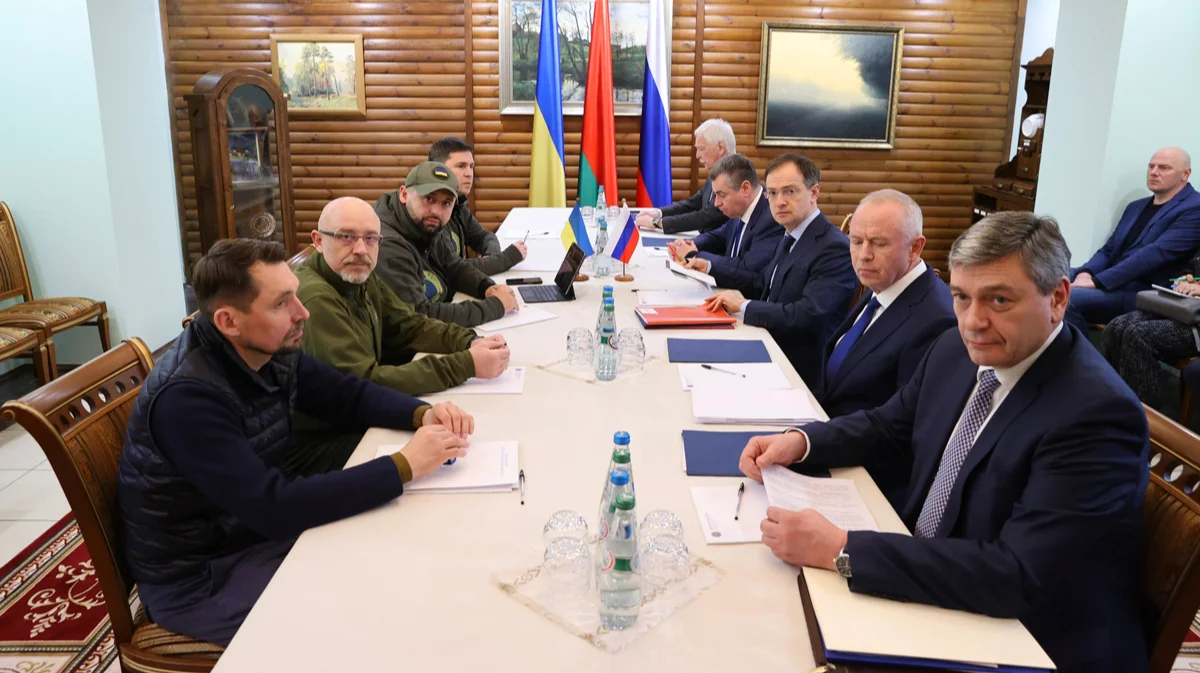
Ukrainian and Russian delegations during negotiations in the Belovezhskaya Pushcha, March 7, 2022. Photo: Maxim Guchek / Belta / Ap / Scanpix / Leta
On May 15, in Istanbul, Russia and Ukraine will try to resume the dialogue. This is the first full -time discussion since the spring of 2022 - then the negotiations also took place in Turkey and ended with nothing. Now Moscow and Kyiv are returning with the same arguments, but in another reality: then the full -scale invasion has just begun - now the war has come to a dead end.
The New Gazeta Europe briefly tells how the first direct negotiations ended and how the second will begin.
On the night of May 13, Vladimir Putin suddenly offered to resume direct negotiations with Ukraine and go to Istanbul, where "they were held earlier and were interrupted." In the spring of 2022, Moscow and Kyiv really approached a possible agreement, but in the end they did not sign anything. The parties still accuse each other of how those meetings ended.
How did the first negotiations go in Istanbul
Negotiations between Russia and Ukraine began a few days after the start of a full -scale invasion of the Russian Federation - already at the end of February 2022. On the Russian side, the delegation was headed by the assistant to the president of culture by Vladimir Medinsky, with the Ukrainian - the head of the faction “Servant of the people” David Arahamia. At the table, Russian billionaire Roman Abramovich, who acted as an informal intermediary, also sat at the table.
This is how it happened:
February 28 - the first meeting in the Gomel region on the border of Belarus and Ukraine. We discussed general approaches, agreed to continue the dialogue.
March 3 - a meeting in Belovezhskaya Pushcha. The first agreements on humanitarian corridors have been reached.
March 7 is another round in Belarus. It was about the ceasefire and the evacuation of civilians.
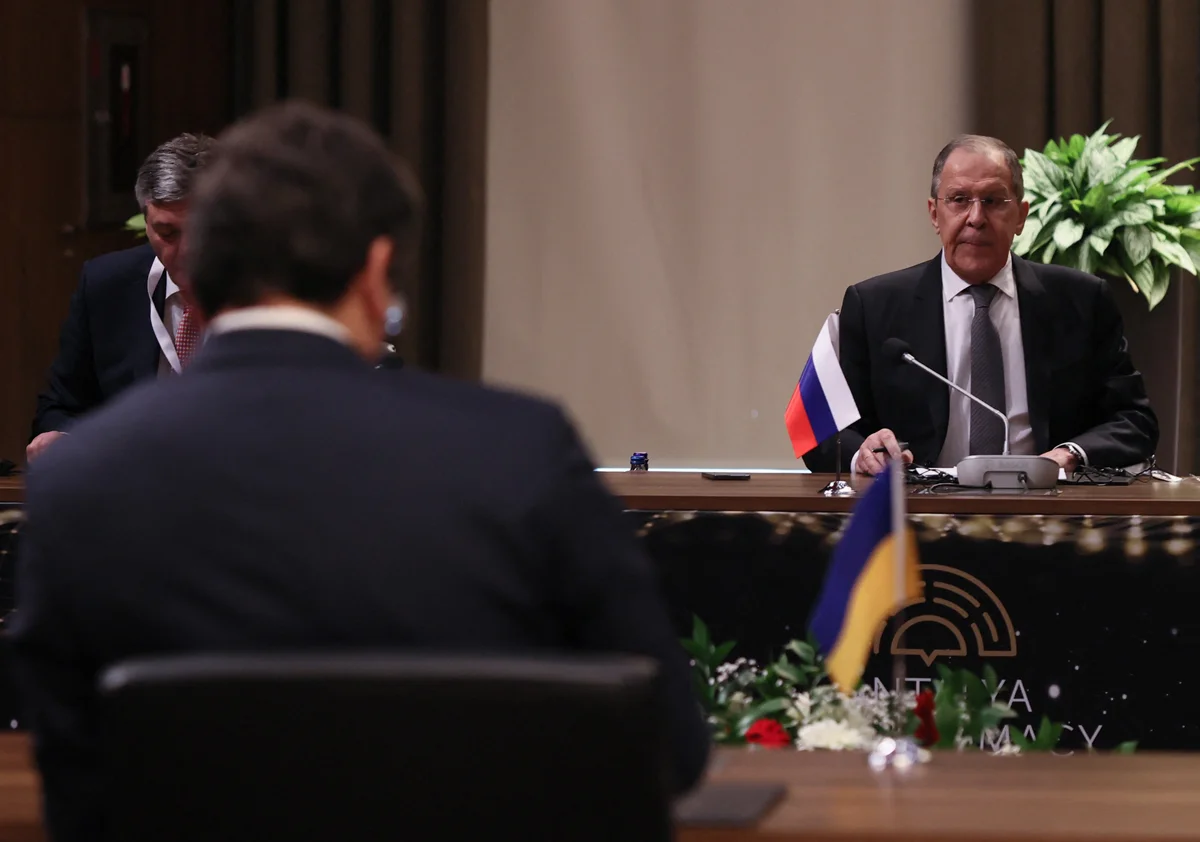
March 10 - For the first time, negotiations are held at the level of foreign ministers. In Antalya (Türkiye) there are Sergey Lavrov and Dmitry Kuleb - without tangible progress.
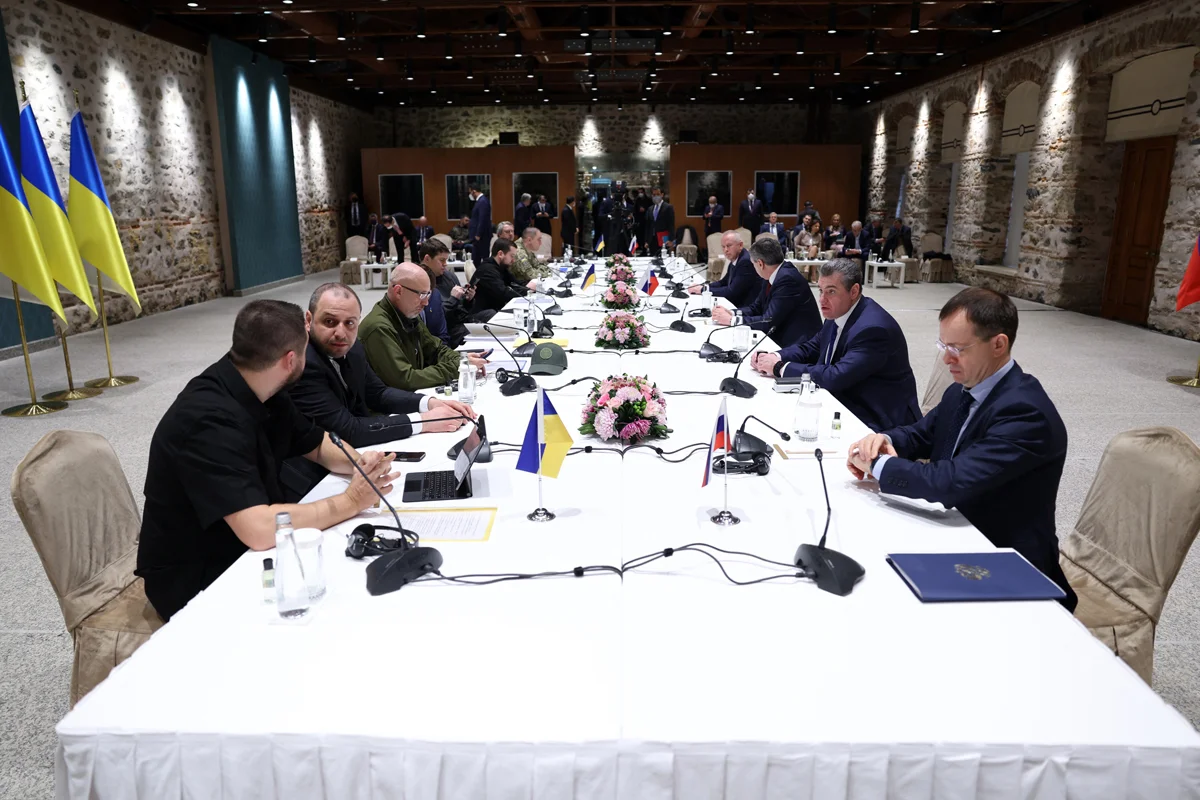
March 29 - the last and key full -time meeting held in the Palace Dolmabahch in Istanbul. It made decisions on it, which are discussed further in the draft agreement.
What did Russia and Ukraine then come to negotiations?
At Istanbul negotiations in 2022, Kyiv emphasized that he recognized the borders of Ukraine as amended 1991, and announced his readiness:
refuse to join NATO and other military-political alliances;
consolidate the neutral and non -block status of Ukraine at the constitutional level;
to provide international guarantors (USA, Great Britain, China, France, Turkey, Germany, Canada, Poland, Israel, Italy) The right to collectively respond to potential aggression - including armed route (among other things, a mechanism was discussed: consultations within three days, then automatic entry of guarantees into force) ;
to exclude the placement of foreign military bases on their territory, to conduct international exercises only with the consent of guarantor countries;
For 15 years, negotiations on the status of Crimea and Sevastopol - subject to an non -violent approach;
Discuss the issue of Donbass separately - at the level of the presidents of Ukraine and Russia.
Moscow, in turn, offered Kyiv the following conditions:
the neutral status of Ukraine, the refusal to join NATO ( intersected with the Ukrainian proposal, but Kiev agreed to non -block, neutral and non -nuclear status only if international security guarantees) ;
a ban on the placement of foreign military bases and contingents in Ukraine (the item appeared with Kiev with a reservation that international exercises are possible with the consent of guarantor countries);
reduction of the Ukrainian army, a ban on the deployment of missiles and other strategic weapons;
“Denacification” of Ukraine (one of the declared goals of the Russian invasion - Putin considers Ukraine a “neo -Nazi” state. Kiev considers such a item to be not subject to discussion) ;
special status for the Russian language and guarantees for the Russian -speaking population of Ukraine;
Recognition of Crimea part of Russia and the recognition of the independence of the self -proclaimed “LPR” and “DPR” within the administrative borders of the Donetsk and Lugansk regions;
The rejection of sanctions policy and the abolition of sanctions already imposed against Russia.
The provisions proposed by Russia and Ukraine were discussed, but were never executed in the final agreement.
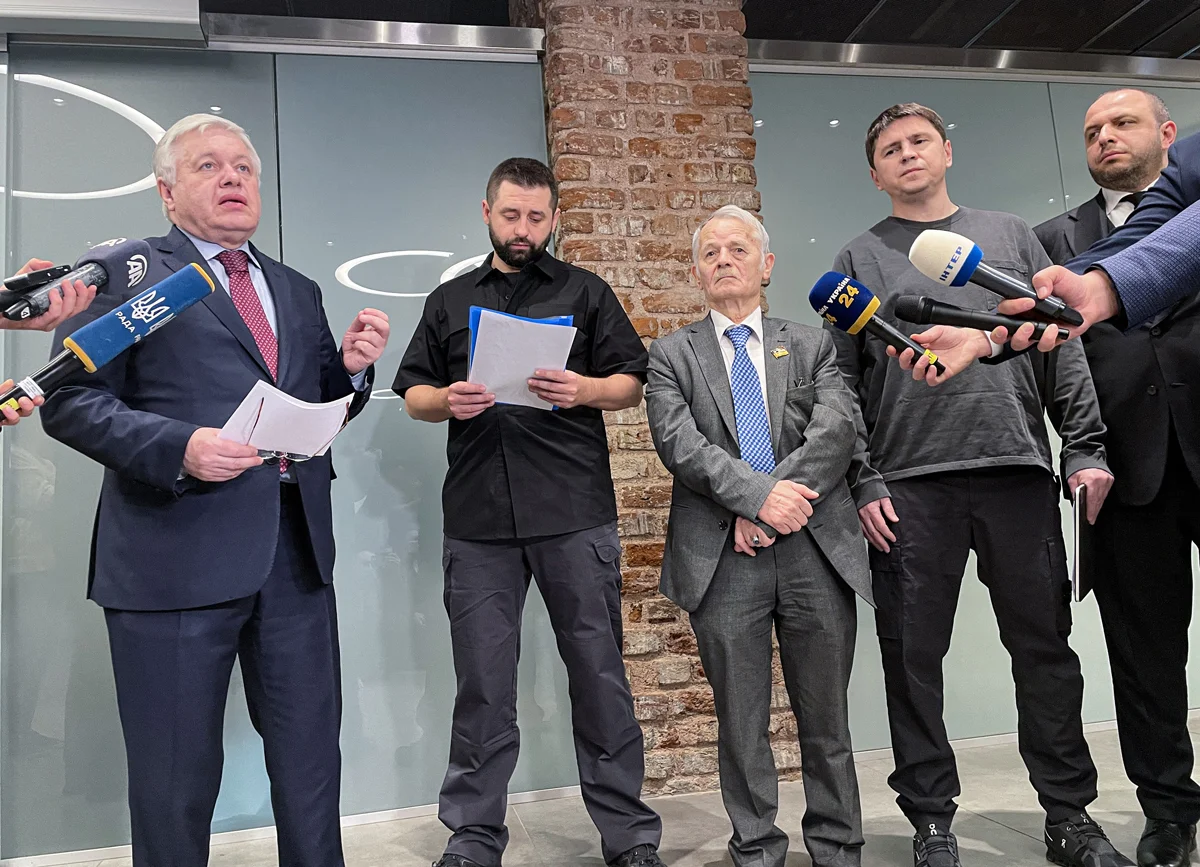
However, in the end, Russia announced the “cardinal reduction” of military activity in the Kiev and Chernihiv directions. The Kremlin presented this as a "gesture of goodwill." The head of the Ukrainian delegation David Arahamia said that the negotiations as a whole were successful - according to him, “eight out of ten points”, since the Russian troops after the meeting really began a retreat.
After the round in Istanbul, negotiations first continued. Moscow claimed that it handed over to Ukraine a modified project, but remained unanswered. Kiev said that he did not receive a document requiring a reaction.
What could be a truce?
Two years later, The New York Times published a draft agreement that has not been signed. It contained the main compromises achieved in Istanbul:
Ukraine receives the status of a neutral state, refuses NATO and other military unions, but retains the right to join the EU;
Foreign military bases and contingents in Ukraine are prohibited;
Guarantus states (including the United States, Great Britain, China, France, Turkey and Russia) undertake to respect the sovereignty of Ukraine and protect it in the event of a new aggression, including the supply of weapons and the closure of the sky;
The agreement would not be extended to the Crimea, Sevastopol and, probably, to other occupied territories.
The adoption of the last paragraph would mean that the parties temporarily bring out the issue of belonging to the occupied territories as a bracket: Russia would maintain actual control, but Ukraine would not recognize its sovereignty.
Key disagreements arose around security guarantees. Ukraine demanded that the third countries take on obligations to protect it without coordination with the Kremlin. Russia, on the contrary, achieved the right of Veto: at the suggestion of Moscow, any help from Kyiv could be provided only with the approval of all guarantor countries.
In addition, Kyiv refused to discuss the recognition of the actual loss of territories, the mitigation of sanctions against Russia, as well as a change in domestic legislation, for example, on laws on the state language and the Ukrainian rebel army - it considers Kyiv to be fighters for independence.
Why did Russia and Ukraine never come to a truce?
The reasons for the breakdown of the agreement in 2022 are still caused by disputes and various interpretations.
Version of Ukraine. In November 2023, Arahamia said : Russia hoped that Kiev would agree to neutrality, but the Western allies recommended that Ukraine disagree on security promises that could not be provided at that time. The head of the delegation from Kyiv also explained why he could not accept the following conditions:
-Firstly, in order to agree to this item, it is necessary to change the constitution. Our path to NATO is recorded [there]. Secondly, there was no confidence in the Russians <...>. We could not sign something, move back [from the front line]. Everyone would breathe out there, and then they ( the Russian army. - approx. Ed. ) Entered [to Ukraine] more prepared [than at the beginning of the invasion].
Zelensky in December 2024 stated that there were no "Istanbul agreements". He emphasized that Ukraine only answered the Russian “ultimatum”, implying the proposals of the Russian Federation in negotiations, but did not sign anything. He added that "no ultimatums [from Russia] are negotiations."
Version of Russia. Moscow claims that the contract was almost ready for signing, but the Ukrainian side refused, supposedly under the pressure of Western allies. Putin at the SCO Plus meeting in July 2024 said:
- Russia, as you know, has never refused and is now ready to continue peace negotiations. It was Ukraine who refused negotiations, and did it publicly by direct instructions from London, which means that there is no doubt about it, and from Washington, which Ukrainian officials are talking directly and openly.
Putin, Zelensky and Trump will meet in Istanbul? It is still unknown
In response to Putin’s proposal to resume negotiations, Zelensky first stated that for a start, Russia should agree to a complete ceasefire. According to him, Ukraine would have agreed to negotiations only when fulfilling this condition.
However, the next day, the Axios publication, citing an anonymous Ukrainian official, reported : Zelensky is ready to go to Turkey, even if the shelling continues. So, on May 13, the President of Ukraine stated that on May 15 he met with Turkish President Recep Erdogan in Ankara - and will wait for Vladimir Putin there. If he is “not ready to fly to Ankara”, then Zelensky and Erdogan will go to Istanbul.
Whoever goes to negotiations from Moscow is still officially unknown. At the same time, the publication of Vladimir Osechkin Gulagu.net, citing a source close to the FSO and the Prochrevskaya Komsomolskaya Pravda, claim that the delegation will be headed by the Russian Foreign Minister Sergei Lavrov and Putin’s assistant Yuri Ushakov.
The fact that Putin will fly to Istanbul, so far there are no specific evidence. The absence of such plans was reported by the “Svetost” publication with reference to interlocutors close to journalists of the Kremlin pool. The Kremlin in the person of Dmitry Peskov states that Putin will say about his decision when he considers it necessary.
Donald Trump, who went on a tour of the countries of the Persian Gulf, sent him to watch the negotiations of his special supporters Steve Whitkoff and Keith Kellogue, writes Reuters. The visit of the US President himself, according to CNN, depends on whether Putin will take part in the negotiations.