Translated material
Consequence in Auschwitz without furnaces
The Cannes showed “two prosecutors” by Sergey Loznitsa: a horror about the Stalin prison with Alexander Kuznetsov and Alexander Filippenko
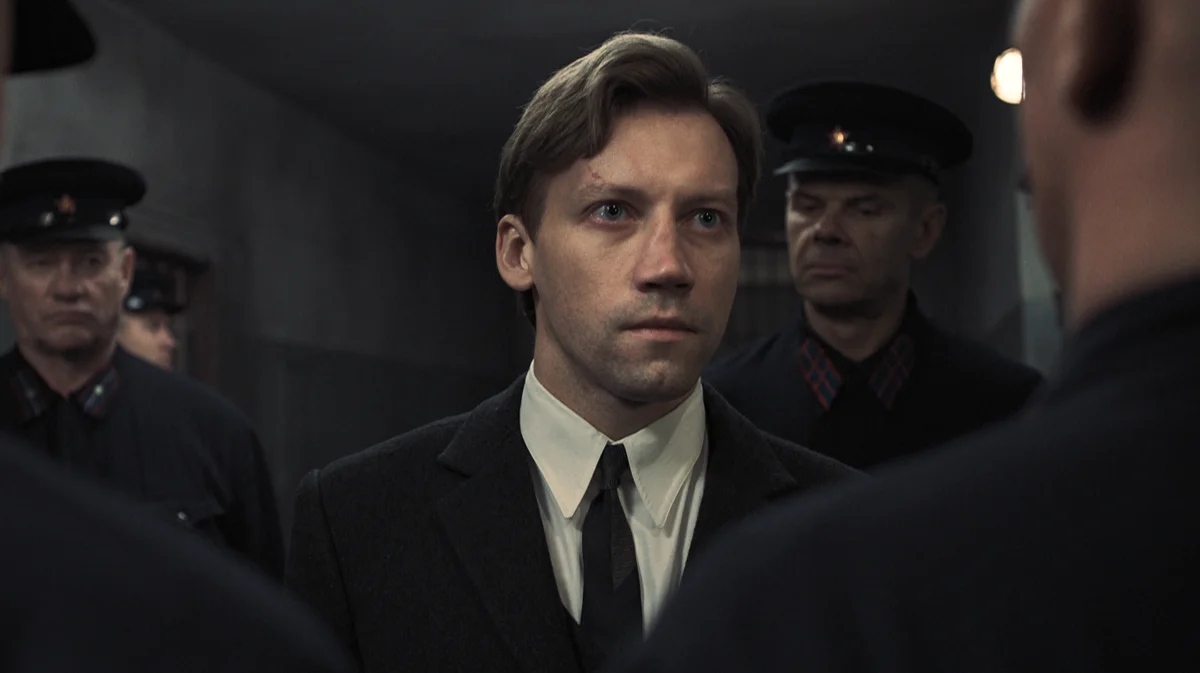
Photo: SBS Productions / Festival de Cannes
Gray walls, brown walls. Iron doors, thick bars. The convicts put the walls of the Bryansk prison of the NKVD. The gray -turn man in the downtings of his pants is instructed to burn complaints of prisoners to comrade Stalin in torture and beating in the bourgeoisie - that they are forced to stipulate themselves and sign false confessions. The prisoner reads complaints and burns them until it reaches one special - it is addressed not to the leader of the peoples, but by the prosecutor of the Bryansk region. It is written on a cardboard with blood. Something will make him stick her under the door of the camera-and somehow she leaves the prison limits.
Thus begins the film by Sergey Loznitsa “Two Prosecutors”, and immediately after the frame with the name, Prosecutor Kornev (Alexander Kuznetsov), light -eyed and young, only three months ago, out of the university, will come to the prison. “Two Prosecutors” - the story of George Demidov, a friend and prototype of the heroes of Varlam Shalamov - “Life of Engineer Kurev”. At a press conference, Sergei Loznitsa said that he was collecting books of memoirs about the Gulag and concentration camps, and he read this almost immediately after the posthumous publication of 2009 (in the collection of novels “Orange Abazhur”).
Demidov was born in a working family, worked at a sugar sugar sugar, and having accumulated money, he entered the Kharkov University at the Physico-Chemical Faculty, where Lev Landau himself noted it. In 1938, Demidov was arrested and convicted on charges of counter -revolutionary activities for five years of camps, exiled to Kolyma. Demidov spent a total of 13 years in the camps, and after liberation, being exiled, sent to Komi. Before retiring, he lived in Ukhta, where he worked at a local factory - first a master, and then an engineer. He called Kolyma "Auschwitz without furnaces." Demidov began to actively write, retiring. But in 1980, his manuscripts were seized by the KGB, and the first publications happened after perestroika - and after the death of the writer and engineer. The story "Two Prosecutors" was written in 1968.
At a press conference, Loznitsa said:
“For me, this picture reflects modernity. Not the past, but modernity. And a lot can be seen in the present - what is in this picture. According to the story written about the events that happened 80 ... almost 100 years ago. "

Having endured the test by a five -hour expectation, the Kornev prosecutor meets the author of the note, the Bolshevik of the old hardening, and now the prisoners (Alexander Filippenko) dying of damage to internal authorities. He says that the old Bolsheviks are destroyed - this is a conspiracy of counter -revolutionaries, they are tortured, beaten, forced to stipulate themselves, hundreds and thousands. What if the young prosecutor is smart, it is honest and not a coward - but the hero Filippenko thinks just like that, then he must go to Moscow without delay. And tell about what is happening lawless to Comrade Stalin. Yezhov. Molotov. Open their eyes.
And the young prosecutor will go to Moscow.
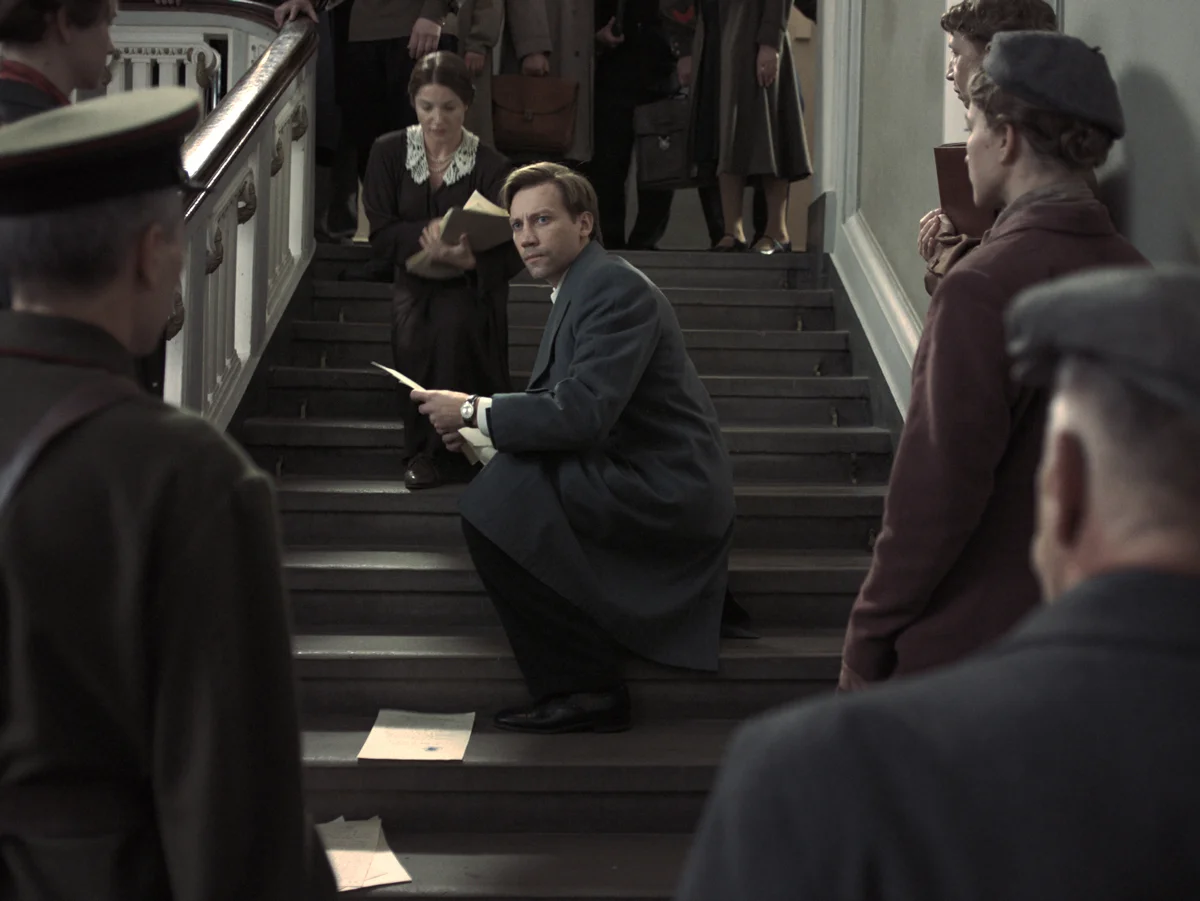
In the retelling of the film Loznitsa, it sounds like a story that is visible and heard many times. We all know how such stories end. But this is the case when words cannot convey his eyes, color and tension. This is not just the story of a naive investigator who wants to tell Comrade Stalin that there was another monstrous mistake, in the film of Loznitsa the tension is the same as in Patricia Haysmit’s novels about the talented mister of Ripley. With your mind you understand what to wait, but still look in the mode of acute anxiety from constant uncertainty. Loznitsa transfers us from the time where we know the final of history, in the middle of action-in 1937, into a room with brown walls, where with fear with fear, frightened, but not cowardly, the prosecutor Kornev looks into the thick-skinned faces of the guards. He does not know anything, his future is open, and the audience heart begins to fights one rhythm with him.
Around the maze of cameras and corridors, in the lens of the Romanian operator Oleg Mutu, the permanent co -author of the Loznitsa, the prison becomes like the Balaban “castle”, and the film adaptation of Kafka.
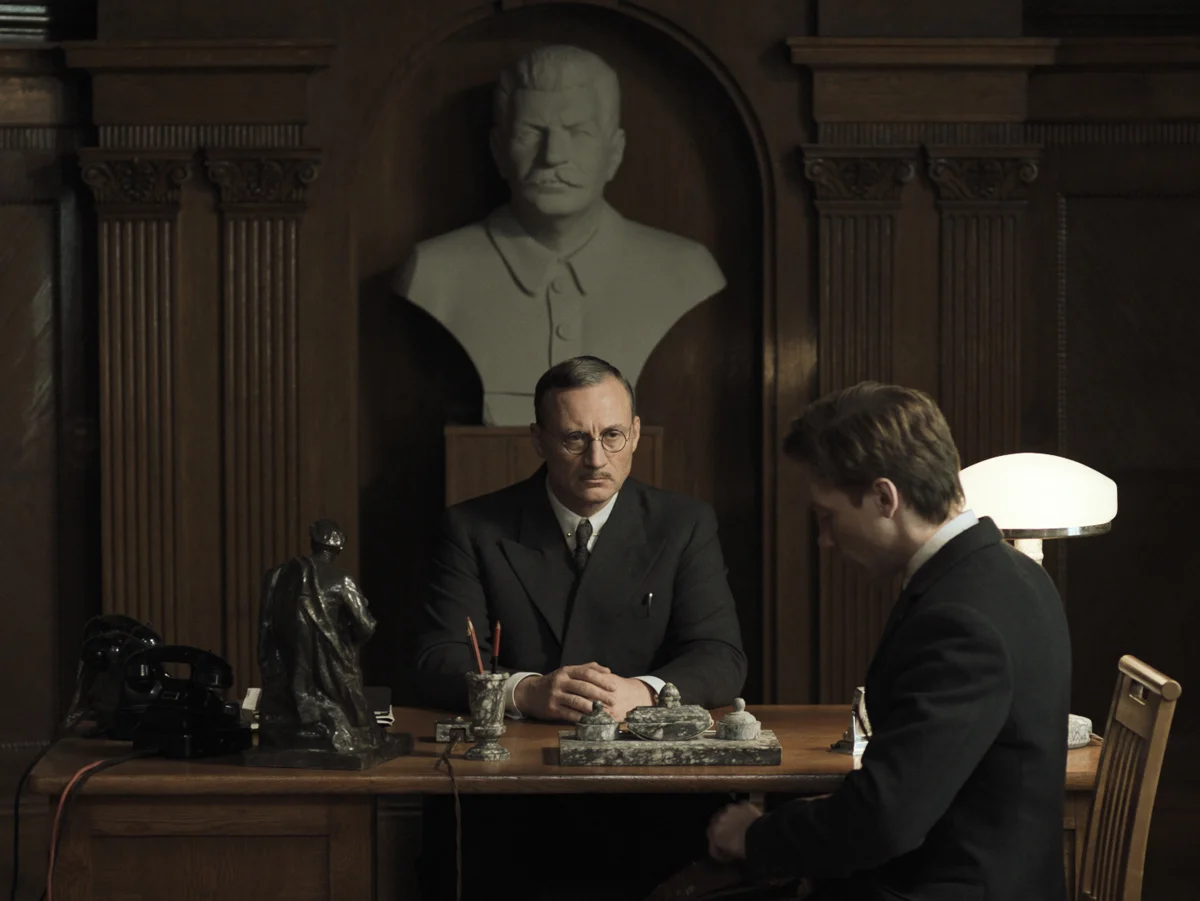
Alexander Filippenko, answering a question about the role, said that the tragifars is his favorite genre. He owns them perfectly and manages to wink at us and force us to smile, even when his hero is clamped by the jaws of the Enkewadesh terror. Kuznetsov - a wandering light in darkness, rising up the stairs to the highest office, not Stalin, but the general prosecutor Vyshinsky (Anatoly Bely). I really hope - although the festival has just begun - that his name will appear among applicants for the acting prize of Cannes. White - prosecutor number two of the names - will appear in the frame in only one short scene, but the bend of his skewed lips will not be forgotten for a long time.
“Two prosecutors” are such a film in which it seems that it is impossible to quail what will happen, because everything is clear. Yes, and no. After all, hope is in the heart of every watchman. I asked Sergey Loznitsa at a press conference-where to look for hope when it seems to be nowhere to? He gave an answer in four parts, interrupting to give the word to the translator.
“Braigel has an allegory of hope . The raging sea, ships drown, a prison is a full nightmare. Hope is on the parts of a sinking ship, in one hand she has a sickle, in the other - a shovel. Cut and bury. ”
“In Zasenhausen ( the former concentration camp of the Third Reich, after the Soviet troops liberated in 1945, was the NKVD/KGB special camp, today was a museum and a memorial. - Approx. Aut. ) One American guide, distinguished from everyone else, said such a thing: only a man who had no hope had a chance to survive. It seems to me that this is a very accurate definition. ”
“[We must look for hope] in a person who experienced it all on himself and left his memories. This is Varlam Shalamov. "Kolyma stories." It seems to me that he very accurately describes the circumstances in which we continue to exist, it just retreated a little, but now it creeps up again. ”
“Salvation is to reformat the language of describing circumstances and the world in which we exist. Reformat the language. "
The film of Loznitsa itself does not particularly reformat, although it was shot and played very well. And the lack of a new description language does not prevent him from becoming the most important film for the Russian audience from the entire Cann-2025 program.