
Translated material
Russia is not the Kremlin
Spanish journalist and writer Mark Marginedas: "I will be back to go to the Bolshoi Theater"
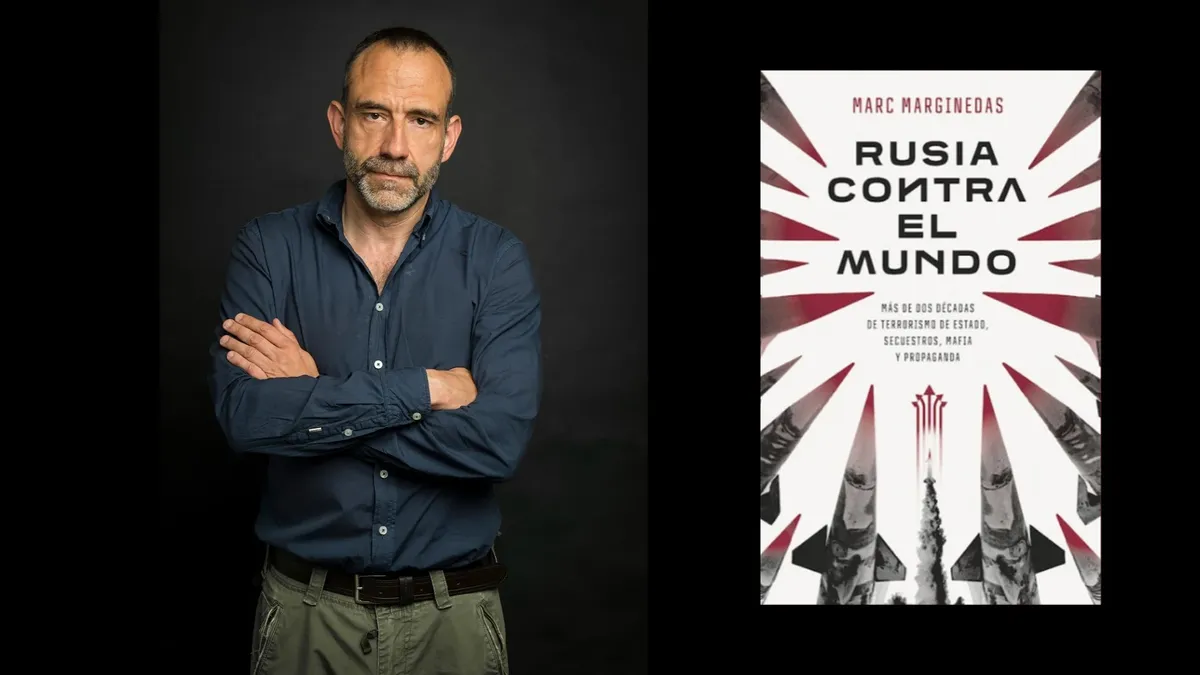
Mark Marginedas and his book
The conference hall of one of the largest bookstores of Barcelona was scored to capacity long before the event, and the chairs in the end were not enough for everyone. At the stand at the entrance were the books of the first circulation of the documentary novel of the Spanish military journalist and writer Marc Marginyedas who had just left the printing house. Everyone entering the hall looked at the cover of a book, the name of which promised a difficult and long conversation - “Rusia Contra El Mundo” (“Russia Against the World”). Today, interest in what is actually happening in Russia, and most importantly - why and why, has grown unusually. The reason, however, is not the best - the last three years have changed not only Russia, but also the attitude towards it.
As in any country in the world, in Spain, the reader in the search for objective information about the nature of events will always turn to his native authors whom he knows and respects. Mark Marginedas is perfect for this role. In Spain, Mark is considered a leading specialist in the countries of the Middle East and the republics of the former Soviet Union. For 30 years, he worked as a military reporter of the El Periódico newspaper in many hot spots - Tunisia, Libya, and then in Syria, where in September 2013 he was abducted by the Islamist militants. Mark was captured by ISIS* for six months, and was released only in March 2014 . The vacation was short -lived, and almost immediately after captivity Mark went to Moscow as an El Periódico correspondent. In Russia, he worked in total for more than 10 years. The result of this period of his journalistic career was the book “Russia against the world”, which can be considered a guide to the country's political biography.
The history of Russia is the last 25 years - a real detective. The book is read, it has all the dramatic elements of this genre. Explosions in Moscow in 1999, operation “Ryazan Sugar”, secret operations of Russian special services in Chechnya and Syria, the history of Wagner PMC and the birth of the “African project”, “Russian mafia” in Spain, the bribe of officials in Slovakia and Bulgaria, finally, Ukraine. The history of the country after February 2022 is reflected with documentary accuracy - propaganda, political prisoners, the defeat of the opposition.
In his study, Mark also relies on the materials of his colleagues from Russia: in the text we will see many links to the articles of Anna Politkovskaya, Elena Milashina and many other authors of Novaya Gazeta.
Many books have been written about Russia recently. "Russia against the world" differs from everyone. It was written with an amazing love for the country, which, according to the author, ended up in a tragic trap of history, contrasting herself with the rest of the world. And then he will definitely find a way out of this trap. Sometimes it even seems that Mark has more hopes for the future of Russia than many of us. With this, we started the conversation.
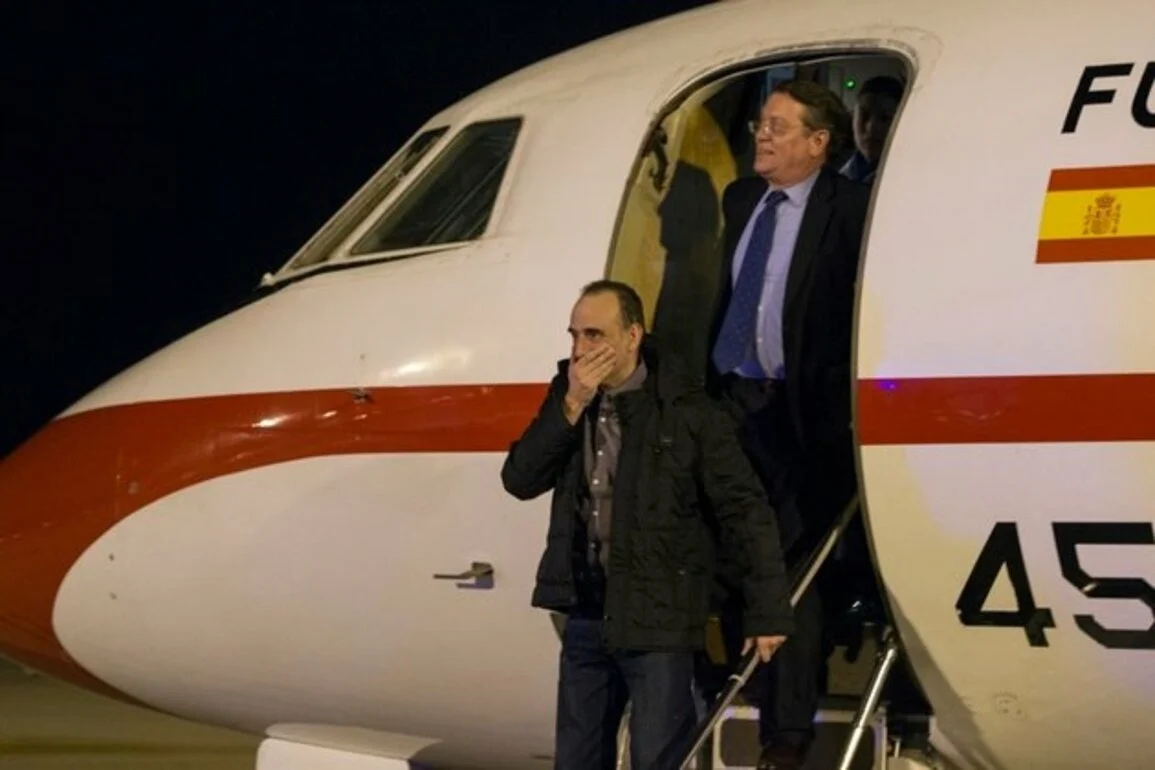
- I see that the book is written by a person who does not care. The author to Russia is clearly not indifferent. Am I right?
- I really don't care, because I love Russia. I love this country in which I lived and worked for about 11 years. I miss Moscow, there I learned to skate next to the house on the embankment, where I lived. This is my second homeland. I wanted to write this book to help residents of Russia find a way out of the situation that has developed there now. And to help its readers in Spain and other countries understand this country. True is a medicine. To know how to correct what the state has done, you need to tell the truth and know it.
- The house on the embankment in which you lived is just a museum of Stalinist repressions. You worked a lot in hot spots, you were captured by Islamic terrorists, and went through many wars. How did it happen that Russia also became a hot point, and the atmosphere within the country is very reminiscent of the text of the novel by Yuri Trifonov?
- When Vladimir Putin came to power at the end of the last century, people stopped thinking about the policy and state of civil society. People had a lot of money, they began to travel around the world and live better. I often heard this: we suffered so much, we now do not even want to think about politics and civil liberties. As a result, people began to forget about their rights. And then they refused them. When the NTV was closed, the people said nothing. When the redistribution of property began, he was also silent. Then, all their lives, the country began to control the special services - and everyone was also silent. And then it became too late, a military operation began, which in Russia cannot even be called what it really is.
I understand the reason for what happened. In the days of Boris Yeltsin, no one wanted to reform the special services, the KGB reform was carried out, there was no lustration.
The state of Soviet special services was huge. I also know how great the agents were. These people have not gone anywhere. Working in Moscow, I was amazed at how many people cooperate with special services.
This force needed only one condition to revive and come to power - the silence of the population and the lack of reforming the service itself, control over it. So it happened. When reforms begin in Russia, they must begin with the reorganization of special services.
- Have you had contacts with special services in Russia?
- Many times. In the last years of my work there have been two cases that, it seems to me, were specially organized to show me - they follow me. I still can’t talk about the first, most serious case, so as not to let the person with whom I worked in Russia and who still lives there. I can tell the second. I had a Spanish phone number that no one knew. On this phone, I talked with a colleague in the USA, and we talked about my abduction by militants in Syria and how the Russian special services worked in this region. Soon after, I had another conversation on the same phone number, during which the connection was interrupted, and I suddenly heard part of our conversation in the record. It was a signal, a warning - we hear you. Then it was confirmed to me by colleagues from “reporters without borders” **.
- Have you had problems in Russia?
- There were no problems with the Foreign Ministry, for example. But I suppose, seeing how they work, they just read little what they write abroad. They do not even know what foreign correspondents accredited in Moscow write in their media. But I felt that I was interested in the FSB. Of course, this was due to my abduction by ISIS militants and captivity. They want to control everything and everyone. This can be understood - freedom of speech seems to them a threat.
- On the “internal front” of the so -called equally important events are taking place today than at the front front. The New Gazeta writes a lot about repressive practices and political prisoners, about the trained freedoms and the destruction of dissent. Do your readers know about these events in Spain?
- As deep as the New Gazeta writes about it, of course, not. The Spanish media indicates that a dictatorship has been established in Russia, and today it is a non -somocratic country. But this problem seems distant to many, especially since no one wants to fight with Russia, despite the fact that Russian propaganda speaks of this. An important problem for Spain is the Russian mafia, which was engaged in laundering money, custom -made murders, and a racketeering.
The Spanish law enforcement officers conducted many operations - the “three”, “wasp” - which were directed against “thieves in law”, who then lived in the country: Shakro, Tariel Oniani and others. In each case, it turned out that all of them are associated with some officials and special services within Russia.
The prosecutor Jose Grind Gonsales was engaged in the Russian Mafia business for many years, he was threatened, in the National Press of Spain , there was material that his murder was even planned in St. Petersburg. He proved the connection of the Tambov-Malyshevsky mafia with officials from St. Petersburg and hiding them with special services.
Over the past 15 years, in the south of the country, in Malaga and Marbella, police officers against organized crime have underwent, many mafia leaders were arrested, many were expelled from the country. But the prosecutor Jose Grinda is still forced to constantly walk with security. Of course, Russia was again in the spotlight when a former military pilot Kuzminov was killed in Alikant.
But the internal problems of Russia in Europe are still incomprehensible - especially what is happening in Chechnya . That is why in my book I bring many links to Elena Milashina’s materials and quotes from the articles of Anna Politkovskaya. I know that during the investigation of her murder in the criminal group, special services were employees. And my readers should know about this.
In addition, I write that freedom of speech in Russia is virtually prohibited. Media was replaced by propaganda, which also operates on the territory of Spain. For us today, this is the most important problem that pays insufficient attention to the level of the government. In Europe, there are large Russian network media structures that are engaged in propaganda. We must talk about this openly.
- How to resist propaganda?
- Governments must operate, only the efforts of the media are not enough. We try to form public opinion. But we are opposed to a powerful and well -funded propaganda machine. In Denmark, fines for the publication of fakes in social networks were legislatively introduced. This is not in Spain. Therefore, Pablo Gonzalez, about which the New Gazeta wrote in Russia , and we wrote here, for some time was considered a journalist. And then it turned out that he was a spy of Russian special services. Finally, now everyone has already understood this. During the political activation of the topic of independence of Catalonia, Russian propaganda by order of the Kremlin wrote about tanks in Barcelona, heated separatist sentiments. Combating Fakes is a matter of national security, in the book I write about it too.
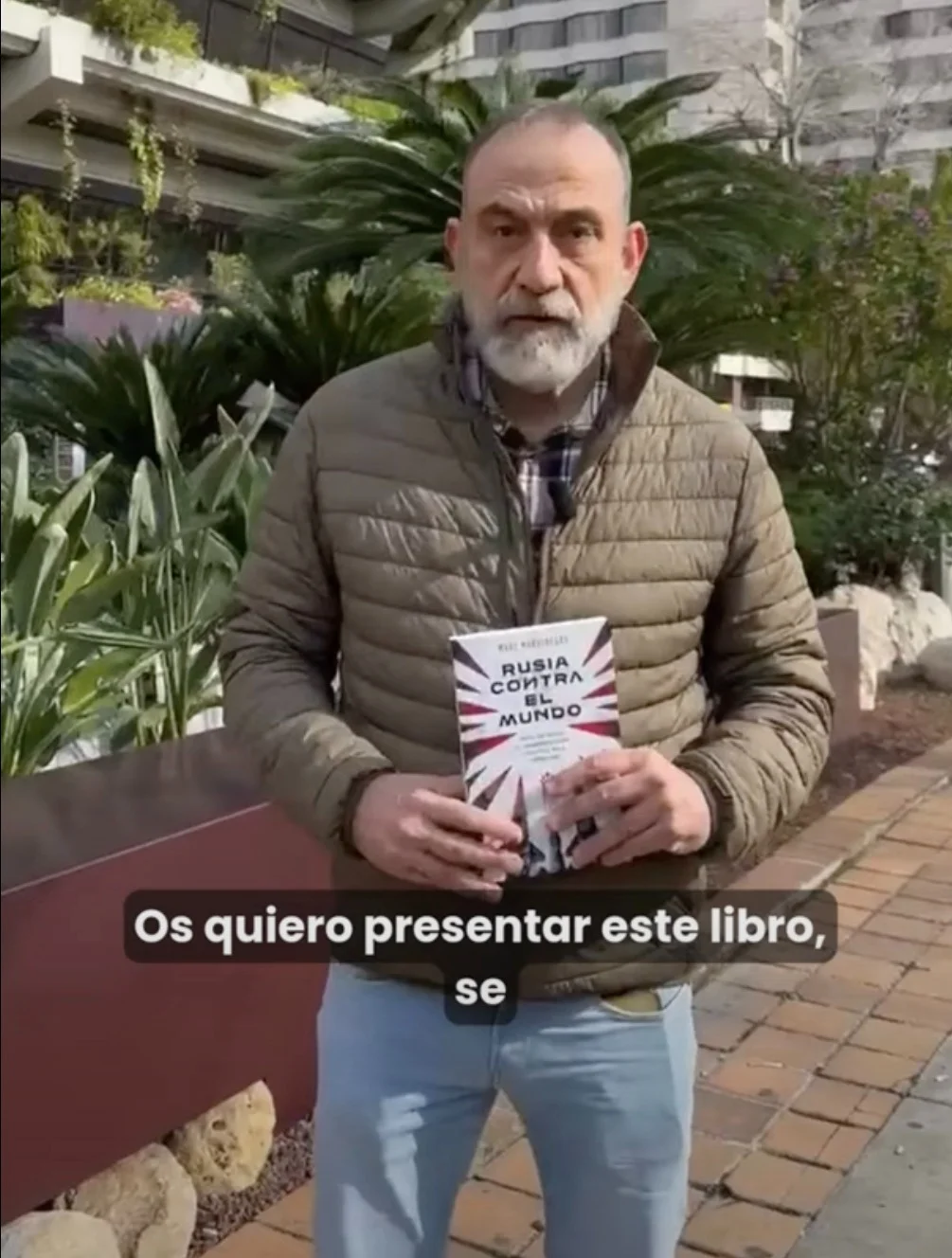
- You and I understand that your book at the moment cannot be published in Russia in Russian.
- Everything is ahead. I really hope that I can return to Russia. I understand the difference between the Kremlin and Russia. Russia is not the Kremlin. I miss the country, people. I believe that everything will change. The state can be strong, rich, huge in its scale, but it cannot be built on lies. The lies bubble will inevitably burst. And we still ride on skates in the Park of Culture and go to the Bolshoi Theater. "Novaya Gazeta" - Big Hello.