
Translated material
Fermat of eternal injury
One of the curious Cannes-2025 paintings is the atmospheric and feminist tape "Sound of a fall"
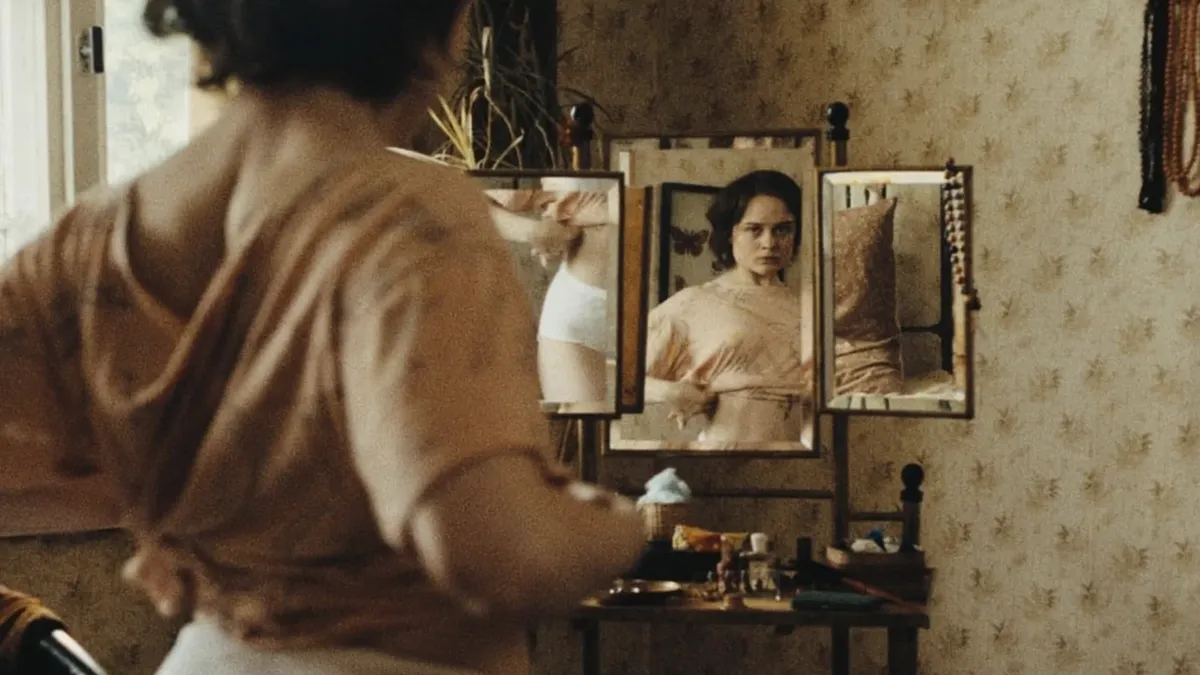
Frame from the movie "Sound of a fall"
“The sound of the fall” of the Masha Shilinski was removed, as if written off from the paintings of Grutzner, France Schwartz, Mile. Gloomy painting with registered details. Or from the old daggerrotypes (we will see them in the frame).
The film is similar to a historical poem in which times are confused. In fact, the lives of four virgins - Almes, Eric, Angeliki and Lenka - from different historical eras were strangely tumbled down. All of them grew up on the same farm in the Altmark region. Their destinies are reflected in each other, as in an old mirror covered with Amalgam.
1940s. Erica knows his own sexuality, spying on his Uncle Fritz, as it seems to everyone, a “disabled person”. She “portraits” it, touches and even tries to walk on crutches herself, imitating amputation. Receiving slap from a strict father, Erica only smiles in accordance with. But from the following scraps of chapters, we learn the terrible family secret about how young Fritz lost his leg (the family did not want to let him go to the front). We also learn about his phantom pain.
The beginning of the twentieth century. Baby Alma from a silent religious landlord family. Together with the sisters, they have fun with cruel draws. The maids are nailed so that she crashes with all her strength. She was given a name in honor of the deceased sister.
And on the day of the deceased, she should put on a black lace dress of a dead girl who looks at her from a wriggling photograph, holding the same doll in her hands. An angel -like alma falls on the sofa in the same position. She plays death, she is now too - like dead.
1980s. GDR. Young Angelika, niece of Erica. Her mother is a harsh with a motionless face of Irma smiles only in the most terrible moments of life. And Erica is ready to dance until the morning, to swallow life with spoons. She is fascinated by adult uncle, fools in love with her cousin ... Until it will become a victim of an adult violence. Like all the girls living in this house, she floats between an unfortunate fear, a thirst for life and the attraction of death.
Present. Nelly, with her sister Lenka and her parents, came to a launched family farm, which they want to restore. And it seems that everything is completely cloudless, with the exception of strange, unfortunate forensic premises, sounds. Another tragedy will connect the past with the present.
You can write separately about the calligraphy soundtrack separately. In the same score: the creak of doors, squeezed screams, deaf knocks, the buzz of the fly, and some strange one-removable, then approaching rumble is the noise of time.
The cinema was shot by a subjective camera, as if Alma from a long -standing dagraurotypic past continues to spy on life -current life. The camera itself looks as if from a living part of the space of the hidden world of a person. And now we touch this secret, hear his inner voice.
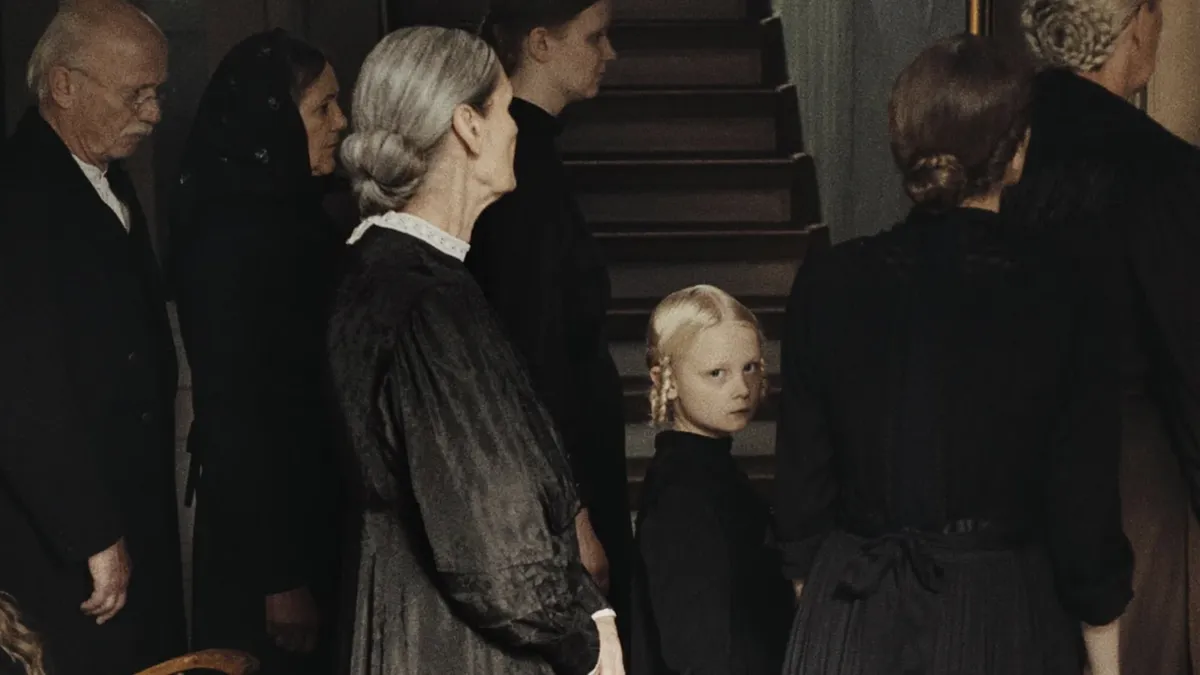
On this farm, time stopped. Not only in posthumous dagerrotypes. In the walls of the house. In the river connecting the East to the West, slippery, vile acne still swim (grab the eel from the bowl, rushing on the bike-the beloved game of Angeliki and her relatives). The past, like a ghost, stands nearby, breathes in the back. And you repeat the fate of someone living here before you. You experience the same intercoral injuries, resentments, a sense of joint sins. Guilt.
Behind Germany’s bucolic paintings, the second and third plan is visible.
The intimate, hidden here is connected to the collective unconscious, with a pressing sense of guilt, mental and physical suffering, violence (dormant militarism) and eroticism. All that Jung called the "mass soul" and its underlying flour.
In this sense, the picture is similar to the “white ribbon” by the Haneke. Latent cruelty is sprayed, scattered, interspersed into everyday sketches, into teenagers, in adult relations. But here is the place of a gloomy humor, and sensuality, and rare surges in light (one of the first names of the film “Peering into the Sun”). And also the heroines of this scattered, like beads, centuries suddenly look directly into the camera: we are here, nearby. Right behind you. Looking around. And the longer they look at him, the darker it is.
Is this the perfect movie, can it be called a work of art? Question. This is a very feminine view of history. This is the strength and weakness of the film, compiled and large passes in which we enter our own interpretations.
More about the cinema
Larisa Malyukova leads a telegram channel about the cinema and not only. Subscribe here .