
Translated material
Jump from the "cliff"
Why did they get to Alcatraz and how did you try to escape from there? The story of the most impregnable prison in America, which Trump promised to open again for the maintenance of criminals
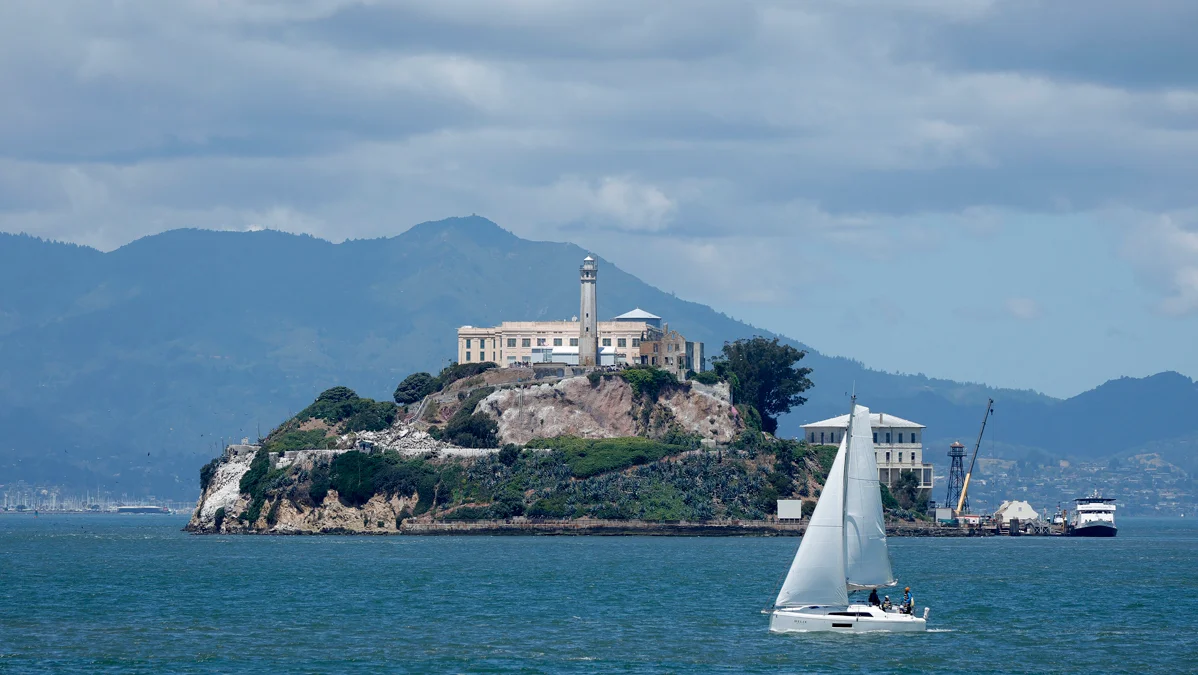
View of the island of Alcatraz in the Gulf of San Francisco, California, May 13, 2025. Photo: John G. Mabanglo / EPA
Against the backdrop of the gaining momentum of struggle with illegal migration, Donald Trump proposed returning to Alcatraz - once the most severe and impregnable prison of the United States, and now the popular tourist attractions - its previous appointment. So far, experts on the American penitentiary system weigh the likelihood of embodying this idea into life (spoiler: it strives for zero), the “New Evrope” recalls the story of Alcatraz and its sad inhabitants.
"Remove and open Alcatrase!" - Donald Trump wrote with capslok late in the evening on Sunday of May 4. Developing an idea, he added that America has been persecuted for too long “recidivists and discharges of society” and that he immediately instructed the federal bureau of prisons, the US Ministry of Justice and the FBI “to open an expanded and rebuilt alkatrase, so that it contains the most ruthless and cruel criminals of America”.
Some political observers suggested that this idea is nothing more than an attempt to distract attention from the next media failure. The fact is that on the eve of the NBC channel there was a scandalous interview with Trump, in which, among other things, he stated that he “does not know” whether the government is obliged to adhere to the constitution in the framework of the fight against migration and that American girls could limit themselves to three dolls instead of thirty. The second thesis, expressed in the context of the tariff war with China and its possible consequences for ordinary Americans, was met with special sarcasm , given the deliberately luxurious lifestyle of Trump and his family.
“Alcatraz was closed as a federal prison more than 60 years ago. Now it is a popular National Park and a tourist attraction. The president’s proposal is not serious, ” said the long-standing opponent of Trump, the Congress-Democrat from California and the former speaker of the House of Representatives Nancy Pelosi.
Scott Wiener, Senator-Democrat from San Francisco (in the bay near this city there is Alcatraz), reacted more seriously to the initiative, saying that Trump “wants to turn Alcatraz into an inner gulag right in the middle of the San Francisco bay”.
Demolish and build
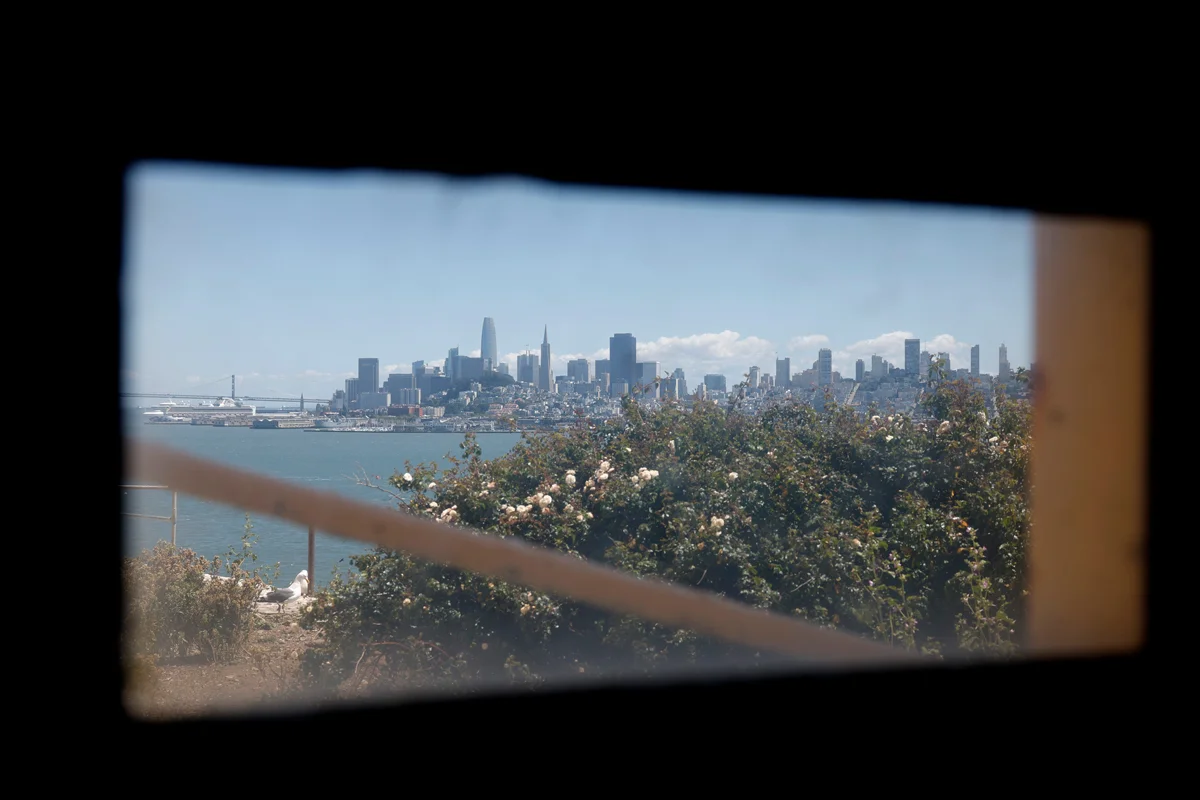
For a number of reasons, it is extremely difficult to return the legendary prison from the National Parks Service to the system of execution. The main one is financial. Former Director of the Federal Bureau prison said in an interview with BBC that he will have to literally demolish and re -build in Alcatrae of prisoners. Salt sea water and many years of non -functioning have done their job: many premises of the complex are falling apart. In the former prison, there is neither a modern observation system, nor treatment facilities that at least at least meet environmental standards, nor electricity. In addition, the content of prisoners on the island two kilometers from the coast would cost several times more than on the mainland.
In the American penitentiary system, there are really problems with the lack of staff and places for prisoners. The recent investigation of the Associated Press revealed numerous violations, including the criminal activities of the warders, the free circulation of weapons and drugs, and dozens of shoots. In addition, at the February hearings in the congress it turned out that at least 4,000 beds in the system-the equivalent of two large prisons-are unsuitable for use.
However, solving these problems, trying to turn the alkatraz back into prison is like extinguishing a fire with gasoline.
The day after the demand to open Alcatraz Donald Trump and managed to partially disavow it. He told reporters that this was only an idea inspired by "radical judges who want to separately consider the affairs of each of the millions of migrants who are illegally in the country." However, the head of the federal bureau of prisons William K. Marshall III, who took office a few days earlier, managed to say by that time that he had accepted the chief’s instructions for execution.
“The bureau will use all the possibilities for the implementation of the president’s program,” Marshall hastily reported, adding that he had already ordered the situation and determine the first steps to “restore this powerful symbol of the law, order and justice”.
It is not yet clear whether Trump will turn his proposal as a joke, switching to a new resonance initiative, or uses this case to open the next front of the fight against the “deep state”. In any case, initially Alcatraz was created as a military facility.
Pelican island
On August 5, 1775, the ship of the Spanish Royal Fleet San Carlos was the first of the European ships entered the Gulf of San Francisco. The 30-year-old Captain Juan de Ayala, who was instructed to explore the surroundings of these almost unknown territories, reported : “This, of course, is an excellent harbor: it has all the amenities, it has no shortage of good drinking water and wood. [...] The pagans inhabiting her are always so friendly and obedient that I should have presented them with earrings, glass beads or bread that they had just learned to ask for our language as a gift. ”
Having spent six weeks in the bay and carefully mapping the area, Ayala, among other things, applied to the map of the island, which differed from others with an abundance of birds. He called him La Isla de Los Alcatracates - “Pelicans Island”. In the 19th century, the British naval officer Frederick Beach, working on the map of the Pacific coast of America, mistakenly appropriated this name to another rocky island, located five kilometers to the north, changing the spelling on Alcatraz. In this form, he remained on the maps. The former “island of Pelicans” Spanish colonists, who settled in those places in the 1790s, named Yerba Buena in honor of the fragrant grass growing there.
Many years before Alcatraz, no one was doing except perhaps the local Indians, who were fishing on his rocks. Everything changed in the middle of the 19th century, when the United States first conquered California from Mexico, and soon, even before the signing of a peace treaty, they found gold in the vicinity of San Francisco.
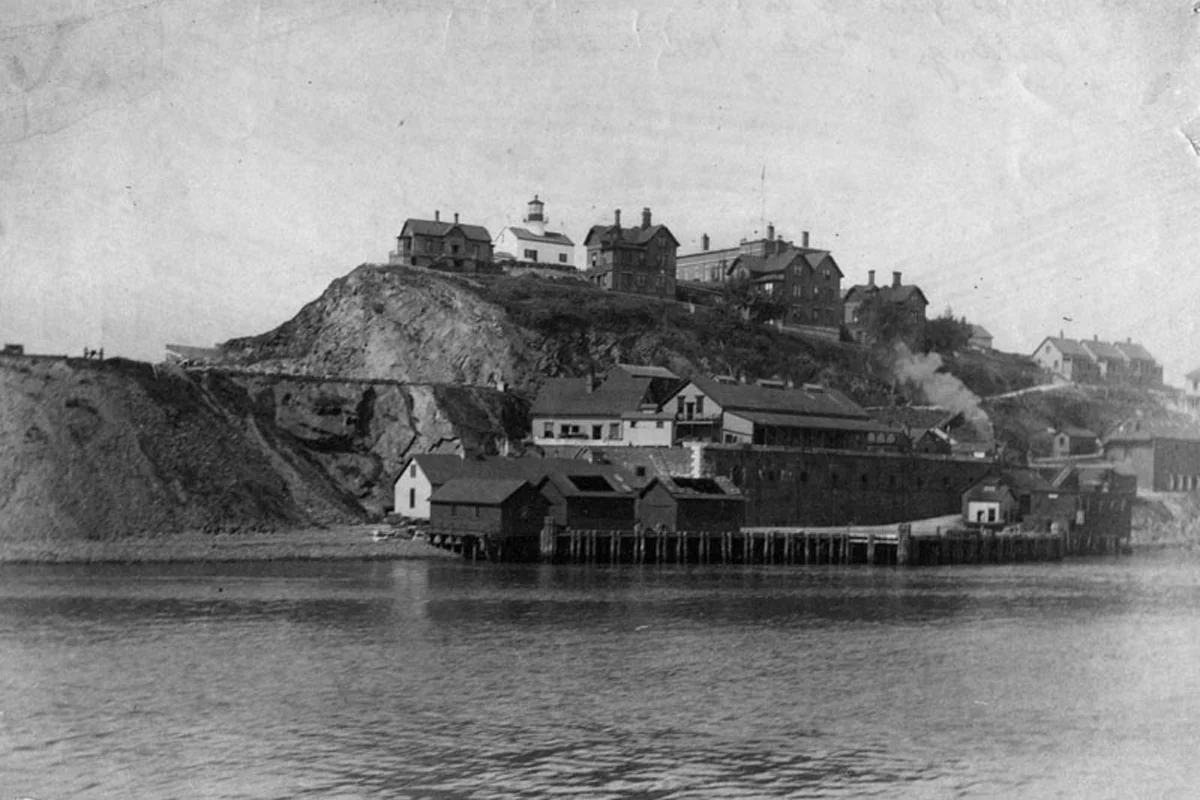
The island, located directly opposite the entrance to the bay, immediately found strategic significance. In 1850, US President Millard Filmor ordered him to transfer him to the military department and build a fortress to repel possible threats from the UK, as well as the Russian Empire, trying to expand the Russian-American company in the Pacific region. By the end of the 1950s, a citadel with 100 guns and barracks for 200 soldiers, as well as the first to the western coast of the United States, was built on the Alcatrase-his task was to facilitate active shipping in the bay.
Fort Alcatraz was not able to participate in battles, but he almost immediately began to be used as a prison: first for the soldiers of the Southerners' army lost in the Civil War, then, during the war with the Indians, for Indian leaders and their own deserters. The beginning of the 20th century, Alcatraz met in the official status of the "Pacific branch of the US military prison".
What was Alcatraz at that time, we know from the report of the head of the department of California General Nelson Miles. Several hundreds who lived on the island of prisoners - finalized soldiers and officers - were serving terms of 1 month to 20 years. Cameras with bare brick walls were unnaturally small, recalling the coffins rather, they did not heat and stood raw for a long time. However, the prisoners spent only night in them: with the rise, the part went to work on the “large land”, some were employed in repair work on the island. Proceeding, wearing heavy pads and branding deserters remained far in the past, but the prisoners had a library open until nine in the evening, a kind of cabin for relaxation and a rather relaxed attitude of the overseers, leaving options for escape. Most of the successful attempts (not all were fixed) were made during work on the mainland, but some managed to escape directly from the island. One of these cases occurred in 1890, when two prisoners immediately after breakfast at 5:30 in the morning secretly went down to the pier and on one of the funny boats went to the shore. The speedy boat of guards on steam driving rushed in pursuit too late: the fugitives reached the mainland and disappeared from sight, so that the guards could only deliver the boat back to the island.
The rule of silence
The “roaring 1920s” turned out to be time for the United States not only a rapid economic upsurge-over a decade of GDP, the countryhas grown by 42%, but also no less stormy heyday of organized crime. According to the FBI, during the years of the “dry law”, 1,200 gangs acted in Chicago alone, which, mainly by super -profitable buttlery and often armed no worse than the police.
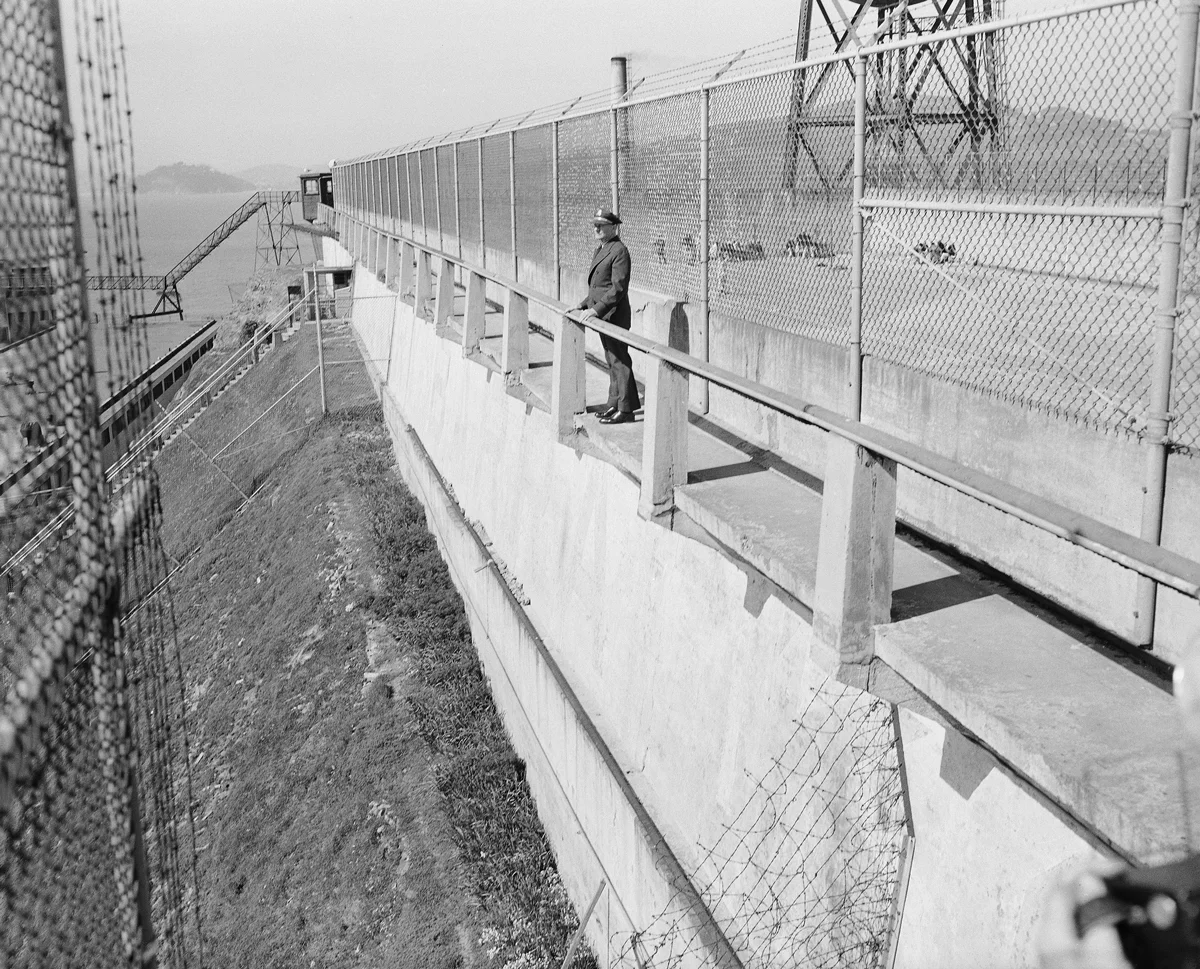
When in 1933 a new administration came to power in the United States, led by the former Governor of New York, Democrat Franklin Roosevelt, one of its main tasks along with overcoming the great depression and the country's withdrawal from economic collapse was the fight against crime. For the most inveterate villains, an exemplary prison was needed, impenetrable with iron internal discipline. Having studied the available options, the Ministry of Justice, together with the Federal Bureau, made a choice in favor of Alcatraz. The Ministry of Defense, suffering from chronic underfunding in peacetime, willingly abandoned the expensive “asset”, and in the fall of 1933 the capital reconstruction of the complex began.
Residents of San Francisco were, to put it mildly, they were not enthusiastic about the prospect of having the focus of evil, the path for thick bars and two kilometers of the bay. In order to prove that if desired, the bandits can easily get to the flowering California coast, and draw attention to the problem, two young women, Doris McLeod and Gloria Shileno, made demonstrative swims to Alcatraz. As a result, the government insisted on its own, and in August 1934 the first parties of the "civilian" prisoners were brought to prison. These were no longer the previous drinks and crooks in military service, but dangerous recidivists and leaders of criminal communities, including the legendary Al Capone. However, the prison awaited them completely different.
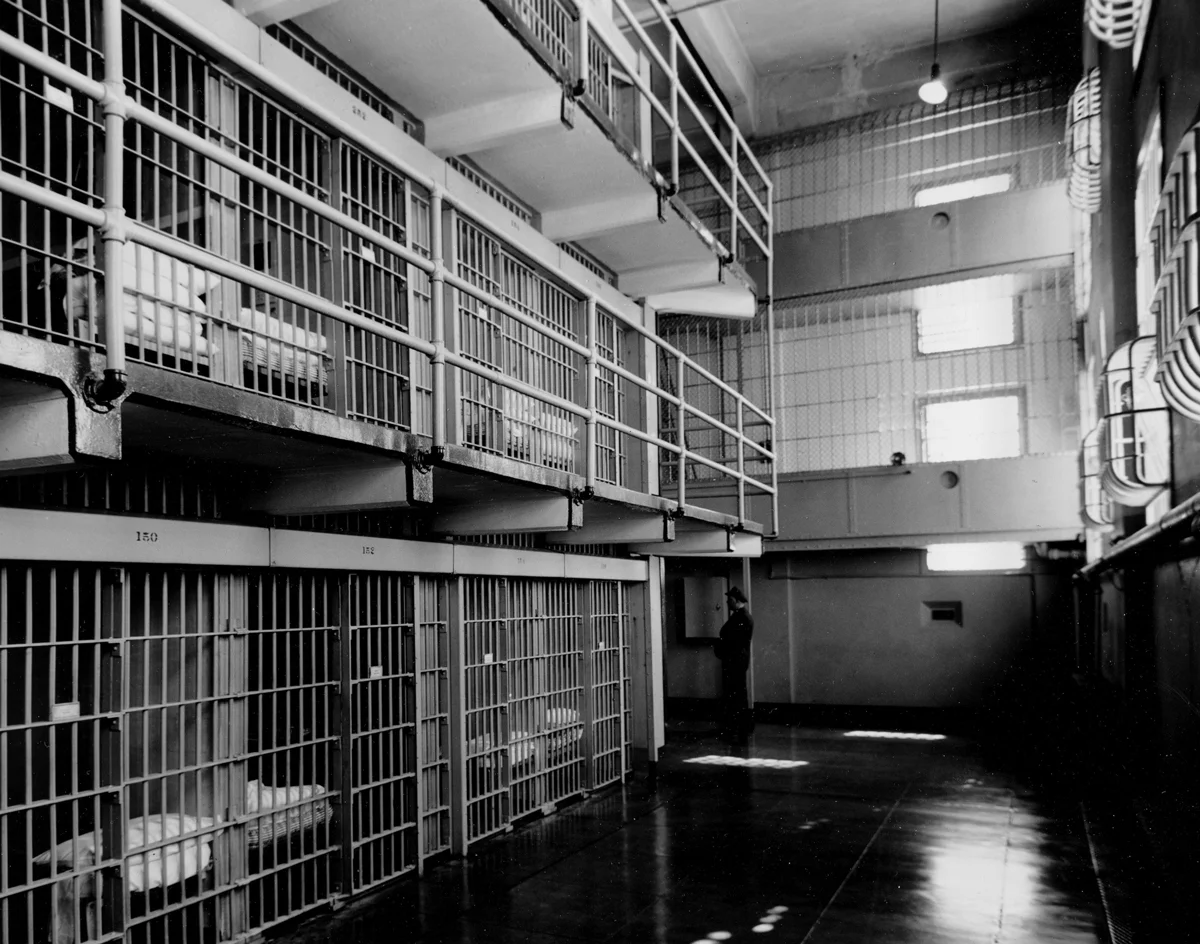
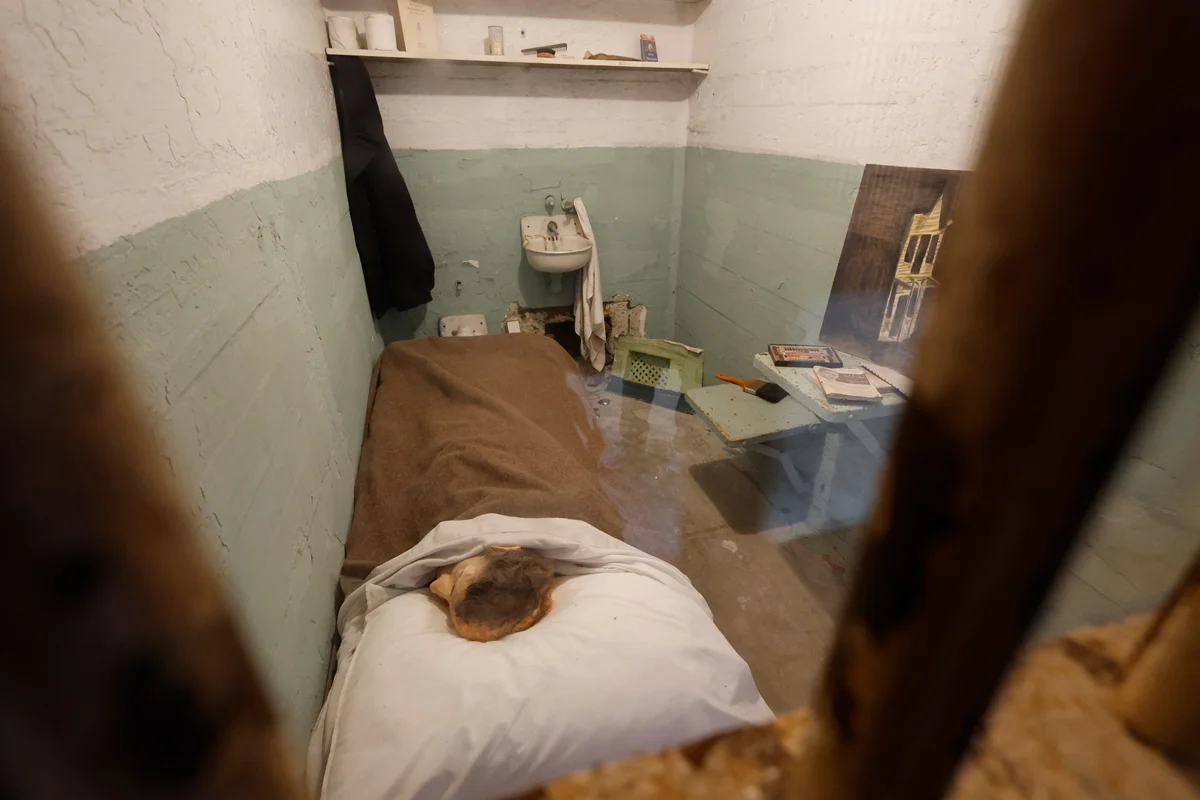
As a result of the capital reconstruction of Alcatraz, under the leadership of the head of the Federal Bureau of Sanford Bates and Robert Börge, four new reinforced concrete units appeared on the island with 336 single chambers of 3 by 1.5 meters each.
Instead of wooden grilles, thick steel rods were installed on the windows, one of the buildings - a strict insulation of the delta - was without windows at all. The builders concreted service tunnels, placed secure galleries around the perimeter for protection, from which the entire space of the complex was shot, and the prison dining room was equipped with tanks with tear gas, which opened remotely. The new jams Johnston, the new chief of the prison, changed the rules of detention: no more walks on the continent to the mainland, no personal items, and even more fresh newspapers, a library and communication with visitors only for special merits to the administration and approximate behavior. At this time, the unofficial name “Rock” (The Rock ”(The Rock), which emphasizes not so much the rocky surface as the impregnability and severity of the content, was fixed behind the prison.
The whole life of prisoners was limited to several hundred square meters: climbing at 6:30, roll call, breakfast, cleaning cameras, lunch, work in workshops in the prison, for about an hour to read and answers to letters, at 21:30 - the hift. For lack of water supply, I had to wash with sea water directly from the bay: the fresh water delivered from the mainland was enough only for drinking and food. The most difficult test was the “rule of silence” introduced by Johnston: prisoners were forbidden to talk other than during meals and brief rest.
Inhabitants
However, some concessions were nevertheless allowed. For example, the legend of the Chicago mafia Al Capone was allowed to participate in imprisonment: he played Banjo in the local ensemble. Otherwise, the life of the once formidable gangster, which by that time had lost influence and suffering from syphilis, was no better than everyone else: he held on to the mansion, sweeping the floors like a simple mortal, and rehearsed on Banjo, secluding in the shower. Due to the progressive syphilis, Kapone was transferred to one of the hospitals in Baltimore in 1939, and then completely released-live the days in their own mansion on the island near the coast of Miami. In 1946, a year before the deadly stroke, the gangster was examined by the medical commission: the state of the psyche of the former Chicago Mafia boss corresponded to the level of a 12-year-old child.
George “machine gun” Kelly, for a series of bold robberies of banks, who received the status of “enemy number one”, like Kapone, was among the first in Alcatraz. In 1933, he abducted the oil magnate Charles Ursel directly from his mansion and even managed to get $ 200,000 as a ransom, but the FBI was still captured and received a life sentence.
The orders started on the island, and raw concrete walls quickly tamed the bandit: Kelly worked in the laundry room, served in the prison chapel and earned a small administrative position for exemplary behavior.
Having served in Alcatraz for 17 years, he was transferred to the Livenvort prison in Kansas, where he died of a heart attack on his 59th birthday.
Robert Straud, nicknamed the "bird from Alcatraz," before being on the island, spent more than thirty years in other prisons. Having committed the first murder at the age of 19 - he shot a client of a prostitute who took care of as a pimp - Straud repeatedly inflicted injuries and staff of other prisons, and once chopped the guard in the eyes of hundreds of prisoners. In order to somehow calm his uncontrolled outbreaks of anger, the administration of the federal prison Livenvort allowed Straud to breed Canaries. As a result, he really calmed down a little, raised several hundred birds and even wrote two books on ornithology. When it turned out that the raw materials requested for “ornithological research” were used for the manufacture and underground sale of alcohol, the incorrigible villain was sent to Alcatraz. Contrary to the nickname, he was not allowed to hold any birds on the island. Instead, Strauud was officially classified as a psychopath and for a long seven years was put in a deaf concrete bag of the Delta corps. For many days, locked up the “birdhouse from Alcatraz” spent the writing of fundamental work on the history of the US prison system. Over time, he was a little softened by the ostrich content, but he failed to get out of the wild: he died at the medical center for prisoners in Springfield, spending 54 years behind bars.
Battle for Alcatraz
No matter how terrible and inventive the bandits were on the “rock” from all over the country, after 1934, none of them managed to escape. In total, 14 attempts were made, as a result of which 21 people managed to catch, six were killed, two drowned, five were missing. In May 1946, six prisoners, led by a robber of banks Bernard, managed to get into the arms room - for this one had to drop several kilograms, cooled with oil and, using the tool made in the workshop, spread the rod of the window lattice - and arranged a real slaughter that went down in history as the “Battle of Alcatrase”. Unable to get out of the prison, they took up defense in one of the blocks and shot about a day with protection and arrived reinforcements from among the marine infantrymen. As a result, three fugitives, including Bernard Koy, were shot, the rest were seized and sentenced to death. There were no losses among law enforcement officers: two of them died, 14 were injured.
The most famous attempt to escape from the island, the story of which was the plot basis of the film “Escape from Alcatraz” with Clint Eastwood in the title role, was undertaken in June 1962. Согласно плану, разработанному 35-летним грабителем банков Фрэнком Моррисом, четверо заключенных должны были ложками прорыть дыры в поврежденном от сырости бетоне, через вентиляционную шахту выбраться на крышу тюремного блока, прихватив с собой склеенный из дождевиков плот и пару фанерных весел. Дальше оставались сущие пустяки — спуститься по водосточной трубе к морю, надуть плот и добраться на нем до материка. План почти сработал: подкладывая выкрашенный в цвет стен картон к месту «раскопок» и обманывая охранников во время вечерних обходов с помощью манекенов, собранных из папье-маше и волос из мастерской, трое участников побега действительно смогли выбраться на крышу и скрыться во тьме ночного залива. Охрана обнаружила пропажу лишь под утро, когда бумажные «дублеры» узников «отказались» вставать на проверку. Бросившись в погоню, тюремщики и военные обнаружили лишь прибившиеся к материку куски плота и пакет с запиской и фотографиями беглецов. Подробности побега узнали от четверного участника — Аллена Уэста, так и не сумевшего выбраться из камеры.
Согласно официальной версии ФБР, беглецы утонули в холодной воде залива, температура которой даже летом редко поднимается выше 12°С. Дело закрыли в 1979 году, однако тела бежавших
так и не нашли, поэтому споры об их судьбе продолжаются до сих пор. Об Уэсте известно больше, хотя и его участь счастливой не назовешь: отсидев свой срок, он на какое-то время оказался на свободе, но вскоре вновь попал за решетку за кражу автомобиля и умер в тюрьме в 1978 году.
В тюрьму с экскурсией
Расследование, проведенное после побега 1962 года, показало: Алькатрас больше не является той непроницаемой крепостью, которой был задумал тридцатью годами ранее. Кроме того, после тщательной оценки состояния зданий Федеральным бюро тюрем выяснилось, что полноценная реконструкция тюрьмы на острове сопоставима по стоимости со строительством новой на материке, с той разницей, что островное содержание заключенных обходится примерно втрое дороже.
В результате 23 июня 1962 года генпрокурор и брат действующего президента США Роберт Ф. Кеннеди подписал приказ о закрытии Алькатраса и распределении остававшихся в нем заключенных по другим федеральным тюрьмам.
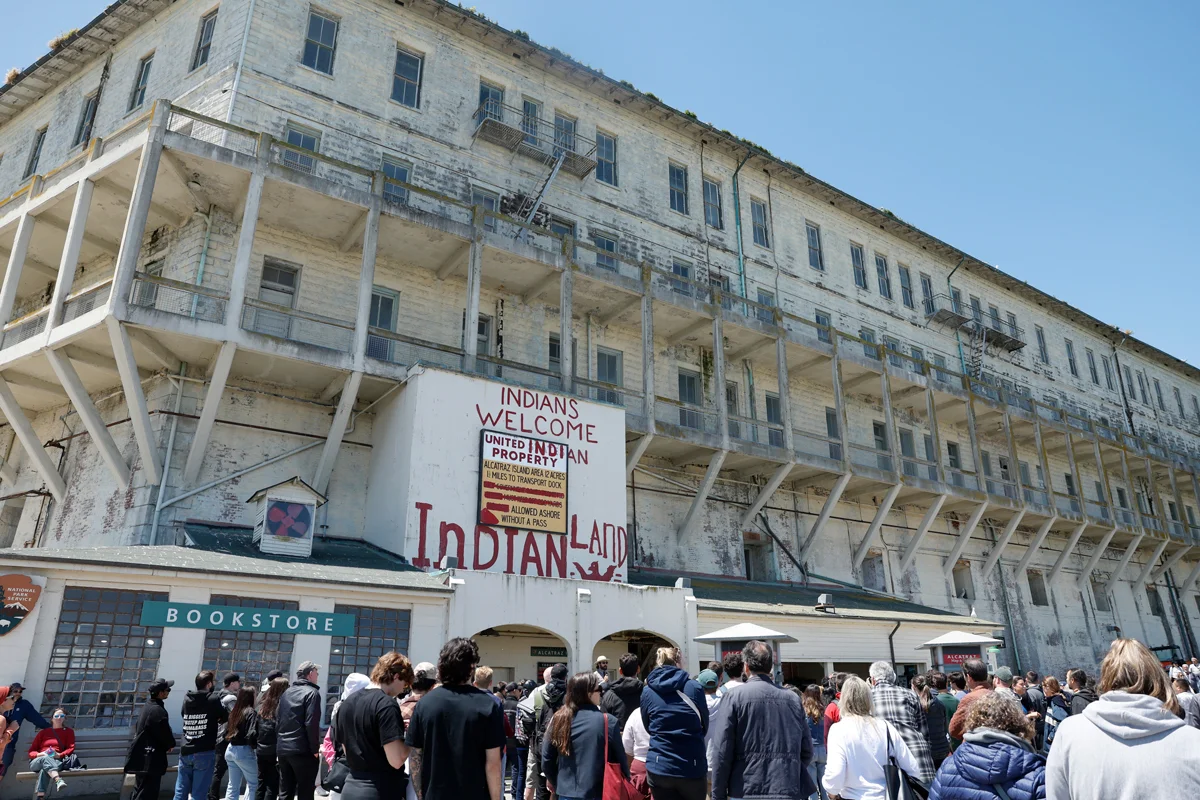
Некоторое время заброшенные постройки занимали защитники прав коренных американцев из организации «Индейцы всех племен» (Indians of All Tribes), требуя превратить комплекс в культурный и образовательный центр. Однако власти решили по-своему. В 1971 году президент Ричард Никсон распорядился выгнать самовольных поселенцев с острова, а через год решением Конгресса Алькартас вместе со всеми обветшавшими постройками передали в ведение Национального управления парков.
В начале 1980-х администрация Рональда Рейгана, столкнувшись с наплывом кубинских беженцев, рассматривала Алькатрас в качестве места содержания наиболее опасных криминальных элементов из их числа. Изучив вопрос, Генеральный прокурор Уильям Френч Смит отверг этот вариант из-за «большого расстояния до берега, отсутствия коммунальной инфраструктуры, высокой исторической ценности и популярности у туристов».
Сегодня остров посещают около 1,6 миллиона туристов в год, принося в бюджет около $60 миллионов. Примерно за $50 посетитель получает билет на паром (единственный способ добраться до Алькатраса) и аудиотур с доступом ко всем основным помещениям, включая корпус Дельта, маяк, помещения охраны. В сопровождении гида от Национальной службы парков посетить Алькатрас можно даже ночью: в темноте, прорезаемой светом карманных фонарей, история о побеге 1962 года звучит более убедительно.