
Translated material
Cannes-2025. The New Wave Richard Linklater is a feature film about the shooting “In the Last Breath” Jean-Luka Godard
Too Sinefilian cinema, which was tired of even Anton Valley
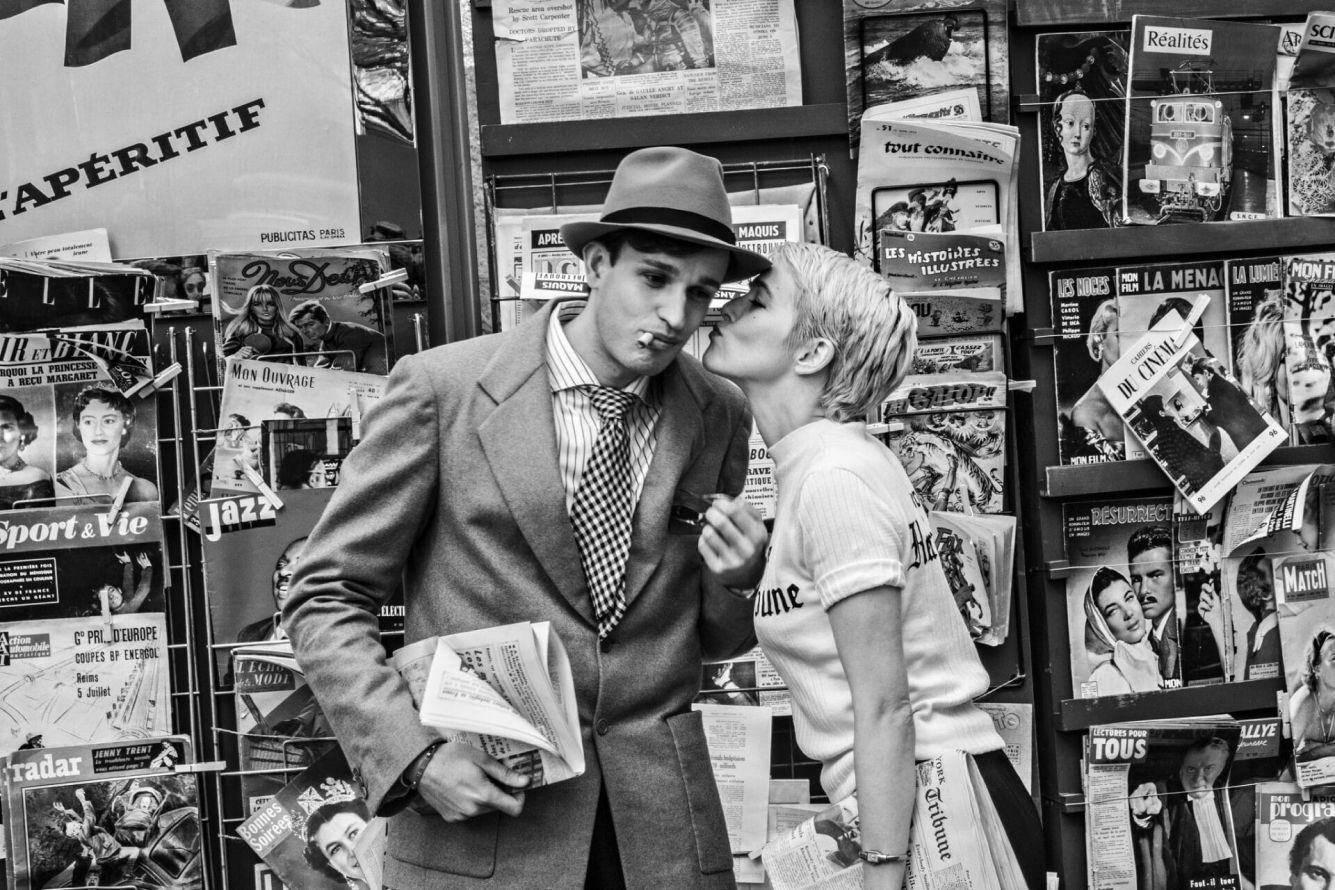
At the Cannes Film Festival, the premiere of the film "New Wave" (Nouvelle Vague), named after the direction in the cinema of France in the late 1950s and 1960s, was held. One of the key works of this era is the full-length debut of Jean-Luka Godard “in the last breath” with Jean-Pole Belmondo and Gene Sberg. The “New Wave”, shot by American Richard Linklater, is a feature film that tells about the history of the creation of this classical picture. Kinocritic Anton Dolin tells whether the linclayer managed to look at the most important period in the history of the cinema in a new way.
If you are in love with a French new wave , you need to see this film - to survive an injection of happiness or a rabies attack. If you do not like Godara, the magazine Cahiers du Cinéma and the bohemian France of the border of the 1950-1960s, it is better not to take risks. If you do not know anything about those times born by the films and people, then your meeting with the “new wave” of Richard Linklater will be an interesting experiment. Imagine a neophyte who was forced to or convinced to watch a film chosen by the science from the Universe of Star Wars or Startrek. The chance to make it a fan exists, but it is small.
However, the French, the American Lincleter, shot French in French and with French producers-are divinely self-confident in everything that concerns the cinema and their decisive role in its development as art. Cannes are an international festival, but it is not by chance that the jury is headed by Jules Binosh, a kind of plenipotentiary representative of the host of France. And from the official posters of this year , Jean-Louis Trentinyan and Anuk Eme , whose eternal embrace, captured Claude Lelush in the “man and a woman” look at eternity.
In a sense, the choice of the mediocre French Romkom “Leave once” to open the festival is also an eloquent gesture. It is a pity, of course, that instead of this passing picture they did not show a “new wave”, it would have approached perfectly. Indeed, for the Cannes residents, and for the Hodar filmmakers who have moved from all over the world and his “in the last breath” are objects of the cult.
The only question is how the target audience will perceive the “new wave”, will see in it a solemn mass to the glory of French Sinefilia or the sacrilege committed by Barbar on the other side of the ocean? So far, the majority in Cannes tends to the first answer.
Linklater is a long -recognized classic, on the account of which impressive achievements (at least the trilogy “before ...” and “adolescence”). For him, the “New Wave” is not a commercial or conjunctural project, but a pure act of love, and not so much to French rebels as to his own youth. Once, by chance, what was seen “in the last breath” prompted the American to change his life trajectory and leave the literature to cinema. As any sincere confession, to the “new wave” should be condescended.
The idea is this: to fix the birth of the debut film by Jean-Luke Godard is by no means the first critic of Cahiers du Cinéma, who stepped into directing (he was overtaken by Claude Shabrol and Francois Truff), but the one whose revolutionary film finally legitimized the French new wave in the eyes of the audience around the world. And to do this in the genre of the “film about the film”, shot right on the site, to make a movie about creating “in the last breath”, stylized under “in the last breath”. Black and white image, a light hooligan jazz behind the scenes, a living camera, countless reminiscences and Easter ladies, recognizable and not too much.
If someone really created a documentary chronicle of filming “in the last breath”, there would be no price to this material-regardless of the author’s talent and artistic ambitions. The "new wave" of the linkelter, with all skill and scrupulousness, is still a thorough imitation.
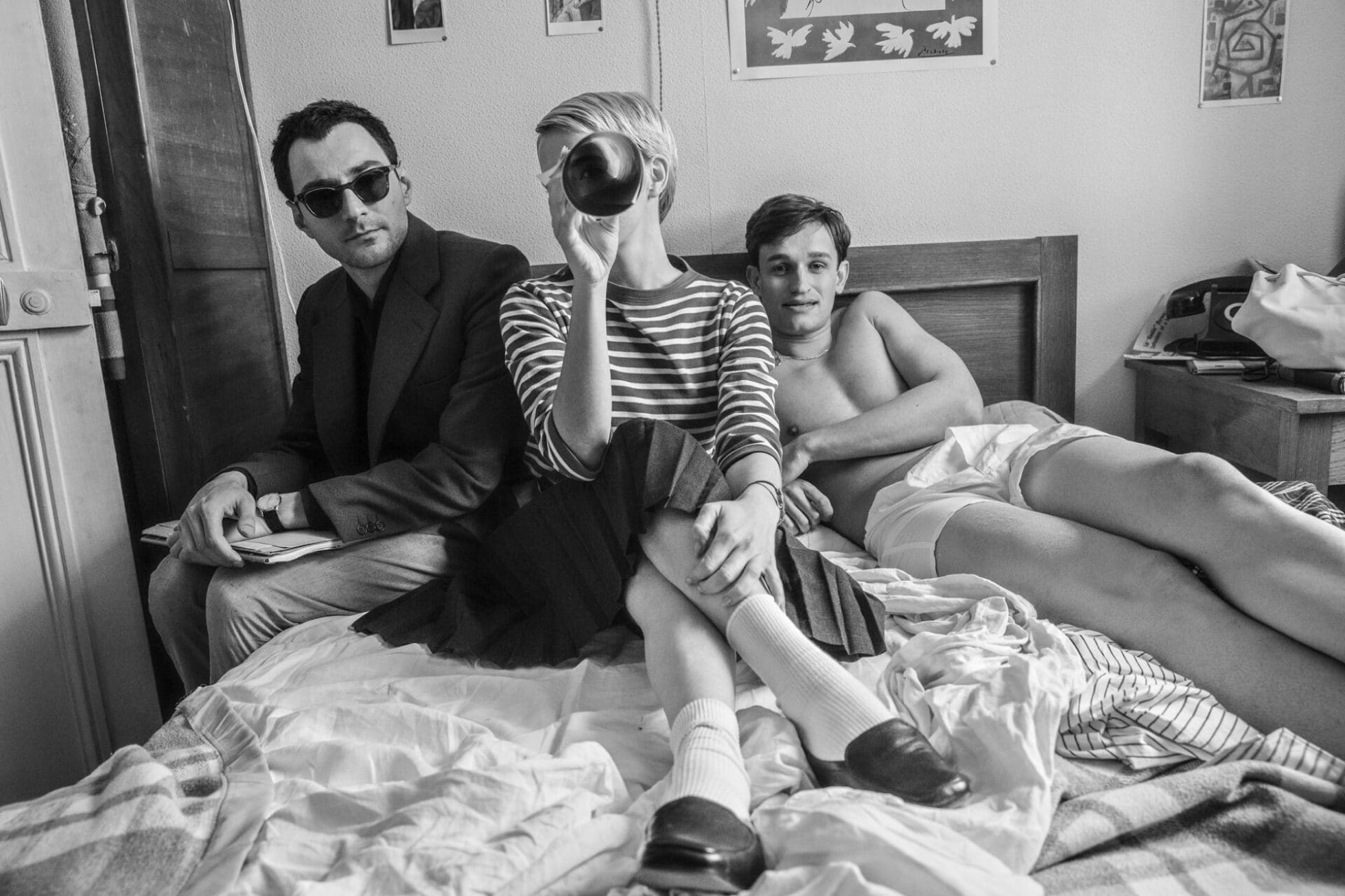
Cinema are images in motion, but in the "New Wave" they freeze. The linkeliter literally shot a portrait gallery of the era on the camera. Static portraits with signatures, as in documentary cinema, follow each other, forcing to lose concentration on the tenth unfamiliar name.
It is clear that at the Godard himself, Belmondo , Gene Syberg, operator Raul Kutar, producer Georges de Boregar, as well as directors Francois Truffo and Claude Shabrov (both took an active part in the creative process) role. The phenomena of other important heroes of the era are justified and explainable - directors Anes Vard , Jacques Demi, Suzann Schiffman, Eric Romer, Jacques Revette, actress Juliet Greco. As well as inspirers from previous eras-Jean-Pierre Melville, Roberto Rossellini, Robert Bresson, Jean Cocteau. But some defendants for the general public remain as nouns, and the authors do not make efforts to give them at least some individuality. They are needed in the frame only to increase the level of alleged “authenticity”.
There is not a single famous performer in the film - probably, so that the viewer imagines that he sees not our contemporary, but a miracle of the revived inhabitant of 1959. Does this work? Not too much. Firstly, you involuntarily compare the prototype with the actor, many seem different. Secondly, it is difficult to throw out of the head the idea that these are only doubles-mummers, whose presence emphasizes the artificiality of the illusion.
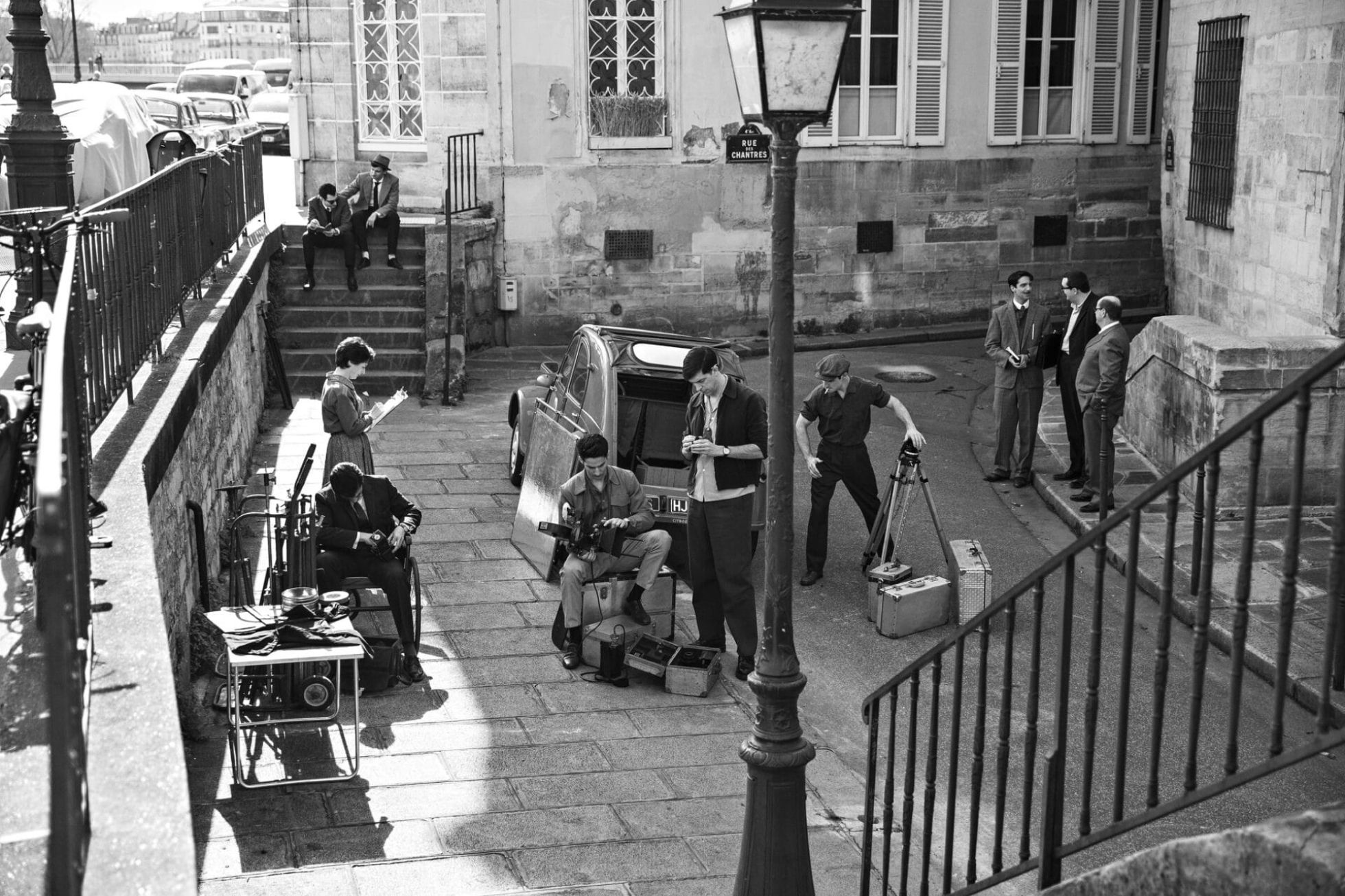
The “new wave”, of course, is not just an Ommage - this is a conceptual gesture. Either the magical ritual, designed to return to the screen, the elusive spirit of the departed era, or the open recognition of the superiority of the departed giants (after all, the representative of the next generation, the linkeliter, does not relieve “in the last breath”, as Gas Van Saint with the “psychosis” of Hitchcock was acted, but is content with the role of an invisible witness of the renting process). However, this is not so important.
The paradoxical effect is more interesting: the “new wave” only superficially resembles the film “New Wave”. At its core, this is the antipod “in the last breath”, confirming the long -standing maxim: when translating you lose either the letter or the spirit of the original source.
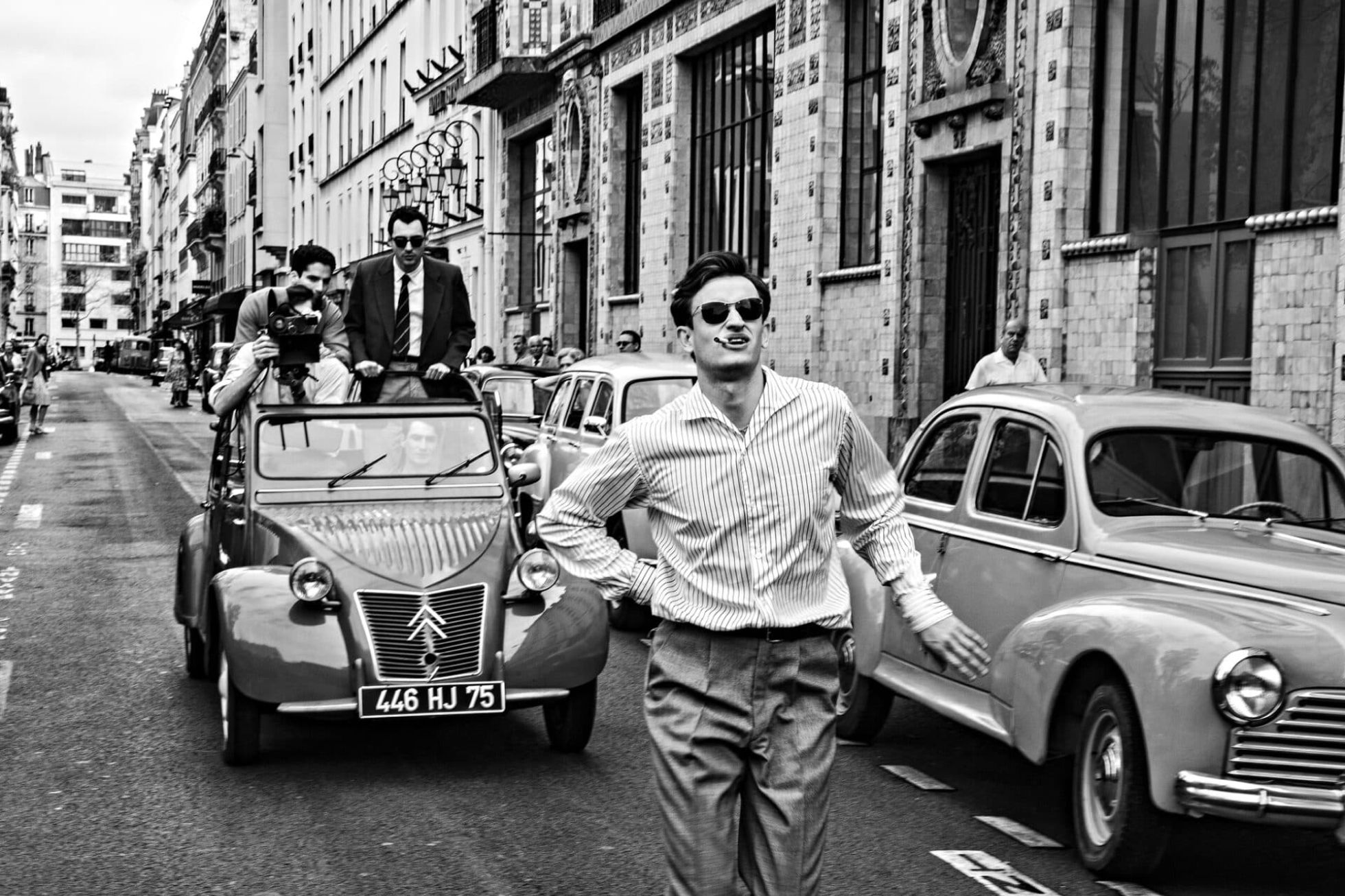
“In the last breath” was created as a jazz improvisation, the “new wave” is spelled out and verified in every frame with thorough images. “In the last breath” was a source of oxygen, and the painting of the linketeer was extremely stuffy, removed only for pumped synefils with a certified “correct” taste. Hoddar was a proto -member, who had thrown a glove for the highest society, the linkeliter respectfully corresponds to expectations - it seems that he deliberately tried not to offend the current edition of Cahiers du Cinéma, even though she had nothing to do with the Godarovsky magazine.
A few years ago, the French press was outraged by the “young Godard” , the witty but boorish Bayopic Michel Khazanavichus, but the comediographer at least overthrew the authorities, following the example of his hero. Linkleter has nothing like that, he prefers quoting (in fact, the most catchy remarks of the “new wave” - common quotes that have long become truisms). Hodar, of course, also loved to quote other people's severities, but invented a lot of his own.
The New Wave focuses on how Hodar changes the script on the move, to the last is not able to decide what will happen to the main character Michel Puaccar in the final stage. On the contrary, the course of the action of the linklater picture is predictable to anecdotalness, and was written based on jokes about the creation of a cult film.
One of them is the final “new wave” of test viewing “in the last breath”, arranged by Godar for colleagues in Cahiers du Cinéma. The light in the hall is lit, offensive remarks are pouring on the director, but he is not offended - such is a comic friendly ritual. It is no coincidence that “in the last breath” ends with the word “dégueulasse” , which the American Patricia, heroine Syberg cannot understand.
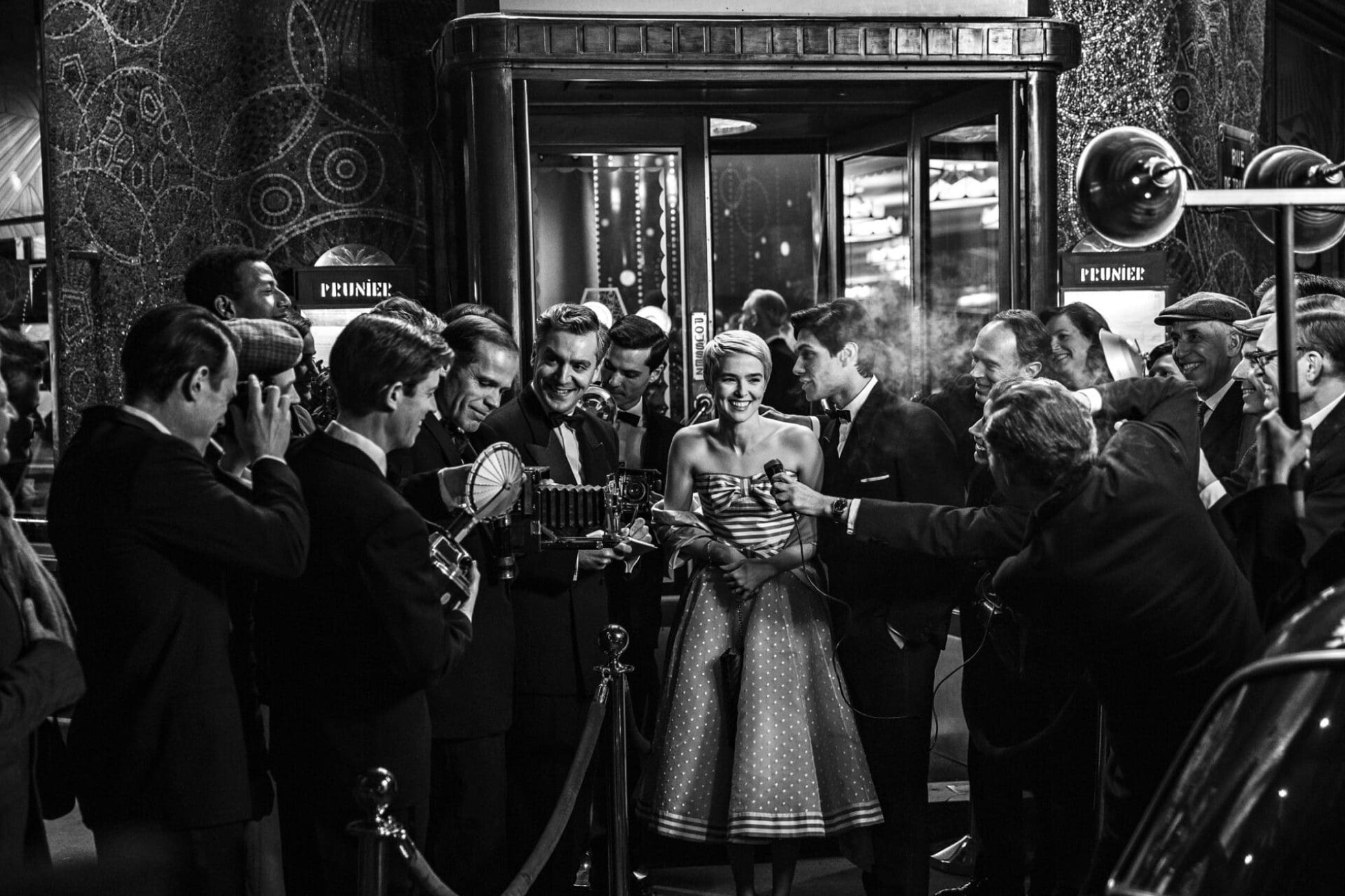
Hodar stubbornly sought his cinema to be disgusting, outrageous, unacceptable. But the film Linkleter is not Dégueulasse in any detail. Rather, Trop MIGNON or, if you switch to your native language, Very Cute.
Anton Dolin