
Translated material
"Anonymity ... It seems to me that it will not be at all"
In the GEC-2, the "future" Yuri Muravitsky came
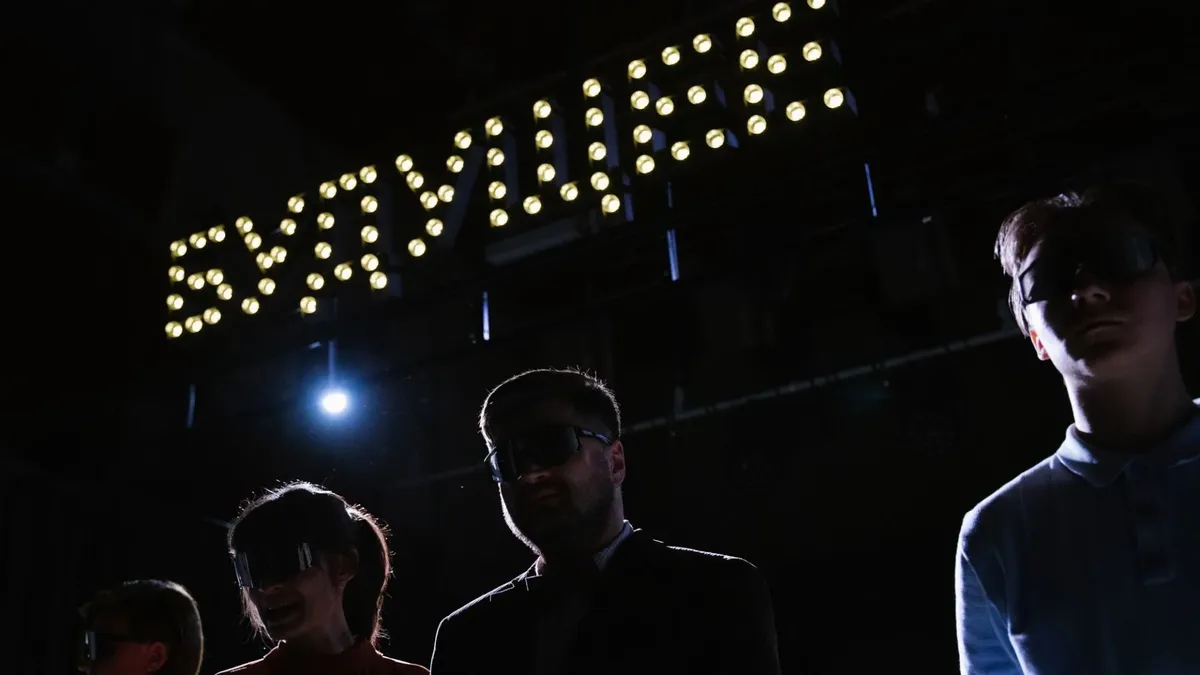
The scene from the play "Future". Photo: vkontakte House of Culture "GESS-2"
The theater does not enter the territory of the future so often - it speaks more about the past, present or eternal, universal. The more interest in advance causes any performance that will decide to directly talk about the eternal “yesterday”, but about “Tomorrow”. For example, director Yuri Muravitsky with the artists of the Voronezh Nikitin theater decided to try to speculate what our future it will be.
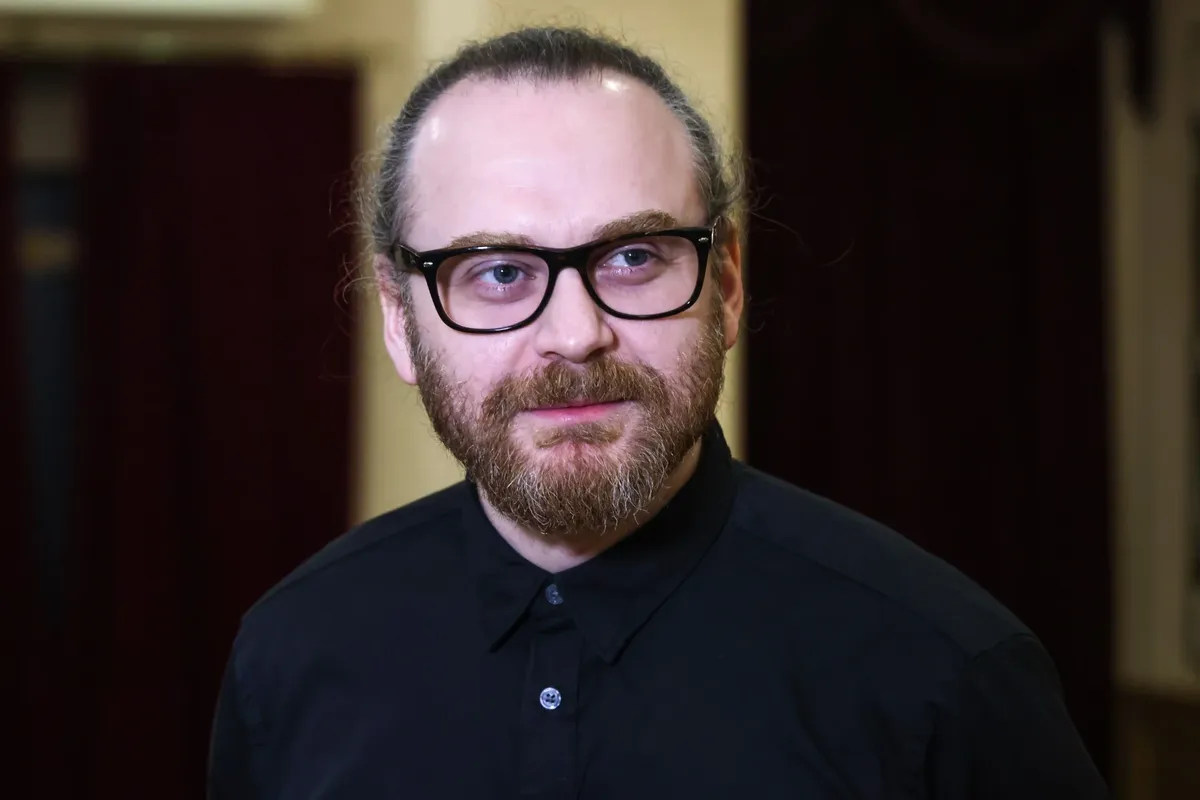
True, try - in this case the keyword. Because the conversation turned out to be protected and not opening anything new in the view of this future: space, aliens, robots instead of doctors and a time machine - familiar from the field of fantasy. From the human area - various fears with the thought of the future. For example, fear of the elusive time, fear for the life of children, fear of old age, fear of missing a chance. Although the fear of the future is, of course, about the present that the director himself understands: “We thought it would be a performance about the future, and it turned out about the present. And, probably, this is natural, ”says Yuri Muravitsky.
Seven artists of the Nikitinsky Theater from Voronezh are engaged in the production. “Future” is the co-product of the Nikitinsky Theater and the House of Culture “GES-2”, which will go to Voronezh after Moscow shows and will go to the local spectator. Context: Nikitinsky Theater - an independent theater founded by Boris Alekseev in 2016. More than 40 performances were created there, two of which - “Chernobyl prayer” and “Twelfth Night” - were nominated for the “Golden Mask” as the best productions of small forms, as well as for the work of the director and the artist. By the way, about the future of an independent theater in the production of Yuri Muravitsky, it also comes to.
For the performance, in the Assembly Hall, the GES-2 built a box of the theater scene with a red curtain, over which the word “future”, composed of numerous warm-yellow bulbs, lit up in the first seconds.
Thus began the production, where almost two hours they talk about the future, and a small round screen on the back of the scene helps silently “declare” the speakers.
There is a lot of anxiety in the “future”, because in the future everyone is afraid of something. Lermontovskoye “I look at the future with fear” as possible characterizes acting monologues on this topic. “Anonymity ... It seems to me that in the future it will not be at all. That is, everyone will know about you. But not all, of course, but only the chosen ones. And now wherever you spit - you’ll get into the chosen one, ”says one of the artists. They are even afraid of new technologies, because "it will not be used for us, but against us." "They wanted the best, it turned out as always." But such more or less sharp moments in almost a two-hour production-only a couple of three.

The authors of the production of the future are also suitable through the theory of probability: accidents occur in the life of each person, the chances fall out (or not), the future is formed in the present and depends not only on ourselves, but also on other people. All this increases the anxiety of the author of the monologue, forcing to increase and increase the tone. Because it’s scary to miss a happy opportunity, it’s scary that it will not fall out of the “jamb” of another person who makes up the link in this probabilistic chain.
In general, the performance is nonlinear - it, like a patchwork blanket, is sewn from monologues and acting studies on the topic of the future, which are interspersed with three songs on a given topic.
Moreover, for some reason, the Vibe of the Soviet past comes from the latter: for example, the song “Black Hill” brings memories of the tracks of the late 1980s and discos in the House of Culture. The Soviet theme is also manifested in the final, when the New Year of the future is celebrated by the immortal “irony of fate”, which is called “postpord”. It turns out that our future is unthinkable without the past? Or from the Soviet theme, even in the future, there is no getting away?
At the same time, in the “future” there is a place for real irony: it turns out, it turns out that they will not be allowed without “25-NDFL’s certificate”, it will not be possible to give birth to a child without approval of a computer who calculates all the probabilities of his personality, and “worked out” and “conscious” people who also resemble robots will sit on the dates. There is even a whole scene that the hall laughs at - when aliens read polarly different reviews for “earthly” performances. True, in the final, for some reason, they decide to destroy “this planet”, but no one promised us logic.
Periodically, the “fourth wall” collapses in the play, and the actors begin to interact with the hall, “robotic” dances (choreographer Nikita Chumakov) begin, curious visual effects arise when a rapidly flashing light turns the actor standing on stage into a hologram (the artist in light in the performance - Maxim Biryukov).

What do we have as a result? The texts and even poems written by artificial intelligence, the Alice’s voice, creeped into monologues and sketches, other people's fears about the future, fantasies about him (wealthy robots replace children, and wives find out relations with a blanket instead of a husband), cosmic and robotization topics. The palette of the experienced emotions is from anxiety to a sincere laughter with a clear distortion towards the first. And if a sincere and calm laughter is that which in our anxious present is really not enough, then in fear for the future most of the spectators and so drowning with their heads. And if they, spectators, came to the performance in search of comfort or, conversely, a strict-satirical forecast-alas, they will not find either one or the other here. They will leave the performance as they came: bewildered, anxious and uncertain in tomorrow.
But in conditions when they do not dare to talk about tomorrow from the stage at all, even this, perhaps, is not so small.
Margarita Usoltsev