
Translated material
"Legally the USSR exists"
So believes Putin's adviser Anton Kobyakov. Novye Europe talked with lawyer Elena Lukyanova why this is not true
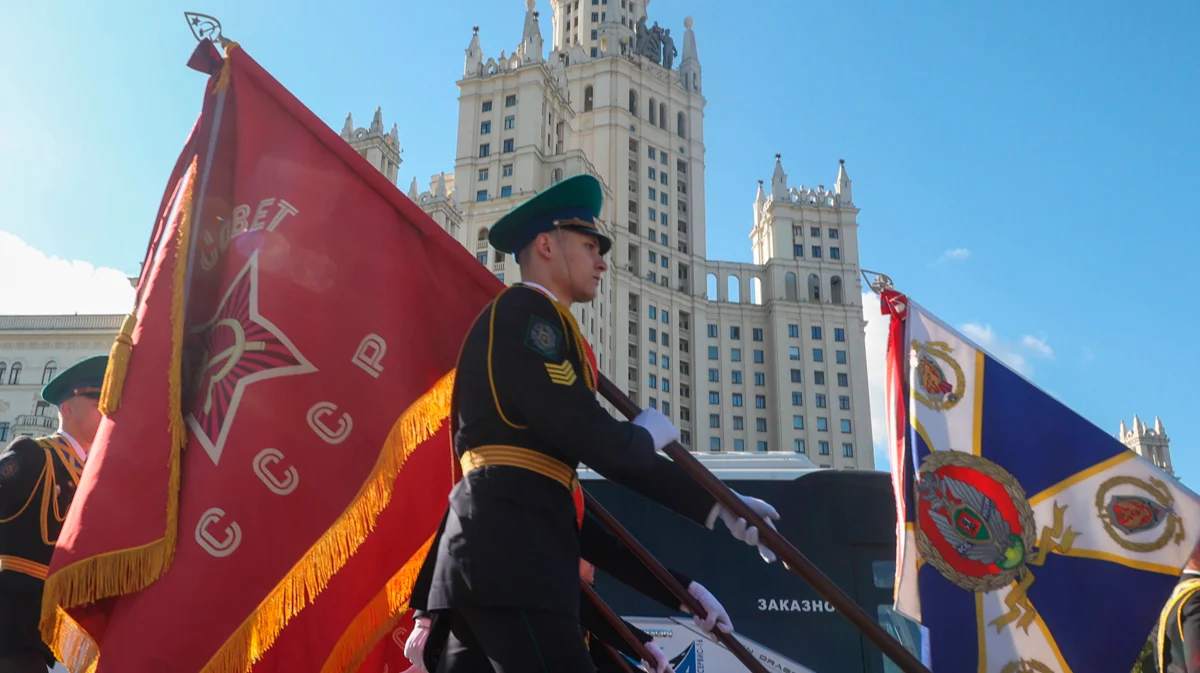
Military personnel with the flag of the USSR are sent to Red Square to participate in the military parade, Moscow, May 9, 2025. Photo: Maria Semenova / Sipa / Scanpix / Leta
On May 21, the adviser to the President of Russia Anton Kobyakov at the final press conference of the St. Petersburg International Law Forum stated that the USSR continues to exist, and therefore the war against Ukraine is the “internal process”. He referred to the opinions of certain constitutional law specialists.
The New Gazeta Europe together explains why the USSR no longer exists.
"If the USSR is not dissolved"
Anton Kobyakov said that the USSR could continue to exist from a legal point of view, since its collapse in 1991 did not comply with the established procedure.
“If the congress of people's deputies, he was the Congress of Soviets, created the USSR in 1922, then it was necessary to dissolve it by decision of the congress of these same deputies,” Kobyakov said.
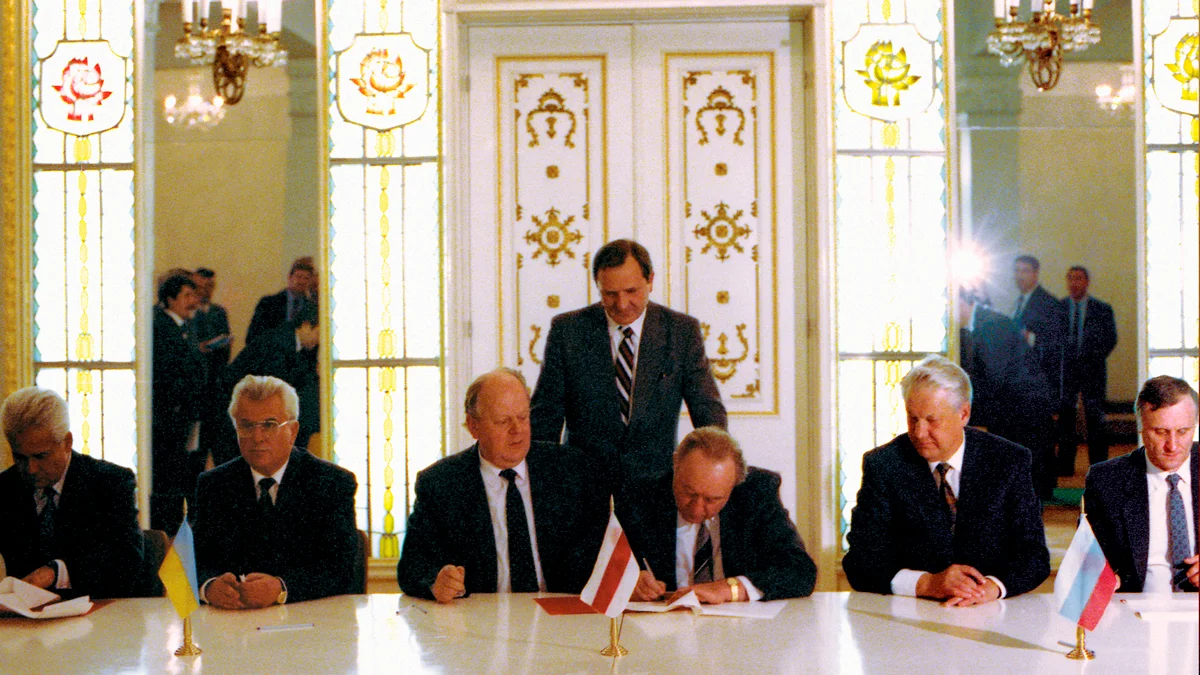
According to him, the signing of the Belovezhsky agreements on December 8, 1991 was a “strange event”, and their ratification by the Supreme Councils of the RSFSR, the Ukrainian SSR and the BSSR - by going beyond the powers of these bodies.
“And if the legal law was violated, then it turns out - legally the USSR exists. So say constitutional law. <...> But if the USSR is not dissolved, then it turns out logically from a legal point of view that the Ukrainian crisis is an internal process, ”
He said.
Kobyakov added that the collapse of the USSR needs to give a full legal assessment, and emphasized that such a discussion has already begun as part of the forum.
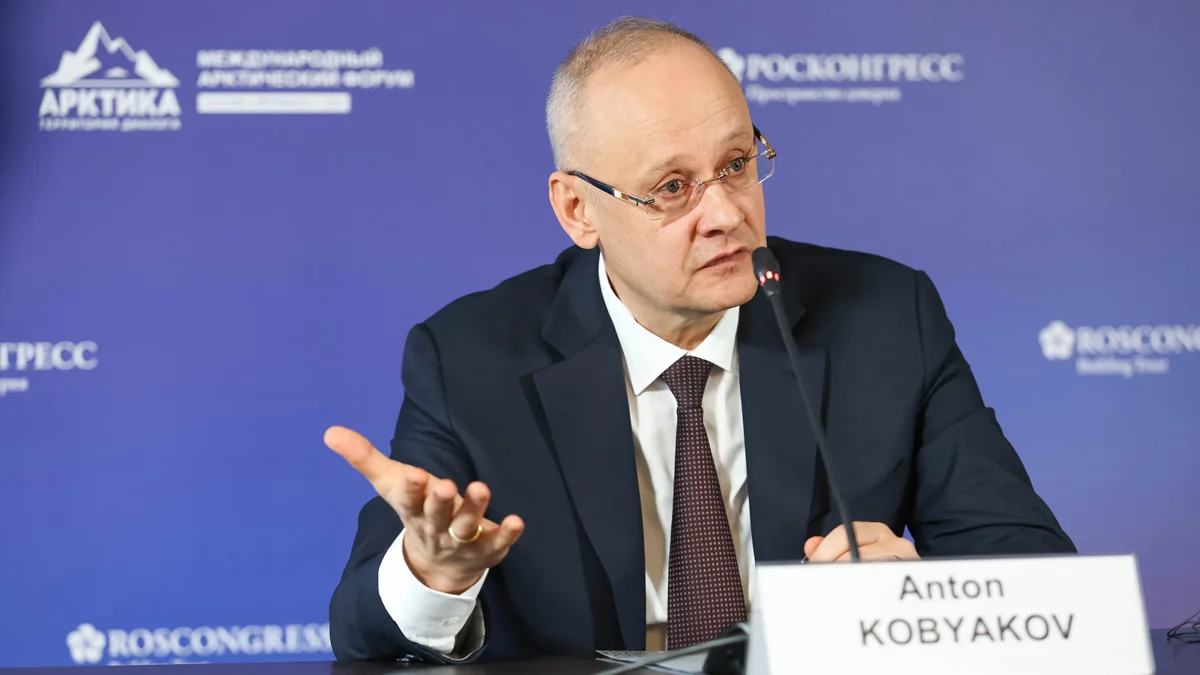
“Until we put an end and decide from a legal point of view of what the collapse of the USSR is, we will have these problems,” he said
Reference
The USSR was officially formed in 1922 in Moscow - it was then that representatives of the RSFSR, the Ukrainian, Belarusian and Transcaucasian republics signed an agreement on the formation of the Union of Soviet Socialist Republics. After almost 70 years, on December 8, 1991, the leaders of Russia, Ukraine and Belarus - Boris Yeltsin, Leonid Kravchuk and Stanislav Shushkevich - signed an agreement on the end of the USSR and the creation of the Commonwealth of Independent States. Two weeks later, on December 21, the leaders of another eight republics joined them in Almaty, actually confirming that the union state remained in the past. On December 25, Mikhail Gorbachev announced his resignation from the post of president of the USSR - the last in his history. The next day, the Supreme Soviet of the USSR adopted Declaration No. 142-N on the termination of the existence of the Soviet Union as a subject of international law and geopolitical reality.
Why is the USSR no more?
“It must be called a minimum of 6 or 7 laws. But the main thing is that the USSR does not exist, because the agreement on the education of the USSR of 1922 was denounced by the Supreme Council of the RSFSR, ”explains the doctor of law sciences Elena Lukyanova.
At the same time, she notes that how legitimate the signing of Belovezhsky agreements was still remains a controversial issue:
- At that time, not 3 republics existed in the USSR, but 12. Baltic countries have already gained independence. But at least these three republics had the right to say that they no longer consisted of the Soviet Union. Maybe their wording was radical, but by this moment Ukraine had already adopted a declaration of independence and voted in a referendum. Russia also had an independence declaration. But despite this controversial history, that the USSR does not exist, it is a fact.
Lukyanova also indicates that Kobyakov himself is not a lawyer, he does not have a legal education. Advisor to Putin is a candidate of biological sciences and doctor of economic sciences.
“He does not know anything about the formation of the USSR, because he says that the Agreement on the Education of the USSR was concluded by the Congress of People's Deputies, he is a congress of Soviets. Firstly, there is a big difference between them. Secondly, the contract was concluded not by the Congress of Soviets, but the day before
This is December 29, 1922 by a meeting of representatives of four republics - Russia, Belarus, Ukraine and the Transcaucasian Republic. Because Georgia, Azerbaijan and Armenia signed the contract each in itself, ”the lawyer emphasizes.
In his statement, Kobyakov mentioned that the USSR had to dissolve the same body that created it. Lukyanova notes that the rule that any international agreement is denounced in the same manner as he signed was introduced only in 1969 in the Vienna Convention on the right of international treaties. The norms of this convention do not apply to documents concluded before its adoption.
“Moreover, it is not at all a fact that the Treaty on the Education of the USSR is international. He is rather constituent, ”the interlocutor of Novy-Europe believes.
Pursuit
Kobyakov’s idea that the USSR exists is not new. Back in the 1990s, communities of the so-called “citizens of the USSR” began to appear in Russia-people who believe that the Soviet Union continues to exist, and the current government is either illegitimate or controlled by foreign forces. They are sure that the Russian Federation is not a state, but a commercial structure, so they refused to pay taxes and repay debts.
In the first half of 2020, the number of criminal cases against “citizens of the USSR” increased sharply in Russia - more than ten months. Then, in Kirov, three people were accused of participating in the prohibited extremist organization “The Union of the Slavic Forces of Rus'”, and in Samara they opened a case for the repost video on the restoration of the USSR.
Alexander Verkhovsky from the Center “Owl” believed that the FSB perceives “citizens of the USSR” as a potential threat due to their activity and opposition views.
In the summer of 2022, the court in the Samara region recognized the Extremist organization to the Novokuybyshev group "Citizens of the USSR", known as the "Union of Soviet Bright Changes". After that, mass persecution began throughout the country for participating in the activities of an extremist organization or its creation.
In 2024 in Yekaterinburg, 11 participants in the movement were sentenced to terms of 2 to 6 years of colony for participating in an extremist organization. In the Republic of Altai, Andrei Kartopolov received 2.5 years in colony for participating in the meetings and the distribution of the ideology of “Citizens of the USSR”. In Omsk, three activists received from 9 months of forced labor up to 1 year and 2 months of the colony for participating in a prohibited organization.
On April 23, 2025, the bailiffs beat the 70-year-old defender and ex-employee of the FSB Alexander Tsopov, representing Valentin Reunov, who calls himself the head of the Presidium of the Supreme Soviet of the USSR. The conflict began after the bailiffs rudely expelled visitors, and Tsopov tried to protect Reunova’s daughter from violent expulsion. During the fight, the bailiff threatened Tsopov, beat him, and the other employee kicked the elderly defender with his foot. Tsopov received injuries, was taken to the Sklifosovsky Institute, but after he wrote a statement on the bailiff for abuse of authority - and he himself was detained for the night.
Later, a criminal case was instituted against him under an article on violence against a representative of the authorities (Article 318 of the Criminal Code), he was assigned a recognizance not to leave.