
Translated material
Brazilian autumn Patriarch
“The disappearance of Joseph Mengel” by Kirill Serebrennikov with August Dile in the role of “Angel of Death” from Aushwitz was shown in Cannes
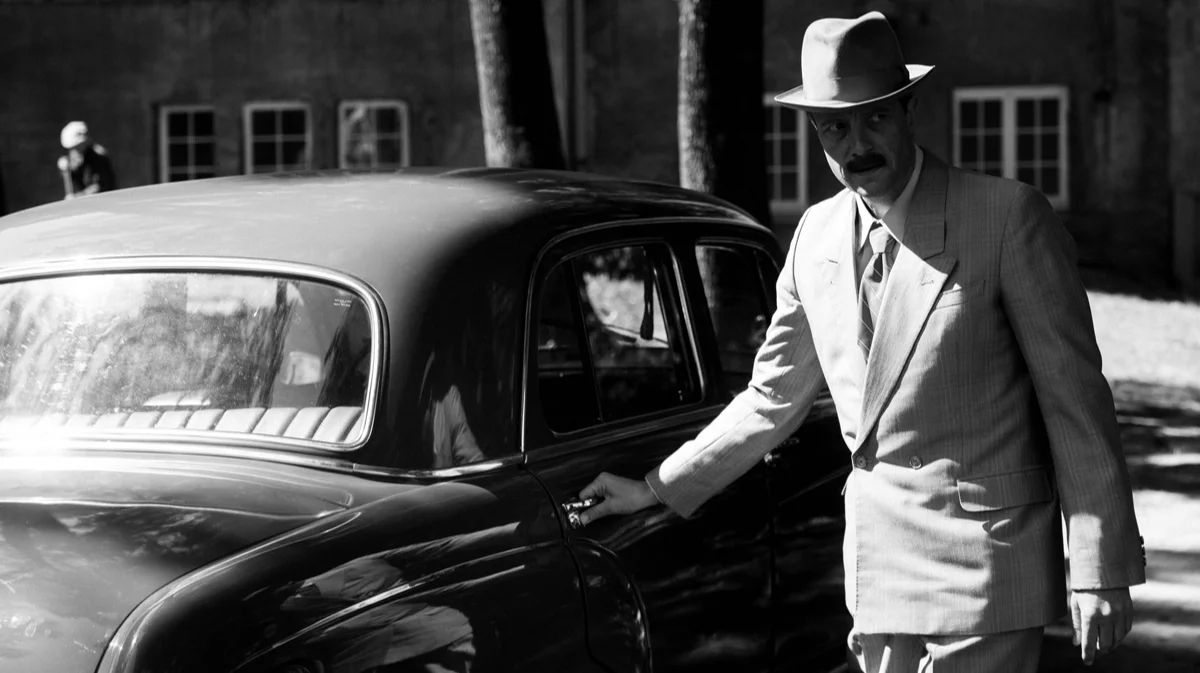
Photo: Cannes Film Festival
The program “Cannes Premieres” - outside the main sections, and therefore outside the distribution of prizes - showed the new film by Kirill Serebrennikov about Dr. Joseph Mengele. The film critic Irina Karpova watched the film and believes that if the film was in the competition, August Dilya would not have competitors for the prize to the best actor.
Kirill Serebrennikov, who had just received the Order of the Honorary Legion from the hands of the Minister of Culture of France Rashida Dati, brought the film unusual for himself to Cannes. There are many naked men in it - here Kirill Semenovich did not change himself - but in it there is neither remote, nor agility, nor carnival theatricality that has the property of appearing in the director’s film works. This is a black and white strict picture about the life of Joseph Mengel in Argentina and Brazil, where he escaped after the defeat of Germany in the Second World War and the collapse of the Third Reich. At the basis - the documentary of the French writer Olivier Geza of the same name.
In festival conversations between shows, I learned that the first script draft was ready three and a half years ago, and the post -production of the film was completed last year - then Serebrennikov offered the artistic director of Cannes Thierry Fremo two films at once, “The Ballad of Limonov” and the film about Mengel, but with the second it was decided to wait.

The watching film in the next chair next to me is a resident of Berlin Prentzlauer-Berg on my replica, as August Dil perfectly played, replied: “So that it is sometimes unbearable to see and hear him.” “Enjoying” is not just a film with August Deyl, August Dil is this film. Dil played a screeching Nazi pig, a monster in life and in death. At first glance, in the film there is no revelation about the personality of Mengel, he is exactly what you represent a Nazi criminal who conducted experiments on living people. But after some time, the realization comes that the myth of Mengele creates in the imagination of a kind of Hannibal Lecter or Count Draculus with a scalpel, while Dil at Serebrennikov shows him absolutely catastrophically normal-this is a narrow-minded chauvinist, who does not accept anything, unlike him. Not a mysterious demon of death, but a racist and a block.
It is difficult for me to imagine the effect of the game of Dilya, depicting the crusting mirror of the past, can show on the German viewer. It causes disgust and sickening horror.
The effect of the picture takes place in two temporary layers-the distant past, starting in 1956, where not the old Mengele is hiding from the German authorities and Israeli intelligence, and relatively recent, when in the late 70s his son Rolf (Max Bretshnider) according to fake documents (with the name Mengel was not allowed to Brazil) came to visit his father. Mengel wrote that he was lonely and he wants to kill himself. There are also colored inserts in the black and white strip of “disappearance”-the color of Mengel in Auschwitz is shown in color so that we are definitely not mistaken, what was the “heyday” period for him. Also in color is an amateur shooting of Mengel’s colleague for murders and torture of 8 mm camera, where one of the killed Jews is played by the actor and director Semyon Treskunov (after the start of a full -scale war he left Russia), then he will appear in the nightmare of Mengele, pursuing him with an automaton.
The camera of Vladislav Opelian, catching the profiles of the heroes and sunlight in reflections of puddles and mirrors, pulls out the film like a statue of a piece of marble - it is close to visual perfection, but at the same time gives rise to perplexity, why so aesthetized through the rusted Nazi and racist?
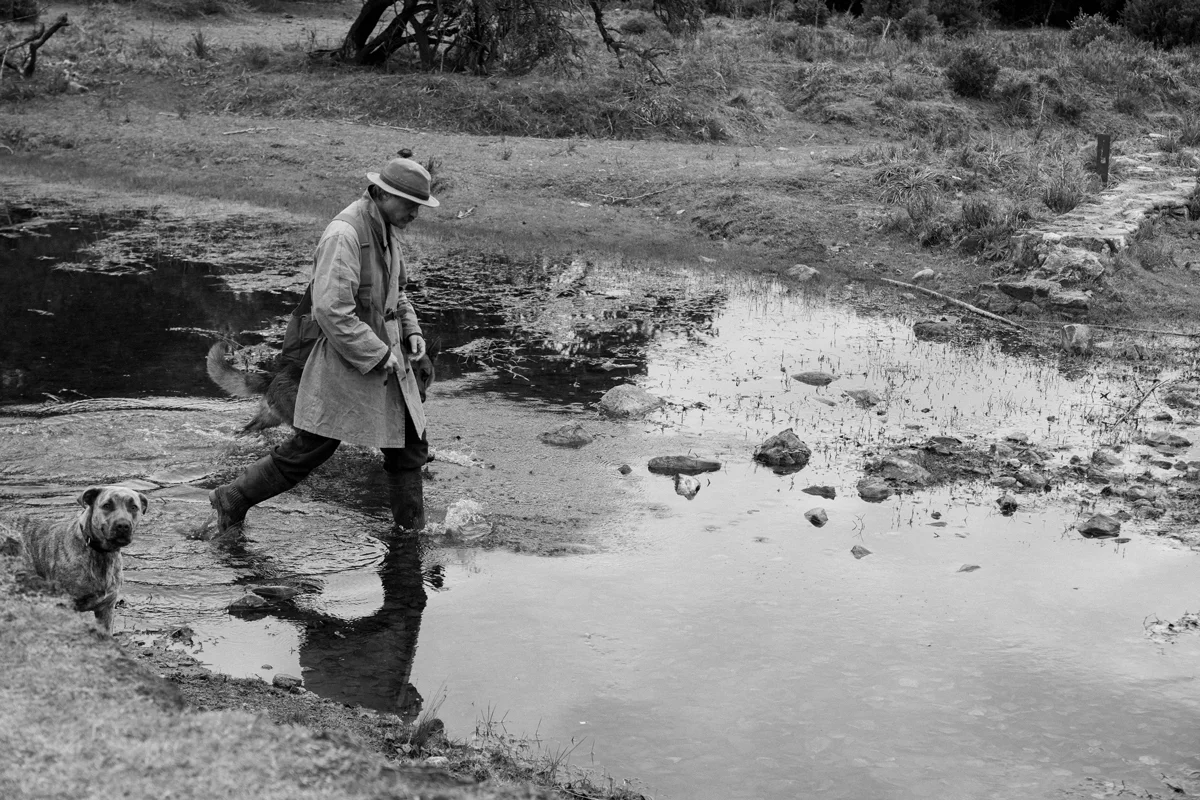
Throughout the film, Mengele curses the Americans and Jews, complains of their propaganda, and when Adolf Eichmann, one of the organizers of the final solution to the “Jewish question” caught and extradited to Israel, gives confession in Jerusalem - calls that traitor. The son came to him with a question - what did you do in Aushwitz, dad? There are no surprises. Tortured. But here is the hysterical reaction of Mengele, who is tearing, moving and almost crying because the story chose him with the main monster Auschwitz, and not colleagues in the workshop that were engaged in the same torture, brings the executioner’s thoughts to today Fake-Nauz and post-truths.
In his view, he only complied with the instructions of the doctor of the concentration camp, killed patients, sent healthy people to work, nothing reprehensible. With such optics, he would not disappear at any time.
But the most interesting thing in the film, despite Giant Dilya, is not his Mengele, but the executioner family. After the war, the Mengel clan lives without any difficulties, in Bavarian Gunzburg, and it becomes clear from their conversations that there was no permutation in the city administration, and Papa Mengele (Burghart Clauser) splashes saliva from indignation, which now does not live in the Reich, but, to think only in the federal republic. At the phasends of Brazil and Argentina, Doctor Death is hidden on their money. And this, it seems to me, is a much more painful and acute topic - who feeds the executioners and sends them strawberry jam? What do the Nazis do and where did not change their place of residence do? Do their children think the same as they are?
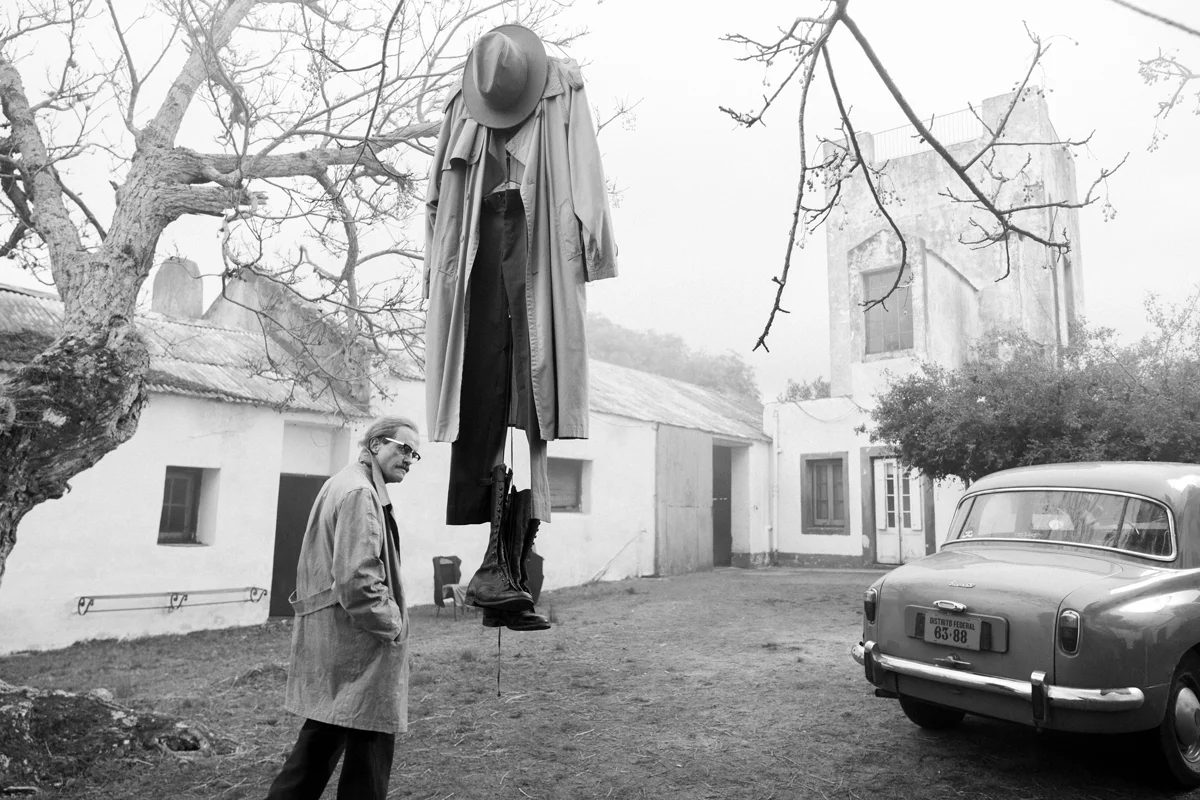
Serebrennikov’s film is preceded by long opening credits, companies and countries that have taken part in creating the picture, it seems, at least twenty is shown. This is a certificate of how difficult it is to find funding for a similar project. So for the study of evil, not on the example of a long -dead monster, whose bones are in Brazil at the Scientific Institute, and on the example of those who live and breathing today, I think it would be almost impossible to find money. But it is the requirement of the impossible that gives rise to change - opinions, moods, optics. A compromise, even talented, becomes just another inverted page.