
Translated material
After the pressure of world politicians, Israel resumed the supply of humanitarian aid to Gaza
Soon, the UN official said that in the next 48 hours 14 thousand babies would die. Journalists clarified that this is not so
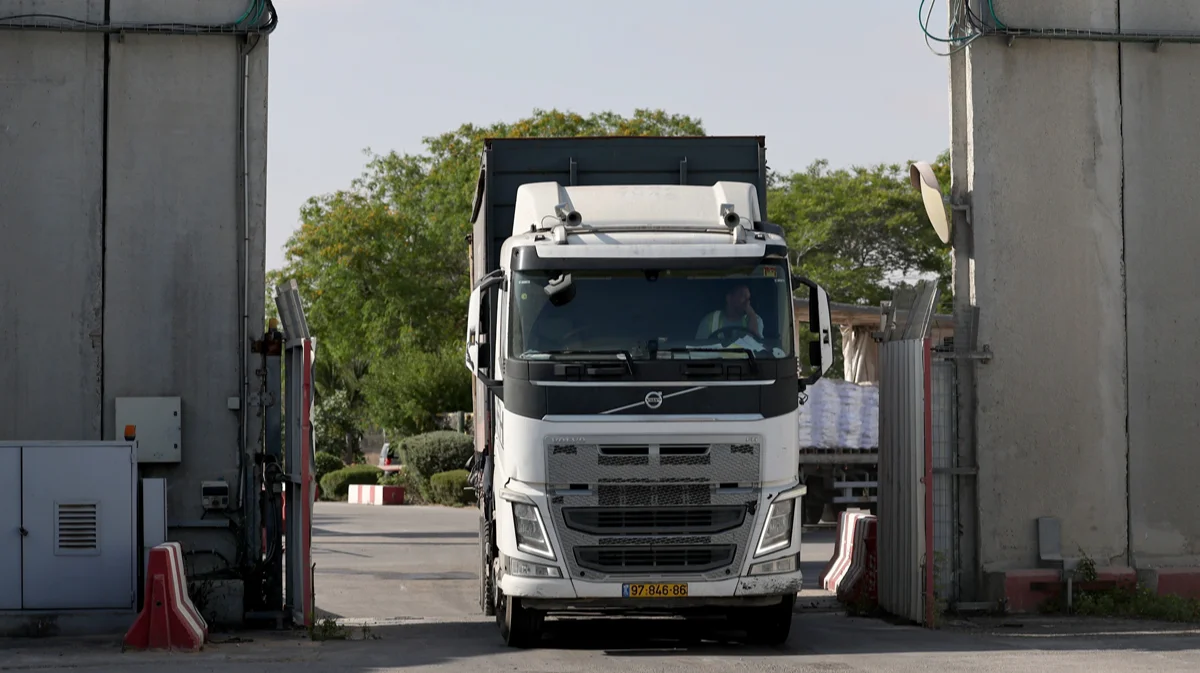
Trucks with humanitarian aid are expected to enter the gas sector at the Kerem-shala, the south of Israel, May 22, 2025. Photo: ATEF Safadi / EPA
On Monday, May 19, Israeli Prime Minister Benjamin Netanyahu announced a partial cancellation of the blockade of humanitarian aid supplies to the gas sector, which lasted 11 weeks. The UN Emergency Coordinator Tom Fletcher called it a “drop in the sea”, and on the air “BBC” said that “14 thousand babies would die in the next 48 hours” if the trucks with humanitarian aid would not reach the communities in the sector. The journalists of the publication later indicated an analytical report published earlier this month, which states that 14 thousand severe cases among starving children can be recorded over the next 11 months.
After the careless statement of Fletcher in Washington at the Jewish Museum building shot a young couple - two employees of the Israeli Embassy in the United States Yaron Lishchinsky and Sarah Milgram. According to the police, the expected killer was 30-year-old Elias Rodriguez from Chicago, who, during the detention, shouted the slogan “Freedom Palestine”. Read more about these events and about the current situation with humanitarian aid in the gas sector - in the material of Novaya Gazeta Europe.
The end of the humanitarian blockade
Since the beginning of March 2025, Israel completely blocked the import of humanitarian aid into the gas sector. Benjamin Netanyahu explained this to “the completion of the first phase of the transaction on the release of hostages and the refusal of Hamas to accept the plan [special messenger of the United States] Whitkoff to the continuation of negotiations, to which Israel agreed.”
Netanyahu added that Israel would not go to the ceasefire in the sector without the release of its hostages. Hamas continues to hold 58 people, about a third of which, presumably, are alive.
The Israeli government considered that by the beginning of March the GAZ sector managed to enter enough help to provide the residents of the Exclave for several months in advance, the Kan television and broadcasting corporation reported.
Netanyahu on May 19 ordered immediately to resume the delivery of basic humanitarian aid to the gas sector against the background of growing pressure from the United States demanding to stop the blockade. Last week, American President Donald Trump during a visit to Abu Dhabi (UAE) as part of the Arab countries of the Middle East said that “many people are starving” in the gas sector, and said that the United States was going to deal with this problem.
The decision to resume the supply of gum forces was made at a meeting of the Israeli Cabinet of Security Ministers on the recommendation of military officials. They warned that food supplies belonging to the UN and humanitarian organizations were completely exhausted, which led to an acute humanitarian crisis.
There was no vote among ministers, although some right -wing politicians openly opposed this decision. For example, the Minister of National Security Itamar Ben-Gvir (the leader of the extreme right-wing party "Jewish power") complained to X: "Mr. Prime Minister, our hostages are not humanitarian [help]!"
High -ranking Israeli officials previously promised that no help would resume until a new mechanism is introduced, which would not allow Hamas to take supplies to himself, notes The Times of ISRAEL.
In the application for the resumption of assistance supplies, it also notes that this is done in connection with "the operational need to expand intensive hostilities for the defeat of hamas." The prime minister’s office promised that Israel would act in such a way as to deprive the militants of the opportunity to take control of the distribution of humanitarian aid.
On May 19, the Israeli Defense Army announced a new offensive in the regions in the north and south of the Gaza sector as part of the Gideon Operation.
On the same day, the first five trucks with humanitarian aid, which included baby food, drove through the Israeli checkpoint by Kerem Shalu to the gas sector. Tom Fletcher, Deputy Secretary General of the UN Humanitarian Affairs (OCHA) confirmed on May 19 that nine trucks were missed into the sector, but called the resumed supplies of humanitarian aid "a drop in the sea compared to what is urgent."
The UN calls for the Israeli authorities:
Open two points of passing in gas: one in the north and one in the south (now humanitarian aid is delivered through the checkpoint by Kerem Shan on the border of Israel and the south of the sector);
simplify and accelerate the procedures (delivery of humanitarian aid); and also cancel any quotas;
eliminate obstacles to gas access and not to attack in areas where assistance is delivered;
Allow the UN to satisfy the whole range of the needs of the inhabitants of the sector - in food, water, hygiene, housing, healthcare, fuel, gas and much more.
The Enclave healthcare system has been destroyed, said the head of the World Health Organization (WHO) Tedros Goebreesus. “Two million people are starving, while 116 thousand tons of food are blocked at the border just a few minutes,” he said.
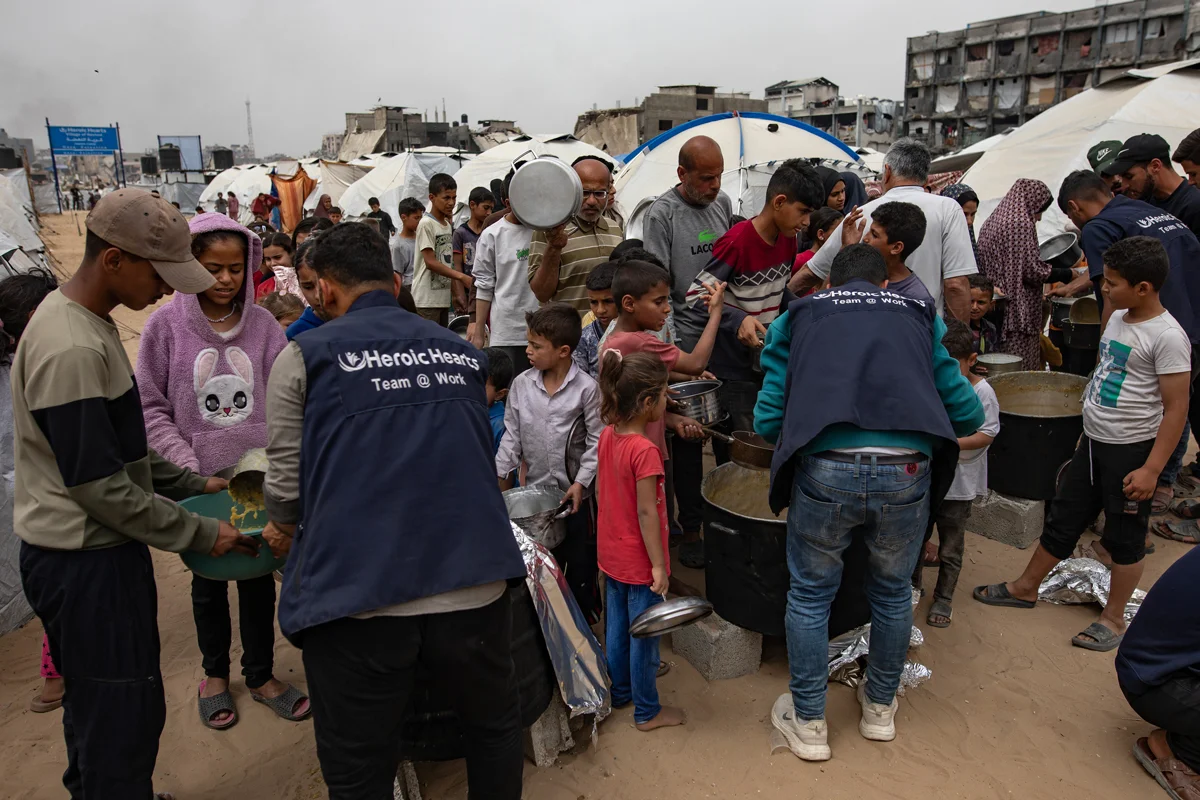
The news that food will be delivered to the gas sector, caused a great resonance among the population of the gas sector, writes Deutsche Welle, whose journalists talked with the residents of the Exclar by phone.
“We have no bread, no other products. We eat everything that we can find without knowing whether this is edible. We collect herbs and cook food from them. Everything is expensive. I spent all my savings on food ",
-35-year-old Alaa Maane from the city of Gaza told the publication, where he is with his wife and three children.
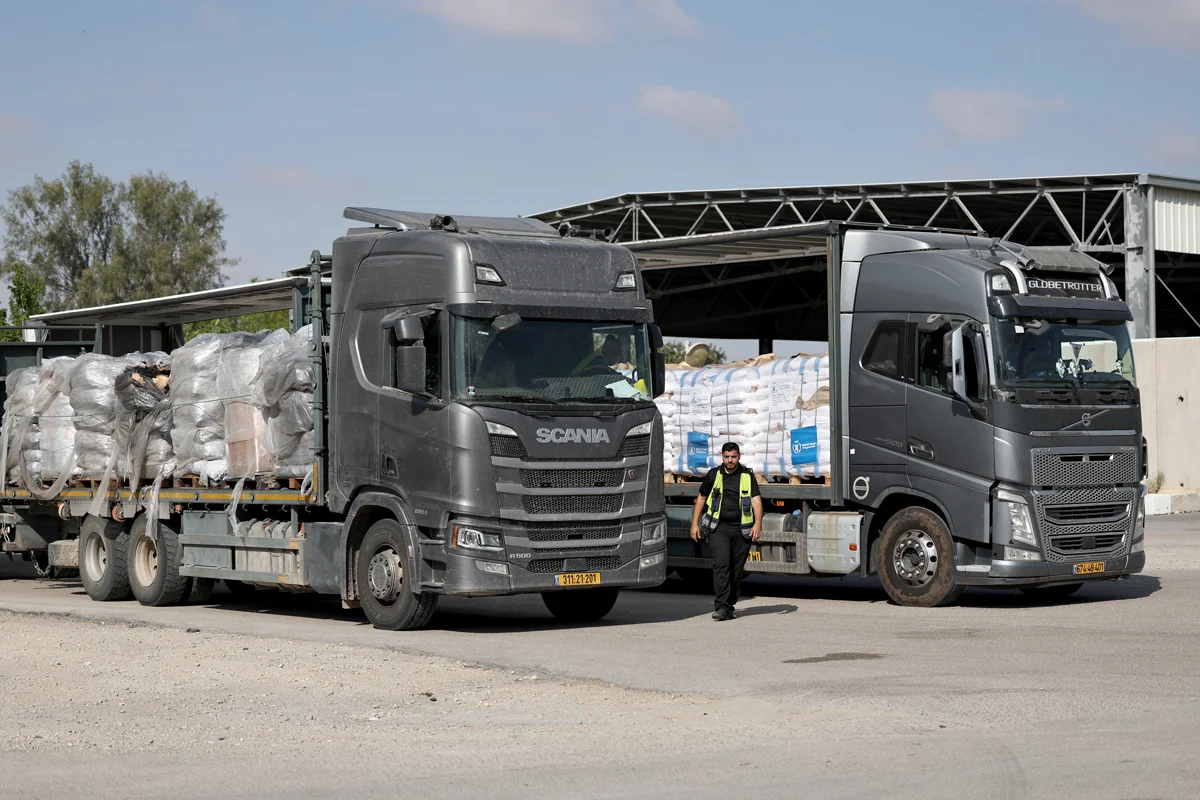
On Tuesday, May 20, Israel said that 93 UN trucks with humanitarian aid, including flour, baby food, medical equipment and pharmaceuticals, were sent to gas. The UN representative Stefan Duzharrik said that the “several dozen” trucks drove into the sector, but the workers could not deliver humanitarian assistance to distribution points, since “the Israeli military forced them to wait several hours, and then unload and overload food to separate trucks.” The workers did not have time to do this before the dark.
The Israeli authorities informed humanitarian organizations that they would pass 100 trucks a day from Monday to Friday this week.
On Wednesday, Israel reported on the passage of 100 trucks with humanitarian aid to the UN and the international community into the sector.
The UN Children's Fund (UNICEF) said that power supply reserves to prevent the increasing level of malnutrition were “almost over”.
The UN institutions in the gas sector confirmed on Thursday 22 that the necessary assistance arrived at warehouses. A 198 trucks with foods, medicines and wheat flour drove through the checkpoint in the south of Enclaw.
At the moment, there is no information about the validity of the permit for the import of humanitarian assistance from Israel.
Application of the UN Extraordinator about the death of children
Fletcher also made a high-profile statement on the morning of May 20, saying in an interview with BBC, that 14 thousand babies can die in the gas sector for 48 hours if trucks with humanitarian aid will not reach them. After this assessment, journalists requested details from the UN. Jens Lerke, a representative of the Human Rights Commission, explained: “We indicate the need for food supplies for saving about 14 thousand babies suffering from acute malnutrition in the gas sector [...] We need to deliver everything necessary as soon as possible, ideally over the next 48 hours.”
“BBC” notes that, according to the analytical estimates of the partnership on the complex classification of food security stages (IPC), over the next 11 months it is expected that about 71 thousand children under the age of five will “suffer from acute malnutrition”, of which “14,100 cases are expected to be difficult.” The report does not say either the death of children, or that this can happen "within 48 hours." But it is indicated that in connection with the expansion of hostilities in the sector, the risk of hunger is becoming more likely.
The reaction of the world to the blockade of the gas sector
The decision to terminate the blockade was preceded by criticism from world leaders. In Brussels, the head of the EU foreign policy, Kai Callas announced that Blok from 27 countries would begin a formal revision of his trade agreement with Israel.
Great Britain suspended trade negotiations with Israel due to the blockade of the gas sector, the UK Foreign Minister David Lammy told parliament on Tuesday. British Prime Minister Cyrus Starmer described the situation in Gaza as “terrible” and “completely unbearable”. Before that, on Monday, Great Britain, France and Canada, they jointly made a decisive condemnation of how Israel wages war, and called for the cessation of fire.
According to the Axios publication, US President Donald Trump is disappointed with the continuing war in gas and upset by the footage of the suffering of Palestinian children. “The president is disappointed with what is happening in gas. He wants the war to end, so that the hostages return home, so that help to help in the sector. And he wants to restore gas, ”said one of the interlocutors of the publication.
At the same time, the Israeli official told Axios that at the moment Netanyahu does not feel strong pressure from Trump.
“If the President of [Trump] wants a hostage agreement and the ceasefire, he should exert more pressure on both sides,”
He said.
Papa Lev XIV called on Israel to allow the import of humanitarian aid to the gas sector and called the situation in the “alarming and sad” sector. He instructed his assistants to transfer Netanyahu to put it to the end, two officials from the White House told reporters.
In the early days of his stay at the post, Leo XIV prayed about the world in the gas sector and the liberation of all Israeli hostages.
The World Health Organization noted that in the gas sector there is one of the worst crises in the world related to the problem of hunger. “All 2.1 million inhabitants of the gas sector are faced with a long lack of food, while almost half a million people are in a catastrophic situation of hunger, acute malnutrition, exhaustion, disease and death,” the press release from May 12 said .
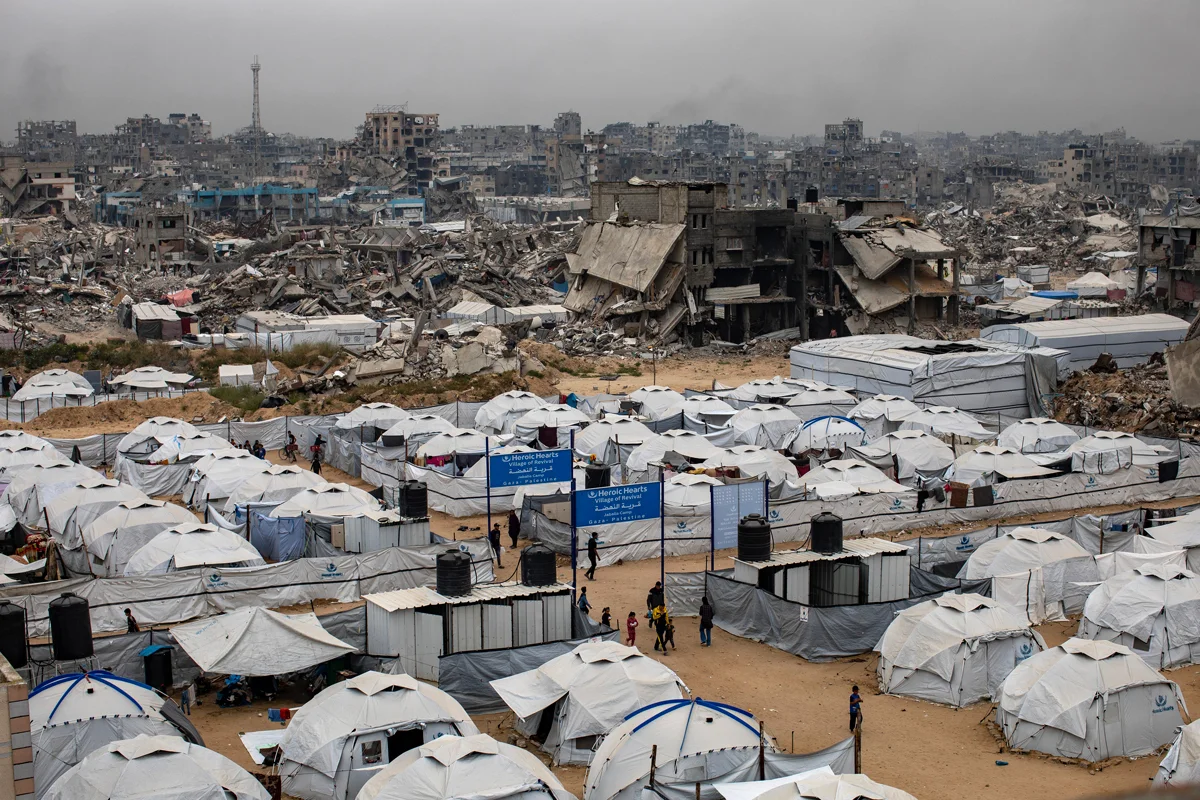
The UN at the same time referred to the integrated classification of food security phases, according to which 470 thousand people in gas were faced with catastrophic hunger, and the entire population experiences an acute shortage of food. The report also predicted that 71 thousand children and more than 17 thousand mothers will need treatment from malnutrition.
In early May, the International Red Cross Committee (ICRC) said that without immediate resumption of assistance, the organization would not have access to food, drugs and vital supplies necessary to maintain many of its programs in the sector.
“The civilian population of Gaza is faced with an unbearable struggle to survive among the fighting, cope with constant movement and survive the consequences of the lack of urgent humanitarian aid”,
- said Pascal Hundt, Deputy Director for ICRC operations.
The field hospital of the Red Cross in Gaza also experiences an acute shortage of food and medical supplies, there some basic drugs and consumables ended, the press release said.
“Help should be allowed in gas. The hostages must be released. Civilians must be protected. Without an immediate reaction of the gas, it will plunge into even greater chaos, which humanitarian efforts will not be able to facilitate, ”ICRC concluded.