
Translated material
Widows of SVO participants deny their death - and for good reason
The opaque identification procedure, lack of DNA testing and closed zinc coffins make widows doubt the death of their loved ones
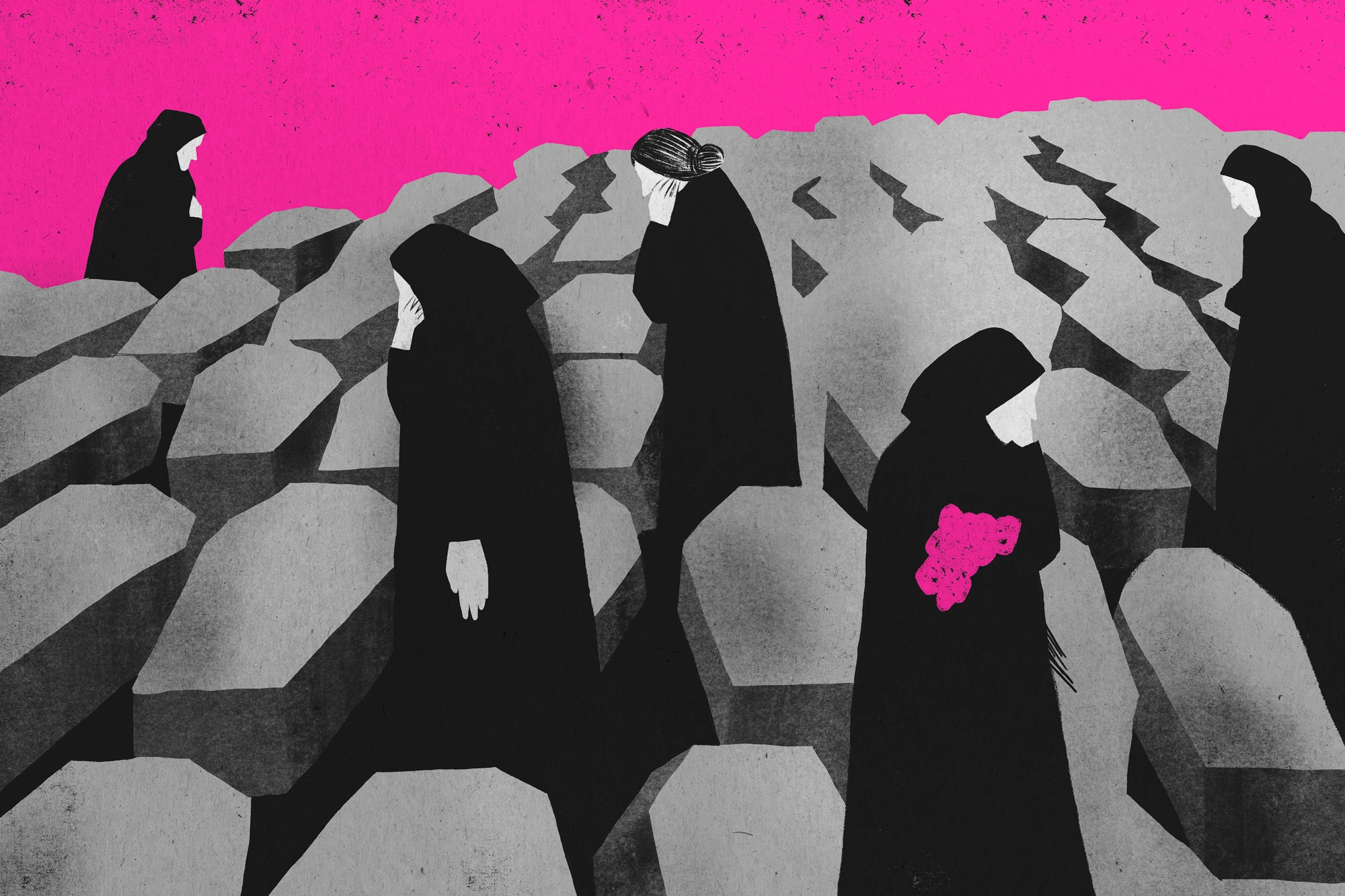
Many widows of participants in the war with Ukraine, as Vorstka found out, deny the death of their husbands. They continue to believe that their spouse is alive, even after the official funeral. Women's doubts can hardly be called groundless. The system of identification and burial of Russian military personnel raises questions. “Verstka” spoke with widows who, months and years after the funeral, believe and prove that their husbands are alive.
In order not to miss new texts from “Layout”, subscribe to our telegram channel
36-year-old Anastasia managed to be a wife for only two months. On September 28, 2022, this blue-eyed brunette, originally from one of the northern regions, stood happy in the registry office. The next day she saw her husband off to war. She buried him on December 6th.
And for two and a half years now, Anatsasia has been a single mother and a widow who does not believe in her husband’s death.
For three weeks after the funeral she did not understand how she felt. On the night of Anastasia’s birthday, she had a dream that changed everything for her.
"Funeral. There are a lot of people standing around, as in reality it was. And I notice how he rises from the coffin. He looks around and doesn’t understand anything. And I push someone standing next to me in the side and say: “Look what’s happening.”
In the morning, Anastasia decided that she had received a sign from her husband: he was still alive, and she had buried someone else’s man.
Anastasia's story: mobilization, sealed zinc coffin, dreams
Anastasia met Alexander, a laser welding master, in 2014. For eight years, according to the woman, they were friends, but in January 2022 they began an affair. He developed quickly.
37-year-old Alexander lived in a small one-room apartment in an old wooden house - it didn’t even have a shower. But this did not upset Anastasia. She spent weekends there, and then more and more often began to come on weekdays, waiting for Alexander from work. Sometimes he returned home with a bouquet of flowers, “just like that, for no reason,” Anastasia recalls.
Alexander's dog lived in the apartment with them. On summer days they took her with them and went for a walk along the lake. In the evening we returned home, Anastasia cooked dinner, and watched a movie together. The relationship seemed ideal to the woman. Therefore, when she found out that she was pregnant, she decided to give birth. In the same wooden house, Anastasia and Alexander rented a larger apartment with more amenities. “He [Alexander], naturally, was glad that he would have a son, he even talked to him. We planned to give birth to a daughter later,” says the woman.

Mobilization began in September. A summons arrived at Alexander’s registered address. He was asked to appear at the military registration and enlistment office to clarify the data. Alexander went and found out that he was being taken to war. According to Anastasia, he had a “serious track record” - “he was in hot spots in the Caucasus and Ossetia.”
Pregnant Anastasia was, in her words, “to put it mildly, against it.” She listened as Alexander explained to her why he would go to Ukraine. “Who, if not me?” - he said.
“I sat, listened and couldn’t even really say anything,” the woman recalls. Now she says that Alexander made a conscious choice: “Yes, risky, but he knew where he was going.”
If it were possible to go back, Anastasia would try to dissuade the father of the unborn child. “I wouldn’t miss the chance,” she says.
On September 29, the man was supposed to be sent to war. The day before, Anastasia and Alexander went to the registry office and got married. For the next month, the newlyweds communicated by phone. Alexander wrote and called his wife from the training unit. On November 3, he called her to warn her: tomorrow he and other mobilized people would be sent to the combat zone.
“He calmed me down, said everything would be fine. I reassured him too, saying that everything would be fine. But it didn’t turn out the way I expected,” recalls Anastasia.
After November 3, Alexander stopped communicating. Anastasia knew that his mobile phones, like those of other military men, were taken away. She wasn't worried for a few days, but after a week of silence she became worried. Other military wives gave her numbers to call. And Anastasia began asking Defense Ministry employees about her husband. Everywhere they answered her: “Wait, he’ll come back from his mission and call you.”
The wait was getting harder and harder. Almost a month later, Anastasia received a call from the military registration and enlistment office and asked to send photographs of her husband - but for what, she did not understand. After a few days it cleared up.
I received a call on my mobile from an unknown number. Anastasia picked up the phone, an unfamiliar voice introduced itself as a doctor at the Rostov Center for Reception, Processing and Dispatching of the Dead (TsPOOP). The person on the phone said that a body similar to her husband was brought to the morgue. He established the similarity from the photographs sent by Anastasia.
“Everything fell down for me,” the woman recalls. - I don’t even know how to describe it. I didn’t want to live at this moment.”
The doctor said there was “no need” for a DNA test because the body was “identifiable.” They promised to bring the body in a few days. Anastasia recalls that the only thing that kept her from intending to harm herself was that she was a mother and would soon have another son.
While Anastasia was waiting for the special plane with cargo 200, she began to doubt that the morgue had made a quality identification using photographs. But since the body was not seriously damaged, it means that it can be identified in the coffin, Anastasia thought. The military registration and enlistment office suggested that they would make a window for her in the zinc. She will be able to look in, identify and say goodbye to her husband.
When the coffin was brought for the farewell ceremony, it turned out that the window had not been drilled into it. The lid was tightly soldered to the base and the ritual service did not open it.
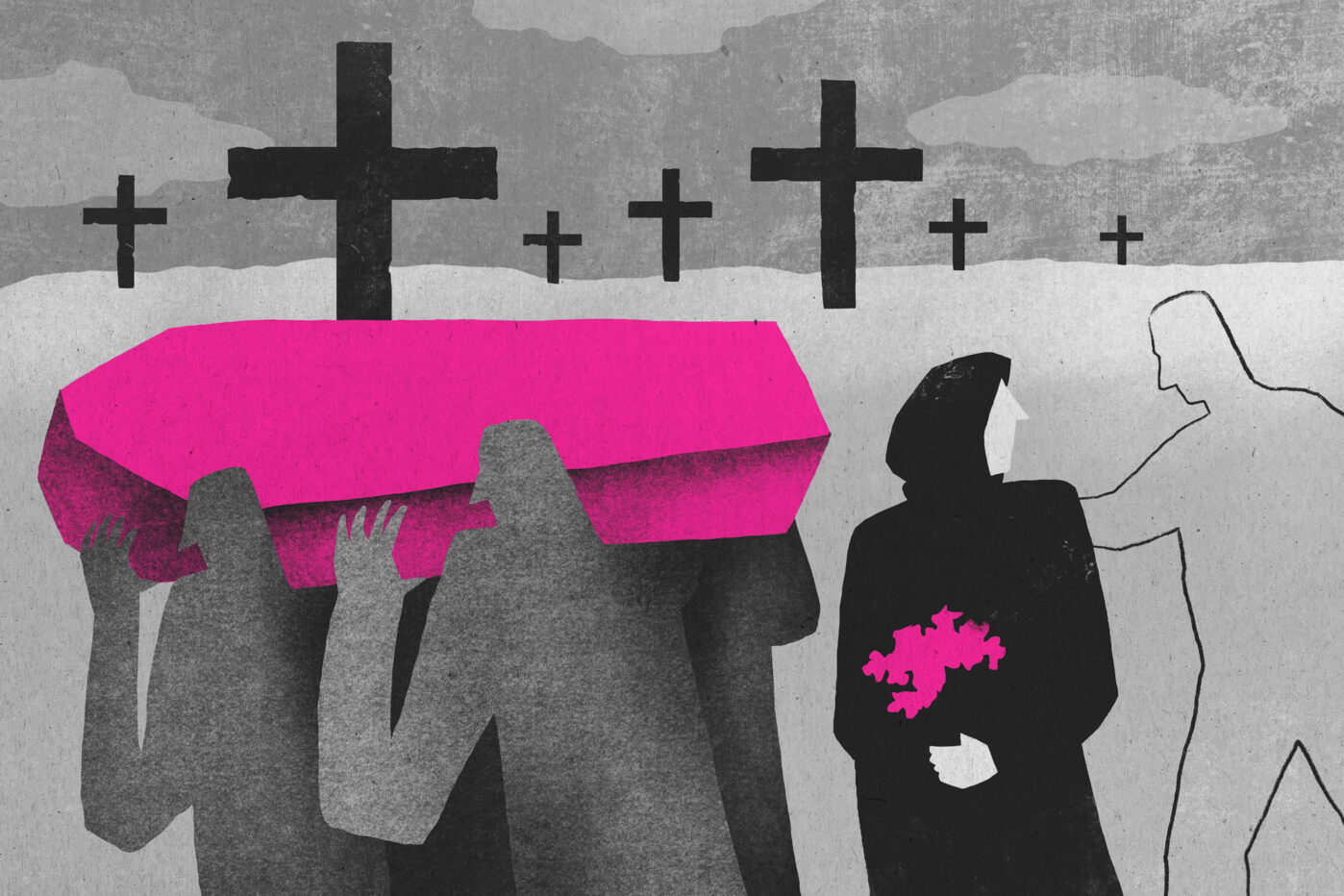
Anastasia felt that she had been deceived. She did not feel that her loved one was lying in the coffin, but she was too exhausted to argue with the military registration and enlistment office and the funeral service and demand an autopsy. I took part in the funeral, listened to the speech, approached the coffin - and all the time I felt awkward. “I didn’t even understand what I was doing there,” says Anastasia. She “kept her emotions under control” throughout the ceremony and began to cry only when the coffin began to be lowered into the grave and there was a noise around.
Anastasia went to the grave for 9 days. And again I felt superfluous. The following days she accepted condolences and did not talk about her doubts to anyone except close friends and parents. Her friends supported her, but her husband’s relatives did not - they admitted that they buried Alexander.
Anastasia tried to understand whether it was normal that she did not believe in her husband’s death. Three weeks after the funeral, she saw a dream in which Alexander rose from the coffin, and realized that she would not recognize his death.
She began to communicate with the wives and mothers of those mobilized and heard from them that dead soldiers sometimes turn out to be alive, and that other people’s bodies are brought in zinc coffins. “If I hadn’t found out about this, I might not have bothered myself so much,” says Anastasia. “But it turns out there are not one or two such cases, but many more.”
Misidentifications and funerals are a common topic of discussion among widows and mothers
Wives and mothers of Russian military personnel correspond with each other in chats and thematic groups. And indeed, they often share not only joys and sorrows, but also doubts. From time to time, a widow or mother who has lost her son admits that she does not believe in the death of her beloved man. Posts like this spark lively discussion. In the comments, many write that they have heard about cases where bodies were mixed up in a military morgue. Or they know the story of how the “deceased” returned home alive.
In one of the groups on VK, a post on this topic published in April 2025 received over 400 likes and more than 140 comments. “Two days ago we buried my son. The zinc coffin, they said, was impossible to identify. Documents, DNA allegedly confirm that it is him. They cried, buried... And then, two days after the funeral, my son called me. Alive."
Under one of these posts, a 33-year-old nurse from Siberia, Zhanna i , left a comment: “They didn’t do DNA, they brought zinc and immediately closed it in another. I wasn’t given the opportunity to see whether he did it or not.” i .
Zhanna told Vorstka that in the fall of 2024, her husband Evgeniy signed a contract - investigators offered him to go to war. Evgeniy was accused of theft, and due to past convictions he faced real imprisonment . As “Vestka” found out, Evgeniy was convicted three times for theft and once for beating his friend’s girlfriend.
Zhanna and Evgeny lived together since 2021, but got married only on the eve of leaving for the front. And they agreed that Zhanna would use her military salary to undergo surgery and renovations to her apartment.
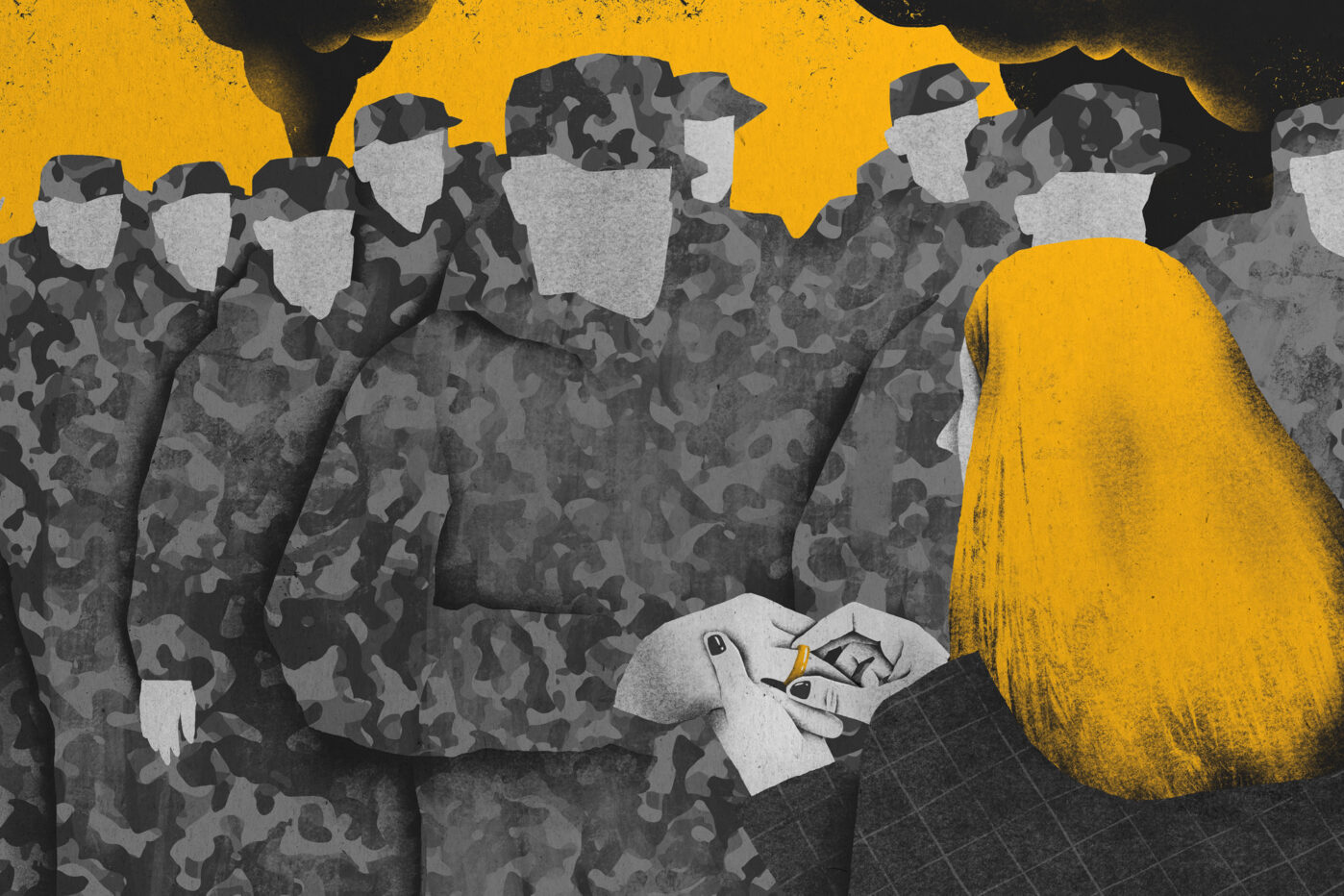
At the front, Evgeniy ended up in the stormtroopers - former prisoners in the Russian army are most often sent to stormtroopers. After one of the assignments, Evgeniy stopped responding to his wife’s messages and calls. And after a while, Zhanna was contacted by a “director” from the Rostov Center for Reception, Processing and Sending of the Dead. i .
“At first he wrote: “It seems like he [the husband] did.” Then he writes: “no, not him.” Then he writes again: “he,” recalls Zhanna.
She asked to send photographs of the deceased, but she was told: “It’s not allowed.” The Rostov morgue also refused to find out whether the deceased had a wedding ring on his hand.
Zhanna hoped that when the coffin was brought to her, she would be able to find out who the military investigator identified: her husband or a stranger. Shortly before the funeral, military registration and enlistment office employees asked Zhanna if she wanted to transfer her husband’s body from a zinc coffin to a wooden one. Zhanna refused so as not to “disturb the deceased.” But she asked to make a window in the zinc coffin. “The military commissar answered me that there is no need for a window, no need to look, but to remember him as he was,” recalls Zhanna. Now she regrets her decision.
A sealed zinc coffin was placed inside a wooden one. The lid, covered with red cloth, was nailed tightly to the base. “I was simply presented with a fact,” says Zhanna. “They didn’t provide me with any evidence.” Except for the token."
Despite her doubts, Zhanna buried her husband. And after 4 days I saw a dream, which I perceived as a message.
“I dreamed that I came to the cemetery, and there was a guy standing behind the cross on my husband’s grave. He seemed stuck to this cross. A complete stranger, he looked at me with such reproach,” says Zhanna.
Zhanna remembered the stranger’s face so clearly that even two months later it is before her eyes. The woman tried to find him among the photographs of missing people, but did not find any similar faces.
Every day Zhanna doubts more and more that she buried her husband. But, according to her, she cannot do a DNA examination. My husband's biological parents died. When asked if Evgeniy has children, Zhanna replies: “It seems like he does, it seems like he doesn’t. It’s not a fact that it is, but there is no evidence.” Zhanna does not want to seek exhumation through the court - she is sure that she will lose.
How are the bodies of the dead identified?
The bodies and remains of Russian military personnel are taken to the Center for the Reception, Processing and Dispatch of the Dead (TsPOOP). It is located in Rostov-on-Don. The identification process, judging by the way widows and mothers describe it, raises questions - the doubts that women have are not groundless.
A resident of Taganrog, Elena, wrote in the comments in the thematic group that over the past year she went to the Rostov Center for Public Education 5 times. A woman is trying to find her husband's body. A year ago, he allegedly died in battles near Krasny Liman, Donetsk region.
Elena told “Verstka” that in August 2024, a DNA sample was taken from her son in case the remains of those killed in those battles were brought to the Central Public Prosecutor’s Office. In November, she went to the Center and made sure that the DNA was entered into the database. Four months later, Elena was there again: trying to find out if there were any coincidences. The staff admitted to her that they had lost the DNA sample. Elena took her son to a private clinic, paid 8 thousand rubles and received a new DNA sample. She herself took him to Rostov-on-Don. A month later I found out that the data was never entered into the database.
“I’ll go again at the end of May, because now it’s possible to identify only by DNA, so much time has passed,” says Elena. - But even in the unit they say that there is no evacuation from that place, the front has not retreated yet. And it’s already a year already.”
DNA testing is not a prerequisite for identification. If the body is not severely damaged, investigators may be able to determine identity from lifetime photographs, tattoos, scars or teeth. DNA testing may also be waived in other cases. Even if there is almost nothing left of the military man. If you believe what the wives and mothers of military personnel tell, bones and a personal item - an army number tag or a pectoral cross - are enough for identification.
“It was impossible to identify the body; my mother-in-law identified it by teeth and a cross. “I then went to the identification ceremony via video link, but there were only bones there, I doubt that this is the husband, ” wrote Taganrog resident Anna on April 3 in one of the groups for mobilized wives.
Anna told Vorstka that she doesn’t understand “how one can be identified by the remains.” According to her, the bones contained someone else’s pectoral cross and a token “made of the wrong metal.” The zinc coffin in which the remains were brought home was closed. All this seemed dubious to the woman, but she did not demand to open the coffin: “At that moment, I probably didn’t understand what was happening.”
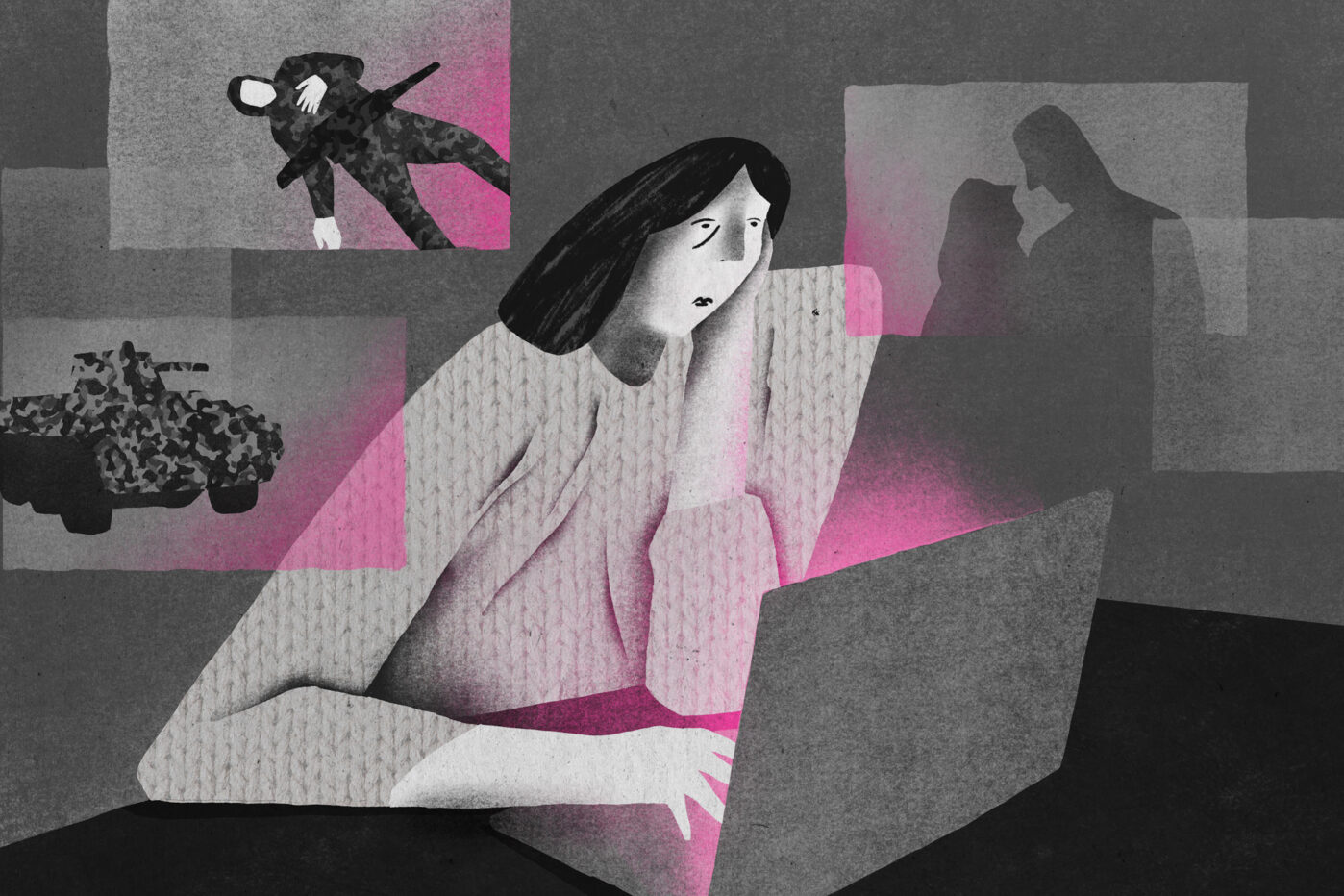
In order to accept her husband’s death, the woman began reading articles on psychological topics and diagnosed herself with “non-acceptance of the death of a loved one.” But all this, Anna admits, did not help her well.
“No matter how many articles I read, it doesn’t get any easier. In the evening, when you put the children to bed, you feel so sad. Especially if I hear the Shaman, I get hysterical and roar into my pillow,” she says.
When asked if Anna would like to seek exhumation through the court and conduct a DNA examination, she replies that the exhumation must be carried out at her own expense, and this is “very expensive and a long wait.”
Is it possible to exhume?
Seek exhumation is one of the common pieces of advice that military wives and mothers give each other. But almost no one shares the real experience of exhumation in such discussions. Perhaps because there are few such cases yet.
In the summer of 2023, the sister of the deceased Wagnerite, Irina, said in a chat for military wives that her family quickly achieved exhumation. The brother indicated the address of relatives who needed to be contacted after death. But without the knowledge of his relatives, he was buried in a general cemetery for fighters of the Wagner PMC in the Krasnodar Territory. Irina found out about this by chance: she saw on the Internet a photograph of a grave with her brother’s full name and date of birth.
Irina told Vorstka that she contacted the curator from Wagner, and she was told that exhumation could be done “either in a year or through the court.” The family decided to try a different path. Together with her mother, Irina went to Goryachiy Klyuch, next to which there is a cemetery. The mother wrote a statement to the city administration. She asked for permission to exhume her son in order to rebury him at home. Permission was issued immediately, and the exhumation took place the next day.
“Of course, there were thoughts that it might not be him in the grave, I heard stories,” says Irina. — We were hoping it was a mistake, but alas. The body was intact and identified. All this was done in the morgue. My brother was reburied at the end of June.” The procedure, according to Irina, “morally killed” her, but she is glad that she decided to exhume: “It was my duty to my brother. We were one."
It is difficult to estimate how many women apply to the court for permission to exhume. Olga i , the wife of career military officer Daniil i , told Vorstka that she consulted with a military lawyer about the exhumation. “He said that the judges would not give permission for the exhumation until the end of the SVO,” says the girl.
Olga met Daniil through mutual friends. Five months later, he proposed to her, three months later they got married and went to live in another region - by assignment. At the beginning of March 2022, Daniil went to the front.
“I knew who I was marrying: a military man. It was inevitable,” Olga describes her attitude towards her husband’s participation in hostilities.
Daniil was at the front until June 2022, then he was transferred to Crimea. Olga claims that this happened after Daniil refused to lead untrained soldiers into the assault: “He came back and told the commander that he would not do this.” In the summer of 2023, Daniil was returned to the combat zone. There, according to Olga, he always tried to be in the forefront: “He always walked ahead of his guys. Because if something happened to them, he, as a commander, would have to bow his head to their relatives. But he didn’t want that.”
That same year, Olga gave birth to a daughter, and Daniil began to look for an opportunity to transfer from the front. They promised him that they would send him to serve on “another continent,” but in the summer of 2024, Daniil went missing.
According to Olga, her mother-in-law wrote to the company commander that she went to a clairvoyant and knew where Daniil was. The fortune teller said that the man was still alive and was under the rubble in a concrete building.
A few days later, Olga was informed that her husband’s body had been pulled out from under the rubble of reinforced concrete slabs: an air bomb had hit the multi-story building where he was hiding with his colleagues. Only the mother was invited to the identification, and Daniil’s body was brought in a closed zinc coffin
This series of events seemed strange to Olga and she began to doubt her husband’s death. On the day of the funeral, according to the girl, she wanted to open the coffin, but listened to her relatives and representatives of the Ministry of Defense, who told her: “Calm down, you’re not yourself.”
Olga wanted to conduct a DNA examination, but the Rostov Center told her that the body was badly damaged. Therefore, when the corpse was brought in, doctors were unable to extract a DNA sample.
Olga managed to see photographs from the scene of death and post-mortem photos of her husband in the morgue. But she could not identify her loved one from them. The girl was embarrassed that in the photographs her husband, a brunette, had a red beard. In addition, the corpse that was pulled out from under the rubble was completely naked. “They tell me that probably all my clothes were blown off by the blast wave. But, excuse me, if even my panties and socks were blown off, then there must be a bag of bones there?” she reasons.
In a dream, Olga sees her husband alive. In one of them, he handed her a document on which the date of his death was crossed out. In another, the husband, with the Ilizarov apparatus on his leg, told Olga: “I am not in that world.”
A year after the funeral, Olga looks at photographs of Russian prisoners of war. She believes that her husband is alive and may be in captivity. At the same time, the girl feels guilty for not wanting to visit the grave.
“Now it will be a year [since the funeral],” says Olga. “I don’t live where he is buried.” And my soul is torn. I'm sure my husband is alive. Just based on some of my feelings and what I learned while conducting my investigation. But what if he’s actually buried there, and how can I not go?”
Judges reject exhumation claims
Russian courts publish only part of their decisions. In cases involving the death of military personnel, the percentage of published judicial acts is even lower. This may be one of the reasons why “Verstka” found only three court decisions on widows’ claims in the court databases.
In all cases, the women asked military units to re-identify them. One court decision specified that the widow would like to have an exhumation.
In the case, which was considered in the Samara region, the widow explained that the Rostov TsPOOP clearly made a mistake: the documents indicate that the body of a man aged 20–30 years was brought to the morgue, but they identified it as her 41-year-old husband. The woman's mother told the court that on the day of the funeral she looked into the small window of the zinc coffin. There she saw a human head tilted to one side. The face was “smeared with something white”, the mouth was open. The woman counted “all 32 teeth” in her mouth. This seemed strange to her, because her son-in-law had several teeth removed during his lifetime.
Despite these arguments, the family was unable to obtain a re-identification through the court. One of the court’s arguments: the investigator who identified the body in the Rostov morgue did not have “reasonable doubts” about whose corpse it was.
Two other widows who sued also lost. One of them was Anastasia, who buried her husband and saw him in a dream rising from the coffin.
Anastasia is looking for information about her husband and goes to court
Anastasia dreamed of her husband both a year and two years after the funeral. And always alive. In one dream she saw his silhouette, in another, Alexander called her on the phone and said: “I’m alive.”
Anastasia continued to go to the cemetery, but, as she says, “out of necessity” - only on days when the whole family gathered to remember the deceased. At such moments, the woman felt awkward: “It’s like I’m visiting a stranger’s grave.”
Gradually, Anastasia collected information about the short time that her husband spent at the front. Sometimes she thought she had found a clue, but “the thread immediately broke.” The Ministry of Defense informed the woman briefly: he died on November 7 near the village of Pervomaiskoye, DPR. My husband's co-workers knew more. Some said that Alexander went missing after he went on reconnaissance with a friend. Others saw the armored personnel carrier he allegedly commanded come under fire.
At the military registration and enlistment office, where Anastasia came to ask about Alexander’s last days in the war, she was told: “Accept that your husband died. May he rest in peace in the next world."
Anastasia did not agree to give up the search. She found a lawyer on the Internet and filed a lawsuit in the district court. The defendants in the case were two military units in which her husband was a member. Anastasia wanted to force them through the court to tell in detail how the identification procedure took place. But the military units did not even send representatives to the court. Only the lawyer from the military registration and enlistment office came to the meeting. She objected to the claim.
Anastasia lost this case. As stated in the decision, the judge did not receive “specific information according to which the identification of the deceased could be questioned.” The situation was made worse by the fact that the husband's relatives did not support the daughter-in-law. In their petition to the court, they said that they did not share the widow’s doubts.
But Anastasia still had benefits from the trial. In court, she found out that the Rostov Central Public Prosecution Service kept a DNA sample of the person she buried. Anastasia ensured that the Center for Public Prosecutions accepted a sample of her son’s DNA for examination and compared it with what they had in their possession.
The results should come in a month - in June of this year. Waiting is not easy for Anastasia. “You don’t know what will be there and what to do with it later,” she says. If DNA testing confirms that she buried her husband, this, according to Anastasia, will help her “accept and calm down.” If the result is negative, she will continue to look for a husband. In the meantime, she hopes for the best: her intuition tells her that the examination will not reveal a DNA match.
Zhanna finds a video from the hospital and decides that her husband is seriously injured
Jeanne, who buried her husband in 2025, also has a premonition that her beloved is actually alive. Hope is supported by chats and thematic groups where wives of military personnel communicate. She learned from other widows that they were collecting remains on the battlefield, without knowing who owned the bones and things. That DNA is falsified, bodies are mixed up in morgues, and some wives are even delivered empty coffins.
In order to find her husband, Zhanna subscribed to public pages that post front-line videos and videos from hospitals. So she saw a recording where a man who looked like her husband was squatting, making a fire and communicating with colleagues. It is unknown when the video was filmed.
At the beginning of May, Zhanna came across another video - from the hospital. A bandaged man lies in a hospital room. He is unconscious and filmed from afar. The caption says that the video was filmed at City Clinical Hospital No. 1 of Donetsk. And that in the video is the wounded commander of the assault brigade.
The recording quality is low, it is almost impossible to see the person. But the outline of the face and the fact that her husband was also a stormtrooper convinced Zhanna that it was Eugene in the video. Zhanna tried to call the hospital, but was unable to.
“Vorstka” contacted City Clinical Hospital No. 1 and sent the recording there. The hospital replied that the video was not taken at their place. И добавили, что регулярно получают «разные изображения, которые не имеют никакого отношения к нашей больнице».
Жанна «на 99%» уверена, что на видео её муж. Сейчас она хочет выяснить, где сделана запись. И, если узнает, вылетит «сразу же первым рейсом». Лететь наугад в Донецк Жанна не хочет: «Вложиться материально и приехать в пустоту, тогда мне не хватит ни одного кредита объехать Украину и Россию».
«Для меня главное его найти: пусть без рук, ног, но главное, чтобы любимый был жив», — говорит Жанна. Многие, по её мнению, хотят, чтобы она «успокоилась и перестала искать», но «пока жива», она будет «бороться».
«А иногда я жалею, что я не такая, как другие, — замечает вдруг Жанна. — Просто похоронила и забыла, продолжая жить в своё удовольствие».
Illustrations: Lyalya Bulanova
You can support “Layout” from any country in the world - it is still safe and very important. We really need your support now. How to help us →