
Translated material
Is Dad "inelegant"?
Pope Leo XIV's first attempt to get involved in the Russian-Ukrainian settlement was unsuccessful
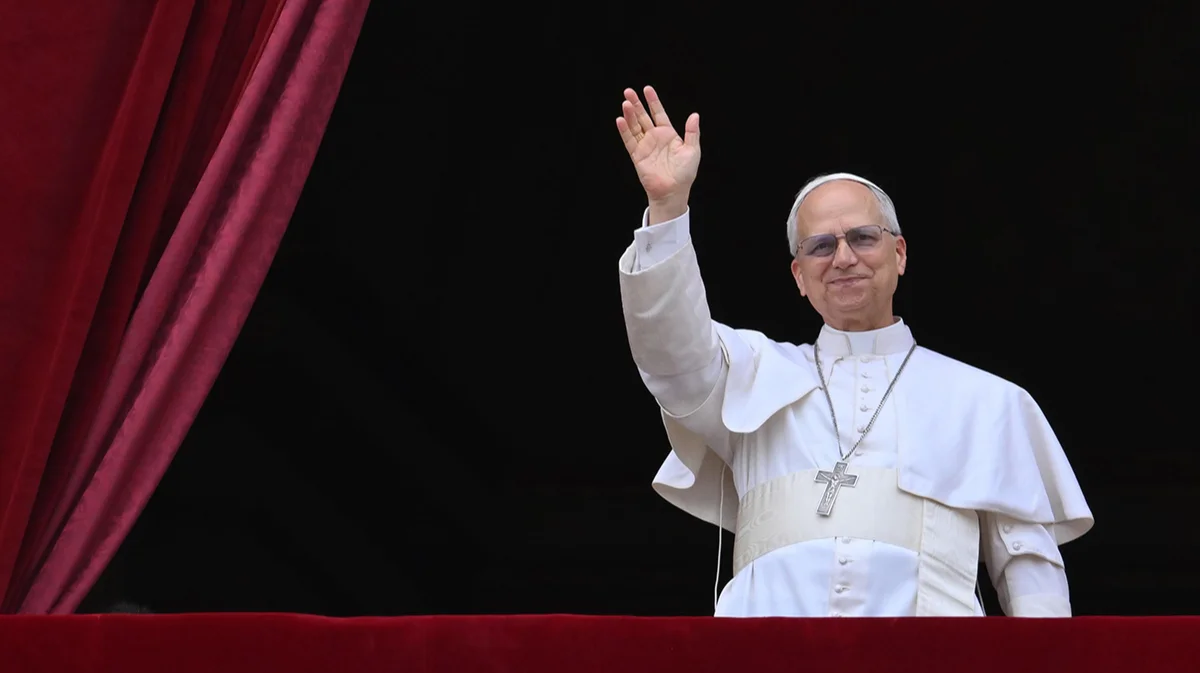
Pope Leo XIV in the central loggia of St. Peter's Basilica in the Vatican, May 11, 2025. Photo: Alessandro Di Meo / EPA-EFE
“An option that is not very realistic,” Putin’s closest ally, Russian Foreign Minister Sergei Lavrov, called on May 23 the initiative of the new Pope Leo XIV to make the Vatican a negotiating platform for resolving the Russian-Ukrainian conflict. It is curious that Lavrov referred to the religious affiliation of the Russian and Ukrainian peoples as an obstacle: it turns out that both peoples are “Orthodox”, and the Vatican is a “Catholic playground”. Therefore, the meeting of representatives of Russia and Ukraine there looks “a little inelegant.” Putin’s minister made it clear that the Kremlin generally considers the Vatican to be a party to the conflict, and a hostile one at that: “There is a Greek-Uniate church in Ukraine (these are Catholics), which is very actively working towards supporting the regime that was established in Ukraine after the coup.”
The representative of the Kremlin regime announced his response to the pope’s initiative, supported by Trump and many Western leaders, at the conference “Historical Southern Russian Lands, National Identity and Self-Determination of Peoples” at the Diplomatic Academy of the Russian Foreign Ministry. The key narrative of the forum was the ethnic unity of the Russian and Ukrainian peoples, which Putin saw as a basis for aggression back in 2021.
On May 22, The Wall Street Journal claimed that a Russian-Ukrainian meeting at the Vatican had been tentatively agreed upon for mid-June. Finnish President Alexander Stubb, who is on Trump's golf courses, was even more optimistic . According to him, a “meeting at a technical level” should take place in the Vatican before the end of May. The idea of a papal city-state as a negotiating platform was officially supported by the head of the Ukrainian Foreign Ministry Andrey Sibiga. However, the Third Rome, as Moscow calls itself, the Second Rome-Istanbul, populated predominantly by Muslims, is more suitable for “inter-Orthodox” negotiations than the First Rome - the symbolic center of Western Christianity.
Interfaith context
The confessional factor is coming to the forefront of world politics, so it is worth taking a closer look at the current state of Orthodox-Catholic relations. The Mixed International Commission for Theological Dialogue between the Catholic and Orthodox Churches was created in 1979 with the active participation of the Russian Orthodox Church. This event was preceded by the gradual involvement of the official Orthodox churches in the ecumenical movement, which aims to overcome the divisions of Christianity into many denominations. In particular, in 1965, Pope Paul VI and the Ecumenical Patriarch Athenagoras mutually lifted the anathemas imposed on each other by Orthodox and Catholics in the distant 11th century, when the Great Schism of the Western and Eastern Churches occurred. In the 1990s, the Russian Orthodox Church, under the influence of anti-ecumenical sentiments among the clergy and laity, actually left the Orthodox-Catholic dialogue, but Kirill (Gundyaev), having become patriarch, tried to reformat it for himself and start it again. In 2016, in Havana, he held a meeting with Pope Francis, which was an attempt to deprive the Patriarchate of Constantinople (Ecumenical) of the leading role in contacts with the Holy See and to begin a direct church dialogue between Moscow and the Vatican, bypassing the Orthodox churches of the Greek tradition.
It was assumed that the “Russophile-minded” Pope Francis would represent the interests of Moscow in dialogue with other Orthodox churches and, in particular, prevent the restoration of the jurisdiction of the Patriarchate of Constantinople over Ukraine.
However, already in 2018, when Constantinople granted autocephaly (canonical independence) to the Orthodox Church of Ukraine, it became clear that these plans of Moscow were a fiasco. And after the start of the “SVO”, in 2022, the World Council of Churches and Patriarch Bartholomew of Constantinople stated that it was further impossible for the church that supported the unjust war to participate in the ecumenical movement.
Robert Francis Prevost, elected pope on May 8 and ascended the throne 10 days later, chose the name Leo, which obviously indicates the continuity of his course with the last bearer of this name on the papal throne - Leo XIII (pontificate years - 1878-1903). Relations with the Orthodox and the “Ukrainian question” were among the priorities of Leo XIII. In 1894 he published the encyclical Praeclara gratulationis publicae, in which he predicted: “The day is not far distant when the Eastern Churches, so glorious for their ancient faith and great past, will return to the fold they left”—that is, to the Catholic Church. The then Patriarch of Constantinople, Anthimus VII, took the encyclical with hostility, declaring that “the devil instilled intolerable pride in the Bishop of Rome, and as a result, countless ungodly innovations arose that contradict the Gospel.” But a quarter of a century later, after the fall of the Russian and Ottoman empires, it was the Patriarch of Constantinople who would become the leader of the process of rapprochement between the Orthodox and Christians of the West, initiating the transition of his church to the Western calendar and its entry into the ecumenical movement. Leo XIII also called for raising the status of the Ukrainian Greek Catholic Church, which is in union with the Holy See, to patriarchy, elevated the head of this church to the rank of cardinal, revived the Greek Catholic monastic order of Basilians and opened the Ukrainian College in Rome.
stumbling block
Patriarch Kirill, in his congratulations to Leo XIV, deliberately ignores this context, linking the choice of his name exclusively with the first Leo on the Roman throne, whose pontificate lasted from 440 to 461, during the fall of the Roman Empire under the onslaught of the barbarians. Cyril wants Leo XIV to be inspired by the image of this predecessor - “the defender of the Christian community of Rome in the face of barbarian invasions.” The head of the Russian Orthodox Church here clearly hints at the “challenge of mass migration,” identifying it with a “barbaric invasion.” In his report at the XXVI World Russian People's Council at the end of last year, Kirill spoke a lot about the danger of migrants who pose an “undoubted threat to the Russian world.” Perhaps the topic of migration has become the only one on which the head of the Russian Orthodox Church still allows himself to cautiously criticize the authorities.
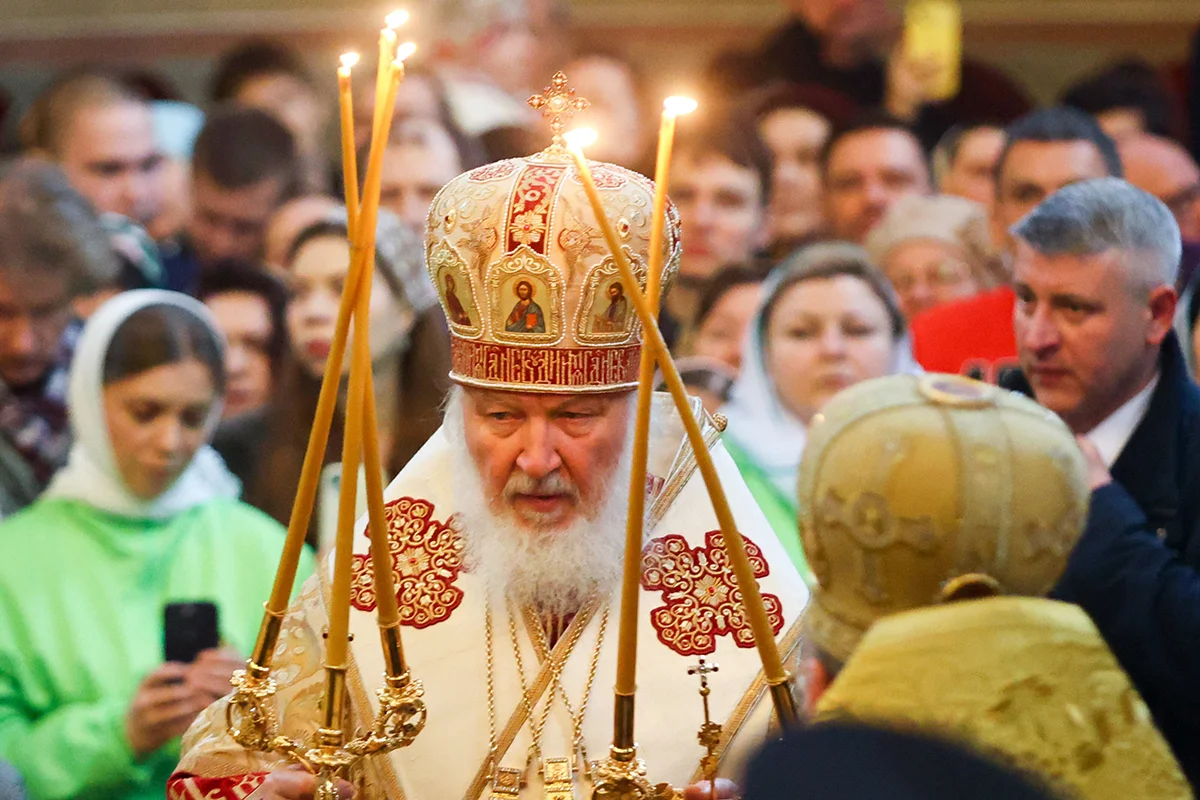
However, the Catholic Church and, in particular, Pope Leo XIV have a completely different experience of working with migrants and perceiving this problem. As a bishop, the current pontiff (like the previous one) served in Latin America, which is both the main demographic base of the Catholic Church and the main source of labor migration to the United States, and partly to Western Europe.
Already as a cardinal, Robert Prevost criticized Trump's Vice President Vance for inciting xenophobia towards migrants.
A special Bureau for Migration Problems within the Roman Curia appeared back in 1912 on the initiative of Pope Pius X. Pius XII created the International Catholic Commission on Immigration in 1951, and the Second Vatican Council (1962–65) dedicated a special constitution to this problem, “Gaudium et Spes” (“Joy and Hope”), which recognizes the right of every person to immigration and to friendly assistance from of his new homeland. Finally, Pope Paul VI created the Pontifical Commission for the Pastoral Care of Immigrants, which John Paul II elevated to the status of a Pontifical Council. It is clear that there are no analogues to these structures in the Russian Orthodox Church.
With Ukraine in my heart
Pope Francis also unsuccessfully urged Patriarch Kirill not to become “Putin’s altar boy” and not to betray his flock in Ukraine. Later, the head of the Pontifical Council for Christian Unity, Cardinal Kurt Koch, will call the position of the head of the Russian Orthodox Church in support of the “SVO” “heresy”, “false doctrine” and condemn the position of his former long-term partner in ecumenical dialogue as “completely unacceptable.” However, in 2022–25, despite numerous invitations, Pope Francis will not dare to visit Ukraine, constantly linking his visit to Kyiv with a visit to Moscow, where, naturally, the Russian Orthodox Church will not allow him.
Pope Leo XIV appears to be more decisive. At the very least, he sent a clear political sign to the world by accepting Vladimir Zelensky as the first of all heads of state on May 18, the day of his enthronement.
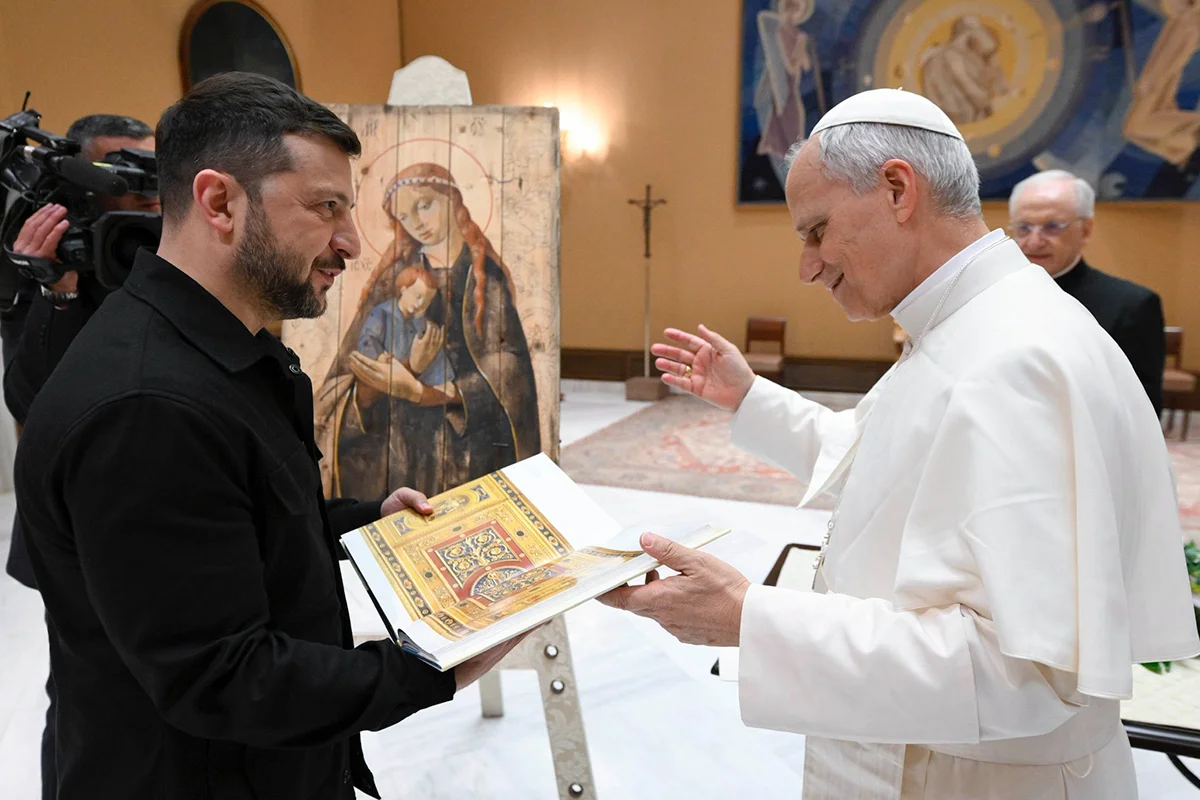
Of course, the Ukrainian head of state renewed his invitation to the pontiff to visit Ukraine, where millions of citizens are Catholics. The gift that the pope accepted from the President of Ukraine was no less symbolic: it is an icon of the Mother of God, painted on the lid of a box of artillery shells brought from the front line. “This icon,” Zelensky explained, “is about our children: those who suffered from the war, who were forcibly deported by Russia and who are waiting with hope at home.” The Holy See has already achieved success several times in negotiations on the return to Ukraine of children taken to the Russian Federation against the will of their families.
Two days earlier, on May 16, addressing thousands of pilgrims from the balcony of St. Peter in Rome, Leo XIV called : “No to war! Never again! “I carry in my heart the suffering of my beloved Ukrainian people,” the pontiff said. - Let everything possible be done to achieve a genuine, just and lasting peace as soon as possible. Let all prisoners be released and children returned to their families." Many times, in conversations with politicians and church hierarchs, the new pope invited representatives of the Russian Federation, Ukraine and all interested parties to the Vatican - “so that the enemies meet and look into the eyes, so that hope is returned to the people and the dignity they deserve is returned - the dignity of peace.”