
Translated material
Millionaire Scout
70 years ago, the KGB came up with the idea of “London businessman Gordon Lonsdale,” who got rich from gumball machines. The Soviet spy failed, but did not leave the image
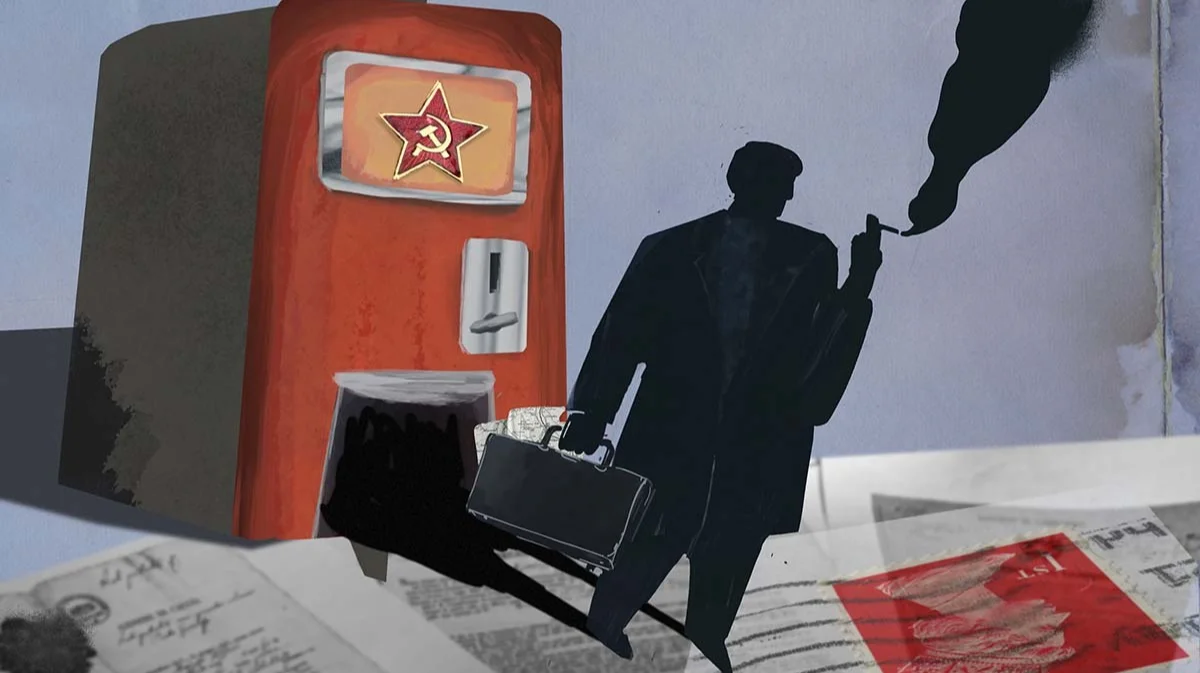
Illustration: Alisa Krasnikova / Novaya Gazeta Europe
In May 1955, the Canadian government issued a birth certificate and driver's license in the name of Gordon Lonsdale, born in 1924. Thus began the path of Konon the Young, who became a legend of Soviet foreign intelligence and British counterintelligence. The first claimed that during the six years of his illegal activities, Molodoy managed to obtain a lot of military secrets from Great Britain and NATO. The second presented Lonsdale’s arrest as a huge success for MI5, which made it possible to destroy several intelligence networks in Great Britain.
Conan the Barbarian and Konon the Cossack
Now it is no longer a secret that the prototype of the main character of the film “Dead Season” with Donatas Banionis in the title role was Konon Molodoy. He was also the main consultant for the film. But the movie reveals only a small part of the intelligence officer’s illegal life. However, most of Molodoy’s work is still classified as secret. But there are many legends around him.
After the real name of millionaire Gordon Lonsdale was first mentioned in an English police magazine in 1971, the media began to regularly write about Konon the Young. It is unknown which of the foreign journalists put forward the version that the intelligence officer was named after Conan the Barbarian, the first stories about whom Robert Howard published in the 30s of the last century in the American magazine Weird Tales . According to that version, Konon the Young’s parents were educated people, and their relative lived in the USA and could well have sent copies of the magazine to their relatives. Some of these assumptions were true.
The parents of the future intelligence officer were truly educated people. His father was a physicist, his mother was a traumatologist and professor. And their relatives actually lived in the USA. But the journalist was wrong about the timing. Konon Trofimovich Molody was born on January 17, 1922. And the first story about Conan the Barbarian, “The Phoenix on the Sword,” was published in December 1932. In 1934, Robert Howard published the story “The Steel Demon” about Conan, the leader of the Cossack robbers who lived on the Zaporozhka River.
In this case, Howard almost got it right. The name Konon (translated from ancient Greek as “worker”) was indeed quite popular among the Cossacks in the 19th century. In particular, this was the name of the grandfather of the future intelligence officer, the foreman of the Cossack circle and a participant in several wars, Konon the Young. The second child in the family of the physicist scientist and talented doctor Molodykh was named in his honor. In 1929, when Konon was seven years old, his father died suddenly. It was quite difficult for the mother to take care of the children and work. And then her older sister Anastasia, who permanently lived in the United States, offered to take the children to America.
Party authorities allowed only the younger Konon to leave. He arrived in San Francisco in 1932 and entered a regular high school. In 1938, the situation in the United States changed. The Great Depression was raging in the country, and supporting an extra child became problematic. Konon returned to Moscow and continued his studies at secondary school No. 36. He received his secondary education certificate in 1940, and almost immediately he was drafted into the army.
The young man, who spoke fluent English, was immediately noticed in the intelligence department and sent to German courses, which Konon Molody mastered quite quickly. After the course, he served as an officer as assistant chief of staff of an intelligence division. But he received his officer rank after the start of World War II. The authorities tried to use Konon only as a translator, but he was eager to fight. He went behind the front line more than once with reconnaissance groups. He ended the war as a senior lieutenant, awarded the Order of the Patriotic War, 1st and 2nd degree, the Red Star, and medals “For Courage” and “For Military Merit.” During the war, he also learned French.
Business as a cover
In 1946, after demobilization from the army, Konon entered the Institute of Foreign Trade, Faculty of Law. But he did not lose his passion for learning languages and, on his own initiative, attended the Faculty of Sinology, where he studied Chinese.
After his diploma, Young remained at the institute, taught and participated in the creation of a textbook on the Chinese language. At the same time, they began to train him as an illegal intelligence officer. Special training and creation of the legend took more than three years.
In March 1955, Konon Molodoy arrived in Canada using forged documents. He needed to be legalized, after which he had to go to his place of work in the UK. The legend for Young was developed in Moscow. In 1927 in Vancouver [happened](https://ru.ruwiki.ru/wiki/%D0%92%D0%B5%D0%BB%D0%B8%D0%BA%D0%BE%D0%B5_%D0%BD%D0%B0%D0%B2%D0 %BE%D0%B4%D0%BD%D0%B5%D0%BD%D0%B8%D0%B5_%D0%BD%D0%B0_%D0%9C%D0%B8%D1%81%D1%81%D0%B8%D1%81%D0%B8%D0%BF% D0%B8_(1927)#:~:text=%D0%92%D0%BE%20%D0%B2%D1%80%D0%B5%D0%BC%D1%8F%20%D0%BB%D0%B8%D0%B2%D0%BD%D1%8F%20 15%20%D0%B0%D0%BF%D1%80%D0%B5%D0%BB%D1%8F,%D0%B2%2070000%20%D0%BA%D0%BC%C2%B2%20(27000%20%D0%BA%D0%B2.) flood, more than two hundred people died, including the Lonsdale family. In Moscow, they carefully worked out a version of the rescue of three-year-old Gordon Lonsdale, who was sheltered by an elderly couple. And when his adoptive parents died, Gordon decided to regain his “real” name. In May 1955, the intelligence officer received a real birth certificate, and then a driver’s license in the name of Gordon Lonsdale, born in 1924.
The first stage of legalization was completed, but now it was necessary to obtain a foreign passport. According to the laws of Canada, to obtain a document, the recommendations of two respected citizens are required: one is a well-known businessman, and the other is a popular priest. After receiving his passport, Gordon Lonsdale left for the USA, and after some time, supposedly to continue his studies at the University of London, he moved to the UK.
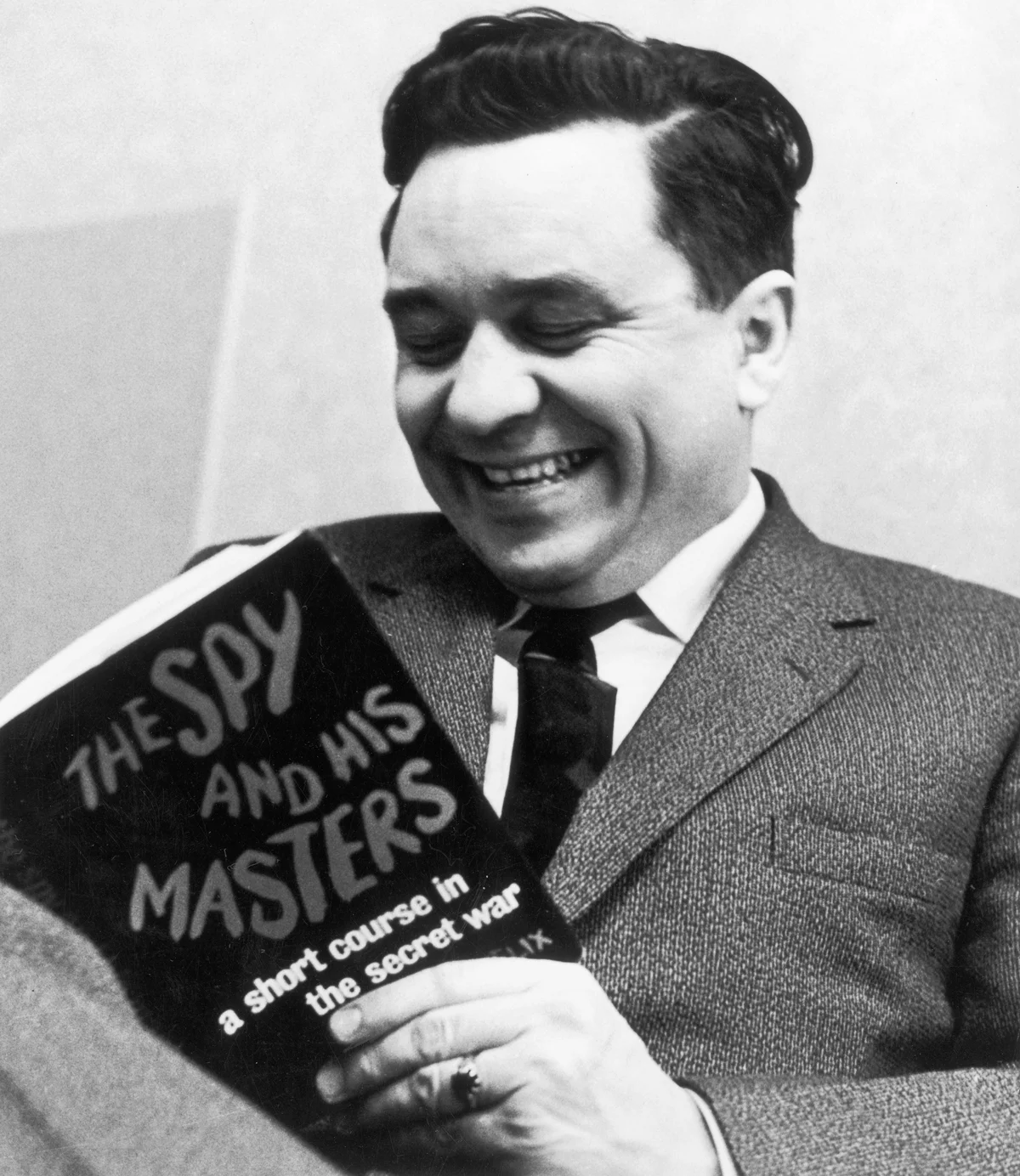
The Chinese department of the University of London is considered one of the best in the world, and quite a lot of British and American intelligence officers and military personnel studied there at that time. Gordon Lonsdale had to go to great lengths to hide the fact that he knew Chinese. The university was a good cover, but studies could not last forever. From the center, Young was asked to think about another legend and pay attention to business. Here's how Molodoy himself talks about it in the book “My Profession is Intelligence” :
“But what should “his” business be? What is this - trade? Production of goods? Mediation? Service industry?
For a long time now I have regularly read everything that was published in newspapers regarding commercial activities. But neither the advertising weekly London Advertiser, which feeds mainly on the tempting offers of marriage bureaus, nor a dozen other English newspapers, which for various reasons I had to look through every day, could please me with anything.
The decision came unexpectedly. And the newspapers, in which I regularly looked through the commercial columns, had nothing to do with it. I just noticed something that I couldn’t help but notice: in sweet, kind, old England, compared to Americanized Canada, there were ridiculously few vending machines!
Yes, vending machines selling chewing gum, chocolate, cigarettes or something of the same kind were exactly the kind of business that even the god of trade Mercury himself could not offer a scout better. I could only shrug my shoulders as to why it hadn’t occurred to me before. It's so simple. And then - amazingly convenient: you are your own boss. I don't answer to anyone. I do these things when I need...
So, a vending machine. Yes, that was the idea! They can be installed and maintained at any time convenient for me. Considering that I was always busy, this gave me an advantage that could decide everything. My income actually left the control of the tax department. Well, who but myself knows how many shillings I took from my machines today! And since it is impossible to determine the amount of income, then no one will be puzzled by my high expenses. And the fact that information of this kind will in due time reach the police (and perhaps even counterintelligence) should have been expected. After all, the work of the police and counterintelligence is based on the principle - “everyone must have visible sources of livelihood and live in accordance with their income.” Any deviation from this ironclad norm immediately attracts the attention of the information network. In necessary cases, information of this kind is also transmitted to counterintelligence. The history of intelligence knows many failures caused by violations of this “principle of correspondence.”
Despite the fact that the business was supposed to be simply a cover and concealment of the money that Molodoy received from the Center, business with the machine guns suddenly went uphill. Now it was no longer Moscow, but Lonsdale himself who could transfer large sums to friendly intelligence networks. Gradually, Lonsdale acquired a reputation as a serious businessman and became well-established in the circles of the London establishment.
One of the “official” legends about Molodoy told how once, after returning to the USSR, Molodoy was somehow invited to perform at the Sochi cinema “Chronicle”. The lecture was supposed to be closed, only for KGB officers, but several high-ranking employees of the Sochi City Committee managed to attend this lecture. And during the lecture, one of the listeners asked the intelligence officer how he could also do business while doing his main job. Konon Trofimovich began to talk in detail about how he did business. And then he began to compare his own enterprises with Soviet ones.
“I was recently invited to a Moscow plant, and I was so horrified: what a mess it is! Absenteeism, drunkenness right on the shop floor. You can't do that! I told the workers: I would kick out all the slackers on the first day, but I would immediately double the wages of the rest. So they started applauding...
Here the secretary of the Sochi City Committee rises from the first row and declares:
- Comrade Young, you are, of course, a hero, but you shouldn’t forget yourself. Why are you promoting petty-bourgeois views here?
- Why petty bourgeois? — Young was surprised. “Not long ago I was a real millionaire, had a luxurious cottage in London, eight cars, rented rooms in the most expensive hotels and supplied all my intelligence groups with money. So my views are not petty, but very bourgeois.”
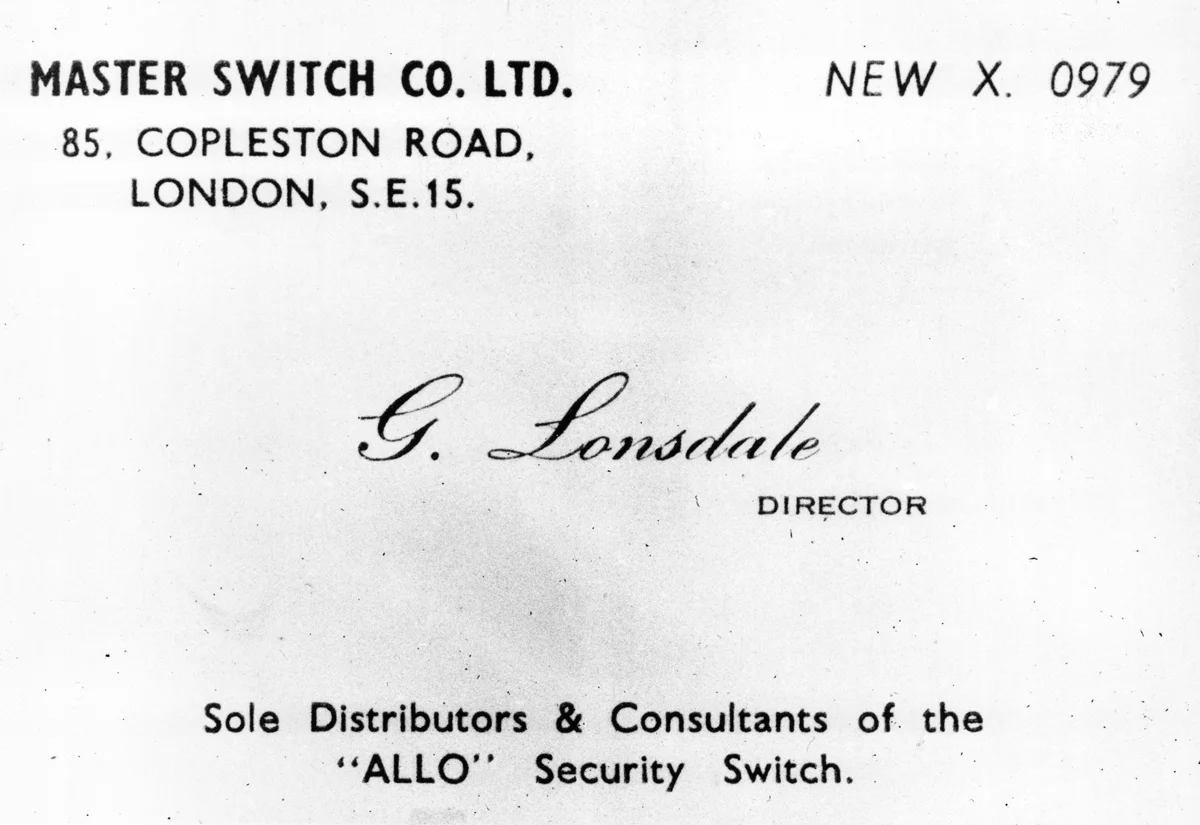
Lonsdale's partner, unaware of his real work, turned out to be a very active person, constantly looking for new opportunities to invest money. The young man had no need for business expansion; he was already torn between business and intelligence. But he decided to participate in one enterprise by investing money in an “electric watchman” - an alarm system.
The idea turned out to be super successful, bringing Lonsdale's company millions of pounds. And in 1960, the car alarm received a gold medal at the international industrial exhibition in Brussels.
This fact gave rise to another legend - that Elizabeth II knighted Lonsdale for his success in business. But there is no evidence of this. There is not a word about this either in the book, where Young talks quite a lot about his contacts with the British authorities, or in the British press. And such a fact could not go unnoticed by journalists, especially after Lonsdale’s arrest. Of course: a millionaire - and suddenly a spy!
Every profession has its own costs
The film “Dead Season” told about one of Konon Molodoy’s operations. Immediately after arriving in England, he was ordered to find evidence that German scientists were developing bacteriological weapons in Porton. These developments began in Hitler's Germany. Evidence was obtained, published, a scandal broke out, and the British completely curtailed all work in this area.
Young's main success was his work in Portland, where the largest naval base and research center were located. Nuclear submarines, friend-foe identification systems, search and defense equipment, torpedoes and locators, mine weapons, reactors and much more were designed there.
Lonsdale managed to recruit retired sailor Harry Houghton, who in 1951 already had contact with Soviet intelligence in Poland. He then worked at the English embassy as a cryptographer and was distinguished by his unbridled behavior. And he constantly needed money for alcohol and women. Soon, Soviet intelligence officers contacted him, and Houghton agreed to sell information to the Russians. But soon, precisely because of his dubious lifestyle, he was recalled to England, and contacts did not receive further development. The center warned Young that Houghton was greedy for money and could fall asleep on this, pulling the resident with him. But Young decided to take a risk: Houghton’s mistress Ethel Gee worked in the photocopying department at the naval research center. Together they removed secret documents from the center and handed them over to Lonsdale’s contacts, the Kroger spouses. Under this surname, the spouses Morris and Leontina Cohen lived in England, Americans who began working for Soviet intelligence for ideological reasons. They were the main contacts of Rudolf Abel, but after the “witch hunt” that began in the USA, they were transferred to London and handed over to Molodoy. The Coens re-shot everything on microfilm, and in the morning the documents were returned to the base. The secrets of Her Majesty's fleet and some NATO developments flowed to Moscow.
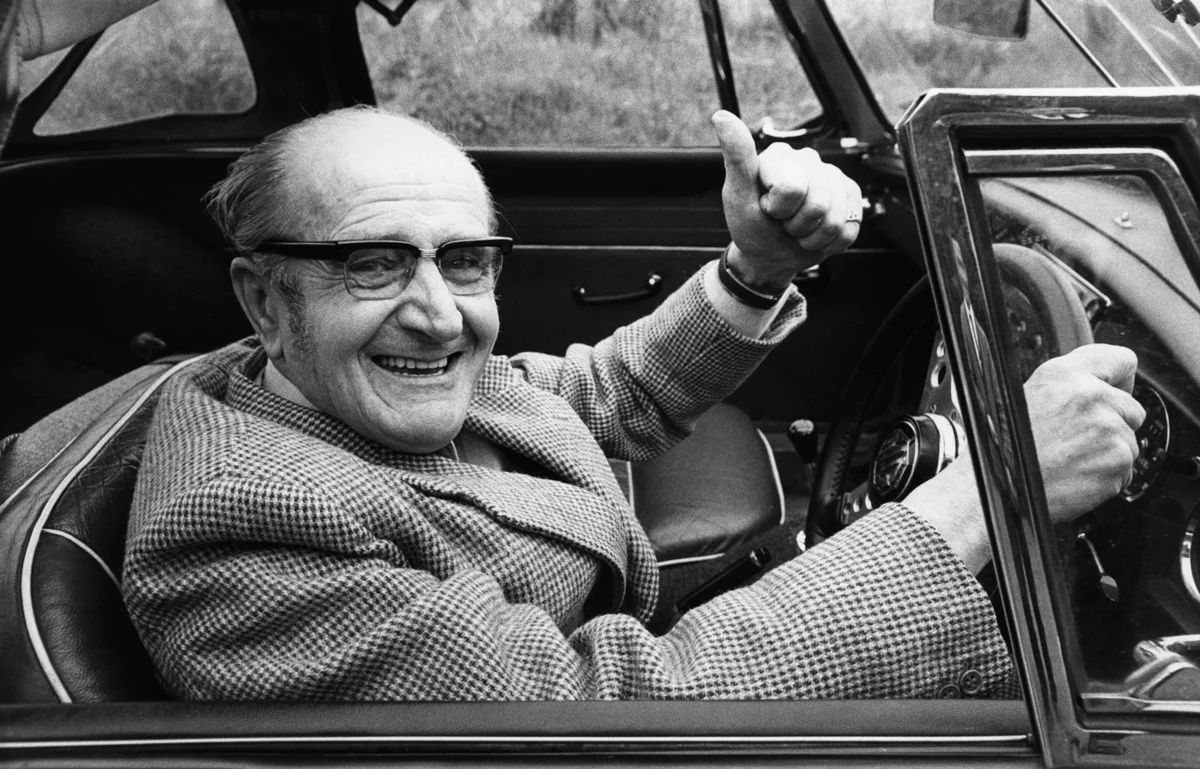
But Houghton really turned out to be not very reliable. And Young was constantly on the verge of revelation.
“Before meeting me, Houghton had only one option: he would have completely drunk himself and sunk to the very bottom. Moreover, over the course of several years, as I kept in touch with him, it began to seem to me that Houghton was changing for the better. And if our meetings with him had continued further, I am sure that Houghton could have been made into a human being, as has happened more than once in my practice and in the practice of my colleagues.
A scout does not always have to work with white gloves. I have already said that he is often simply forced to communicate with people who do not arouse his sympathy. Well, every profession has its own costs. There are plenty of them in my profession too.”
And yet, the failure of Young-Lonsdale was not due to Houghton’s fault, although not without his participation. In 1960, Polish intelligence officer Michal Goleniewski fled to the United States. Subsequently, the defector became famous for declaring himself the direct heir to the Russian throne, Tsarevich Alexei. According to his version, the Romanov family was not executed in 1918, but fled to Poland. Golenevsky demanded that the so-called “Romanov accounts” be handed over to him: money from the royal family placed before the revolution in Western banks.
The West was skeptical about these statements, but they meticulously asked about work in the Polish Ministry of Security. Golenevsky, in one of his conversations with CIA employees, said that some kind of radio encryption passed from England through Poland. I also remembered that Soviet intelligence in 1951 had contacts with the English embassy's cryptographer. This information was passed on to MI5 by the CIA. Several people who worked in Poland at different times came under suspicion.
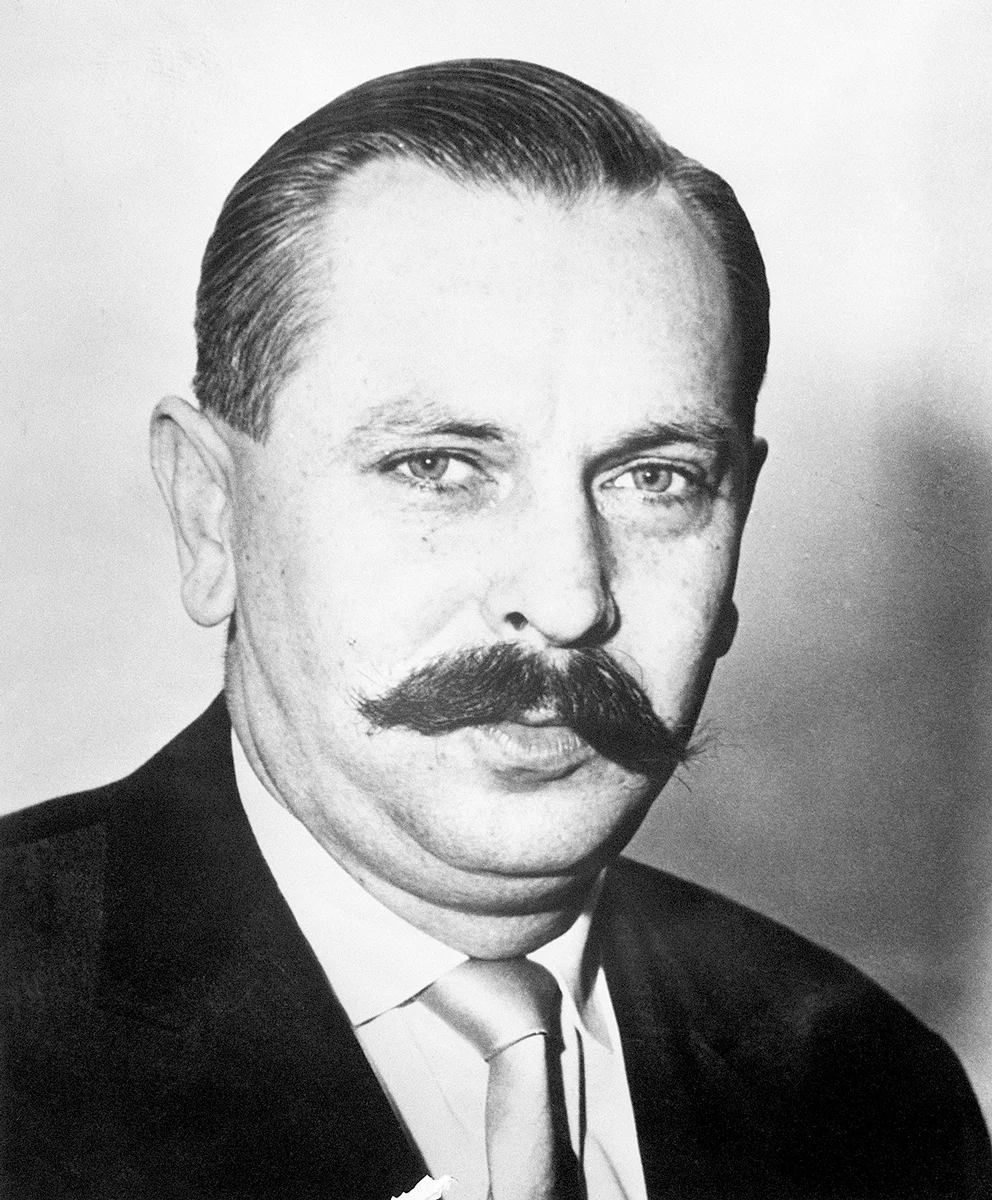
At the end of 1960, the British identified the “mole” - Harry Houghton. And soon they established his interaction with Lonsdale and the Kroger spouses, who were immediately suspected of having connections with Russian intelligence. It was planned to monitor Lonsdale and gradually identify all his contacts. But the British were in a hurry: information that the defector Goleniewski had “betrayed” Houghton could have reached the Russians, and the entire network would have instantly disappeared. On January 7, 1961, near Waterloo tube station, Lonsdale and Houghton were arrested while handing over documents. Ethel Gee and the Krogers were arrested that same day. During the search, a powerful radio transmitter was discovered in the latter's possession.
Lonsdale admitted that he bought secret documents from Houghton for resale. But he denied his involvement in Soviet intelligence. And he even tried to shield Krogers, saying that he used them in secret. But British intelligence, which was in deep depression at that time, needed at least some kind of rehabilitation. Let us recall that in 1954 it turned out that, under the nose of counterintelligence, several high-ranking officials of the Ministry of Foreign Affairs and military intelligence had been working for the USSR for many years ( the “Cambridge Five”). And the Americans exposed them. So the British hastened to declare the arrest of Lonsdale’s group as a colossal success in the battle with Soviet intelligence. At the trial, it was not possible to prove the involvement of Krogers and Lonsdale in Soviet intelligence. That didn’t stop them from being accused of spying for an unidentified country and being sentenced to substantial prison terms.
Lonsdale received 25 years, Kroger-Cohen - 20, Ethel Gee and Houghton - 15. The remaining intelligence networks with which Gordon Lonsdale had connections or financed were never identified.
In prison, Lonsdale met George Blake, who also worked for the USSR. They met on walks. Blake later recalled how Lonsdale once said that they would definitely meet again on Red Square during the celebration of the 50th anniversary of the October Revolution.
Blake was sentenced to 42 years, Lonsdale to 25, and the spy's words sounded unconvincing. But that’s how it turned out! They actually met on November 7, 1967 at the podium for honored guests on Red Square. Lonsdale-Young was exchanged in 1964 for English intelligence officer Greville Wynne , a liaison for GRU Colonel Oleg Penkovsky, who worked for MI6 and the CIA. It was then that the British learned the real name of the millionaire Lonsdale. Well, Blake was able to escape from prison.
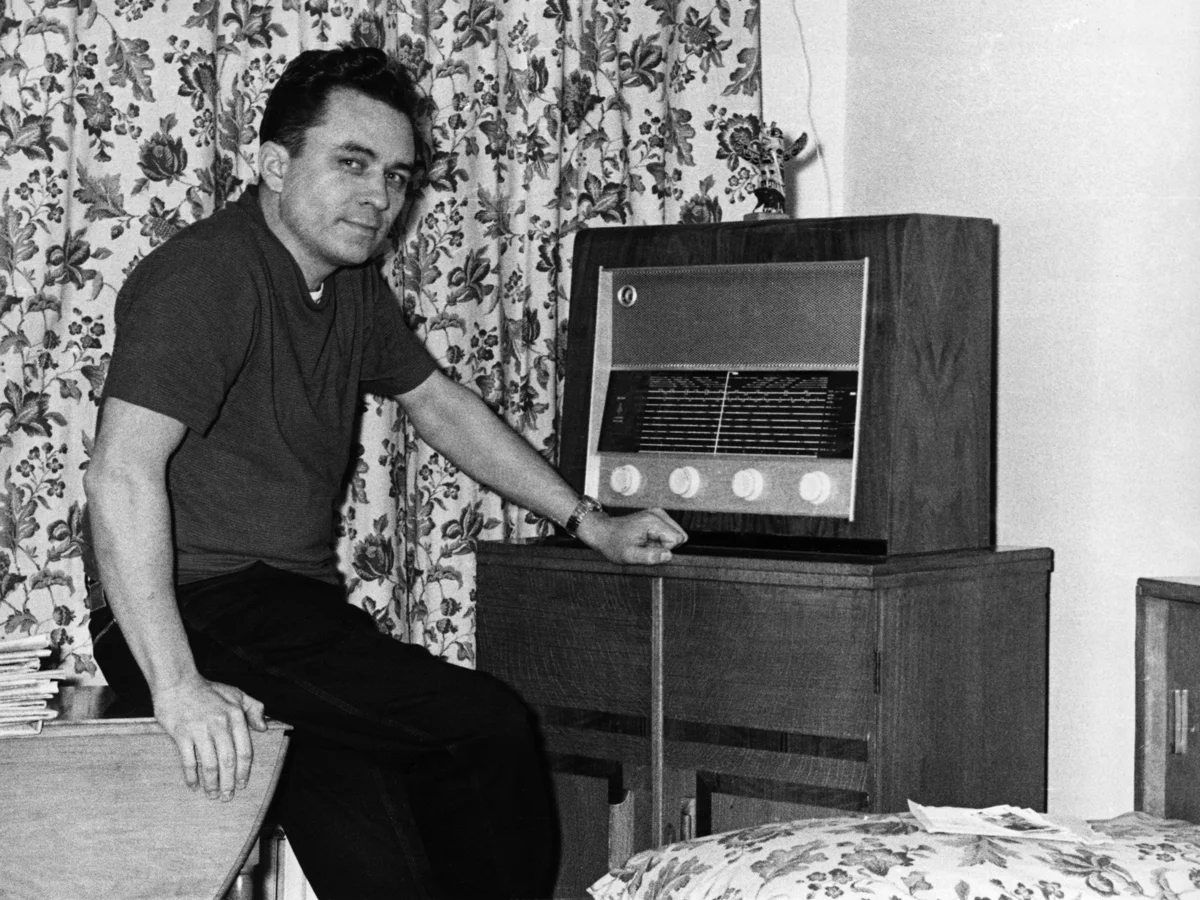
In 1967, filming began on the film “Dead Season” about the Soviet intelligence operation to prevent the development of bacteriological weapons. Konon Molody was the main consultant on the filming. In the credits he is listed as Colonel K. T. Panfilov. Many famous actors were considered for the main role in that film, including Vyacheslav Tikhonov. But Young insisted that this role be played by Donatas Banionis, who was somewhat similar to himself.
The Cohen couple were exchanged in the fall of 1969 for three Englishmen arrested in the USSR for criminal offenses. In 1995 and 1996, they were posthumously awarded the title of Hero of Russia. Harry Houghton and Ethel Gee served their sentences, and after their release they were “stars” for some time, giving interviews on television.
The millionaire intelligence officer's incredible life came to an abrupt end at age 48, six years after his return. On September 11, 1970, while walking in the forest, he suffered a heart attack.