
Translated material
War
One thousand one hundred and eighty-eighth day. The Russian Armed Forces are launching 300 drones across Ukraine for the second day in a row. Western media write that this is not the limit
Since February 24, 2022, Meduza has been broadcasting live about the Russian-Ukrainian war. We publish your letters in our daily materials because we are sure that we need to continue talking about the war. Russia is bombing Ukraine even more violently than in the spring of 2022. Ukraine responds with attacks on Russian cities. Did this affect you personally? Please tell us about your experience. A review of the previous day can be read here .
Ukraine
The Russian Armed Forces again launched almost 300 drones across Ukraine
On the night of May 26, the Russian military again launched a massive drone strike on Ukraine. According to the command of the Air Force of the Ukrainian Armed Forces, a total of 355 Shahed-type drones and simulator drones, as well as nine Kh-101 air-launched missiles, were involved in the attack. This is probably the most massive attack of the war. A day earlier, Russia launched almost 300 drones (including simulator drones) and 70 missiles of various types into Ukraine. Then Reuters reported that this was the largest strike by Russian drones and missiles on Ukrainian territory since the beginning of a full-scale war.
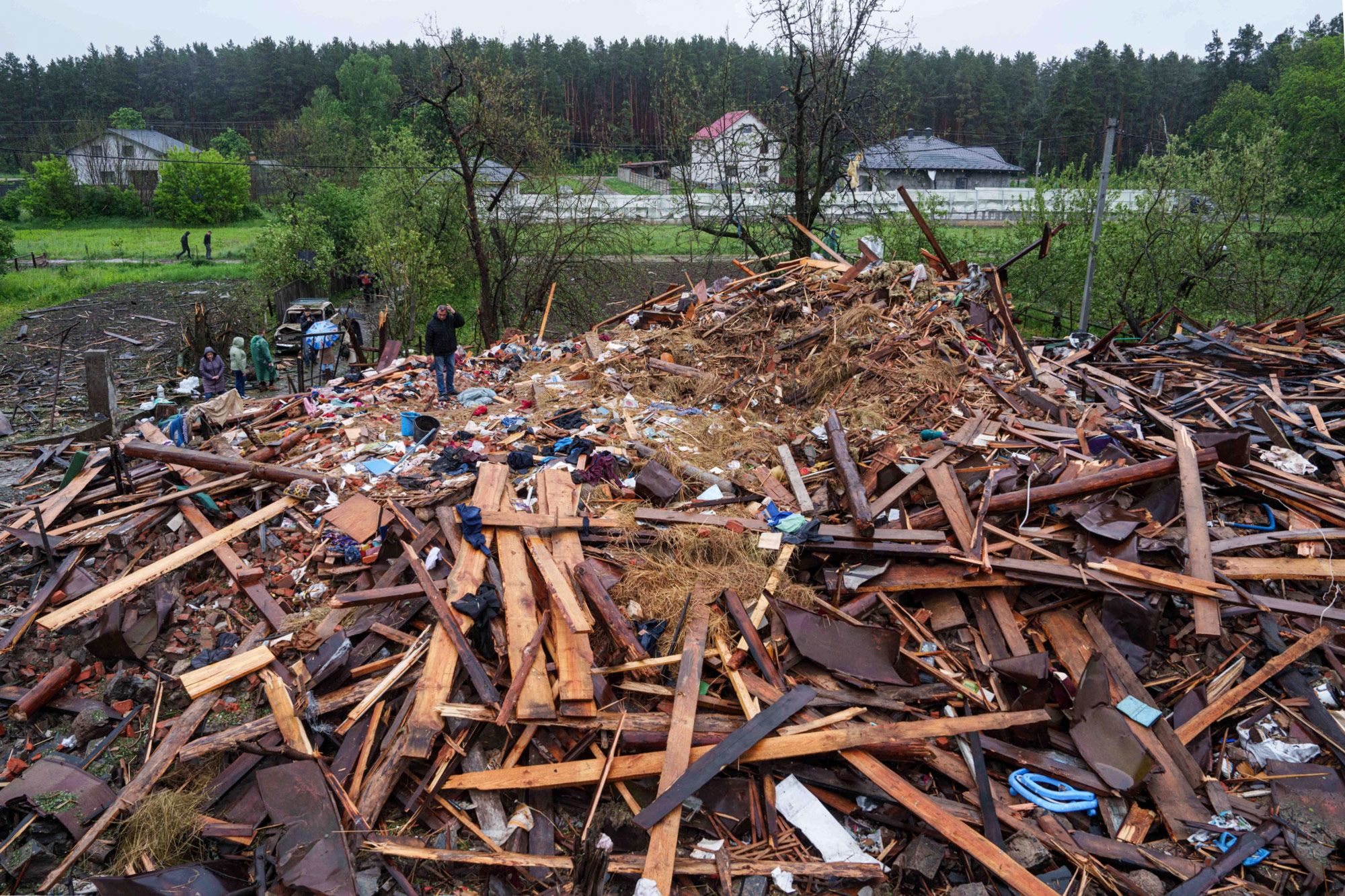
On the night of May 26, Kyiv and the Kiev region, Kharkov, Odessa and the Odessa region, as well as the Khmelnytsky and Dnepropetrovsk regions were again attacked by drones. Regional authorities reported destruction, but there were no data on casualties.
As The Economist noted in an article published on May 26, the Russian military has been using more and more missiles and drones to strike Ukraine since the beginning of the year. Their types have also changed: Russian troops, the publication notes, are now more actively using ballistic missiles supplied by North Korea and an improved version of Shahed drones, which use machine learning to better hit well-protected targets. The Russian military-industrial complex, writes The Economist, now produces 300 drones in three days, although recently it took a month to make such a number of drones.
According to Ukrainian intelligence data cited by the publication, Russia plans to increase the production of various types of drones to 500 per day and use up to 1,000 drones simultaneously for attacks on Ukraine. Ukrainian expert Konstantin Krivolap, quoted by The Economist, believes that such figures are likely exaggerated. However, he said, it is clear that the number of drones at the Russian military's disposal will increase significantly.
The Financial Times also notes that the Russian Armed Forces are using more missiles and drones, and are also using modernized drones. The more drones involved in an attack, the greater their chance of overcoming air defenses and achieving their goals, Ukrainian military personnel involved in the fight against drones told reporters.
According to a senior Ukrainian official, air defenses around Kyiv still shoot down about 95% of unmanned aerial vehicles, but the 5% that penetrate the air defenses cause serious damage.
There are not just more Russian drones. The new Shahed-type drones have increased altitude and flight speed - making them more difficult to shoot down. Previous versions of drones, The Economist recalls, successfully destroyed ground mobile groups equipped with machine guns, missiles and short-range artillery.
New versions of drones, writes The Economist, successfully bypass these mobile groups. At first they fly at low altitude to avoid detection, and when they approach cities, they rise sharply to an altitude of 2000-2500 meters, inaccessible to the weapons that mobile groups have. To combat drones, Ukraine is forced to use aviation and interceptor drones.
As for ballistic missiles, Russia, as FT writes, now produces even more of them than it uses. At the same time, Ukraine, the publication notes, does not have enough Patriot air defense systems and F-16 fighters - the most effective means of combating ballistic and cruise missiles.
In April, Vladimir Zelensky said that Ukraine is ready to buy Patriot air defense from the United States for a total cost of $15 billion, and European allies are ready to allocate funds for this. However, The Economist notes, there has not yet been a clear response from the United States to this proposal.
War through the eyes of Meduza readers
Anton. I was scrolling through Instagram, in 2020 I published a photo of Fleura from the film “Come and See” with the caption: “Moms who dress their children in uniform on May 9, do you really want them to go to war? Do you think this is great? Wake up, this is what children of war look like!”
A neighbor's son and husband died, and she is proud of it. At every opportunity, it reminds you that they died protecting you. We didn't wake up.