
Translated material
Black birds. Who stole people's money?
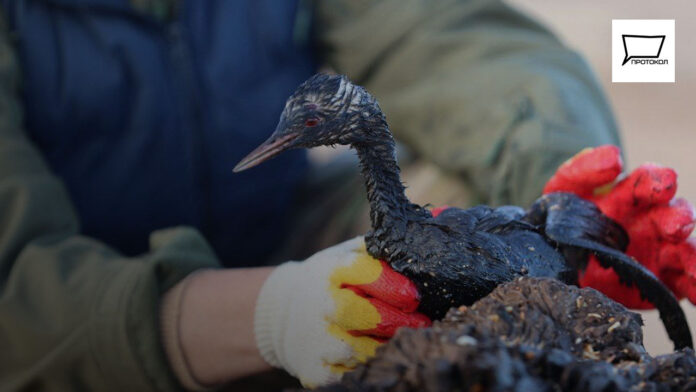
After the fuel oil spill in the Black Sea in December 2024, a volunteer movement emerged - activists are fighting the consequences of the disaster. They also rescue injured birds. Volunteers raise tens of millions of rubles for their work, but face political pressure, sabotage and financial scandals. “Protocol” talked to participants in the “bird campaign”. All names in the material have been changed at the request of sources.
“It became clear that we needed to study birds”
On December 15, 2024, an accident occurs on two tankers of the state company Rosneft in the Kerch Strait. Thousands of tons of fuel oil are poured into the Black Sea. Both volunteers and government services are cleaning up the consequences of the disaster. On the same day, former political prisoner and environmental activist Evgeniy Vitishko arrives at the site and organizes the work of the activists. The second organizer of the volunteer campaign is the coordinator of the public organization “Ecological Watch in the North Caucasus” Andrey Rudomakha. He visits Anapa on short visits, but constantly works and helps remotely.
Due to the “intensity of the processes”, in the first days the movement is divided into several directions. A participant in the volunteer movement, Bogdan, says that social activists took upon themselves only the rescue of birds. Activist Maria explains this choice by the fact that in the first days, the Ministry of Emergency Situations, Anapa and regional authorities take charge of cleaning the beach and water area: “It became clear that we need to deal with the birds. There were no government structures provided for their rescue at all ,” says the girl. Immediately after the disaster, ornithologists develop “protocols for working with birds”—rules for their rescue. Maria notes the work of ornithologists under the leadership of Natalya Volgina and Ekaterina Rachinskaya, Candidate of Biological Sciences: “Volgina and a number of her former students came here and volunteered. She and Rachinskaya introduced common protocols for working with birds . ”
The work looks like this. First, the “catchers” pick up birds from the sea and on the shore: “Birds that are in fuel oil, they can no longer float normally. Many begin to become intoxicated, so they are in a weakened state. There are also unconscious people ,” says Maria. Birds are trying to cleanse themselves of fuel oil. When harmful substances enter the body, intoxication begins. If intoxication is high, then from the fifth to the seventh day the functioning of the nervous system is disrupted. Then the bird begins to have convulsions and it is already useless to save it - the poison has entered the circulatory system, the brain is affected, which means the animal will die.
The birds are dumped in starch. It plays the role of a sorbent - a substance that absorbs and binds fuel oil, simplifying further cleaning of the body and feathers. The birds are then washed several times with regular detergents and placed in boxes. They are washed many times and put on IVs: “Even when they were washed, their noses, for example, were clogged with this fuel oil. Noses were cleared. Somehow [fuel oil] got into the respiratory tract, I don’t know. But I know that oxygen installations for birds were also used,” says Maria. The activist claims that “resuscitation measures” are even carried out for some birds. After all procedures, the birds are sent for rehabilitation to special centers.
“There was no money for gasoline”
Volunteer Bogdan calls the “bird campaign” the most successful and “quickly built up”: “2,400 people went through the campaign. This is a huge mass of people. Many are not local, but many want to move here. Moreover, people with social experience, well, maybe 1-2%. These are all people who are zeros for the most part, who have never done this at all . ”
A campaign that involves thousands of people requires its own infrastructure: informational, physical and financial. Telegram chats are becoming information infrastructure. The first chat, “Anapa-Taman, helping birds,” was created by Andrey Rudomakha on December 16. A few days later, the main audience flows into the chat “Fuel oil spill in the Black Sea.” Activist Bogdan explains that this happened because the second chat is more conveniently designed - there is a division of discussions by topic.
The physical infrastructure consists of warehouses and headquarters that the activists managed to “knock out.” With the support of the regional authorities, Andrei Rudomakha and Evgeniy Vitishko found premises for volunteers to work on December 16th. One is in the village of Vityazevo on Chernomorskaya Street, and the second is in the village of Blagoveshchenskaya. A day later, the first two “washing stations” appear—poultry processing points.
Activists also have a warehouse on Stepnaya Street in Vityazevo. Volunteer Bogdan says that this room also became the headquarters - due to the fact that the building on Chernomorskaya Street turned out to be too small. The warehouse spontaneously receives trucks with humanitarian aid. At the same time, people from all over the country are sending parcels - the delivery points of Wildberries, Ozone and Yandex.Market orders are overcrowded: “It took a very long time to order all this from some delivery services. And people at the distribution points began to order all the necessary humanitarian aid. And in the spill chat [volunteers] put up lists: what is needed now, what is needed most ,” explains Maria.
On the morning of December 19, Andrei Rudomakha, through the Razliv chat, is looking for a person who will cope with the duties of a volunteer coordinator: “Andrei was just writing messages that we have a real shortage [of people]. We urgently need people who can deal with all sorts of organizational issues and [issues of] coordination ,” says Maria. As a result, the headquarters is headed by activist Anastasia Vdovina. According to Bogdan, she contacted the organizers and “proved herself really well”: “Very active. I brought the printer myself from somewhere. [Andrey] Rudomakha then said: “That’s it, let’s actively promote it. Once a normal, adequate person has appeared, let’s do it . ” During the same period, representatives of the all-Russian movement “Ecosystem” appeared at the headquarters on Stepnaya, which volunteers call “pro-government.” Indeed, in September 2022, the creation of this movement was personally supported by Vladimir Putin.
At the same time, activists are building a financial infrastructure. In the first days, the company has no money, and volunteers cannot provide for their work and life on their own: “ There was complete chaos there. Food, for example, was simply provided by different cafes and entrepreneurs. We cooked it ourselves and brought food to different cleaning points and poultry processing stations. This was a personal initiative. There wasn’t even money for gasoline ,” says Maria. Andrey Rudomakha is looking for a person whose card can be used to collect money. We need funds for “all sorts of small expenses”: starch, detergents, transportation costs. Activist Elena Kholmirzaeva offers her personal bank cards for fundraising: “She was on the shore, she showed herself more actively than anyone else. Andrei [Rudomakha] said: “You are a very active woman. Let’s take care of finances,” recalls Maria. Volunteer Bogdan confirms her words.
"We don't need them"
The organizers of the campaign approve the candidacy of Elena Kholmirzaeva and announce in the Razliv chat about raising funds for her accounts. On December 17, money begins to arrive. Activist Maria says that after two days Elena “began to behave inappropriately”: “She communicated with some individuals in the campaign, but said: “I don’t trust anyone, I won’t give anyone any money at all.” I clung to this money.” Participants in the volunteer movement say that Elena Kholmirzaeva is “overwhelmed.” She stopped responding to Andrei Rudomakha and Evgeniy Vitishko - “she almost sent them.” At the same time, Elena Kholmirzaeva threatens to send money to the SVO, or to the church.
Volunteer Bogdan suggests that Kholmirzaeva’s behavior changed, including under the influence of Anapa administration official Igor Polyakov: “The administration assigned him to Rudomakha. Like helping, solving all sorts of technical issues. I think that this Polyakov started to mess with Lena [Kholmirzaeva’s] brains ,” Bogdan suggests. Activist Maria shares this hypothesis, but does not name a specific person who may be involved in changes in Elena Kholmirzaeva’s behavior: “There is an assumption that the administration approached her. Did you tell her that you know who you got involved with here? Here is “EcoWatch” - former foreign agents, Vitishko - a former political prisoner, and so on and so forth. And that give us two million, and we will protect you from all attacks ,” Maria suggests.
On the 20th of December, Elena Kholmirzaeva records an emotional video message. In it, the activist says that she is suspending fundraising on her cards “due to certain situations . ” She asks him to stop calling and texting her.
“I am now attaching the data of Anastasia Sergeevna Vdovina, ” says Kholmirzaeva. - Everyone knows her, many people trust her, they know her personally. She gives her card, to which you begin to transfer your charitable money. Thank you all very much. There are a lot of birds, everyone helps us, but there are some points for which I can no longer accept money on my card - legally, and so on, and so on. I can’t explain everything now, but please, I beg you: transfer [the money], this is the second officially confirmed account.
It is unknown whether any funds were transferred to Anastasia Vdovina’s card. Volunteer Bogdan says that soon Elena Kholmirzaeva re-announced the collection of funds into her accounts: “The collection continued throughout December. In December she received nine million, and in January another two million . ” She continued to be suspicious of the organizers and volunteers. The activist was not impressed by the visit of Governor Veniamin Kondratyev on December 24: “[Andrei] Rudomakha brought this governor there alive, straight to the car wash. But she’s crazy about it and doesn’t recognize it, it hasn’t changed ,” says Bogdan. According to the activist, during the official’s visit, Anastasia Vdovina “jumped out” and “began to pull the blanket over herself that she was in charge here ,” although she had nothing to do with the car wash. Participants and organizers of the campaign found her behavior strange.
On the same day, Veniamin Kondratyev gathered to meet with volunteers and answer their questions. Anapa authorities decided to hold the meeting in the village of Vinogradny, away from the main places where activists work. Volunteers were given only an hour to prepare. Bogdan says that the request to find ten people to meet with the governor was sabotaged: “Lena [Kholmirzaeva] and Nastya [Vdovina] said that there was no need to go there . ” Some people who did come to the meeting place were refused entry into the premises by local Cossacks. Baza later wrote about this : “They turned this event around, [they wrote] that the governor did not want to meet with anyone, and so on ,” says one of the activists. Volunteers suggest that this is a “deliberate move” by the Anapa administration and city head Vasily Shvets. They needed this to hide the accumulated problems and avoid introducing a federal emergency, which the volunteers demanded. At that time, the disaster was recognized as a municipal emergency. Despite the efforts of local authorities, a federal-level emergency regime was introduced two days after Veniamin Kondratiev’s visit.
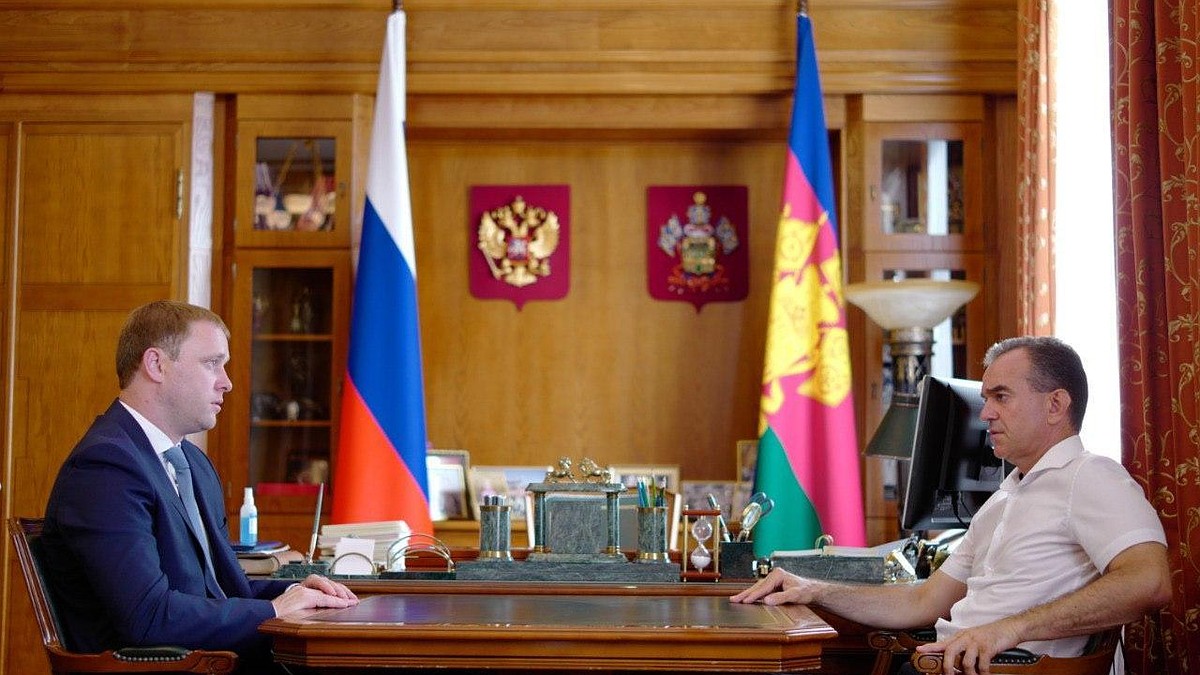
Activists say that the next day a scandal broke out at the headquarters on Stepnaya. Andrei Rudomakha asked Anastasia Vdovina why she asked volunteers not to participate in the meeting with the governor. Vdovina replied that the reason was that this meeting had not been agreed upon with her. Then Andrei Rudomakha decided to hold a general meeting of volunteers in the evening, it was scheduled for 17:00: “At five o’clock we arrive at Stepnaya, and there is [the all-Russian movement] “Ecosystem”. They say: “You can’t [hold a meeting here], we’re considering something here.” [Andrey] Rudomakha calls Nastya [Vdovina]. Nastya doesn’t pick up the phone, although she was supposed to be [at the meeting],” recalls activist Bogdan.
The volunteer says that on the same day Andrei Rudomakha “used his connections”, met with the head of Anapa Vasily Shvets and demanded to “recall” Igor Polyakov and Anastasia Vdovina: “As far as I know, Andrei [Rudomakha] told [Vasily] Shvets: “We don’t need them.” And since then Polyakov was recalled from us, and [Anastasia] Vdovina somehow fell off herself . ” The next day, representatives of the all-Russian Ecosystem movement were kicked out of the warehouse.
"When I've eaten too much"
When Elena Kholmirzaeva “falls into an inadequate state,” activists ask her to provide a report on the funds collected and spent. For several weeks she refuses them this under various pretexts. Only in early February a commission of eight people is formed. These include organizers and coordinators of headquarters, warehouses and a representative of the Department of Internal Policy of the Krasnodar Territory Administration. The commission begins an audit.
Based on the results of the inspection, the commission draws up a report. It follows from it that in total Kholmirzaeva’s accounts in Sber and Tinkoff banks received donations of almost 11.9 million rubles. As of mid-February, a little more than 3.7 million of this amount remained in the activist’s accounts. At the same time, the commission considers 2.2 million of the money spent to be suspicious expenses with probable signs of violation of the law on legalization and money laundering.
Activist Kirill, in a conversation with Protocol, calls Elena Kholmirzaeva a fraudster. He says that in addition to those expenses that the commission considered illegal, he has questions about other expenses: “At first she bought food in a pizzeria, in some kind of restaurant. It's not clear what this is for. And then, in short, I started [buying] what’s their name... weight loss bars. This is when you’ve eaten a lot,” the volunteer says indignantly. He claims that activists asked Kholmirzaeva about unnecessary spending on food: “They told her: “Listen, Lena, what the fuck are you doing?” Then [she] said: “I didn’t eat by myself, I ate with the volunteers.” But this is a fucking elementary thing: if you want to eat caviar, you buy more of it to say: “I wasn’t the only one who ate it.” Why the hell are you spending money on this? Did people give their last money so that you and the volunteers could eat together, damn it?” , - Kirill is indignant.
Activist Julia disagrees with him. She says she is far from calling Elena Kholmirzaeva a fraudster: “I think someone asked her to buy something. And she couldn't refuse. She was locked in a corner, roughly speaking. This, it seems to me, is very important [to understand] before making materials about her as a fraudster. I think that we have a scammer administration and some of the pro-government structures are scammers, and Lena was simply a tool ,” says Yulia. This point of view is shared by all the volunteers interviewed by Protocol, except Kirill.
Four days after the end of the inspection, on February 13, Elena Kholmirzaeva was suspended from participating in the campaign. This decision is not widely publicized. Activists hope that she will be able to provide justification for the controversial expenses, but this does not happen. Volunteer Kirill shared with Protocol an audio recording of Elena Kholmirzaeva’s reaction to the decision to remove her: “In this case, then, if you remove me from all problems, I am removed from everything else. I reserve the money that remains on the card for taxes. I reserve the rest of the amount for lawyers, lawyers, trips, courts and so on. And from tomorrow I will completely retire and return to my life ,” says the activist.
Volunteers found out that on December 26 and 27, Anapa individual entrepreneur Olga Zubenko issued four invoices to Elena Kholmirzaeva for the services of a backhoe loader and transportation by dump trucks. Based on these accounts, the activist made four transfers for the same 2.2 million rubles. Entrepreneur Olga Zubenko and Elena Kholmirzaeva signed certificates of completion of work, according to which the excavator and dump trucks worked for 400 hours.
— There is also an agreement for special equipment, which Kholmirzaeva and Zubenko signed on December 17. This is when donations for Elena’s cards just started to arrive,” says one of the volunteers of the bird rescue campaign on condition of anonymity. “At the same time, Kholmirzaeva refused to pay us for the work of the tractor, which actually worked to clean the shore. She said that the money was collected for birds and she could not spend it on cleaning the beach.
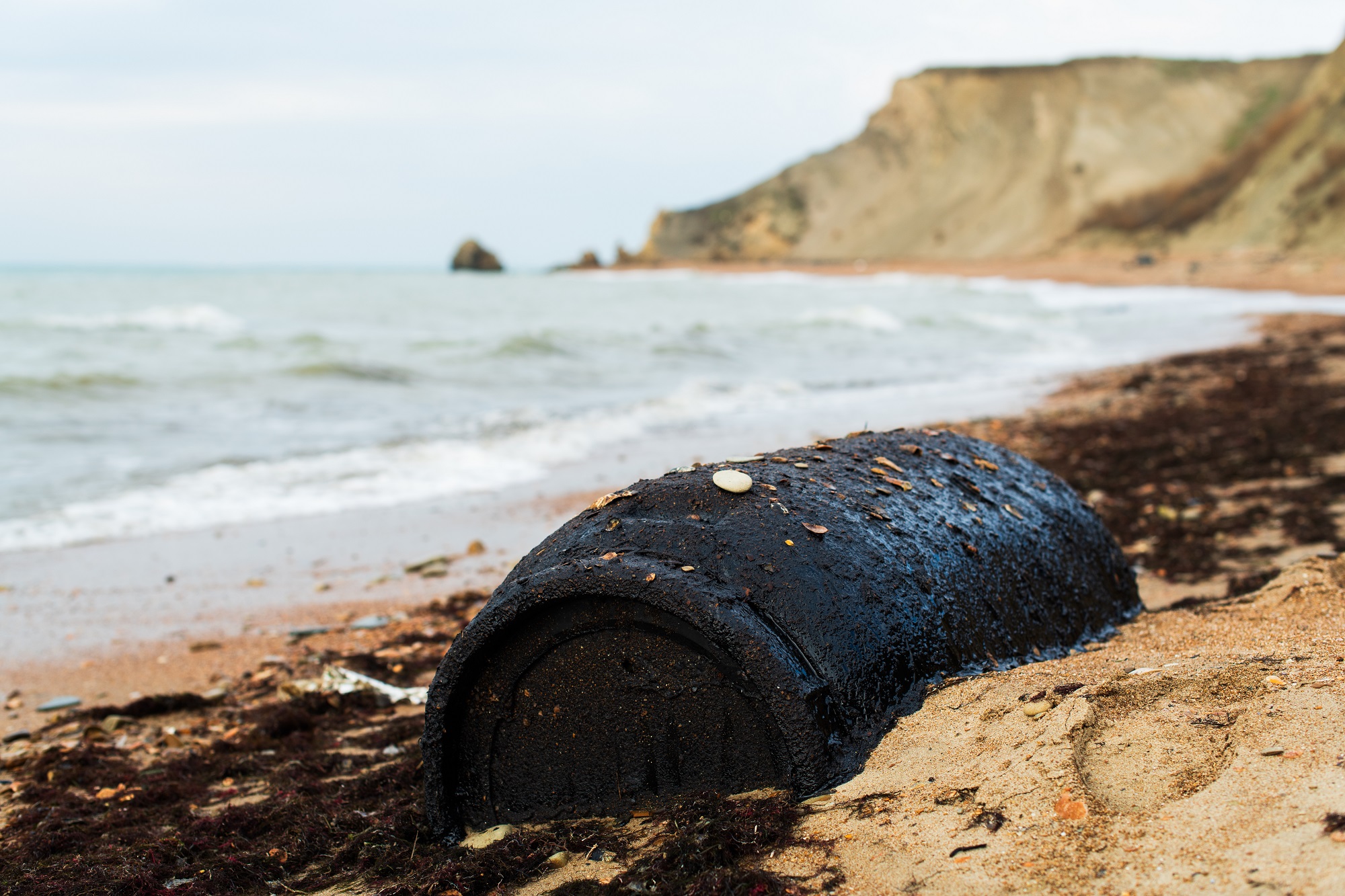
When volunteers raise the issue of spending 2.2 million rubles, Elena Kholmirzaeva refuses to say at whose request she transferred the money. The activist claims that she spent these funds so that she could approach the birds affected by fuel oil: “After that she left and the question hung in the air. When Elena returned a week later, questions about the spending of these 2.2 million rubles were raised several times at general meetings of the campaign activists, but Elena was still unable to answer them, says one of the campaign participants.
Activists claim that Olga Zubenko does not have the equipment that is indicated in the work completion certificates. After the transfer from Kholmirzaeva, Zubenko cashes out the money and transfers the entire amount to Ruslan Saitov, director of the Stroykarierservis company. Zubenko herself also works for this company. When the Department of Economic Security of the Ministry of Internal Affairs took over the matter, Saitov said that he did not carry out any work, but transferred the money to another entrepreneur - he was engaged in cleaning the shore. The entrepreneur said that he did not receive any money. Then Saitov stated that he did not remember to whom he transferred the funds and refused further testimony. The final fate of 2.2 million rubles is still unknown.
“There’s no money, we’ve spent it all”
Because of Elena Kholmirzaeva’s behavior, volunteers decide to open a parallel fundraiser. To ensure that the authorities do not have complaints and suspicions, they want to collect money into the accounts of a legal entity: "The [Anapa] administration, it says to Andrei [Rudomakha]: “We have a fund. In general, it is so neutral, it collects funds for sick children - for treatment. Let’s give it to it.” Andrei decided that it should be so,” says activist Maria. So, on December 21, the collection of money for the accounts of the Droplets of Good charity fund begins.
This organization appeared in 2021 in the Chekon village, 30 kilometers from Anapa. The general director of the fund is Galina Myshkina. From documents published on the foundation’s website, it follows that in the first year of its existence, the organization collected a little more than 60 thousand rubles. In 2022, the fund collected 1.3 million, and in 2023 almost 266.5 thousand rubles. In the first year of its existence, “Droplets of Good” helps sick children and elderly people who find themselves in difficult life situations. In 2022, another program appears - assistance to those mobilized for the war with Ukraine.
At the same time, independent media, opposition media, bloggers and politicians are getting involved in covering the problem of the spill. The number of participants in the chat “Fuel Oil Spill in the Black Sea” is constantly growing - by the twentieth of December there are already 100 thousand people in it. All of this helps ensure that the new fundraiser is attracting much more attention and money than before.
As in the case of Elena Kholmirzaeva, activists quickly have questions for the Drops of Good Foundation. According to Maria, the collection into the fund's accounts lasted about four to five days. The activist says that the organizers of the campaign tried to get money to pay for the accommodation of volunteers in the first days after the disaster - it was necessary to allocate 30 thousand rubles. Galina Myshkina ignored the activists: “ On December 27, Galina actively pretended that she did not want to have any contact at all. We are all unknown who, unknown what to call ,” recalls Maria.
On January 3, Andrei Rudomakha sends Myshkina a request for compensation for the costs of accommodating volunteers. Soon the head of the fund begins to get in touch: “She said that’s fine, fine, we’ll formalize everything, we’ll do everything, no problems at all ,” recalls Maria.
After the New Year holidays, it turns out that a significant part of the money was spent without reporting: “On January 10, they wrote to her and said that the ninth day had passed, and the bills had not been paid. She says: “There’s no money, we’ve spent it all, why didn’t you tell me something before?” says Maria. Galina Myshkina claims that all the funds were spent “on maintenance.” In the correspondence available to the editors, the head of “Droplets of Good” names an approximate amount of 38 million rubles. A report dated January 17, 2025 is available on the fund’s website. This is a report on spending on the next charity program of Kapelek - helping the population overcome the consequences of the fuel oil spill in the Black Sea. The document indicates the exact amount of 39.6 million rubles. The report states that the fund paid for tools, personal protective equipment, equipment, food, medicine, dishes, special equipment and transportation services.
“It’s in our nature to interact this way.”
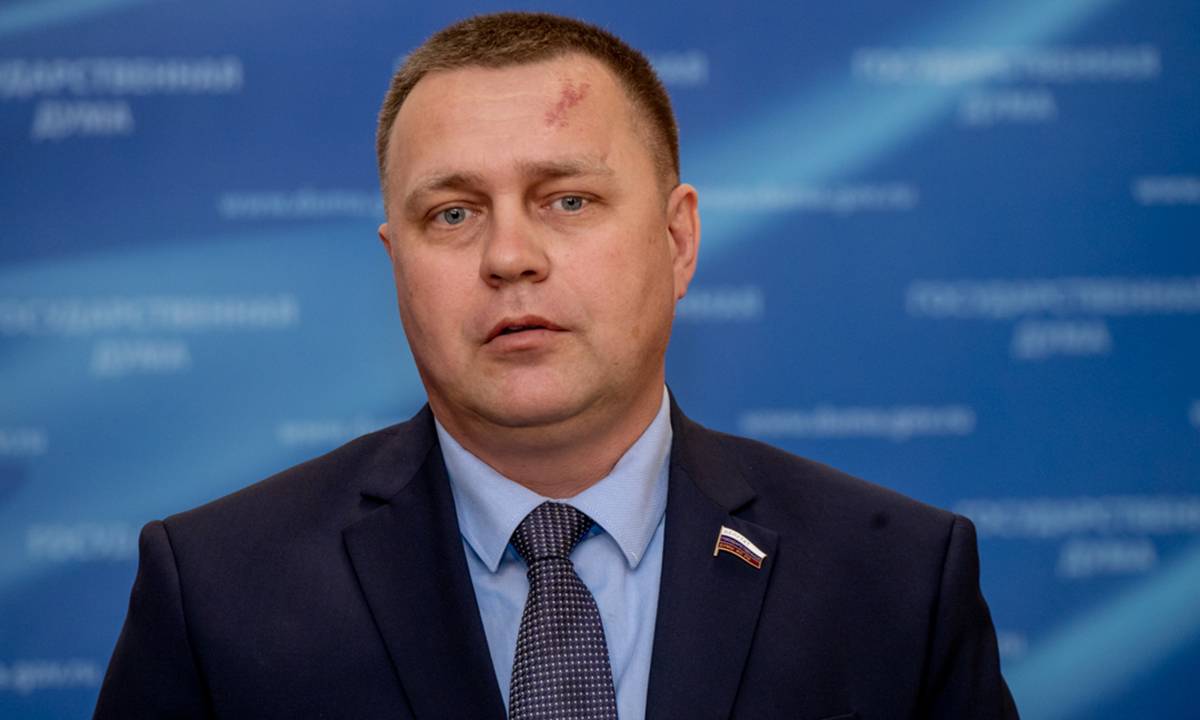
According to Bogdan, in mid-January, the organizers of the bird rescue campaign tried to get involved in the work of cleaning the beach. Then two public headquarters appeared, called “Barrier” - on the Bugaz Spit, and “Dolphin” - in the village of Volna in the Temryuk region: “Now the United Russia senator [Igor] Kastyukevich got in there and brought 300 of his stupid volunteers. It so happened that after he arrived there, there was a fire at the Barrier. It was a powerful camp with its own base, support, and so on . ” Bogdan characterizes the senator as “a good manager,” but notes that many volunteers are dissatisfied with his work methods. According to the activist, after the fire, the senator took advantage of the moment, ousted or subjugated the previous organizers of “Barrier”: he put someone on the payroll, lured one of the administrators of the headquarters chat on Telegram to his side and “stole our group.” Bogdan says that the social activists were not able to fully “get a foothold on the shore.” The Dolphin headquarters is still working, and the Barrier is working, but is experiencing serious difficulties due to the fire.
According to the activist, the campaign to eliminate the consequences of the spill as a whole is also experiencing difficulties: “The mood is so-so, the enthusiasm is no longer there. The atmosphere, let's say, is no longer what it was at the beginning. But on the whole, people are following the general flow that existed then. I think that’s it: it won’t last long, then it will start to crumble ,” Bogdan shares his thoughts. He says that initially many campaigners supported the creation of a local organization, which was given the working name “Save the Sea”. Some activists still believe that it is necessary to create such an organization. Bogdan thinks that the moment for this initiative has already passed.
Activist Yulia says that recently there have been strong conflicts among volunteers. She believes that the stage of actively helping nature has ended, “sharing” and “all sorts of social movements” have begun: “This is absolutely normal, by the way, ” says the activist. — I talked to a man who volunteered for 25 years in the Red Cross. He says that there are manuals that describe all this, all this social dynamics. It's absolutely standard. This doesn’t say anything about people, it’s in our nature to interact this way. It’s just that the sharpness has subsided . ”