
Translated material
"Panahi crosses the border without running away from Iran, but remaining in it." Chapter from the book of Anton Dolina* On the New Cannes Laureate
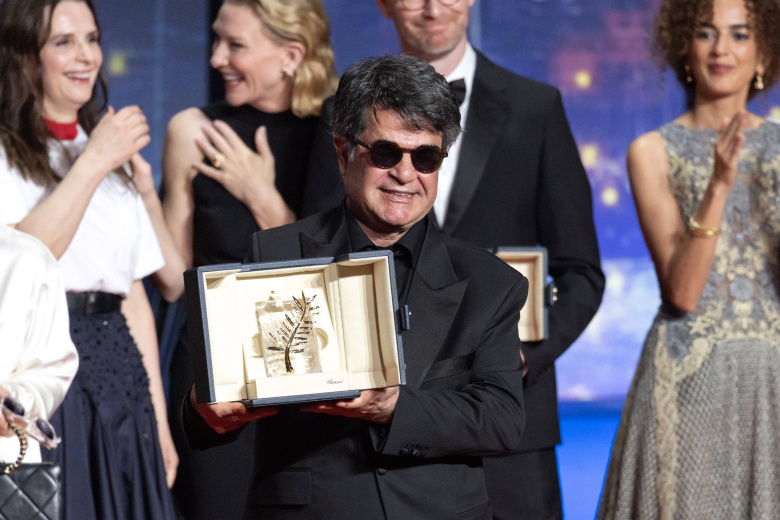
Jafar Panahi with a “gold palm branch” for the film “Simple Accident”
Syspeo / Sipa / Scanpix
At the 78th Cannes Film Festival “Golden Palm Branch”, the film “Simple Accident” of Jafar Panahi, ended on May 24. This is the second branch of Iranian cinema (the first in 1997 received the teacher of Panahi Abbas Kiarasts for the “taste of cherries”), and Panahi himself is now the second director (after Antonioni), who collected Fullhaus from the highest awards of the four main festivals of the world - Cannes, Venice, Berlin and Locerno.
Two years ago, Anton Dolina’s book “Act of Dis Beigless”, dedicated to the director, nine out of ten films of which was banned in his homeland (the fate of the eleventh, formally, is not yet clear, albeit predictable), in the publishing house of Novaya Riga Gramatas. When she was written, Panahi was in a prison cell: on July 11, 2022, he came to the prison of Evin to find out about the fate of Director Mohammad Rasulof, where he was detained, saying that he had an unsortable term of imprisonment. Panahs were released only in February 2023, so the premiere of his previous painting “No Bears” took place in Venice without his participation.
With the permission of the author, Republic publishes the last chapter from the book “Act of disobedience” dedicated to this film.
"There are no bears", or borderline
Jafar Panahi was arrested and sentenced to six years in prison. For the premiere of his tenth full -length film “There are no Bears” at the Festival in Venice, he cannot even follow. An enthusiastic reception (about fifteen ovations, no less) and a special jury will improve the situation or will it only aggravate it? Will the attention of the Western press and the public, filmmakers and festivals will help to free Panahi, or, on the contrary, will convince the Iranian authorities that the disgraced director is an enemy with whom he must behave appropriately?
“Honestly, we do not know the answer. It remains only to guess, ”the Reza Haidari and Mina Cavani, actors of the film who came to represent him in Venice, answer. A day later, they will accept the prize on stage.
In 1994, six years after his first documentary and a year before the premiere of the gaming debut in Cannes, Jafar Panahi participated as an assistant director in the filming of the famous Abbas film by Kiarasts “Through Oliva”, the third part of the “Coker trilogy”. For Panahi, this is a decisive meeting and experience that determines his biography and method. Kiarosts is not the first to hide behind the screen doubles. His film is a fake Making of of, in which there is an actor playing the director, that is, himself (Mohammad Ali Keshavars seems to be in the first frame, destroying the “Fourth Wall”, and without that shaky kiarosts in all films), and another actor from the previous film “Life and nothing more” (1992), who played the role of playing the role The director is there. The kiarons behind the scenes. And his assistant Panahi - in front of the camera, under his own name, will immediately recognize, despite the thinness and magnificent mustache. Here, a systemic, if I may say so, is already visible, the difference between evasive kiarosts and insisting on its directness, turning it into a key technique of Panahi.
The roll call with aesthetics and the theme “through olives” in “There are no bears” is obvious, as in no other Panahi film.
As if anticipating the future arrest and conclusion, the director, as it were, sums up, is looping his professional career from the first step to the last, at least at some period.
Both films are about filming cinema. The action of both was transferred to the countryside. Both concentrate on genuine life drams (of course, staged, but at the same time played by non-professional actors and therefore completely believable), which occur parallel to the filming process. Both films are slightly camouflaged love stories - a rare genre for both kiarosts and a panhai who resorts to “romance” for the first time.
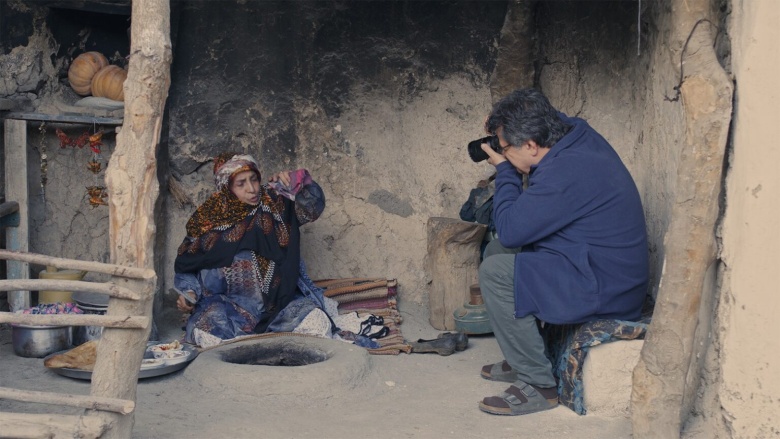
The frame from the movie "There are no Bears" (2022), dir. Jafar Panahi
Kirosts completes the “through olives” with the scene, where, on the general plan in the distance, against the backdrop of those very olives, his hero, mason Hossein (Hossein Rezai), haunts his chisobu - the educated high school student Taher (Taher Lanikyan), achieving an answer from her: Yes or no? Having received this answer, not prominent and not heard by the viewer, he rushes back towards a static chamber, and does not have time to run close enough so that we examine his expression and guess about the outcome of the love conflict: the final titers begin. While Panahi prepares his love dramas - there are two of them in the film - to the tragic end, not allowing him to doubt the outcome, as sharp and final as the jerk of a manual brake in the last frame “There are no bears”.
The name of the Panahi film, in contrast to the beautiful name by kiarasts leading towards the beautiful name, is categorically. When an elderly local resident stops halfway to the director (character), who is going to the prayer house to bring a solemn oath, we will talk about its content a little later, he is suffering from a stranger to be bears that are found in the vicinity: walking in the evenings is unsafe. But having settled the Panahs of his considerations (“it is necessary to swear in this and this, but whether the oath will be true, it is not so important”), he lets it go on the next path, soothing: there are actually no bears here a long time ago. The danger is invented, fear and order for the sake.
Overcoming the fear born of a myth or phobia becomes a key theme of Panahi cinema from the very beginning, at least from the “mirror”. In "There are no bears" this is a leitmotif. What kind of fear is actually we are talking about, it soon becomes clear. In the very sanctuary where Panahi once again violates traditions, refusing to swear on the Qur'an and offering to shoot a ceremony, that is, to profane the sacred ritual, turning it into a movie, production. The young local resident Yakub (Javad Sayyakhi) angrily addresses the elders, using a local proverb: "Do the bears ate your languages?"
It turns out that these very bears are a conspiracy of silence that it is scary or indecent to make a topic of public discussion.
To name the film for what is not in the film, and to declare this absence in the same name is paradoxical honesty, very in the spirit of Panahi. Spectators of the Venetian premiere in the first reviews jokingly complained that the bears on the screen really did not show. At the same time, this absence involuntarily reports the absence of the author. And the theme of silence signals the forced silence of Panahi, arrested before the premiere and for the first time unable to, even indirectly, comment on his picture or present it to the public.
Subscribe to read the whole
Make a subscription Redefine.media to read Republic
Subscribe [you can pay for a Russian or foreign card. The subscription is extended automatically. You can unsubscribe at any time.]
Where are the money subscribers going