
Translated material
As for great movie dramas
About “Photogenie” by Louis Delluc
People did not immediately understand that cinema was not a mixture of photography, literature and theater, but an independent form of art, and one of those who made a decisive contribution to the formation of such an idea was the French critic, fiction writer and director Louis Delluc, who published the book “Photogenie” in 1920. Not at all similar to modern works on cinema, free in style and form, it stands at the origins of modern film studies. At the request of Gorky, Anton Prokopchuk talks about this book.
All of us, since February 24, 2022, have found ourselves in the face of advancing barbarity, violence and lies. In this situation, it is extremely important to preserve at least the remnants of culture and support the values of humanism - including for the sake of the future of Russia. Therefore, the editors of Gorky will continue to talk about books, reminding our readers that there is still a place for thought and fiction in the world.
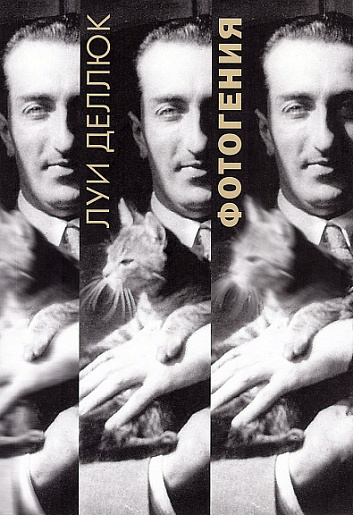
Louis Delluc. Photogenia. M.: Cloudberry, 2025. Contents
 |
The average viewer has no idea what all true connoisseurs know: cinema is dead. Not just in the nineties, but already a hundred years ago. Did it die on its own, having depleted its vitality, or did someone help it? There are many guesses. No doubt the sound had an impact. Perhaps the theater too. Not exactly the color. Surely - a passion for new techniques to the detriment of meaning. In any case, the golden age of cinema is irrevocably a thing of the past, and the truer the connoisseur, the more distant it turns out to be. According to the most balanced estimates, it all ended somewhere in the mid-1930s. Be that as it may, “real” cinema is completely exhausted by the silent era.
We have all at least once tried to watch one of the few surviving films of that time. Most likely - a “silent comic”, something from the “hundred best” list, most of which do not include silent films at all. It is often found that they cannot be watched directly, as they say, “for pleasure.” Inevitably there is a feeling of going to a museum on a school excursion, and with it - distance, rejection and simply boredom. To the perception of examples of what is called the avant-garde, all sorts of prejudices are added. Finally, all of the above is accompanied by a simple consideration: why waste time on some artifacts of remote antiquity when a top series with a bright design and loud sound effects has been released on streaming?
Even those cultural phenomena that seem natural and self-evident were once not so. The cinema itself, with its very sophisticated system of conventions, quickly, but not at all immediately, became familiar. The artistic status of the newfangled attraction for the masses was even less obvious - needless to say, some still dispute the possibility of cinematography. This is partly why its pioneers needed to be not only inventors and poets, but also thinkers. Since it was new and not entirely familiar, it was necessary to protect the right of cinema to be called art on its own grounds.
One of the most productive paths to the aesthetic autonomy of creativity under the auspices of the tenth muse was the search for the special substance of cinema. The search for something that only a movie camera can deal with, that cannot be captured by any other means, much less framed in a work. This move in itself is also far from obvious. For example, to this day the stereotype of cinema as a “synthetic” art and, therefore, not completely independent is much more widespread. It is, of course, almost as old as the debate itself. And just as weak. On the contrary, the thesis about the independence of cinema is much stronger and, if you think about it, promises the artist, and with him the public, much more. It is possible that the oblivion of this simple maxim at one time finally finished off cinema.
Meanwhile, it is here that the key to most of the masterpieces of a bygone and, at first glance, completely alien to us era is hidden for the unprepared viewer. The fact is that almost all the highest achievements of young cinema, and especially the avant-garde ones, were the results of the search for new, unique means of expression. Today, of course, it’s not “necessary” to watch them, but it’s worth it . After all, we are not talking about a natural necessity (like with obsessed cinephiles) and not about an obligation (like with professional film experts), but about boundless value, which, with some initial effort, even a viewer born in the era of acid colors and obsessive sound design can discover in black and white silent cinema. And along with the awareness of this value will come a deep pleasure that no blockbuster will give you.
“Photogenia” (1920) by the famous theorist and practitioner of film directing Louis Delluc (1890–1924) was one of the first attempts to find the own matter of art, working with intangible light and shadow. This brochure was first published in Russian in 1924, and in a new translation several months ago. Those who are in the know don’t need to explain anything - they have already bought the book, read it and thought about it. Therefore, today we will look at it from an angle that may be of interest not to film experts and cinephiles, but to inexperienced viewers interested in cinema as a leisure activity. Therefore, we will not touch on all the details of the historical context or professional wisdom. After all, not our area of expertise. In addition, the publication is carefully provided with a fairly detailed commentary, and most importantly, with a scattering of wonderful illustrations, without which a book about photogeny is unthinkable. However, knowing well about the peculiarities of Russian book publishing, we understand that all this might not have happened, and therefore we will not fail to once again thank the translators, editors and publishers for their wisdom and generosity.
In short, let us try for once to perceive the text before us as a timeless statement. Paradoxically, this polemical work, steeped in the specifics of its time, even encourages such a reading. Delluc, of course, is not a thinker on the level of Henri Bergson, but still quite a thinker - insightful, witty and much more sensitive to cinema. Which, of course, is not life, but it can teach you something vital.
First of all, you need to know that this is not a theory. Authors like Jean Epstein, Germaine Dullac or Dmitry Kirsanov tried to raise the fragile idea of cinematic photogeny to this level (see the cult collection edited by M. B. Yampolsky “From the history of French cinema thought.” M.: Iskusstvo, 1988). They also introduced the more appropriate term “cinogeny”. On the contrary, our author is not at all concerned with giving systematicity or even consistency to his notes. It can be difficult to understand what he is driving at at any given moment. In a sense, the book is kept together by the deliberately irritating and confusing overall impression, and by the commentary that explains to us the unknown details of the historical context of Delluc's thoughts (which, in truth, were as little obvious to his contemporaries as they are to us today). For every thesis put forward, or rather thrown in by him, the author had to justify himself and fight. The matter was not helped by either the paradoxical style or the fundamental rejection of strict argumentation in favor of the unbridled mobility of thought and its polemical causticity.
Delluc did not even coin the word “photogeny,” let alone give it a clear definition. However, he pointed out the photogenic path that cinema should follow as an independent, living and therefore real art. Photography, he wrote a hundred years ago, stands apart from other venerable arts. They make fun of her, but don't take her seriously. Meanwhile, this outlandish technology has the mysterious ability to discern in objects captured on film something that the naked eye cannot see. There is photogeny, Delluc declares, there is a “ genius ” of the image, living in a reality invisible to human vision alone. Photogeny is not equal to the cuteness of the actors and the expressiveness of their movements, the natural beauty of the landscapes photographed and the elegance of the combinations of objects in the frame. The point is not in the “beauty of the picture,” as particularly naive directors still believe, but in the tendency of certain things and phenomena to be captured on camera.
The concept of photogeny, if one can even say so, is extremely vague. This book does not even talk about a comprehensive catalog of “photogenic” objects, and those that are mentioned, at first glance, have little in common with each other. The author, who left this world untimely, did not see most of the masterpieces of the silent era, including the advanced achievements of the cinematic avant-garde, which arose under the influence of his ideas and films. He did not survey the photogenia in its entirety - it was impossible, and it was not necessary. To begin with, it was enough to notice her invisible presence and announce it to the city and the world. Delluc's task as a theorist was not so much to systematize and analyze accumulated achievements as to call for the creativity of a hitherto unknown, genuine cinematic art.
“Every director has his own vision, which means there are as many photo geniuses as there are ideas.” It is photogeny and its search that is the primary concern of the director. Only by touching this transparent matter can a director develop his own style. At some point it even turns out to be synonymous with “cinematography”. We must forget, says our author, about the “beauty” of the image, the rules of framing and cameraman’s habits. Photography must be stripped of its power. A thousand photographs of Paris are not yet Paris, wrote Bergson, who did not accept cinema with its illusory nature of movement and life. An album with photographs, Delluc counters, is not a film. The director must not only be able to handle the technical methods of recording reality on film, but also understand their place in the general sense of the film work as a living whole. The idea is inseparable from technology in any art, but especially in cinema, this product of technical innovation.
On the other hand, you shouldn’t be too zealous in your desire to master more and more ingenious devices. Such technicalism or, if you like, handicraft sucks out of art all the naturalness, all the life that cinema is supposed to depict. “A good film is a good theorem. There are few good theorems.” There are beautiful and precise films that no one remembers, and rightly so. There are films that are inconsiderate, not very elegant, but lively. “Let everything be natural in the cinema! Let everything be simple!” - Delluc exclaims. This does not mean, as some still believe, that art imitates life in the sense that it captures with photographic precision all the details of the surrounding world, and at the same time comes into line with the expectations of the least demanding public. On this basis they also say that art “is not for everyone” and does not imitate nature, but this is too superficial reasoning. All art is for everyone, as long as you don’t take anyone for idiots. All art imitates life in the sense that it artificially reproduces naturalness itself. It creates something beautiful and living anew, without any natural necessity, thereby affirming the freedom of the spirit.
"Liberty" was the title of Delluc's planned but unproduced film about the French Revolution. In the book, this word is practically not used, except in relation to loose dresses, which the author considers more photogenic than other elements of a woman’s wardrobe. Perhaps it is too philosophical and pompous to be used seriously in such an ironic pamphlet. However, in a sense, the entire “Photogeny” is dedicated to her alone. After all, in essence, the author defends the freedom of art, and therefore of man. The freedom of cinema to express itself in its own language and on its own themes, without looking back at the reasons of the surrounding world: nor at the expectations and prejudices of the public, which does not know what to expect from young art; nor to the condescension and contempt of artists and critics of the old arts, who do not see anything valuable in the newfangled attraction. For for this freedom there are invisible, almost supernatural, but completely objective and solid foundations. If you like, photogeny is the secret ontological basis of freedom of aesthetic expression, access to which only the camera has access.
Therefore, let’s say, our complaints about the “unnaturalness” of the acting of actors of the silent era, about the “implausibility” of plot collisions, about the “madeness” of mise-en-scenes and scenery, and finally, about editing, lighting, and all sorts of visual techniques such as caching or blur, which are unusual by the standards of modern cinema, do not make sense. Art in general is an unnatural thing: it took free human intervention in nature for it to arise. Of course, as Immanuel Kant noted in his time, nature must be structured in such a way that freedom is physically possible. In turn, even in the most free actions a person is forced to reckon with natural laws. However, creative freedom is out of this world. Imitating nature, art adheres to other, not entirely physical laws. He doesn't care about gravity. When something in art becomes “natural,” it becomes just familiar, just that degree of convention that we are willing to ignore and not focus on while we enjoy the spectacle. Eventually it becomes a pattern.
Templates, like, for example, masks. a necessary and useful thing. Until they turn from a means into a goal. The same technique—say, the main character's tousled hair—may or may not be a pattern. If the actress is not charming, then no amount of hair will give her charm. If she is not present on the screen as if alive, then even the liveliest hairstyle will not be able to breathe life into her image. You cannot proceed from old conventions in the new conditions of cinema. There is no point, says Delluc, in pulling psychology by the hair, only conventionally designating states of mind that should be visible on the screen in themselves. Rather, let the hairstyle correspond to the psychology detected in the frame.
After all, it is impossible to say in advance what type or color of eyes will be photogenic. There is no point in relying on lists of “photogenic objects”, which Delluc himself sometimes indulged in, since then the very idea of photogenius will turn into a template, and the film will perish. “The director must understand that the telephone is photogenic, otherwise he will not be able to show it to the viewer.” The director must evaluate whether the actor has chosen the mask correctly, whether the gentleman is being played by a real gentleman. After all, the camera sees everything. Until she identifies “hers”, until an object involved in photogenic appears before her, we cannot say anything about its photogenicity. Here everything depends on the virtuosity of the director, on the commitment to the special virtue of cinematography - no matter whether it is brought up, acquired or innate. It depends on whether he has a close enough view of the world to see the invisible.
Young cinema, therefore, is an area of real, almost unpredictable technical experiment. But also instincts, intuition, and finally taste, on which the artist relies. Science is at one with poetry here. “Light is mathematics,” Delluc throws out at one point. True, unlike real mathematics, in the field of photogeny there are not many indisputably reliable provisions. “Flesh is photogenic,” the author suddenly declares, but it immediately turns out that not everything is obvious with nudity in the frame. It is not enough to simply undress the actresses to make the scene sensual.
It is not so easy to expose the visible world around us and discover photogeny under its covers, because it is not visible to the eyes. One thing is certain: photogeny exists. Delluc, unlike Descartes, does not derive this principle logically, but rather puts forward it as a postulate, as a symbol of faith, which any filmmaker needs in order to get closer to truly high art. In addition to taste and skill, the director is required to think, guided not by the pre-given principles of “pure reason”, but by the search for the mysterious source of cinematic freedom and beauty. Therefore, a real book about the invisible genius of the visible image cannot provide instructions and final answers. It only suggests in which direction, far from the well-trodden paths, the truth hidden from view can be sought.
Delluc points to it especially zealously in a fragment from the collection “Dramas for Cinema” (1922) accompanying “Photogeny”. I would like to quote it in its entirety as an afterword to our chaotic thoughts. This is at the same time a call, a prophecy and a call to the directors of the future to hold on to the freedom to make films according to the laws of cinema, and not anything else. Despite all the obstacles, habits and prejudices, despite the fact that the industry will always be ruled by mediocrities indulging in the worst tastes, despite all future mistakes and crimes against the art of cinema - in a word, despite everything that, with a seemingly natural necessity, kills all the artist’s attempts to revive the work - let him affirm human freedom in the creative search for beauty. Let him see and bring to light that which is not yet visible, let him create that beautiful thing that does not yet exist, but which, without knowing it, we need. Otherwise, why all this?
AS FOR GREAT MOVIE DRAMAS, they will appear soon.
But they won't be alone. Mediocre works, or stupid, or disgusting works will not go anywhere, and it is only fair, humanly fair, that they will win money.
But the million misfortunes that accompany the film will not go away: for example, the sponsor who hits the table with his fist and yells: “French cinema is me, damn it!”
But the director of the hall will again say: “‘Intolerance’ was staged by Griffith? And “Josselin”?.. - This is Lamartine. - Lamartine? You see, he’s a Frenchman, but he works no worse than an American.”
But the screen will still hardly warn the viewer about the tone of the film that he is about to watch. Well, try to come to the theater without knowing whether they will show you Macbeth or the Folies Berger Revue...
But film screenings will always suffer from the fact that the owner of the hall decides that he is obliged to accommodate the most intense program in the minimum time. And for a long time yet the photography of funerals will compete with the big races in Auteuil.
But film orchestras will always play “The Yellow Princess” for Sesshu Hayakawa, “On the Surface of the Sea” for naval shooting ranges, the Pastoral Symphony for society thieves - and, of course, “The Death of Oze”: ten minutes before the death of the hero, so that there is no surprise.
But the most idiotic novels, which are the most difficult to adapt, will, as usual, be entrusted to the most incompetent directors.
But the public will always be flattered by quoting phrases from Victor Hugo, Marguerite Debord-Valmore, Tolstoy, Erckmann-Chatrian, Vincent Ispa or Pierre de Culvain in the text of the film.
But the prince, in nine cases out of ten, will be played by a comedian from a café or a boxer. But at any moment, God knows what kind of fool might be dubbed a “star.”
But until the end of time they will argue about three-dimensional cinema, color cinema, sound cinema, and so on.
But censorship will cut off innocent, chaste, artistic scenes, leaving the people with the most vile, the most unhealthy, the most base scenes.
But in foreign distribution, hundreds of meters will be cut out of a film in a second, where editing was a puzzle for the director, which he painstakingly solved for eight weeks.
But the cinema is not only a poorhouse for retired pimps, bookmakers on the run, whistle manufacturers, failed actors and feeble-minded majors.
But one day all distributors will stop looking like wine merchants. Now, unfortunately, even if one of them is no longer similar, this does not mean...
But even when brains begin to create for black and white, editors will still consider it a clever move to order scripts from eminent playwrights, from old novelists, from academics - from all those who, naturally, know nothing about cinema.
But now is not the time to comment on the intellectual appeal of the image machine and all its linguistic capabilities. This is not a topic for conversation. What's the use of arguing about something that could fit into a whole book? Write a book. Let us say no more about these “hows” and “whys” and “why not” of cinegraphic dramaturgy in its early days.
Compose those highly anticipated films. The heart and mind are quite enough to find hitherto unprecedented techniques inherent in this art. And human stupidity, which tried so casually to take over the cinema, will become an inexhaustible resource for Terence, the Tabarens or Bernard Shaw - in the language that already has Chaplin and which is still waiting for its Aeschylus.
* At the beginning of the material: Fanny Ward and Sessue Hayakawa in the film “Perfidy” (1915, dir. Cecil B. DeMille)