
Translated material
Budapest article
Brussels again wants to deprive Hungary of its voting rights. In theory, Article 7 of the EU Treaty allows this, but in practice it hardly works

Hungarian Prime Minister Viktor Orbán, European Council President António Costa and European Commission President Ursula von der Leyen at a press conference following the EU summit in Brussels, Belgium, December 19, 2024. Photo: Olivier Hoslet/EPA
Hungary is once again under pressure from the EU. On May 27, Brussels will consider the application of Article 7 of the Treaty on the European Union, which makes it possible to deprive the right to vote of a country that systematically deviates from the “basic norms and values” of the union.
The reason for the new discontent in Brussels was Budapest’s plans to adopt a law “On Transparency in Public Life,” which allows the state to monitor all NGOs and media that receive foreign funding, including grants from the EU itself, and subsequently ban the work of such organizations in Hungary. Brussels' current attempt to invoke Article 7, or the “nuclear option” as it is also called, will be the eighth since 2018. All this time, the European Commission is trying to stop the authoritarian rollback taking place in Hungary under the leadership of its long-time Prime Minister Viktor Orban. However, like the previous seven attempts, the new episode of EU pressure on Budapest has almost zero chance of success. The withdrawal of voting rights from any country must be supported by all other EU members, and Slovakia has already stated that it is ready to defend Viktor Orban. At what point did Article 7 appear in EU legislation, how exactly it (doesn’t) work and why Brussels is once again trying to use it against Hungary, independent journalist Alexander Gorsky examined especially for New Europe.
The principle of unity, or consensus, plays a big role in how the European Union is governed. Decisions affecting all EU member states must be made on the condition that no country opposes them. The state does not have to vote “for”; it can simply not participate in the procedure , but even a single vote “against” stops the implementation of any reforms, including those vital to the association.
It is precisely because of the rule of consensus that the extension of sanctions against Russia or the adoption of new ones is always accompanied by lengthy negotiations , during which the most fundamental points may ultimately disappear. However, consensus in pan-European affairs is needed not only in foreign policy.
Article number seven
It is assumed that all EU countries entered into the union by agreeing to a set of fundamental values , which include the rule of law and support for democracy. But each member of the association still has autonomy in domestic politics - and as a result of elections and changes in governments, a force that does not share the original values may come to power in the country. Such a force, for example, can subordinate the judiciary to the president or prime minister, restrict media freedom, or change electoral rules, providing itself with more favorable conditions in the next elections.
To combat such examples of authoritarian backsliding,
On the eve of the wave of large-scale EU enlargement in 2004–2007, Brussels provided for the appearance of Article 7 in the system of its fundamental treaties. Its activation is equivalent to sequentially pressing the yellow and red buttons in relations between the EU and the state,
accused of deviating from basic values.
The procedure for applying Article 7 involves 2 stages .
Article 7(1) is a preventive mechanism or “yellow button”. The EU issues a warning to the country, saying there is a “clear risk of serious breach” of the union’s values. The process can be launched by the European Commission, the European Parliament or a third of the EU member states by their decision. To issue a warning, it is necessary to achieve its approval in the European Parliament by a simple majority of votes, as well as to collect at least ⅘ votes (22 out of 27 members) in the EU Council, a supranational body in which government ministers of member states participate.
Article 7 (2) and (3) - punitive measures, or “red button”. In cases where the situation continues to deteriorate and the EU sees “serious and persistent violations” of core values, the union has the opportunity to move from words to action. The procedure can also be launched by the European Commission, the European Parliament or a third of the EU member states, but now the issue goes to the European Council, the supranational body of the EU, where the heads of government sit. The European Council must unanimously ( acting by unanimity ) - with the exception of the accused - recognize the existence of systemic violations. Receiving such a label by a country opens the way to sanctions against it, such as deprivation of voting rights. This issue is already being considered by the EU Council, and support by a qualified majority is sufficient for it.
Thus, in order to really influence a state that is moving away from democratic principles - not only with words, but also with deeds - Brussels must first achieve support at the level of heads of state of all other EU members. In a situation where there are at least two violators, such a task becomes almost impossible.
Three delinquents
Since 1999 - the date when Article 7 appeared in the European Commission's arsenal - there have been only three cases of use of this mechanism. And each time, only the first part of the seventh article with a warning was used, and the matter never came to the point of receiving a permanent label, much less sanctions.
In Austria, in the 1999 elections, the far-right party was able to take second place and enter the ruling coalition. A wave of panic, caused by the rather outright neo-Nazi ideas of the new members of the Austrian government, swept across European capitals. Brussels quickly responded by invoking a then shortened version of Article 7, which did not contain a warning stage, but immediately accused the country of violating fundamental values.
Admitting that it had gone too far, the EU decided to retreat , especially since the odious head of the Austrian far-right himself left the government. But as a result of precisely those events, Article 7 became two-part in 2001. And since then, the second - the most effective part with measures against the offender - has never been used.
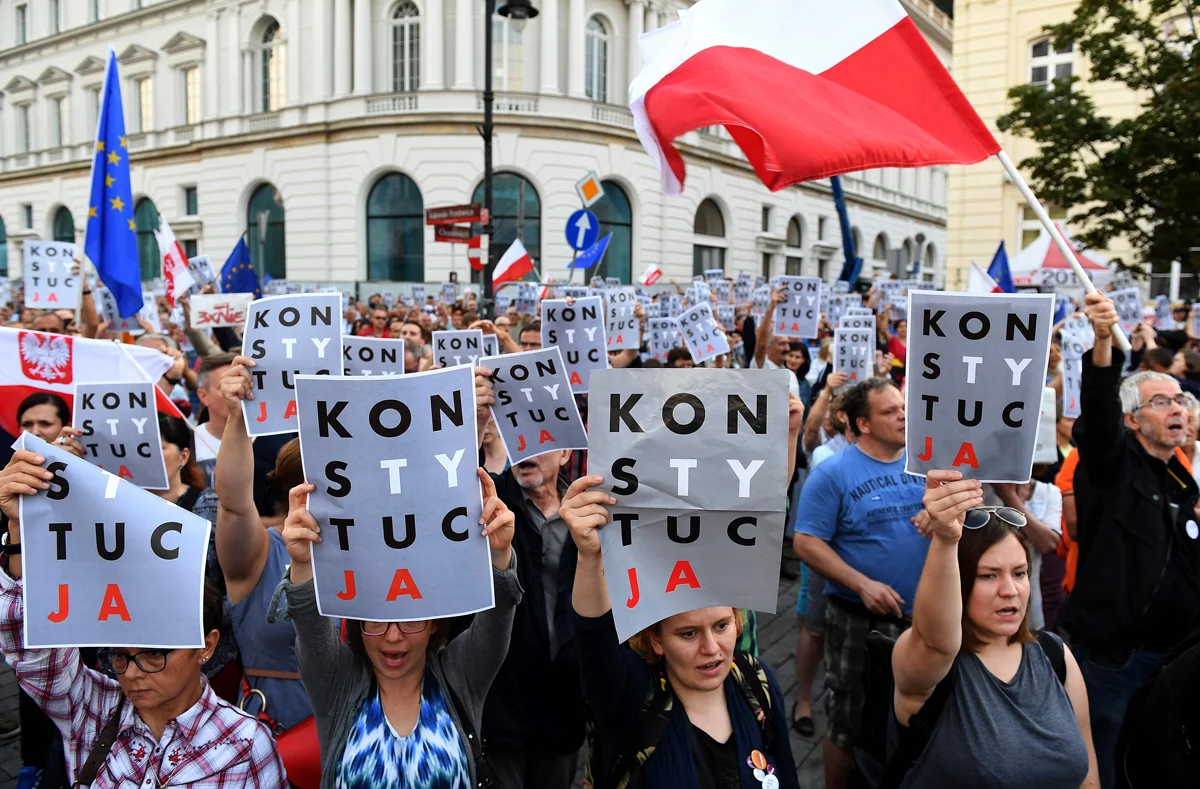
The next state against which the EU decided to use a punitive mechanism was Poland . The reason was the judicial reform , carried out under the leadership of the right-wing conservative party Law and Justice (PiS), which actually placed courts and judges under the direct control of the executive branch.
In 2017, Brussels launched the use of Article 7 against Warsaw. Having managed to quickly issue a warning, over the next seven years the European Council was unable to agree on giving Poland a persistent violator label, which would have opened the way to the use of sanctions against it.
As a result, the situation resolved itself: in 2023, PiS lost the elections to the liberal opposition under the leadership of Donald Tusk. The new cabinet he formed immediately proposed a plan to change the judicial system. And in 2024, the European Commission reported that it was satisfied with the planned steps of the new Polish authorities, and stopped proceedings against Warsaw.
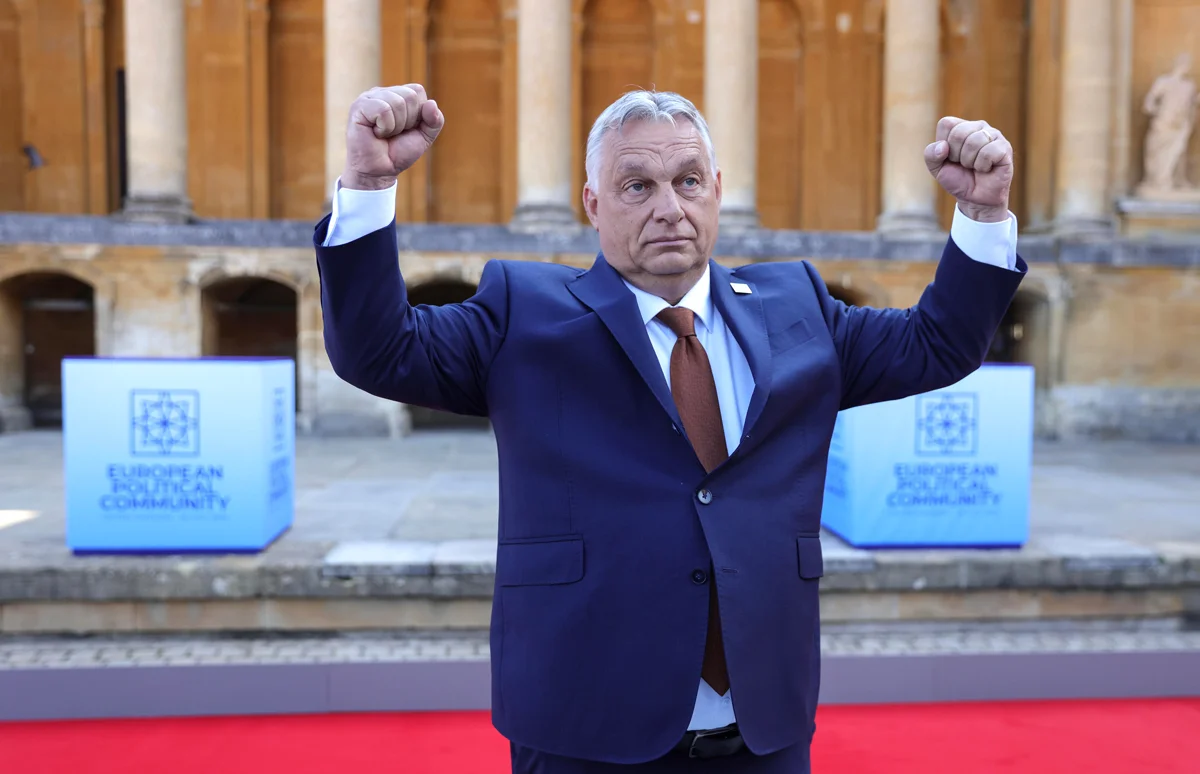
The European Commission was largely prevented from making progress on the issue of Poland by Hungary , against which Article 7 began to be used almost at the same time - in 2018.
For eight years now, Brussels has been accusing Budapest and the country's Prime Minister, leader of the conservative Fidesz party, Viktor Orban, of various violations that harm Hungary's democratic institutions. This time, the procedure was launched by the European Parliament, which considered that the reforms of the Orbán government harm the independence of the judiciary, limit academic freedom and media pluralism, and also provide the ruling party with the opportunity to use the public procurement system for personal and political corruption.
Since 2018, seven meetings have already taken place under the Article 7 procedures, and the list of claims from Brussels is constantly growing. In 2021–2024, the EU considered Hungary’s new laws restricting the rights of NGOs and media, initiatives against the LGBTQ+ community, and much more as deviations from basic values.
Despite a solid list of violations, it was not possible to switch to the second, punitive part of Article 7. Over the years, at the level of the European Council, Viktor Orban had defenders from Poland, as well as the Czech Republic and Slovakia. After the change of government in Warsaw in 2023, the main defender of Hungary became Slovakia, where Prime Minister Robert Fico, previously often accused of authoritarian tendencies, came to power.
Budapest tactics
Eurosceptic and populist Orbán treats accusations from the EU from a position that is absolutely logical for his vision of the world: supranational elites are trying to dictate to Hungary how to live and what to do, trying to erode the country’s sovereignty and bring its government under their control.
Immediately after Article 7 was invoked in 2018, official Budapest reacted extremely sharply, calling this decision “the revenge of pro-immigrant European politicians” for Hungary’s refusal to agree to the size of its refugee quota.
In 2019, Orbán lashed out at the "United States of Europe" over ongoing Article 7 proceedings, again accusing Brussels of interfering in Hungary's internal, sovereign affairs. In 2024, Hungarian Foreign Minister Péter Szijjártó called the EU a “factory of lies” in response to new accusations of backsliding on democratic norms. Finally, in light of the latest EU action on a new hearing on the application of Article 7, Orbán said that he “will not succumb to pressure from Brussels,” adding that Budapest “will continue to defend its sovereignty and national interests.”
This rhetoric from Fidesz leaders is primarily aimed at the more conservative part of the Hungarian electorate, but also at other right-wing politicians in Europe who are gaining more and more influence both at the national and EU level. Viktor Orban clearly hopes, if not to form a broad conservative flank around himself against Brussels, then at least to always have an ally in reserve ready to protect him from the punitive part of Article 7.
Eighth hearing
The next round of discussions on depriving Hungary of the right to vote, set for May 27, is probably doomed to failure, like the previous seven attempts.
This time, Hungary's main argument will be the position of Slovakia. Budapest and Bratislava have effectively formed a "mutual defense pact" that allows both to bypass any potential sanctions from the EU, requiring unanimous approval.
The May 27 hearing will follow a familiar pattern: the EU will raise concerns and bring charges, Budapest will reject them as an attempt to interfere in the country's internal affairs, the vote (if it takes place at all) will fail due to a rift between the 25 EU members and Slovakia.
There is no easy way out of this impasse. The European Union is constrained by its own rules and regulations, which are skillfully used by authoritarian forces. The problem is that time is rather on Viktor Orbán’s side here. With each new attempt, the EU institutions continue to lose authority, demonstrating their extremely limited ability to influence anything at the national level.
The example of Hungary shows that sometimes in politics all you need is one good friend.