
Translated material
Soldier of Misfortune
Electrician Ruslan Sidiki from Ryazan committed a series of sabotage acts in the interests of the Ukrainian special services and received 29 years in prison. Now he calls himself a prisoner of war and hopes for an exchange
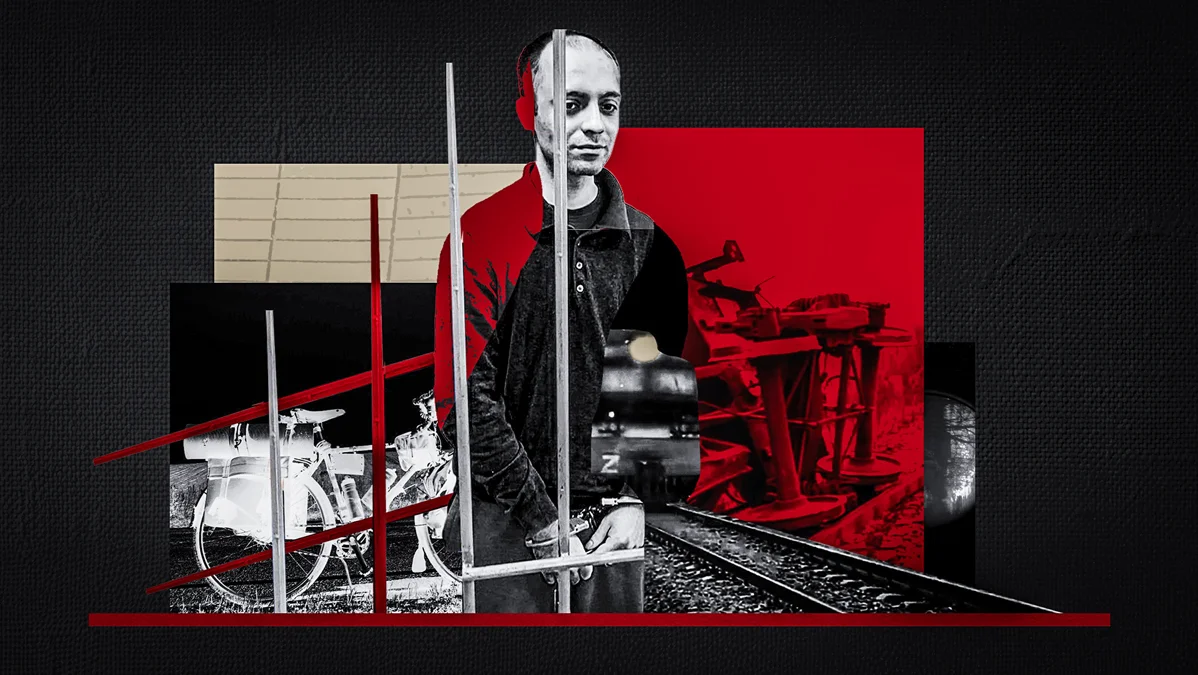
Ruslan Sidiki. Collage: “New newspaper Europe”
On May 23, the Ryazan Garrison Military Court sentenced 37-year-old anarchist Ruslan Sidiki. He received 29 years in a maximum security colony. As Mediazona writes, he will spend the first nine years in prison and only after that he will go to a colony.
Sidiki received such an impressive sentence for the fact that, under the leadership of the Ukrainian special services, he carried out a series of sabotage in his native Ryazan region: according to the investigation, in the summer of 2023, he independently equipped four drones with explosives and attacked the Dyagilevo military airfield with their help, and in the fall of the same year he blew up railway tracks on the stretch between the Rybnoye - Blockpost stations, which led to the crash of nineteen freight cars trains. Sidiki does not deny this and emphasizes that he only regrets that people were injured - Kamaz driver Alexander Bogatyrev, train driver Dmitry Unshakov and assistant driver Sergei Tarabukin. All of them survived and filed civil lawsuits against the bomber, which the court granted. Novaya Gazeta Europe tells the story of Ruslan Sidika - from sunny Sicily to his last word in court.
Italian from Ryazan
Ruslan Sidiki was born in Ryazan and, as he himself told Mediazona, lived there with his mother and grandmother the usual life of a Russian teenager. Spent a lot of time on the street, being a hooligan. He got his last name from his father, probably an Afghan, whom he doesn’t remember. As “Layout” writes , with reference to an acquaintance of Sidiki, his father was an Afghan officer. He allegedly graduated from the Ryazan military school, and then disappeared in the war.
At the age of 12, young Ruslan went on vacation to Italy - there his mother had been living with a man named Gabriele Pizzo for several years. He became Ruslan's stepfather. The young man remained in Italy, began studying and received Italian citizenship. At 18, he went to work, became an apprentice ironworker, and then tried to enlist in the army. But it didn't work out. The Palermo military registration and enlistment office refused Sidiki, citing “inconsistency of physical parameters and insufficient knowledge of the Italian language.” In 2007, the guy returned to Russia. He lived with his grandmother and worked either as a plumber or as an electrician.
“It was also influenced by the fact that I missed my grandmother and friends, and life in Europe then seemed too boring. At the same time, I remember Sicily with warmth - five minutes from the sea, beautiful nature, a quiet life for those who love warmth,”
— the young man said in letters to Mediazona.
...In 2016, the fashionable youth magazine FurFur published a report by Andrei Kaganskikh about a trip to the anarcho-commune “New Way”, which is three hundred kilometers from St. Petersburg. There, in the wilderness, on the ruins of the estate of Rear Admiral Sergei Timirev, an anarchist peasant community was formed at the dawn of the nineties. By the time the journalist visited, the project had already existed for 26 years, but it still looked like a long-abandoned dacha. The commune was led by an elderly erudite and passionate beekeeper, Nikolai Panteleev, who previously worked at a research institute. In addition to him, Tatyana, a mother of many children, whom Panteleev had once taken from a psychoneurological dispensary, and several “mobile” participants who came to the commune from time to time lived in the “New Path”.
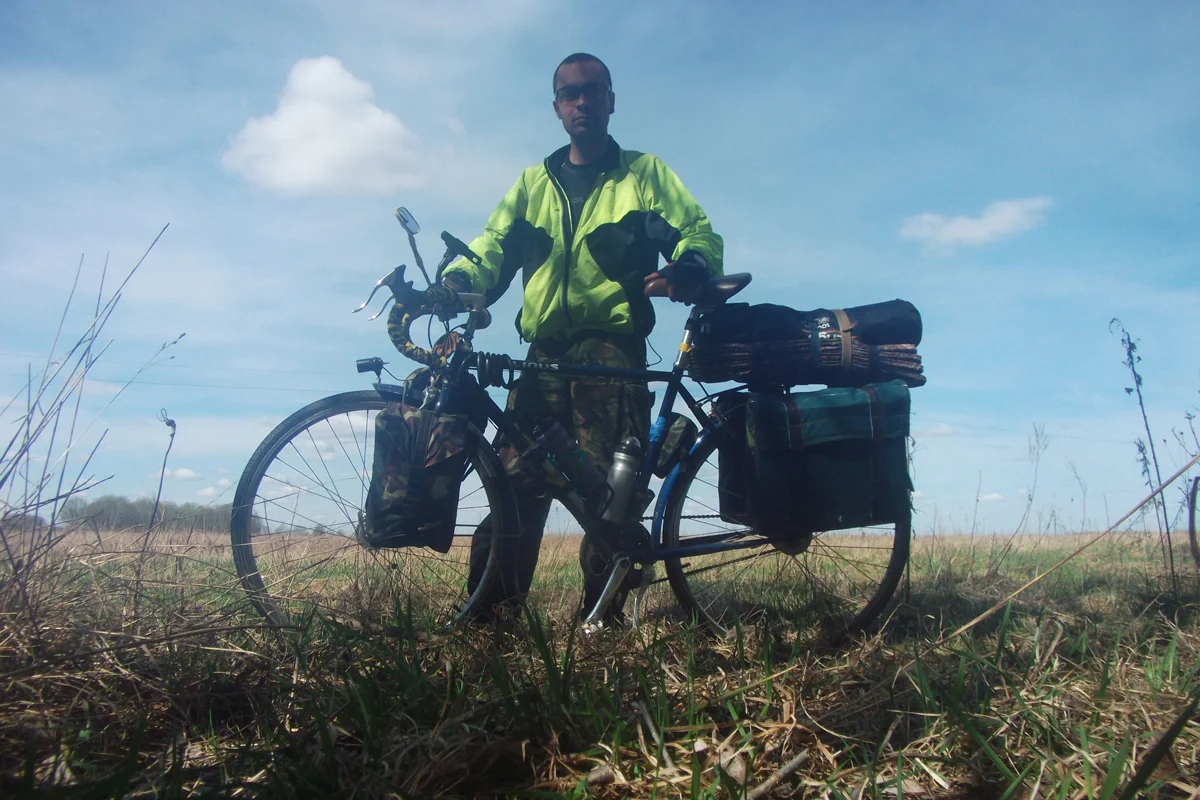
One of these “temporary” residents of the “New Way” was the now convicted Ruslan Sidiki. He traveled to the Leningrad region from Ryazan by bicycle when he found himself without work at home. He lived for six months and went back. He settled in one of the dilapidated houses, put it in order, did the wiring and “turned the homeless building into the most pleasant house in the area,” the author of the report described the results of his work.
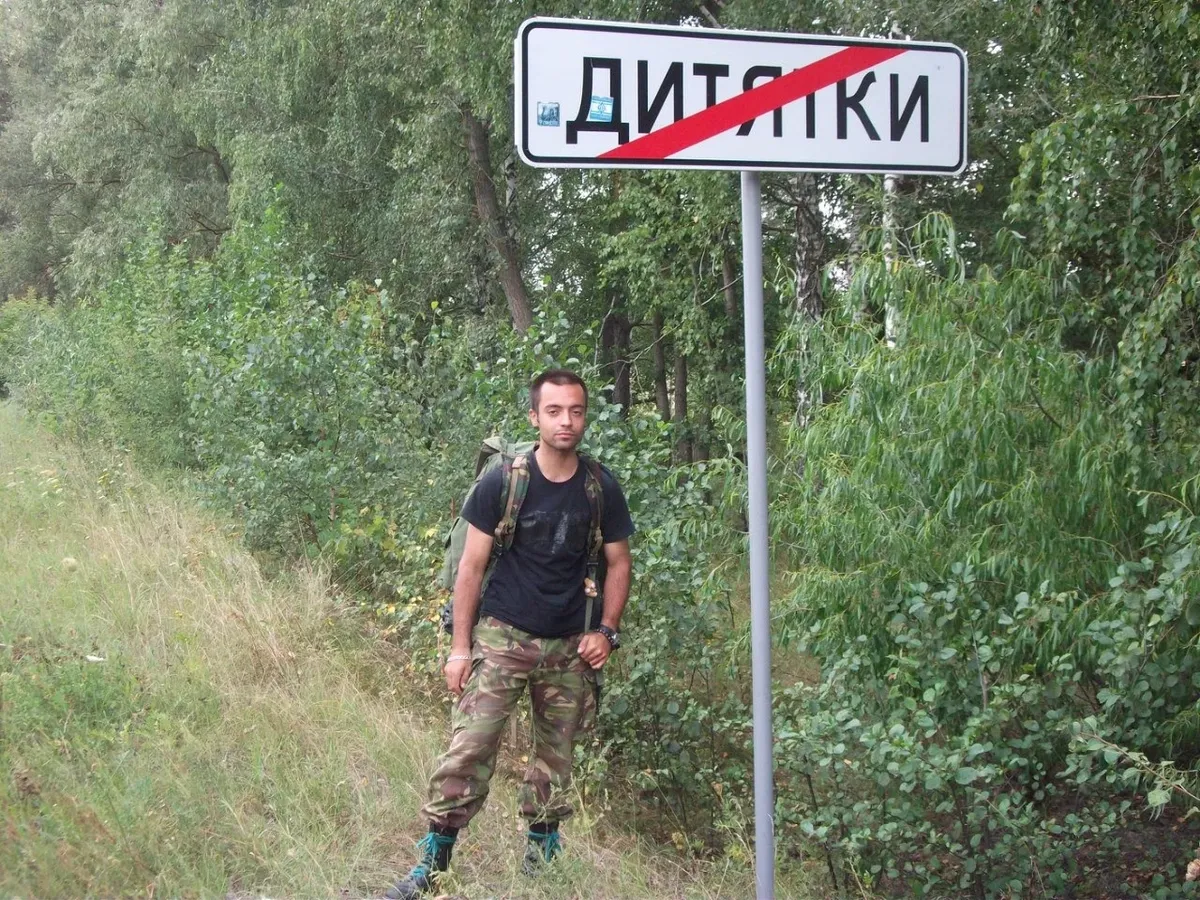
Sidiki eagerly talked with the journalist, talked about his trips to Pripyat, about “folk medicine” and his dreams of creating a settlement with a charter and his own armed detachment. Actually, this desire led him to the “New Path”. Perhaps, Panteleev said, only he can be trusted with the future of a small commune: “He gives the impression of an organized person who is capable of such a life.”
But life turned out differently. Over the years, the anarchist farm was completely empty, and Ruslan returned to Ryazan.
Bomber on a bicycle
When the war began, the young man decided to “take up explosives” because “the government cut off all opportunities to peacefully influence the situation”:
“There was a very unpleasant feeling that you couldn’t do anything. I saw trains with military equipment traveling, out of despair I wanted to gnaw the gun barrels with my teeth,”
- he wrote while already in prison.
Sidiki turned to his friend, who fought in the Ukrainian army, and said that he wanted to organize sabotage. He connected him with “a person knowledgeable in this area,” and the future saboteur was invited to Latvia. There, according to investigators, he “learned the rules of handling explosive devices and substances, and the use of unmanned aerial vehicles.” “They invited me to test my skills. If successful, they promised to help with the purchase of a drone,” Sidiki himself told Mediazone.
In 2023, returning to Ryazan, he began preparing for an attack on the military airfield closest to his home. He equipped the drones himself and carefully studied the future launch site. On a summer night, he biked four drones to their destination, setting them to delay takeoff for three hours, and then drove off. Only one drone reached its target, but no aircraft were damaged. The other three drones appeared to have been overturned by a nearby fox, Sidiki said. And although the bomber was lucky and was not caught, he decided that the attack was not very successful and he should switch to the railways.
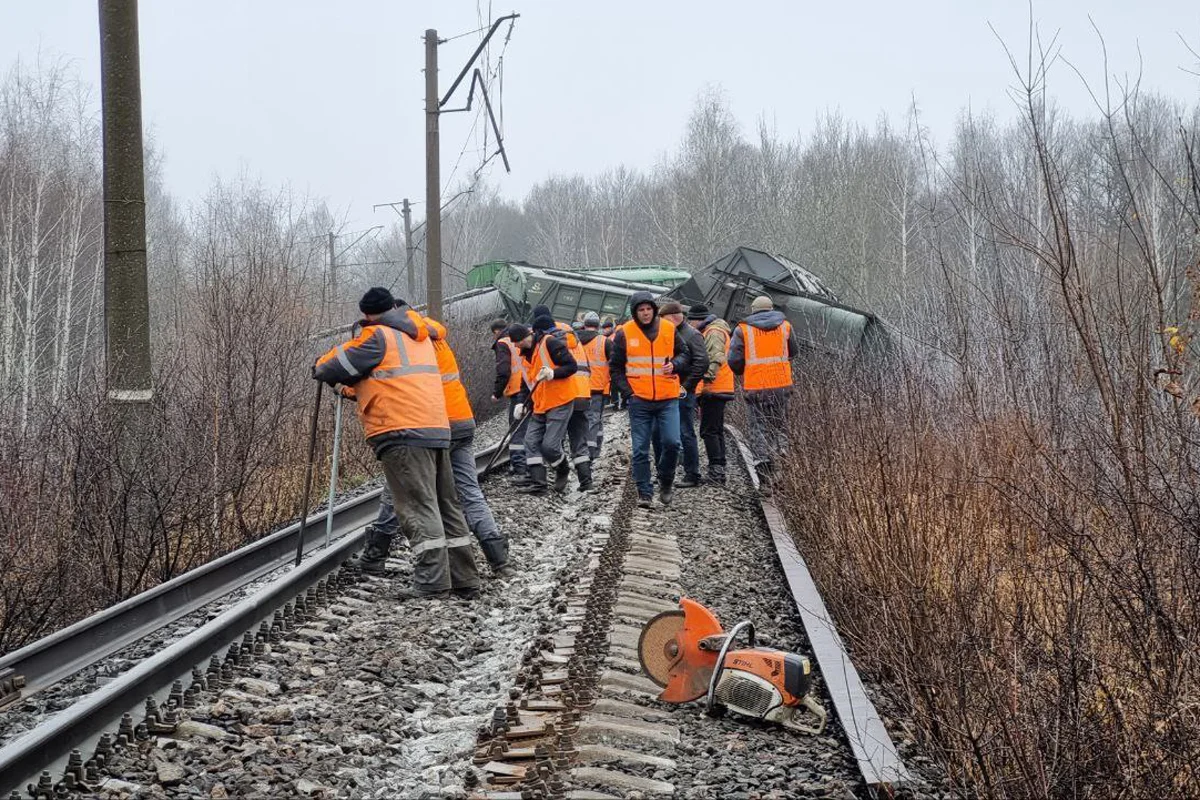
According to Sidiki, published by Mediazona, he discovered which section of the tracks the military cargo was going through and decided to blow it up. Having spent only ten thousand rubles, the young man assembled two powerful bombs and a video transmitter with a self-destruct mechanism. On November 11, hiding in the forest, he watched the tracks through a homemade video transmitter, and at dawn he detonated the charge, noticing a freight train. True, in the cars, which immediately derailed, there were not guns, but fertilizers. After the explosion, the anarchist threw away his bicycle and clothes and returned home by a different route.
“For me the war is over”
With such preparation, it would be quite difficult to catch the demolitionist. However, he was unlucky: a few hours after the explosion, he was caught on one of the CCTV cameras installed on the road. On November 29, Sidiki was detained.
“I had already relaxed and didn’t attach any importance to the fact that there was a cop standing at the entrance. He compared me with the photo from that same surveillance camera and urgently asked me to go with him to department No. 4 in Ryazan. <…> Even when they accepted me, they were not sure that I was somehow involved,” he said in his letters.
Doubts were dispelled when the police got hold of the anarchist’s phone - there they found his social networks and “concluded that he is at least not a supporter of the so-called SVO.” They threatened to kill the detainee, and then beat him and tortured him with electric shock, “the instrument for torture was a field telephone TP-57” (aka “tapik”), Sidiki claims. The next day they beat me with a stun gun.
“Compared to the tapik, the shocker has a rest, but it burns through clothes and leaves burns on the body, even part of the tattoo on my shoulder was burned off. I still keep the panties that turned into a sieve after the shocker...”
— Sidiki wrote to Mediazona.
After that, the detainee told on record and on camera everything he could tell, and showed the places where he threw out the waste from the production of explosives. During the investigation, Sidiki was charged under several articles of the Criminal Code: committing a terrorist attack (205 of the Criminal Code of the Russian Federation), illegal production of explosives (223.1 of the Criminal Code of the Russian Federation), illegal acquisition of explosives (222.1 of the Criminal Code of the Russian Federation), undergoing training for the purpose of carrying out terrorist activities and preparing and planning another explosion. The defendant categorically denies the last two charges, claiming that he learned everything himself and did not plan to blow up anything else.
In letters published by Mediazona, Sidiki said that “the deadline is quite long” and he does not foresee any successful outcome, but he hopes that one day the Ukrainian side will exchange him:
“I think that I can be classified as a prisoner of war, since my actions were part of the war between Russia and Ukraine. I would be a political prisoner if I were locked up for a peaceful anti-war rally or putting up stickers “discrediting” the Russian Armed Forces,” he believes.
The anarchist refuses to call his actions “terrorist” and claims that his goal was military targets, not intimidation of the population. Sidiki has no complaints against the Ukrainian special services and only blames himself: “Despite the fact that the war is over for me and I was caught, I am sincerely grateful to the guys from Ukraine for the trust they placed in me.” Speaking with the last word , Sidiki repeated his arguments that he was a saboteur, but not a terrorist, condemned the use of torture against him, after which he quoted a poem by Nestor Makhno:
“Let them bury us now,
But our essence will not sink into oblivion,
She will rise at the right time
And he will win, I believe in it.”