
Translated material
My goodness
I find it hard to believe that Things Like This is ten years old. Colleagues laugh: “We made it!” But they really survived, given the context. Today I was thinking about what gifts I would like to receive for our anniversary. Well, what if you dream? For example, for wealthy citizens to come to us and say: here’s your money, do your important work. Or they gave the editorial team a trip to some sanatorium, where we would “soak off” from burnout. Or a wizard appeared who helped all our heroes at once. And then I went into the bathroom, took a tin jar from the shelf, opened it and inhaled the floral, soapy smell... Over ten years, the heroes of my materials have given me many gifts, which I carefully keep and consider priceless. Like this box, which I look into from time to time and admire the contents. And since today is a holiday, I will tell you about these gifts and those who gave them to me
Silver Zalva
For several years I went on business trips to Chechnya and wrote about women who had survived violence and were in difficult life situations. Once in Grozny, I was taken to a hostel where people barely make ends meet and have been waiting for years to be moved into normal housing. There I met Grandma Zalva, who raised eight children and now takes care of five grandchildren.
Zalva is short, one eye is slightly closed, and he wears an old scarf on his head. A simple dress, worn out slippers. Against the background of the poor outfit, a silver ring with stones stood out on her hand. All her life she lived almost in poverty, her alcoholic husband beat her half to death. There was nothing to eat. And what appeared, she gave to the children. Now she is over seventy, she has one room and a kitchen, next to her eldest daughter, three grandchildren, two granddaughters. They sleep on the floor - they simply spread out a blanket and lie closer to each other.
Judging by the stories, there was nothing particularly good in Zalva’s life. Beatings, betrayal, war, hunger. “I don’t know what to treat you with,” Zalva threw up her hands. — I have bread and sour cream. Will you have some tea? I refused. She said: “Let me hug you better?” Then Zalva spread her arms and pressed herself tightly against me. And then she pulled away, took the ring off her finger and held it out: “I’m giving it to you.”
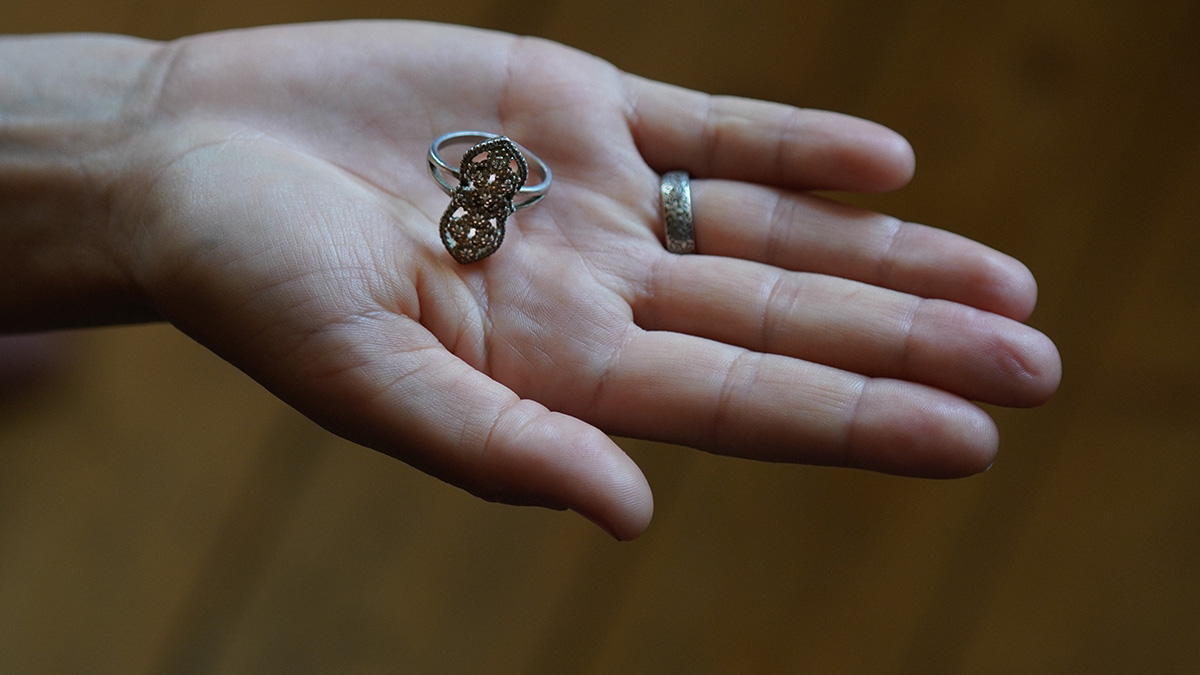 Ring from ZalvaPhoto: Vladimir Kiselev for TD
I almost jumped away. I couldn't take it. It seems that besides this ring, she had nothing else. But Zalva insisted: “Please take it. This is from the bottom of my heart! You will remember your grandmother. And I will feel it, and I will be pleased.”
I continued to refuse, but Zalva begged me to accept the gift. “Take it, take it,” said her adult daughter. - If you don’t take it, you’ll offend me. She’s like this: she’ll give away the last piece of bread - that’s her happiness.”
And so I fly home with a beautiful ring on my finger and think about her. About how people who have seen only bad things all their lives manage to remain so good.
The next day I talked about this incident on Facebook. And people suddenly began offering to raise money for Zalva. I don’t like targeted fees on a personal card; I almost never do that. But here it turned out there were simply no options: Zalva’s grandmother did not have a card. During the day I collected nine thousand rubles, I rounded the amount to ten. And she asked Libkan Bazaeva, the head of the Chechen organization “Women for Development,” to transfer money to Zalva. Libkan went to the hostel and wrote to me: “Dear Zhenechka, today I gave ten thousand to Zalva. I also gave them a few things (clothes). I said hello from you. Zalva was touched and shed tears, poor thing. She said that she had such a situation, she urgently needed six thousand rubles, she didn’t know where to get them, and so Zhenya sent them. I asked you to convey my gratitude to you from the bottom of my heart.”
I wear Zalva's ring with a matching dress. And every time I remember her.
Shawl Aishat
I met Aishat in the highland Dagestan village of Godoberi. The photographer and I were looking for the house of our future heroine, and Aishat simply met halfway. “Come,” she said, “to me. I’ll change my clothes and take you out.” And we found ourselves in a large, unfamiliar, beautiful house. In the hall, a girl in a white scarf was sorting pine cones for pollen. Pollen particles stood around her like a glowing cocoon.
“This is Patimat,” said Aishat, “daughter.” I extended my hand to Patimat, and she hardly extended hers. And then she stared into the corner with an absent-minded smile.
Patimat has cerebral palsy. And Aishat’s second daughter, Mariam, too. Patimat has a complex form of cerebral palsy; she has difficulty walking, has difficulty adjusting her scarf, and has difficulty picking at bumps with her naughty fingers. It’s easier for Mariam - she, swaying slightly, stood at the stove and fried chuda, which her mother immediately rushed to roll out for us.
Aishat was wearing a black scarf with a white pattern and a black skirt with red and yellow flowers. She apologized for the fact that she spoke Russian poorly and that her house was unfinished. She smiled when photographer Dasha asked permission to photograph her daughter. And when I rolled out balls of dough and chopped onions, too.
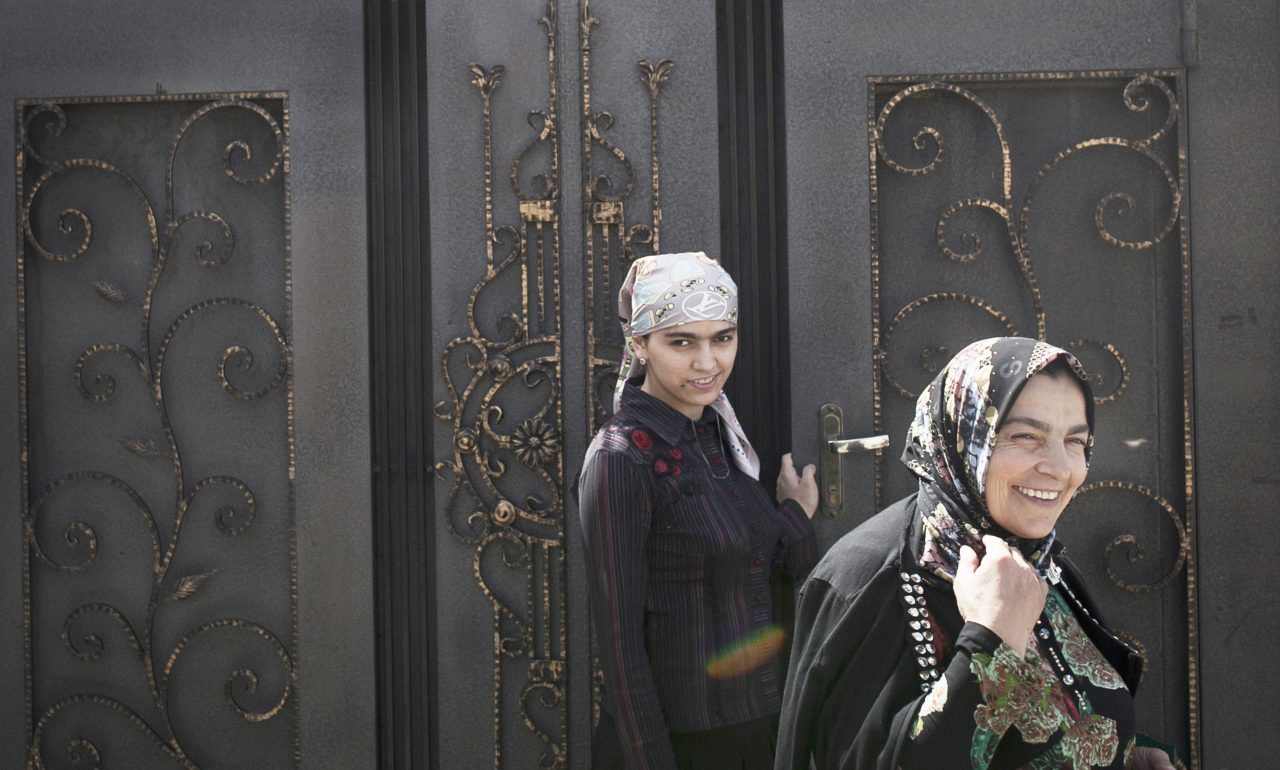 Aishat Aliyeva with her daughterPhoto: Daria Aslanyan for TD
Medicine in the village is in complete disarray: while Patimat was diagnosed with cerebral palsy in infancy, a year has passed. Mariam was luckier: it took five months to get a diagnosis. Aishat’s husband left her, and people in the village talk about it in whispers. I looked at the beautiful chandelier, the quality furniture, the cleanliness of the room and the roses outside the window and couldn’t understand: how does she take all this out alone? Why is he smiling?
Aishat’s brother helped raise the house. Construction took ten years because there was little money. Aishat spends all day working so that she and her daughters can have lunch. Vegetables and fruits are in the garden, herbs, pine cones, berries are in the mountains. Cow. Save every penny on everything. The house should be beautiful and cozy, home is important.
She said that she was saving money to go with Patimat to St. Petersburg for rehabilitation. In general, she often has to wander with her daughters to sanatoriums and hospitals. I couldn’t imagine this simply because even leaving from here to the nearest city is a whole undertaking.
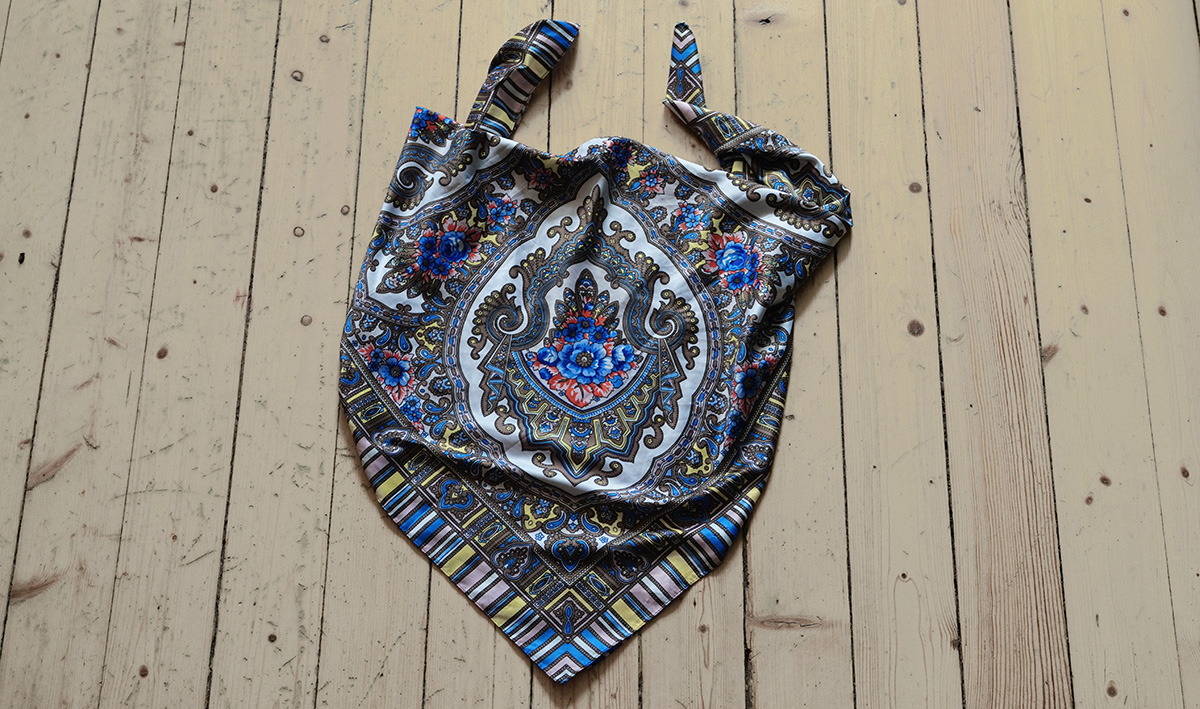 Shawl from AishatPhoto: Vladimir Kiselev for TD
When we licked our fingers after the miracle, Aishat, as promised, went to see us off. We walked from house to house together all day. In her hands, Aishat held two bags with gifts for us (in each she put a jar of pine cone jam, a white towel, a scarf and socks). She wouldn't let us carry them, no matter how much I begged. It’s hard to climb the mountain with bags, it’s hard to walk all day, but Aishat smiled.
Such a smile may seem suspicious and artificial. But Aishat’s smile was real. It seems that she really enjoyed feeding us, spending time with us, carrying our gifts, and simply living.
Aishat’s jam has long been eaten, the socks are worn out. And I keep the scarf and put it on in the spring - it hugs me like Aishat’s smile.
Amber beads of Nina Vasilievna
I came to Nina Vasilyevna in the village of Yantarny on the instructions of the editors - to tell about her misfortune. And young Nina once came to “raise the region” and worked for 45 years at the local amber factory: she made jewelry. She had already retired when her house caught fire. The roof was almost completely burned out. Nina Vasilievna had nowhere to go, so she stayed in her house in the hope that the local authorities would repair the roof.
I still remember the stains on the ceiling and the smell of mold in her house - damp, stuffy, pungent. I remember the greenish mucus that remained on my fingers after I touched the walls. On the second floor, under the leaky burnt roof, there were buckets, cans and basins - the grandmother collected water in them and drained them regularly. If it rained at night, she practically did not sleep - the containers quickly filled with water. At 81, it’s hard to run to the second floor and carry full buckets, but Nina Vasilievna had nowhere to go.
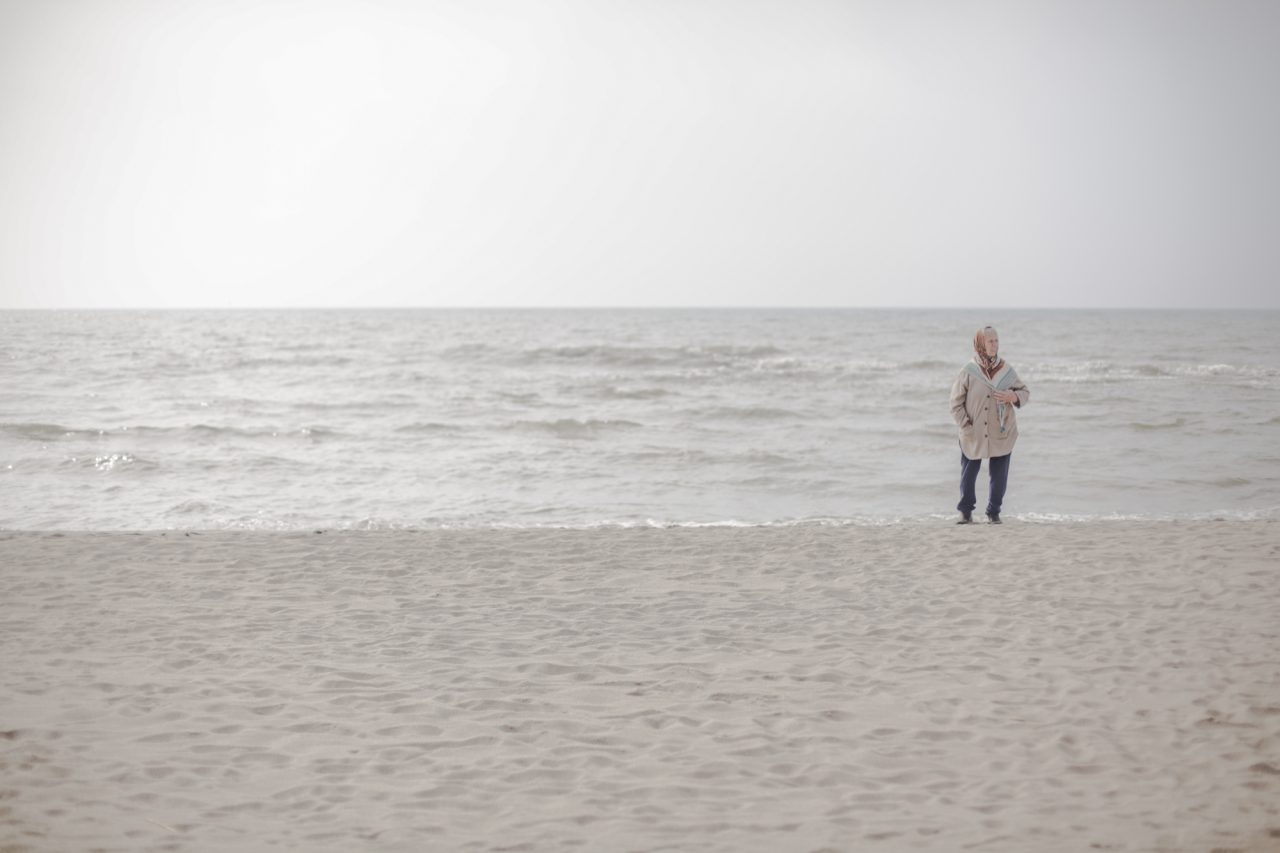 Nina Vasilievna walks along the promenade on the shores of the Baltic SeaPhoto: Anna Ivantsova for TD
My grandmother answered my questions about life and work with incredulity: she didn’t understand why I was telling all this. “Well, what can you do here, girl?” At that moment, to be honest, I didn’t understand it well. But I knew for sure that we should write about such Nina Vasilievnas. People who have worked hard all their lives and deserve a calm, respectful old age. Gradually, the heroine finally softened and on the last day after the conversation, she suddenly took out a ceramic bowl from the sideboard and poured six amber beads into my palm - all her wealth acquired over 45 years of hard work at the plant. She kept them for many years, but suddenly decided to give them to me.
I squeezed the beads in my fist, gasped for air and struggled to keep from crying. At home I put them in a handful on the shelf, in a visible place. And I looked at them every day.
The pebbles lay on the shelf for a long time. They were a precious gift - personal and touching. But I didn’t know what to do with them. And then I once wrote to a jeweler friend from Samara who makes amazing designer jewelry. Anya read the material, was inspired by the story, and made the most beautiful earrings and ring. Nina Vasilyevna’s amber beads found a frame and a new life. And I have the first and only earrings and a ring made of amber.
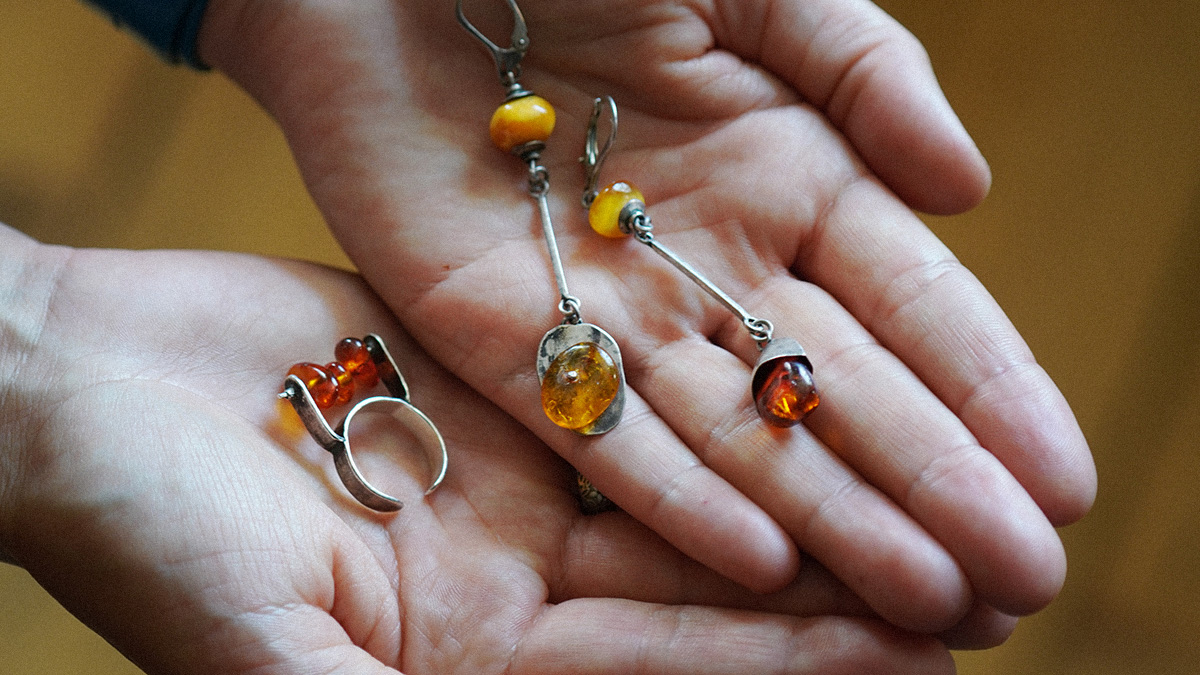 Set of amber beadsPhoto: Vladimir Kiselev for TD
When everything was ready, I called Nina Vasilievna and told her what happened to her beads. She was delighted and ordered me to wear jewelry. And I wear it, although I only wear it on occasion, because I’m very afraid of losing it.
After the publication, officials came to my grandmother and promised that they would soon fix the roof. Yantarny authorities temporarily moved the grandmother to a good apartment and began renovations in her old house. When Nina Vasilievna told me about this, I didn’t recognize her voice on the phone - it was somehow completely girlish.
Soap from Ira
Ira Novikova from Samara is one of the heroines dearest to my heart. I wrote about her for two years, and for two years we communicated so closely that we became friends.
Ira was slowly dying of cancer, but her death was not tragic. She lived and loved every day. Only much faster and richer than ordinary people - more greedily. Ira understood that she had very little time, and wanted to live the remaining days making her dreams come true. Not at all global: to survive until summer, to take two sons to the sea, to see a field of blooming lavender, to learn how to make cosmetics and soap, to plant flowers, to have the strength to walk and go searching with LisaAlert.
She tried to do everything in time. I learned to take photographs, dyed my hair blue and pink, got a tattoo, and then a second one. I grew flowers on the balcony. We at the editorial office helped her get medicine, paid for a trip to the sea and to a lavender field. She cried with happiness when she saw the purple glow from afar!
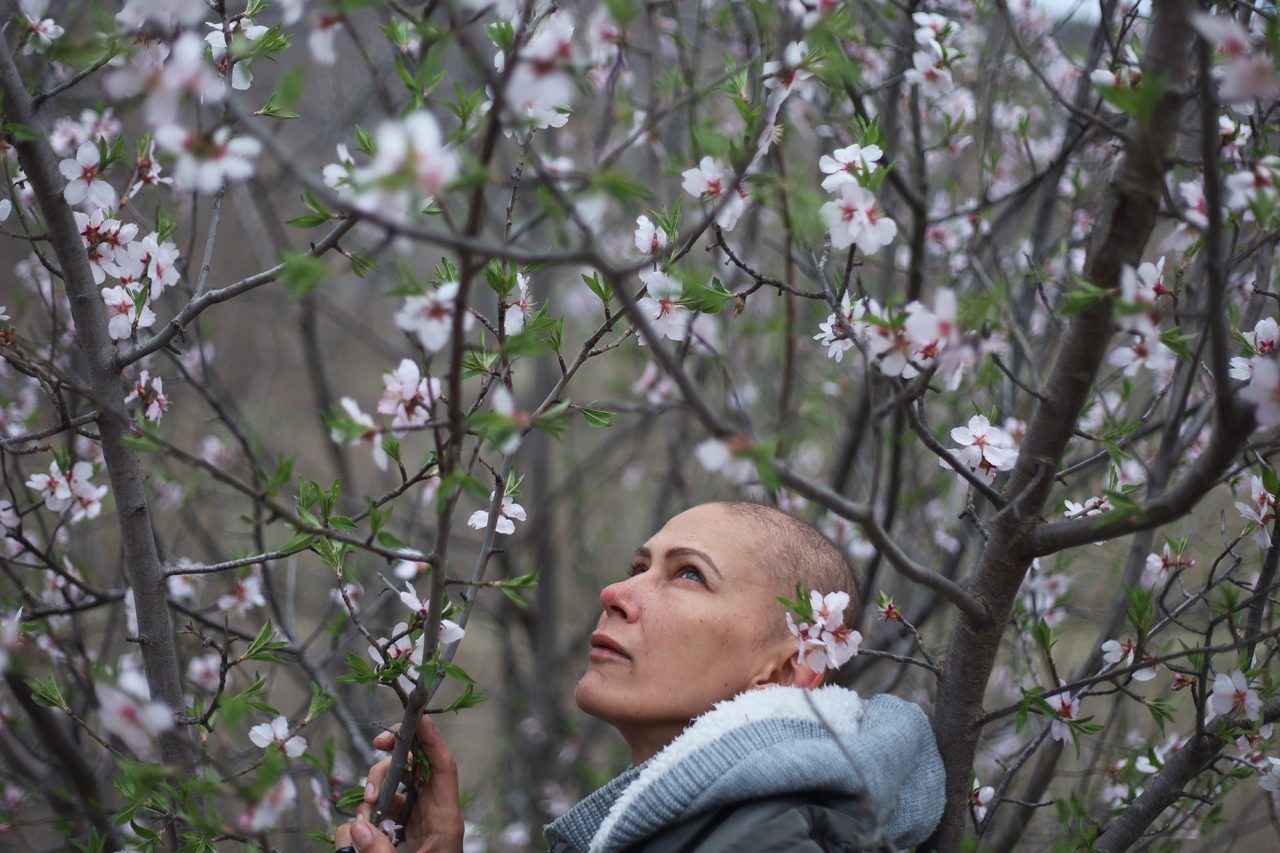 Ira escaped from snowy Samara in order to see the blooming Crimea. Photo: Daria Aslanyan for TD
I remember our last meeting. Thin, beautiful Ira, in an apartment filled with jars of seedlings, said: “Life is such a cool thing! I don’t understand people who say: “Damn, when will I die!” This is unthinkable for me!” She happily told me that she managed to touch the sea. And she mastered soap making. It was then that she gave her a box containing the soap she had made. With the aroma of roses and cookies.
Ira died fulfilling another dream - to walk around St. Petersburg. When I found out about this, my hands shook. I knew this would happen one day, but how to prepare for this?
Irino’s soap remains in the box. I can't seem to start using it. Sometimes I just open it and smell it.
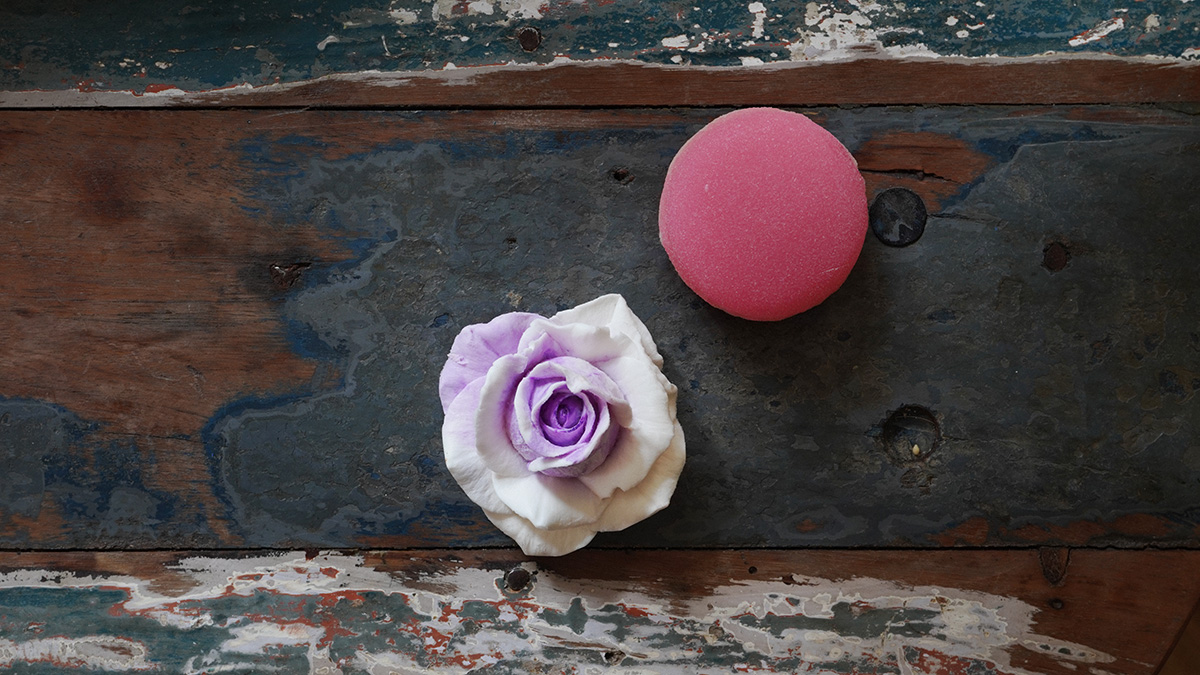 Soap donated by IraPhoto: Vladimir Kiselev for TD
Let it lie as a reminder of a woman who knew how to dream, and that my work gives me such people. And also that we were able to win two years of a happy life for a wonderful person. And her little son was left with a rich legacy - articles about his mother and her diaries, which were published on our social networks. I think Vovka will understand everything correctly.
Jacket of the “Vyatka fashionista”
Another hero who remains in my heart is Viktor Kazakovtsev from Kirov, who became famous in the city as a “mentally ill” or “fool” in fancy dress.
When we met, Victor was 72 years old, he lived in an old house in a gloomy area of Kirov. From the age of 14 he had epileptic seizures, and all his life he worked in creative fields - he was not hired anywhere else. In the village House of Culture, Victor was the leader of amateur performances. He accompanied the choir, dance ensemble and helped select and design costumes for the group. “I did it brightly, catchily, so that it could be clearly seen from the hall. So that even drunk people can sober up while looking at the stage,” he told me. — When they look at you and applaud you, it’s very nice. On the other hand, envious people immediately appear.” And Victor had envious people. Several times he was beaten half to death for looking too “intelligent.”
Merits in the field of culture brought Victor an apartment-shed. But in 1982, when he was director of the Palace of Culture in Kirov, the intellectual was laid off. According to him, for being registered in a psychoneurological dispensary. So at 36 years old, Kazakovtsev was left without work and without the stage, which he loved selflessly. But he did not despair - he took and turned the whole city into a stage.
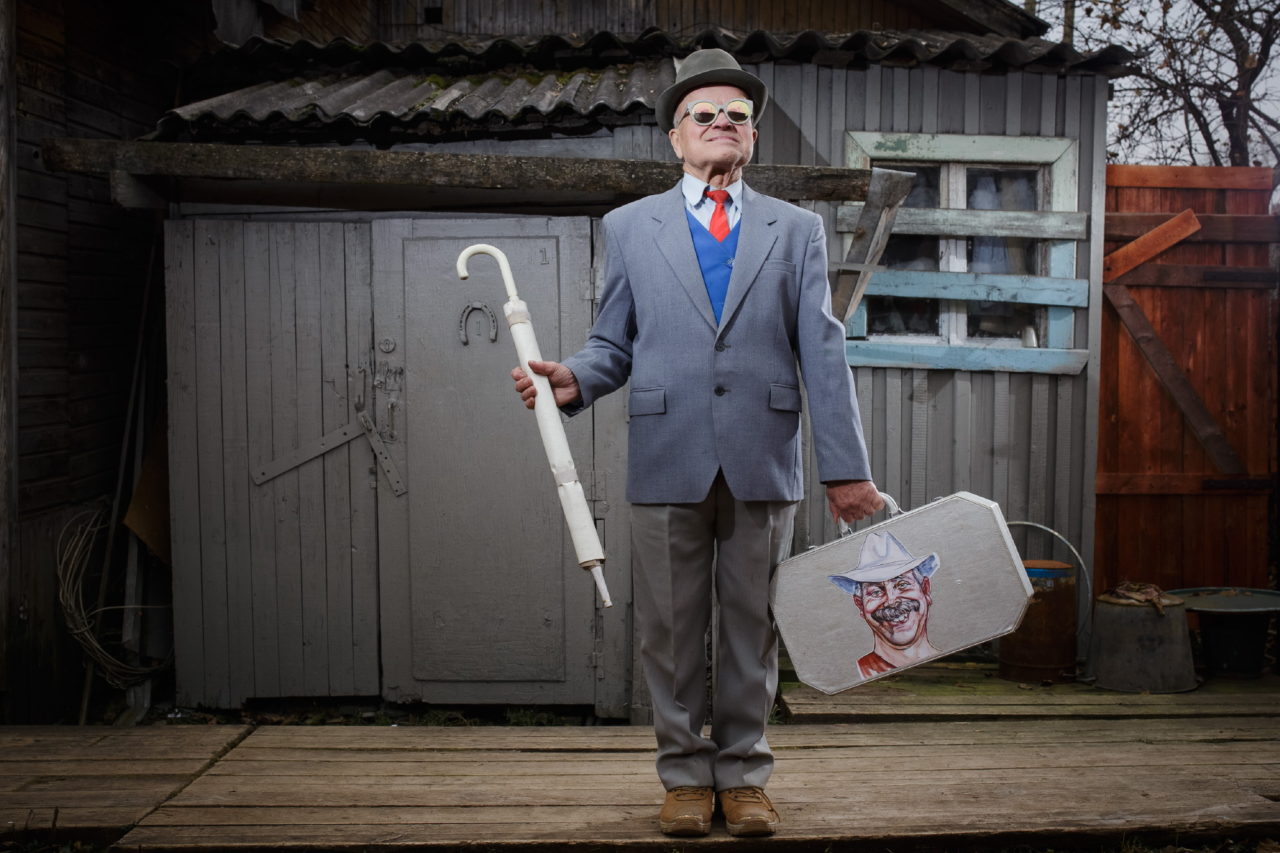 “A summer suit of a business nature, and since I am a pensioner, my business is to go shopping and even surprise passers-by. When I put together costumes, I make sure that the elements match in color, tone, line, and shape. I added bright spots to the gray color, and the result was not just a suit, but an elegant suit. Jacket from the “Spasibo” store and from the “Free” basket” Photo: Evgenia Zhulanova for TD
I remember how we agreed to meet to walk the streets together. Victor was waiting for me at the bus stop in a white suit with red ribbons, with a homemade sword and a white cap with a red star. I almost fainted when I saw him. We walked and talked, periodically being distracted by passers-by who asked Victor to take a photo with them.
He said that he lives on a pension of eight thousand rubles. Thousand - apartment and light. One thousand is a bus pass. Three thousand - food: potatoes, dumplings, vegetables. The rest is spent on household needs and outfits. “I don’t drink, I don’t smoke, I have enough. I’m not dying, as you can see.”
Victor purchased blanks for his outfits at second-hand or thrift stores, and then altered them on an old machine. He said that you have to work until the end. Because “while you work, you are alive.”
Before I left Kirov, Victor said that he definitely wanted to give me something. I dug around in the closet for a long time and fished out a vintage ski jacket. I tried it on - it’s just great! Since then, I have been skating and skiing in it for six years now. Sometimes my husband grimaces and tells me to “throw away that old stuff.” But of course I won't throw it away.
And after the release of the material, Victor received a barrage of attention from journalists, documentarians and television crews, which he was incredibly happy about.
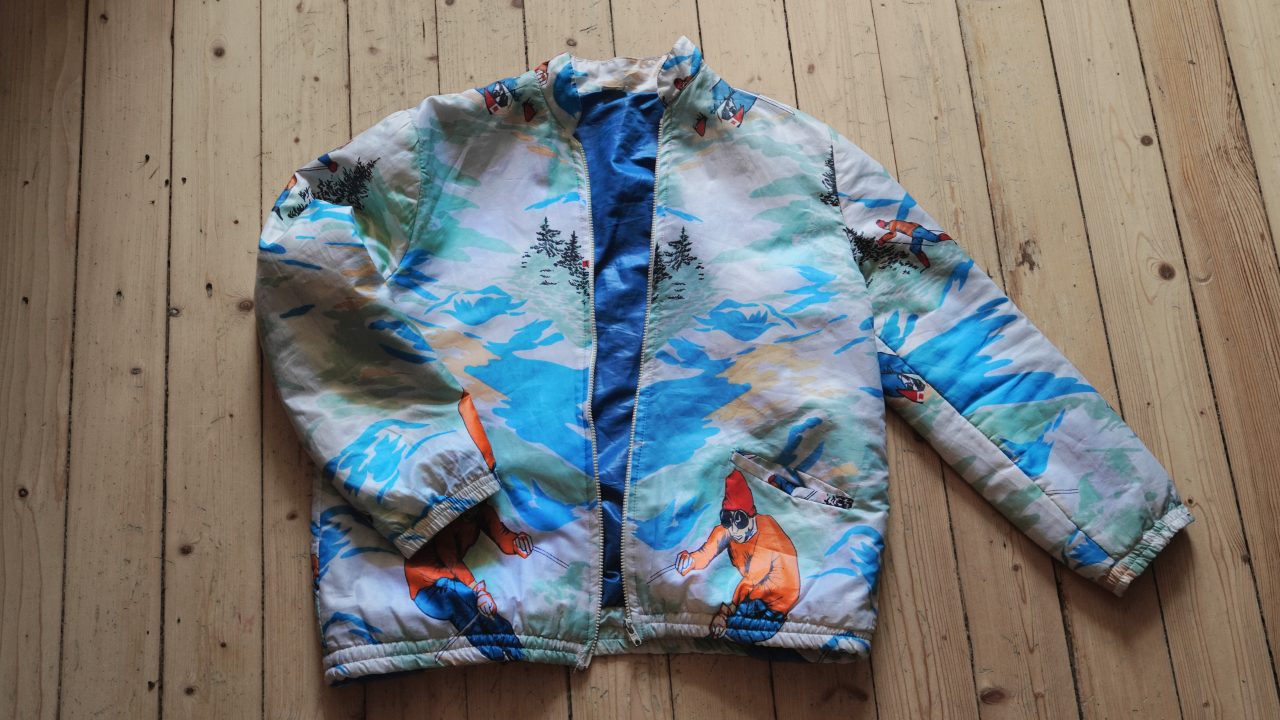 Jacket donated by VictorPhoto: Vladimir Kiselev for TD
I will not throw away the “Vyatka fashionista” jacket, nor the slippers knitted especially for me by Marina Seferova from Ingushetia, whom I interviewed about how she survived in Grozny during the war. Or a huge warm scarf from Anna, who lost her daughter during the terrorist attack in Beslan. I wrap myself in this scarf in cold winters and think: “How is she doing?”
I also have something that I wear without taking it off, a gift from ornithologist Nikolai Petrovich from Fringilla. After I had ringed several birds, the scientist handed me a ring that he had taken from a robin’s foot. An ordinary metal roundel with ornithological engraving: number and designation of the region. But with this ring, the robin may have flown halfway around the world during its migration and returned home each time. Just like me.
I've been wearing it on a chain for seven years. This is my talisman.
* * *
Over ten years of work, we have released thousands of materials and helped a huge number of people: someone was able to finish their studies, someone found a family, someone coped with trauma or built a new life out of ruins. Every destiny is important and incredible. Every little help on a large country scale is priceless.
Ten years for media is a period that is difficult to comprehend. Looking back, I don't see the beginning, as if we were always there. But I clearly remember the faces of the people we supported. And they, in turn, helped us become better ourselves and remain true to our mission - to see heroes in ordinary people.
I wish my colleagues a happy birthday. We are still putting people back into journalism. And I don’t know anyone more humane than them.
I also congratulate our readers and donors: thank you very much for your support! Without you, we would not exist, but together with you we have done a lot of good things - and we will continue, no matter what.
If you enjoy reading us, but have not yet signed up for a monthly donation to Such Things, please do. A birthday is a great occasion. We won't let you down.
The material uses links to publications on social networks Instagram and Facebook, and also mentions their names. These web resources are owned by Meta Platforms Inc. — it is recognized as an extremist organization in Russia and is banned.