
Translated material
“Everyone wants Stalin for their neighbor”
Attitudes towards the figure of the leader of the peoples in the North Caucasus differ from territory to territory. From special, almost religious veneration in North Ossetia to ambiguous in Kabardino-Balkaria and acute rejection in Ingushetia. And one of the heroes of this article even regularly writes to the investigative authorities: he seeks official recognition of the crimes that were committed against entire nations during the reign of Stalin
Unconditional love
North Ossetia is a recognized leader in expressing love and veneration for Joseph Vissarionovich. On the territory of a rather small republic - 24 monuments to Stalin and 16 streets bearing his name (this does not count art objects and rock carvings) - there is no such concentration in any other region of Russia.
To say that the figure of Stalin is revered by many here would be a serious understatement - rather, the absolute majority. At least in public conversations, this is practically a consensus (I had to work hard to hear an alternative point of view). Therefore, my question, which I addressed to the local residents, was not “Do they love Stalin in Ossetia?”, but “Why do they love Stalin SO much in Ossetia?”
The reaction to it ranged from mild bewilderment (“What’s incomprehensible here?”) to irritation and even aggression (“Don’t you dare touch Stalin!”). Within this range, as a rule, there were standard arguments (“Strong hand”, “From the plow to the nuclear bomb”), but there were also unexpected ones (“Are you Orthodox? That means you too must love Stalin”), emphasizing that a negative attitude towards the leader of the people borders on blasphemy.
And if the conversation dragged on and acquired shades of confidentiality, then the deeper layers of the worldview were already revealed. For example, it became clear that the common expression “everyone wants Stalin for their neighbor” here also has a completely different refraction, a literal one: Stalin - in the sense of mass terror - was for the neighbor. That is, according to the interlocutors, the deported “neighboring” peoples fully deserved it, and the leader acted wisely, reasonably and expediently in relation to them. As for Ossetia itself, if there were repressions, it was more like “excesses on the ground”, or even like “there is no smoke without fire.”
There were also very detailed points of view.
“People are now offended by Stalin, because at that time he took responsibility for everything that happens in the state,” says Nikolai Nikolaevich. - On the one hand, this is his mistake, but this is my subjective opinion. On the other hand, this is what saved the country. Because a firm hand was needed to rule the military camp into which our great, mighty Soviet Union had been turned.”
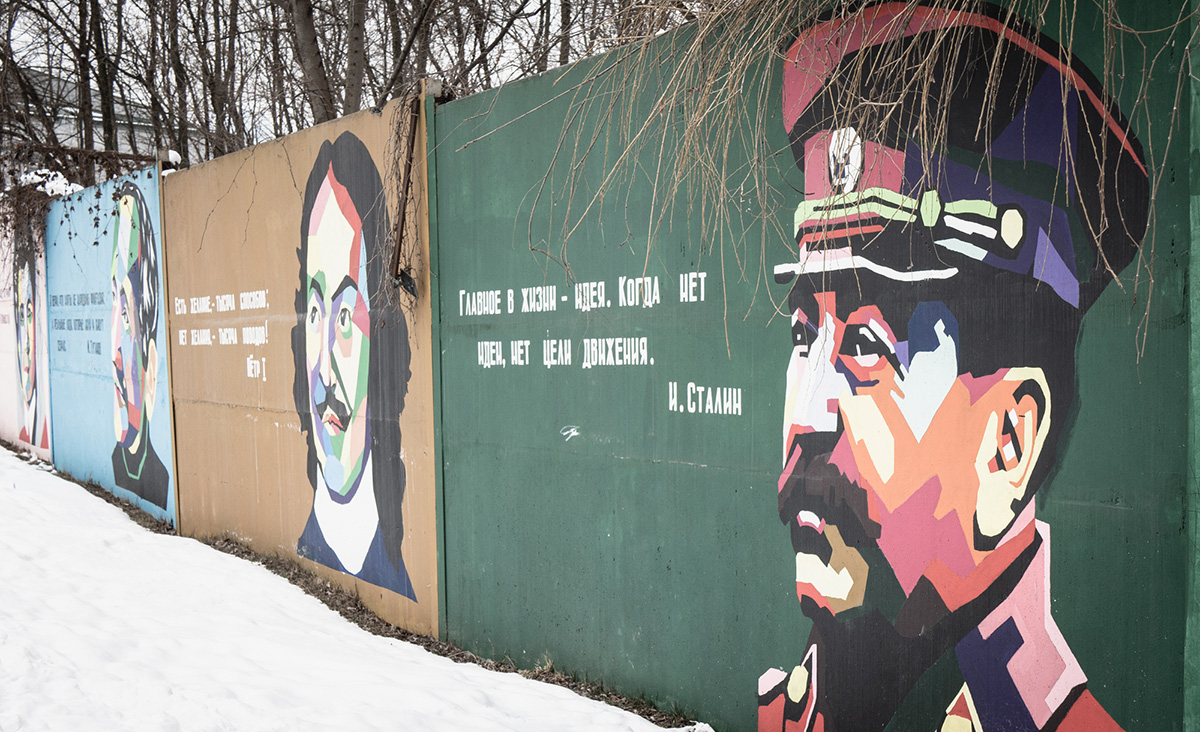 Wall of Personalities in VladikavkazPhoto: Nikolay Zhukov for TD
Nikolai Levchenko is a former military man, now a political scientist, an employee of the Republican House of Friendship of Peoples. He says that he defended his PhD thesis on the topic “Ethnic separatism as a factor in the weakening of Russian statehood using the example of the Chechen Republic.” “I carried out combat missions there for 12 years and therefore considered it my duty to make a contribution to science.”
Levchenko tries to speak slowly, intelligibly, calmly listens to objections, selects, in his opinion, the most convincing counterarguments and periodically emphasizes that these are all his subjective judgments. He also speaks “subjectively” about the so-called troikas, who sent people to their deaths in the rhythm of an assembly line.
“This is not Stalin’s mistake, this is his flaw. He needed loyal people - such people are always needed when you want to be sure that the enemy will not attack from behind. Beria was such a devoted person. He led the NKVD and also selected his subordinates according to this principle. Not by the mind, not by thinking, but solely by the principle of devotion. And from such people troikas were created. These people were from a simple background and were not distinguished by high intelligence. As they are told, so they do. They were told to exterminate the enemies - they found them, based on their own idea of what the enemies should look like. And these people could be completely innocent. Yes, now it seems wild and incomprehensible to many. On the other hand, this was the only procedure possible at that time to keep the country in obedience, so that it would not fall apart.”
"A matter of principle"
In neighboring Kabardino-Balkaria, the attitude towards Stalin can be called ambiguous. There is no adoration akin to religious that is found among Ossetians. But not everyone shares the negativity.
“In the mountainous regions, people still remember well the years of deportation; the interpretation of those events is quite definite and uncompromising,” says Oleg. - But in the city it’s different. There is no consensus, even among the Balkars [in 1944, the Balkar people were deported to Central Asia]. You can hear that all these were excesses on the ground, Stalin himself did not know about anything, this was the work of Beria. They may even sagely claim that the deportation is part of an insidious plan to liberate the North Caucasus from indigenous peoples and resettle Jews here.”
Oleg Kelemetov is a Balkar, lives in Nalchik. In a past life, as he himself puts it, he was a lawyer, now he is a man of physical labor with enough free time to search for justice. He doesn’t really like the word “activist,” but admits that that’s essentially what he is.
A couple of years ago, he had an unforgettable trip to the mountainous regions of the republic, where he spoke with old people - still living witnesses of the deportation. Since then, he has been seeking recognition of crimes that were committed against entire nations during Stalin's reign. The fact of forced deportation of USSR citizens due to their nationality was established by the law of the RSFSR, adopted in 1991. However, a legal assessment of the actions of those responsible for this has never been made. Oleg wants to fix this.
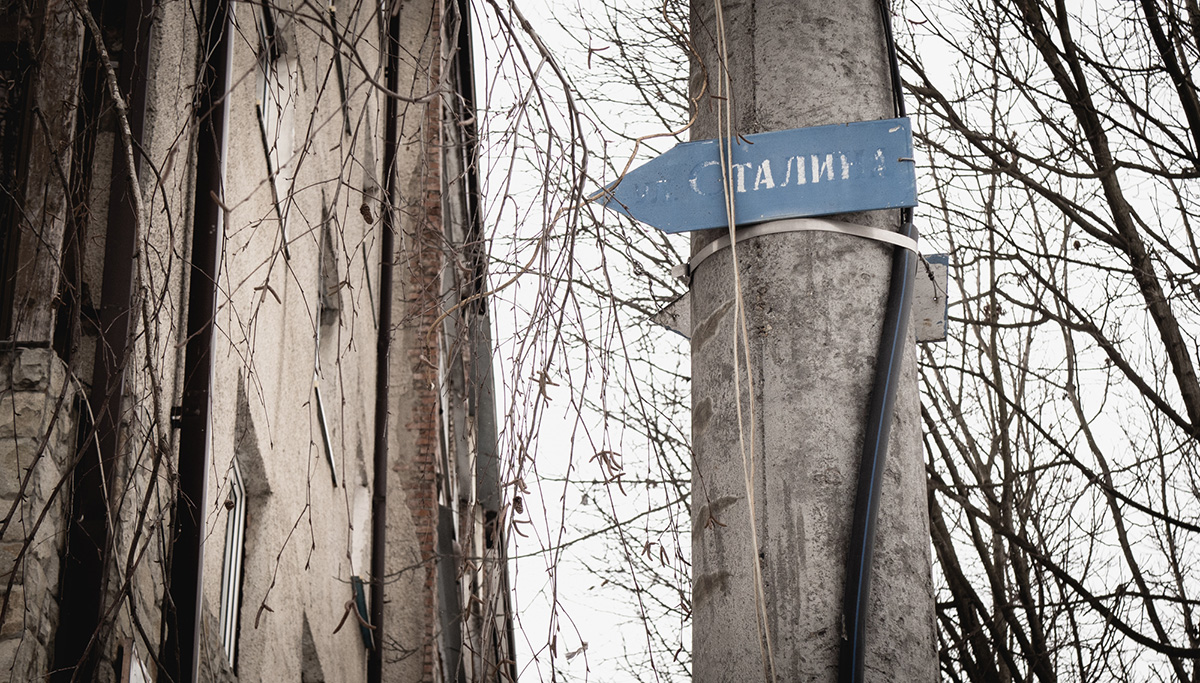 Stalin Street in BeslanPhoto: Nikolay Zhukov for TD
Basically, his activities come down to paperwork. He shows me letters, including appeals to regional parliaments regarding the need for a legislative ban on perpetuating the memory of those who made the decision to deport the peoples of the USSR, an appeal to the prosecutor's office of the Vologda region demanding verification of the legality of the installation of a monument to Stalin, applications to the Investigative Committee and the Prosecutor General's Office with a request to give a legal assessment of the actions of the country's leadership who organized the deportation.
So far, his entire experience of interaction with various government bodies has been reduced to receiving formal answers that, with varying degrees of convincingness, justify the impossibility of meeting his demands. Can't say he's very surprised by this. Everything is in the spirit of a current and completely official trend, where the figure of Stalin again emerges from the eternal fog of Russian history in the half-forgotten capacity of the “savior of the Fatherland.” But Oleg does not plan to give up.
“For me, this is not an attempt to turn the world upside down, but simply a matter of principle. Even this process will not take a year or two. It’s not difficult for me to write in my free time from work and continue to stand my ground. My main goal is to achieve a substantive answer. The authorities are required by law to do this. If they believe that deportation is not a crime, let them answer that way.”
In memory of lost relatives
Oleg has personal reasons to hate the Stalinist regime. Brutal raids, unheated cattle cars, appropriate treatment of the people with whom they were stuffed, the horrors of an endless road into the unknown - all this is his family tragedy. Oleg’s grandmother and two teenage sons—his father and uncle—were deported to Northern Kazakhstan.
“My mother told me this story from her words - with her it was easier for my grandmother to share creepy and femininely delicate details. How she stood on the platform where everyone was herded, hugging two children, without things or supplies. How two completely unknown Azerbaijani men gave her a bag of ground corn, thanks to which they were able to survive. How the girls in the carriages died from a ruptured bladder because they were embarrassed to relieve themselves in public. How people hid corpses, covering them with clothes - otherwise they were simply thrown out into the steppe - in order to be brought to the place and buried. Eight people died along the way, among them my cousins and uncles.”
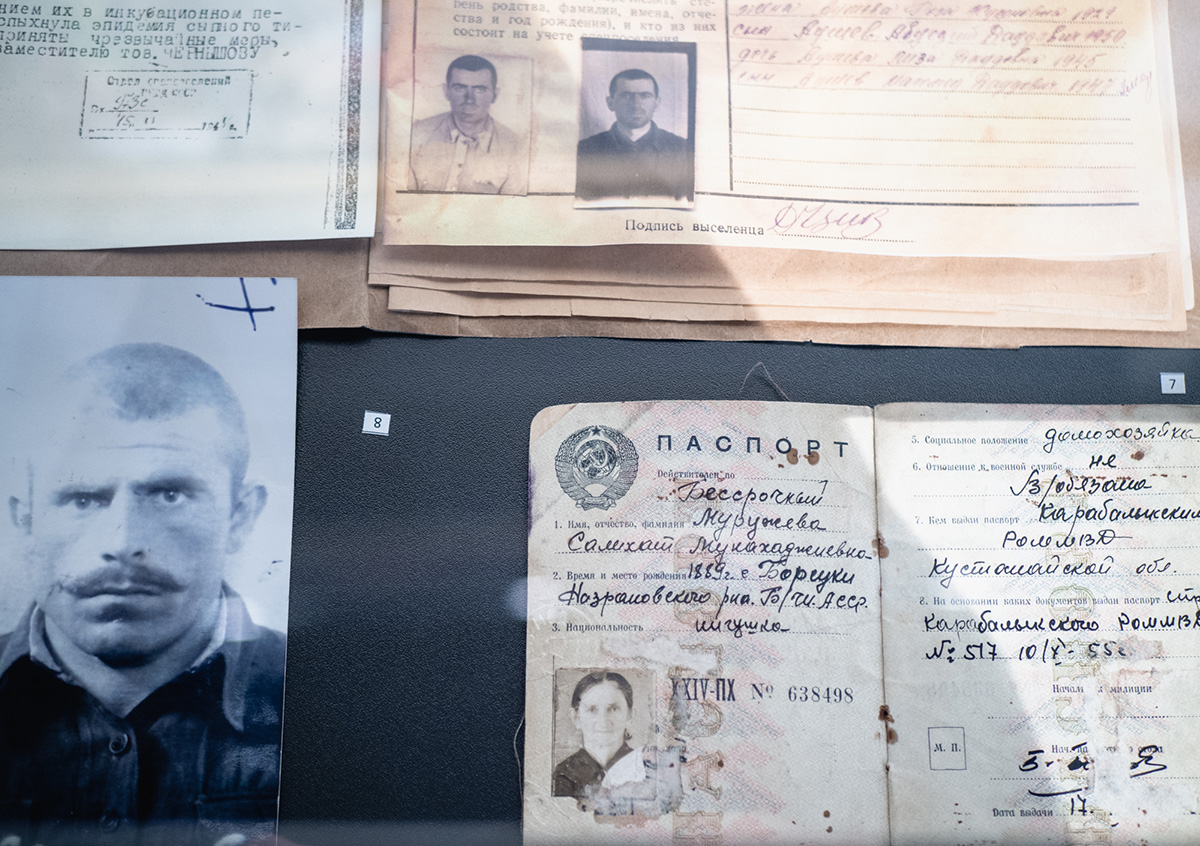 The tragedy of deportation has specific names and faces. Museum of Memory of the Victims of Stalin's Repressions, NazranPhoto: Nikolay Zhukov for TD
Kelemetov admits that he decided to seek the truth in memory of his father and his lost relatives. But he tries not to concentrate on the personal, transferring all his claims from the emotional plane to the legal one. “If you put pressure on the personal, you will have to understand the personal, find out the circumstances of events for which there are almost no witnesses left; if you put pressure on emotions, they will ask you to confirm them. Therefore, I simply ask you to evaluate the regulations. Whether they are legal or not."
Often a man hears that there are practically no prospects for achieving justice for long-dead people. Oleg has something to say to this: “Even if a person has died a long time ago, the legal assessment is very simple. The investigation checks the factual circumstances of the case: whether a particularly serious crime took place, who was involved in it. If a person has died, they refuse to initiate a criminal case or terminate it. But the circumstances are established - this is the main thing. Nothing prevents the Prosecutor General’s Office from canceling decisions on the rehabilitation of long-dead people. “Nothing prevented the Investigative Committee in 2015 from investigating the circumstances of the death of the Dyatlov group, which occurred in 1959.”
"That was the time"
“If you write something against Stalin, I will not help you with this,” Tamara Kaytukova immediately warns me. She is the deputy head of the North Ossetian association of victims of political repression “Nomaran”. This unexpected beginning sets a very interesting tone for our conversation.
“My opinion: Stalin cannot be blamed for what happened then,” she explains her position. “He couldn’t get to every village and aul and understand what they were doing there. He gave a general guideline on what to punish. And already on the ground they went too far to fulfill the figure. But if it had not been for his strong hand, if he had not pursued such a policy, we would not have been far from the plow and would not have become a great power. I think so as the granddaughter of a repressed person.”
Tamara talks about the enormous work that has been done in North Ossetia to restore the good memory of the repressed and their rehabilitation. And this really cannot be denied. Consider only the six volumes of the “Book of Memory,” which, in addition to archival evidence, memoirs, essays, and poems, also contain a list of names (perhaps not yet complete) of the residents of the republic who suffered from the terror of the 20-50s of the last century. The publication of this work is the merit of Auzbi Zuraev, who headed the Nomaran association for almost 30 years. He died in 2020, just short of his 95th birthday. Since then, the association has been led by his son. But her activities largely depend on Tamara Gaboevna, who worked with Auzbi from the first day.
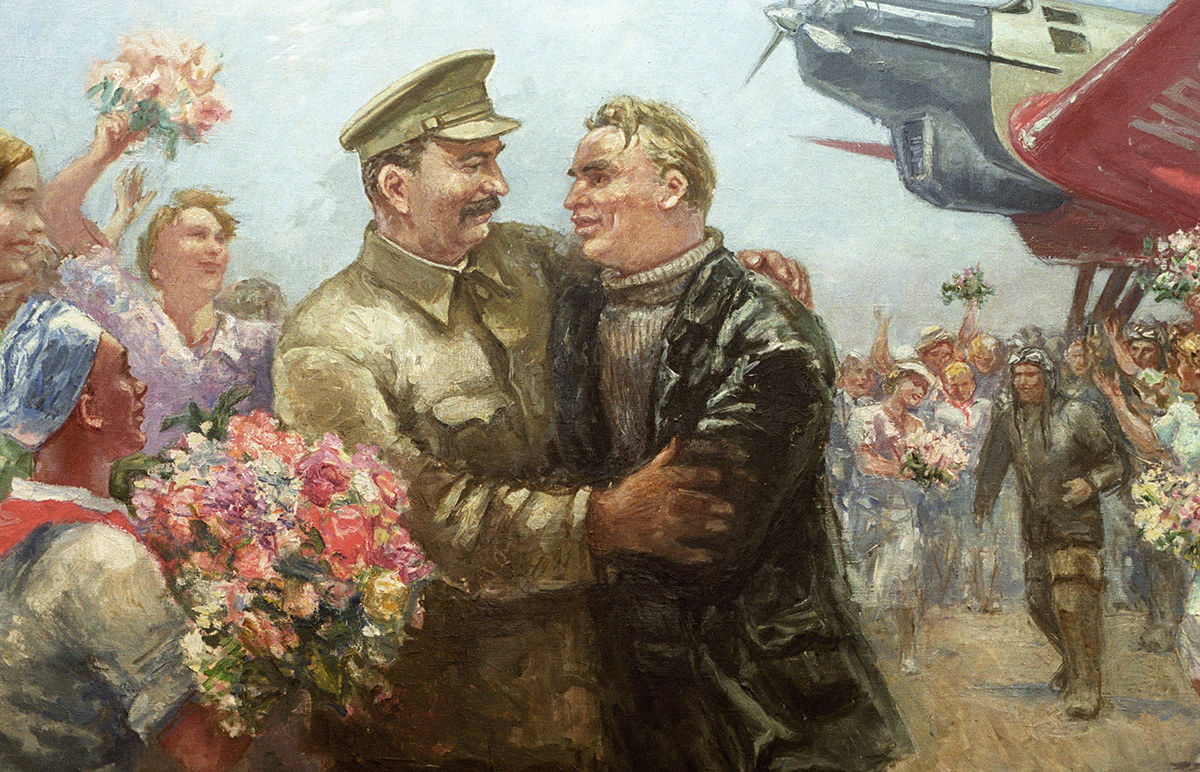 Reproduction of the painting by artist Samuil Adlivankin (1897-1966) “Stalin’s First Route” from the exhibition dedicated to the 50th anniversary of the death of Joseph StalinPhoto: Yuri Abramochkin / RIA Novosti
Tamara Kaytukova provides data from the sixth and final volume of the “Book of Memory”: 13,222 people were repressed in the republic over all the years. Of these, 8,755 were for political reasons, 2,177 were dispossessed, and 2,290 were for ethnic reasons. 1,684 people were sentenced to death.
“For little Ossetia, these are very large numbers,” says Tamara and immediately gives them an explanation: “Ossetians ranked first in the USSR in the number of Heroes of the Soviet Union per capita, as well as in the number of repressed people. Brother wrote denunciations against brother, neighbor against neighbor. It was such a time. Ossetians are an executive, law-abiding people. If in neighboring regions they preferred to close their eyes, not say too much, and not give away their own people, then in Ossetia it was different. There were guidelines, there were numbers about how much to repress from each region, and we tried to fulfill these numbers at any cost.”
And even overfulfill. The zeal of local fighters against the enemies of the Soviet regime is well illustrated in the same “Book of Memory” by Yuri Sidakov, who headed the human rights commission under the head of North Ossetia in the late 90s and early 2000s: “New victims were needed, and they were looked for everywhere. The notorious circular by L. Beria ordered the head of the NKVD of the SOASSR to “destroy 500 enemies of the people by November 7.” Early report: “Your instructions have been fulfilled, allow me to confiscate (destroy – TD’s note) another 200 enemies of the people.” Resolution by L. Beria on a report from Ossetia in blue pencil: “I authorize! Beria. Moscow.”
Tamara Gaboevna talks about her grandfather, who was repressed in the 1920s. “He was a wealthy man because he worked a lot - he had a large farm. One day he was standing near the house, and a neighbor walked past. Let's go, he says, to the club, where they are awarding the heroine mother - she gave birth to ten children. And take it and answer: “And my pig Froska brought 15 piglets, maybe I should give her a “Hero” too?” A neighbor reported him. Grandfather was given ten years. His three brothers were taken along with him and sent to Siberia. None of them returned home. My grandfather had nine children left, and my poor mother, my grandmother, had to raise them alone. But my grandfather didn’t do anything wrong, he was repressed simply for his words.”
Kaytukova takes a deep breath, emphasizing the severity of the family tragedy, and calmly summarizes: “It was such a time. But what’s important is that everyone had portraits of Stalin hanging in their houses at that time. Because people believed: what Stalin is doing is all right, it’s all necessary and important.”
"Revolt" of five boys
Such was the time. A mercilessly accurate answer to this universal justification is given by Vladimir Vaneev in his book “White Clouds on a Black Sky,” recalling how someone, after his return from “Stalin’s hard labor,” instead of words of sympathy, gave him the emotionless “then there was such a time...”.
“Following this logic, a person should remain silent, like a silent beast, and agree with everything, “since it’s such a time.” If he is killed, he himself must put his head on the block; if he is ordered to marry his own sister, he must do this, and then, when the situation changes, say: “What could I do, such was the time, but now you are my sister again.”
Vladimir was one of five participants in the underground Ossetian organization “Rastdzinad” (“Justice”), which few people remember in North Ossetia today.
However, “underground organization” perhaps sounds too loud. These were five boys from South Ossetia (two of whom were still in school), united by a love of poetry, literature and their native language. The year was 1949. And for several years now, in the South Ossetian Autonomous Region, which was part of the Georgian SSR, there was, in fact, a process of forced assimilation of the local population. Ossetian schools were closed, signs were changed, newspapers and office work switched to Georgian. The guys decided to speak out against what they saw as cultural genocide and began distributing leaflets in defense of the Ossetian language.
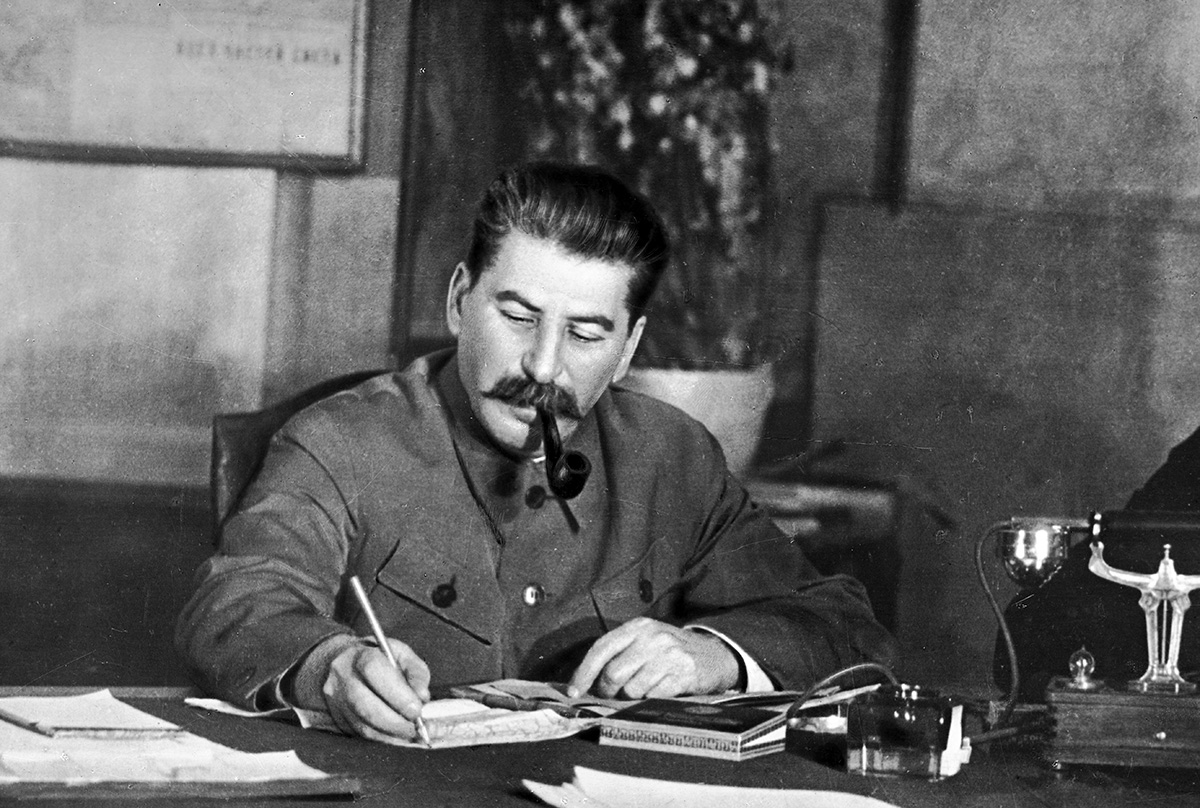 General Secretary of the Central Committee of the All-Union Communist Party of Bolsheviks Joseph Stalin in his office Photo: RIA Novosti
“We composed the text together, and then rewrote the copies, carefully changing the handwriting,” writes Vladimir Valeev. — The proclamations were small, just one piece of paper. They are written in Russian, and pasted on top is a headline cut out from the Pravda newspaper. Then we naively believed that altered handwriting was a sufficient measure of secrecy. How were we to know that it was practically no different from the real thing?”
The boys cooked flour paste in a large saucepan and at night they all went together to post leaflets along the streets of Stalinir (as Tskhinval was called then). Actually, there were only two such actions. The second, dedicated to the 70th anniversary of Stalin, caused the greatest resonance. The small town was excited. Serious efforts were devoted to searching for “nationalists and counter-revolutionaries.” They were found quickly, but did not detain them immediately, hoping to uncover a large network of accomplices and sympathizers. Hopes were not justified. All five were arrested in 1951.
The court was able to interpret the impulse of youthful idealism against injustice as “the creation of an anti-Soviet national-terrorist organization” and even as “preparation of an armed uprising.” Vladimir Vaneev, as a community organizer, received 25 years in camps. Khazbi Gabuev, Lev Gassiev and Zaur Dzhioev - ten-year sentences, Georgy Bekoev, as the last one to join the group - eight years.
In 1954, their cases were reviewed. Four were acquitted. Khazbi Gabuev served ten years for participating in a camp riot. Unfortunately, none of them have survived to this day.
Fear of breaking ties
“I spoke with Georgiy about those events when he was already bedridden,” recalls Batraz Misikov (Georgiy Bekoev is his relative). “He said that they all then firmly believed that in Moscow they did not know what was going on here. And as soon as they find out, the all-good father will definitely figure it out and punish the culprits.”
Already in the camps, they came to understand that they were challenging not “a group of Georgian chauvinist officials who hate Ossetians,” but the entire system. Cruel and merciless. And if in their leaflets the boys naively appealed to Stalin, quoting his statements about the nation and the school, then the camp experience made them look at the leader of the peoples differently. As a “tyrant and murderer” - this is how Vladimir Vaneev characterized him in his book.
Batraz says that Georgy also spoke harshly about Stalin, but admitted that this was rather a marginal position. “He said that for his generation, discussing the topic of repression and speaking negatively about Stalin would mean breaking ties with his entire generation, becoming a black sheep. And for older people this is very difficult. It’s easier to say what they want to hear from you.”
This is also why Batraz calls the positive attitude towards the figure of Stalin in the republic rather mainstream, especially among the older generation. Mainstream, also encouraged by the state.
With young people everything is a little more complicated. There is no fear of breaking ties.
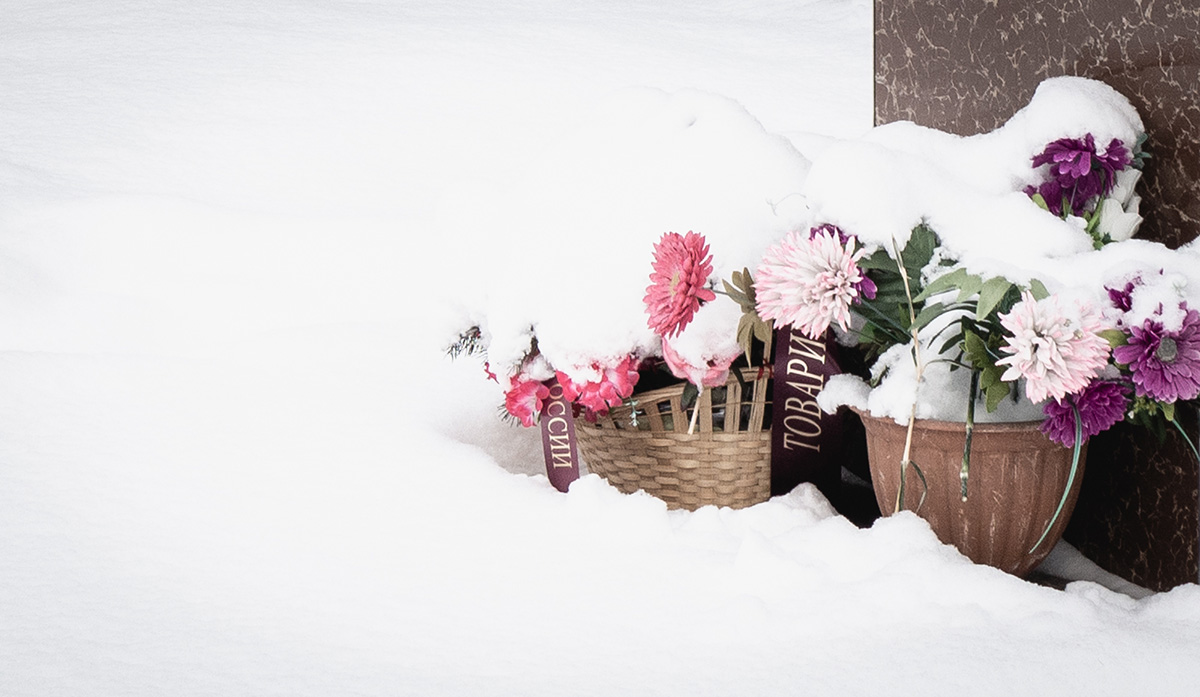 You will always see flowers at the monuments to Stalin in Ossetia. Mostly deadPhoto: Nikolay Zhukov for TD
“I don’t have an environment that would condemn my views,” says Batraz. However, it is immediately stated that his social circle is atypical. For the most part, these are people who work for themselves, are not dependent on the state budget and are not afraid of being fired for speaking. Just like himself. Batraz is a blogger and public figure, quite deeply immersed in the topic of Ossetian history and culture. We are sitting with him in a small cafe in the center of Vladikavkaz. A discreet but cozy interior, vintage furniture, soft light from lamps, a peaceful atmosphere. Tea, coffee, delicious pastries. The young public is engrossed in conversations or their gadgets. Batraz looks around the room.
“Try to find at least one Stalinist in this cafe. It won’t work,” to confirm his words, he simply stops a guy passing by our table. In response to a question about Stalin, he laughs and gives a very impartial characterization of the personality of the “father of nations.”
However, it would be a mistake to assume that the majority of young people in Ossetia share such positions.
“Sometimes the Caucasian patriarchal cult plays a cruel joke on us, idealizing the wisdom of elders. And since it is precisely people of the older generation who express their disposition towards Stalin, their words are often not taken critically. They say: “My grandfather believed that Stalin was a great man, that there was order under him, I respect my grandfather, he would not speak well of a bad person. But I don’t know what really happened there, I’m not interested.” To question your grandfather's words, you need to make a certain intellectual effort. But not everyone is capable of this.”
National question
Another factor explaining the Ossetians’ love for Stalin is Nikolai Levchenko.
“Each nationality that lives in the North Caucasus, of course, has its own attitude towards Stalin. Ossetians have it the way it is because many consider him Ossetian. According to one version, his grandfather was Dzugaev - this is an Ossetian surname, and the ending -shvili, as a rule, was given to the surnames of all South Ossetians who lived in Georgia.”
Let's assume that this is indeed the case. But can a person be classified as one or another nation only based on his ancestry? The question is controversial. Batraz thinks not.
“Stalin’s great-grandfather Zaza Dzugaev was indeed an Ossetian. He lived in a village near Gori - many from Ossetia settled there, was a fairly famous person and took part in local unrest against the Georgian feudal lords. But his son - Stalin's grandfather - was already a Georgian. Georgian of Ossetian origin. Stalin's father, according to the memoirs of contemporaries, spoke five languages fluently, Ossetian was not among them. Stalin indicated himself as a Georgian in all party questionnaires. And his Georgian identity is very well revealed in his early published poems. Judging by them, he was a romantic Georgian nationalist.”
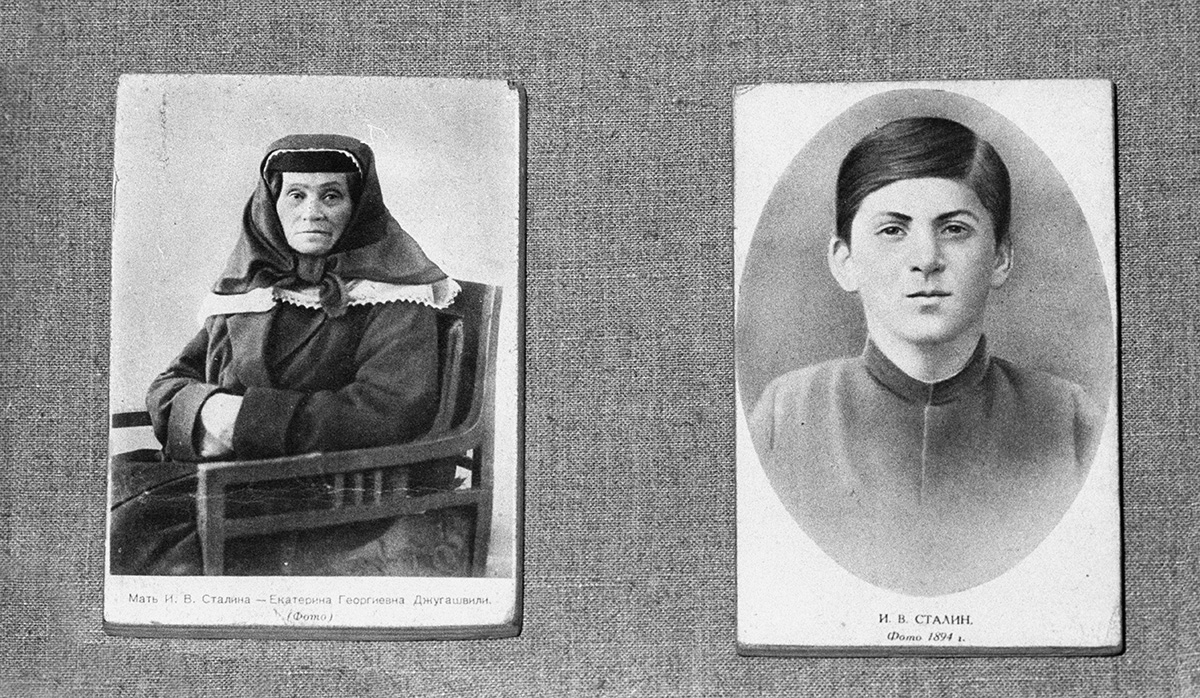 Exhibits of the Museum of Cult, created by the docker of the Batumi seaport Guram Kakhidze: on the left - Stalin’s mother Ekaterina Dzhugashvili, on the right - 15-year-old Soso (diminutive of Joseph) DzhugashviliPhoto: Galina Kmit / RIA Novosti
To understand this side of Stalin’s personality, Batraz advises turning to his perhaps most important literary work, “Marxism and the National Question.”
What do we find in this work? Stalin claims that “in the Caucasus there are a number of nationalities with a primitive culture.” He includes Ossetians among them. He denies any ideas of national-cultural autonomies and makes an unambiguous conclusion: “The national question in the Caucasus can only be resolved in the spirit of involving belated nations and nationalities into the general mainstream of higher culture.”
That is, we are talking about assimilation. More precisely, about uncompromising forced assimilation. Actually, what happened in the South Ossetian Autonomous Region after the war is a clear example of an attempt to translate words into reality.
It is interesting that at that time many Ossetians, despite the leader’s obvious disdain for their national culture, preferred to consider him “one of their own.” True, back then such freethinking was severely punished. Here’s more from Vladimir Valeev’s memoirs about 1949: “Periodically, someone began to discuss the question of what nationality Stalin was, although everyone knew that his father was an Ossetian, Dzugaev. Sasha was accused under Article 58-40, specifically for slandering the leader. The leader says that he is Georgian, therefore, whoever calls him an Ossetian is slandering him.”
Modern social sciences have long come to a consensus that belonging to a particular nationality is determined not by blood relationship, not by “roots”. In many ways, this is a question of self-identification, where it is important what language a person speaks and thinks in, what ethnocultural values he shares. But in the Caucasus, as Batraz states with regret, the “cult of blood” is still strong. In this regard, he can understand the need to feel a genetic connection, a blood relationship with a person who controlled the destinies of half the world. True, in his opinion, this is a manifestation of a kind of inferiority complex.
“Nobody here likes Stalin”
From love to hatred for Stalin is just one step. In the most literal, spatial sense. North Ossetia borders on Ingushetia, where the attitude towards the Generalissimo changes its sign to the opposite and it is unthinkable to hear a kind word about him, at least in the public space. Strictly speaking, the Memorial Complex to the Victims of Repression is located 21 kilometers from Vladikavkaz, on the outskirts of Nazran. It also includes the Museum of Memory of Stalin’s Repressions, where maximum immersion into the atmosphere of the terrible years of terror is possible.
Here are collected documents and photographs of those years, household items that survived exile along with their owners, paintings by local artists in which the pain, despair, and doom of people who were deprived of their homeland were captured in vivid images.
A separate exhibition is dedicated to the Ossetian-Ingush conflict of 1992. The details of those bloody events, and even more so the assessment of the actions of each side, is a topic for a separate and difficult conversation. But it is difficult not to admit that their preconditions were laid precisely by the deportation of the Ingush and the resettlement of Ossetians to their lands. That is, both peoples felt the consequences of this Stalinist decision once again decades later.
A nice girl guide leads me through the halls of the museum, telling me that in two weeks in 1944 these places were completely deserted. They took out everyone who could move. Those who could not were killed on the spot. In total, during Operation Lentil, about half a million Vainakhs (Chechens and Ignushs) were deported. According to various estimates, at least 20% of them died. Plus, about nine thousand soldiers and officers were recalled from the front, who overnight turned into enemies of the people simply because of their nationality.
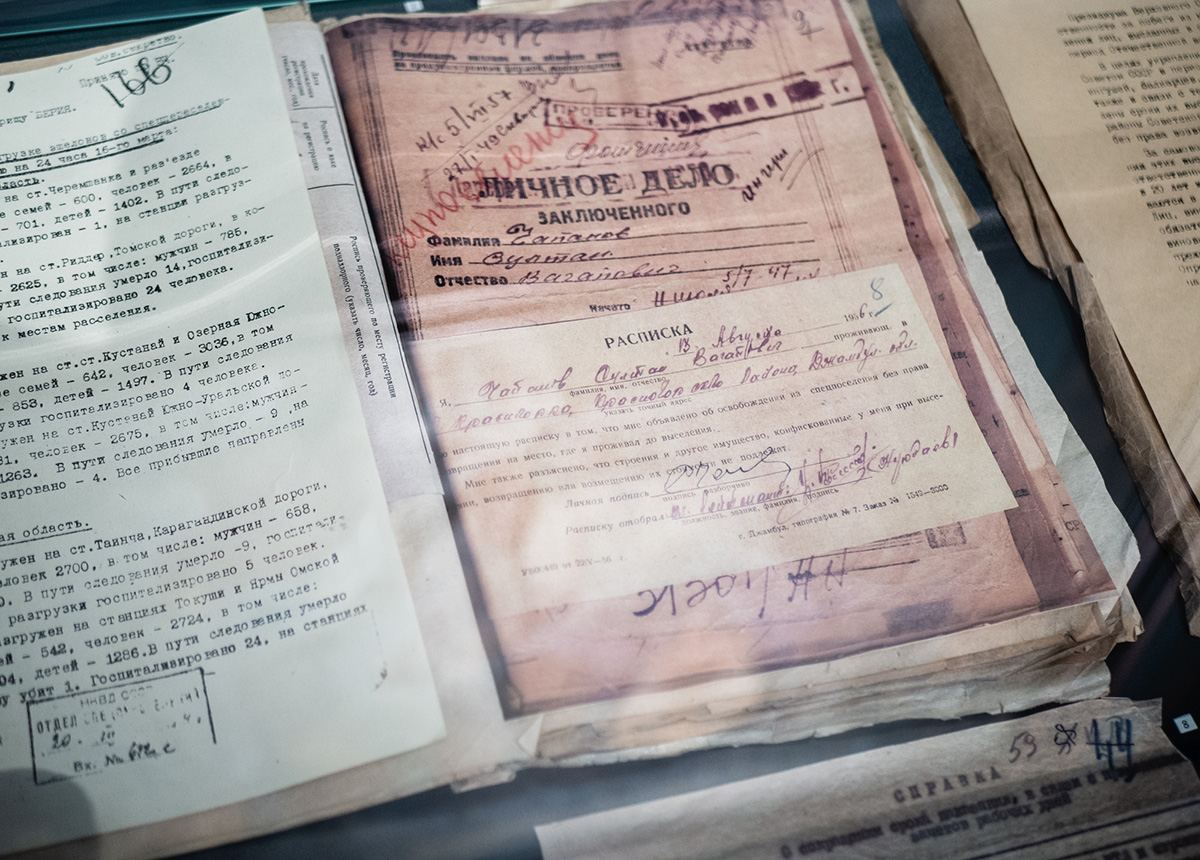 Personal files of repressed Ingush. Museum of Memory of the Victims of Stalin's Repressions, NazranPhoto: Nikolay Zhukov for TD
“We simply don’t have a single family that has not been affected by this tragedy,” says the girl. “That’s why, of course, no one here likes Stalin.”
However, the negativity that the figure of the leader takes on here like a lightning rod does not in any way extend to the state. At least, the museum tried to emphasize this idea.
And between the photo gallery of survivors of the deportation and the exhibition dedicated to the repressions of the 1930s, there are interactive stands and photographic materials offering insight into the prerequisites and progress of the SVO, as well as the participation of residents of Ingushetia in it.
“This is a temporary exhibition, which will most likely become permanent,” explains the guide, drawing attention to its main message: “The Ingush have always been with Russia in carrying out the most difficult tasks.”
"The Bonfire of Veal Delights"
Tamara Gaboevna also puts the interests of the state above all else. “We live in a state, and we have the leadership of the country. All nations must obey him. Whether it is good or bad - only time will judge. My opinion is this. And for today we must each fulfill our own task.”
At the same time, she believes that the memory of past repressions is very important:
“At all the events that we hold, the main leitmotif is exactly this: no to war, no to terror, this should never happen again. This is why we hold our events.
— Can you say this is one of your goals?
- This is our main goal.
But Oleg Kelemetov does not entirely agree that memory protects against repeating the mistakes of the past: “Everything is repeated in a circle due to a massive lack of self-respect. Because a person tells himself and others: nothing depends on us. Therefore, they will remember, they will know, but they will repeat it anyway - they will repeat it with ease.”
According to Batraz, the image of Stalin fits perfectly into this picture, imbued with the syndrome of learned helplessness. As an idealized figure, as a variation of the eternal Russian formula “good tsar - bad boyars.” “This is a very convenient myth that has survived to this day and acquired the ugliest forms,” says Oleg. “And he will live for a long time.”
Stalin himself, by the way, was fully aware that he was turning into a myth, and even expressed restrained displeasure about this in an interview with the German writer Lion Feuchtwanger: “I would like not to justify - it is impossible to justify, but to explain in a human way - where such unbridled, almost cloying delight around my person comes from. Apparently, in our country we managed to solve a big problem, for which generations of people fought for centuries <...> Liberation from exploitation is a very big thing, and the masses celebrate this in their own way. All this is attributed to me - this, of course, is not true, what can one person do? They see in me a collective concept and light a fire of calf delights around me <...> How to prohibit these manifestations of delight? You can't use force. There is freedom of expression. You can ask in a friendly way. This is a manifestation of a certain lack of culture. Over time it will get boring."
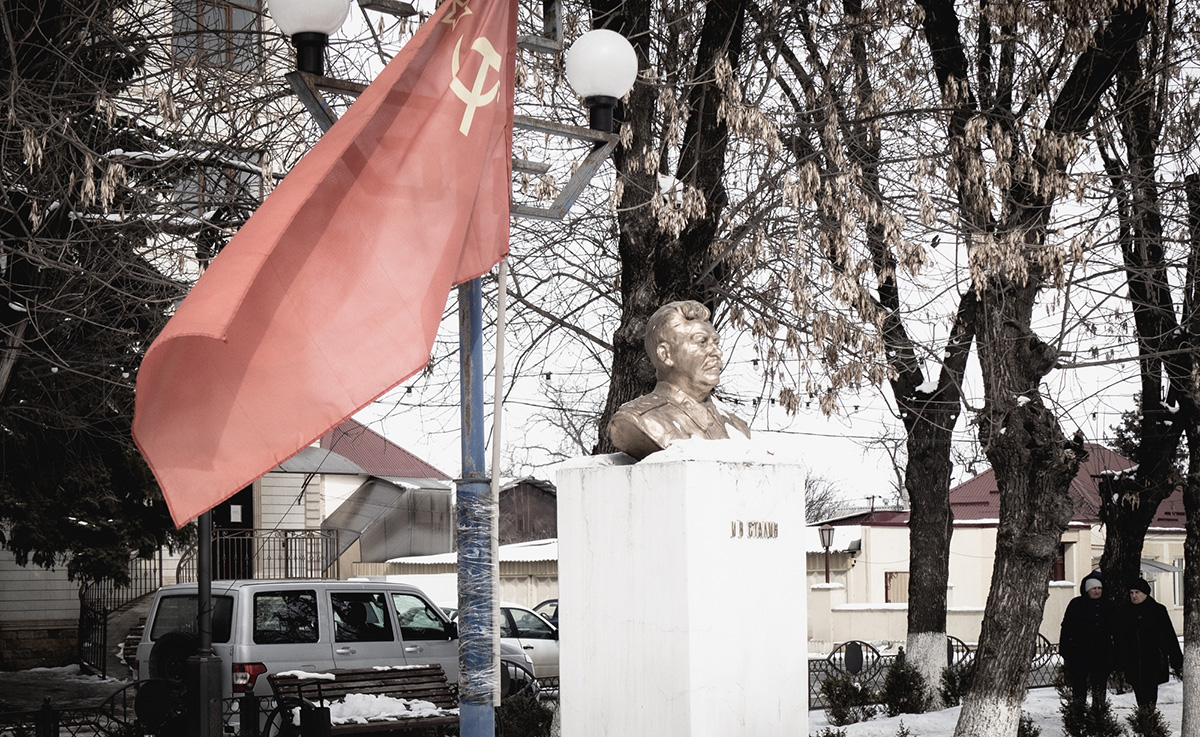 The red banner and the face of the leader are a typical landscape for North OssetiaPhoto: Nikolay Zhukov for TD
Not everyone is tired of it yet. But Batraz is optimistic about this:
— The work that Auzby did [the six volumes of the “Book of Memory”], he may not have realized it himself, played a huge role in the development of critical views on the events of those years. Since his books were published within a small community, you could easily trace the path from yourself to one of the people on the lists of those repressed. And those who received these books first of all began to look for people of their own surname in them: “Wow, ten, twenty, thirty people of our surname turned out to be Japanese spies! Somehow doubtful." The effect of the books was very strong.
— But did this lead to a rethinking of the attitude towards the era of repression throughout the republic?
— The books were published 30 years ago. This is one generation. There's more to come.
— Do you hope that things will get better in the future?
- How else? We live in hope. As market relations strengthen, as the trauma of the 90s fades, I think there will be a rethink. Unless, of course, new injuries occur.