
Translated material
“I was the only white straight guy”
Alexander Molochnikov - about his directorial debut in New York, a short film about Sasha Skochilenko and why art about the difficulties of minorities confuses him
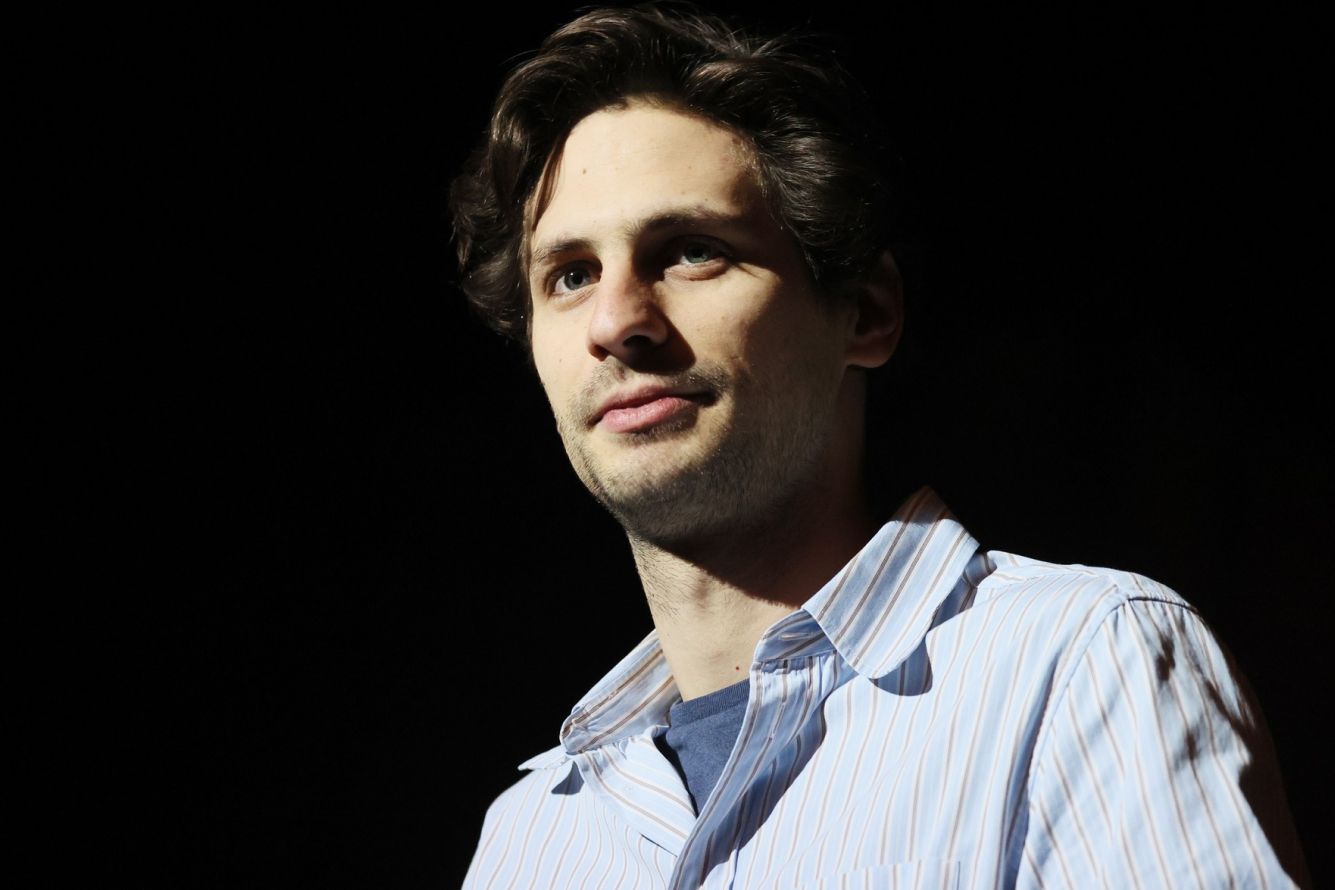
“The Seagull: A True Story” is the first New York performance by Alexander Molochnikov. In Russia, the director collaborated with the Moscow Art Theater. Chekhov, Bolshoi Theater, filmed the series “Monastery” with Nastya Ivleeva in the title role. With the outbreak of full-scale war, he left for the United States to study at Columbia University and decided not to return. Molochnikov openly criticized the Russian authorities and the invasion of Ukraine. His new play is not quite “The Seagull”; Chekhov’s play is only the starting point. The young and promising director Kon stages “The Seagull” at the Art Theater, but war breaks out and the main character is forced to leave for New York. But there he does not find freedom of expression and, by and large, turns out to be of no use to anyone. One of the producers was Sofya Kapkova, the former director of the Documentary Film Center in Moscow, who also left Russia after 2022. Journalist Andrei Muchnik asked Molochnikov about the prime minister, American education and attitude towards DEI .
— What kind of “Seagull” do you get?
I had one shot down. We started at the Moscow Art Theater, Oleg Pavlovich [Tabakov] was in the hospital, but was still alive, and we started doing something so strange for the Small Stage. But then a new artistic director came, appointed by the Ministry of Culture, and it all collapsed.
— Sergei Zhenovach?
Yes, this was such a first undershoot. Then Yura Possokhov, a wonderful choreographer, offered to do something together in a ballet for the Bolshoi, because at that time Kirill Serebrennikov was under house arrest, and before that they had worked together on “Nureyev” with composer Ilya Demutsky, they had, as it were, such a team. And suddenly Yura said: “Seagull,” and since my first “Seagull” did not fly, I, of course, did not believe my luck at all. The performance was released and received the Golden Mask for the best ballet already in the war year [2022]. It was already unclear where to put this “Mask”, but now I could only put it in the toilet. Well, that’s all, and now it’s the third one. At first it was called “Chekhov in Chelsea.”
— It seems that you said something about this in an interview with Ilya Zhegulev?
— Yes, thanks to the wonderful Nathan Sharansky, a certain foundation gave us ten thousand dollars so that we could do something. We gathered in an abandoned office, and, in general, it turned out to be so-so. It was a transfer of the play “The Seagull” into the reality of the Chelsea Hotel , which has always interested me. The so-called residents have been living there for years. Various artists who are still not kicked out, although Savoy bought the building. And in general, this is a historical place where Warhol, Burroughs, Foreman and many others hung out. This all seemed very Chekhovian to me.
— And how did this fit in with “The Seagull”?
— There was such a mix of “The Seagull” and “The Cherry Orchard”: people are kicked out of the hotel, they don’t know where to live. Some young guy is trying to make a play there, show it to his mother, a famous actress on Broadway - the kind of New York adaptation of "The Seagull" that theoretically would take place. But when I had a chance to see this together with the audience, it seemed that the theater that we tried to do in Moscow was much more interesting. It was simply brighter, more complex in shape. When you come here, it seems that all the performances are absolutely literary-centric.
But it became clear how much it would cost to make a performance and how long it would take. It seemed that it would take six months to do this and it would cost a hundred thousand. But in the end it turned out that it would take two and a half years to do this and it would cost 400 thousand. This is generally two to three times more than anywhere else in the world, despite the fact that this is a performance with virtually no scenery. I thought: if we’re going to spend this money and time, why do something that will become an ordinary New York production? We need to do something that will blow up the dance floor, so to speak, and be unusual.
And then it became clear: what happened to me in 2022 could well form the basis of a strong plot. Well, because the stakes are really high and the events, let’s say, unforgettable. Since we did this for so long, there were already enough American events for the second act. It turns out that the play takes place through four times: Russia before the war, Russia after February 2022, America under Biden and America under Trump. These are four very different narratives.
— The main character of the play is you?
— A lot of the plot was invented by playwright Eli Rarey. There is no heroine-mother in my life who is a great prima of the Moscow Art Theater, afraid of the Kremlin and does everything as she is told.
- Well, this is just from “The Seagull”?
- Well, yes, it’s like Arkadina. There are no parallels in the specifics of the characters, but there are parallels at the level of motives, themes, and choices of the hero. There is also some parallel with the love line.
— The producer stole your girlfriend too?
“My girlfriend is already a producer herself, so there’s no one to take her away.” Although there is probably someone, I don’t know, we’ll see how it goes. [Molochnikov meets with producer and actress Odessa Ray, who won an Oscar for the documentary “Navalny.”]
— Do you also miss creative freedom in the USA, like your hero?
- Well, of course. The play shows criticism of restrictions in the United States extremely delicately, although it is impossible not to notice it. There is a scene where the actors ask the main character questions like “Why should Treplev say that he will commit suicide? This can trigger people in the room.” Or “Why do we worship some white male writer who lived a hundred years ago?” This all goes on in some strokes, a dotted line, but not because we are embarrassed to talk about it, we just don’t want to do a performance like “in the morning in the newspaper - in the evening in a verse.”
- Well, what is the situation in reality?
— America and Russia are very different, but I have never experienced such fear of saying something wrong as in America in my life. That is, you are on guard all the time, it’s scary to offend someone. It's like a minefield, you never know where it's coming from. It seems to me that if Russian censorship tears off a hand, then liberal censorship here, like chicken pox, covers the whole body with pimples.
Here you don’t know at all what you can and cannot do, but you find out when you’ve already done it, and then you’re screwed. On the other hand, you are not imprisoned, you are not raped with a mop, but you can be fired or branded and removed from the advanced cultural community. For example, if you joked that a dancer, who looks like an absolute man, is sitting in a women's dressing room. God forbid, I didn’t do that.
- Well, why do this, actually?
- Why joke like that? From a woman’s perspective, a women’s dressing room is a very private, very personal space, they talk about all sorts of feminine things, call girlfriends, walk around naked, and there is a man with a penis sitting there. Well, okay, society has decided that this is good for everyone, but I’m not sure that all these women are happy. I just know that it's not true.
I'm not saying it's actually bad. While still living in Russia, I took part in gay pride parades without being gay, because I understood that this is a minority for whom it is really very difficult - and it’s cool that they find the strength to get together and feel like full-fledged residents of the country.
And here, when I sat in groups of directors of 12 people, ten out of 12 films were about the difficulties of the lives of minorities. Although I was the only straight white one. It's not that it offends me in any way, it just makes me smile.
- Well, you understand that you are also a minority here in this country?
- No. Here the Russians are imperialists and aggressive, predatory straight whites. They are not a minority; no one will take seriously a film about the difficulties of being Russian in America.
— How do the theater industry treat Russian heritage in general and Chekhov in particular?
- Well, we see that Chekhov is being given a lot of credit. Over the past month, I have been to three performances of Chekhov: “The Cherry Orchard” at St Ann’s Warehouse, “Uncle Vanya” in Washington, then Andrew Scott brought his “Uncle Vanya” to New York, where he plays all the roles alone. Our "Seagull" is out. “The Queen of Spades” is always everywhere, I was just at Carnegie Hall to see Rachmaninoff. In short, as they loved, so they love. I feel on the part of the artists, for example, great respect for the Russian school of acting. A lot of people participated in the Yale and Moscow Art Theater exchange program, went to Moscow and studied, or came here to visit them.
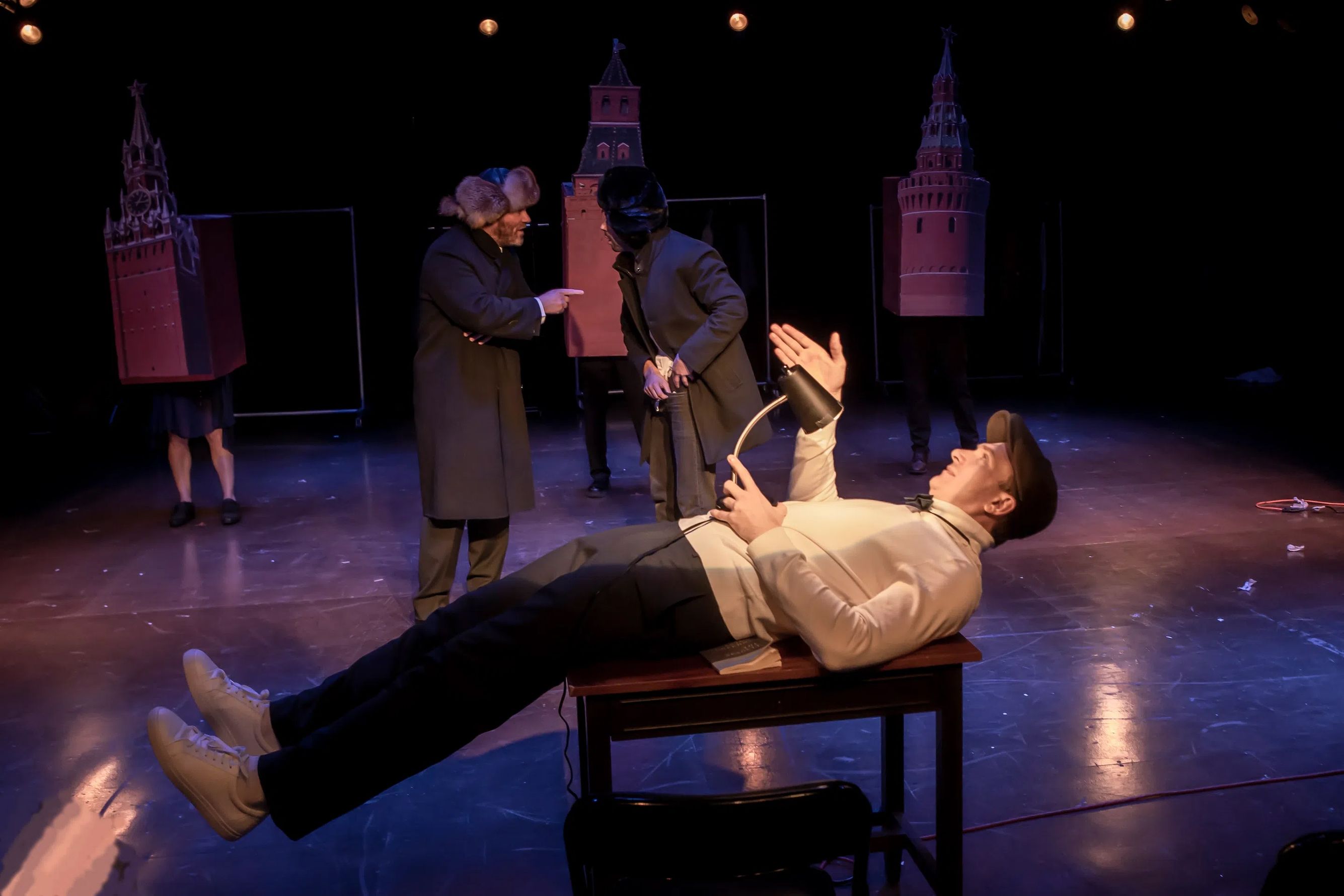
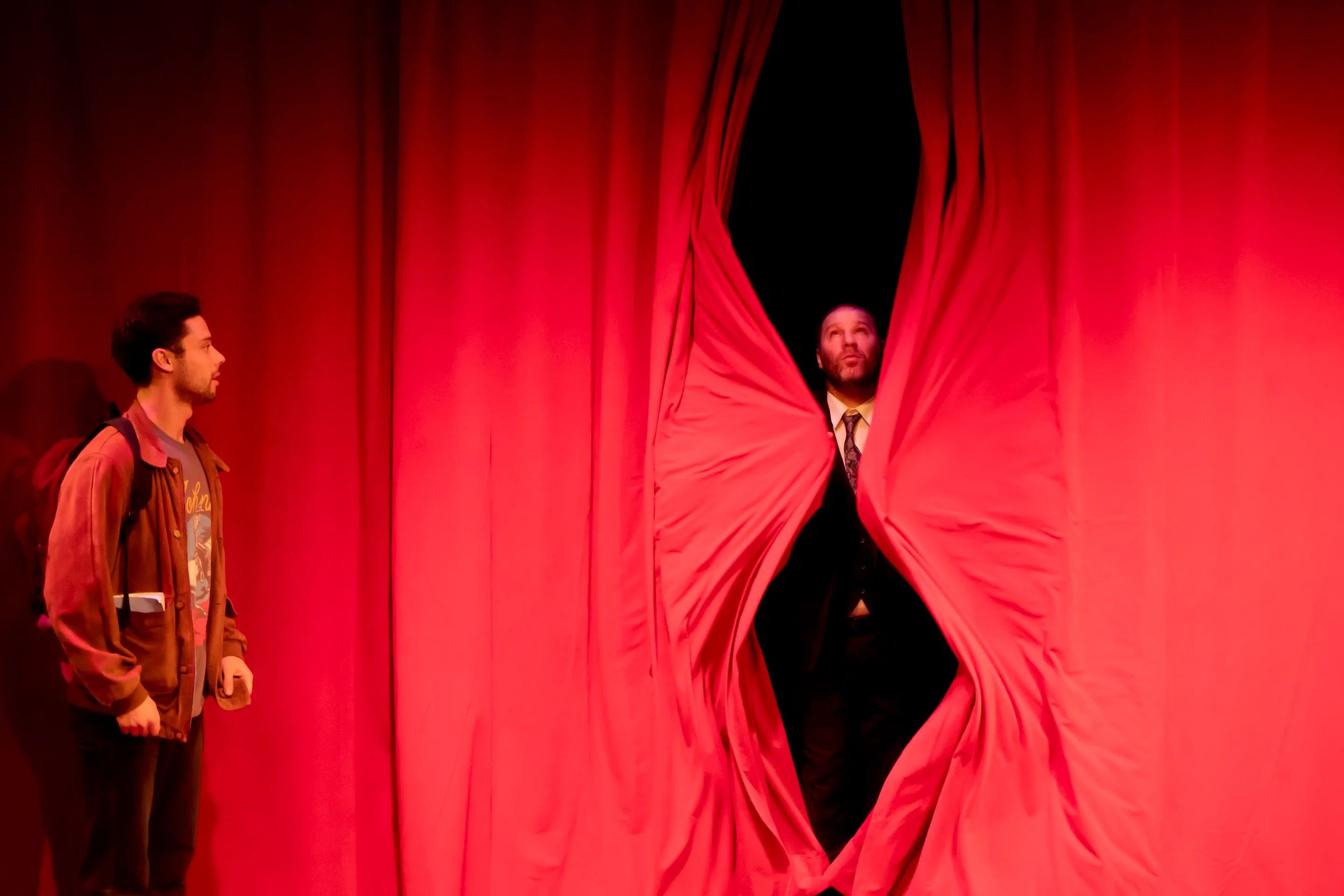
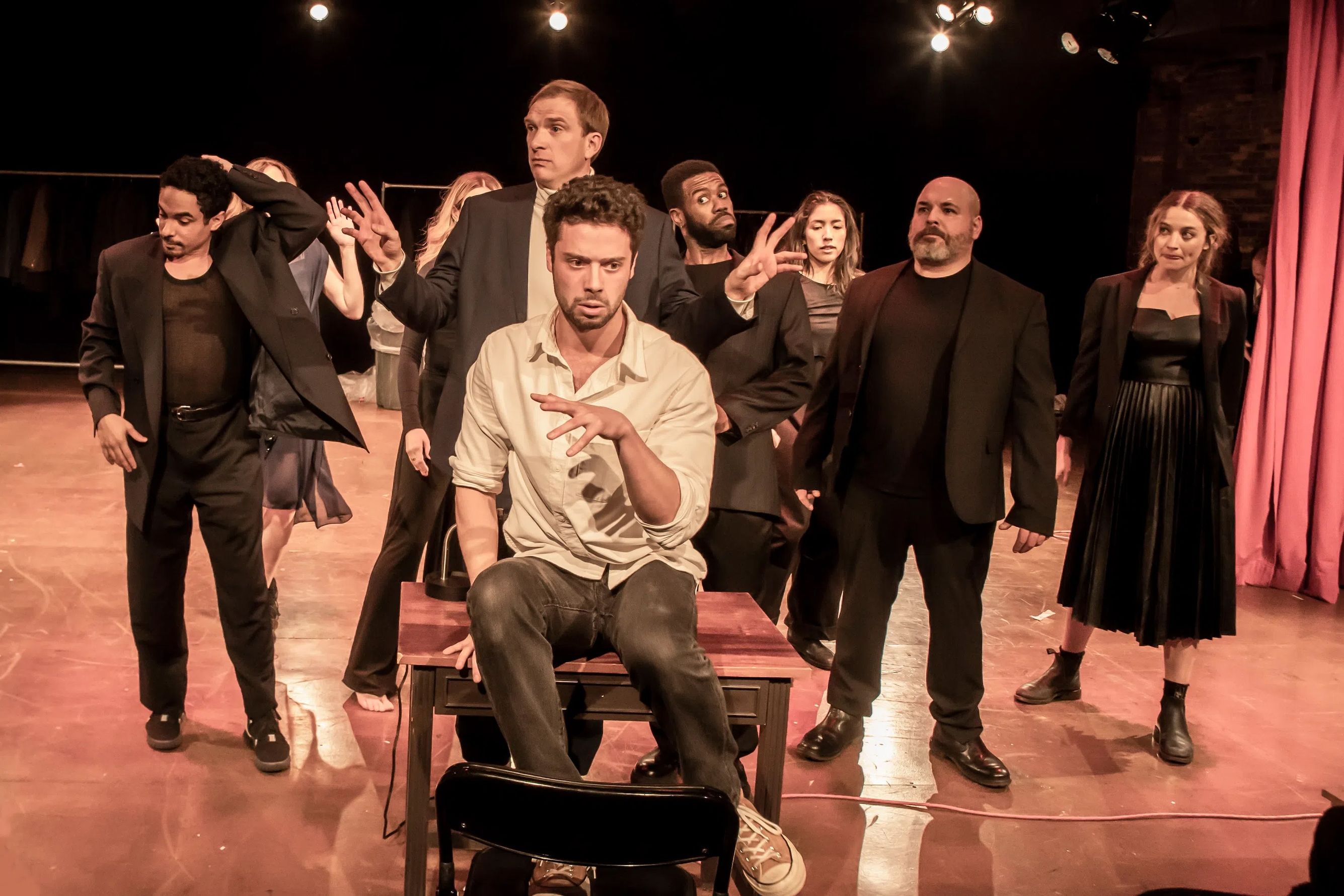
— You had a scene in the play that you just described, where someone exclaims: “Why do we worship some white male writer who lived a hundred years ago?” But in fact, it turns out that New Yorkers go to see his plays.
- Yes, but this topic exists, and there are people who always want to cancel all sorts of Lewis Carrolls and other comrades. Are you aware of how much literature is not being taught at universities now because the writer was, for example, a misogynist, or said something about slaves?
— The topic of ceasing Russian culture is briefly mentioned in the play when producer Berry advises Cohn not to say that he is Russian. Have you had similar problems?
— No, I didn’t have to deal with this, but in the first year [2022], in principle, I didn’t want to yell that you were Russian. Well, I never wanted to shout that I was Russian before.
- This is understandable, but people often ask here: “Where are you guys from?”
— When they ask, you say that you are from Moscow, not from Russia. You just don’t know who you’re talking to: maybe the person is Ukrainian, maybe someone is dying there right now, and you tell him that you’re Russian. Well, we attacked. But now it's different.
- What has changed now?
— I think that Israeli history has changed the context a lot. In a liberal environment (and culture is almost always a liberal environment) when I arrived, Russia was the main bad boy. There are a lot of bad boys now, including America. It is in the brains of liberals, that is, for the majority of the liberal community, that America actively funds Israel - as if it were good. It turns out that not only Putin is the aggressor, but everyone else too.
— How was the work on the play? Did you write any parts, or was it all written by playwright Eli Rarey?
— Initially, I took the risk of writing it myself, and it was monstrous. The actors read my text and said that it was very poorly written. This is bad English. This is a very cool idea, a cool plot; It's very interesting that you do this, but it's just bad writing.
And Eli Rarey jumped in and wrote this meeting scene between [director Cohn] and [producer] Berry in 15 minutes and then put up with me for two years. We fought a lot over each line, but I’m very happy, he’s a talented person.
During these two years, I have never picked up the text myself, which is new for me, because I edited all previous works. And, in fact, it's better this way. Let everyone do their part.
— The story of a playwright who said the wrong thing, went to prison and died there - is this some kind of collective story, or did you think about specific cases?
- This is, of course, a collective story. There is also Zhenya Berkovich, about whom we think about all the time and try to at least write to her. This is probably Navalny, this feeling of a person somewhere out there in the tundra who is slowly dying. These are just some of my friends, detained, whose lives I roughly understand.
— You said that the performance cost $400,000. Where did they come from?
- Well, from the Kremlin. Fully. They were brought on horseback. In fact, about forty amazing and amazing people who live from Tel Aviv to Los Angeles believed that this was the case. Someone gave us 2,000 [dollars], and someone gave us 50 or even 70 thousand, and without them nothing would have happened.
— At the end, the hero seriously thinks about returning to Russia. Have you ever had such thoughts?
- Not really. But in the play he actually wants to visit and hug someone he loves. And yes, this certainly comes to mind. Of course, I would give a lot to hug my grandparents at the dacha. I would probably give anything for this. But this is impossible.
And I'm glad that I know about the impossibility of my return, because it is not safe, and I seriously never think about it. I’m glad that this path seems to have been cut off and you are forced to pedal here.
From some who stayed in Russia, I heard even before leaving that we were not important to anyone there, that there was no need to go anywhere. And these are people who could leave. Some, by the way, already had much more leads here than, say, me. I didn't have any at all; everything I did until 2022 was done in Moscow. So, all these people who could have taken the risk and taken such a step did not take it. And now it seems to me that they were mistaken, judging by the fact that Dmitry Krymov is directing at the National Theater in Prague, that his third play has already been released in New York, that Maxim Didenko won the main British theater award [The Offies] a year ago, that Kirill Serebrennikovhas become one of the leading directors in Europe, and Yuri Butusov is producing a big play in Oslo.
— How do you like the experience of working with American actors?
“I had an amazing day, perhaps the happiest in my first year in America, when we sat down with American actors to read The Seagull.” It became clear that we speak absolutely the same language, that the whole “director-actor” communication system is the same, that they are easy-going, and you suddenly feel that you have a certain ability, not super-ability, but simply an ability, and it is international. One actor told me in the early days that he understood me better than many American directors. It was the most beautiful thing that could happen.
— What is the main result of your studies at Columbia University?
— Firstly, I was happy that I had somewhere to go when I came to America. Happiness, because many simply had nothing to do at all. Secondly, very strong teachers, including the great Iranian director Ramin Bahrani . I learned from them, in a sense, to understand the language of cinema, as far as I learned, we’ll see, but the short film is quite good so far. Thirdly, I’m actually glad that I managed to get into the epicenter of wok culture, the birthplace of all these ideas, and, so to speak, taste it to the fullest. It's a great experience.
— And have you drawn any conclusions for yourself?
- That this is such a dictatorship of the proletariat, only cultural, where talent, at least during study, is far from being in the first place. In the first place is who you are, what race you are, what gender you are, sexual preferences, etc.
— Did you find protests on the campus of Columbia University?
— Yes, I walked around the camp and talked to people. There are two sides of the same coin. Today they are being arrested , and this is unfair. This, of course, is all strange at the very least, and at the most reminiscent of Russian realities - they come home and are deported. But on the other hand, these protests themselves were very aggressive and they were very closed in on themselves, that is, everyone was wearing masks and no one wanted to answer a single question. They just shouted these chants, one of which was “From the river to the sea,” which, in general, to put it mildly, is not the most pacifist slogan. But when you talk about this to pro-Palestinian people, they answer that it’s about something else altogether. Well, if it’s about something else, but a very large group of people thinks that it’s about the fact that it would be nice if Israel didn’t exist, then change the chant. The chant seems to be very ambiguous, if you put a different meaning into it, find another damn one.
— Your short film “Extremist” about Sasha Skochilenko received two prizes at the Columbia University Film Festival, congratulations. Was this your thesis?
- Thank you. Yes, this is a graduate student. I was hooked by the article about my grandmother, Galina, who reported on Sasha, and her comment that girls in general, of course, should be flogged. This is generally such an amazing desire - you don’t need to imprison, you need to flog. For some reason, the Soviet man needs to flog everyone.
It seemed to me that this story differs from other stories related to the war and illegal arrests in that she is an artist, that she has some kind of vision of her own. This heroism of a small act is an ideal event for a short film. It seems to me that we did not miscalculate.
A week before the start of filming, Sonya, Sasha’s girlfriend, and I agreed, conditionally, on Friday to Zoom on Wednesday, and the following Friday we had a Zoom with the two of them. It was one of the brightest events of these years, it was impossible to believe. You think of Sasha as someone who will be in prison for another five years, you subconsciously imagine that this film will come out, the lawyers will tell her about it. And suddenly bam - you’re on Zoom with her. This is quite a hallucinogenic effect.
— Sasha and Sonya watched the film?
- Yes, they saw the film, they really liked it.
— What is more interesting to you: cinema, television or theater?
— It’s more interesting to have a live project that resonates with those who watch it. That is, you feel that you are changing something in their perception. It seems to me that our performance changes the perception of theater among New York audiences, where there is very little visual theater that goes beyond the text. I don’t want to boast too much, but to hear from Americans that this performance is better than the performance with Clooney or Kieran Culkin - well, it’s nice, of course, because I think so too. These performances, with wonderful actors and wonderful texts, are simply completely uninteresting in form.
— What are your plans for the near future? Considering that you say that there is nothing for a straight white man here.
- No, everything is shining. You just deal with this all the time, a lesbian from China says, “You don’t understand my script because you’re a straight white man,” and I can only respond with “sorry.” Well, this is the reality. Nevertheless, of course, something can be done, fortunately. You just don't raise the white flag.
As for plans for the future, I really hope that in the near future we will sign with big screenwriters to finalize the feature script that I wrote at Columbia University. And then we’ll start looking for money. The film is connected with the story of the move; it is a film about a man who did not want to participate in the crime of his country, but in the end he himself was faced with such injustice in the world that he committed a much worse crime.
No one gives a damn about your statements and posts. Globally, as a result, we see how those who were silent are slowly becoming completely fine. It's not good or bad, it's just the way it is. That is, this is actually good. For me personally, the fact that Yura Borisov was nominated for an Oscar is great. But this is also evidence that the world does not reward you for what you think is the right moral choice. What else? Our play (“The Seagull”) is going to London - and I really hope that it will have a continuation in New York, another release.
Interviewed by Andrey Muchnik