
Translated material
And the judges are?!
The history of the confrontation between the courts and presidents of the United States is long, but today Trump is trying to finally solve the issue of who is more important
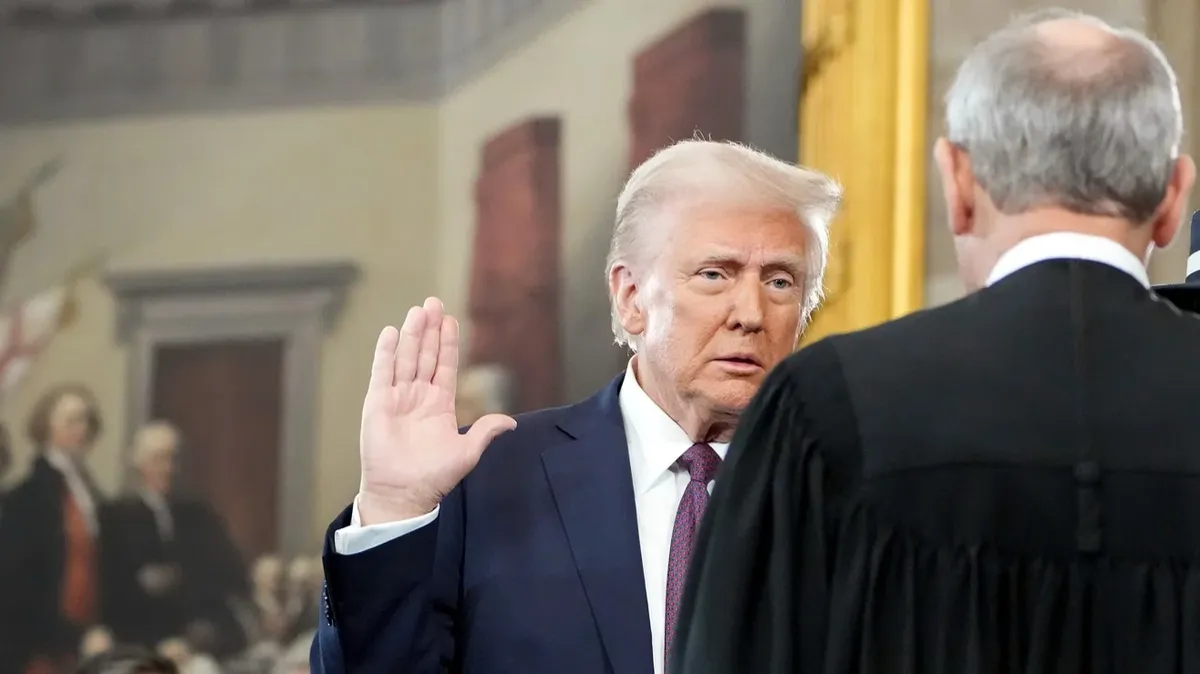
Photo: Zuma / TASS
Disputes about the separation of powers do not subside on both sides of the Atlantic, and in the heat of the debate many have already forgotten that at the dawn of the formation of this doctrine the ideological inspirer of the North American colonists in the eighteenth century became the Englishman John Locke.
According to Locke, there are authorities: legislative , the embodiment of which is parliament; Executive , which is personified by the government; Union ( federal) , which is granted all foreign policy powers. As for the judicial branch, it did not stand out as an independent branch and, according to Locke, was part of the executive.
Thus, even such a classic of the doctrine of the separation of powers did not yet attach importance to judicial control, which is given to it today. By the time the US Constitution was adopted, the political thought of the States was already disappointed in the Lokkovo model of the separation of powers, the place of Locke in the hearts and minds of North American political thinkers confidently occupied Montesquieu.
The process of developing the theory of separation of powers into a constitutional principle has ended and ultimately embodied in the purely American practical scheme of “retractions and counterweights”.
From the very birth of the United States, the courts were the object of criticism of experts and attacks from politicians, and at the turn of the XVIII - XIX centuries. Republicans led by Thomas Jefferson (1801–1809) made an attempt to cleanse federal courts from elected judges. Several years later, their political opponents who won the election, in turn, tried to establish control of the courts. There were attempts to subjugate the judicial system of political expediency later, especially during the years after the Civil War between the North and the South.
Again, under a serious threat, the independence of the US Supreme Court, and along with it and the entire judicial system as a whole, was during the reign of President Franklin Roosevelt, beloved by the Americans (1933–1945). Especially after he began the second presidential term as a result of a triumphal victory in the 1936 elections. And although the Supreme Court did not appear in the program of his election campaign, nevertheless, he was obviously the subject of the president’s reflection, dissatisfied with the topics of the Supreme Court considered a number of the most important cases for the country.
In particular, the US Supreme Court recognized the national plan for the restoration of industry, the act of regulation of agriculture and the so -called “Hot Oil Act” - the key parts of the new course aimed at the country's withdrawal from the great depression. In the same period, the Supreme Court made a number of other decisions not in favor of the federal government, however, for less large -scale cases.
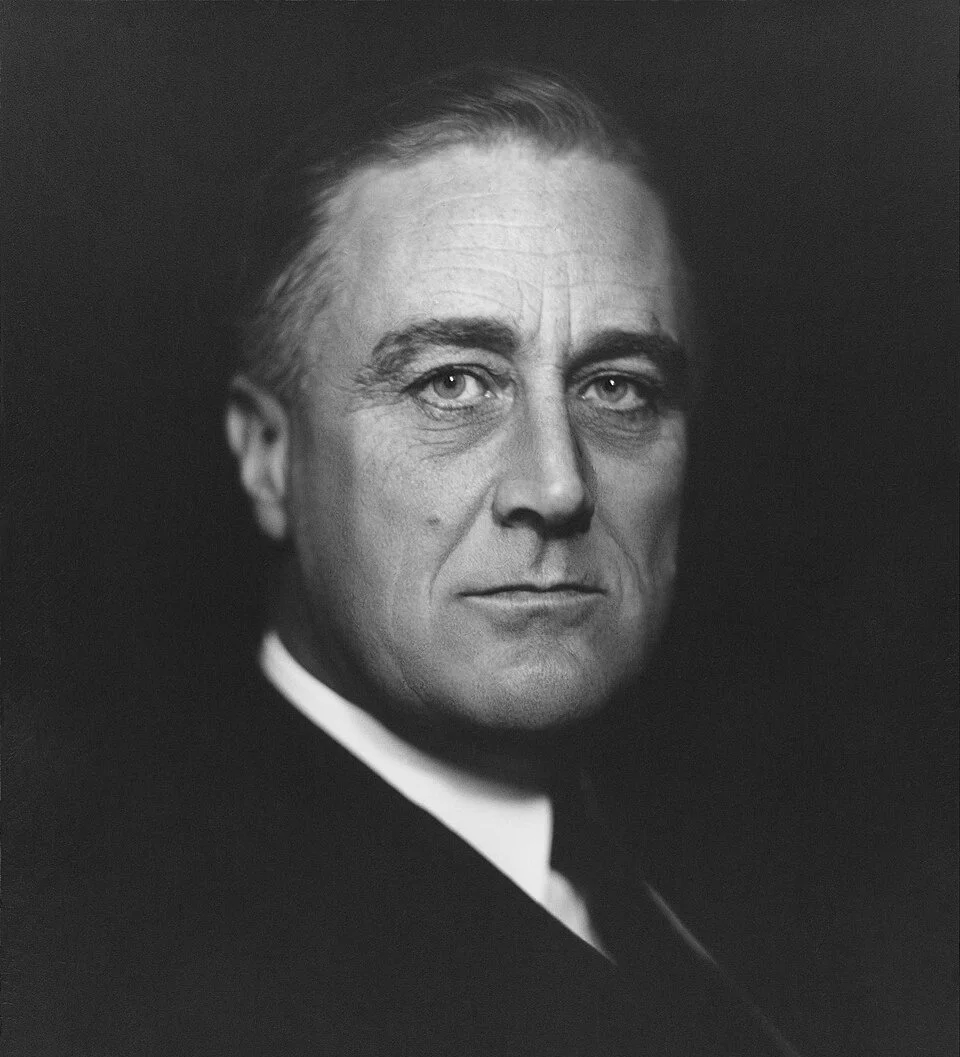
Faced with a series of legal defeats, President F. Roosevelt began to perceive the Supreme Court as an obstacle to the path of progressive reforms so necessary for the American nation, and decided to use his political resource in order to force the country's highest court to keep up with the president and Congress.
In February 1937, F. Roosevelt acquainted the members of the Cabinet and the leaders of the Democratic Party in both chambers of Congress with the text of the message to Congress, containing recommendations on the reorganization of the judicial branch of the authorities, which he intended to send to Congress on the same day. The message also proposed to give the president the authority to appoint an additional judge in addition to each member of the Supreme Court, who reached the age of seventy and did not intend to retire (and at that time six of the nine members of the Supreme Court were at that time).
Thus, Roosevelt would have been able to personally select six judges of the country's highest court, increase the number of judges to 15 people and, as a result, ensure the numerical superiority of their supporters in the Supreme Court.
But Roosevelt made a mistake by calling the judges of the Supreme Court “by the elders who block its economic reforms” and announcing the need to get rid of gerontocracy in the country's highest court. At the same time, he referred to the fact that the judge “entered at age” was not able to fully ensure the entire volume of activities of the Supreme Court and that it begins to affect the quality of his work. It seemed that the president would receive the desired: four fifth deputies of the House of Representatives were democrats, and out of ninety -six senators only sixteen - Republicans.
The situation was saved by the chairman of the Supreme Court Ch.E. Hughes. His letter, who was replete with very eloquent statistics, showing that the Supreme Court fully copes with his work and has no real opportunity to resolve the case faster, was submitted to the Senate law and destroyed the initial motivation for the presidential bill. The president was forced to replace the motivation, to declare that the Supreme Court in its current form does not live up to the expectations of the people (the motivation familiar to us), because it recognizes the social legislation so necessary for the country.
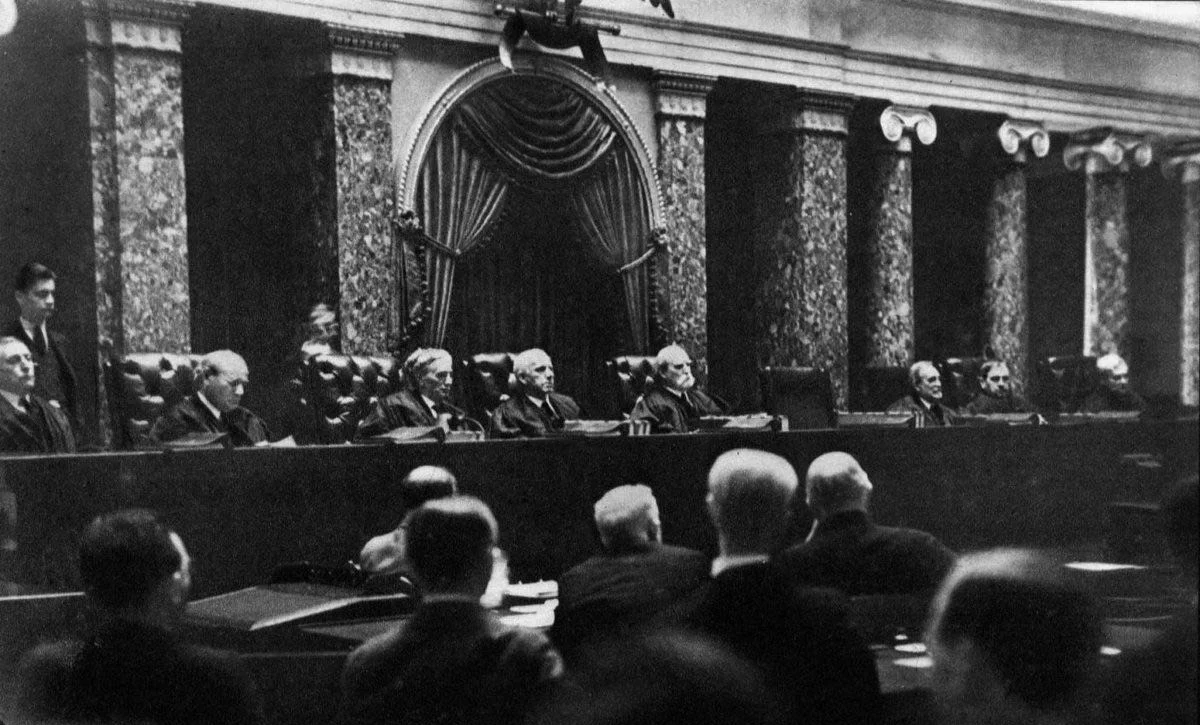
The battle in the Senate lasted from March to July 1937. In the spring, the Supreme Court made two decisions in which by five votes against four supported the essential parts of Roosevelt's social legislation. These solutions went down in history called “The Switch in Time that Save Nine” - “Timely change in the direction that saved nine”. Then, one of the oldest and most conservative judges, Willis Van Devanter resigned, which allowed the president to appoint a new judge, without resorting to the "Plan of the Authority of the Court."
Gradually, public opinion regarding the president’s proposal became negative. As a result, Roosevelt realized that in order to hold a bill through the Senate, he did not have enough votes, and in order to maintain his face, he agreed that the bill was returned to the secondary consideration, while the provisions regarding the Supreme Court were subject to seizure.
Not the most pleasant moments were experienced by the US judicial system and later, when in the 1950-60s political hostility towards the judiciary increased to such an extent that direct threats began not to execute the decisions of the Supreme Court and to dismiss from the post of judges.
At that time, the chairman of the US Supreme Court was Earl Warren, appointed President Dwight Eisenhower (1953–1961). It was under Warren that such famous decisions were made as “ Brown against the Education Council ” and “ Miranda against Arizona ”. However, at that time the judicial power resisted.
REFERENCE
Brown against the Council by Education
On May 17, 1954, the US Supreme Court unanimously issued a precedent decision in the Brown case against the Education Council of Topek, Kansas. According to this decision, the segregation of public schools authorized at the state level violated the 14th amendment to the US Constitution and, accordingly, was unconstitutional. This historical significance laid the end of the doctrinal principle “separate, but equal”, established in the precedent solution “Plesses against Ferguson” in 1896, “Brown against the Education Council” marked the end of the legalized racial segregation in American schools and became a catalyst for growing civil rights in the 1950s in the 1950s.
Miranda against Arizona
“Before the start of any interrogation, a person should be warned that he has the right to remain silent, everything he says can be used against him, and he has the right to the presence of a lawyer hired or appointed.” (US Armed Forces Chairman Earl Warren).
In the decision in the Miranda against the state of Arizona, issued in 1966 by 5 votes against 4 and with three special opinions, the Supreme Court ruled that the arrested person has the right to protect against coercion to give confessions against himself, as well as the right to a lawyer in accordance with the 5th and 6th amendments to the US Constitution. The Miranda against the state of Arizona, which became the precedent, established a mandatory to pronounce the “rule of Miranda” at the time of the detention, which gained world fame.
So there were very difficult minutes in the life of American ships.
But such that at the head of state twice with a break on a four -year advertising pause was a person who was openly not respecting the judiciary, who did not understand and did not want to understand the most important constitutional principle of the separation of powers, was not yet.
... Donald Trump’s relationship with the courts did not immediately set. Since the mid-1970s. And before the first election, President Trump and his companies were involved in more than 4 thousand cases in the courts of the federal level and state level. Trump's lawyer Alan Marten at one time called Trump's legal adventures “a natural part of the business”. And although in the pre -presidential period Trump won in more than 90% of cases, he perceived each lost business as a manifestation of bias or antipathy to him personally.
When Trump took office and thereby became part of the system of separation of powers, understanding this constitutional principle and, in particular, this did not add the role of the judiciary. Rather, on the contrary: Trump stubbornly did not see and still does not see the difference between the president and master of large business, whose orders are obeyed by everyone around. And here these courts, fu ... and reactions to unfriendly decisions of the courts, including the Supreme Court, sometimes turned out to be some kind of children's. "Do you have the feeling that the Supreme Court does not like me?" - Trump bitterly complained in 2020 on Twitter after the Supreme Court first blocked the termination of the DACA program (“delayed actions in relation to the arrived children”), and then made a case in favor of LGBTK+* workers.
At the end of 2020 - early 2021, the courts, from the point of view of Trump, were completely scared, because one after another they refused to consider the Trump team in connection with the primitive “stolen elections”. As a result, more than 60 court cases were formed, where judges, including judges appointed by Trump and other republican presidents, having studied the evidence presented, came to the conclusion that there was no large -scale fraud .
And this was only the beginning - the number of various court cases grew simultaneously with Trump's hostility towards the courts, and when he became the president for the second time, he already had a completely different environment.
During the first presidential term of Trump, his appointments often tried to keep him from destructive decisions. The current Royal army indulges the worst instincts of the president and, instead of installing protective barriers, actively creates it. And about ships and judges, they also have something to say.
Back in early February, Vice President Vance said that judges were not allowed to control the legitimate power of the president. It is strongly said, especially taking into account the fact that Vance graduated from one of the best schools of law in the country.
The idea came to the court, began to develop rapidly, and now the president is already seriously starting to solve the key question of who is the main one - he or the courts.
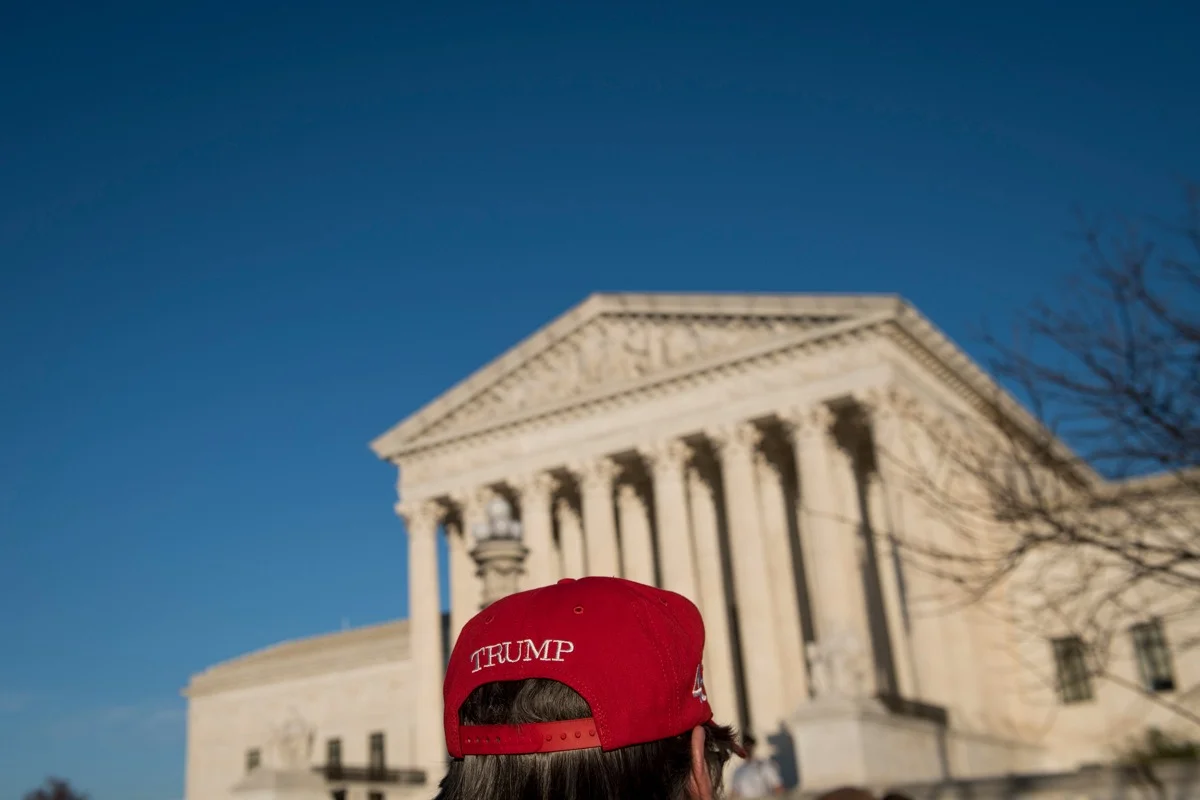
In early March, Trump informed reporters that the federal judge in California, who issued the order to hire thousands of dismissed temporary workers, "thus put himself in the place of the President of the United States, elected almost 80 million votes." On March 17, the federal judge demanded that the Trump administration presented evidence before the end of the working day showing whether the White House violated the court order during the deportation of migrants, during which the proper legal procedure was either practically or not observed at all. The media nicknamed the “king of state borders” Tom Homan said that the flights would continue, and he does not care what the judges think.
It became very obvious that Homan’s point of view on American courts was shared by the Ministry of Justice, whose lawyers went to court and in the appeal indicated that the administration would not provide any information regarding deportation flights, and the court should stop the hearing. By the way, in the appeal on page 4 there is an indicative phrase: “Data established by Art. II ( US Constitution. - E. M. ) Powers, especially if they are carried out outside the United States, are not subject to judicial control or intervention. ” And in the evening of the same day, speaking at Fox News, Attorney General Pam Bondi criticized the judge, saying: "What he did is interference with presidential powers." Separation of powers, I target, where are you?
On March 21, the defendant in the high -profile case of Perkins Coie LLP v. The US Department of Justice has petitioned for the disqualification of federal judge Beryr Howell. By the way, it is known to us: it was Judge Beryl Hwell that did not recognize the right of the Russian Federation to sovereign immunity in the United States, when in November 2023 the District Court of the United States County of Colombia rejected the application of Russia to recognize Yukos for $ 50 billion. And on March 27, Judge Hawwell harshly suppressed the attempt to remove it from the work of the famous law firm and She accused the Department of Justice of the fact that attacks on it are part of a large -scale campaign directed against the judicial branch of the authorities.
Each new case with the participation of the Trump administration is a continuation of the struggle of American courts for their independence and for maintaining the place in the system of separation of powers according to Montesquieu. And for the Trump administration (although many there heard about the “two treatises on the rule”) this is an attempt to return the system of separation of powers according to Locke, the ghost of which is following what is happening and, like all of us, it is waiting for a circle and whether the executive branch will be able to break the power of the judicial one.
In the preparation of the article, materials of the book M.A. Krasnova and E.A. Mishina "Open eyes of the Russian Themis ."
This material was released in the seventh issue "New Gazeta. Magazine". You can buy it in the online store of our partners.