
Translated material
Bloody Cult of Kali
The Guinness Book of Records considers the leader of the Indian sect to be the most “productive” maniac in the world. His followers strangled travelers across the country - and acted with impunity for years
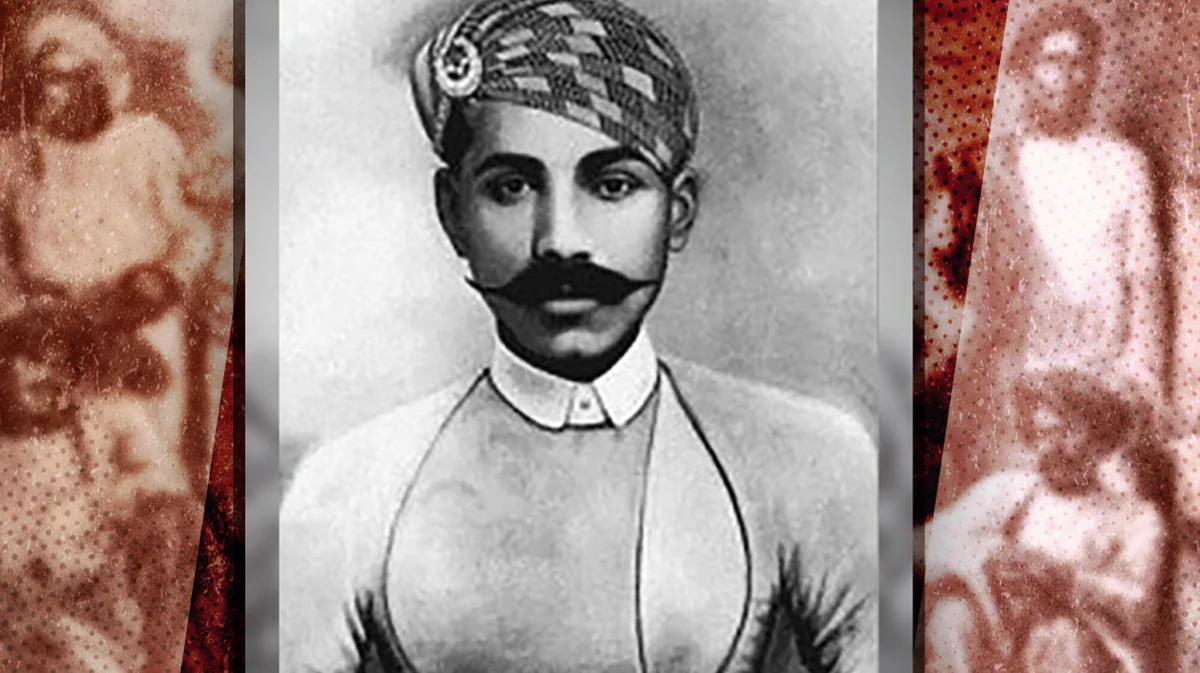
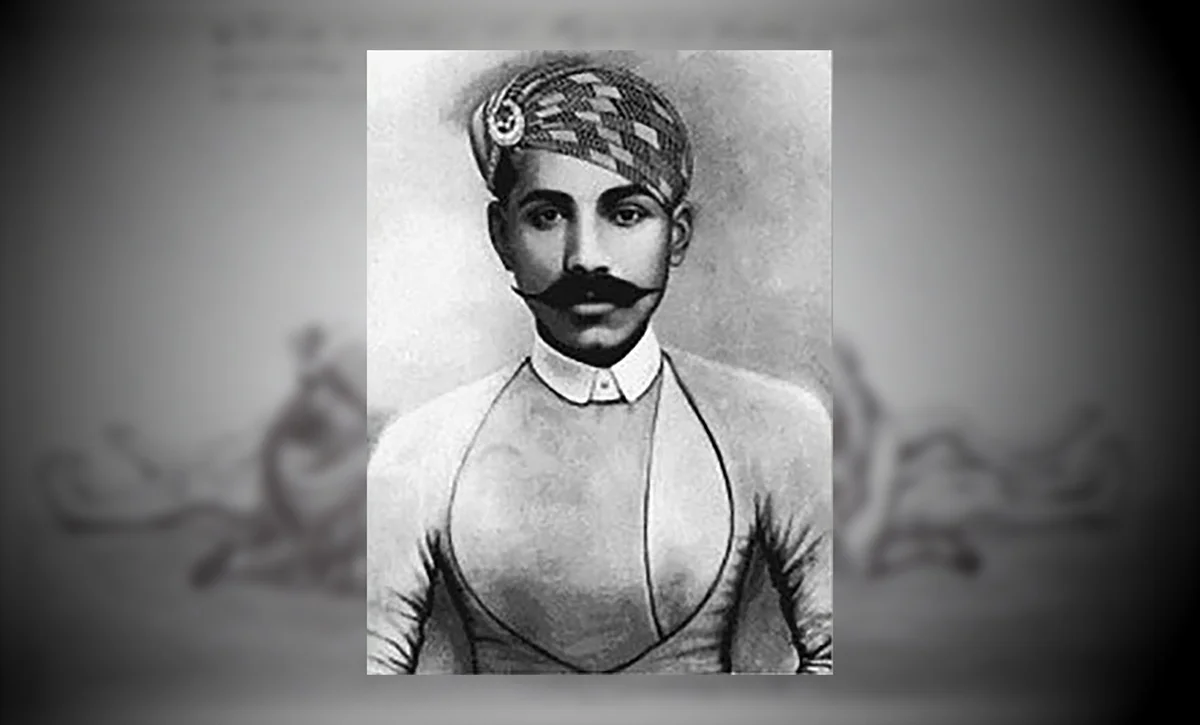
260 years ago, in the spring of 1765, one of the bloodiest serial killers in the history of mankind, Tag Behram, was born. Over a fairly long life (75 years), Behram personally killed at least 125 people and participated in another 931 murders. Followers of the Thug sect, which he led, considered him the incarnation of the goddess Kali on Earth. After his execution, the sect still continues to exist, and the “common fund” of the sect has never been found.
Tag Behram was predestined to become a killer even before he was born. His father occupied a significant position in the Tugh (or “Thagi”) sect, which appeared in the 12th century. Her followers believed that they served Kali, the goddess of death, destruction, fear and horror. There are several options for the origin of the name: the first is from the English word ṭhuggee, translated as “suffocation”; the second is from the word ṭhag, which means “thief” in Hindi. But if the sect originated in the 12th century, then it is unlikely that an English word could be used in its name. The British came to India only at the beginning of the 17th century. Although it is quite possible that the name appeared after the British came to India, and they themselves called themselves differently.
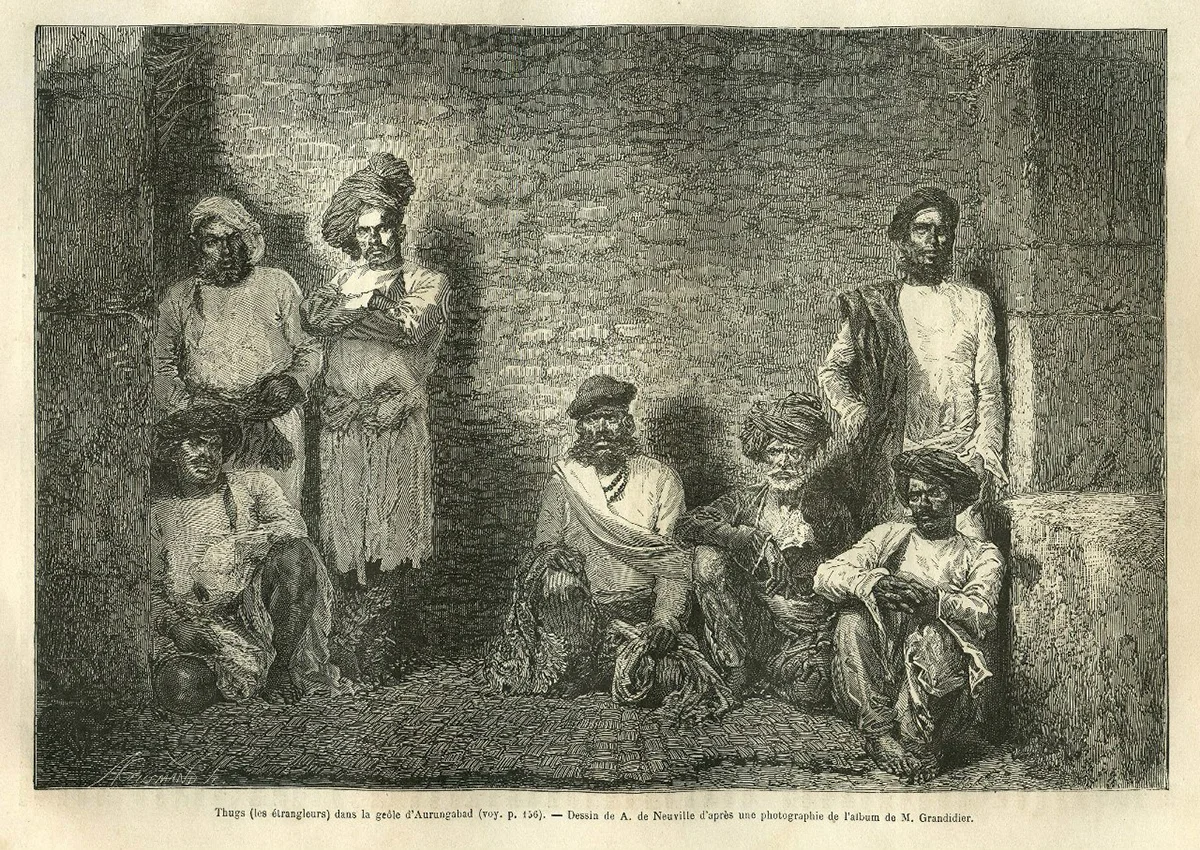
In some ways, the Tug sect resembled the thieves’ community of the USSR in the second half of the 20th century. They had their own jargon, a system of conventional signs that was incomprehensible to the uninitiated. Anyone from Delhi could count on the help of a fellow man when he arrived, for example, in Bombay. The Tugs had safe houses for living (analogous to the Soviet “raspberries”), a common treasury from which any initiate could receive help.
Well, the Tugas were also meticulous in their secrecy: even relatives often had no idea that their loved ones were engaged in robbery and murder of traders and travelers.
To become a Tug initiate, it was necessary to go through a long journey, which began when one was 9–11 years old. At first they served as gravediggers, then they were allowed into reconnaissance, then they became “barkers” who lured travelers into a trap. Particular attention was paid to secrecy. Anyone who, through negligence or intentionally, spoke about his membership in a sect was subject to immediate execution.
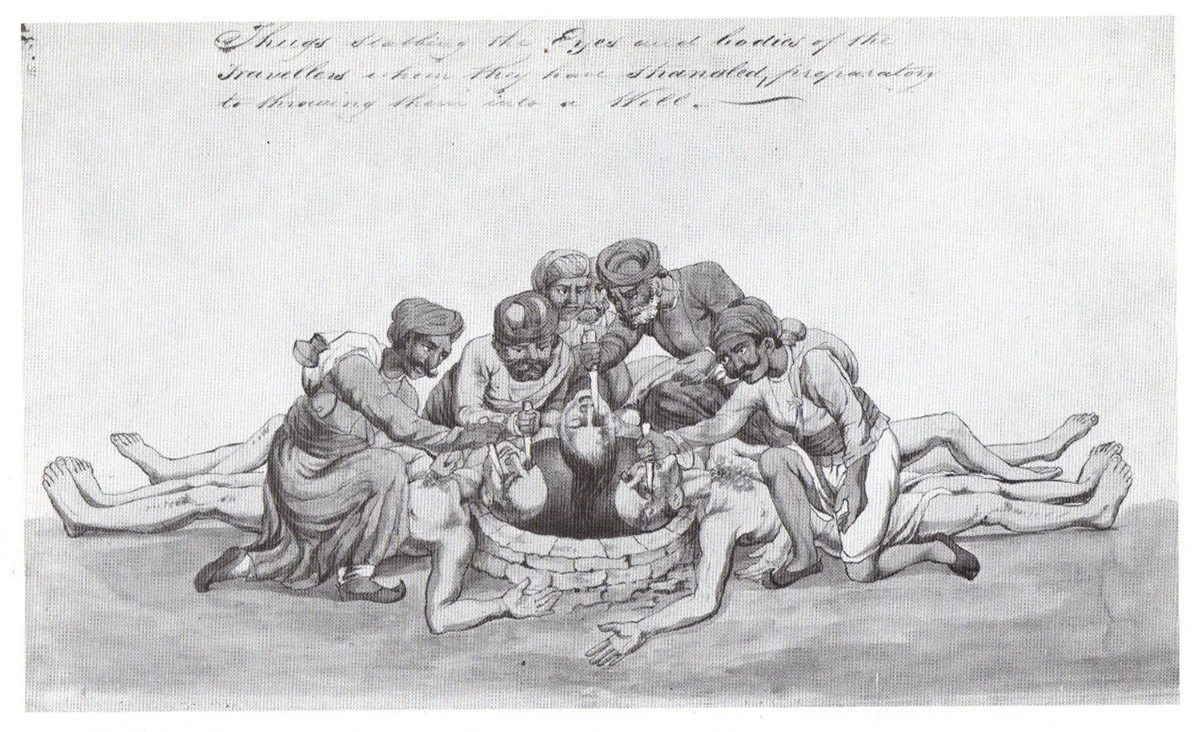
The 17th century French traveler Jean de Thévenot described the actions of the gangs as follows:
“They had a favorite trick to deceive gullible travelers. They sent young women to meet the caravan or group of travelers, who cried and wailed bitterly, arousing pity. After which they were lured into a trap, where the thugs strangled their victims with yellow silk ribbons, to which a one-rupee coin was tied at one end. With a weight on one end it was easier to get the noose around my neck.”
Bands of Thugs, and there were several hundred of them in India in the 18th century, usually went hunting after the rainy season, in the fall, and acted until late spring. One group of 30–35 people could kill up to a thousand people in a season. The Thugs never left witnesses; they even killed dogs, monkeys and other animals that belonged to their victims. Each gang had its own territory, where they had caches in order to rest and dump their loot. Often, when a caravan was of great interest but was too large, several gangs merged into one.
Tag Behram committed his first murder when he was 12 years old. According to the recollections of contemporaries, from childhood he was distinguished by a powerful physique and by the age of 12 he looked like an adult man. He was born in the suburbs of Delhi, grew up unsociable and shy. After he took a leading position in the sect, he began to say that he was a descendant of the Persian shahs, who were forced to flee to India after the assassination of the famous Nadir Shah (at the beginning of the 18th century he founded an empire in the East, the borders of which extended from the Caucasus to the Indus River). But there is no confirmation of his words about the origin. Nadir Shah was assassinated in 1747, 18 years before Behram was born. During this time, his father, forced to hide not only from the new government in Persia and Iran, but also from the authorities in India (Nadir Shah entered India in 1738 and, having defeated the Mughal troops, occupied Delhi, where he carried out a massacre of the population), could hardly have gained authority in the Tugh sect if he had been related to the Persian shahs.
Tag Behram approached murders creatively . The usual strangulation practiced by the Tugas did not suit him.
He improved the weapon for killing the Thugs: he sewed a medallion weighing 90 grams into his belt. As a result of this “upgrade,” the belt would snap around the victim’s neck in an instant, and the medallion would dig into the Adam’s apple.
The Behram medallion itself, now kept in the private collection of an Indian businessman (approximate price is a million dollars), is also of interest. It has not yet been clarified how Behram got this work of art, made in Italy. The medallion was made by a student of the famous sculptor Antonio Canova (his sculpture “The Three Graces” is exhibited in the Hermitage and is part of the museum’s permanent exhibition, the years of the sculptor’s life are 1757–1822). The medallion depicts a copy of the sculpture “The Three Graces” on one side, and Canova’s profile on the other. It was this medallion, which it is not clear how it got to India, that Behram sewed into his belt.
By the beginning of the 19th century, the English East India Company virtually owned all of India. The British drew attention to the strange disappearances of trade caravans - a real hunt was launched for the Thugs. In 1840, the British managed to capture the leader of the Thugh sect, Tagh Behram. How this happened is still shrouded in mystery, but it certainly wasn’t without betrayal. Behram was taken to Delhi, the British conducted a quick inquiry. Behram confessed to 125 murders and spoke about another eight hundred in which he participated. The British were shocked that a sinister organization had been operating under their noses for many years.
The Guinness Book of Records estimates that the Thugs are responsible for at least two million deaths, and Thug Behram is one of its bloodiest members.
When Behram was arrested, the leaders of the East India Company, which exercised power functions throughout India, were interested not so much in the number of people killed, but in the treasures he had hidden. The British knew that, while robbing trade caravans, Behram gave silver to his people and sold perishable goods. But he took gold and precious stones for himself and hid them until the moment when all the Tugas might need it, that is, he created a “common fund”. According to rough estimates by British historians, these caches contained valuables worth $100 million (at current prices).
In order to force Behram to give up his caches, the British arrested his son Ali, who was not initiated into the tugs and did not participate in the murders. Blackmailing Behram with the life of his son, the British forced him to hand over several treasures. And then intelligence received information that the Thugs were planning to recapture their leader and were even involving Sikhs in this matter. This threatened a serious uprising. The authorities decided to get rid of Behram as quickly as possible. He was quickly sentenced to death and hanged in a Delhi prison. After which other members of the sect, who were betrayed by Behram, were arrested and executed. Officially, the Thug sect was put to an end, and the roads of India became much calmer. However, even today in India, corpses of people strangled according to the rules of the sinister cult of Kali are periodically found.
And in India, a community of “search engines” has developed that are looking for Behram’s treasures. They have become a true legend and attract travelers from all over the world. And from time to time one of the “search engines” declares that they are on the trail. Officially, the treasures have not yet been found, but this does not mean that they are not there.