
Translated material
The Constitution is not for children
Starting with the new school year, social studies in middle school will be canceled, and in high school it will be reduced. Let's figure out what this will lead to together with teachers
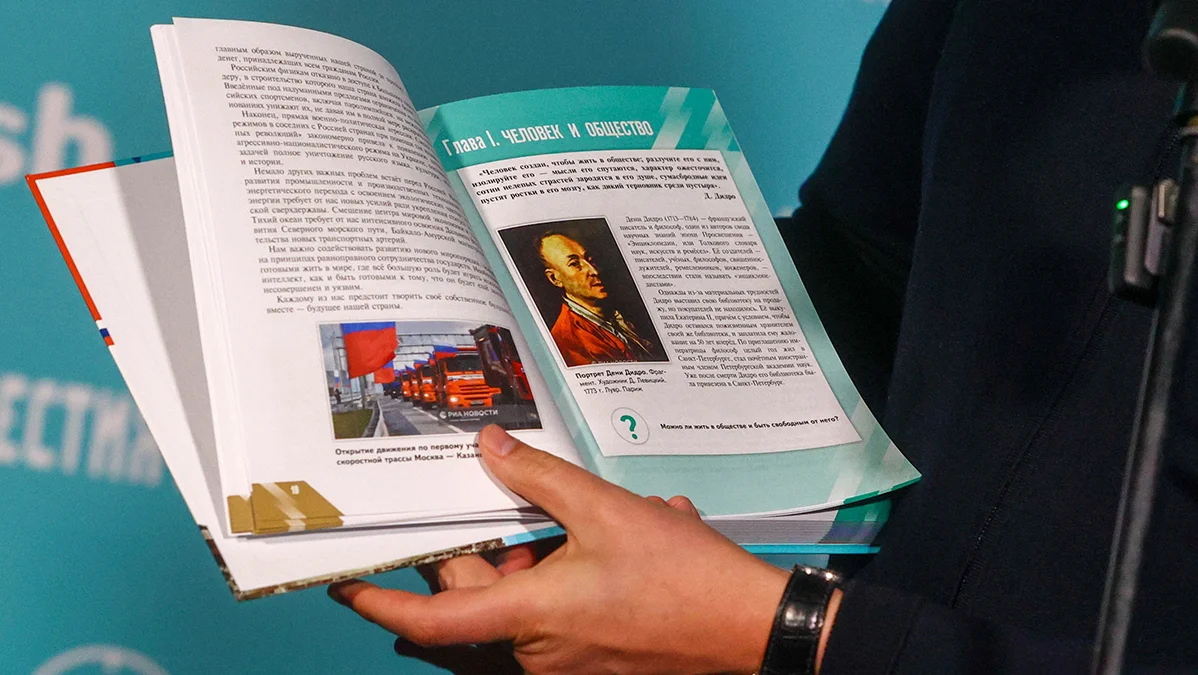
Social studies textbook for ninth grade. Photo: Yaroslav Chingaev / Moscow Agency
In the spring of 2024, the Ministry of Education decided to shorten the social studies course at school. From September 1, 2025, it will be removed from the schedule of 6th and 7th grades, and from 2026 - from 8th grades. The subject will be taught only from 9th to 11th grades. We are figuring out how the program will change and trying to understand what will come of it.
The material was first published on the Wind project website.
What did social studies look like in grades 6–8?
The subject “social studies” in its modern form appeared in 2000. It combines many different sciences: political science, law, fundamentals of philosophy, economics and sociology. The main proponent of this concept was the author of the most popular social studies textbook, Leonid Bogolyubov. Until the end of this school year, social studies was taught from 6th to 11th grades.
According to the federal subject program , which has been in effect until now, 6th grade students studied topics within two large blocks: “Man and his social environment” and “The society in which we live.” In the first part there were, for example, the following topics: human needs; relations between generations; features of adolescence; people with disabilities; human right to education; relationships in the family, with friends and peers. In the second part - the position of a person in society; types of economic activities; political life; our country at the beginning of the 21st century; traditional values of the Russian people; global problems of our time.
In seventh grade the program became more complicated. “Social values and norms” appeared in it: principles and moral norms; good and evil; conscience and shame; the influence of moral norms on society and individuals.
In the section “a person as a participant in legal relations,” schoolchildren studied the concepts of lawful behavior, offense and legal liability, misdemeanor and crime, rights, freedoms and responsibilities. Another block for seventh-graders was “the fundamentals of Russian law”; the section was entirely devoted to various laws and documents: the Constitution of the Russian Federation, the fundamentals of civil law, the fundamentals of family law, the fundamentals of labor law, types of legal liability.
The eighth grade curriculum was largely devoted to economic relations: resources, the concept of property, types and forms of entrepreneurship, market equilibrium, production efficiency, wages, employment and unemployment, stocks and bonds, personal financial plan. A block of cultural topics appeared: modern youth culture, the role of science, religion, art.
Course towards patriotization
In 2024, new guidelines for teaching social studies were published. They advised teachers to pay attention to Putin’s decree No. 809, which lists “traditional spiritual and moral values” that need to be guided by and names the signs of “destructive ideology.”
“A social studies teacher should pay attention to the possibilities of the subject when updating issues of countering destructive ideology. <…>
Fulfillment of this requirement is implemented by including tasks in social studies lessons that allow identifying examples of antisocial behavior, that is, behavior that does not correspond to social norms and values accepted in Russian society,” the methodological letter says. In addition, the teacher was recommended to refer to the list “Our Heroes,” which includes, among other things, “heroes of the Special Military Operation.”

New program
If in middle school social studies will, in principle, disappear as a subject, then in high school, from September 1, its teaching will change somewhat. Thus, several important topics will be excluded from the updated program for grades 10–11 - for example, “the role of the media in the political life of society,” “the Internet in modern political communication,” as well as “conformism.” References to peacetime and wartime will disappear: “international protection of human rights in peacetime and wartime” will become simply “international protection of human rights.” At the same time, the conventionally “liberal” vocabulary still remains in social studies textbooks and programs. There is “freedom of speech” and “freedom of conscience”, but side by side with them is “a fair world order”, “cultural sovereignty of Russia”, “fakes and disinformation”. More practical topics will appear: credits, loans, money transfers, insurance services. The program will touch upon several fairly new social phenomena: legal regulation of artificial intelligence, blogging, marketplaces.
The number of hours will be reduced: ninth-graders will study social studies once a week - that’s 34 hours a year. According to Dmitry Kokorikov, tutor and author of the educational project “Our Society,” this time is not enough to prepare for the OGE. However, officials believe this is justified.
“We [drawing up a new program] are moving away from declarations, from overload of content,
- said the rector of the Russian State Pedagogical University Sergei Tarasov during the St. Petersburg International Legal Forum. “This overload erodes the semantic foundations of the social science course.”
What do teachers think?
Novaya Gazeta Europe asked teachers to share their opinion on the reduction of the social studies program.
Mikhail (name changed), social studies teacher at one of the Moscow schools
I was not in favor of introducing social studies in high school when it was done in the 90s, and I am not upset that it is being removed now. Social studies in its most basic form is necessary for graduates at the stage of leaving school for adulthood. If exit is carried out in the 11th grade, it is needed in the 10th–11th grade, if in the 9th grade, then in the 8th–9th grade. Any subject can be taught well; the question is to what extent the system and situation in education allow this.
Maria (name changed), social studies tutor, former teacher at one of the Russian schools
Social studies as a subject is definitely needed. Children under the 9th grade need it just as much as children older: in the 6th grade there is, in fact, a short course in psychology and sociology, in the 7th grade there is a first introduction to legal literacy, and in the 8th grade to economic literacy.
The social studies curriculum should look the way it does now, and teaching this subject well is not only possible, but necessary. But only if the teacher has internal motivation to talk and have as many discussions as possible with children on topics that were previously in the curriculum for grades 6–8. These topics are controversial, they are designed to develop critical thinking and value systems in children.
Such things cannot be memorized, because these are not natural sciences, these are humanities. Social studies can be a super important subject for children, where they can have their voices heard and develop very important skills. Unfortunately, as far as I know, this is almost never implemented in state schools. This is very much tied to the personal motivation and vision of the teacher.
By the way, an important disclaimer: an hour of social studies is transferred to the history program, and supposedly topics that were previously covered in this course are added within the history curriculum. It is important to say here that history teachers are already busy because they absolutely do not have enough hours, and, most likely, these hours will only be implemented on paper. But in reality, these will most likely be the same history lessons.
The main problem of social studies at the moment is the terrible dogmatism of the subject, the disinterest of teachers in teaching, and the general feeling that no one needs this subject.
The 7th grade program included the foundations of law, where branches of law were examined, and, in my opinion, two hours were allotted to the Constitution. I was walking on thin ice and forcing the children to teach it.
The 9th, 10th and 11th grades also have topics on freedom of speech, conscience and political regimes, although the focus has probably already shifted from them. Now it looks a little crazy. Children are still learning the postulate that Russia is a democratic state.
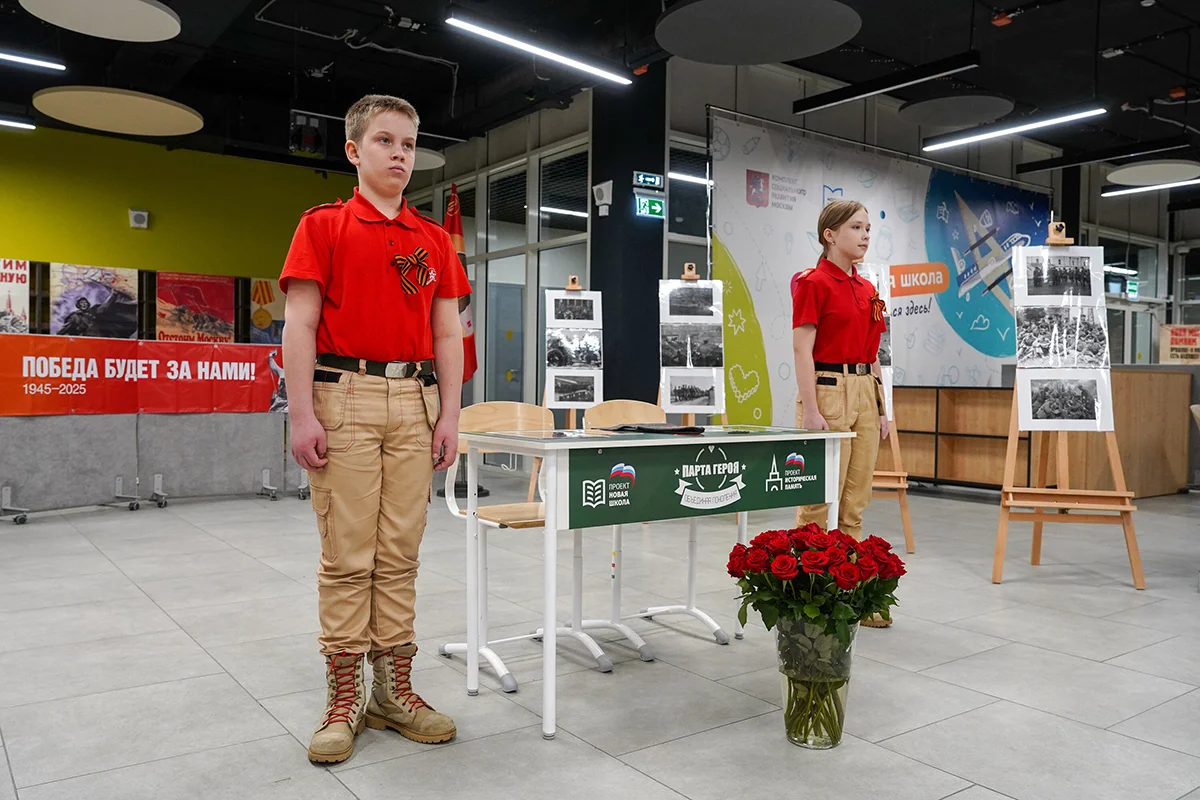
Savely, social studies tutor
The problem of social studies in school is akin to treating caries in a cancer patient. We are dealing with a sick education system, and this subject is simply a symptom. As a teacher, I was not guided by the program or textbooks: I had to do what was really needed, without looking at the ministerial bureaucracy.
I often started a course with the phrase, “Social studies is a terrible subject that shouldn’t exist.” And this is partly true, because it is assembled from unrelated disciplines, none of which are revealed in depth. It is amorphous, like an amoeba, and it is unclear what to grab onto. But the problem is not in the subject itself, but in the fact that philosophy, political science, sociology, economics and law were crammed into one course, one textbook, one teacher.
Nevertheless, all these disciplines are needed - by lawyers, economists, sociologists, philosophers, and officials. For this purpose, social studies is needed despite the fact that in its current form it is terrible. It needs to be radically reformed, along with the entire school education system.
Who needs it more? In reality, 9th grade students arrive without any baggage from grades 6–8. They discuss “what is good and evil,” but do not provide an understanding of the world either in a legal or economic sense. In practice, these lessons are a joke. Everything has to start from scratch.
At the same time, students who become interested in social studies before the ninth grade receive a huge advantage in high school and in competitions. But this is usually facilitated not by lessons, but by talented teachers, visiting schools and Olympiads.
If you remove social studies from grades 6–8, nothing bad will happen. It would be ideal to start with the 8th - it is the most suitable. But the current program up to the ninth grade is frivolous and meaningless: it hinders, not helps. There, everything is chewed so much that the item becomes an “exit pair.” An attitude is formed: social studies is not a lesson, but a class hour. But topics like “What is a form of government” require complex thinking that simply does not arise until the ninth grade. There is no space for questions. As well as an understanding of what society and the state are.
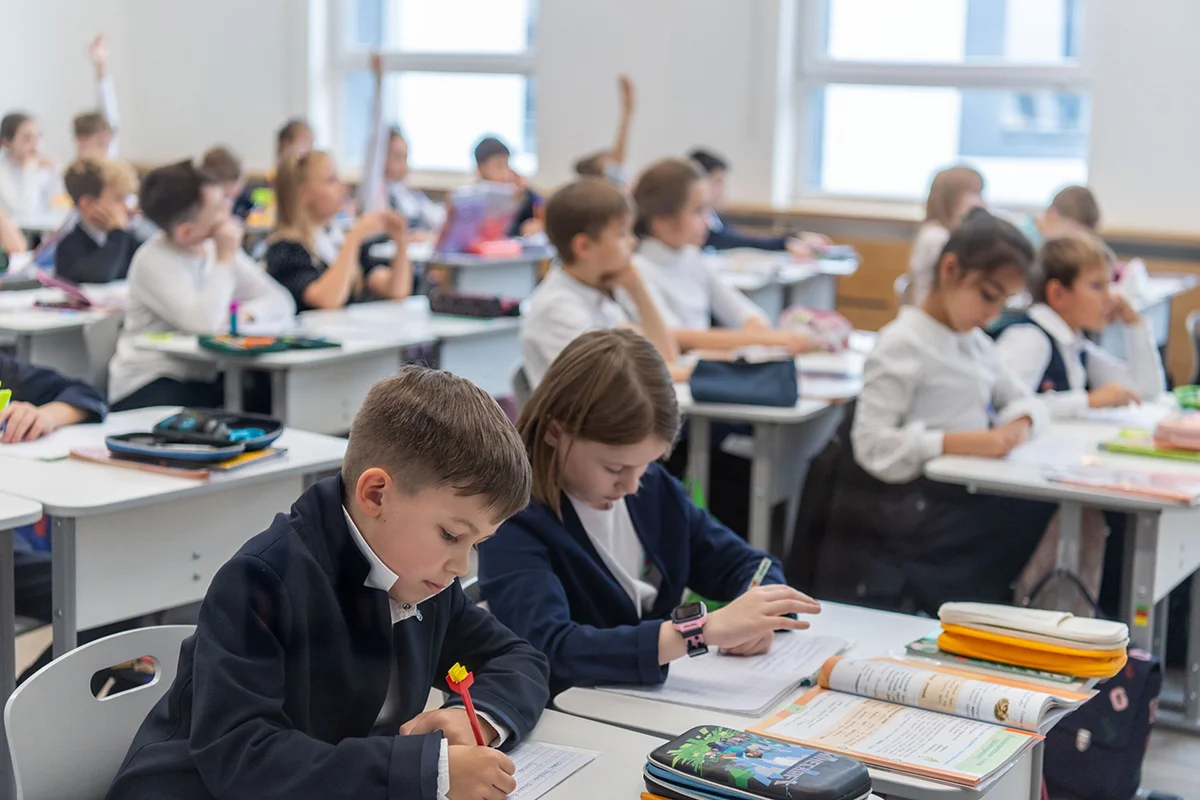
From the ninth grade, everything changes: a dense flow of information about modern society begins, requiring a broad outlook. You have to spend a lot of time trying to explain how the world works. At this age, students are bombarded with huge blocks of knowledge, but they are not ready for it, because they do not have an outlook.
In general, I have no global complaints about the program for grades 9–11 - only specific ones. But there are a lot of such private complaints about each topic.
Social studies can be taught well. Ideally, this should be a dialogue between teacher and student, the Socratic method. Unlike mathematics, where practicing skills is important, discussion and questioning are much more important in social studies.
In the meantime, everything comes down to cramming tables, forms of government and laws, as if they were logarithms. This is harmful and needs to be changed. One has only to start talking to students about the meaning of these tables - that they are abstract models - and they begin to understand. This is what social studies should be.
Ilya Andreev