
Translated material
"Peace and security - from the Antichrist." How in Russia "normalize the war"
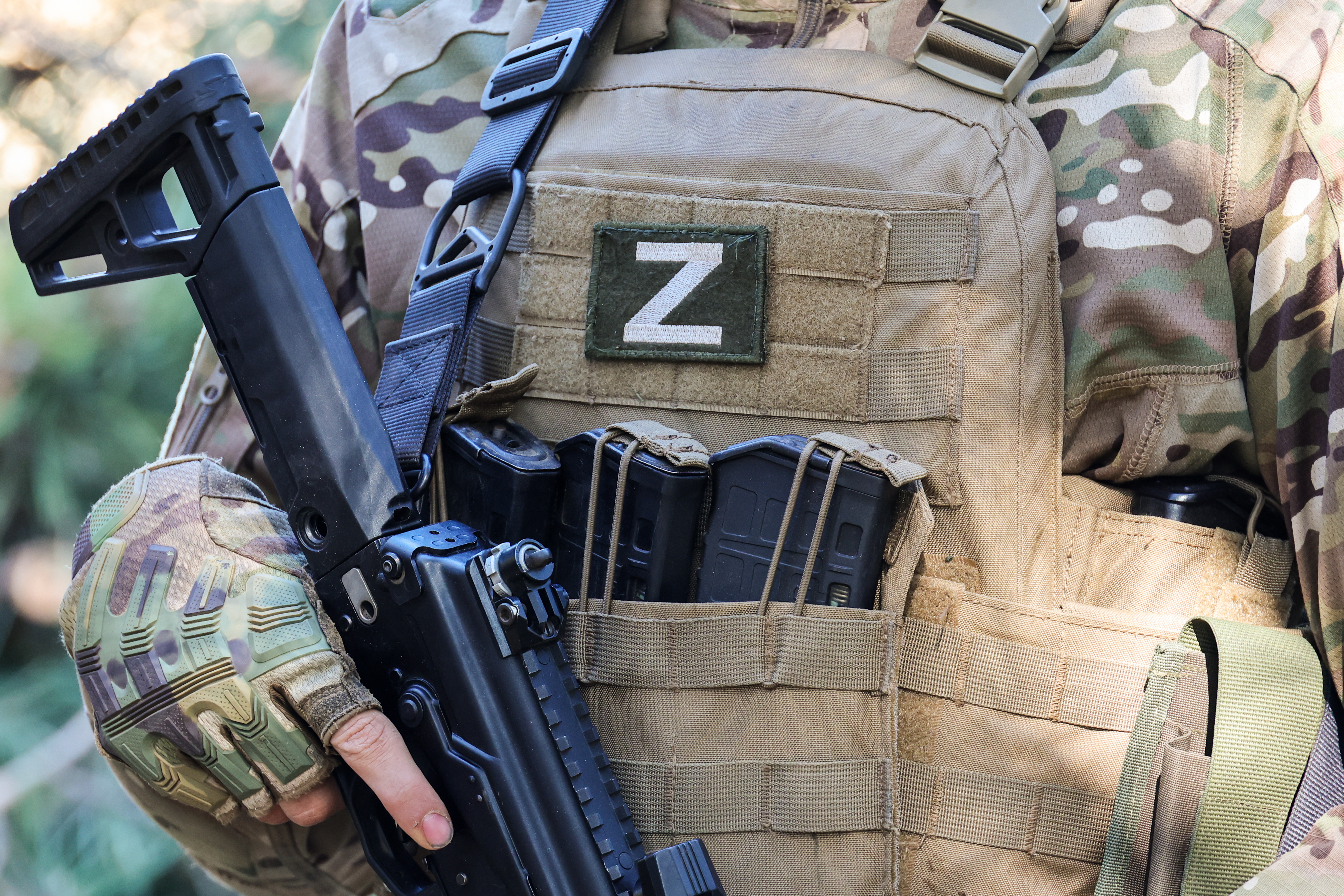
At the beginning of the Russian invasion, many opponents of the war expected that the obvious crime and madness of what was happening would cause such a wave of protests in Russia that would sweep away the current Kremlin power. But this did not happen either in the early days of the war, nor after the mobilization announced by Putin, this does not happen now. Someone in Russia approves of the invasion and even to the best of the possibilities is enriched on it, someone prefers to live as if nothing was happening, and those who condemned the war - either left the country, or got into prison, or switched to a whisper, as in Soviet times. Although it is still dangerous to call the war war in Russia for ordinary citizens and can turn into repressions, the country seemed to have an almost complete normalization of what was happening.
In order not to miss the main materials of Siberia. Realities, subscribe to our YouTube , Instagram and Telegram .
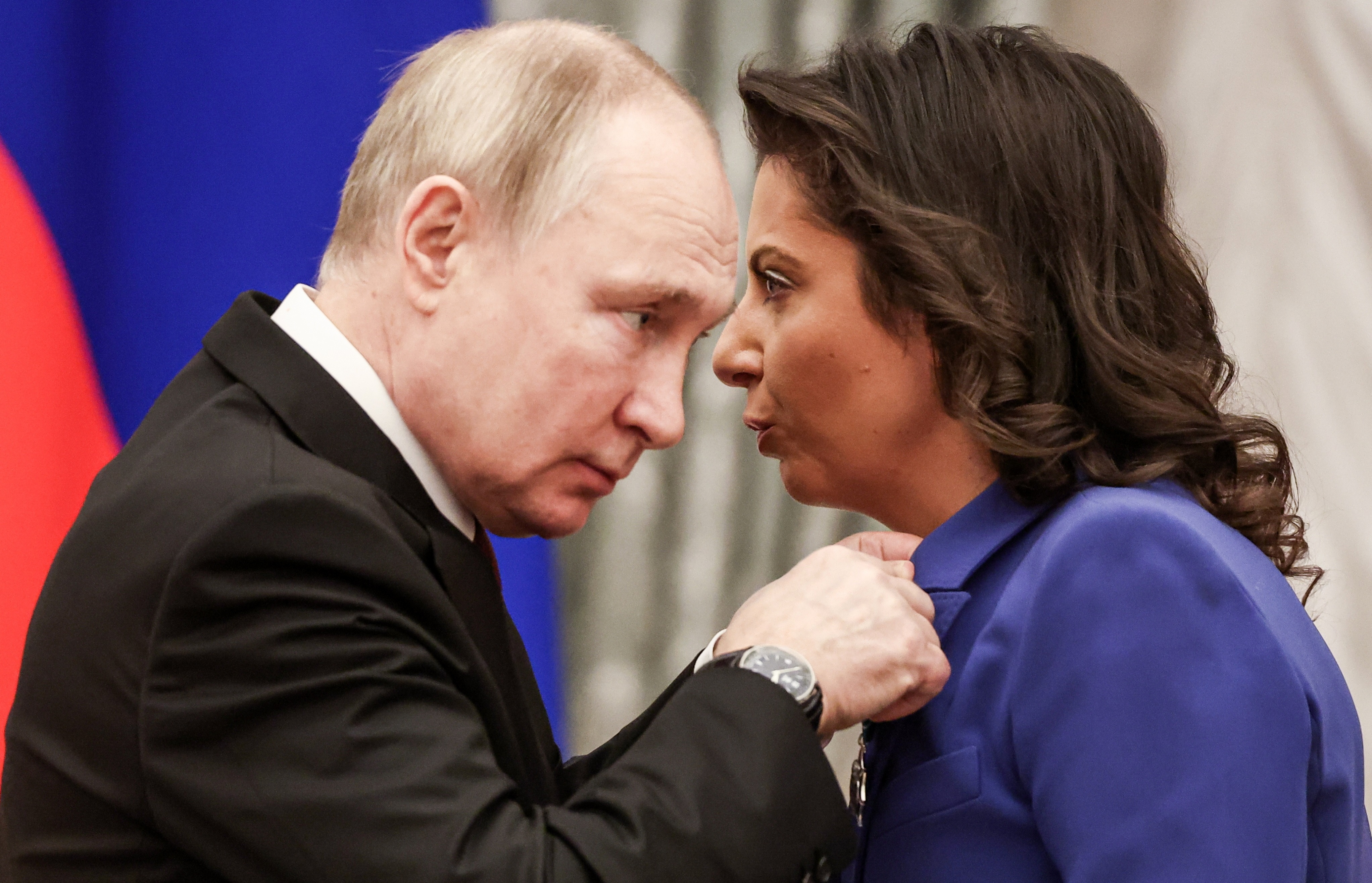
“The war is a much more natural state for a person than the world,” propagandist Vladimir Solovyov convinces of TV screens. Russian propaganda is contemptuously calling the war against the war “non -tutorials” and inspires the consumers of this propaganda that the war is to the benefit of Russia: it ralves the people and heals the economy. At meetings with mothers and wives of those who died in the war, Putin tells these women that they should be proud that their son-muzh died. The Orthodox Church controlled by the Kremlin blesses the Russian military equipment and assures that any struggle for the world is "from the evil one." “Peace and safety are from the Antichrist and those who want peace and security have the spirit of the Antichrist,” is a literal quote from the preaching of an Orthodox priest in Russia.
As the publication of Re.russia notes one of the main strategies of the Russian propaganda - to fit the war into everyday life, when "the war does not appear as an integral extraordinary event, but fits into a number of traditional media narratives intended for various audiences. At the same time, although the airtime devoted to the war on Russian television, since the beginning of the war, is systematically reduced by the military. The narratives are widely represented in the stream of information that is not directly related to the war - so they in the background reach those who do not follow the news purposefully. "
If at the beginning of the war the entertainment television show shyly moved from the air, now the invasion is also promoted in them. In May of this year, in the most popular entertainment program of Russian television, “Field of Miracles”, presenter Leonid Yakubovich presented the car to the fighters of the Pozhnashka brigade, which is accused of war crimes in Ukraine. At the same time, Yakubovich emphasized that he handed the keys to the car on behalf of Channel Channel Channel Channel Channel Channel Konstantin Ernst.
It turned out that in today's Russia it is possible to normalize any crime not only committed in the war. Over the three years of Russian aggression against Ukraine, the Veterans of Swim, who returned home, killed and crippled 750 people, calculated the “layout”. The victims of household crimes were neighbors, acquaintances and relatives of the "Heroes of the War".
At the same time, over three years, the number of political criminal cases against dissenters increased almost four times (compared to pre -war data) and reached 1300. Political prisoners in jail and camps are faced with state cruelty daily: intimidation, torture and placement in a penalty for the smallest “regime violations”. For the elderly and sick concessions, they do not. Convicted by 7 and a half years of camps for the "fakes of the Russian Army" Kaliningrad pensioner Igor Baryshnikov suffers from cancer, which, according to Russian laws, "prevents the possibility of serving sentences related to imprisonment." But the court did not pay attention to this and upheld the sentence, and when the mother of Baryshnikov died a month and a half later, the court did not let the convicted person go to her funeral.
"This system is designed to cause endless, endless suffering," said Baryshnikova lawyer. But to the new round of repressions, most Russians seemed to be used to.
At the same time, the authorities are concerned about facilitating the punishment of the participants of the "special military operation" if they, having returned from Ukraine, committed new crimes. The Minister of Justice of the Russian Federation Chuychenko suggested completely releasing them from criminal liability, because they "protect moral values."
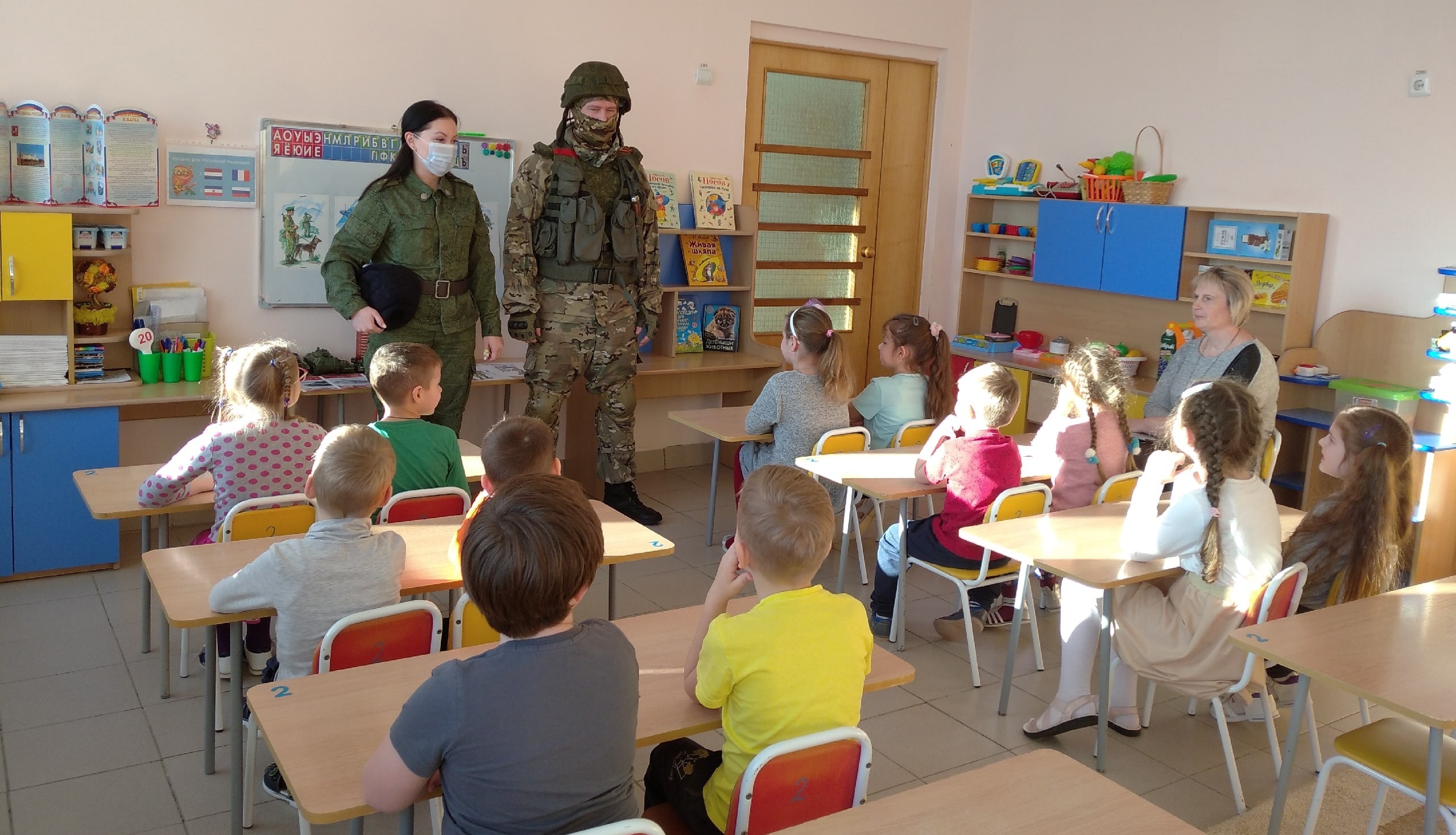
The formation of a new elite of untouchables was the result of a protracted war, the purpose of which is still not explained by the majority of the population. But this does not interfere with hundreds of thousands of Russian men to sign contracts with the Ministry of Defense and earn millions of rubles in the war, which they never dreamed of in peaceful life. Special enthusiasm is shown by volunteers from the poorest regions of the country, where the chances of dying from drunkenness and household crime are almost as high as in the war zone. Now, thanks to Russian aggression against Ukraine, such a risk has become a highly paid and honorary occupation. And the wives and mothers of contractors, it seems, easily humble themselves with the death of their men in the war after receiving the so -called "grave". “Swate veterans” are now sitting in local authorities and come to Russian schools in the role of heroes who teach children to love their homeland. The dead graduates in schools install commemorative stands and "desks of the heroes".
"The country lives, people work"
Starting in February 2022 a full -scale invasion under the slogan "Kyiv in three days", the Russian government soon encountered people to explain to people why the war lasts so long? The answer, as always, was found by propaganda: the “collective West” is fighting against Russia, but Russia is not presented.
Putin's negotiator Vladimir Medinsky at a press conference in Istanbul on May 16 stated that "we are ready to fight another year, two, three-as much as it will be required." And he recalled that the Northern War with Sweden in the 18th century lasted 21 years. Such a confidence of the representative of the president became possible thanks to the loyalty of society, ready not to notice the horrors of war and consider fakes to the night bombing of residential areas of Kyiv and other Ukrainian cities.
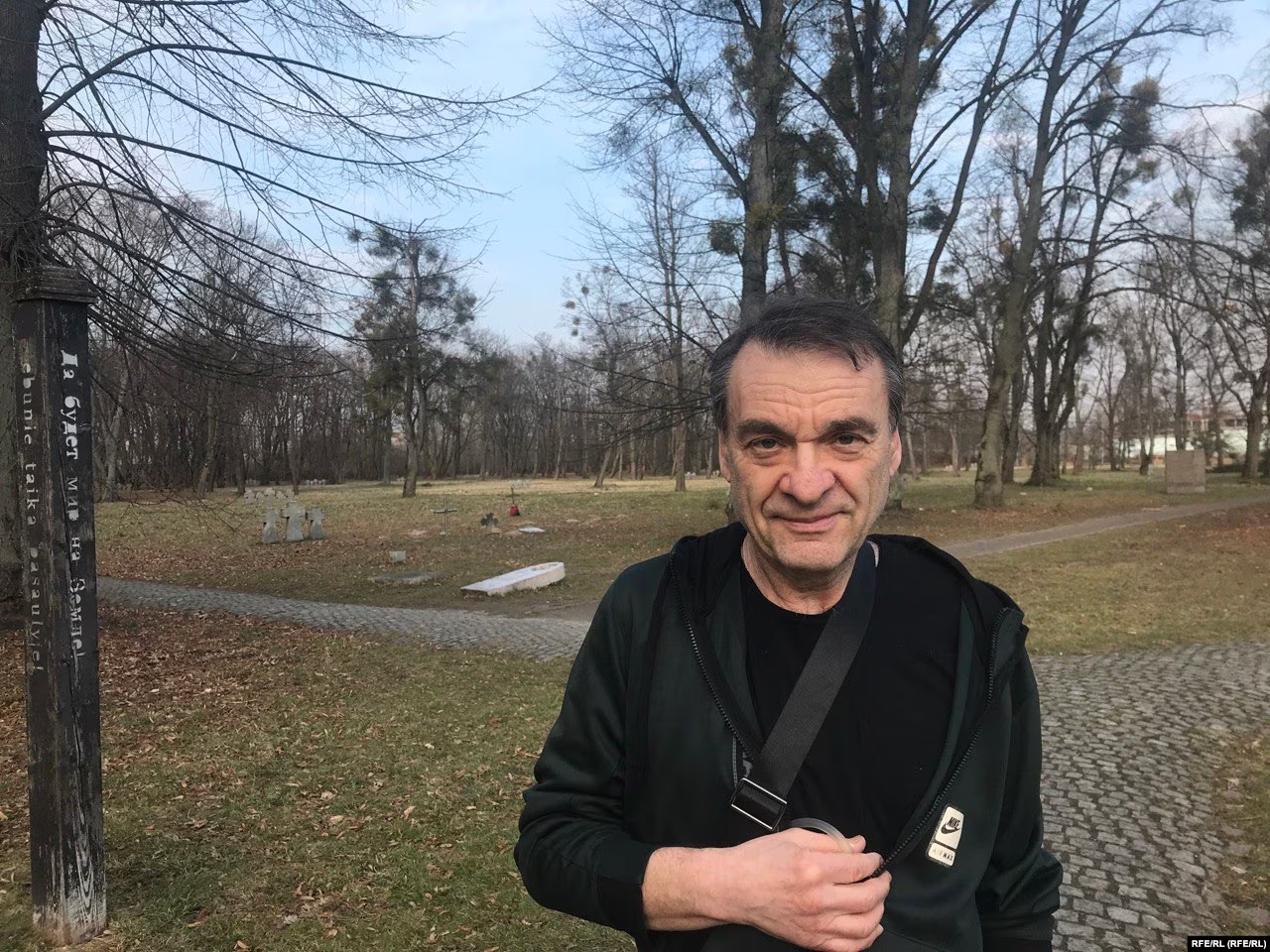
About how the Russian authorities managed to normalize the political and military madness in the minds of most Russians, the correspondent of Siberia. Reali spoke with the emigrant philosopher Ilya Inishev .
Ilya Inishev is a doctor of philosophical sciences, a graduate of the Faculty of Philosophy of Tomsk State University, author of scientific articles in Russian and German. From 2010 to 2022 he worked in the Higher School of Economics and led the academic course "Cultural Research". In December 2022, Inishev was fired from the tower for an "immoral act, incompatible with a continuation of work." The leadership of the HSE considered the "immoral" anti -war statements that initials allowed, communicating with colleagues and students. In 2023, he had to leave Russia and settle in Germany.
- Ilya, now, in the fourth year of invasion, the Russian authorities are promoting new ideas for normalizing war and violence in general. For example, recently, the Minister of Justice proposed adding a new “structure” to the Criminal Code (this is how it was formulated), which allows the accused from criminal liability if he acted “in the interests of protecting moral values”. As an example, the minister cited residents of the Kursk region who allegedly "killed Ukrainian nationalists." This idea of normalizing violence is proposed by Russian citizens. Killed the Ukrainians? Well done! How can this be related to moral values?
- Here the mechanism is quite understandable. The authorities know that Russian society as a whole inert and most of all wants it to be left alone. Therefore, they create the most favorable atmosphere for the so-called "asset", which is given by carte blanche for violence, announcing this "protection of moral values." The asset receives the forgiveness of sins, crimes, full rehabilitation. Impunity is a very powerful emotional stimulus. This was checked back in 2022 by criminals who were released from places of imprisonment if they agreed to fight in Ukraine. It turns out that for three years, power has been offering society the concept of a “new normality”, which has been introduced without any public discussions about its moral grounds. Because people who introduce it, appeal mainly to the Criminal Code. And there are not many people who want to sit for their beliefs. - says Inishev.
The Russian courts began to use participation in the war as a softening circumstance shortly after Russia's full -scale invasion of Russia. In 2022, the "veteran of his" Vladimir Ustinov shot down two people. The Khabarovsk court sentenced the Veteran to the minimum period - two years in the colony (Article 264 of the Criminal Code of the Russian Federation provides for a punishment of up to 5 years in prison). But Ustinov did not even have to serve the “minimum”, the college of the Supreme Court of Medican Affairs intervened, which issued a decision that a dashing driver “does not pose a danger to society”, since from the moment the crime is committed “performs combat missions” in Ukraine.
The Veterans of Swoles who have returned from the war commit a variety of crimes: thefts, robberies, and the turnover of drugs, but only the most difficult ones become known to the public - murders and pedophilia. According to all the rest, less serious criminal articles, criminals are most often "excited." This practice was started for mercenaries of the Wagner PMC Evgeny Prigozhin.
“Each Wagnerir had a connection with the lawyer, who was provided to them by PMCs,” says Olga Romanova, the founder of the Rus Sitting Foundation. “If the mercenaries were delayed, they immediately called lawyers - they“ resolved the “issue with the police”.
Prigozhin died, but his case lives, and now, in the fourth year of the war, the idea of the liberation of its "heroes" is solved from responsibility systematically, at the level of the Government of the Russian Federation.
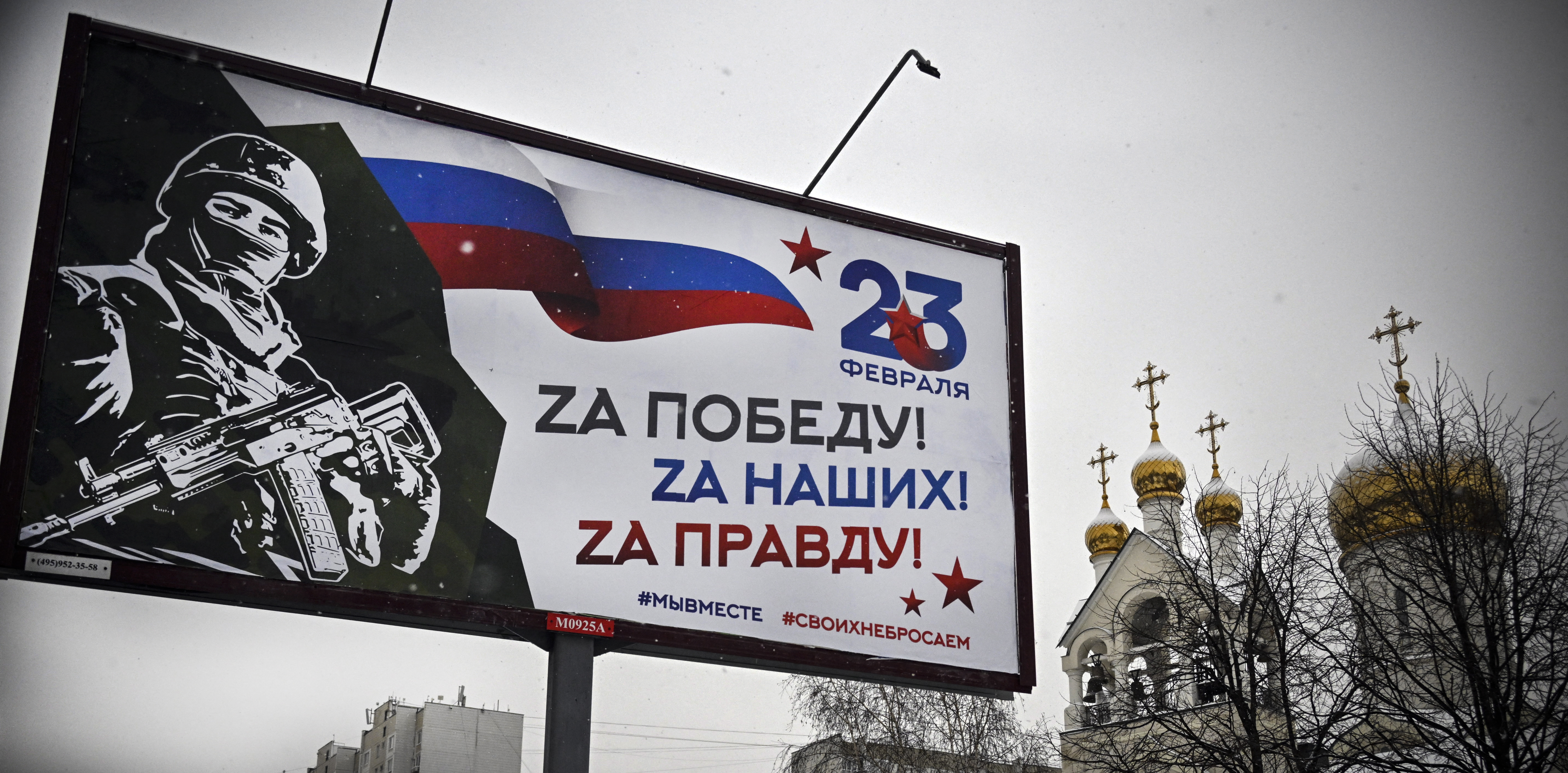
- At the same time, everyday life in Russia looks like there is no war. Somewhere some posters hang with armed people. There are topics that are not customary to discuss publicly. Due to the sanctions, some products or medicines disappeared, but all this is not critical for the majority of the population. How did the Russian authorities manage to achieve such an effect? To convince people that everything is fine, and everything goes according to plan?
- One of the reasons for this “success” is that the plank of this very normality in people decreases in the direction of elementary biological aspects. Food, clothing, rest. The cottage has not yet been taken away. They did not drive out of work. The future, however, is not visible, but you can always blame the "collective West". It is clear that people living in Russia have to spend a lot of effort on adaptation, constantly engaged in self -control in order not to say excess, not to substitute themselves for a possible denunciation. In order for everyone to be clearly visible to the “red lines”, in Russia they defiantly plant people “for fakes”, “for likes”, for the words spoken in a private conversation. Few are planted, but the signal is thus sent to the whole society.
At the same time, the Russian authorities did not insist on a universal oath of fidelity by the population. As under Stalin, when you had to constantly signal that you are "for", and constantly prove this with deeds. Now in most cases it is quite enough that you will not speak out against and will observe the visible system. And you will be fine. A public contract, it seems to me, in Russia, is approximately like that. And he is really effective, as we see. Because even in private conversations, living in Russia say something like this: "Do not regret us, you do not understand what is happening here, the changes are not as dramatic as it may seem. The country lives, people work."
- " People work," and for a long time also on the "subbotniks" who returned to reality from the Soviet past. We must all show our love and respect for the native land together, it is written on the official website of one of the regions of Russia. Why "should", and even "all together" - is not explained.
- Surely there it is also said that subbotniks are "an old kind tradition." And what is bad if it becomes cleaner in the yards? People go out, work in the fresh air, clean the garbage. A good thing is doing. When they are forced to go to demonstrations in honor of Putin's birthday, they will also say that there is nothing wrong with this. A normal reason to meet friends who have not been seen for a long time. And here, on you, met, sat, noted. Well, we passed with these banners, was it worse for someone because of this?
You can explain and justify anything. One Novosibirsk teacher, on whom the students wrote a denunciation, told me that he was called to the dean’s office, made an oral reprimand, but did not punish him. As the saying goes, they came across a matter. And he is satisfied. He argues in such a spirit that he himself was to blame, it was necessary to give a lecture closer to the topic, and not be distracted and not talk about what is not in the curriculum. In this way, you can reassure yourself for quite some time. Because the changes occur gradually. After each large -scale shock, such as mobilization, a period of relative calm follows when people get used to new circumstances and convince themselves that nothing special happened. The current system does not require an active approval of state policy from a citizen. At least not yet requires. But constantly probes public moods to determine how far you can go next time.
- At the beginning of this year, the vice -rector of the Novosibirsk University of Economics (NSUEU) discovered a unique national resource, thanks to which Russia experienced Western sanctions. It is called the "reciprocal economy" or "Daro exchange". It turns out that people in Russia “exchange help, and due to this there is a redistribution of goods. Not all countries are understandable,” said Vice -Rector Dmitry Kunitsyn, who is responsible in Novosibirsk for the implementation of the ideological project “ DNA of Russia ”. Why did power in Russia always loved these conversations about the special path of the country? When it was "Orthodoxy, autocracy, nationality", then the "moral code of the builder of communism." Now they came up with a special "DNA".
- In fact, the fact that the Russian authorities are accustomed to dump part of state functions on interpersonal social relations. And they sell this to society not as a weakness of the state-economic system, but as the power of the popular spirit. For example, the state does not have a normally working pension system. But there is human relations between people, and this is expressed in the fact that the younger generations often take on financial obligations for the maintenance of relatives, despite the fact that they still expel a rather significant part of their salary to these pension funds.
The state does not have the opportunity to ensure a normal standard of living, but this is presented as special properties of a Russian person, a high degree of adaptability, he will go to the country, begin to plant potatoes and eventually survive. And the Western man will simply fold his hands and die. It is very curious when the weakness of the state is very successfully interpreted in this way, ”says Inishev.
Siberia. Reals talk a lot about how the inhabitants of the Russian regions, without waiting for the help of the authorities, build dams, bridges and roads, repair schools and shops, conduct water supply and electricity. Sometimes the state punishes too initiative citizens. For example, residents of the village of Pakhomovo, Tyumen Region, who urgently erected a dam with their own hands to stop floods. And the officials demanded that they demolish the unauthorized building under the threat of a fine. Those who are too actively complaining of the authorities are writing video statements to Putin with a request to intervene and help, they can also be punished .
But more often, the authorities do not react at all to the attempts of the population to somehow survive. The idea to declare this part of the “DNA of Russia”, a certain special gift is a big step in the development of the ideology of the “new normality”, in which the authorities allows their citizens to somehow survive on their own, and citizens should also experience gratitude to the authorities and not disturb it once again with their complaints.
- Ilya, against this background, the last three years, as it seems, only the gap between those who have remained in Russia and those who are looking at what is happening from forced emigration has only intensified. You in 2022, after a worldview conflict with the leadership of the "Twes", decided to leave Russia. And most of your colleagues remained. Do you communicate with them almost two years after leaving? How do you feel how much a full dialogue between emigrants and those who remained in Russia is possible now?
- Honestly, communication almost came to naught. For many months there are no contacts. When I was fired, from the side of my colleagues there was sympathy, solidarity, an offer of help. Moreover, they offered assistance from such a position that we are in relative safety, but you do not. And this motivates us to incite us to somehow actively participate in your fate. I was advised to leave soon, they even offered money. This was the first stage. And then, when it became clear that the danger has passed, and I successfully "rejected", they sometimes wrote and asked me: how are you there, is everything okay? It gets worse and worse here here. So I wrote friends from Russia for some time. Then the next stage came - complete silence. It was impossible to speak. If they agree with my position, then the question will arise, why are they silent? Why aren't they trying to at least leave? It is clear that the prospect of leaving Russia for political reasons is becoming more and more foggy. The price of the move has grown strongly. The foundation that I had is now not considered in Europe a significant basis for receiving asylum. And what is considered significant threatens human personal freedom in Russia. That is, you will get the foundation, but you won’t be able to leave, because you will find yourself in prison.
In this regard, people have no special moral throwing, what to do, what to do, some decision to make, leave, stay. The horizon is narrowing. And against such a background, what could there be a dialogue between us? If I can’t even imagine what position these people are in. And it seems to me that this is only the beginning of the process, which will go on growing and drag on for years, if not decades, ”says philosopher Ilya Inishev.
Meanwhile, the administration of the President of Russia discuss the possibilities of "normalizing" life in the event of the end of the war, writes "layout." The sources of the publication say that the Kremlin is already developing plans, from the probable return of Ivan Urgant to the air of Channel One to a possible withdrawal of the status from some “foreign agents”, provided that their public repentance is.