
Translated material
They sell oil, but there is no money
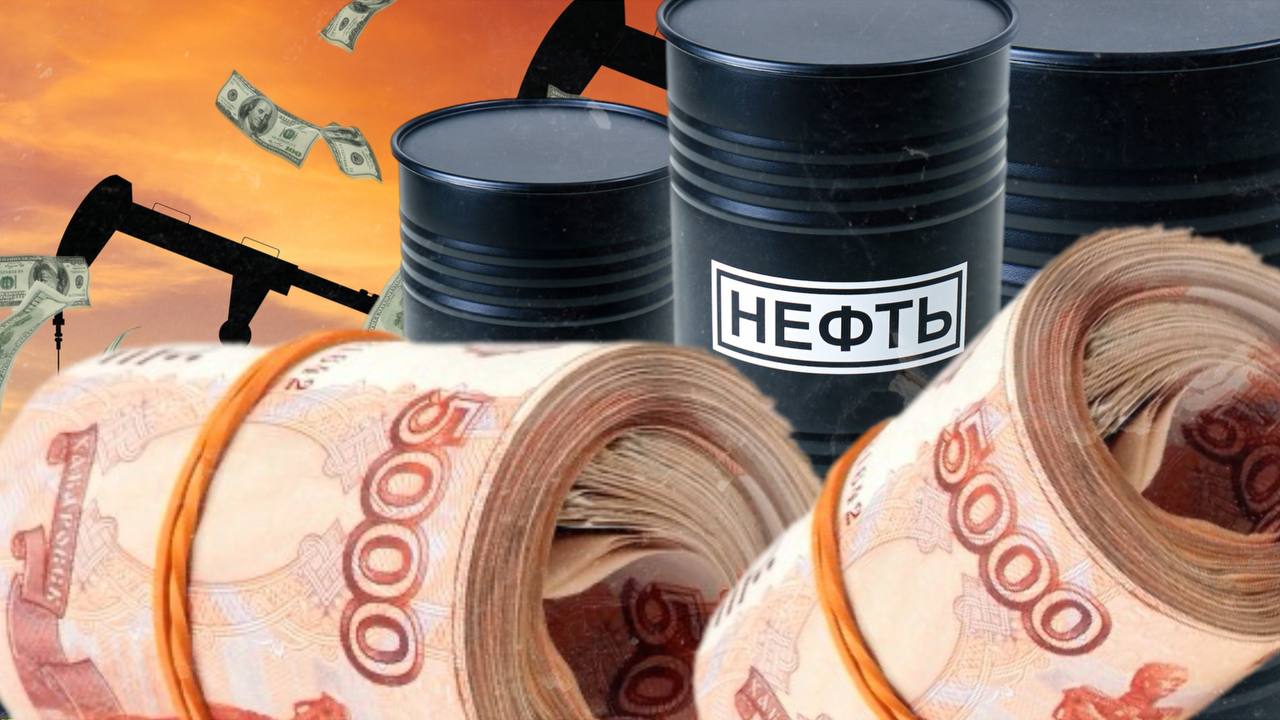
What does a slowdown in the Russian economy mean?
The Russian economy has froze. What does it mean?
How will this affect the daily life of citizens? Is it possible to “replace” products that were previously produced in conditions of global cooperation? What will prices increase? The ruble is strong: who is good, who is bad?
The facets of the time. Mumin Shakirov sums up the results of the 22nd week with an invited researcher of the Center for Analysis of European Policy Alexander Kolyandr .
After the annexation of Crimea in 2014, Russia received the first package of Western sanctions: a ban on the transfer of technology for the oil and gas industry, restrictions on loans for state -owned banks and oil companies, as well as visa sanctions against officials and oligarchs close to Putin. In response, counter -sanctions and embargoes to products were introduced. The era of import substitution began not with economic reforms, but with political rhetoric and cheese crushed by bulldozers. The Kremlin announced: "Its is better." Import substitution became an ideological project: it was important to create not a quality product, but “to abandon the western”. This gave rise to a system of imitation, not modernization. More than ten years have passed since the announcement of the era of import substitution.


What does a slowdown in the Russian economy mean?
The text of the copyWidth PX Height PX
The url has been copied to your clipboard
No Media Source Currently Available
0:00 0:07:38What sanctions can be called successful in terms of pressure on the Russian economy? The invited researcher of the Center for Analysis of European Policy Alexander Kolyandr answers:
- The most successful from this point of view can be called sanctions against the banking sector, which greatly complicated cross -border trade. Apparently, the sanctions are sectoral . In addition, the ban on export to Russia of dual -use goods . It is necessary to make a reservation that none of these sanctions fully works. The ban on cross-border operations partially led to the fact that the capital was locked in Russia, and this helped a lot of the Russian economy in 22-23. The ban on exporting technological goods to Russia costs through third countries. The same applies to sector sanctions. As we know, oil is exported bypassing restrictions. Technologically, sanctions can be circumvented, almost everything. You can introduce them, but it is much more expensive than direct deliveries: it affects inflation, company profit, and so on.
- Is it possible to name the Russian model of import substitution successful?
- It is difficult to judge the success of a particular model, if we do not know what was a criterion for success. If you look at agriculture, with which import substitution began in the 14th year, then part of Russia became less dependent on imports, although it was not possible to achieve the indicators that the Kremlin from the agricultural industry.
In many branches of complete import substitution, it was not possible to achieve
Russia is still dependent on foreign food supplies, as well as components of production: feeding, antibiotics, agricultural machinery. Russia is not completely self -sufficient in this. In many branches of complete import substitution, it was not possible to achieve. But I do not think that someone was ready to achieve. I suppose that the main goal was to reduce dependence on the import of Western countries and China, on which Russia has become completely dependent, it only increased.
- How realistic to replace the products produced in conditions of global cooperation? The same chips, machines, equipment?
- You can do anything. The question is, what qualities it will be, and for what money. You can close the market, develop domestic against the background of a lack of competition. Well, you will get a “Zhiguli” car. Much can be done within the country, closing the markets, many countries tried to do this in different eras. The full closure of the market is possible, but leads to economic problems. Goods are more expensive, and their quality is worse.
- The Russian economy began to slow down. What does this mean for Russians, for citizens, for citizens?
- People will live worse.
When the economy is inhibited, everyone feels
In other way, the improvement of their material well -being will occur much more slowly if it happens at all. Slowing the economy means that there will be less demand for labor, salaries will grow more slowly, the profit of companies will be less. When the economy is inhibited, everyone feels. This is not an abstraction from the reports of Rosstat. In Russia, in 23-24, there was an economic rise, an increase in salaries, actually disposed income, that is, what remains of people after inflation and taxes. Perhaps the highest and fastest from the beginning of the “well -fed” two thousandths. Apparently this ends.
- One of the parameters in the grocery market is the rise in cost of the cost of potatoes, vegetables and fruits. Now the economy is slowing down, will prices rise?
- Prices are rising during the growth of the economy. Economics growth spurred inflation. Due to the improvement of the financial situation of citizens, they can buy more for a lot of money. As far as I understand, rising prices for fruit and vegetable products in Russia is associated with a poor crop, and partly with violations of imported supplies. I do not see why prices for essential goods, which are vegetables include, would not continue to grow. If inflation remains 10% per year, which is 2.5 times higher than the goal of the Central Bank, then the Central Bank will not be able to reduce it. The so -called stagflation can turn out when the economy slows down, and prices remain high. Inflation continues to grow.
- Does Trump's Trading War affect the Russian situation?
- First of all, through oil. The trade war launched by America will most likely lead to a global recession, a decrease in growth rate, this, together with the actions of OPEC, will lead to a decrease in global oil prices. That is, the budget will receive less money. It will spend less, there will be less opportunity to stimulate the economy, and so on. Pressure on the ruble.
The budget will receive less money
The main source of anxiety for Russia related to the trade war, I would call oil prices. The second is the probability of dollar inflation. Economists diverge in predictions whether it will be or not. But in conditions of violation of global trade and the possibility of falling oil prices, the Central Bank is more difficult to decide to reduce the discount rate , which means that the probability of the very stagflation becomes higher.
- Conts for oil falls, it hits the Russian economy. What are her resources? How to maintain economic stability?
- Economic stability cannot be preserved exclusively thanks to oil. Russia has an unconditional resource for filling out the missing budget revenues from oil prices. This is a national welfare fund . It contains enough funds to fill out the possible loss of income in the 25th year. It is difficult to believe that oil will fall to $ 20 per barrel. But if it is where it is now, or a little lower, the FNB funds are enough to fill out the missing budget revenues.
- The ruble is strengthened for the first time since 23 years. For whom is it good, for whom is it bad?
- As usual, when the national currency is strengthened, it is good for importers, and for import buyers. For exporters and manufacturers within the country, it is bad. The consumer will move from a T -shirt released in Russia to a Chinese T -shirt, it will be cheaper.
- The key rate of the Central Bank is now 21 percent. Will Nabiullina go to its decrease, and what consequences are possible?
- There is a danger of recession . Will the Central Bank reduce the rate or not? There will be, for sure. The main question is when. It depends on inflation indicators. The Central Bank never warns about its steps. And then everything is according to the textbook: the lower the rate, the cheaper the loans, which means that the economy breathes a little easier.
The Central Bank does not warn about its steps
Will it be possible to maintain the Russian economy from stagnation or fall by reducing the value of money, that is, reducing the rate without returning two -digit inflation? Can this case continue to stimulate budget expenditures without promoting inflation? There are mechanisms for stimulating the economy, but like any medicine, they have side effects. And the moment comes when the side effect is stronger than the effect of the drug. But the discount rate will be reduced at some point.
- What is more important for the growth of the economy: an attempt to produce everything inside, or integration into international chains with high added value?
- From the point of view of the growth of the economy and the well -being of citizens, the experience of the previous half a century says that globalization leads to improve the well -being of all. Some parts of society, parts of the economy and company benefit from economic closed. But societies and national economies are developing worse than they could.
- What will happen to the Russian economy if the war stops tomorrow?
Experts say that military equipment factories will stop.
- I do not think that if the world is signed tomorrow, military spending will be reduced, and not only in Russia.
Everyone will be prepared
Unlike the First and Second World Wars, which were seen as the “recent wars” in history every time, apparently, no one will consider the Russian war against Ukraine as a “last” war. Everyone will be prepared. Russia will need to make up for reserves, spend money on the re -equipment of the army, retraining, the production of drones, tanks, shells. And there is an understanding that a sharp reduction in military expenses can lead to an economic decline. In the conditions of the Russian state there is no threat from the voter, this can be done for a long time.