
Translated material
After captivity - to the front line
Military personnel returned to Russia as a result of an exchange are sent to military units and then to the front. This practice is illegal. Can this be avoided?
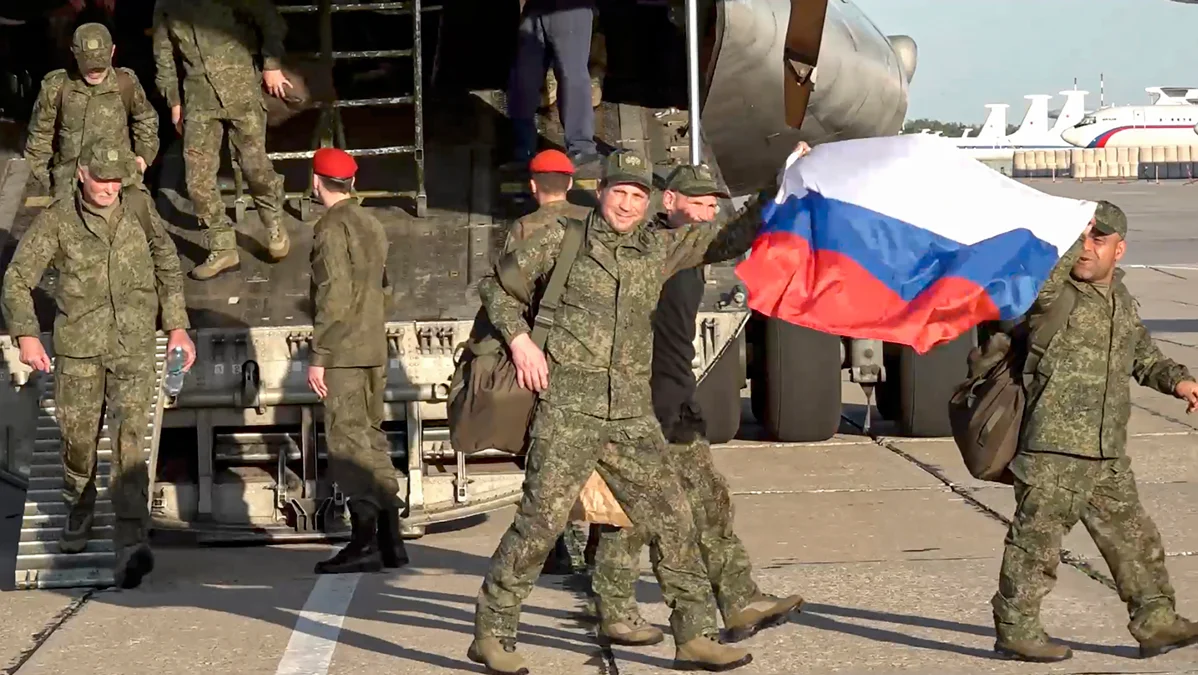
Prisoners of war returned to Russia as a result of an exchange, at the Chkalovsky airbase, Moscow region, May 24, 2025. Photo: Russian Ministry of Defense / EPA / Scanpix / LETA
Soldiers returned to Russia as a result of the largest prisoner exchange in the “1000 for 1000” format at the end of May said that they were being returned back to military units, the “Walk through the Forest” movement told New-Europe. After this, they can be sent to the front again, human rights activists emphasize. However, according to the Geneva Convention, prisoners of war cannot be used on active duty.
Relatives of the military have repeatedly said that after the exchange they are not even allowed to see their loved ones: men, including the wounded, are simply sent to the front line. Human rights activists warn that the same could happen to seriously ill and young soldiers who will be returned as part of the exchange that Russia and Ukraine agreed to at talks in Istanbul on June 2. Whether such actions of the Ministry of Defense are legal and how this can be avoided is being investigated by New Europe.
Relatives of the servicemen who were exchanged on March 19, 2025, said that they were not even allowed to see their loved ones who returned from captivity. According to them, the men, including the wounded, were returned to the front line and sent to the front.
After the exchange, they were in the village of Mosrentgen, in unit No. 61899, one of the relatives said. However, the girl continues, the former prisoners of war were “taken away in a KamAZ” to Donetsk, then one of them got in touch and said that they had reached Makeyevka. The next day, another of the servicemen said that they had arrived at a place unfamiliar to them and that all their personal belongings were taken from them: telephones, crosses, chains, and that they had been assigned guards, the relative says. Soon they reported that they were being sent to the front line:
“Our guys went through hell in captivity. <…> Most have shrapnel wounds and contusions, fractures, which healed without medical intervention. One is missing a leg, they all need medical attention, passing the military medical commission [military medical commission] and, ultimately, leave. And their patients are sent to the front line,” the appeal says.
Human rights activists have also received numerous reports over the past week that military personnel returned to Russia as a result of the largest prisoner exchange in the “1000 for 1000” format at the end of May are being sent to military units,
Ivan Chuvilyaev, a representative of the “Walk through the Forest” movement, said in a conversation with Novaya-Europa. From there, military personnel can already be sent directly to the front:
“It’s mostly relatives who turn to us, but there have also been requests from military personnel, and what frightens them, first of all, is the fact that they are being sent back to the unit. After the exchange procedure, the military man will first undergo the most unpleasant thing - interrogation by the FSB. After that, he is brought to the military unit where they are assigned. It would seem that this is just a formality, but some of them may be located, for example, in the Lugansk region. Also, upon arrival, military personnel are simply forced to sign contracts with the Ministry of Defense, and this is impossible to refuse - often documents are signed simply for them, recalls Chuvilyaev.
What does the law say?
The Geneva Convention (Article 117) expressly prohibits the use of former prisoners of war in active military service. However, in both Russia and Ukraine, legislation does not allow voluntarily leaving military service during the war, even for those who were captured, and virtually all contracts with the Russian Ministry of Defense are indefinite.
According to Russian legislation , former prisoners and hostages retain the status of military personnel, that is, being in captivity is not grounds for dismissal from the army, a lawyer for the Call to Conscience project points out in a conversation with New Europe ( he chose to remain anonymous for security reasons. - Ed. ):
— If after captivity a serviceman’s health has deteriorated, theoretically he can demand a military medical commission, and if it confirms deterioration in health, demand dismissal based on health. But in practice it is very difficult to achieve this now,
- he added.
As lawyer Maxim Grebenyuk points out, the Ministry of Defense takes advantage of a loophole and refers to other provisions of the Convention (Article 110), which describe special categories of prisoners subject to direct repatriation (for example, the incurably wounded and sick, whose mental or physical abilities appear to have been greatly reduced). The Russian military department also refers to Putin’s decree “On Partial Mobilization,” where return from captivity is not specified as a basis for dismissal from service.
New exchange - new former prisoners at the front?
The day before, the second round of Russian-Ukrainian negotiations took place in Istanbul, as a result of which Ukraine and Russia agreed on a new exchange: all seriously ill prisoners of war and persons under the age of 25.
The Appeal to Conscience emphasizes that there is a possibility that even these prisoners could be sent back to the front line:
“We must proactively demand a military medical commission.” The command may “not notice” that the serviceman is seriously ill. We need to complain wherever possible: to the command, to the district medical service, to the prosecutor's office, to the Ministry of Defense. Write a report with a request to send it to a military medical commission. The quote is very suitable here: “The rescue of drowning people is the work of the drowning people themselves,” human rights activists note.
Digging trenches after captivity is not the first time
Despite international norms, this is not the first time that the Russian Ministry of Defense has sent back to the front military personnel who were captured in Ukraine and returned to Russia under the exchange procedure.
This is exactly what happened to mobilized Vasily Grigoriev and Dmitry Davydov in 2024: as Military Lawyers reported , the men spent six months in Ukrainian captivity, and then they were exchanged and a month later returned to the front line, where they were forced to dig trenches and dugouts. The servicemen fled from the field camp and hitchhiked to Moscow. There they sought legal help. During the proceedings, they were assigned to a military unit in the Moscow region, where Davydov died due to “sudden cardiac arrest” three days after contacting the military prosecutor’s office, wrote “Caution, News.”
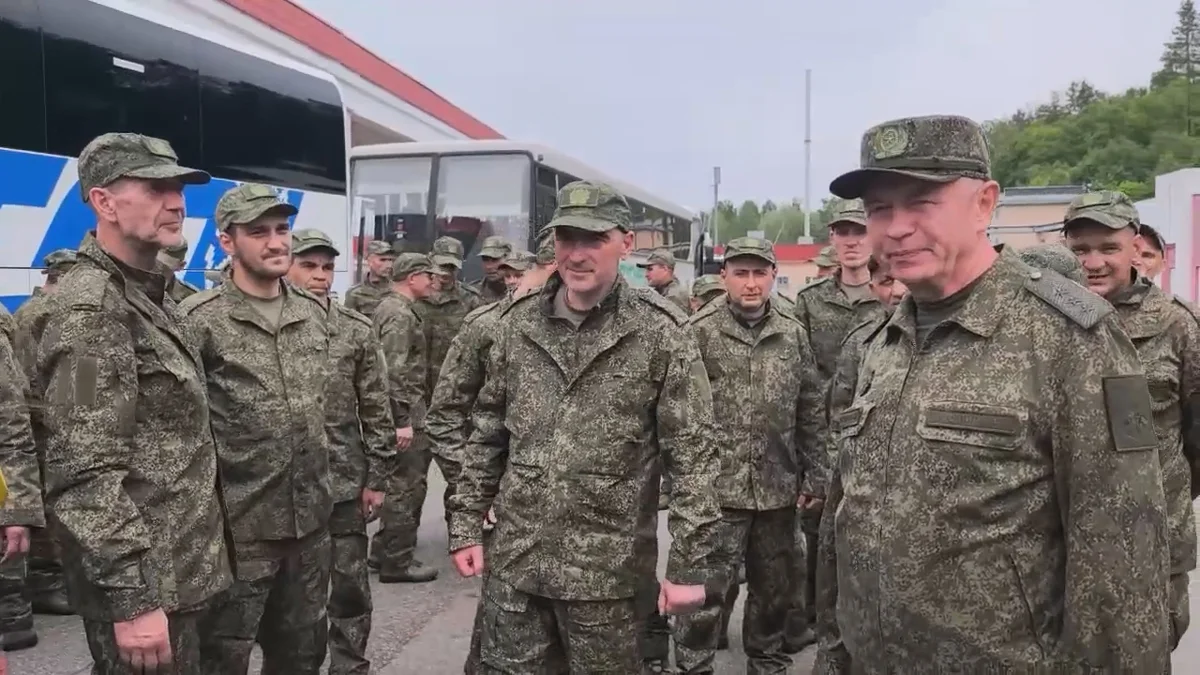
In addition, a representative of the “Go through the Forest” movement, Ivan Chuvilyaev, told Novaya-Europa that military personnel who were captured in the Kursk region andexchanged in September last year were also sent to the front:
— In the Kursk region, it was mainly conscripts who were captured, and after the exchange, these conscripts were sent to the units to which they were assigned. Although, logically, both they and their loved ones expected that after captivity they would simply be returned home, the source told Novaya-Europa.
Also, the fact that former prisoners who returned from captivity, who were recruited for the war from the colonies, are used as labor at the front, was told in “Cold”. According to the publication, about 30 former convicts, who were returned from captivity to Russia in the summer of 2023, were sent to occupied Novoazovsk to dig trenches at training grounds.