
Translated material
K-pop is beyond politics
Why are Korean celebrities being “canceled” during the presidential election?
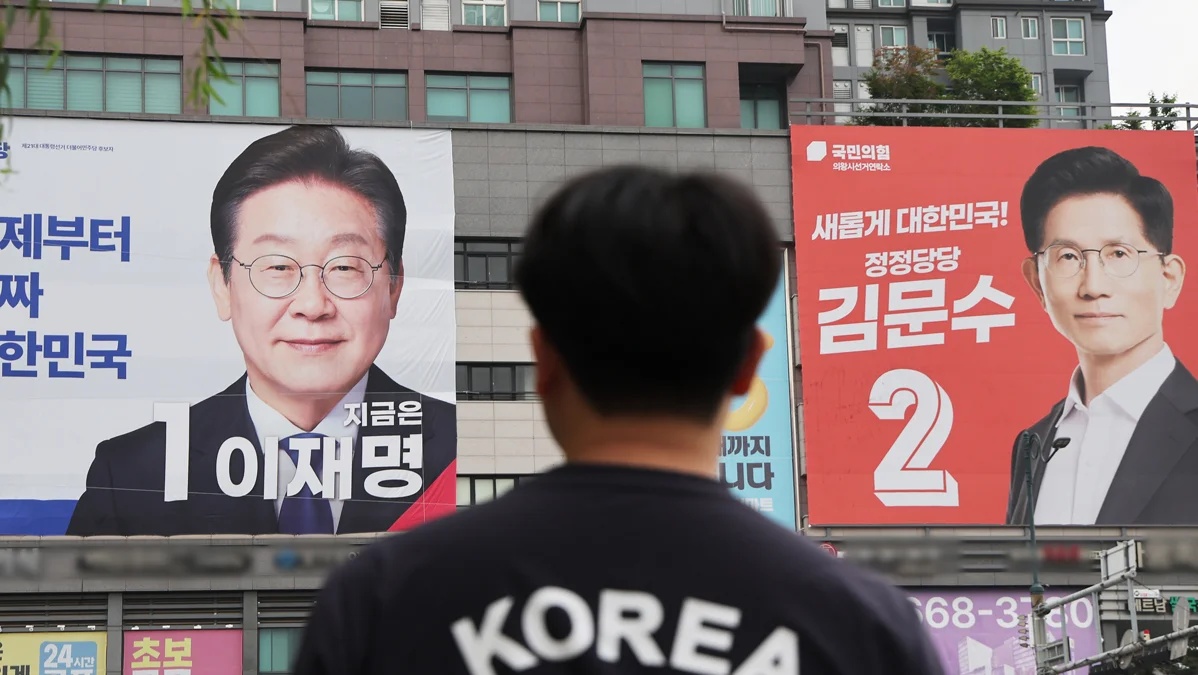
Campaign banners for presidential candidates Lee Jae-myung (left) and Kim Moon-soo (right) hang on a building in Uiwang, South Korea, June 2, 2025. Photo: YONHAP/EPA
On May 27, famous K-pop singer Karina from the group “aespa” posted a photo of herself on Instagram. In the picture she is posing in a black and red jacket and a long white skirt. At first glance, it’s nothing special, but it was this image that almost cost Karina her career. The reason was the red stripes on her bomber jacket and the number 2 on the print.
The aespa member is not the only one who has come under criticism for her photos on social media since late May. Here are just a few reasons why Korean celebrities were bullied: blue skies, red roses, the popular V gesture in photos. The correspondent of “New Europe” tried to figure out why they began to look closely at the actions of Korean celebrities and what the presidential elections have to do with this.
June 3 in South Korea is the main voting day for the early presidential elections. There are six candidates in total, but the main fight is between Lee Jae-myung from the Democratic Party and Kim Moon-soo from the conservative People's Power Party. Early elections were called after the impeachment of previous President Yoon Seok-yeol, who was often called the “Korean Trump” in the media. His reign ended with a failed coup attempt.
On the ballot, Lee Jae-myung ranks first, Kim Moon-soo - second. Parties have clear color markings: blue is traditionally associated with Democrats, red with conservatives. The public use of these colors and numbers by South Korean celebrities in the midst of an election campaign could jeopardize their careers.
On May 27, members of the famous K-pop group "NMIXX" Bae and Solyun held a live broadcast on YouTube. During the broadcast, Bae began to pose and made the V gesture characteristic of South Korea - the middle and index fingers raised up.
The girl immediately realized her mistake and shouted: “No! You couldn’t do V!” She then quickly pointed out the numbers from one to five with her fingers, so that she would not be branded as someone who supported a particular party.
A member of the boy band RIIZE raised his thumbs up at a meeting with fans, his colleagues immediately reprimanded him, and he lowered his hand. Other idols either posed for photos with their hands clenched into fists, covered gestures with emojis, or took their photos in black and white to avoid the colors red and blue.
Actress Jung Chae Young posted a photo on her Instagram on May 25 in which she posed against the backdrop of red roses currently blooming in South Korea. The girl would have been called a supporter of the Conservative Party if the evening blue sky had not yet been visible in the photograph. In the same “reasonable” way, according to the Korean public, a member of the popular group BigBang, Kwon Ji Yong, acted : he posted a blurry selfie in Instagram stories, where a blue lamp is visible, and then posted a photo with a red sun.
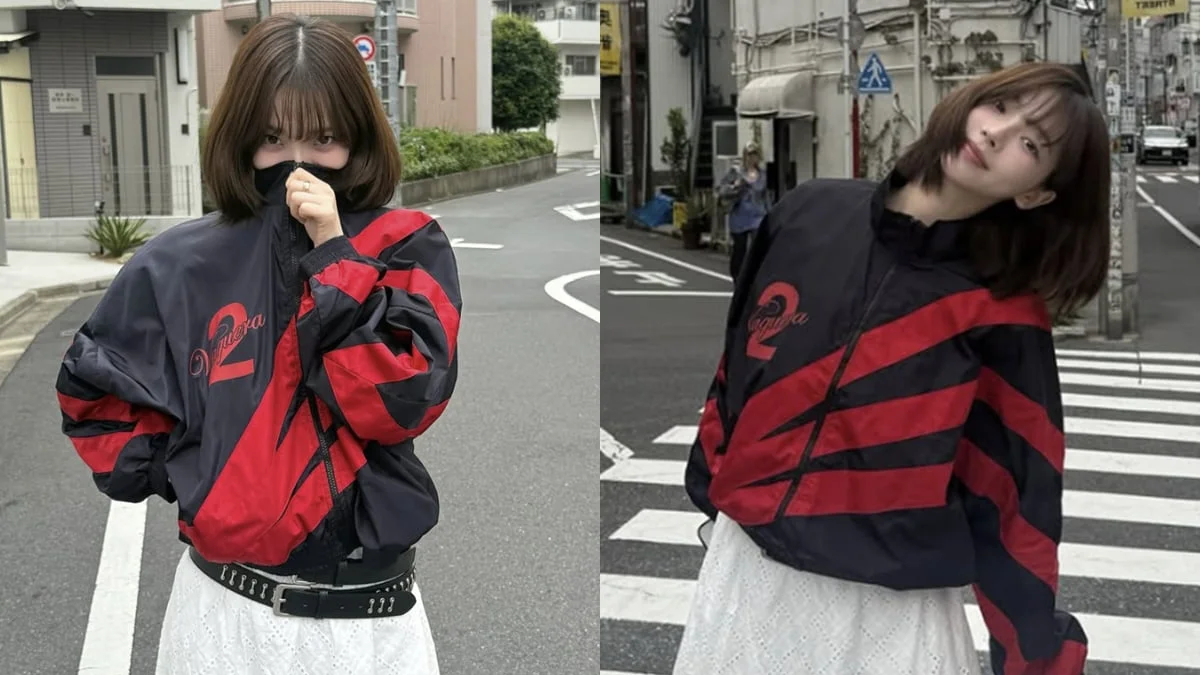
Aespa group member Karina found herself in the worst situation. In her photograph , posted on May 27, two factors coincided at once: the red color of the stripes on the bomber jacket, and the number 2 on it. All these are symbols of the People's Power party. Karina was immediately accused of supporting conservatives, and South Koreans began to boycott the brands for which the girl is an ambassador.
Idol [ K-pop celebrities are called “idols” – Note. auto ] almost immediately deleted the photo, and a few days later publicly apologized :
“My [ English word “my” is the name of the fan community “aespa” - Approx. auto ], I'm really sorry that I made you worry. I had no such intentions at all, but due to all the misunderstandings, and because you are worried, I decided to explain myself personally. In the future I will try to be more attentive and careful. Once again, I’m sorry that I made you worry,” Karina wrote on social networks.
However, this did not stop the wave of hate: even foreign fans began to call the girl “MAGArina” - an association of Make America Great Again (MAGA) and the name Karina. Former President Yoon Seok-yeol, also a member of the People Power Party, was often compared to Trump in South Korea for his conservative views and odious behavior. The singer also began to be called the “queen of incels.”
The main electorate of “Power of the People” are young men, among whom there are a lot of incels—people in involuntary celibacy who blame “spoiled” women for their abstinence.
In South Korea, it is believed that if a celebrity is truly repentant, she should handwrite an apology, take a photo of it, and post it online. Karina limited herself to a short message on social networks. Her critics immediately recalled: just a year ago, when the singer was involved in a scandal due to a romantic relationship - she simply started dating a guy, which the fans did not like - she posted a handwritten apology and announced the breakup. That is, she is “more frivolous” about the current scandal.
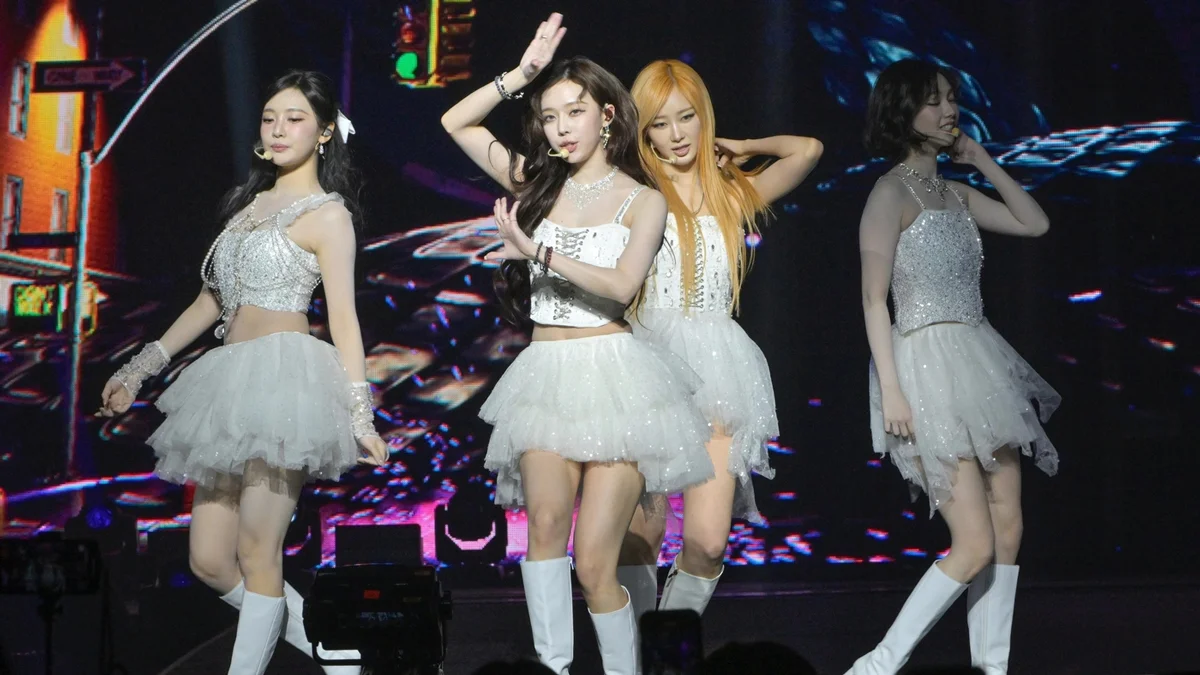
What made the situation worse was that the conservatives themselves began to act as if the mega-famous idol really supported them. For example, the People's Power spokeswoman posted a link to Aespa's hit "Supernova" on Instagram, thanking them for their "support."
It is noteworthy that the public demands political activity from celebrities. But one that would not show their preferences. Thus, every idol should go vote and talk about it on social media, but without any hint of who they voted for. For example, singer Lee Che-yeon came to the station wearing clothes of neutral colors, but she had a blue bandage on her broken hand. And in her other hand the girl was holding a package of cherry tomatoes.
“I can’t replace the bandage, so I neutralize it with cherry tomatoes,” the girl wrote on social networks, earning everyone’s approval for her wit.
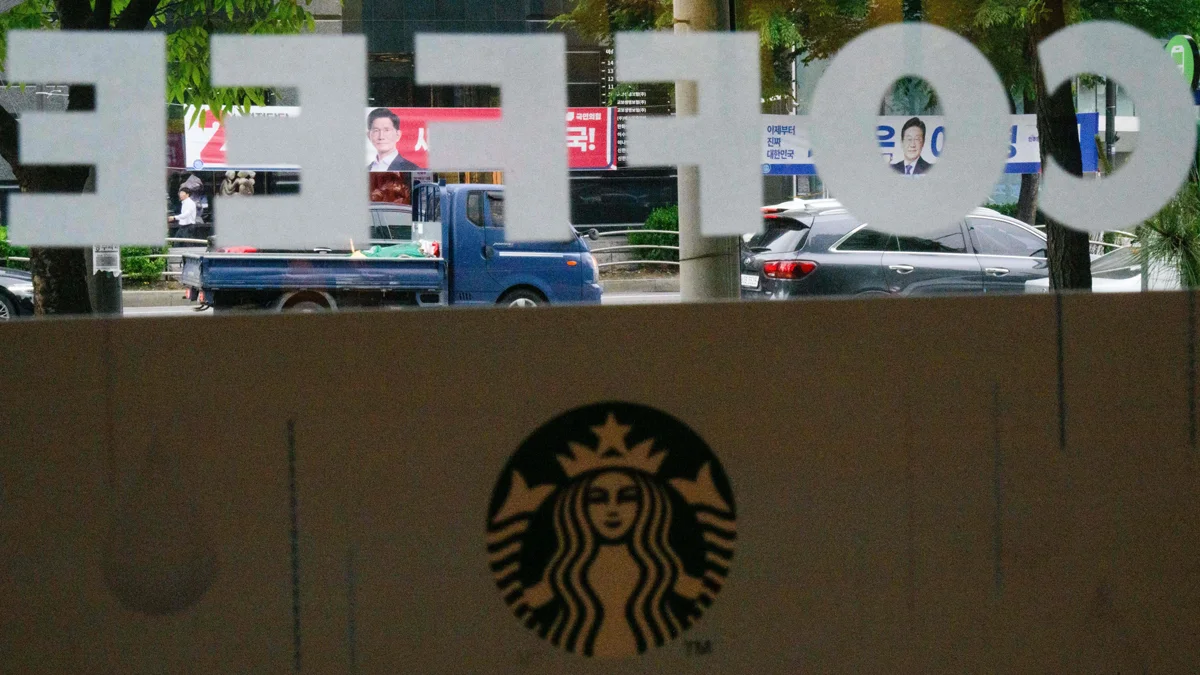
Not only idols, but also large corporations try to maintain political neutrality. For example, at Starbucks, baristas traditionally ask customers for their names so they can announce them loudly when the drink is ready.
Before the election, people who order online from Starbucks often began writing political statements as their names. The company has now banned its employees from accepting such orders.
In addition, you cannot even simply indicate the names of candidates. If you are called as a candidate from the “Power of the People”, for example, you will have to give a different name to order coffee.
The current presidential elections have become the most long-awaited and controversial for South Korea. The country has not yet recovered from the crisis that arose on December 3, 2024, when then-President Yoon Seok-yeol declared martial law. He declared a threat from the DPRK, but in reality he was trying to protect himself from a parliament opposed to him. The military rebellion failed, and Yun was forced to apologize to the people.
At that time, Korean society was greatly divided: rallies of thousands took place in the country, the participants of which demanded that Yun be put behind bars, and at the same time, young men aged 22 to 35 actively advocated for the conservative president, seeing in him a man who would save them both from feminists and from the “progressive dictatorship.”
“After [Yoon’s impeachment], I don’t talk about politics anymore. It feels like the ideological split has become so intense that conversations often turn into arguments,” said , for example, 27-year-old Korean Ji Seok Bin.
The country actually spent six months without a president. All this was reflected in the election race. For example, democrat Lee Jae-myung wore a bulletproof vest at all public events due to numerous threats he received.
According to Korean scholar and lecturer at Koryo University Fyodor Tertitsky, Lee Jae Myung is considered one of the most left-wing politicians in the history of South Korea and a person sympathetic to North Korea. He also participated in the last presidential elections. At that time, conservative Yun Seok-yeol opposed the normalization of relations with the regime of Kim Jong-un, and Lee was in favor of reconciliation. Days before the election, North Korea launched a ballistic missile toward South Korea, and Yoon said Kim Jong Un was trying to influence the election and that he would "teach him [Kim] some manners." As a result, Yun Seok-yeol won the election with a margin of one percent.
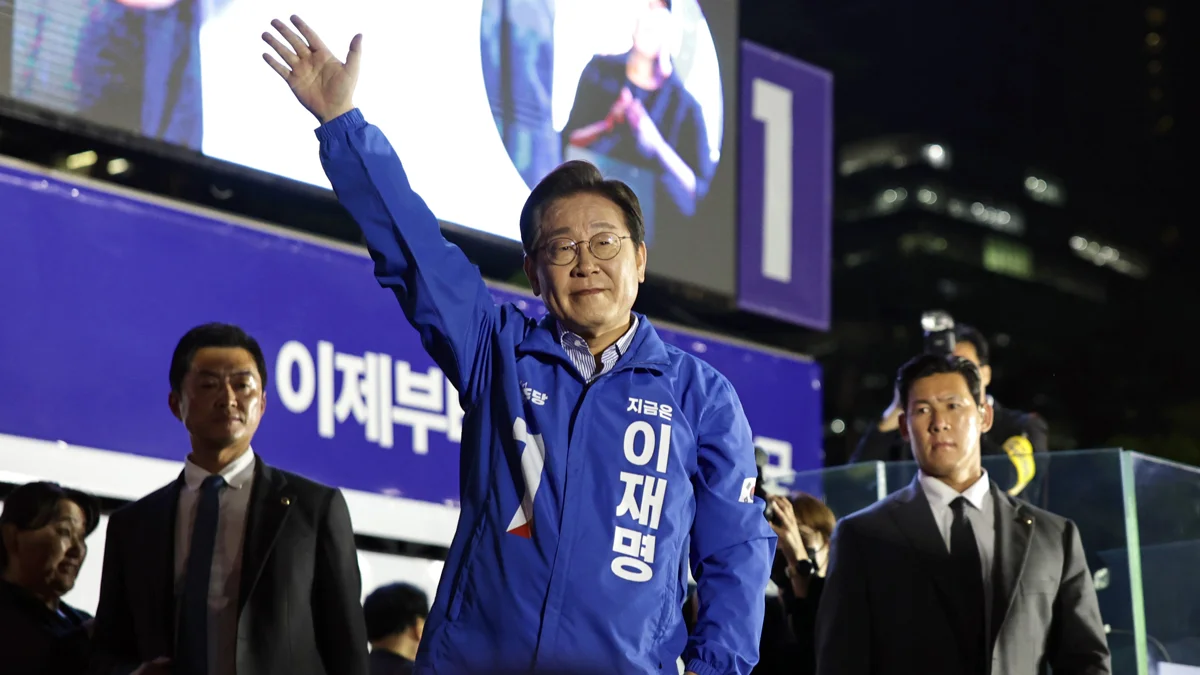
On the night of December 3–4, when Yun declared martial law, members of parliament gathered to reverse the decision. Many of them were forced to fight their way through the military and climb over fences to get into the building. Democratic Party candidate 60-year-old Lee Jae-myung then even broadcast live on YouTube from his phone, in which the politician was seen climbing over the fence. This turned Lee into a "national hero".
The Power of the People Party, instead of distancing itself from Yun, nominated 73-year-old Kim Moon Soo, who actively supported the president who was trying to stage a coup. This made him a less popular candidate.
Elections in South Korea ended today at 20:00 (14:00 Moscow time). According to exit polls, Lee is winning 51.7% of the vote, while People Power candidate Kim Moon-soo has 39.3%.