
Translated material
Legend and mission
95 years since the birth of the most titled coach in the history of domestic hockey Viktor Tikhonov
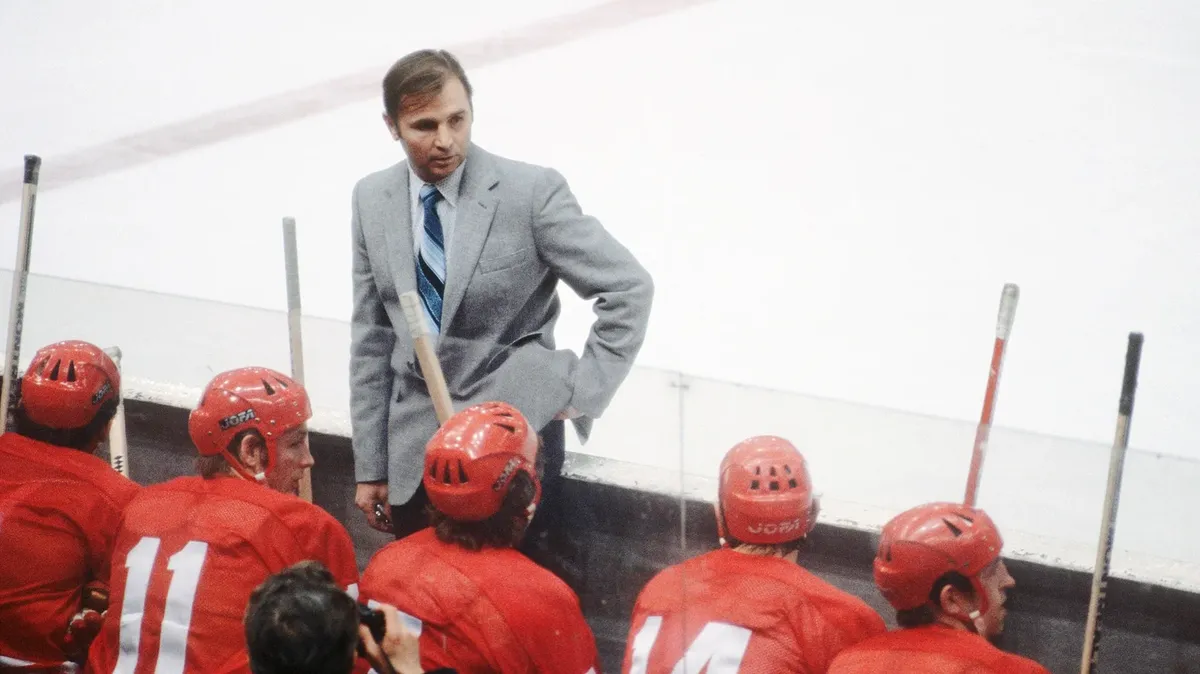
Coach of the USSR national hockey team Viktor Tikhonov, 1979. Photo: Vyacheslav Un-Sin / Photo Chronicle TASS
95 years since the birth of the most titled coach in the history of domestic hockey, Viktor Tikhonov, is a noticeable date, but not so much that it is noted in some special way. The figure of Viktor Vasilyevich remained in the era, about which young people judge by the series or by pronounced primitive memories. Tikhonov and his hockey were one of the symbols of the power of the country, which was gone in the early 90s and which the master experienced almost a quarter century.
Tikhonov in the hockey environment was not very fond of even at the time of him by anyone that the most successful coach of the country. Among the fans of unanimity, it was also not noticed, although the consensus during large tournaments of the national team was undoubtedly present - the unspoken slogan “Everything for the national team” entered the mass consciousness long before the accession of Viktor Vasilyevich and was perceived completely naturally. This did not add directly to the coach of folk love, but he, by and large, was not needed. He thought of other categories, he felt his activity at the main hockey post as a mission entrusted to him from the very top. This coincided with his nature of a frantic workaholic, and with his life attitudes, and with the goals to which he went and which he sought until the moment when they lost their importance and self -sufficiency.
In history with a proposal that cannot be abandoned, and it happened in 1977, there are practically no white spots. After the failure of the World-1977 championship, and the third place was then considered a failure,-the lead limit to the senior coach of the USSR national team Boris Kulagin was exhausted, and CSKA, despite the return of the championship, under Konstantin Loktev, was considered an unstable team. The authorities, for which hockey, due to popularity among the general masses of the population, was an ideologically important area of work was needed at the main post by a person who would “restore order”. So they saw the successfully working in Riga Tikhonov.
Tikhonov in Riga was good in every sense. There he was in the second half of the 60s after he worked for several years in the Moscow Dynamo as an assistant to the permanent and authoritative Arkady Ivanovich Chernyshev. Independence was beneficial - the Riga Dynamo, as if recalling those times when other regions studied from the Latvian hockey, just starting to master Canadian fun, went uphill again.
The young coach, without a small part of the capital's resources, worked fanatically, infecting his wards and fans with his zeal.
With Tikhonov, who boldly experimented, introduced intensive hockey with four links instead of three and gave battle to any rival, Dynamo from the second league reached fourth place in the USSR championship, and the coach was entrusted to the national team, albeit not in the strongest composition, for the first Cup of Canada. Viktor Vasilievich took root in Riga, local authorities adored him, the fans were well treated, the team was controlled under his leadership, and he did not really want to leave his own place.
The issue was resolved at the level of the chairman of the State Security Committee Yuri Andropov. Andropov, as the unspoken chief of the Moscow Dynamo, saw Tikhonov at the head of the club, in which he played for almost ten years and in which he became a coach. But another not quite simple fan represented by the Secretary General of the CPSU Central Committee Leonid Ilyich Brezhnev objected that the place of the senior coach of CSKA as the base club of the national team is more important. The point here is that at first Tikhonov was proposed the post of mentor of the national team, after which it was logical to head CSKA. At the same time, in CSKA he had to shift the very popular Loktev, who had just returned the championship rank to the club. Tikhonov understood what the attitude from the leaders of CSKA would meet after that - and during the first meeting on Lubyanka he refused the proposal.
During the second meeting, the owner, after listening to the arguments of the invited, called his colleague, and he said, conveying a simple thought to Tikhonov that they did not refuse to proposals in this office. Having received consent, Yuri Vladimirovich kindly admonished the newly-made chief person in hockey-and the senior coach of the national team was considered as the words that he would have to go to bed at three in the morning, but for the order to be imposed. And with victories, and with discipline, and with everything else.
Here, in fact, where the legs grow from. If he hadn’t been this proposal with whom he received a carte blanche, Viktor Vasilievich Tikhonov, of course, would have achieved a lot, but he would hardly have won the country's championships 12 times in a row and won everything that could, almost perfectly embodying the life of the largest bosses. The fact that the patronage was not formal confirmed the first seven years of Tikhonov at new posts: despite the separate failures, the most loud of which was the “miracle” at the 1980 Olympics in Lake Placide, despite conflicts with CSKA leaders and the “groaning” of such an authoritative retiree as Anatoly Tarasov, unhappy clearly made it clear that the new head coach would continue his work anyway.
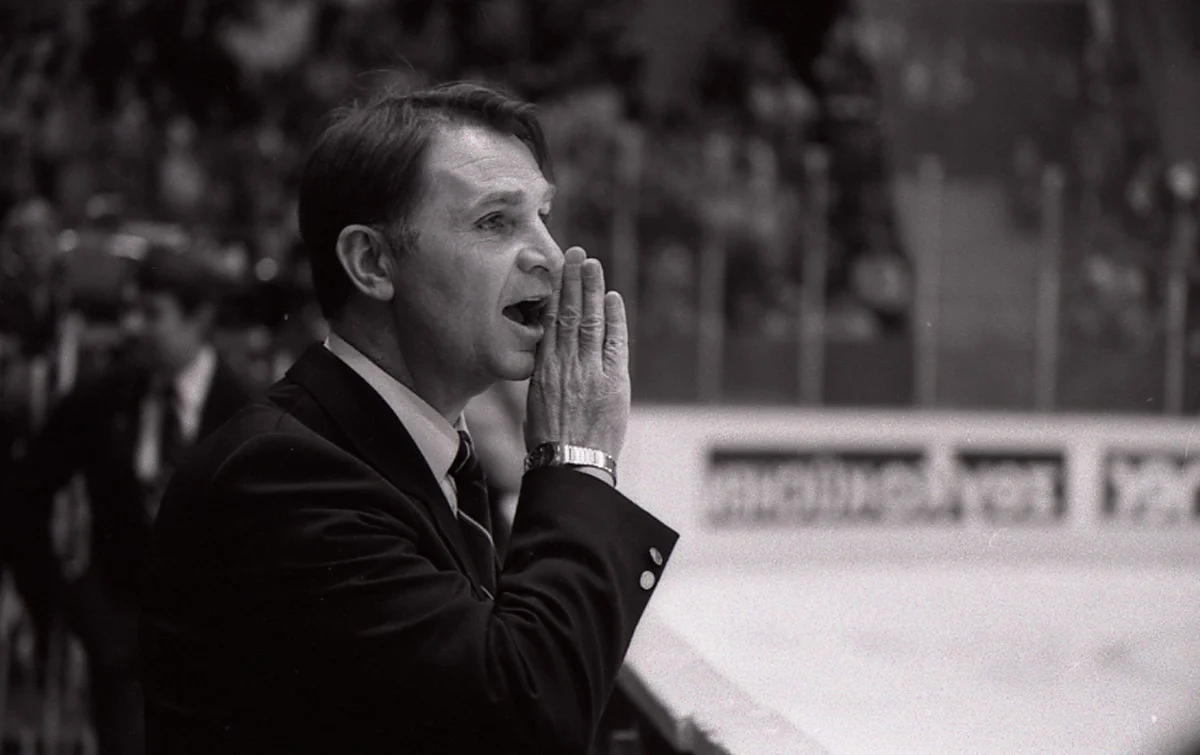
... Tikhonov strengthened the already powerful composition, taking from Riga and the “wings” of the two strongest extreme attacks of the countries of that time - Helmut Balderis and Sergey Kapustin, he worked elegantly and demanded the same from others, he began to compete with CSKA, he held the team in a fist, the case of mercilessly, the case with the talented, but the case was indicative, but the case with the talented. Nepothev Alexander Gusev. Gusev was going to expel, army ranks stood up for his defense, then Tikhonov simply said that he would call anyone and consult - the intercessors immediately fell silent, the hint was enough. But he did not have to hint - it was already clear who was standing behind the senior coach.
In the case of many-year leaders of Soviet hockey Boris Mikhailov, Vladimir Petrov and Valery Kharlamov, after failure in Lake Plosid, the coach cut through the living, everything was determined by the achievement of which Viktor Tikhonov succeeded. In 1981, he did not take the Canada Cup, adored by the whole country, Valery Kharlamov, guided by purely sports requirements, and the death of the public favorite in a car accident cannot be forgiven for the coach. But the national team won the Canada Cup, created by Tikhonov, the “Great Five” of Fetisov-Kasatonov-Makarov-Larion-Krutov already gained move, the team after 1980 won all tournaments until 1984. When the highest patronage, due to natural reasons, came to naught, authority, albeit won by high price, was already working on the coach. Viktor Vasilyevich Tikhonov did not spare anyone, the same first goalkeeper of the country Vladislav Tretyak sent a prematurely “retirement”, refusing to give a relief to a man who, since the age of 17, lived “in a barracks” and could be infrequently with his family.
It really was a mission, for which he was nothing and no one sorry, including himself.
Once he said that, having returned from the super -series, he slept for two days in a row. What he considered the norm for himself, he transferred to others, despite the circumstances. The second half of the 80s is the time of fatigue of the country, economics, ideology that required changes. It became more difficult to win due to partial loss of motivation to leaders, but Viktor Tikhonov remained in the circle of the same ideas that he chose. The fact that the best “work” in the person of the first five rebelled against him (or rather, four rebelled), starting with the letter of Igor Larionov into the “light” and continuing the interview of Vyacheslav Fetisov, the master considered it not to change. Stronging for freedom and tasting its first fruits, the country flew into the abyss, dragging symbols behind itself - and hockey was not from the latter.
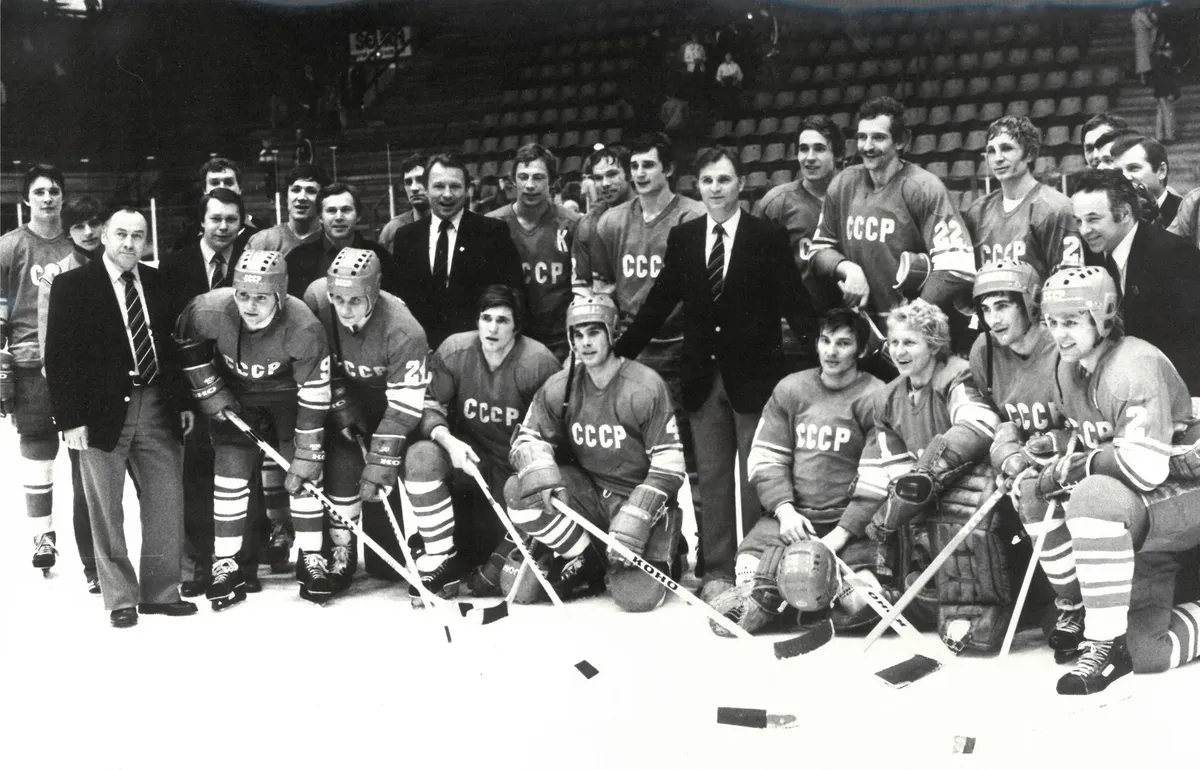
... Tikhonov could easily go abroad, even in the NHL - the proposals were from there, but his many -year -old comrades -in -arms Vladimir Yurzinov left for Finland, and no one called Vladimir Vladimirovich “a traitor”, but few of the famous hockey players and trainers did not go to earn extra money and simply survive not the best times. Tikhonov remained, having managed to win his third Olympics in the French Alberville-1992 under the curtain, and preparing for the next Olympic tournament, the master no longer knew by the last names of all candidates for the national team-the composition was qualitatively changed in three years. His CSKA was initially ruined, and in the mid-90s he completely bifurcated after the scandal with the division of the brand, but Tikhonov appeared in public as if nothing had happened, in full readiness to overcome hardships without leaving his native club.
Those who could not stand it could include the old record: it is easy to be great, having at their disposal the best hockey players of the country, and where is this “great” now, when there is no “kindergarten” under the lead and there is no money? There was a reason in such reasoning, but it was not the whole truth. Tikhonov’s time was gone more rapidly than he could expect him. It finally left in 2004, when he was again appointed head coach of the national team, but in the Czech Ostrav there was a shame, which was equal to the Petersburg failure of the 2000. 73-year-old Tikhonov right during the last press conference rushed into a fight, hearing the journalist’s question when he will be submitted for resignation. The spectacle was miserable and sad, that was the final.
No, he still had the strength to invest in the development of CSKA as the president of the club, he still lived with hockey, but hockey was already without him. Of course, Viktor Vasilievich pushed and softened over the years, he was not at all a “man in a case” - and a contemporary was friends with the theater, and attended parties, and was completely different in the family than in public, and his grandfather turned out to be attentive and caring,
But there was nothing to expect forgiveness from him-he did not forget anything, and the habit of at least something to repent of him did not work out. It could be called a "genius without charisma", it also happens.
Very few third-party people managed to somehow break through the protective wall they built-in particular, my colleagues from Sport-Express in 2009. From that frank interview by Tikhon’s standards, we learned that in childhood he had a nickname, that he watched the film “Favorite Arias” twenty times that he considered Tarasov’s so -called wives councils an empty and even harmful venture, that the famous Igor Moiseev in the ensemble was the same streaming system and that hockey players are completely optional.
If I loved, he would not have 30 kilograms of medals.