
Translated material
Deep State and Soviet methods
How the personal complexes of Georgia's shadow ruler affect relations between Tbilisi and Washington
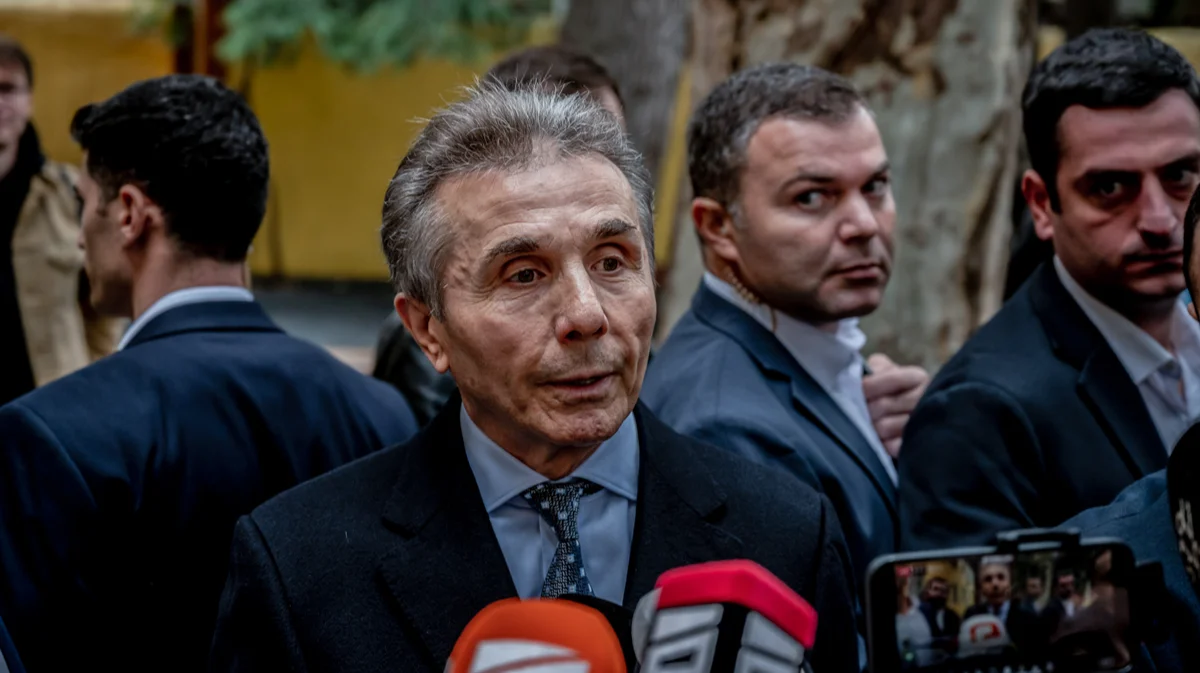
Bidzina Ivanishvili speaks to journalists after voting in the elections in Tbilisi, October 26, 2024. Photo: Maria Giulia Molinaro Vitale / SOPA Images / Sipa USA / Vida Press
Another drama in relations between Georgia and the United States - this time in letters. Tbilisi and Washington have recently actively exchanged open and confidential messages. However, this process showed that the parties are still not ready to move from monologues to dialogue.
The real ruler of Georgia, billionaire Bidzina Ivanishvili, reminds the States of the sanctions imposed against him, and the head of the State Department, Mark Rubio, hints that Washington may punish the “anti-American government.” Iya Barateli dealt with the epistolary epic.
34 plus 6
This year on Independence Day, Georgian Prime Minister Irakli Kobakhidze gave a speech in which, among other pathetic phrases, he compared “Georgia’s struggle for independence and freedom” with “Moses’ 40-year journey to the Promised Land.”
On May 26, Georgia celebrated its 34th independence day. Considering that it was Kobakhidze who announced at the end of last year that Georgia, which had already achieved the official status of an EU candidate country, was now voluntarily refusing accession negotiations for the next six years - until 2030, then the passage about 40 years of “wandering” does not seem so far-fetched.
According to tradition, the morning of the main national holiday begins with the oath-taking ceremony for new recruits of the Defense Forces. This is happening in several regions of the country at the same time, but the main site is on Freedom Square in Tbilisi, in the presence of the government and the diplomatic corps.
In his celebratory speech, Kobakhidze mentioned Europe only once, although integration into the EU is written into the constitution as the main goal of the country's foreign policy.
The prime minister said that Georgia, which “survived four wars, a nine-year encroachment on Georgia’s sovereignty and bloody authoritarianism” (as the Georgian Dream calls the period of Mikheil Saakashvili’s rule), nevertheless “regained its independence, freedom and democracy, which creates a solid foundation for the progress, development and integration of our country into the European family.”
But the Chairman of the Georgian Parliament, Shalva Papuashvili, did not say anything at all about Europe in his speech at the holiday - but he mentioned the outstanding Georgian kings, as well as “the Shroud of Christ, the robe of the Mother of God and the nail of the Savior’s cross.” Papuashvili called on fellow citizens to be faithful to “faith, language and fatherland,” but immediately added that the Georgian people are united by common energy “regardless of religion, ethnicity and location.”
Elected by Georgian Dream electors, Georgian President Mikheil Kavelashvili in his speech, without naming specific countries, advised “to realize how useless it is to wait for any external force to come and save us.” This sounded a little illogical against the backdrop of a military review, given that the Georgian Defense Forces were created mainly thanks to many years of Western assistance. However, no one would argue with Kavelashvili’s argument: “We must remember that it is we, and no one else, who determine our future.”
Protest on Independence Day
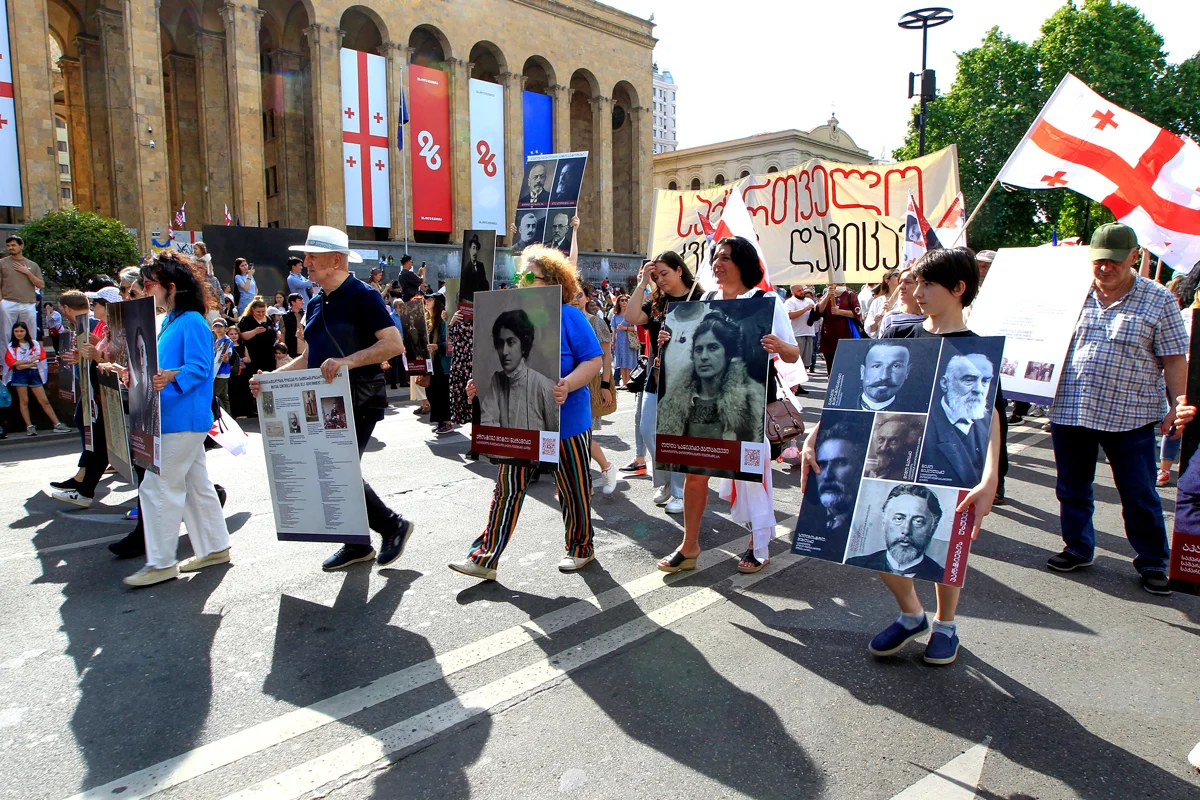
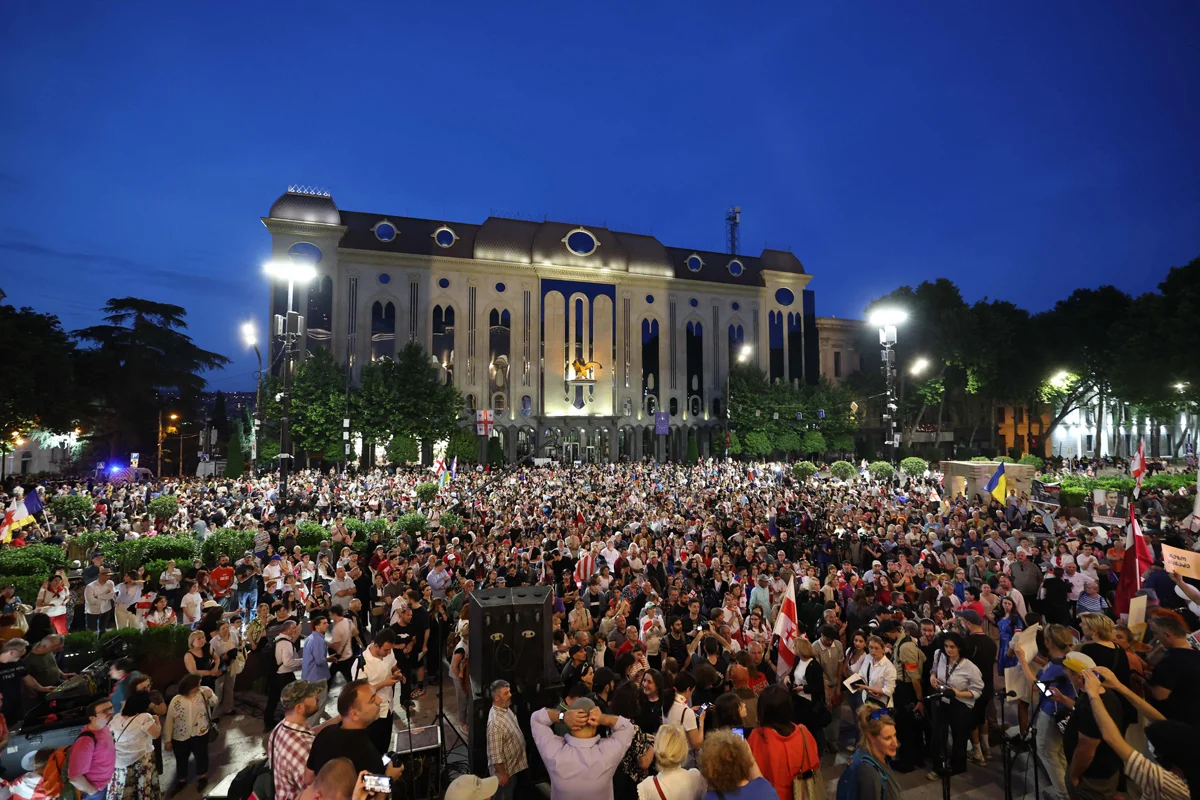
There were many in Tbilisi on Independence Day who believe that they can still determine their future. Rustaveli Avenue has been blocked every day for more than 180 days by protesters who demand the return of Georgia to the Western orbit, the holding of new parliamentary elections and the release of more than 50 protest participants detained during this time. In order not to aggravate the situation, this year on May 26, the authorities refused to block Rustaveli for walking. All entertainment events were moved a few streets below, to Orbeliani Square. Despite this, about 10 thousand people took to the main avenue of the capital to celebrate and protest near the parliament. Dozens of different groups organized their marches on social media, without coordination with opposition political parties.
In fact, they started celebrating the day before - the annual Tbilisi Open Air music festival was just taking place in Tbilisi, which turned into a spontaneous political action with protest slogans sounding directly from the stage.
“Down with the Russian regime, freedom for prisoners of the regime, the oligarchy - into the fire! Glory and victory to our friend Ukraine! And, of course, everywhere and always - glory to Georgia, to hell with Russia,” the lead singer of the popular rock band Loudspeakers, Levan Laudadze, ended his performance on stage with these words.
Other artists who have repeatedly participated in protests also performed at Tbilisi Open Air. The world-famous opera bass Paata Burchuladze, who never misses a single protest on Rustaveli, together with rappers sang the song “I am Georgia,” and several thousand people sang along with them. The most famous Georgian dance ensemble “Sukhishvili” also showed up at the festival, and its artists not only danced, but also performed a rock version of the Georgian national anthem.
The legend of Georgian jazz, adored by several generations, Giuli Chokheli, also performed at the festival - back in the 70s, she became the first Soviet singer to record a jazz record in Europe, and she still amazes with her energy when she appears in public.
“I’m already 90 years old, I don’t have much left, but I’m waiting for victory. It’s up to you, we will win!” - Chokheli said from the stage, and no one in the huge crowd on the shore of Lake Lisi questioned what kind of victory she was talking about.
"Anti-American government"
On Independence Day, it turned out that the ongoing protests in Tbilisi, although they had disappeared from the screens of international media, were still clearly visible to politicians in Europe and the United States.
“The Georgian people’s dedication to freedom is inspiring,” US Secretary of State Marco Rubio wrote in his congratulations on the national holiday. At the same time, he, unlike the speaker of the Georgian parliament, clearly did not mean King David the Builder and the Didgori battle of the Georgians against the Seljuks in 1121.
Rubio’s message emphasized several times that the head of the State Department, on behalf of the United States, congratulates “the people of Georgia” on the holiday: “On this day we celebrate the strength and resilience of the Georgian people, as well as our strong ties.”
The text also included a reminder that the partnership between Georgia and the United States dates back more than 30 years and was “built on the common values of democracy, sovereignty and the desire for a better future.” Rubio did not write anything in his congratulations about the fact that Georgia and the United States are no longer strategic partners due to Washington’s dissatisfaction with the “Georgian Dream” policy, but assured that the United States is still “committed” to partnership for the sake of a secure and prosperous future.
Rubio spoke even more harshly about the situation in Georgia verbally, a few days before he sent congratulations to Tbilisi. The occasion was a question from Republican Congressman Joe Wilson, an outspoken critic of the Georgian Dream, asked by Rubio at a hearing in the Foreign Relations Committee on May 21.
As a result, the Secretary of State’s first comment on Georgia since the Trump administration came to power included the expression “anti-American government.”
It must be admitted that Congressman Wilson formulated his question in his characteristic style of frank “assault”: “I thank the Trump administration for its tough position against the anti-American regime of the Georgian Dream.” They rigged the October 26 elections. They criminalized connections with America. They kicked out American companies by blocking trade and access to minerals along the Middle Corridor, effectively selling Georgia to the Chinese Communist Party. They have repeatedly denigrated President Trump and the American leadership... In addition, for 200 days in a row, freedom-loving Georgians have heroically taken to the streets with American flags and posters with appeals to the US President. What will be done under your leadership so that the State Department introduces real measures against the anti-American “Georgian Dream” in the interests of the Georgian people?”
And although Rubio’s answer was diplomatically vague, the situation clearly does not promise anything good for the “anti-American government” in the “important region”:
“The goal of the United States is to pursue our national interests, so we ask ourselves: Is it in our interests to have an anti-American government in this important region?” If not, we will take appropriate action to ensure that this government bears the costs.”
Sincerely, Donald Trump
Before the Georgian opposition could get enough of Rubio’s congratulations, the administration of President Mikhail Kavelavshili announced that their boss had also been sent a letter, and from Donald Trump himself. Supporters of the “Georgian Dream” were jubilant: the congratulations were supposed to be considered a breakthrough in Georgian-American relations and confirmation of the legitimacy of both the government and President Kavelashvili himself.
True, unlike Rubio’s message published on the State Department website, Trump’s congratulations were only available in a message from Kavelashvili’s press service, and exclusively in the Georgian language version. Journalists could not find Trump’s message on any resource. In addition, the text of the American president’s congratulations looked suspiciously formulaic:
“My Administration is committed to strengthening peaceful and fruitful relations with the Government of Georgia. In the future, I hope to deepen economic ties between our countries by supporting fair trade and expanding the scope of bilateral cooperation.
I sincerely congratulate the Georgian people on this important date, which reflects the country’s distinguished and diverse history.”
Representatives of the opposition, familiar with the nuances of the diplomatic service, immediately doubted the value of such a letter, citing the fact that such messages are usually sent by the protocol service and it would be wrong to see a “diplomatic breakthrough” in such correspondence.
Soon the hero of the occasion of the Georgian Dream appeared - a farmer from Virginia, Kimberly Lowe. Pro-government media in Georgia have been presenting this woman as an influential figure from Trump’s entourage for six months now. This attention to an ordinary, albeit active supporter of the Republican Party is explained by the fact that she has turned into an ardent supporter of the Georgian Dream and willingly gives optimistic comments about the prospects for Georgian-American relations.
And this time, Kimberly Lowe reported on the social network that the protocol congratulations for Kavelashvili appeared thanks to her assistance.
By the way, after Kimberly Low visited Georgia in person in January, the scale of her projects began to eclipse even the real Trump administration. For example, in April, she announced through social networks that by the fall she intends to organize a “World Peace Summit” in Tbilisi with the participation of Trump, Putin, Xi Jinping and Erdogan. The climax of the summit in Georgia, according to Ms. Low, should be a peaceful resolution of the conflict in Afghanistan (therefore, representatives of 33 Afghan tribes should come to Tbilisi).
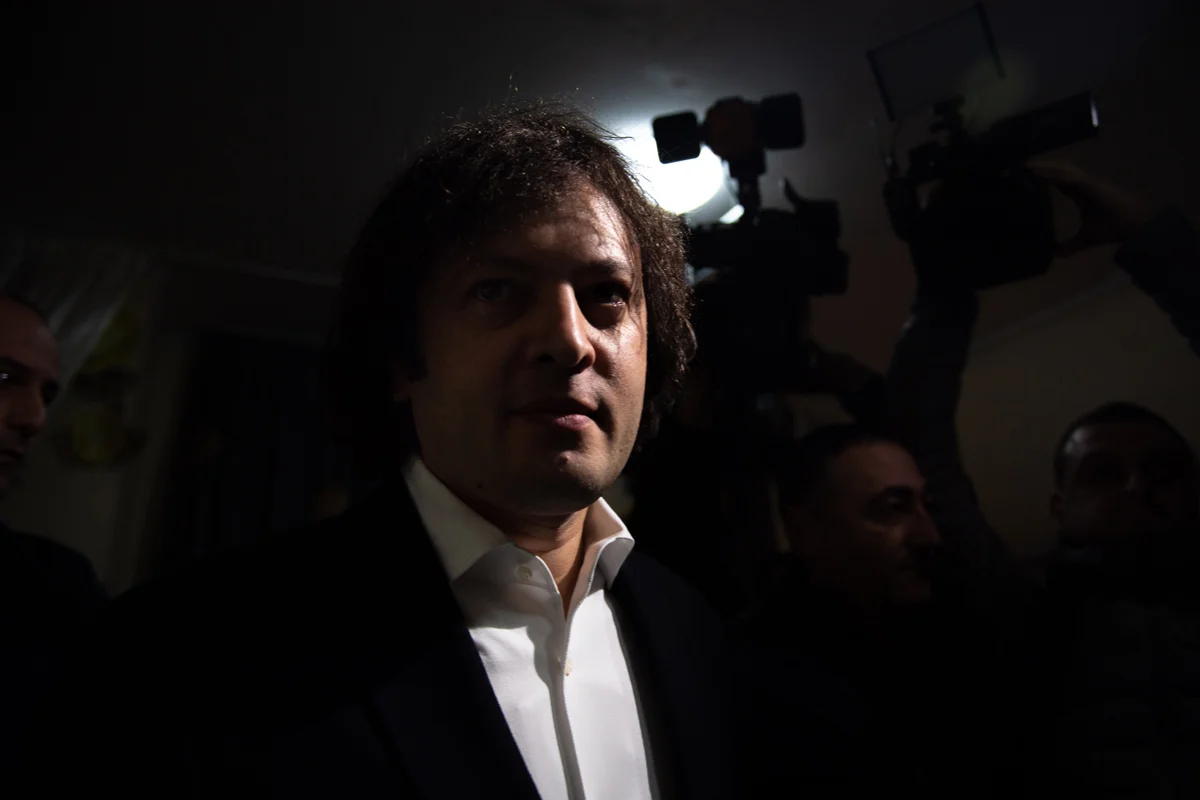
Return to sender
The atmosphere of secrecy and omission around Trump’s protocol congratulations did not prevent Prime Minister Kobakhidze from drawing strategic conclusions: if Trump’s letter gives hope for strengthening relations with the United States, then Secretary of State Rubio has fallen under the influence of the Deep State and his congratulations “have no price.”
“This duplication [of congratulatory letters] from the same government directly reflects the confrontation that is now taking place between the Trump administration and the Deep State. This already indicates the duel and confrontation that will take place between the new administration and the Deep State. Otherwise, it is impossible to explain how such radically different letters can arrive in Georgia.”
Kobakhidze really has something to compare with: ten days before all this “confusion” with congratulations from Washington, he sent a large open letter to President Donald Trump and Vice President J.D. Vance to the White House, in which he expressed concern that the United States was ignoring his proposal to start relations “from scratch.” The message remained unanswered, although it became a reason for Kobakhidze to comment on the situation in Georgian-American relations in the local media.
“This is not a state of neutral silence, this is not a passive status, relations between Georgia and the United States have a certain active-negative status,” Kobakhidze emphasized, once again recalling that the head of the Georgian Ministry of Internal Affairs, Vakhtang Gomelauri, was included in the Magnitsky list, and the MEGOBARI law, which provides for even greater tightening of sanctions against the Georgian Dream, was successfully voted on in the House of Representatives on May 6 and has already been sent to the Senate.
Kobakhidze criticized the co-author of the MEGOBARI law, Congressman Joe Wilson, and said that he reminds him of the “Secretary of the Central Committee” and his approach is “Soviet methods.”
The prime minister was especially indignant that Wilson called the Georgian government “pro-Iranian, pro-Russian and pro-Chinese.”
“What do they want from our small country? To say that they are concerned about the democratic state of our country is simply ridiculous,” Kobakhidze said.
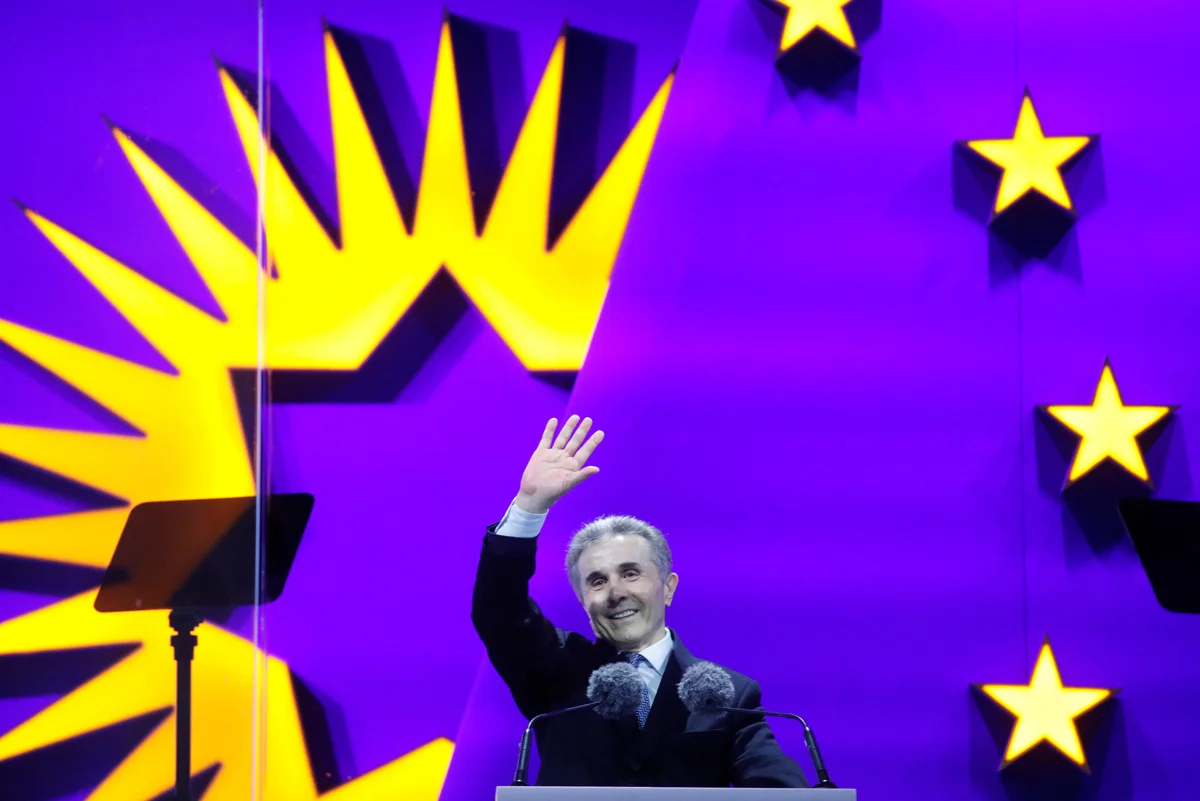
Kobakhidze also believes that the American organizations USAID, NED and others were “instruments of foreign influence” and “sowed hatred in Georgian society,” just as the Soviet KGB “did” in the early 90s.
In an atmosphere of resentment toward America and clearly fading optimism about President Trump, the Prime Minister of Georgia spent the entire week before Independence Day. Therefore, the question of the authenticity of Trump’s congratulations seriously worried the public. It was assumed that this issue would be clarified by the American Embassy in Georgia, which usually copies all official appeals on its website. However, here everyone was in for a big trick with an unmasking session.
Washington demands Ivanishvili
Instead of discussing how protocol Trump’s congratulations were, the US Embassy on May 28 issued a message from which it became known about the White House’s attempt to negotiate with the founder and honorary chairman of the Georgian Dream, Bidzina Ivanishvili.
It turned out that on May 22, Ivanishvili, on behalf of Secretary of State Rubio, was offered to hold a meeting with the US Ambassador, Mrs. Robin Dunnigan.
Ambassador Dunnigan was to convey to Ivanishvili a message from the White House administration about “concrete steps that the Georgian government can take to demonstrate its seriousness in resetting relations with the United States.”
Such a proposal clearly indicates that the only person in Washington who is considered responsible in Georgian politics is Bidzina Ivanishvili. It also turned out that the richest and most influential man in Georgia refused such negotiations.
When the secret became clear, Ivanishvili did not deny it: he also published a letter in which he confirmed that the US Ambassador had offered to meet with him. But the billionaire made it clear that he does not intend to enter into negotiations until the sanctions imposed on him by the Biden administration are lifted. The sanctions also relate to the amount of approximately a billion dollars, which the United States prohibited Ivanishvili from paying as compensation from a Swiss bank by court decision.
Ivanishvili also clarified that during negotiations with the Americans he expressed his readiness “for the sake of improving relations between Georgia and the United States” to “spend the blocked money not for personal purposes, but for any purposes that they would propose.” However, this did not attract interest in Washington.
Ivanishvili explained his desire to sort out the fate of personal finances before deciding the issue of strategic partnership with his “complexes” (this word is mentioned several times in his letter). The billionaire hints that while his money is frozen and he is subject to sanctions, he is afraid of “being subjective” when talking about public interests.
Ivanishvili also said that he invited the head of the American diplomatic mission to meet with Prime Minister Kobakhidze, but Robin Dunnigan refused such a meeting.
“The Prime Minister is not under any formal or informal sanctions and therefore cannot have any complex related to personal blackmail. However, the ambassador refused the meeting, which confirms our opinion that they consider personal blackmail to be the leading factor influencing the Georgian side’s adoption of possible decisions related to state interests.
They may say that as the founder and honorary chairman of the ruling party, I have special influence on decision-making. However, I assure you that not a single fundamental decision in the ruling party is made without the participation of the team, first of all, the Prime Minister. The only explanation for the request for a meeting with me personally could only be that such a meeting has value for them for personal blackmail,” Ivanishvili explained in his letter.
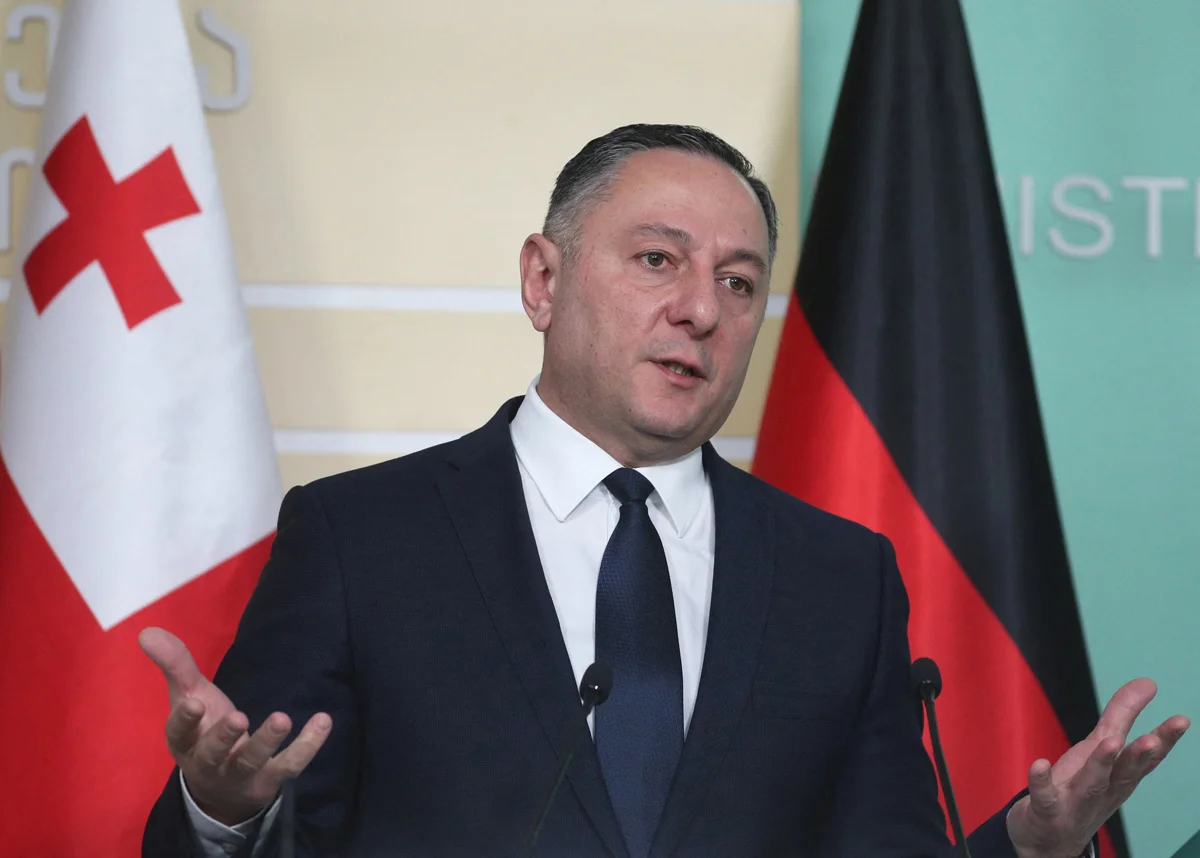
An ordinary Georgian billionaire
Against the backdrop of a diplomatic scandal, the day after Independence Day, the head of the Georgian Ministry of Internal Affairs, Vakhtang Gomelauri, a man from Ivanishvili’s inner circle, unexpectedly resigned. He became one of the most affected by the confrontation between Tbilisi and Washington, since, along with visa sanctions, he was included in the “Magnitsky list,” which is considered the most difficult and inevitable financial sanctions instrument. Gomelauri, who was also sanctioned by Britain and several EU countries for the brutal crackdown on protesters in Georgia, also wrote a letter before resigning. The now former minister explained that the government in which he worked for ten years established peace and tranquility in the country, so he decided to devote time to his family and raising his grandson.
However, the opposition does not believe that a high-ranking official, who is only 50 years old, decided to retire of his own free will. In addition, this is not the first resignation of the minister of the security bloc, who was personally devoted to Ivanishvili: in April, the head of the State Security Service, Grigol Liluashvili, also unexpectedly resigned.
Tina Khidasheli, former Minister of Defense of Georgia, chairman of the non-governmental organization “Civil Idea”, believes that Gomelauri’s resignation is a continuation of the performance that Ivanishvili has been playing for a long time.
“This is a demonstration of Ivanishvili’s withdrawal from politics, with which he is trying to convince foreign partners that he is not even formally in power, that not a single representative of his inner circle is a member of the government.
Therefore, it makes no sense to carry out any measures against him, and if you need to impose sanctions on someone, freeze finances, or revoke a visa, Irakli Kobakhidze and his team are there for that. This is exactly the passage contained at the end of Ivanishvili’s letter: here is Kobakhidze, talk to him, meet and sort it out, but I have nothing to do with politics, I have nothing to do with it.”
At the same time, Khidasheli believes that Ivanishvili was in vain not to meet with the ambassador, since America would hardly have presented him with any impossible demands.
“The current US administration is not demanding anything extraordinary from anyone. Unfortunately, we see that they do not demand anything special even from dictatorships. They only ask that minimum standards be met in order to continue the partnership. “Don’t break journalists’ faces when the cameras are on,” these are the demands. But Ivanishvili is not even ready for such a conversation.”
Mirian Popkhadze , a researcher at the American Foreign Policy Research Institute and a former representative of the Georgian Ministry of Defense to the UN, believes that the Ivanishvili government has no chance to improve relations with the United States through the “back yard”:
“There is no communication between Tbilisi and Washington now. The United States tried several times to establish relations with the person who really rules Georgia, but this did not happen. Ivanishvili decided to lead the country back towards Russia, China and Iran. And he is not even trying to pursue a reset policy with the United States. This is clearly indicated by Rubio's statement in which he talks about developing a new policy towards countries hostile to the United States. And we see that the United States will soon take such concrete steps against the Georgian authorities.
Most likely, these will be new sanctions. The United States has extensive experience in dealing with regimes such as the one now established in Georgia, and has institutional and historical memory. And they know how to use these weapons."