
Translated material
Repressions in Russia: torture, cruelty, long sentences
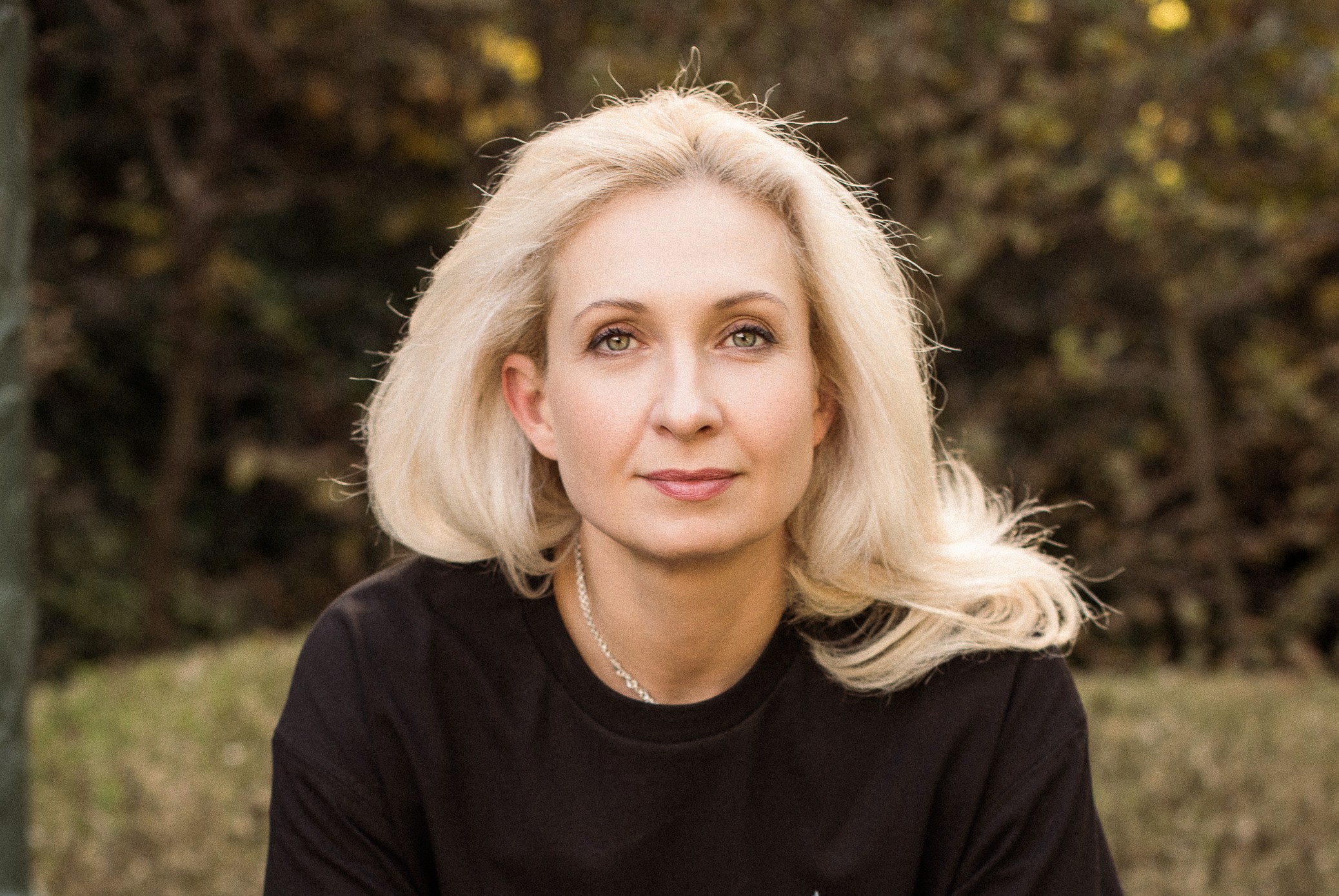
How repression is changing in Russia and why there is so much cruelty in the system - an interview with Olga Sadovskaya
Briefly
If you read the news, there will be many of them that begin with the same phrases: “In Russia they banned...” or “The court sentenced so-and-so to a huge term for...” and then, as a rule, there is some fact that is difficult to comprehend. We are already used to this. And even when it seems that even greater savagery is difficult to imagine in 2025, the authorities never cease to surprise us every time. Has mass repression really returned to our country? Now absolutely everyone is under threat of imprisonment? Why is dehumanization one of the main problems in modern Russia? And what does the banality of evil look like right now? We talked about this with lawyer and deputy head of the Team Against Torture Olga Sadovskaya.How have repressions changed over three years of war and where is everything going?
The repressive system is definitely getting tougher. We see this in how legislation changes and how it is applied. Over the past three years, a huge number of changes have been made to legislation. The law is becoming more and more cruel, and it criminalizes acts that are not inherently socially dangerous; rather, they are a manifestation of rights and freedoms. But the authorities are beginning to consider them socially dangerous and include them in legislation. Foreign agency, fakes about the army , cooperation with undesirable organizations, treason, confidential cooperation , and so on.
It is already obvious that everything is moving along the path of destruction of legal logic, concepts, and instruments. If earlier we had a fairly logical and internally interconnected Criminal Code, now it is a set of articles completely unrelated to each other.
There are now almost one and a half thousand political prisoners in Russia and it seems that this is far from the limit.
The number of political prisoners is steadily growing, and it is very symbolic that at the same time the total prison population is rapidly declining - in 10 years it has decreased from a million to 300 thousand. Such dissonance speaks of both the growth of repression and the fact that in practice the system is becoming tougher.
It seems to me that there is another trend: the latency of political prisoners will increase in the coming years. People will deny that they are political prisoners, because they will be afraid of additional pressure on themselves already in prison. Such cases already exist.
At the same time, now not only are more and more people being persecuted for their views and disagreement with the actions of the authorities, but they are also given absolutely enormous sentences, which are often called Stalinist. Has all this already become a new reality, the norm, or is it still some kind of intermediate stage?
I think this can all be called the new normal. Because a phenomenon becomes the norm when it ceases to surprise anyone. Huge deadlines no longer surprise anyone. Yes, they can cause any other emotions: indignation, indignation, a feeling of hopelessness, injustice, but I no longer see surprise. This has already become commonplace. And we all understand that it was like this yesterday, is today and will be tomorrow.
So far, at least, there are no “NKVD troikas”, and everything is happening in a pseudo-legal field. Every case requires a ton of papers and formal documents. Do I understand correctly that when new prohibitive measures or tightening measures appear, we should automatically expect arrests and criminal cases in such cases?
Russia still remains a legalistic state. This is why new laws are being adopted. If it ceased to be like that and we, for example, returned the concept of “socialist justice,” then we would not have to accept these 150 regulations, that this and that are not allowed. And since Russia is still legalistic, for every sneeze that the authorities don’t really like, a prohibitive measure must be introduced. Because without this piece of paper no one will work normally. That's how we work.
At the same time, I cannot agree that all the tightening of legislation begins to work immediately. This is wrong. We have “dormant” articles of a repressive nature that are not used at all. This does not mean that they will never be actively used, but for some reason, maybe the authorities have no desire or are busy with something else, they are still “dormant”.
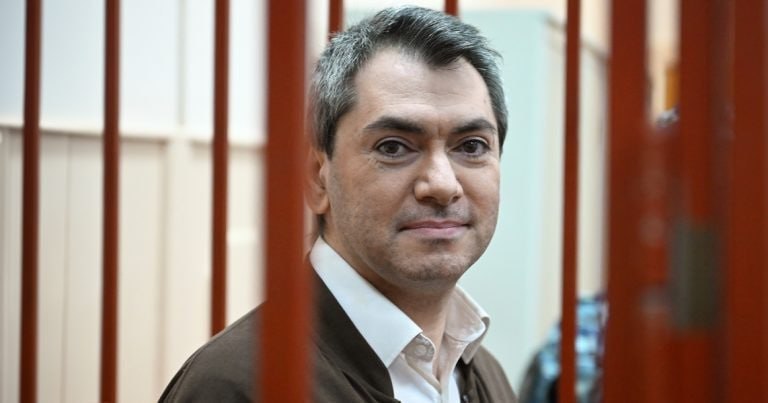
For example, cooperation with undesirable organizations. If someone had set a plan, Grisha Melkonyants would not be the only one in prison. Yes, Grisha’s case is outstanding; it concentrates many circumstances that led to state pressure on him and “Golos”. But the same crazy things can be done against a huge number of people. Apparently, the authorities do not yet have such a desire, or request, or plan. If suddenly, on July 1, we roll out a plan to the Investigative Committee on some article, of course, it will be immediately implemented. But for now we still have articles that are not very actively used.
There is a timid hope here that the system has a limit to which it can process. The same new foreign agents are recognized every week not in hundreds, but in batches of several people.
Yes, they don’t have time to process or carry out procedural procedures, because of course they could already do it in hundreds. The bureaucratic machine has its limitations, including the number of people. And in the motivation of those who don’t really want to work, not even for ideological reasons, but simply out of laziness. Therefore, the technical limitations of the system have so far saved us from widespread repression.
Previously, before the war, there was a general opinion that the repressions were rather targeted, albeit brutal, demonstrative, in order to scare everyone. And now there has already been a transition to a new level, a qualitatively new level?
I still wouldn’t call them rampant. Perhaps they are already like a blot. When you didn’t just put a dot with a pen, but it also blurred all around. But in a certain number of cases we already see that they are not targeting one person, but are doing it in micro groups. As in the case of Navalny’s lawyers, where there are already three arrested lawyers. Or Nevzorov and his wife became a criminal group. Or Gozman’s wife was put under house arrest. That is, there is now a tendency towards spreading out rather than targeting individual people.
Previously, there was practically no pressure on loved ones at all. They could, for example, come to a husband or wife and say: “Why is your husband doing some kind of garbage?” And now we see a new trend that concerns relatives. I started working in human rights in 2002 and this has never happened in my memory.
Another thesis from the past: Russia is following the path of Belarus, but is several stops behind. Is this still relevant? And can we thus predict what to expect in the future?
Now it is already more difficult to trace this - after the protests in Belarus in 2020, repressions reached such a level that the entire human rights community there collapsed. I can’t say whether anyone is still in the country, but most of the human rights lawyers have either left, been deprived of their license, or are imprisoned. This is still not the case in Russia. Some organizations remain, activists work, many lawyers remain. We remain the largest organization operating entirely in the country. It's still possible for now.
Many here will ask: “What is your task if the person is convicted anyway?”
It’s easier for us: we go to court on behalf of the prosecution. The main thing for us is to get there, and this is the most difficult thing. As for why you need a lawyer if he can’t help you, I really love one story.
Maxim Gorky had a lawyer wife, Ekaterina Peshkova. They did not live together for long, but he did not divorce her, because her status as the wife of a Soviet writer greatly saved her. In 1922, she headed the organization “Assistance to Political Prisoners”: she helped the families of political prisoners and the families of exiles. She went to court, collected food parcels, helped send children abroad whose both parents were sent to camps, and placed them in families. Her organization lasted until 1937, when the Soviet government completely strangled it. In her memoirs, she wrote that she did not save a single person from an unjust sentence. But she saved their souls when they realized that their children still had a future, that they would not die in an orphanage, that they would not be beaten to death like the children of enemies of the people. For some, she sought early release for health reasons; for others, she helped after release, so that people could start a new life. Without protecting anyone from an unjust verdict, she still saved many lives.
We are involved in many aspects of assistance. Yes, you have a right, it will not help you, the law will not help you. You won't save anyone from a judicial sentence. Your maximum plan is for the person to be given probation or fewer years than they could have been given. You can save a person from agonizing over what will happen to him and his family while incarcerated. This is also where I see my task and that of our entire organization—to stand between the individual and the state. Yes, it is always stronger, it will overstep you, but the person will know that he was not abandoned and you can help him.
Are only those at risk now who actively express disagreement with what is happening in the country or is this already affecting more people?
It is obvious that the authorities are trying to select victims from different social categories in order to scare everyone. Like the classic in films about jurors: here you have 12 jurors and they are all different, each symbolizing some kind of social group. The state does the same with repression, remember the “Bolotnaya Case” - if we look at the convicted, we will see that these were people from very different social groups, each of which should have been scared.
Now the same thing is happening - targeted actions on, for example, a group of publishers, so that everyone else is scared. Then they will scare the next ones. And no matter how we talk about repressions in Russia, there are still about one and a half thousand political prisoners, and there are more than 140 million people in the country
This is exactly the same as being afraid to fly on an airplane. If you arrived at the airport by car, then you have already overcome the riskiest part of the journey. But it’s not the taxi ride that you’re afraid of, it’s that you’re afraid of getting on a plane. The goal of the state is not to imprison everyone, as before, but to scare everyone.
Let's talk about those who, in a very scary and harsh video message, Dmitry Muratov called “punishers” - people who torture and abuse prisoners, who give huge sentences and pass sentences on fabricated cases. Who are these people anyway? Where do they come from? Why do they become so cruel?
I completely disagree with this thesis: they are not punitive, they are elements of the system. This is all a product of collective psychology. These people do not have a special level of cruelty that is different from everyone else. They did not purposefully enter this system to “punish.”
It seems to me that an incorrect understanding of the system leads to the fact that we interact with it incorrectly. These people cannot be justified absolutely, but you still need to understand how it works.
All the experiments that have been conducted, the same Milgram experiment, show that any person is prone to violence when they feel impunity and they have a reason to dehumanize the one to whom they use violence. There are only a few exceptions. That's all. This is how the system has taught us from the very beginning, and it has not become like this now.
I studied at law school in the late nineties and early two thousand and remember well how people who went to investigate crimes at the prosecutor’s office (at that time there was no separate Investigative Committee) immediately got into the system and learned a certain vocabulary. It was constructed in such a way that the people under investigation should initially not evoke any sympathy or respect. There were certain concepts for them. For example, any suspect was called a crook. The person did not necessarily steal something, he could be suspected of any crime, but this is generally a derogatory name. It demonstrates: I am an investigator, I am a person, I have self-respect, and he is a swindler, he does not have it.
The very fact of falling into the category of a suspect or accused already indicates that you have no rights, your fate is predetermined and depends on the investigator. You are no longer human here. This is purely a dehumanizing effect. And as soon as you take this step, that’s it, you no longer have a stopper. You no longer have a person-person relationship, there is only a person-crook.
Aren’t there sadists in the system who are ready to torture people, to extract any testimony from them in the most sophisticated ways?
This is what lives in each of us. Any person is capable of violence. This is all dehumanization. The person was trained, the system encouraged him to do this, and if he remained in this system, then he accepted it. Of course, there are people who see all this and leave the system. But everyone who remains in it obeys it, learns its mechanisms. They do not perceive people as their equals. And they are not some special rapists, punishers, sadists. These are people who can behave quite decently at home. It is not necessary that they come home and start beating their wife after beating the suspect. Not everyone does this.
Plus, the system encourages them to do this - if you try to use high-quality methods to investigate crimes without using violence, collect certificates, video recordings, etc., it will take you a lot of time. For this you will get hit on the cap 33 times. And your neighbor will handcuff a person to a battery and solve any crime in 48 hours, including the Kennedy assassination.
But we know that there are police departments where people are tortured. Yes, not in all of them, but it literally happens.
Naturally. In some places it depends on the personality of the leader; he encourages it, turns a blind eye, does not resist - a culture of violence flourishes there. Or, for example, some territory where there are mass protests and there may be orders that people need to be pacified. It’s the same with colonies: there are torture facilities, and there are more or less.
We have such a colony IK-14 in the Nizhny Novgorod region. She was known for many, many years as a torturer. It was headed by Vasily Voloshin and he created a cruel system. If it was necessary to split someone, everyone was taken to this colony or they even threatened people that they would be sent there and someone immediately confessed, realizing how it could end - rape with a hose and what not. I admit that Vasily Voloshin had a certain level of sadism. But for everyday performers it’s just an atrophy of feelings. People don't analyze what they are doing. They came to work, they do what they were told, they need to knock out - they knock out.
You need to be held accountable for this; this is a very serious crime. But people were not initially sadists, they did not go to the colony to work in order to torture. They came there because there was no other work. They live in some village where the colony is a city-forming enterprise and they get there by self-propelled vehicles. And they learn it there. If a person was prone to sadism and he wanted to torture people, he would move to another district of the Nizhny Novgorod region to get a job in a torture colony. This doesn't happen.
There is a theory that torture in modern Russia began to be used on a large scale after the Chechen wars. Is that so?
Torture appeared with humanity because it is a sign of higher intellectual activity. Animals do not torture each other, except for highly developed ones, they already have this tendency. Torture is a sign of evolution. Nothing pleasant, but the fact remains a fact.
I cannot say with certainty whether there was torture at the end of the Soviet Union; we will probably never know. We have no research on this topic. And individual stories are not very relevant. At the same time, the Chechen wars definitely had a significant impact on the surge in the level of torture in the system.
Because many employees of the Ministry of Internal Affairs and the Federal Penitentiary Service passed through Chechnya and then they returned back. In a zone of armed conflict, you have only two options: either you are a victim or an aggressor. If you are a victim, there is a real threat of death. The aggressor has a chance to survive. The more aggressive you are, the higher this chance. No matter which side you fight on, you still only have two options. And of course you are trying to assign yourself the role of a source of strength.
When a person returns home from there, with proper rehabilitation they should be taken out of the single-choice paradigm. Lead to the fact that in peaceful life one can choose other social roles. But no one worked with these people. And they came and continued to live in the same paradigm - when you cannot allow yourself to play the role of a victim, because otherwise you will die. This continues at home, at work and everywhere else. Of course, this led to a huge surge in violence and brutality.
Around 2015-2020, we saw a trend towards a decrease in the severity of torture. Now, probably, everything will roll back. Although it is not the Ministry of Internal Affairs employees who are sent there, cross-pollination will still occur. Now we can predict an increase in violence in Russia, and primarily domestic violence.
How can each of us resist dehumanization? War and other terrible events strongly push for this. You read the news: here they hit a peaceful city with a missile, here drones killed civilians, here someone was imprisoned for many years because a person was against killings. And the first emotion: here are the bitches, take them all! And it is clear that these are terrible emotions and must be suppressed. How to keep the person inside you?
There is no need to prohibit yourself from emotions - this is a destructive path. We have the right to any emotion, the question is what to do with it next. We must have the opportunity to name this emotion, understand it and then do something with it, somehow then contain it. If you have anger, hatred, run. And the biochemistry of the body will help cope with this aggression. Or do something good for someone. The question is not that this emotion arises in us, but what we then do with it and how we realize it.
It is also very important to keep yourself in as healthy a psychological state as possible. And endless sitting in the news and a bunch of negative emotions will not make anyone better. This will not benefit the reader of the news or those with whom he interacts. I am not a supporter of the idea that you need to completely close yourself off from the world, go to Inner Mongolia and grow mushrooms, but it seems to me that constantly reading the news is also an unhealthy tendency.
You need to understand how you can save yourself, ideally to do something good, but at a minimum so as not to destroy yourself and the lives of those around you.
It helps me personally to know that I am helping people. Understanding that you are on the side of good, that you do not abandon a person in trouble, is very supportive.