
Translated material
War
One thousand two hundredth day. Russia launched a massive attack on Kharkov. Medinsky said that Kyiv is delaying the exchange of bodies of dead soldiers
Since February 24, 2022, Meduza has been broadcasting live about the Russian-Ukrainian war. We publish your letters in our daily materials because we are sure that we need to continue talking about the war. How do you feel about the ongoing war? How is it affecting you personally right now? How has your attitude to what is happening, to Russia, to Ukraine, to the world changed over these three years of war? Find the feedback form at the end of this article. You can read the previous day's review here .
Russia dealt the biggest blow to Kharkov during the war
The Russian armed forces attacked regions of Ukraine with missiles and drones for the second night in a row. One of the main targets of the Russian Armed Forces on the night of June 7 was Kharkov. Russia launched a massive attack on the city, using 48 drones, five aerial bombs, four rockets and three missiles, said the head of the regional administration Oleg Sinegubov. This is the most powerful attack during the entire full-scale war, said the head of Kharkov, Igor Terekhov.
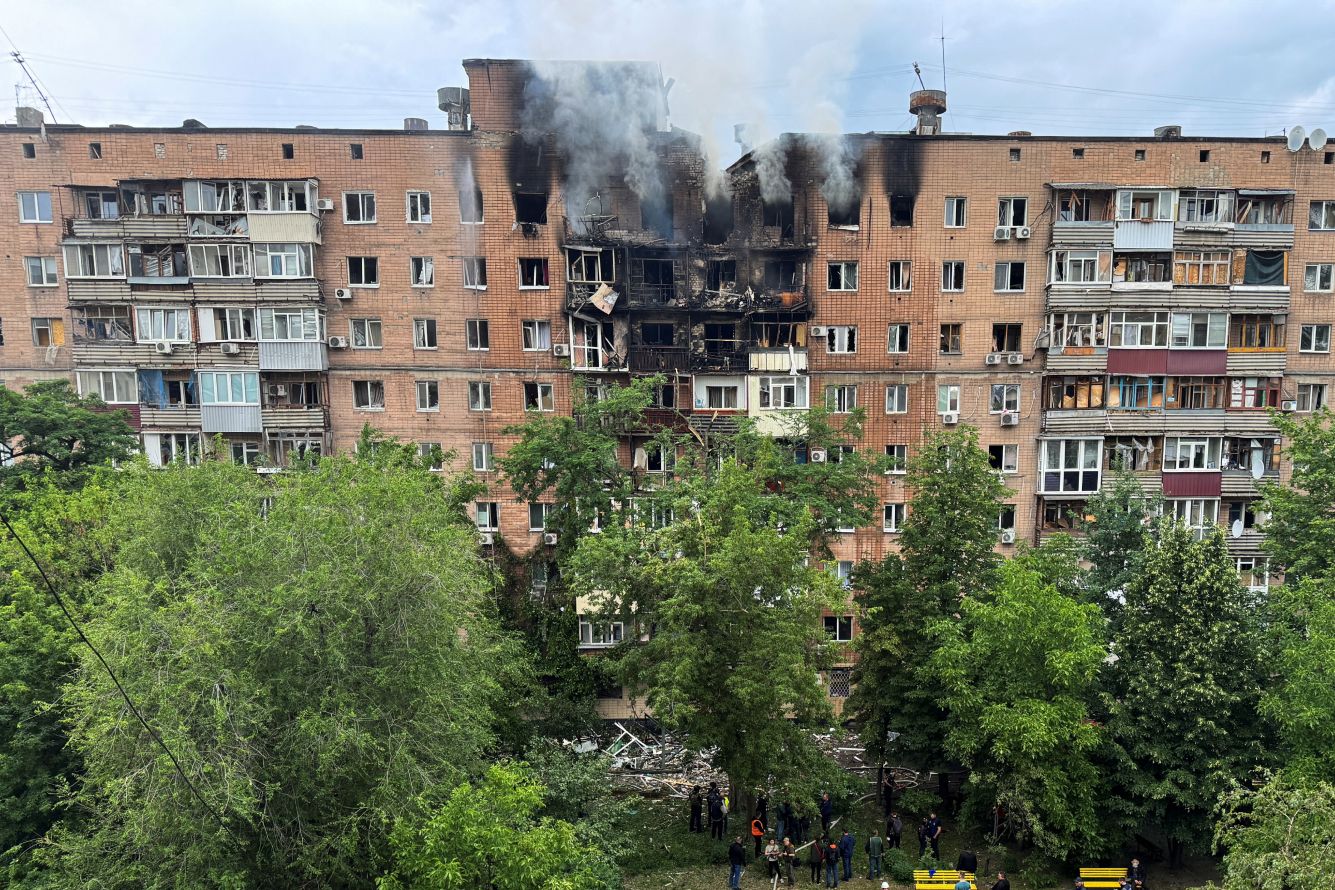
As a result of a drone hit, a nine-story residential building in the Osnovyansky district of Kharkov received significant damage. The attack caused a fire in 12 apartments on the seventh, eighth and ninth floors, with a total fire area of 600 square meters. The injured civilian was pulled out from under the rubble.
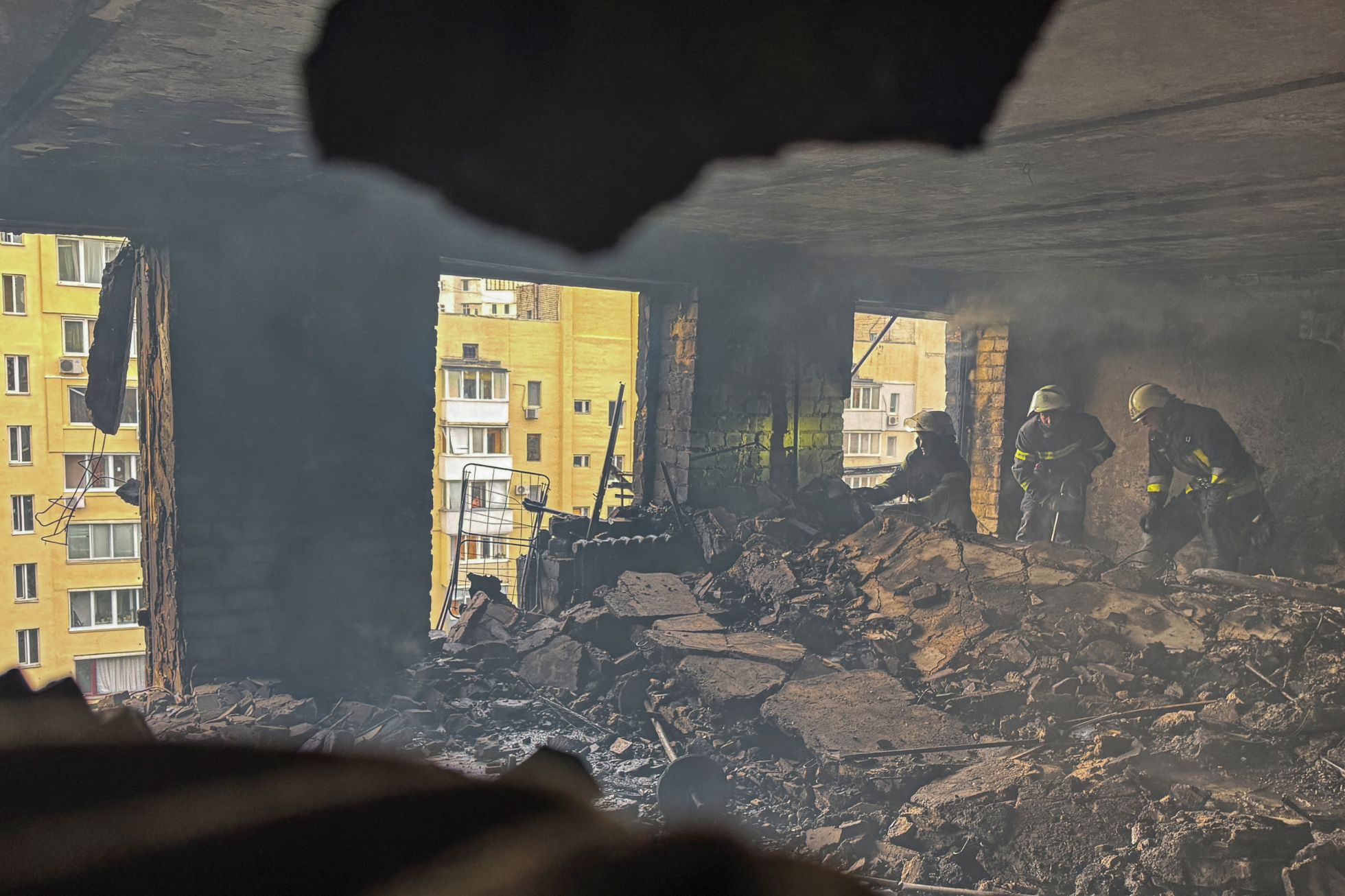
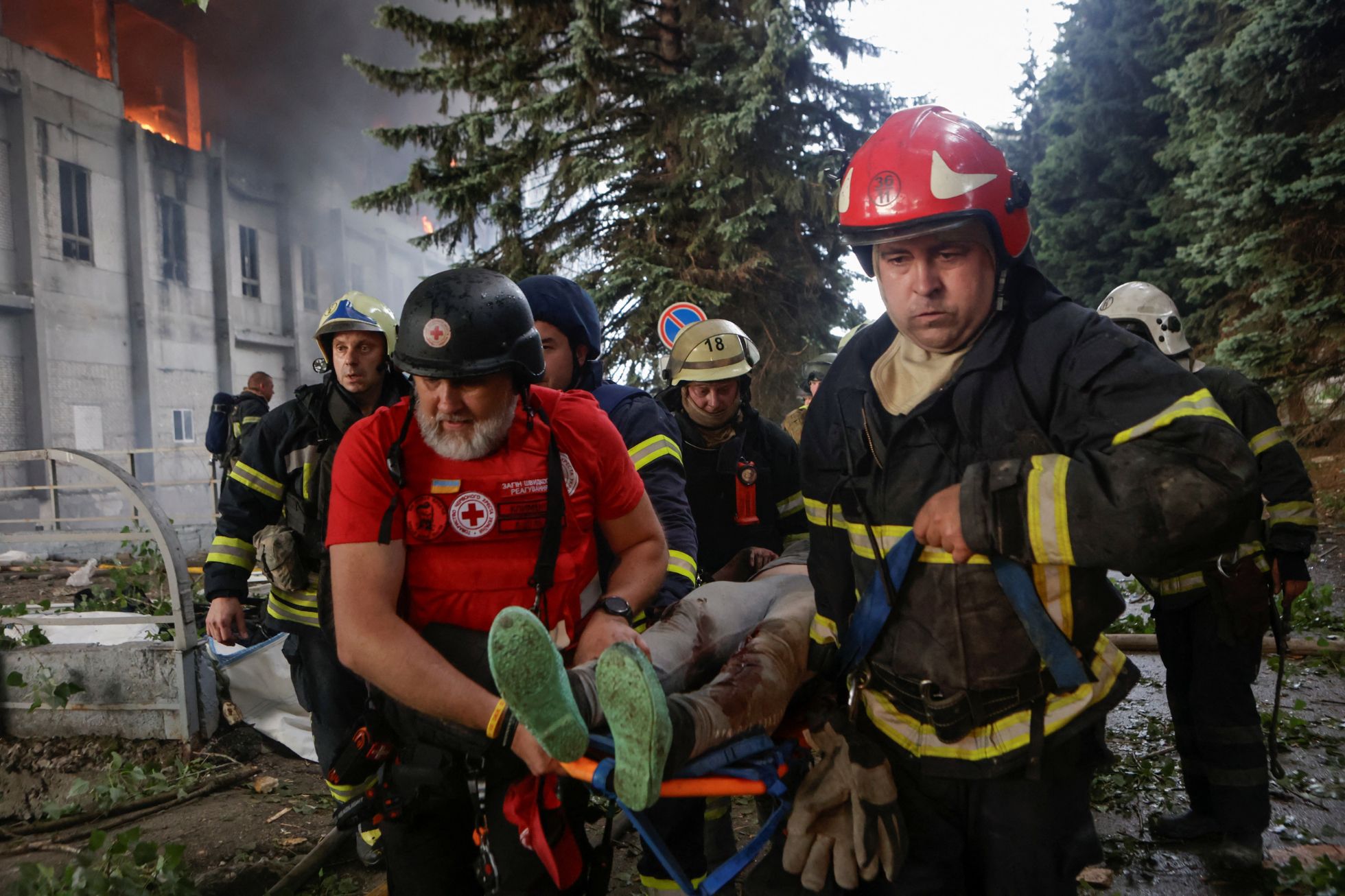
According to Ukrainian authorities, as a result of the attack, a large fire occurred on the territory of a civilian enterprise in Kharkov over an area of 10 thousand square meters. According to the head of the regional administration, the enterprise was attacked using 40 drones, four aerial bombs and one missile. Four workshops were hit. There may be people under the rubble; according to the regional prosecutor's office, six people are believed to be trapped.
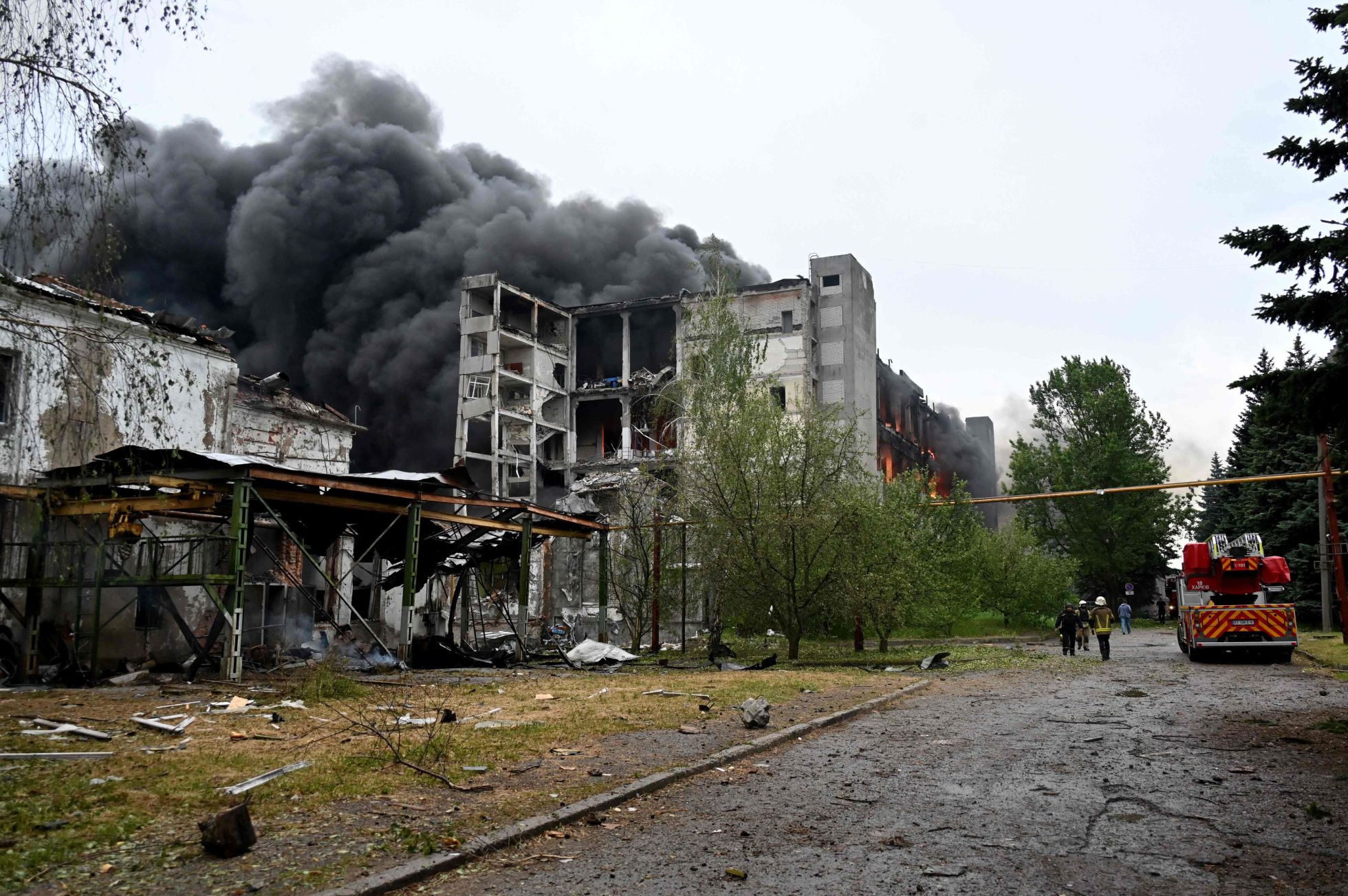
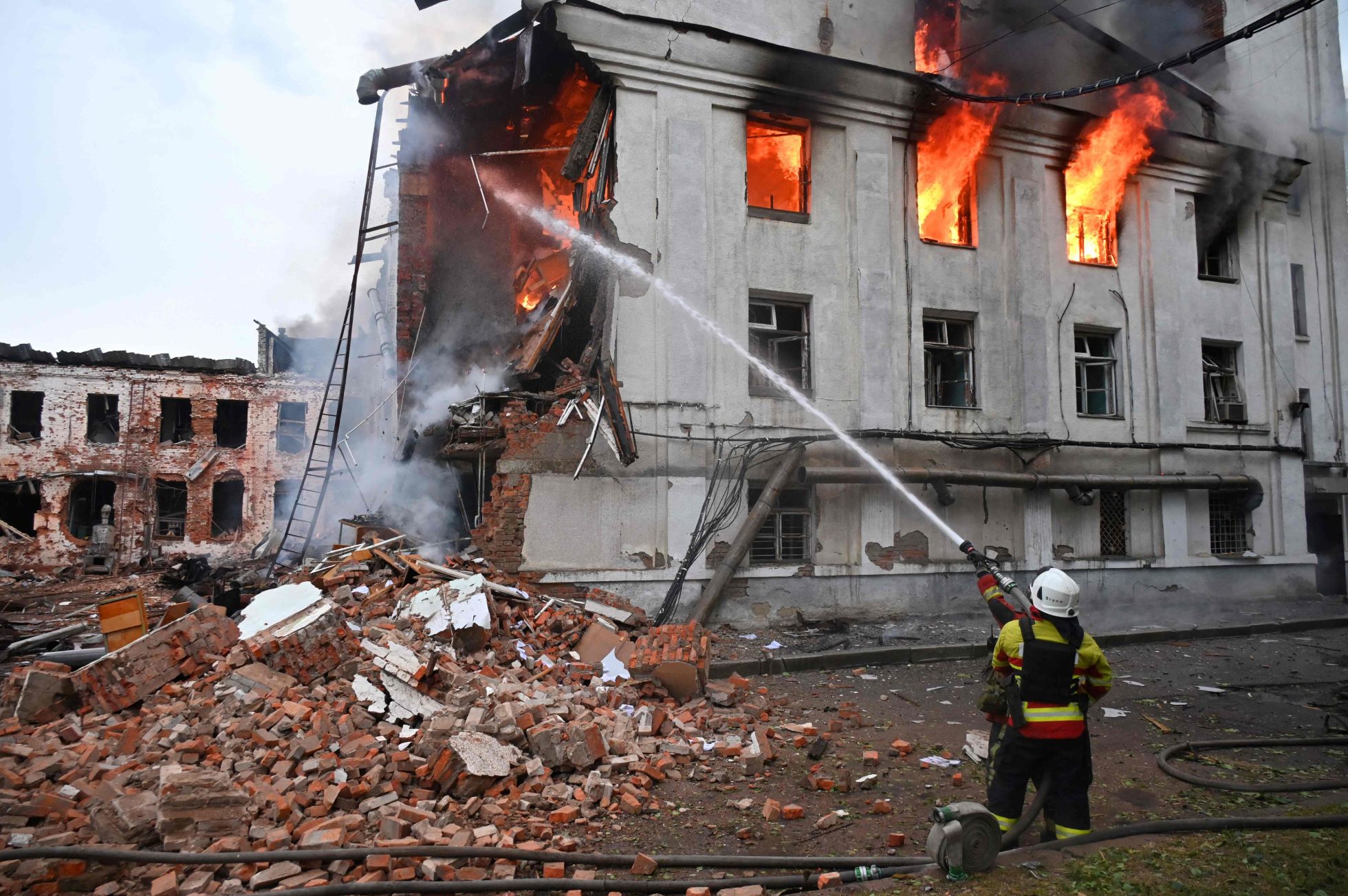
In total, according to the regional administration, as a result of the strike in Kharkov, two apartment buildings, two private houses, two businesses, two cars, an administrative building and a children's music school were damaged.
According to the latest data, three people were killed in Kharkov and 21 people were injured, including a baby and a 14-year-old girl. In Kupyansk, Kharkov region, a 64-year-old civilian was wounded during shelling.
In Dnepr, according to Ukrainian authorities, as a result of the Russian attack, infrastructure, an enterprise, an educational institution, garages and cars were damaged, windows were broken in multi-storey buildings, and two civilians were injured. In Kherson, two multi-storey buildings were damaged as a result of shelling, killing two civilians - a married couple.
In total, as reported by the Air Force of the Ukrainian Armed Forces, the Russian military used 206 drones and nine missiles overnight: six Kh-59/69 aircraft missiles, two ballistic missiles launched from the Iskander-M complex, and one cruise missile launched from the Iskander-K complex. According to the Armed Forces of Ukraine, the Ukrainian military shot down or intercepted 167 drones, and also shot down seven missiles: six aircraft and one cruise.
The Ministry of Defense of the Russian Federation stated that on the night of June 7, the Russian military attacked enterprises of the military-industrial complex of Ukraine, assembly shops for attack drones, maintenance centers, repairs of weapons and military equipment, as well as ammunition depots of the Armed Forces of Ukraine. “The target of the strikes has been achieved. All designated targets were hit,” the Russian side said.
Russia said Ukraine had undergone an exchange of prisoners of war and the bodies of dead soldiers. Kyiv accused Moscow of “manipulation”
Assistant to the President of the Russian Federation Vladimir Medinsky, who heads the Russian delegation to negotiations with Ukraine on the settlement of the war, claims that the Ukrainian side “unexpectedly postponed indefinitely both the acceptance of bodies and the exchange of prisoners of war.”
The parties agreed on this exchange during the second round of negotiations held in Istanbul on June 2. According to Medinsky, Russia on June 6 “began implementing a humanitarian action” to transfer the first bodies of dead Ukrainian soldiers to Ukraine. The head of the Russian delegation said that “the first batch of frozen bodies of Ukrainian Armed Forces soldiers” was brought to the exchange area in refrigerators, a total of 1,212 out of six thousand bodies. The remaining bodies are still on their way to the site, Medinsky said.
An aide to the Russian President said that a group of Ukrainian negotiators “for some reason did not even arrive at the exchange site.” According to Medinsky, various reasons for the delay are cited, “and quite strange ones.” He did not specify what it was about. Medinsky called on Ukraine to “strictly adhere to the schedule and all agreements reached, and immediately begin the exchange.”
The Russian presidential aide also said that Russia handed over to Ukraine the first list of 640 prisoners of war for exchange.
The Ukrainian Coordination Headquarters for the Treatment of Prisoners of War, in response to Medinsky’s statement, called on the Russian side to “stop dirty games and return to constructive work” in order to implement the agreements of the two countries in the coming days.
Commenting on the repatriation of bodies, the Ukrainian headquarters said that the parties had previously agreed on the exchange of bodies of the dead, but had not determined the date when they would carry it out. “Instead of consistently implementing the agreed algorithm, the Russian side resorted to unilateral actions that were not agreed upon as part of the joint process,” the headquarters said.
Speaking about the exchange of prisoners, the headquarters reported that Ukraine sent Russia lists, which, in accordance with the agreements reached in Istanbul, included “seriously wounded, seriously ill, according to the ‘all for all’ formula, as well as young military personnel.” At the same time, Russia, as stated at the headquarters, “transferred other lists that do not correspond to the agreed approach.” “Ukraine has provided appropriate comments, and now the next step is expected from the Russian side,” the headquarters added.
The Ukrainian Coordination Headquarters stated that “instead of constructive dialogue, we are again faced with manipulation and attempts to use sensitive humanitarian topics for information purposes.”
A source from RBC-Ukraine, informed about the process of preparing the exchange, said that Russia is “trying to put pressure on the negotiating group” of Ukraine. “The exchange is being prepared, and any details can greatly affect this. This is a sensitive issue,” said the publication’s interlocutor.
Update. On the evening of June 7, the representative of the Russian negotiators, Lieutenant General Alexander Zorin, said that the exchange of bodies of those killed on Saturday did not take place. “Unfortunately, no one from the Ukrainian side contacted us today, the action did not take place,” he said, standing in front of a refrigerator truck with the bodies of dead Ukrainian soldiers. According to him, Russia is waiting for official notifications from Ukraine that the exchange has been postponed until next week.
The day before, Z-channels announced that Ukraine had disrupted the exchange of bodies of dead soldiers. The Ukrainian Coordination Headquarters then stated that preparations for the exchange were continuing.
War through the eyes of Meduza readers
Valery (Volchansk). There is nothing left of my city now. Whether the war ends or not, nothing will change for me; I have nowhere to go.
In the fall of 2022, I drove my car to Shebekino for gasoline and shopping. I had with me two bills of five thousand rubles, a passport and nothing else. But I didn’t go back again, because there was a retreat [of the Russian army] from Volchansk, and they were no longer allowed to cross the border in that direction. I'm wearing shorts, driving, with a few rubles and that's it. I approached the cops and asked what I should do - they told me to go to the temporary detention center . I lived there for a couple of days and was sent to another region, also to a temporary temporary detention facility. I went by car and filled up the last gas. It's cold, and I don't even have pants or a jacket. At the temporary detention center I grabbed hold of a volunteer boy - they had brought something for someone - I asked: “Brother, at least send me some pants, an old jacket, whatever.” A week later, other girls brought a whole package, someone specially collected various things for me, they even put new panties in there, although I didn’t ask.
I have an ex-wife in Russia, we separated badly, didn’t communicate, but then we got in touch, and she also helped - [she and her new husband] found me a job, let me stay with them for a few days while I was looking for housing, and lent me money for rent until my first salary.
Neighbors from Volchansk first looked after my apartment, then they said: “If you are not a traitor, come here now and live here. And those who live in the Russian Federation are traitors.” Although these neighbors managed to be the first to get Russian passports for themselves while the city was under the Russians, but I didn’t have time. Then they started writing nasty things, then they sent a video of a man from Kupyansk being killed for collaborating with the Russians. They said it would be the same with me. Then my telegram was leaked into some database, like I’m a traitor, strangers started writing me all sorts of vile things, threats, insults.
And it turns out that where I am an enemy, at least everyone helps me, even my ex-wife (and when we separated, we almost wished each other death). And from home they write only nasty things and insults. I look at this and don’t understand who I am, whose I am, who I’m with. There was nothing left, the war took everything.
Share your thoughts about the war
"Jellyfish"