In early June, the head of just Russians, Sergei Mironov, was not the first to invite Vladimir Putin to remove the moratorium on the death penalty in Russia since 1997. And although, according to surveys of recent years, the number of supporters of the highest punishment is reduced in society, more and more often various statesmen talk about the need to return it. In 2025, in Russian online cinemas, the premiere of the series “Autsors”, the events of which took place in 1996. According to the plot, colony officers in Kamchatka organize “business” - sell the right to kill criminals to the relatives of their victims. The point in the ominous “outsource” is set by the presidential decree on the introduction of a moratorium on the death penalty.
The New tab publishes a text from the now closed magazine "Results". Masha Hesse, shortly before the introduction of the moratorium, spoke with the prisoners sentenced to the highest degree of punishment, as well as with colonies, judges and deputies - about whether the state has the right to take life from a person and why life imprisonment in every sense is better than the death penalty.
This story “New tab” publishes in the section “ Retro-Scope ”. In it, we post materials from already closed independent publications, whose texts we consider still interesting and relevant.
The material “ Rescue Execution ” was published in December 1996 in the weekly social and political journal “Results”, which was published in Russia from 1996 to 2014. The full archive of the publication, like other materials of independent Russian media over the past twenty -odd years, can be found on the website of the archive of Russian independent media Rima .
If you want to propose your story for the Retro Entities, write to a friend of the new tab editorial staff or on Hello@thenwtab.io
An experienced judge sees such things a mile away. There are several victims, aggravating circumstances are a complete set. We will have to, then, “smear your forehead with a green”, as the judges are expressed. Make a death sentence. There are judges who do it with pleasure. There are those for which there is nothing more tragic.
The first six years of work in the Pskov Regional Court, Vyacheslav Surov successfully avoided such cases. Then, as he recalls, "those around them began to notice." Finally, in 1992, the judge Surov had to take up the consideration of the case, which he determined immediately - should have ended with a death sentence. The accused by last name Petrov raped two women-sisters along with two friends and stabbed them. Before their eyes, he ripped off his stomach of their fourteen -year -old brother, who died in terrible torment. All three rapists were drunk, which was aggravated by guilt. In court it turned out that Petrov was guilty of another murder.
“My arms and legs trembled while I read the verdict. After that I went out into the deliberative room and drank a glass of vodka, not snacking, and did not get drunk, although in general I am a nonsense man. Yes, and write down, ”adds Vyacheslav Surov. “The court, taking into account public danger, could not fail to bear the death sentence.”
Two years passed before Petrov's case reached the Supreme Court, which left the sentence in force. The judge Surov was sure that Petrov was doomed: only a commission on pardon under the president remained. But in 1994 the presidential decree came.
“I remember him literally, because he was very simple,” says Surov. - “Out of reasons of humanity to pardon Petrov.” I am grateful to the president for taking blood from my hands. And now my hands are clean. "
Subscribe to the “New tab” in telegram. There we tell everyday stories from the regions of Russia
For reasons of humanity
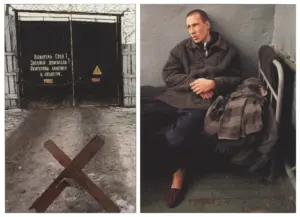
- Well, what does this mean “out of reasons of humanity”? - one of the employees of the colony of special regime in the village of Lozva in the very north of the Sverdlovsk region asks. This is one of the two colonies in Russia, which contains people who are replaced by a life sentence. So far, sitting in special units, I read the personal affairs of the "lifelongs", the jailers chat. - And so on every pardon: “For reasons of humanity, for reasons of humanity!”
“And this is just a stamp,” Major Vladimir Penkegov, deputy head of the colony for the educational part, answers wisely. - As the stamps used to be, and now.
It is really difficult for professional jailers to understand what this is a new category of prisoners. Firstly, why sweet them? When meeting with me, the head of the penalty department of the Sverdlovsk region, Ivan Zharkov, without delaying a minute, says: “My personal position as a person who has worked for 32 years in this system is that the bandits must be shot. Before the trial. In place. A person who took up a weapon must be destroyed. ”
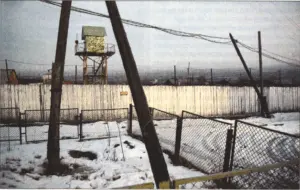
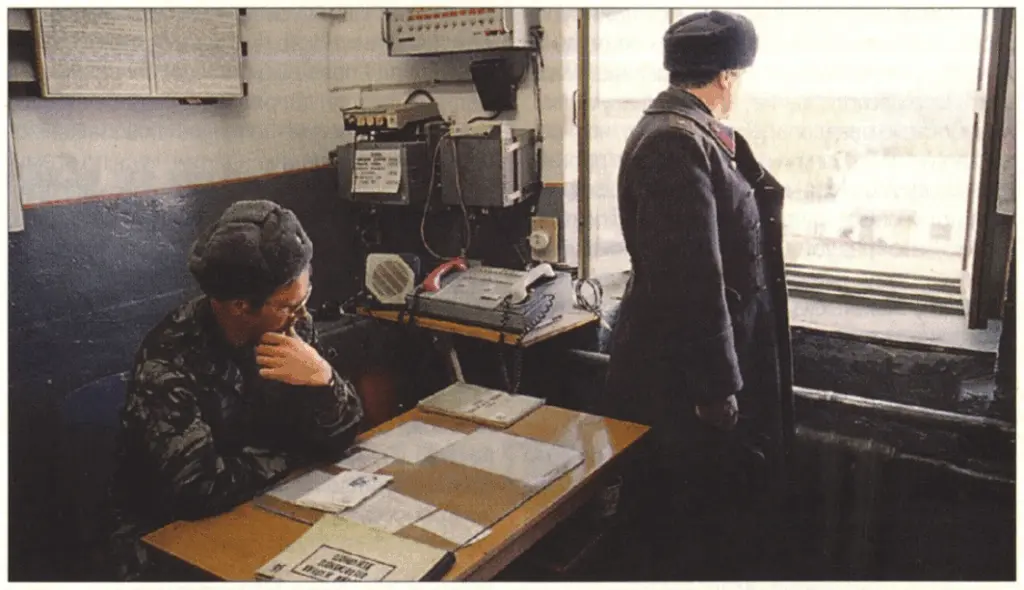
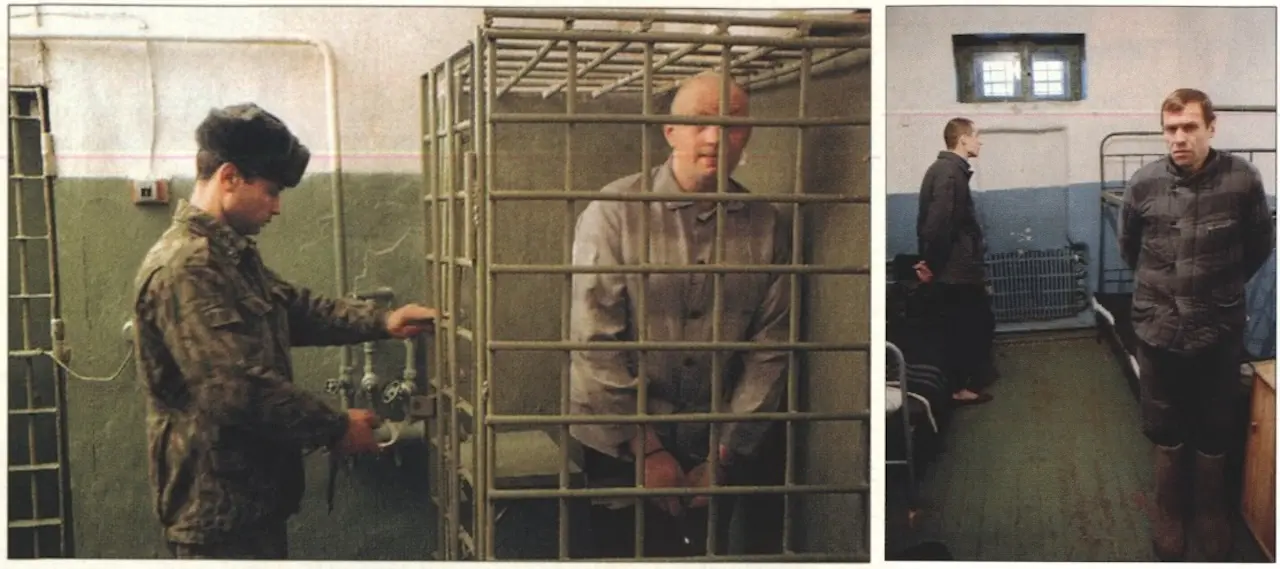
But if the president with his commission has come up with the head of riding the killers from death, then what kind of life awaits them? A lifelong conclusion in modern Russia looks something like this: life in cells from one to four people without any work, for walking they take a bristly into a tiny, darkened from all sides (even from above) a courtyard. Such walks last, as a rule, less than an hour a day. In Lozva, prisoners are taken out of need once a day, at five in the morning. In the White Lake colony in the Vologda region, lifelongs are not allowed. In Lozva, they have two three-day and four short-term dates per year, but because of the remoteness of the colony (she is in the taiga, 780 kilometers from Yekaterinburg) even to those prisoners, which the relatives did not refuse, almost no one comes. For years, the prisoner sees anyone but his cellmates (if any), guards and the chief of the detachment. All sick, almost half - tuberculosis.
In almost all countries where there is a lifelong conclusion, it is conditional, that is, the prisoner can expect that if he behaves well, then after how many years he will be released. True, in some US states a special sentence is practiced-"lifelong conclusion without the right to parole." In Russia, until the very recent time, life imprisonment in all cases was interpreted literally until his death; Both convicts and their guards call him "shooting in installments." Even hopes for changing the conditions of maintenance have no such convicts. In any case, until the legal base of life imprisonment is developed.
For modern Russia, life imprisonment is a new phenomenon. However, life imprisonment was already provided for by the Judicial Sciences of 1550, and in the XVII century such a sentence appeared as unlimited hard labor. Subsequently, the Bolsheviks, who planned to replace punitive measures by educational, lifelong conclusion canceled. The current Criminal Code does not provide for such a punishment (for a specific crime). This partly explains the huge number of death sentences carried out in Soviet times (in 1985, 654 people were executed in the USSR, in 1986-666). The maximum term of imprisonment allowed by the Criminal Code is 15 years; The judges, who chose among the only 15 years of conclusion and the death penalty for the killer of several people, had to choose the death penalty.
In 1992, President Yeltsin formed a pardon commission led by writer Anatoly Posnovkin, and an amendment was introduced in the Criminal Code to assign a life imprisonment in the order of pardon sentenced to death. However, specific articles of such a measure of punishment in the Criminal Code still did not provide for, so that some judges began to say people to the death penalty in the calculation that the commission would replace the sentence. The calculation was usually justified: the commission was satisfied with the vast majority of petitions for pardon, and the president most often accepted the recommendation of the commission.
In the new Criminal Code, which will begin to act in January 1997, finally prescribed the possibility of life imprisonment. The new code provides for the death penalty for five corpus delicti - 26 less than the acting one - and allows the judges for the same crimes to be sentenced to life imprisonment. What will have to be in handy for judges, since six months ago the mercy commission stopped considering the petitions of suicide bombers.
Anatoly Postakkin explains that since March 1995, the president began to reject all recommendations on the mercy of the sentenced to death. By the summer of 1995, Boris Yeltsin rejected 86 petitions about pardon. Then the members of the commission found some formal reasons to stop considering such cases, thus “freezing” them. The entry into the Council of Europe demanded the signing of the contract from Russia, according to which acting death sentences should immediately stop. Following this, the commission dared to submit petitions for the pardon of 31 more convicted. All of them were rejected. The commission again stopped considering the affairs of the suicide bombers.
With the advent of Nikolai Egorov, the Presidential Head of the Presidential Administration, the commission for pardon, was out of work at all: the administrative Czech arranged by Egorov allowed officials to file affairs with his own recommendations that were not agreed with the commission. Thus, the petitions of the pardon of another 20 convicts were rejected. With the advent of Chubais, says Protekin, the relations of the commission with the administration improved again, and the actions of the commission stopped bypassing. So now the pardon commission safely continues its policy of humane "red tape". “If we had not stopped considering cases,” says Posnovkin, “then we would have blocked last year’s version with its 86 executions. This year we would not have 53 executed, but more than a hundred. ”
"Frozen" are waiting
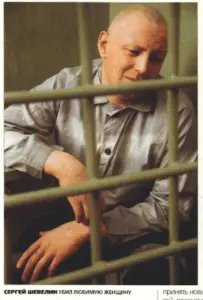
- Do not live dejectedly, do not regret what it was, do not guess, what will happen, take care, what is. I remembered such a rhyme, ”the thirty -year -old Sergei Shelein, sentenced to execution in July 1995 and now waiting for his fate in the Yekaterinburg investigative isolation ward, informs me. Shevelin, Dylda-Vorchak, for 15 minutes, trying to conquer my location, chatting incessantly, not taking care of belief, assures that he was “disappointed in everything” and did not even write a petition for pardon, that “it never hurts to hope” and he waits for him to have mercy (by the request) that “I was also sorry for” that I deserve it and “sorry for it,” Here innocent people suffer - I hoped that at least the court would figure it out. "
The fact that he repented, Sergei Shevelin does not even try to convince me. “Well, killed. Well, how did I do it? I loved a woman, she left me, and I had to - it so that I killed her, my roommate, and there people intervened, fell under a hot hand. ” From the sentence, Shelinh follows that he really burst into the apartment of his former cohabitant, stabbed her, stabbed her with a knife of her new boyfriend, and at the same time killed an old woman and a neighbor and crippled two neighbors who jumped out to the noise.
The lifelongs who have already served their “under the tower” say that Shelinin’s relatively optimistic mood is typical for a person who is waiting for a shooting not so long ago. Psychologist Mikhail Kochenov, a member of the mercy commission, says that the petitions for pardon often begin “for the repose”, and end “for health”: the allegedly repentant killer shifts the blame for the victims, society, and circumstances.
Later, as lifelongs say, there is a moment of repentance. For many, he turns into an attempt to suicide and, it seems, for the majority - an appeal to religion.
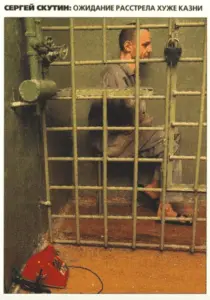
“I have no hope already,” 32-year-old Sergey Skutin, a small, who covers his mouth, full of rotten teeth, half-shifting. I don’t know how others, but I am already, well, in general, I have nothing to be proud of.
Skutin says, and his guards confirm that he reads a lot of religious literature. “I did not even know what the Bible was. And now for me no material values mean anything. ” Before the murder, the scatting twice fell in the colony for theft. In 1992, he again climbed into someone’s house at night, wanted to steal a tape recorder and something else on trifles. At the crime scene, he was found by a 10-year-old boy, the son of the housewife of the house. Scatin hit the child and, running away, settled the house. The boy died, his mother received heavy burns. Sergei Skutin has been waiting for an execution for more than three years. The Supreme Court upheld his sentence, so now the word is behind the mercy commission. Skutin, apparently, suspects that the refusal from the commission has already come. “They don’t tell us if they didn’t have mercy,” he explains. “Only before the shooting.” They can take it off on any night, usually come at three hours.
Today, 455 people of investigative insulators throughout Russia are awaiting decisions on their petitions for pardon. They are preserved by the inaction of the mercy commission, which established the same moratorium on the execution of death sentences that Russia promised the Council of Europe.
History with moratorium
What is necessary for Russia, and what is not very? Complex question. For example, the obligations are obligatory or not quite? In one of his interviews, the chairman of the Duma Committee on International Affairs, the vice-chairman of the Parliamentary Assembly of the European Council Vladimir Lukin called some obligations given by Russia to the Council of Europe, “ridiculous”, and some “undeniable”. However, the position of Lukin to cancel the death penalty is unambiguous: the obligation must be observed.
There are other opinions. “Maybe we promised too much the Council of Europe? - asks the professor of the Institute of Legislation and Comparative Law Felix Reshetnikov. - And we do so much for them. Thank you for this. ” This replica sounded during the parliamentary hearings on the bill "On the Moratorial for the Fulfillment of the Death Health."
Domestic experience shows that it is possible to put the country's signature under the prestigious international agreement and simply not fulfill it. So it was, for example, with the 1975 Helsinki agreements. Democratic Russia is in a familiar position: when I do not want to fulfill the obligations, long -developed techniques are used.
Anatoly Postalkin claims that in the transfer of the conclusion on the application of Russia to join the Council of Europe, received by the Commission on Cl Heads from the Foreign Ministry, the words “from the day of the entry” were allowed to establish from the day the moratorium entry into the execution of deaths. And during the discussion of the application at the European Council, the speaker used the data provided to him by official Russian sources - apparently also a Foreign Ministry, and perhaps the Ministry of Justice: in 1995, he said, 10 people were executed in Russia. In fact, there were 86 of them.
Despite the fact that, according to Lukin, representatives of the Council of Europe are increasingly expressing their dissatisfaction with Russia's non-compliance with the obligations for nine months, the Council of Europe is unlikely to be able to somehow punish Russia. Although the theoretically unscrupulous member country can be excluded, in reality, the European Council counts on the honor of each of the participants and the unwillingness of the countries to drop its international prestige.
It is unlikely that this will be concerned about the deputies of the State Duma, who in December will have to consider the bill on the introduction of a moratorium on the execution of the death penalty. Even the deputies of the Yabloko faction did not immediately support the bill, although it was developed under the leadership of their colleague in the faction of Valery Borschev. The probability that the Communists, who voted for joining the Council of Europe in compliance with all conditions, as well as the Zhirinovites, who voted against then, will now vote against the moratorium is large enough. And in their own way, in a deputian, they will be right: public opinion polls show that most Russians do not want the abolition of the highest punishment . If the Duma does not approve the bill on the moratorium, the word will remain with the president who can introduce a moratorium by his decree. However, immediately after Russia joined the Council of Europe, Boris Yeltsin did this. On May 16 of this year, he signed only a decree “On a phased reduction in the application of the death penalty in connection with the entry of Russia into the Council of Europe”, which recommended that the Federal Assembly rather adopt a new Criminal Code with fewer articles providing for the death penalty.
The compilers of the new Code split on the issue of death, but ultimately decided, according to one of the compilers of Professor Sophia Kelina, that "this is generally not a legal problem, but a moral problem."
What is this problem?
In fact, it is impossible to separate moral considerations from the legal execution. All the basic arguments “for” and “against” the preservation of the highest measures appeal to both legal and moral concepts. The main question is whether the state has the right to deprive a person of life in general. From a legal point of view, the answer is unexpectedly simple. The Constitution of the Russian Federation reads: "The fundamental rights and freedoms are inalienable and belong to everyone from birth." Inalienable means cannot be selected by the state. Of course, the first and main right is the right to life. Более того, в статье 20 части 2 Конституции указано, что смертная казнь сохраняется временно, и вплоть до отмены она может назначаться только в тех случаях, когда обвиняемому было предоставлено право на рассмотрение дела судом присяжных. Но пока суды присяжных введены в очень немногих местах, и смертные приговоры по-прежнему выносит обычный суд.
С точки зрения религиозной морали ответ на вопрос о праве государства убивать выглядит ещё проще: жизнь дана человеку Богом. «У нас чуть ли не все стали христианами, — отмечает заместитель председателя думского Комитета по делам религии Валерий Борщёв. — Почему же они забыли, что жизнь человека неприкосновенна?» А как же око за око? Борщёв напоминает, что это принцип мести, а не наказания. «Ведь как наказал Господь Каина? — спрашивает он. — Лишением смерти, то есть в переводе на наш язык пожизненным заключением. А является ли смертная казнь наказанием? Нет, это месть». Более того, как утверждает уже упомянутый Михаил Коченов, доктор психологических наук, заведующий отделом психологии правоприменительной деятельности НИИ при Генпрокуратуре, такая месть обычно не приносит удовлетворения близким убитого: «У них не наступает облегчения, у них теряется смысл жизни. Он для них состоял в том, чтобы добиться этой кажущейся справедливости».
Что же касается эффективности смертной казни как наказания, осуждённый Сергей Скутин берётся судить по собственному опыту: «Если человек не раскаялся в своей прожитой жизни, то что ему смертная казнь? Он может подумать, что это какая-то избавительница. А когда человек находится в течение многих лет в одиночной камере или здесь, ожидая расстрела, это ад, это хуже, чем смертная казнь. Днём и ночью содеянное всплывает — это не просто страдания, это натуральный ад».
Подпишитесь на «Новую вкладку» в X (Твиттер). Там мы пишем о том, как живут регионы России. Ещё бубним и материмся
Преступность и казнь
Пожалуй, самый ходовой сегодня аргумент в защиту смертной казни — это утверждение, что отмена смертной казни приведёт к резкому росту преступности, а её сохранение хоть как-то сдерживает преступника. Однако доказательств этой теории в российской уголовной статистике ХХ века нет. В советской России смертная казнь отменялась трижды: на несколько месяцев сразу после Октябрьского переворота, вновь ненадолго в 1920 году и на два года в 1947 году. «Все эти отмены и введения смертной казни никак не повлияли на уголовную статистику — темпы роста преступности ничуть не менялись, — утверждает Сергей Вицин, доктор юридических наук, председатель Комиссии по судебной реформе и член Комиссии по помилованию. — Рост преступности — двукратный, в два с половиной раза, происходил как раз тогда, когда у нас больше всего казнили. Преступность всегда росла в моменты дестабилизации общества и уменьшалась при наступлении относительной стабилизации» .
«Как специалист по криминологии я берусь утверждать, что в странах с более жестокими наказаниями больше всего преступников», — продолжает Вицин. Впрочем, что здесь курица, а что яйцо, определить трудно. Однако статистика тех американских штатов, где смертная казнь была отменена и потом введена вновь, свидетельствует о том, что именно её существование привело к росту числа тяжких преступлений. В штате Флорида смертные приговоры не приводились в исполнение в течение 15 лет — до 1979 года. В 1976-1978 годах количество убийств было самым маленьким в истории штата, а в 80-м подскочило на 28 процентов. В 1983 году штат Джорджия возобновил приведение в силу смертных приговоров, а на следующий год количество убийств подскочило на 20 процентов (в среднем по стране оно упало на пять процентов). Примерно то же происходило в других штатах, где возобновилось исполнение смертных приговоров.
Преступления содержащихся под стражей пожизненников — свидетельства способности людей действовать без оглядки на возможные последствия. Один в ярости на участкового, забравшего двух его приятелей в вытрезвитель, сходил домой за обрезом, явился на квартиру участкового и застрелил его. По его собственному утверждению, даже когда он увидел фоторобот, вполне похожий на себя, то не попытался скрыться.
Согласно статистике МВД, 80 процентов преступлений, повлёкших пожизненное заключение, совершены в нетрезвом виде.
Сергей Вицин добавляет, что «превентивная» логика требует казни одних ради устрашения других — что невозможно оправдать ни с правовой, ни с нравственной точек зрения.
Убить невиновного
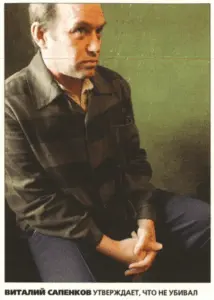
«То преступление, за которое меня осудили, я не совершал, — заявляет Виталий Сапенков, отбывающий пожизненное заключение в лозьвенской колонии. — Я не говорю, что я совсем невинный человек». Один из специфических российских аргументов в пользу отмены смертной казни — невероятно высокий процент судебных ошибок . Статистика в этой области противоречива, но Валерий Борщёв утверждает, что обычный для российских судов процент ошибок — 15, а во времена активной «борьбы с преступностью» эта цифра удваивается.
Как многие заключённые, Виталий Сапенков, осуждённый за убийство целой семьи — мужа, жены и двоих детей, — явно врёт, пытаясь оправдать себя. «Меня пригласили на встречу, потом мы пошли на квартиру, там я видел двух исполнителей, и я их описал даже и имя назвал одно, но никто их искать не удосужился».
Рассказ Сапенкова мало похож на правду, но ещё менее правдоподобным кажется описание его преступления, приведённое в приговоре. Согласно последнему, Сапенков не работал в течение полугода, скрывая это от жены. Он одалживал деньги и приносил их домой вместо зарплаты, объясняя, что остальное отдаёт приятелю, собирающемуся эмигрировать и оставить Сапенковым часть своего имущества. Когда Сапенков решил, что пришла пора предъявить обещанные вещи дома, то убил своего приятеля и его двоих детей. Затем, как заключил суд, Сапенков отнёс кое-какие вещи домой и вернулся на квартиру убитого, где дождался прихода его жены, изнасиловал и убил её, забрал ещё несколько предметов, а на следующий день вернулся с грузовым такси, чтобы перевезти мебель к себе. Тут его и поймали.
Во время следствия и суда Сапенков утверждал, что задолжал бывшему подельнику крупную сумму денег, и тот потребовал, чтобы Сапенков указал ему на подходящую для ограбления квартиру. Там его кредитор с напарником убили семью, а Сапенкова заставили перевозить вещи на его собственную квартиру, чтобы потом их оттуда забрать. Несмотря на то, что версия Сапенкова звучит убедительнее, чем версия, представленная суду, следователи, судя по приговору, действительно не удосужились найти и допросить тех, на кого указал сам Сапенков.
Сапенков провёл два года в ожидании расстрела и был помилован в 1993 году. «Если всё-таки установится у нас нормальная система в стране, — предполагает Сапенков, — то моё дело пересмотрят, и я выйду, потому что даже если мне дадут срок как соучастнику, то я его к тому времени уже отсижу».
Смертная казнь в Беларуси
На прошедшем 24 ноября республиканском референдуме был предложен вопрос: «Поддерживаете ли вы отмену смертной казни в республике?» По предварительным данным, 17,9 процента граждан проголосовали за её отмену.
За палача замолвите слово
Коронный аргумент отечественных противников отмены смертной казни — российское общество не готово отказаться от высшей меры наказания. Однако при том, что в половине стран мира смертная казнь отменена, в большинстве из них население в целом отмену не поддерживало. «Право никогда не должно идти за бытовым сознанием, — заявляет Валерий Борщёв. — Иначе мы должны были бы поощрять самосуд» .
Контраргумент сторонников отмены смертной казни — потребность смягчить нравы в ожесточённом обществе. В первую очередь это касается тех, кто непосредственно участвует в вынесении и исполнении смертного приговора. «Существование смертной казни превращает законопослушных граждан — судей и прокуроров — в палачей», — утверждает судья Вячеслав Суров.
«Представьте себе, что человек работает палачом, — предлагает Михаил Коченов. — Вот он приходит домой после рабочего дня. Что он должен сказать? Можно обставить это торжественно: «я привёл в силу приговор», или «я совершил акт правосудия», или «я воздал преступнику по заслугам». А можно сказать проще: «Я сегодня убил человека. Беззащитного. Безоружного. Он был опасен, когда он был вооружён. А я его убил, когда он уже никому ничего не мог сделать».
На каждого расстрелянного преступника приходится несколько десятков человек следователей, прокуроров, судей, судебных и правительственных чиновников, палачей, присутствующих при казни врачей, охранников и уборщиц — запятнанных его кровью.
Но именно в рядах МВД, прокуратуры и судей встречаются самые ярые сторонники сохранения смертной казни . Представители МВД, в частности, утверждают, что для содержания осуждённых на пожизненное заключение нет ни места, ни средств. С количественной точки зрения этот аргумент абсурден — сегодня в местах лишения свободы содержатся больше миллиона человек, и по расчётам Главного управления исполнения наказаний с отменой смертной казни это количество возрастёт менее чем на одну десятую процента. Однако самая обширная пенитенциарная система в мире действительно не знает, что и как делать с пожизненниками.
Воспитательные меры
Вне зависимости от того, когда будет введён мораторий на исполнение смертных приговоров и будет ли отменена в России смертная казнь, количество преступников, отбывающих пожизненное заключение, будет продолжать расти. Сегодня в России их около 200. Некоторые находятся в заключении уже больше 10 лет. Согласно новому УК, после 25 лет лишения свободы такие заключённые будут иметь право на условно-досрочное освобождение. При среднем возрасте 36 лет у большинства пожизненников нет надежды выйти на свободу.
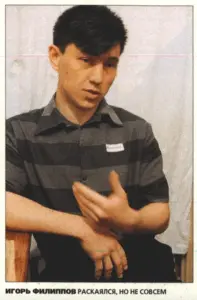
Один из самых молодых среди пожизненников лысьвенской колонии, 29-летний Игорь Филиппов, сидит уже шесть лет, из них три — в ожидании расстрела. В 1989 году он убил свою беременную жену. Спустя шесть месяцев убил старушку, заводскую кассиршу, чтобы завладеть хранившимися у неё ключами от сейфа с деньгами. Он утверждает, что на второй год «под вышкой» раскаялся.
В письме, написанном любимой девушке из камеры смертника четыре года назад, Филиппов был ещё более откровенен (письмо, почему-то конфискованное, подшито к его личному делу, орфография и пунктуация автора): «Я уже, если буду жить, не смогу жить так, как того требует общество. Вернее смогу, но частично. И в большой степени, буду жить так, как будет удобно мне… Мне очень просто дали понять, что я, я! человек, я ничто в этом мире, и что я должен ждать от них милостыни. Я должен ждать, пока колесо фортуны повернётся ко мне. Но я не тот человек, не тот! Я считаю, что человек должен иметь то, чего он заслуживает, что человек должен получить то, к чему он шёл, а раз ему не дают такой возможности, то человек должен бороться за себя, и пусть он начал жить не правильно, пусть я стал жить не по правилам, но всегда и во всяком правиле есть исключения. И не всякое правило защищает то, что оно предназначено защищать. И пусть мои взгляды будут несколько эгоистичными, но меня наврятли кто сможет в них переубедить».
«У меня сын — ему сейчас 11 лет, — рассказывает уже теперь Филиппов. — И я понял, что оставил сына без отца, без матери. Ну, кассира я не знал. Но я теперь понимаю, что можно было украсть деньги, никого не убивая. У многих бывают попытки суицида в момент раскаяния, но у меня никаких попыток не было, потому что я вспомнил, как общество ко мне отнеслось. В армии тебе дают автомат, мишень с фигурой человека нарисованной. Потенциальных убийц готовит армия. Я Евангелие читал, там написано: если ты думаешь о прелюбодействии, это уже грех. Представьте себе, меня 10 дней судили, горожане пришли, которые меня даже не знали, и кричали: „Убить его! Разорвать!“. Если бы не страх перед законом, они готовы были совершить убийство. А я в этой клетке. Чистое средневековье» .
… У начальника отряда, в котором содержится Филиппов, на каждого заключённого заведена аккуратненькая тетрадка. С интервалами примерно в месяц в ней записано: «Проведена воспитательная беседа с осуждённым». Начальник отряда Виктор Лопашев несколько ошарашен моим вопросом: в чём заключаются цели воспитательных бесед? "Goals? Ну чтоб он стал человеком в конце концов». А средства? «Ну разное там. Разъяснить ему надо. А то он считает — если мне положено там что-то, то мне должны. Приходится разъяснять положение в стране». У Лопашева — главного воспитателя пожизненников — среднее техническое образование, полученное в школе МВД по специальности «Лесозаготовка».
Поддержите авторов «Новой вкладки» Вы нуждаетесь в качественных и интересных историях из России, которые рассказывают наши авторы. А нам больше всего нужно ваше внимание, ваши реакции, ваша поддержка — и, да, в том числе материальная. Support

 Subscribe to the “New tab” in telegram. There we tell everyday stories from the regions of Russia