
Translated material
Two worlds plus three wars
Arithmetic of the Book Festival "Red Square", held in the center of the capital from June 4 to 7
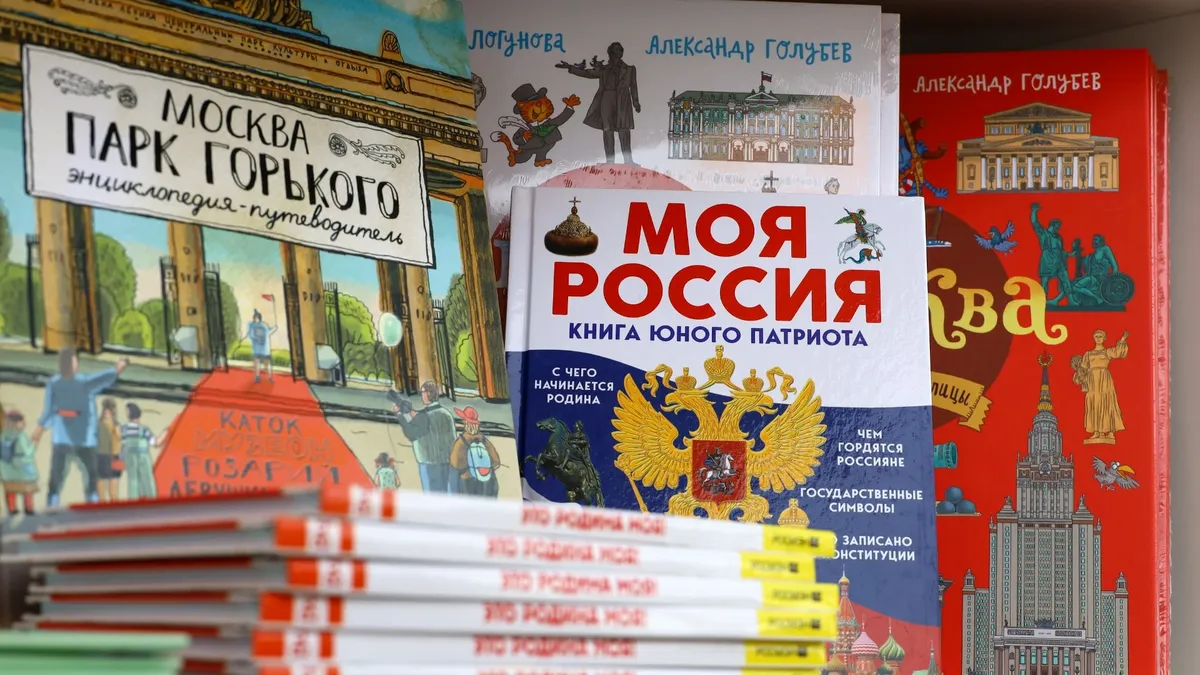
Photo: Oleg Elkov / TASS
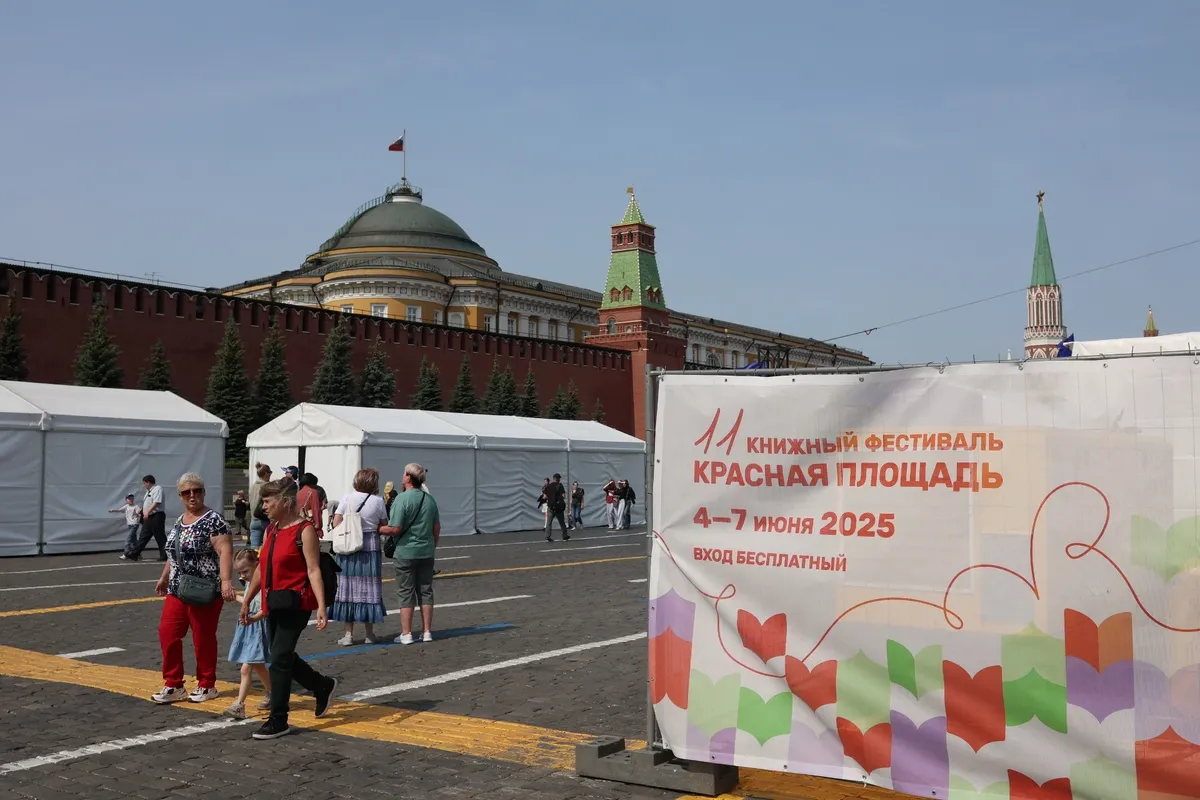
The Book Festival "Red Square", already on the 11th in a row, has predictably acquired a reputation as one of the most large-scale state events in the book industry in the past few years. Of course, there is nothing surprising in this-it is surprising more likely that in the first years after its founding in 2015 the festival did not have such an unconditional reputation and was quite objectively part of the three main capital's book exhibitions-fair exhibitions from Mimkvy and Non/Fiction. And the free entrance, dates in the early days of summer and some other pleasant bonuses made the festival even in some ways more attractive than their more authoritative and well-deserved competitors.
However, it is possible that now we can talk about the reverse trend: if earlier the “Red Square” sought the level of MMKVVI and non/fiction, today it may be possible that the main book trends are born in a place that is close to the main “decision center” in modern Russia.
One of the evidence of impressions
Even with a cursory examination of the stands of most publishers, books on his, the Great Patriotic War, the heroic past of the country and, as a whole, are subject to the definition of “patriotic”, are put up, to the expense of the novelties and other texts.
The same publishers who cannot boast of such a set of topics in their catalog are more likely to be represented nominally: so on at least the last day of the AD MarginEm Publishing House, who has experienced serious pressure from the state in recent months (in several independent book countries, the books of the publishers were removed during the searches of the security forces), was given to the neighboring stand of the publisher "Career-Press."
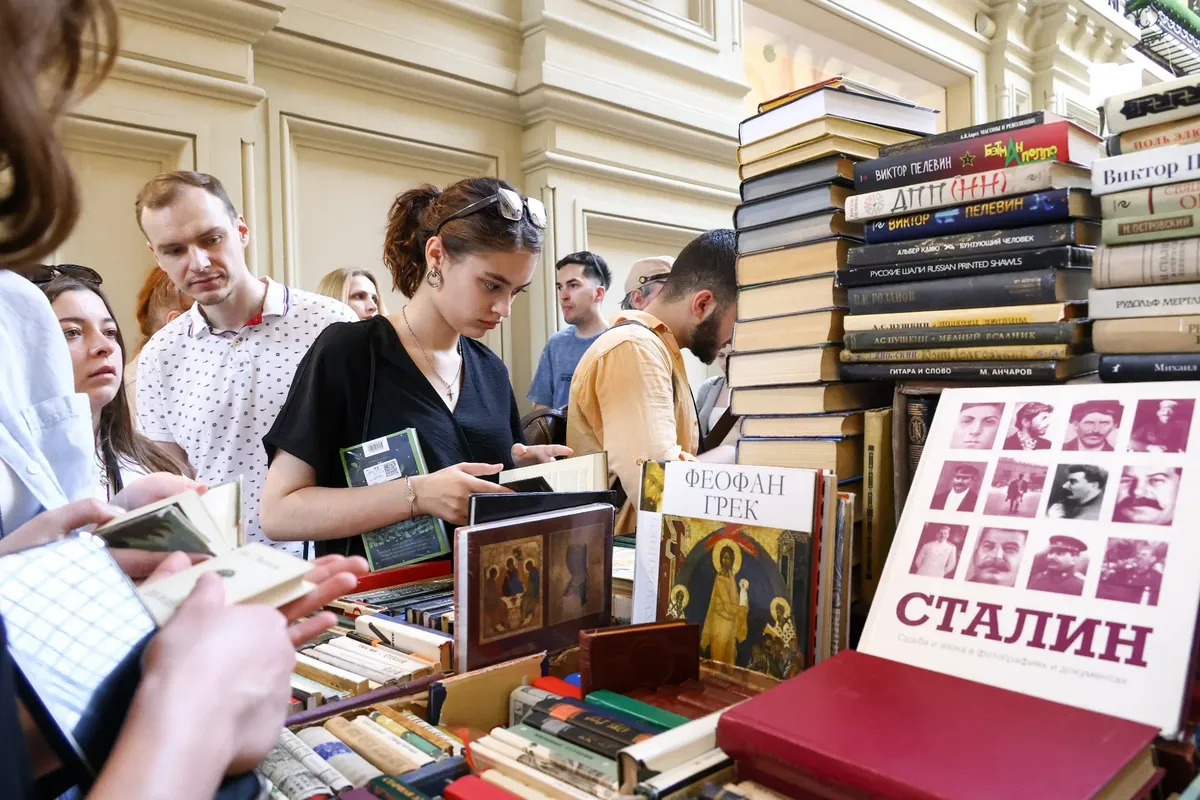
Although it is worth admitting that even those publishers who put the “right books” to the fore made it not quite for commercial reasons. It seems that the Red Square festival now now carries the functions of the showcase, where it becomes much more important to show for publishers than to sell. The main goal of this showcase is to protect yourself from suspicions of non -reduced. What you can’t do so that the random viewer does not horror at the sight of some books, like Sergey Stepashin in the Mariupol school library. In this regard, the regiments with books were not particularly indicative at the festival - a public program became indicative, within the framework of which several hundred meetings, lectures, discussions and concerts took place for four days.
The ideological center of the public program, of course, was the tent of the Russian Military History Society “History of the Fatherland”. On the first day of the festival, the work of the tent was opened by a book presentation under the eloquent name “Donbass - the heart of Russia”, and there is no doubt that for four days on this site, closest to the Lenin mausoleum, the most ideologically charged speeches about the past, present and future of the country.
On the last day of the festival, I managed to get to the presentation of the book of Vladimir Kiknadze with the ultimatum title “Victory over fascism. Falsification - no! " Here are a few scraps of phrases I heard during this meeting:
“The Soviet-German treaty was an act of real courage and state wisdom”;
“There was not a single episode in the history of World War II, which would not be falsified in the West”;
“My book is an attempt to reveal the soul of the Soviet people”;
“There is not just a war on the fronts, there is a war for the minds of our youth”;
“Many of our colleagues over the past 30 years have been dealing with the devil, and lied and lying!”;
"It is necessary to revive the traditions of SMERSH."
At some point, against the backdrop of these speeches, the monologue of Chlopushi from Yesenin’s poem “Pugachev” sounded. Really, I want to see this person!
The unifying theme of the festival this year is the “War and the World in Poetry and Prose”, which, of course, cannot surprise anyone in the year of the defender of the Fatherland and the 80th anniversary of the Victory, but at the same time even a little confuses his almost liberal extensiveness-was the word “peace” in this name? Or the organizers, in accordance with the common legend of the title of Tolstoy’s novel, did not mean “peace”, but “world”, that is, not the lack of war, but the entire planet and the world community? In any case, the overwhelming part of the events of the festival was dedicated to the first word, that is, the war in its various manifestations.
Two magic abbreviations - his own and the Second World War - of course, made up the semantic core of the public program, but the organizers did not fail to expand the military theme, logically concluding that the Russian military history contains almost all the most important things in the history of our country. On June 4, the festival was opened with a concert at which they performed the dramatic symphony of the composer Alexander Tchaikovsky “The Word of Igor’s Regiment” for the reader (Garmash), Alta (well, of course, Bashmet), symphonic and folk orchestras.
And even if the reckless campaign of Prince Igor ended ingloriously, the main thing in this special operation was love for the motherland, which means that all campaigns of the future should be justified by this irrefutable argument.
Among other vivid performances on the main stage in four days of the festival, in addition to the inevitable festive events in honor of Pushkin, one cannot fail to note the literary and musical performance according to the poem “New Russia Groz, Novorossia of the dream” of Elena Zaslavskaya, the presentation of the collection “Poisia of the Russian Winter” from the publishing house RT (the fourth presentation of the same collection on the main book Fair) and the presentation of the new novel Zakhar Prilepin "Tuma" dedicated to the life of Stepan Razin.
However, while on the last day of the festival, the crowd of people sought to get closer to the main stage to listen to how Zakhar Prilepin made a popular adventure novel like “three musketeers” and “Treasure Islands”, another crowd - in a much more limited space - still surrounded the most popular Russian author - probably the most popular Russian author - probably the most popular Russian author - probably the most popular Russian author. The tireless Daria Dontsova to congratulate her on her birthday.
The parallelity of these two performances could not but suggest that with all the desire for uniformity under the banners of state patriotism and loyalism, such large events as the Red Square festival will always create internal contradictions like this. After all, Russia Zakhara Prilepin and Russia Daria Dontsova, whatever one may say, are two completely separate worlds. And if there were at least some islands at this festival, reminiscent of the world as the absence of a war, then the picture of dozens of readers of Dontsova, who addresses her on her affectionate “Dasha” and want to congratulate her beloved writer on her personal holiday, was exactly from this series.
There was another picture - in the afternoon, on the last day of the festival near the small scene, several dozen women of different ages unexpectedly united in a round dance and sang the popularly beloved hit of Oleg Mityaev, “How great we all gathered here today”. It seems that such a scene could look good in the novel by Vladimir Sorokin about post-Soviet Russia, but in the atmosphere of the entire festival it also became a comical, but necessary reminder of some other world, where endless thoughts about the war, history, internal and external enemies and other similar matters are much less interested in the opportunity to make a round dance.