
Translated material
Great Machinator
Nikas Safronov opposed the war, but criticized those who left, and Putin gave his picture to Donald Trump. We decided to write a portrait of the painter himself
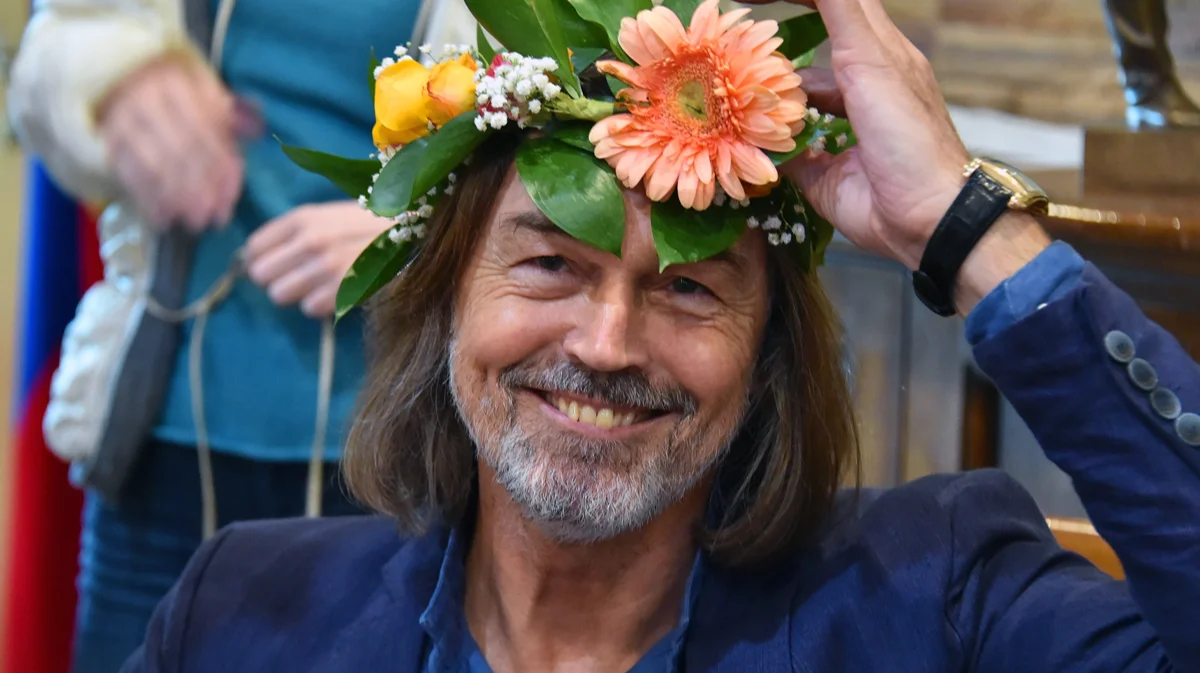
Artist Nikas Safronov, 2015. Photo: Anatoly Zhdanov / Kommersant / Sipa USA / Vida Press
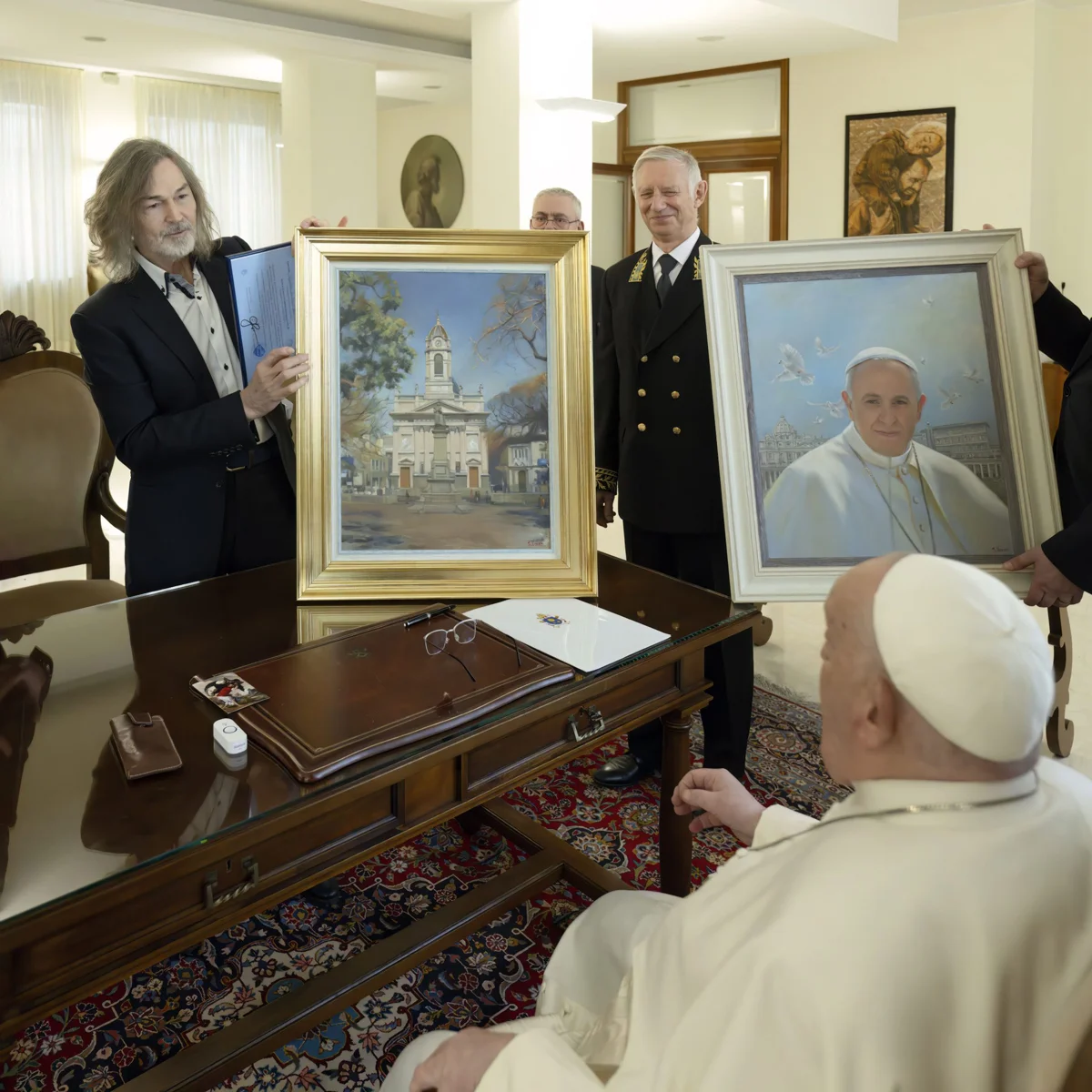
For many years, Nikas Safronov is called the court painter of Putin's Russia, and in 2025 there is still demand for his work. It was Safronov who wrote a portrait of Donald Trump, which Vladimir Putin presented to the American president in March. A month before, the artist met with Pope Francis I, handed him his two paintings (portrait of Francis I and the view of the Argentine Temple, where dad began the service) and allegedly agreed to hold an exhibition in the Vatican.
For art historians, the name of Safronov became a household name - the personification of a bad snocus and emphasized pleasing to the customer. Detection in the Foundation of the Pushrooms named after Pushkin (later it turned out that not mainly) Safronov’s canvas, the “Pushkin and Penguins,” provoked a scandal this spring with this spring. In 2008, on the air of the Gordon Quixote current show, the painter’s decisive criticism was performed by the ex-director of the Pushkin Museum Marina Loshak, the many-year-old director of the Multimedia Art Museum Olga Sviblova, the current head of the art department of the XX-XXI centuries. Tretyakov Gallery Natalia Alexandrova and other experts. But all this does not prevent the artist from remaining successful for a quarter of a century both in the media and in a commercial sense. The ironic attitude of experts led to the fact that the phenomenon of Safronov is poorly meaningful, although such a long and bright career could not grow from scratch. His painting accurately reflected the request of the elites of Russia and the CIS countries to art and became a kind of mirror of the 1990–2020s. Sorin Brut decided to understand the creative path and the method of the portraitist.
Dreamer called by Leonardo da Vinci
The trouble of the biography of Nikas Safronov is that the main speaker is himself. The artist was already caught on embellishment and myths. In the 2000s, for example, he stated that the Hermitage acquired his three paintings. The museum later refuted these words. Safronov willingly tells his biography in countless (and this is almost no hyperbole) interviews-some stories repeat some stories over and over again, others slightly overdue, and he closes some places sequentially. The period of the 1980-1990s remains the least clear, when Safronov went to the path of success. The artist’s media strategy creates a sense of openness and abundance of information. In fact, there are not so many of it, but which part is true, it remains only to guess.
Nikolai was born in Ulyanovsk, in a poor large family of a former military man who lived in an apartment in a hut. I got carried away with drawing in childhood, but did not go to an art school. He copied illustrations and reproductions, " thus embodying his dreams of travel and adventure." Later, these dreams brought him to the Odessa naval school. According to one version , he did not even think about art then, but dreamed of following in the footsteps of pirates - heroes of his favorite books. According to another (autobiography “Cinema for Adults” in collaboration with Natalia Ivanova) - suppressed the desire to become an artist, because he was not confident in himself, and his parents did not give a choice. However, Nikolai deducted from the seafarer a year later.
For some time he studied at the Rostov Art College, where he barely entered without academic training (the only teacher saw the talent of the young man and took it with an advance; soon Safronov overtook almost everyone thanks to zeal! It could be like that, it looks like a myth? Very). Everyone ruined the conflict with another teacher and, of course, romantic conflicts (Safronov’s stormy personal life was once a common theme in a secular chronicle).
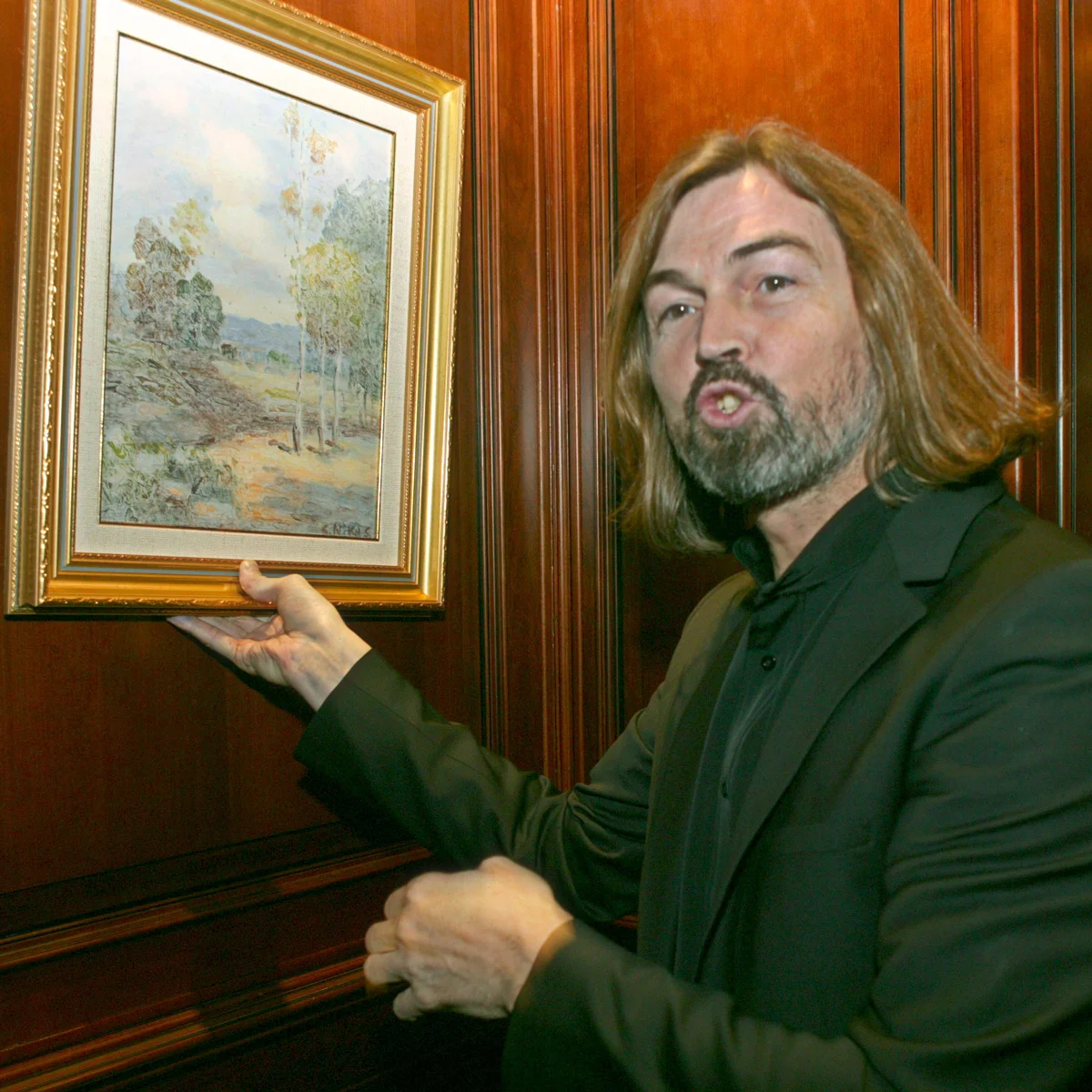
The artist abandoned the school, served in the army, and then went to his mother’s homeland in Panezhezhis (hence the pseudonym "Nikas"). In the Lithuanian SSR, he worked as an artist in the theater and at the linseed plant, studied as a designer at the Vilnius Art Institute (1978–1982). In Lithuania, he arranged his first exhibitions. Then he saw a dream where Safronov drove and gave Leonardo's advice on the gallery of his own paintings. So Nikas was convinced that his vocation is art (of course, to dream, but again it is very similar to a myth). At 28, Safronov went to conquer Moscow and entered a conservative Surikovka.
So far, nothing in this biography of a brilliant artistic career promises. And then the mysterious haze begins. Perhaps he earned a fan. In perestroika years, it seemed to participate in some exhibitions in the West, but the names are almost never mentioned. In one of the biographies, several expositions are listed with work in the Nude genre. In any case, these exhibitions could hardly launch a career of Nikas, although they would look excellent in the resume (but for this it is not necessary to participate in them).
Safronov himself sometimes counts his fame from the appearance in the View program in 1987. Often, Nikas says that he was friends with Listyev. The widow of journalist Albina Nazimova in an interview made it clear that there was no friendship between the journalist and the painter. The artist describes Dmitry Gordon how in the early 1990s he was shy to invite his friends, overseas stars, to a one-room apartment. That is, the conquest of Moscow then continued. Meanwhile, a few years remained until loud success.
Hurray to the customer
Slava Safronov was brought by portraits of celebrities and representatives of the Russian elite. But how did he get “access to the body” became an “trusted” artist whose works adorn the mansions and palaces of very wealthy Russians? The most famous (and, of course, not confirmed by the painter), the version of Safronov’s strategy was set out by publicist Vasily Chapar, who, according to him, knew the artist in the early 1990s.
Chapar explains that the painter created portraits of stars and political leaders from the photo and sent them as a gift. From the most polite, a letter of thanks came in response. Then the artist published an album, where an inscription appeared under the portrait of a celebrity, like “stored in the personal assembly of this celebrity” (to substitute the correct-Jean-Paul Belmondo, Alla Pugacheva, the English queen, etc.). Further, the album could be shown to potential customers, confirming the reliability of information from letters of thanks. In the same article, the publicist tells the story of how Safronov handed the portrait to Andrei Makarevich, catching it near the house. The text spread over the network, including through the popular LiveJournal Stanislav Sadalsky.
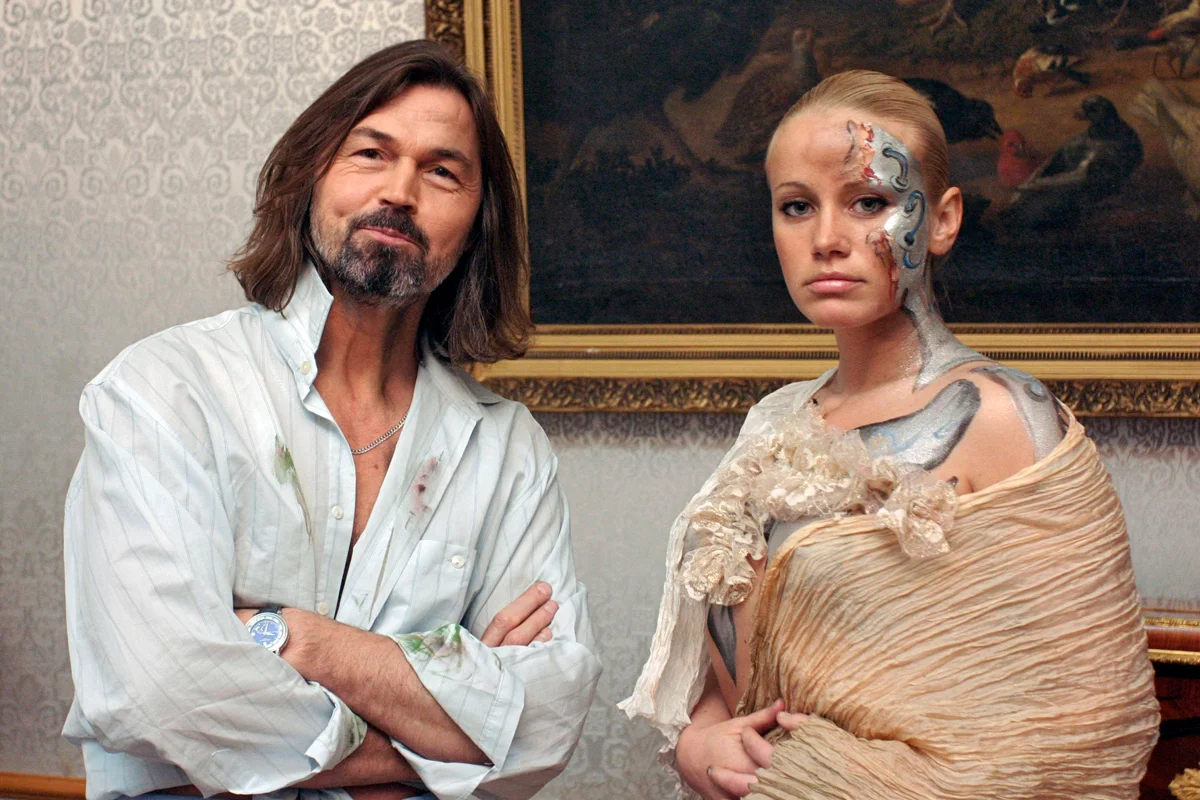
A similar version was recently voiced by the journalist and art critic Julia Pankratova: “He, of course, is the genius of self -party. (...), from the end, in my opinion, the 1990s realized that the main thing is a party. I went to all the events, arranged some strange performances there, sometimes with stripping.
He was so prominent man, and men are always not enough at parties - he was invited. (...) His most important step - he came, for example, for his birthday and gave a portrait. (...) This is not a photo of you, not a souvenir, and suddenly your portrait! In the frame! Big! Bring! And you immediately imagine yourself very important.
Therefore, I think ... No, I don’t think, I am sure, I know, he was introduced in this way, he got acquainted. ”
Further, obviously, a word of mouth and the desire to be no worse than an elite neighbor were connected. The complementary versions are convincing and would explain a lot in the development of an outstanding career of Nikas. If everything was so, Safronov went atypical in the way. He made a key rate not at exhibitions, auctions, galleries, museum projects, but for a private order of a wealthy client - he won this client. And with him, like a real pirate (from a child’s dream), he took on board the cultural space of Putin's Russia.
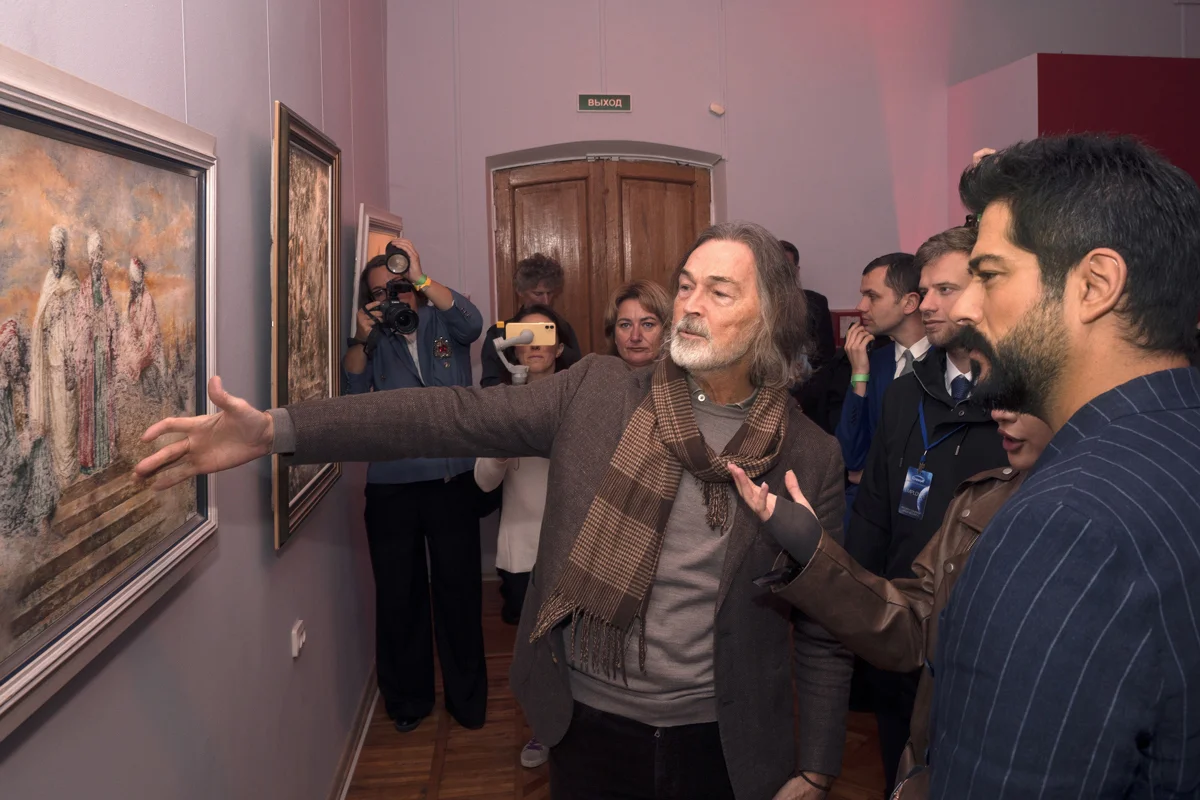
Safronov really knows how to dispose to himself. It is difficult not to be charmed with softness, kindness, friendliness that oozes from his interview, especially in recent years. Willy, you will think: "Whatever the artist he is, but the person is good." And God would with him, with that old scandal : Safronov stole several paintings, he outlined their price, and when the paintings were found, the Tretyakov Gallery employees conducted an examination and appreciated them almost 10 times cheaper. Including, because the paintings " turned out to be made in color printing technology on canvas, and on top of the printing layer there is a study of picturesque means ."
Even to Safronov’s statements about “Svo” is difficult to cling. The artist immediately stated that against the "fratricidal war", like any hostilities. At the same time, he said that people of art should not “be promoting on politics”, and did not approve of the criticism of Russian authorities from the celebrities who left. He himself avoided such criticism. Against the backdrop of the conquest of world information, Donald Trump Safronov was not lost either. He actively participates in the television show and gives out interviews. It will not be possible to forget Nikas - even if you really want to! However, no matter how successful the PR strategy, the main and most important element of Safronov’s success, is an accurate hit in the aesthetic request of his audience.
Dale Carnegie's smile
The painter is usually reproached with the fact that he writes not people, but their idea of himself is a perfect version of a particular person. Embellishment of appearance goes hand in hand with exaltation. So, on the new portrait, Donald Trump is shown at his “climax” - rose after the assassination and threw up his fist. Trump here is primarily a winner. In part, this image is sculpted from the other two-the hero-revolutionary and the ruler (New York in the background is subdued).
Also, in the portrait of Maya Plisetskaya, its artistic genius is emphasized - ballet poses, immersion in creativity, inspiredly thrown back and a look directed only to eternity. The image of Francis I on the portrait is literally the quintessence of holiness (the face enlightened by the rays and the “holy spirits” soaring over the head). Wisdom, will, but also the attribute of the papal status in the form of the Cathedral of St. Peter. Not a picture - a temptation that, which, wants to believe, dad opposed dignity.
It seems that once Safronov read the famous book by Dale Carnegie and gathered a lot of it. For example, the idea that each person first of all wants to be significant. It is the significance of the “outstanding personality” (more outstanding than the individual) - the main message broadcast by portraits of Nikas. How to resist? The “Aristocracy” of the CIS pulled up for Russian customers, and then inexperienced customers from other countries.
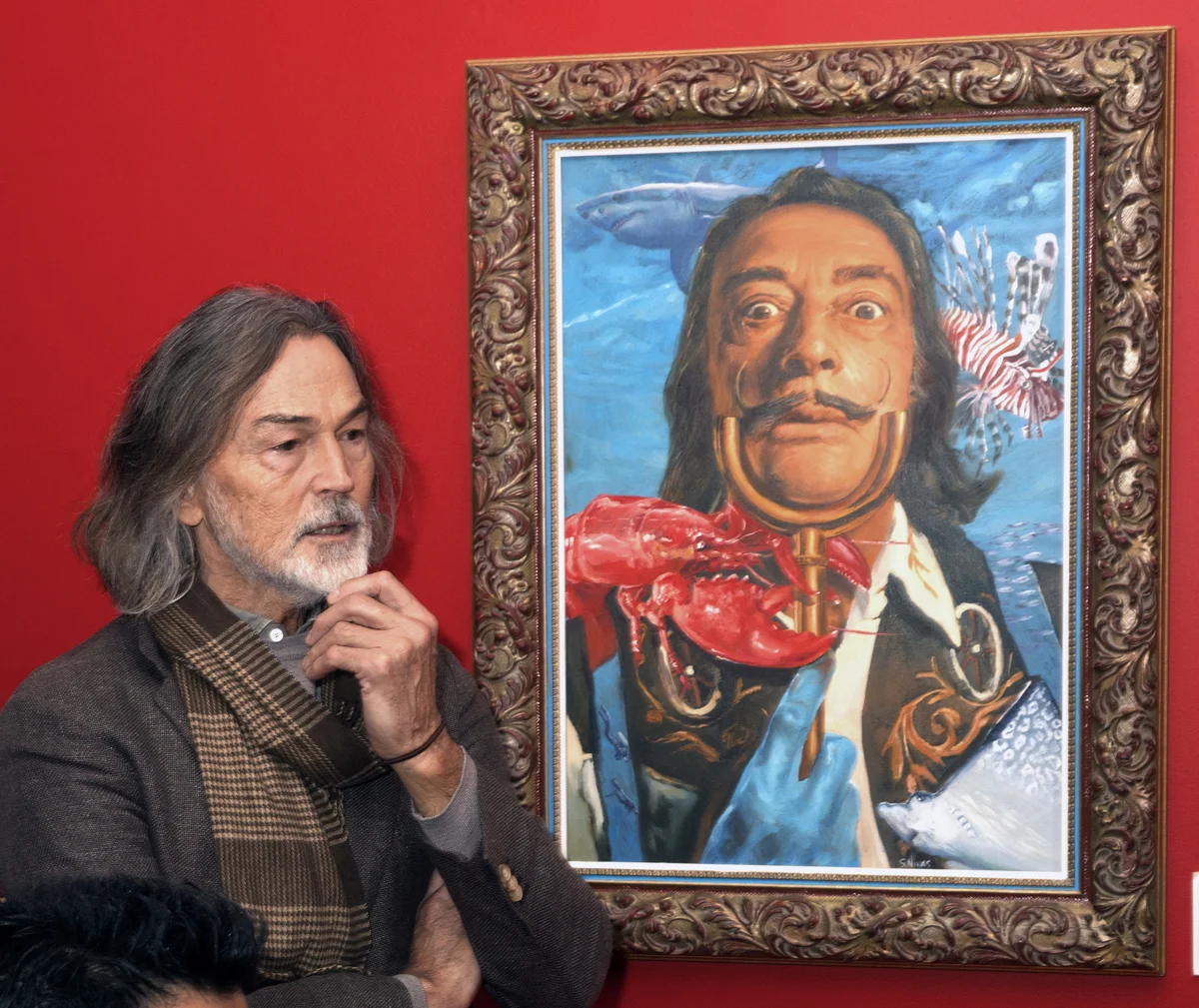
In this sense, the idea of the most popular series of the “River of Time” series is to wear heroes (for example, Putin, Medvedev or Nadezhda Babkin) in historical costumes and write them, quoting the painting of the masters of the past - turned out to be successful. A contemporary in the wave of a magic brush falls into eternity along with outstanding people of all time - he “develops” an ordinary earthly man and takes a place between Pushkin (without penguins) and Peter I (the portrait of Kirkorov refers to his image). Of course, this “historicism” played along with fantasies of Russian elites for himself as a nobility of the times of tsarist Russia. Safronov willingly sold them this show -off identity.
His painting in itself was part of the imperial necro-spoke. Order to Nikas - including the act of imitation of a nobleman, hanging in his estate a portrait of Levitsky’s work in the Golden Rama.
One of Safronov’s most popular series is ceremonial portraits of animals with human bodies. Through such a simple comparison, the artist seeks to capture various characters. The effect of the series is built on the break of the usual perception. Safronov loves this technique and often uses (for example, Pushkin in the form of an iceberg or a winged rabbit from the picture “Flights in a dream and in reality”; it is also felt in the series “River of Time”). But the breakdown in him always practices and is never traumatic for the viewer. In fact, a superficial wow effect, behind which there is no substantial conflict; Comfortable sign of "intrigue".
Safronov and “beauty”, blindly so that the viewer necessarily recognizes it recognizes it. Again, the sign of "beauty" is more important than she herself. Spectacular girls, cute beasts, magnificent historical architecture, open Venetian species and almost always sunny weather - “beautiful” is packed from undoubtedly beautiful elements. Sometimes they strengthen each other. The film “Peak of Beauty” combines a fatal lady and a mountain landscape. And then and that is great - so let's summarize! Why not lay down the hilly Tuscan landscape (if you google the “hilly Tuscany”, you will quickly find the source in the pictures) and a sleeping cat, curled up into a ball (“Cozy warm summer”). In both canvases, the addition of two “beautiful” works as a favorite breakdown.
Nikas's work is eclectic. He easily addresses different genres and changes styles like gloves: “symbolism”, “surrealism”, “cubism” (the artist has an original idea of these genres; his “cubism”, for example, is not very similar to historical cubism), post -impressionist and expressionist features, academism with references to the painting of renaissance, classicism, classicism, classicism, classicism, classicism, classicism sentimentalism and romanticism. Styles are a reflection of not a worldview, but mood (or preferences of the customer). Development is not deep, but in breadth is an attempt to capture as much as possible an aesthetic without the need to plunge into the essence of each. Safronov needs only their most spectacular features and techniques. For a long time tested on the viewer, they will probably impress, which means that they are great for introducing Nikas's work.
Real artist
Safronov’s paintings are consonant with the architectural Luzhkov style, who flooded Moscow in the first post -Soviet decades, or Nazarbayevsky Baroque, who blossomed in the same period in Kazakhstan. The facade, which famously combines the classic colonnade, a plentiful national decor and awkward attempts to Haytek style. Or, for example, a beauty salon on the ground floor of Khrushchev, the entrance to which is decorated with an “antique” portico with Corinthian columns and a pair of gilded statues. The post-Soviet space is dotted with architectural sorts of this kind, and Safronov’s exhibitions are perfectly combined with them-the same superficial eclecticism, deliberate spectacity, a claim at once to high art and status, ignoring the context in which Kirkorov-Peter I generally causes a crynge.
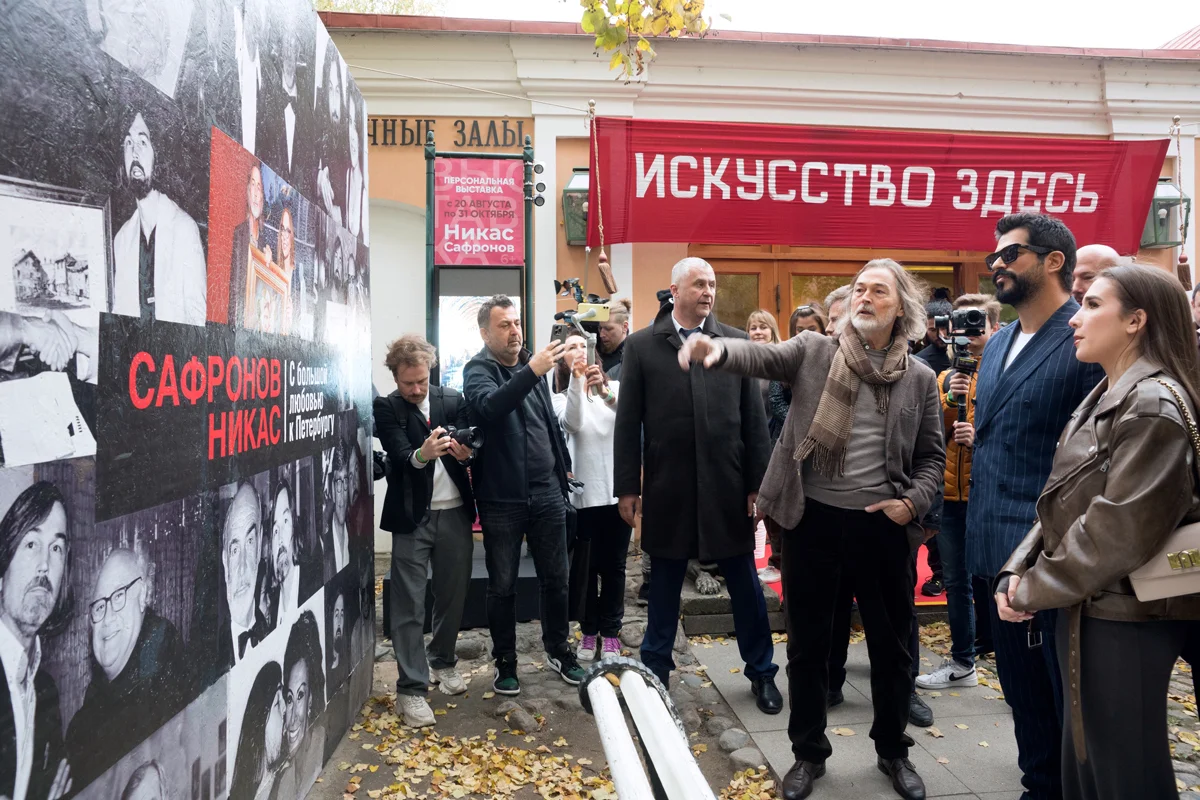
Chapar wrote: “Who is the potential customer of the Safron portrait in modern Russia? A thieves' official or criminal businessman? " When looking at the paintings, you represent just such a client. In fact, it is difficult to find out real customers and buyers of Safronov. The post -Soviet elites often do not advertise their art meetings, fearing questions in the spirit: "And what money?" The artist himself, among the customers, lists the Spanish king, the President of Azerbaijan, the Arab Sheikhs (in the last two points is easily believed), other national leaders and world celebrities. There is confirmation of the artist’s international relations - for example, the appearance at the opening of his last year’s exhibition in St. Petersburg Ornella Muti (which, however, has a close history of relations with Russia). Nevertheless, Safronova is difficult not to suspect of exaggeration.
Of those whom we know, the banker was bought byOleg Gusev , the shocking rector and ex-deputyNikolai Kosarev , a businessman, a member of United Russia Eduard Shabalin , a deputy from United Russia, Colonel General Vladimir Shamanov (Safronov could also give him, they are friends), former statesman Andrei Dunaev , Zolotozhnaev, Konstantin Strukov . It can be assumed that in addition to officials and entrepreneurs, Safronov’s work is also acquired by representatives of show business.
More about the image of the buyer, they say the work themselves. Clients - representatives of the elite of different calibers (Safronov’s order cost - tens of thousands of dollars). They have conservative tastes and they did not manage to bother “deliberate” images and hackneyed techniques - that is, these are people not formed in a cultural and humanitarian sense (or very loving kitsch). Their success, most likely, begins in the 1990s and has been formalized in the Putin years. Time required the ability to survive in extreme conditions. Excessive cultivation with this quality is poorly knitted. Взмыв на социальном лифте до положения элиты и соблазнившись статусом, такой герой не особо соответствует ему в смысле кругозора и образования. Но их ценность — пусть лишь как дополнения к благосостоянию и весу в обществе — он уже осознал (дочь такого воображаемого деятеля, получившая скорее всего заграничное образование, картину Сафронова уже вряд ли купит).
Искусство Никаса отражает эстетическую вселенную отечественного «барона-разбойника» и его менее удачливых подражателей. Неожиданный статус, возможности, разнообразие, открывшееся после падения железного занавеса, выбросили его в огромный мир, к которому он едва ли мог быть готов. Плоды культуры — естественная часть элитного потребления, но культурное поле огромно и сложно устроено, а соответствующий опыт и знания скромны. Голодная новая знать набрасывается на прекрасное в попытке потребить как можно больше культурных знаков в ускоренном и упрощенном режиме — забрать всё «самое красивое», всё «самое величественное» от всех известных в истории искусства стилей и, смешав, получить «самую великую красоту».
Краткая формула эклектичного творчества Сафронова — сокровищница мировой культуры, воспринятая узким, неокультуренным сознанием. Для постсоветской аристократии он создал удобный и понятный суррогат большого искусства. Польза от суррогата, конечно, поверхностная — восприятие и вкус не разовьет, сознание не расширит. Но все же, уже как настоящий серьезный художник, Сафронов точно запечатлел одну из сторон своего времени — чувство прекрасного «неодворян», заправлявших Россией 1990–2020-х. Долго же над ним смеялись историки искусства! Но в будущем им придется иметь дело с наследием Никаса и разгадывать, что же оно такое — нелепый коммерческий китч, болезненный симптом или диагноз.