Translated material
Departure instead of a split
The Jubilee G7 Summit in Canadian Albert, it seems, helped European countries to stop being afraid of Trump and start living again
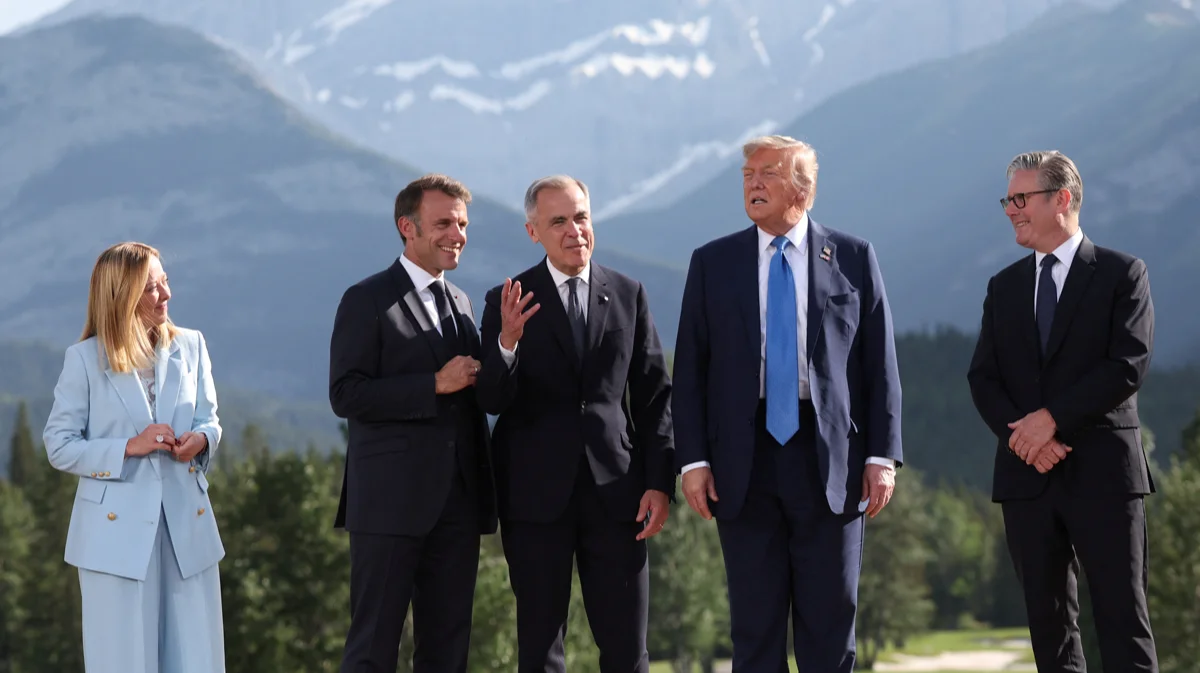
Italian Prime Minister George Melony, French President Emmanuel Macron, Prime Minister of Canada Mark Carney, US President Donald Trump and British Prime Minister Sir Starmer at the G7 summit in Cananian, Canada, June 16, 2025. Photo: PA Wire / PA Images / Scanpix / Leta
The Jubilee Summit of the Big Seven (G7), which took place at the beginning of this week in Canadian Canadian, found most of the developed countries of the world for the height of the next escalation in the Middle East.
Despite the initial plans to discuss the problems of the global economy, energy security, artificial intelligence and, of course, the Russian war in Ukraine, as a result, the main final document of the summit was the resolution on the military conflict of Israel and Iran. Under the influence of the United States-the key ally of Israel-the countries of the G7 emphasized the presence of Tel Aviv "right to self-defense", while calling Tehran the source of "regional instability and terrorism." Trump, who left the summit, escaped unpleasant conversations for him with Europeans about tariffs and dodged a meeting with the President of Zelensky. But also his fast departure gave less reason to accuse the G7 of an internal split. Novyevropa followed the jubilee meeting of the leaders of the "Big Seven" and tells how the leaders of Europe and Canada seem to have learned a little better to cope with the chaos named after Donald Trump.
In the 1970s, when the world plunged into a difficult energy crisis, the leaders of the largest Western economies of that time began to meet once a year to discuss economic issues. Over time, this format was called the "Big Seven", and in the 1980s, political issues were also added to the discussion on this site.
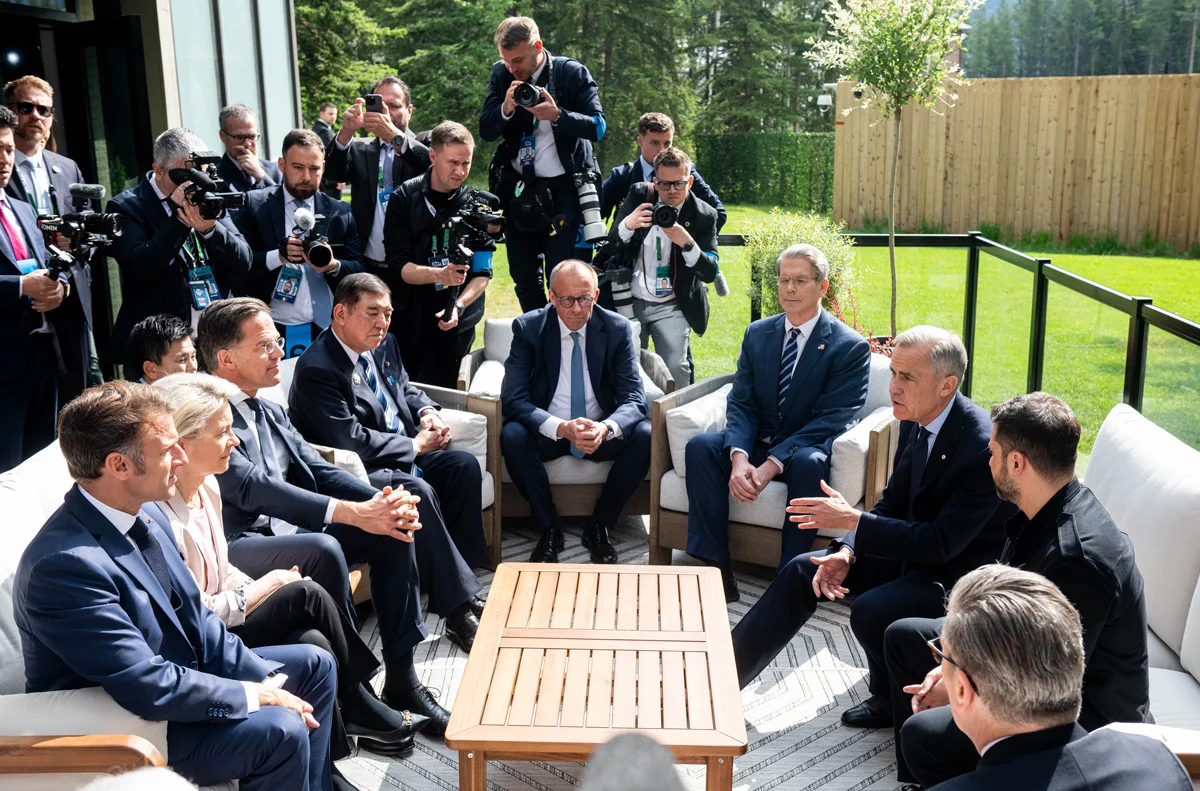
The fiftieth G7 summit in the Canadian province of Albert, in the town of Kananaskis gathered a traditionally impressive composition of world leaders. In mid -June, the leaders of the seven permanent members of the club - Great Britain, Germany, Italy, Canada, the USA, France and Japan - the heads of the European Commission and the European Council, the Secretary General of NATO and the UN. The invitation was received and formally not included in the Club of the state - India, Australia, Brazil, Mexico, South Africa and South Korea, as well as Ukraine.
Trump no longer scares
In the past three years, the G7 has become an important platform to strengthen Western support of Ukraine in the war with Russia. In 2022 and 2023, it was possible to coordinate the strengthening of sanctions against Moscow and an increase in the volume of Kiev support, and in 2024 a fundamental agreement was reached on the use of frozen Russian assets to allocate loans in the amount of about $ 50 billion.
However, this time the discussion of Ukrainian themes and other issues went completely different from how it was originally supposed. Firstly, because just a few days before the start of the Summit, Israel began a military operation against Iran, who pulled the attention of the leaders of the participating countries of the summit. Secondly, this year, Donald Trump represented the United States in the “Big Seven”.
Even during the first presidential term of Trump, the G7 summit accompanied scandals.
In 2018, when the summit was also held in Canada, the American president withdrew his signature under the final document, offended by Justin Trudeau, who, in response to the introduction of the United States, stated that his country would not allow itself to intimidate.
And a year later, Emmanuel Macron, who took the summit in the French Biarrice, announced in advance that there would be no final communique, because Trump could not agree on a number of formulations on topics that, incidentally, remain relevant today - trade, climate and Iran.
Now the chaotic atmosphere of the last five months that passed the post of President of the United States has also been added to the memory of past summites. During this time, he made a lot of high -profile statements on duties, and on the accession of Greenland, and the reconciliation of Russia and Ukraine, but there were no significant actions for them. The European Council for International Affairs (ECFR) calculated that from late January to May, the owner of the White House managed to threaten the use of military force 22 times, but in reality the United States attacked only the Yemenic Husites. At least for now.
Realizing that Trump’s words often remain only words, the rest of the G7 countries, during the winter, clearly shockedly listening to various statements of the head of the White House and fearing them to react, in recent weeks they acted more decisively.
So, the next portion of duties, with which Trump in early June put steel and aluminum from the EU countries, caused the Europeans a rather restrained reaction: they filed a complaint to the WTO and promised to answer, but when they consider it necessary, did there be guarantees that after some time Trump would not change his mind or cancel them?
Frederick Mertz during his recent visit to Washington went against the head of the White House, emphasizing that Moscow should be forced to sit down at the negotiating table by expanding Kiev’s assistance, while Trump talked about the fact that Russia and Ukraine were like two played boys who need to be given to fight properly before rim. And Emmanuel Macron on the way to Canada visited Greenland, said that the island was “not for sale”, and assured its inhabitants that they were “not alone”. In addition, he rejected the recent proposal of Trump that Vladimir Putin could become an intermediary in the conflict between Israel and Iran, "who is now involved in a high intensity conflict and has not observed the UN Charter for several years."
A week before the G7 summit, the new Prime Minister of Canada Mark Karney in French, and not English, said that Washington is no longer a dominant force in the world and that the United States "begin to monetize its hegemony by introducing duties for the right to access their market and reducing their contribution to our collective security." At the end of May, he completely expressed the hope that Canada could join the EU re -equipment plan, which was voiced by Brussels, which would reduce her dependence on arms and ammunition from the United States. In Canada, “75 cents from each dollar spent on defense are leaving for the United States. This is unreasonable, ”the prime minister explained .
In other words, in Kananaskis, Trump was in a weaker position - his tactics of “oversaturation” of the information space and intimidating his visas with disproportionate requirements ceased to bring its former numb effect.
And the agenda that the Americans and the Europeans wanted to discuss at the summit was completely different -Trump put the theme of the global confrontation with China at the forefront, while the leaders of Great Britain, Germany, Italy, France and the EU were much more interesting to discuss the settlement of transatlantic disputes, which were flared up due to American import duties, and the end of the war in Ukraine.
Avoiding the scandal
Nevertheless, with all the differences between the United States and other participants in the Canada summit as the receiving party, it hoped that even if the G7 did not come to some important agreements, she would at least be able to avoid scandals. It is no coincidence that Mark Karni followed the example of Macron in 2019 and even before the Summit began to understand that there would be no traditional single final communique. At the end of last week, the Western media distributed information that the parties should have limited themselves to individual declarations in which the most acute issues like wars in Ukraine and Gaza should not have been mentioned.
The chances of mitigating contradictions were also given by the fact that several leaders who called the international media “whisperers” by Trump, that is, those who are trying to establish bridges between the old light and the US President, also made a list of all those who claim the role of such intermediaries at once.
However, the hopes that the summit will pass without scandals did not materialize.
Arriving in Kananaskis, Trump made a high -profile statement that the exclusion of Russia from the Big Eight after the annexation of Crimea in 2014 was a mistake, and that if this did not happen, there would be no war in Ukraine.
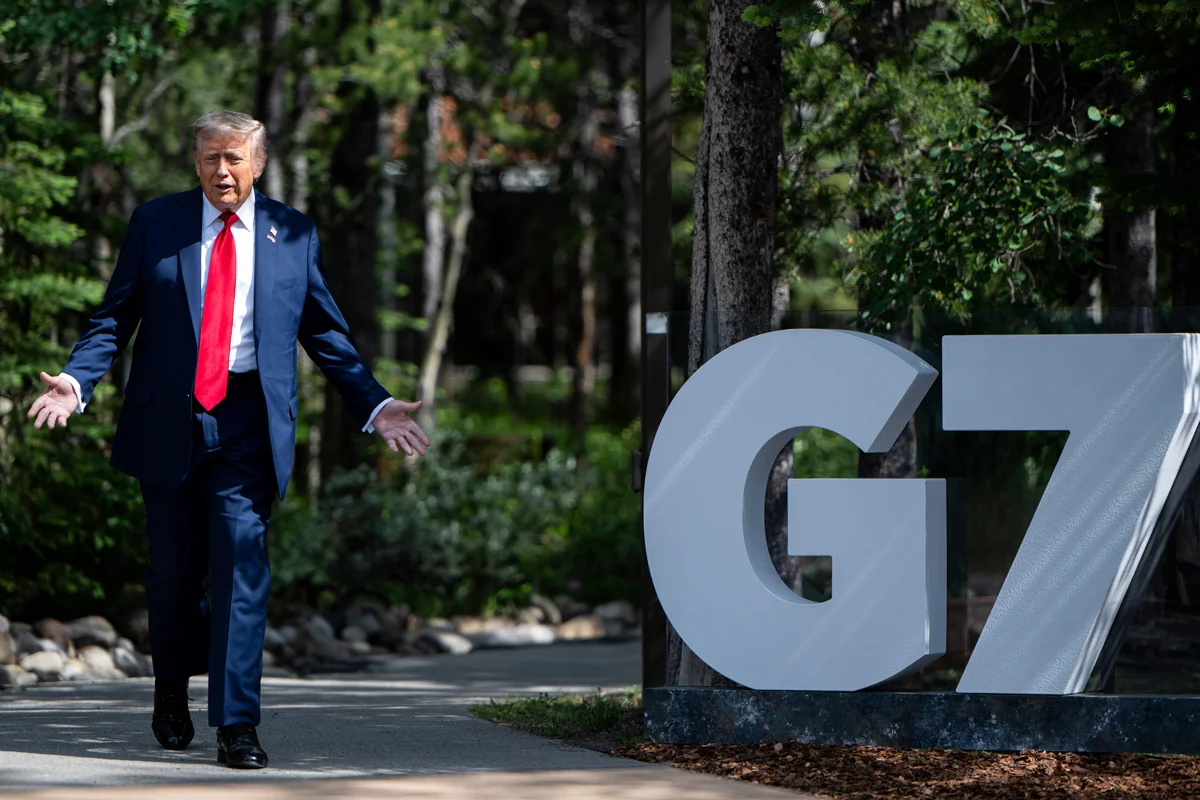
Then he refused to sign a joint declaration calling for the de -escalation of the conflict between Iran and Israel, and at the end of the first working day he went back to Washington.
Emmanuel Macron tried to maintain the appearance of normality, suggesting that the American president left Canada to develop an agreement on a truce between Israel and Iran, especially since Trump's spokeswoman Caroline Livita motivated his departure precisely the events in the Middle East. However, the owner of the White House did not like such a version. Macron “has no idea why I am going to Washington,” he wrote on the Truth Social network, at the same time accusing his French colleague of striving for self -promotion and emphasizing that he is “always mistaken”. And already aboard the presidential aircraft, he said : “We did everything we had to, at the summit. It was a good summit. "
Based on the business logic of the American president, for the United States, the summit really went well. Washington concluded a trade agreement with the UK and agreed to sign a bilateral transaction with Canada on trade and security within 30 days. Trump said that Ottawa wants to join the American Golden Dome missile defense project, but she will have to pay $ 71 billion for this - however, Canadian officials refused to comment on this.
However, it is more important that the premature departure from Cananian allowed Trump to avoid discussing issues by which he has the most serious disagreements with the rest of the G7 participants.
In the current circumstances, they are primarily associated with the situation in the Middle East: the European leaders, although they expressed the support of Tel Aviv’s actions, they still continue to achieve de-escalation, while Trump is thinking about Washington to directly participate in the war on the side of Israel, then to declare himself the main winner in the conflict.
Ukraine is on the sidelines
However, Trump's fast departure from the summit, although he prevented the aggravation of a public scandal, but also did not allow Europeans to achieve significant movements on other key issues for them in relations with Washington.
Firstly, these are 50 percent American duties that Trump threatened to introduce against the EU from June 1, but then postponed until July. While the situation remains in limbo-Brussels and Washington continue negotiations, and, according to Reuters, the EU is ready to agree to the introduction of 10 percent duties for their goods exported to the United States and cancel the tariffs for American cars imported into the EU, drugs and electronic goods, but there is still no final agreement.
Secondly, this is Russian aggression against Ukraine.
Prior to the start of the Israeli operation against Iran, it was assumed that the discussion of a fair and long -term world for Ukraine would become one of the key topics of the summit, and the working breakfast on June 17 was to be dedicated to the topic “Strong and Sovereign Ukraine”.
Among other things, it was supposed to talk about additional mechanisms for using frozen Russian assets to help Kyiv, about the allocation of additional assistance from the Western countries and about pressure measures to Russia in order to force it to terminate hostilities. In particular, Europeans planned to discuss the reduction of the price ceiling for the purchase of Russian oil from 60 to 45 dollars per barrel, against which the United States spoke out literally on the eve of the summit.
In addition, on June 17, Trump’s personal meeting with Zelensky was supposed to take place. After the scandal that occurred in the oval office at the end of February, two politicians managed to restore relations at a short meeting in the Vatican during the funeral of the Pope Francis. The Ukrainian president had high hopes for a new meeting during the summit - after all, as the last months showed, personal contacts are very important for Trump, and he often radically changes his position under the influence of the last conversation, as, for example, this happened at the end of March, when the American president spoke sharply about Putin a few hours after the meeting with his Finnish colleague Alexander Stubb, who urged him to put Russia in Russian The ultimatum about the ceasefire in Ukraine.
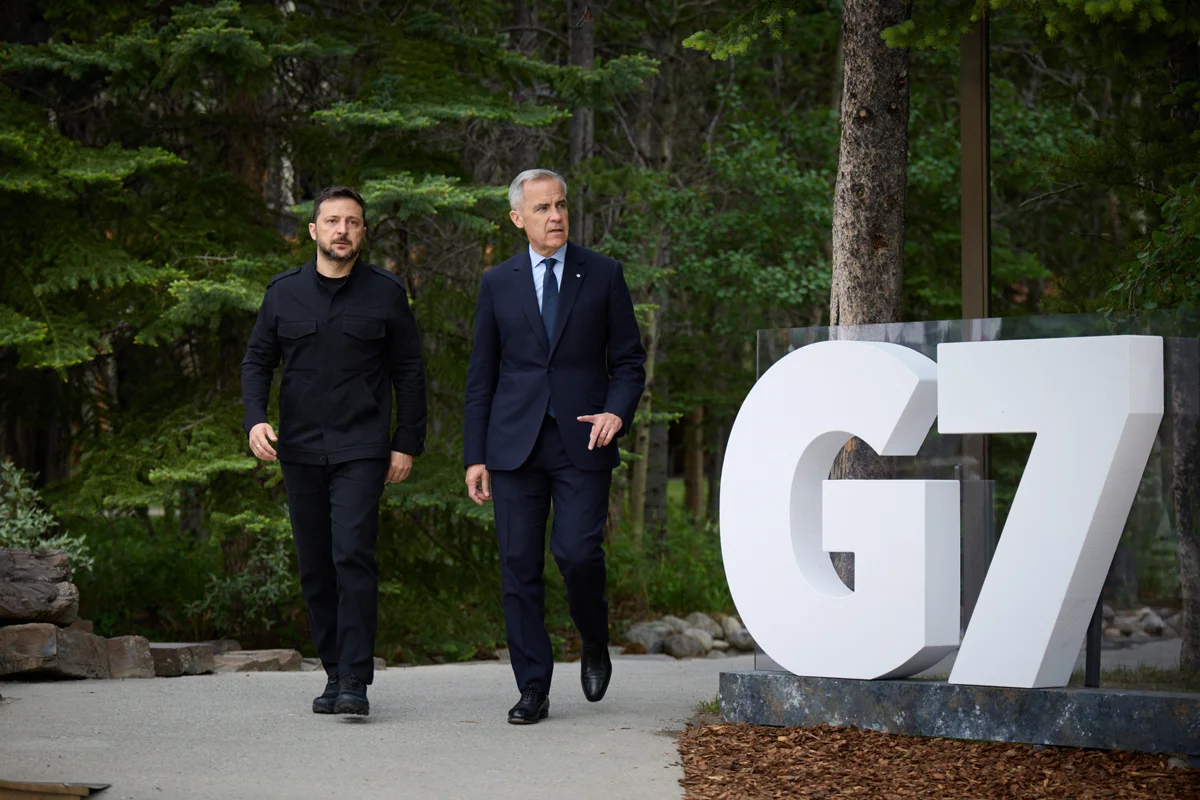
As a result, Zelensky failed to see Trump. However, he left Canada not quite empty -handed. Mark Carni announced a new loan to Ukraine in the amount of 4.3 billion Canadian dollars (3.16 billion US dollars), of which a little less than half are intended for the purchase of drones, armored vehicles and ammunition, and the remaining funds will go to restore infrastructure. As the Canadian prime minister noted, this loan will be covered due to interest on frozen Russian assets in Europe.
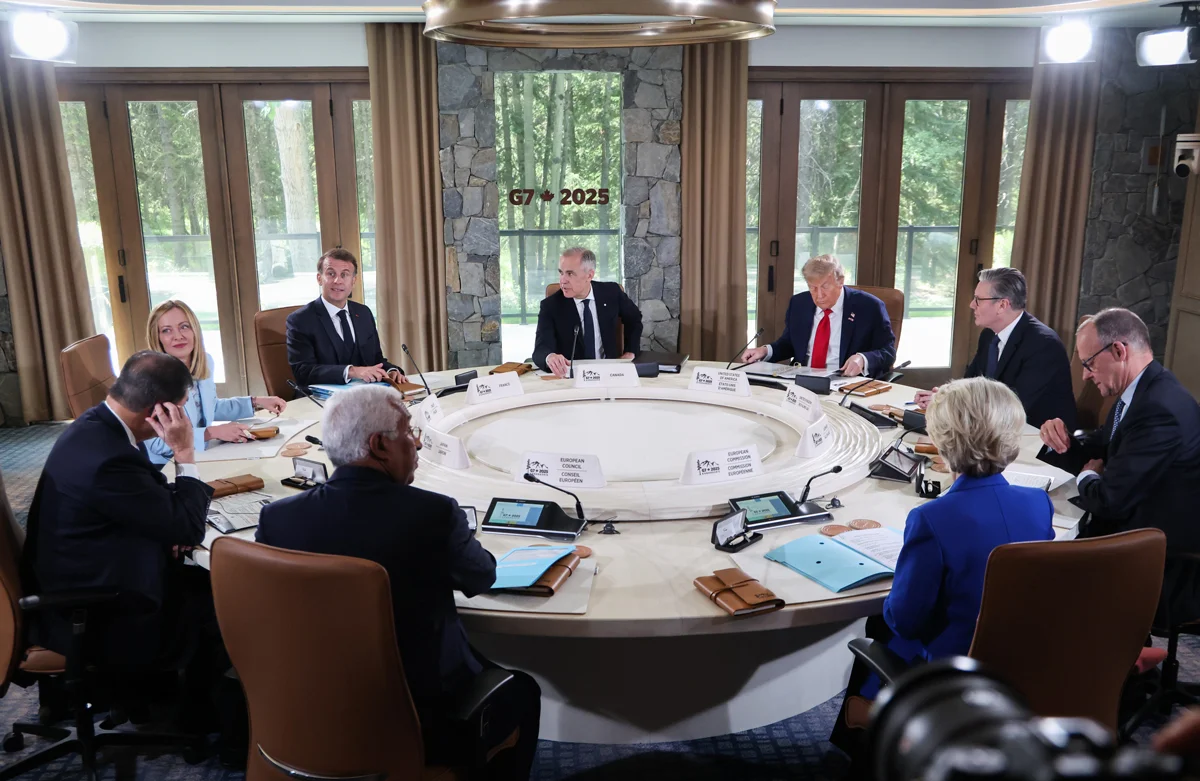
In addition, Carney said that during the negotiations on Monday, even before Trump's departure, the leaders of the “Big Seven” emphasized the importance of “maximum pressure on Russia” to force her to begin serious peace negotiations. In Frederick Merets, these conversations caused “cautious optimism”: he hopes that in the near future the United States will impose additional sanctions on Russia.
Modest results
Trump's departure, of course, made a strong impression, but if you look at it in a wider context, it turned out to be not the worst option - it would be much more unfortunate if the parties were quarreling right during the negotiations.
The summit still has practical results - this is not only assistance to Ukraine, but also joint statements on such topics as transnational repressions, artificial intelligence, critical minerals, the fight against illegal import by migrant, forest fires and quantum technologies.
The parties even managed to agree on a declaration on the situation in the Middle East, in which they called Iran the “main source of regional instability and terrorism”, spoke out against Tehran of nuclear weapons and expressed support to Israel.
And if at first the European leaders wanted to make a call for the de-escalation of the Iranian-Israeli conflict, then in the final document the wording turned out to be much more acceptable for the American administration:
“We urgently call for the settlement of the Iranian crisis to a wider de -escalation of hostilities in the Middle East, including the ceasefire in the gas sector.”
As for the issues related to Russian aggression against Ukraine, apparently, European leaders still managed to convey their position to Trump - according to Reuters, three European diplomats “heard signals from Trump” that he wants to strengthen Putin and studies the bill on “dental” sanctions proposed by Senator Lindsay Gram. As far as these “signals” can be trusted, it will become clear very soon - next week the NATO summit will be held in the Hague, where Trump and European leaders will be able to continue the dialogue interrupted in Cananian.