
Translated material
The war between Iran and Israel finally pushed the Russian-Ukrainian conflict into the background
Alexander Baunov - about how Vladimir Putin (unsuccessfully) is trying to use this
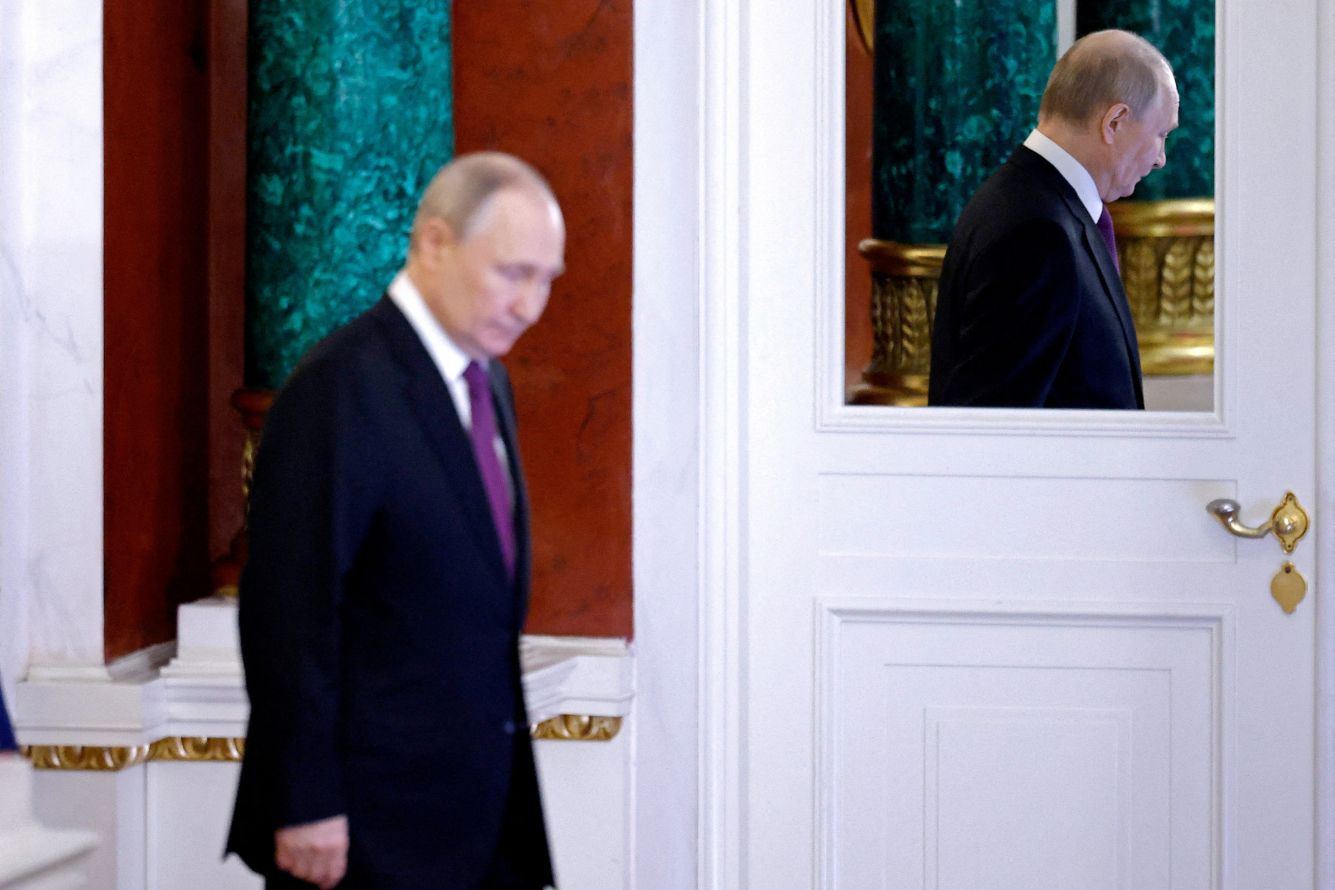
The war between Iran and Israel replaces the Russian-Ukrainian war from the world agenda, and also demonstrates the loss of the world influence of Russia, which considers itself an ally of Iran. The senior researcher at the Carnegie Berlin Center for the Study of Russia and Eurasia, Alexander Baunov, explains why Putin really wants to act as an intermediary at the end of the new war, but no one needs it.
Why Russia cannot decide on a clear strategy
The war of Israel against Iran, to which the Trump administration thinks to join, put Vladimir Putin in a difficult position. The regime is attacked, which, after an invasion of Ukraine in 2022, became a close ally. The new status is formalized in a strategic partnership agreement signed in January of the current one, 2025. The collective memory of the past greatness, which is based on the internal and foreign policy of the Russian regime, is full of stories about how one shout from Moscow was enough to stop the aggressive actions against its allies in the Middle East-whether it be the Suez intervention of England and France, stopped by one Soviet hint of the atomic ultimatum, or the Arabian-Israeli binding wars 1960-1970s.
Such an ultimatum verbal intervention Russia, bogged down in Ukraine, cannot afford. The tool of verbal nuclear blackmail has already been used during the Ukrainian war. No one will believe that Moscow, not even daring to symbolically cross the nuclear threshold for itself, will go to more for the sake of Iran.
In addition, Russia was in the position with Iran in which she was used to seeing its opponents to fight for Ukraine. Putin always claimed that Russia needs more than the West, so the Russians are ready to sacrifice more for Ukraine, which means they will achieve their own. Now in the Kremlin they realize that Israel and the USA are ready for more to destroy the Iranian regime than the Kremlin for the sake of its salvation.
The choice of how to act is complicated for Moscow by the fact that the opponents of Iran are not at the moment the worst enemies of Russia. This applies to Israel, and to the Monarchies of the Gulf, and to the Trump administration, with whom Putin still hopes for a “big deal”.
And at the same time, the Iranian regime for Russia is one of those that are too important to fall. As China cannot allow Russia's defeat in Ukraine, although it will do well without Russian victory, Iran should not lose this war in the submission of the Russian regime. Russia is unable to help him with military means, but he is trying his best to sell its intermediary services.
The new war makes Russia imperceptible to the world, but the minuses for the Kremlin are still much more
In the attack of Israel on Iran for Russia, there are short -term advantages. Oil has grown from 65–70 to very comfortable $ 78 per barrel and can grow yet. Any use of force in the world, especially leading, masks the actions of Russia, helps to distract from what is happening in Ukraine, multiplies examples of double standards, especially valuable in that they are not from the past, but from our days.
A photograph of a multi -storey hole, made in a sleeping residential building in Kiev on the night of June 17, would fall on the world first stripes three or even two years ago, now it is almost not visible outside the Russian media in exile and social networks. For all the difference in contexts, the war in GAZ relative to Russian cruelty, the war in Iran is the very fact of a preventive blow.
The warring Russia is the beneficiary of any world violence and disorder, regardless of any background, whether it is India with Pakistan, Africa or the Middle East. Moscow assertively uses other people's sins to cover its own, although Christianity, the defender of which she proclaimed herself openly rejects moral relativization, insisting that she will have to answer for her, without weighing the alien on the scales. However, the citation of the gospel phrase distorted to the opposite meaning shows that he refers to the scriptures as frivolously as to parliament, courts, press or science.
Even taking into account the price and camouflage benefits of the minuses from the war in Iran for Moscow, more is gaining. During his Iran, he turned from an enemy of a common enemy into something like a full-fledged ally. When Russia needed combat drones, Iran, in response to the Turkish-Ukrainian “Bayractars”, provided his “mined”-and still supplies them. He shared the experience of bypassing sanctions and the fruits of his own import substitution, became a roundabout channel of international trade, acquired part of Russian energy carriers and even resold them on the international market with his own. And after 2022 he joined Brix and the SCO and became an observer in the general EAEU market collected by Russia.
Iran is an important ideological ally. Its hostility in relation to the West is based on the foundation of revolutionary traditionalism - aggressive protection of religious values similar to Russia. Finally, Iran, for a long time or another, isolated from the West, is a living example of the Russian version of complete sovereignty and multipolarity - one in which the rights of the state are above human rights, and the government has full power over the inhabitants. The very possibility of defeating such a “completely sovereign” state is a minus alone in the Russian picture of multipolarity.
In paradoxically, Moscow does not consider its own invasion of Ukraine a blow to the idea of sovereignty, because Ukraine is not sovereign enough for the Kremlin. In this way, a part of one of the world poles leaning too far.
Official Russian reactions are fully consistent with the important place of the current Iran in the Kremlin picture of the world. The attack on Iran was convicted of almost the same formulations and expressions, in which three years ago, or even in 2014, they began to condemn Russia that had begun war, but in Moscow it was only a reason to lift the West, and not doubt their own rightness.
A number of circumstances complicate this simple, clear picture. Unlike the Soviet era, Israel is not in a series of enemies, on the contrary, this is almost the last non -hostile state of the Western camp. This is accompanied by informal admiration for Israel among Russian militarists, its willingness to use power without looking back at someone else's opinion.
America Donald Trump is temporarily excluded from a number of sworn enemies of Russia. All this prevents the development of an evaluation of events for the Russian regime. Putin for part of his own environment, irreconcilably configured to the West, was in a similar situation in which Trump himself finds himself because of his attitude to Russia. Both respond to criticism: you need to talk even with a sworn enemy if you want the war to stop. But it continues.
Why Iran will not become a new Syria for Russia
More than ten years ago, after the annexation of Crimea and the first invasion of the Donbass, Russia fell under large -scale sanctions and in diplomatic isolation. To end this isolation, to turn the page helped successful interference in the Syrian war on the side of Assad. Then Russia ceased to be a country with which Ukraine is being discussed, and again became the one with whom they talk about world affairs.
Now the situation is repeated. Russia under even larger sanctions and even more isolation after an even more bloody war and new annexations, the Kremlin again comes to life to pushing this war to the periphery of Russia's international relations through intervention in the next conflict in the Middle East. In 2015, Moscow, sending troops to Syria, put everyone in front of the fact, literally forced the region and the world to recognize it as a player not only in the post -Soviet, but in the global space.
Now Russia cannot afford it. The enemies of her ally are not local partisans, albeit supported by influential forces outside, but Israel to which the United States can join. And in the role of an intermediary it is impossible to come by a clear order, the consent of the warring parties is needed, and in the case of Israel, Washington also.
If you count the statements of the last four months, it is noticeable how Moscow literally suggests itself to the assistants to Washington to resolve the Iranian nuclear issue. Already in the report on the first telephone conversation of Trump and Putin on February 12, the Kremlin tried to expand the range of issues as much as possible and bring the discussion as far as possible outside the Ukrainian topic. Among the topics discussed in the reports of the interlocutors, the Middle East sounded.
In March, Reuters said that Russia offers mediation on the topic of the Iranian nuclear program. In April, Lavrov welcomed the beginning of Trump's negotiations with the Iranian leadership, which should take into account the legitimate interests of Iran. In Trump’s report on telephone conversations with Putin on June 4, the maximum skepticism sounded about the end of the Ukrainian war (“this was the wrong conversation that would lead to the immediate world”), but Iran looked a second, more promising topic of conversation. In the report of it and the Kremlin, the Iranian theme occupied an equal place with Ukrainian.
Obviously, the Kremlin was not preparing for the Syrian version of the departure from the Ukrainian theme, but rather to Iranian 2015. Then Russia, having barely completed large -scale hostilities in the Donbass, became one of the participants and international guarantors of the Iranian nuclear program and the chief operator of the Iranian nuclear fuel as part of the transaction.
After the start of the Air strikes of Israel for Iranian targets, Putin tried in the new conditions to accelerate his mediation potential, prepared for negotiations on an updated nuclear transaction. He called the prime minister of Israel Netanyahu and President Iran to Cyzshkin, and then phoned Donald Trump and offered intermediary services.
At first, Trump said that he was opened by the Russian proposal. But his replica, following the results of the next conversation with Putin on June 14, sounded almost mockingly: “I answered him: provide me with a service - be an intermediary at home. Let's get Russia at first, okay? "
The changeable Trump is able to come out again with the opposite opinion tomorrow, and perhaps for this reason some media outlets within Russia lead his replica as a whole (and for someone this is also a quiet front). However, doubts about a possible Russian mediation role are not only in Washington.
The personal relations of Putin and Netanyahu did not deteriorate, but Israeli public opinion after October 7 began to relate to Russia worse because of its frankly friendly contacts with Hamas. To this, new vague conversations were added that part of the Iranian missiles overcome Israeli air defense through Russian modernization.
The Iranian political class refers to potential Russian mediation skeptical. Official Iran thanks Russia - for example, in the conversation of Foreign Minister Abbas Aragvi with Sergey Lavrov. True, without distinguishing Russia separately, but in a row with others who supported Iran.
The message of the Iranian ambassador in Russia looks more mysterious, which writes that attacked by the Zionist regime and American weapons, "with the inaction of international organizations, Iran" will not forget which countries supported us. " From the head of the diplomatic mission in Moscow, targeted gratitude with the mention of Russia would rather be expected.
The diplomat’s statement is not so much gratitude as the call to maintain more actively. And by international organizations, one can understand not only the UN where Tehran could find sufficient support to condemn Israel, but the same BRICS and SCO , which are not yet particularly concerned with the help of their new full member.
All this happens against the backdrop of the preceding war of incredulous expectations in Iran about the rapprochement of Putin and Trump and traditional fears that imperialist powers are always able to conspire among themselves at the expense. And also that Moscow is able to exchange Iran's interests to correct things with America.
The topic of Russian assistance or support is now not allocated by Iranian propaganda, from which a feeling of support on national heroic forces and friendship with its own army, aviation and fleet is more likely to take shape.
Russia can still offer unique mediation. But there is no demand for her services
For potential mediation, present-day Russia had two main assets-both inherited rather from perestroika and the 90s than from the bipolar era of Soviet foreign policy power. This is relative neutrality in the Middle East, acquired due to the refusal to support the Arab countries. And the role of the coherent between the rogue modes and the civilized world. From the first years, Putin tried to moderate relations between the West and North Korea, Syria and the same Iran in power.
Successful peacekeeping could now restore the place of Russia among the influential world powers, despite its own aggressive war. But there is no distinct demand for this Russian proposal. The previous attempts to mediate between the West and his opponents ended in the transition of Moscow to the side of the storm countries. It is difficult to mediate from this position. And its own war deprives Russia of the remnants of the peacekeeper's reputation. It was this that Trump hinted at his rather caustic to his communication with Putin tweet "first meditate at home."
Without the possibility of saving the Iranian ally, how she saved the Syrian, without the usual intermediary assets, Russia does not stand out against the background of other potential mediators, such as Turkey or Qatar. She lost exactly the currency that she intended to pay with Washington for returning to the world elite. The organizations of the global majority of BRICS and the SCO, which Iran have joined last year, have also been inactive.
It remains to watch Vladimir Putin how one of his understanding, completely sovereign countries, are being scurryed, and refer to the fact that there are no military obligations in Russia with Iran, and they did not ask him.
But if they suddenly ask, there will be literally nothing to help. Putin cannot afford to quarrel either with Israel or Trump. The war against Ukraine did not leave him anything in reserve, except for the unconvincing proposal of mediation, but it also needs the Russian leader mainly in order to exchange someone else's war for his own.
Alexander Baunov