
Translated material
"Iran is on the edge of the abyss"
The researcher of Iranian origin Pierre Pekhlevi explains whether the war with Israel leads to the collapse of the regime of the Islamic Republic
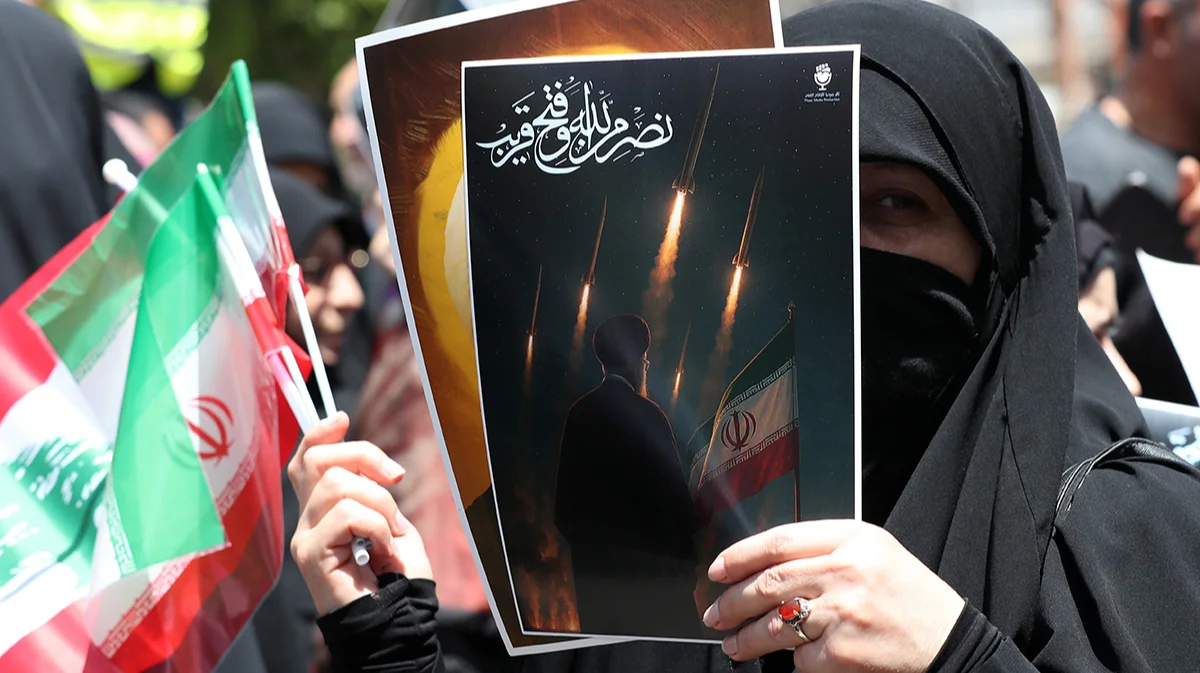
A supporter of Hezbollah with an Iranian flag and a poster during a protest against Israeli attack on Iran, Beerut, Lebanon, June 20, 2025. Photo: Wael Hamzeh / EPA-EFE
On June 13, a new escalation of the conflict between Israel and Iran began. According to the Iranian Ministry of Health, at least 224 people were killed as a result of strikes, most of them are civilians. Among the victims were the military, officials and nuclear physicists. Iran inflicts response to Israel. According to the Israeli authorities, 24 people died from Iran’s missile strikes.
Some Iranian public figures, including activists and representatives of the diaspora abroad, saw a chance for the opposition to overthrow the regime of the Islamic Republic. So, the famous human rights activist Masikh Alindzhad in a column for The Free Press wrote: “Many Iranians do not mourn today. Despite uncertainty, they celebrate. These commanders were those who ordered the protesters to shoot teenagers in prison. ” Other opposition representatives are much more restrained. The artist Shirin is nonsense, for example, said: "The regime that kills children cannot save us from another regime that kills children." At the same time, the Israeli authorities urge the Iranians to "take advantage of the moment." Prime Minister Benjamin Netanyahu expressed confidence that the war opens up the opportunity for Iranian society for an open performance against the government. The correspondent of Novaya Gazeta Europe, Fariza Dudarov, spoke with Pierre Pekhlevi, a researcher of Iranian descent, professor of the Department of Defense Studies of the Canadian College of the Armed Forces - about whether the Iranian society really had a chance to overthrow the regime or, on the contrary, Israeli blows only strengthened the power, forcing citizens to rally around it.
Pierre Pahlavi
Professor of the Department of Defense Studies of the Canadian College of the Armed Forces
- Pierre, I will start with the most common question. How would you describe the foreign policy of Iran? How much, in your opinion, it was she who led to the current escalation? And vice versa, what role did Israel and its foreign policy play in the aggravation of the conflict?
- Both countries are responsible for the current escalation. Over the years, Iran has adhered to an asymmetric strategy [ this is an approach in which a country inferior to the enemy in traditional military power uses non -standard or indirect methods of struggle. - approx. aut. ], which was aimed at creating a protective buffer and compensating for shortcomings in traditional weapons. This also includes the use of proxy -il-from Hezbollah in Lebanon to armed groups in Iraq, Syria and Yemen-in order to put pressure on Israel and defend its influence on the region.
From the point of view of Tehran, the “resistance axis” [ the informal coalition of Iran supported by Iran of combat and political organizations throughout the Middle East. - approx. aut. ] - this is a restraining factor and a demonstration of power. And from the point of view of Jerusalem - an unacceptable and growing threat from several directions at once.
This long -term “shadow war” reached the climax after the Hamas attack on October 7, 2023. After that, Israel decided to act on the “escalation strategy”, which is aimed not only at eliminating the “tentacles”, that is, a proxy -il, but the entire system. Israeli officials call it the "head of the octopus." As a result, the leadership of Iran, his nuclear and military facilities, were declared legitimate goals.
Israel decided to choose a Tehran nuclear program as an excuse for his actions. But Iran, although he enriched Uranus up to 60%, which is dangerous to the level suitable for use to create a bomb, he still has no key technical capabilities, such as the creation of a nuclear warhead of the desired size and installing it on the missile. The nuclear threat is quite real, but it is not fully realized. However, for Israel, even this is enough to deliver a preventive blow.
The Israeli strategy includes the military and psychological part. That is, even if Iran does not succeed in completely depriving Iran, Israel seeks at least it to weaken - in particular, having paralyzing and destabilizing the country's leadership. This double strategy is the meaning of the current military campaign.
Ultimately, this escalation is the result of not one specific provocation, but the accumulated effect of many years of strategic rivalry, which was aggravated due to recent events and distrust of countries to each other.
- You mentioned that the Israeli strategy is to strike at the very center of the system and paralyze the leadership of Iran. Did the recent killings of Iranian officials affect the stability of power in the country?
- The killer of several high -ranking Iranian officials last week was an unprecedented blow to the stability of the Islamic Republic. The political situation in the country was already fragile after the events of October 7, 2023. In addition, the regional influence of Tehran weakened: the Assada [in Syria] regime collapsed, and the proxy-lines supported by Iran suffered serious defeats. All this put Iran in a particularly vulnerable position both in terms of security and in terms of geopolitical weight.
The Israeli operation “people like a lion” is not some kind of impulsive reaction. This is a doctrine developed by the IDF after the war in Lebanon in 2006: destroy the enemy’s command structure, paralyze its protective buffer and cause horror by military operations. Israel involved more than 200 fighters, drones and special forces acting inside Iran to coordinate point blows.
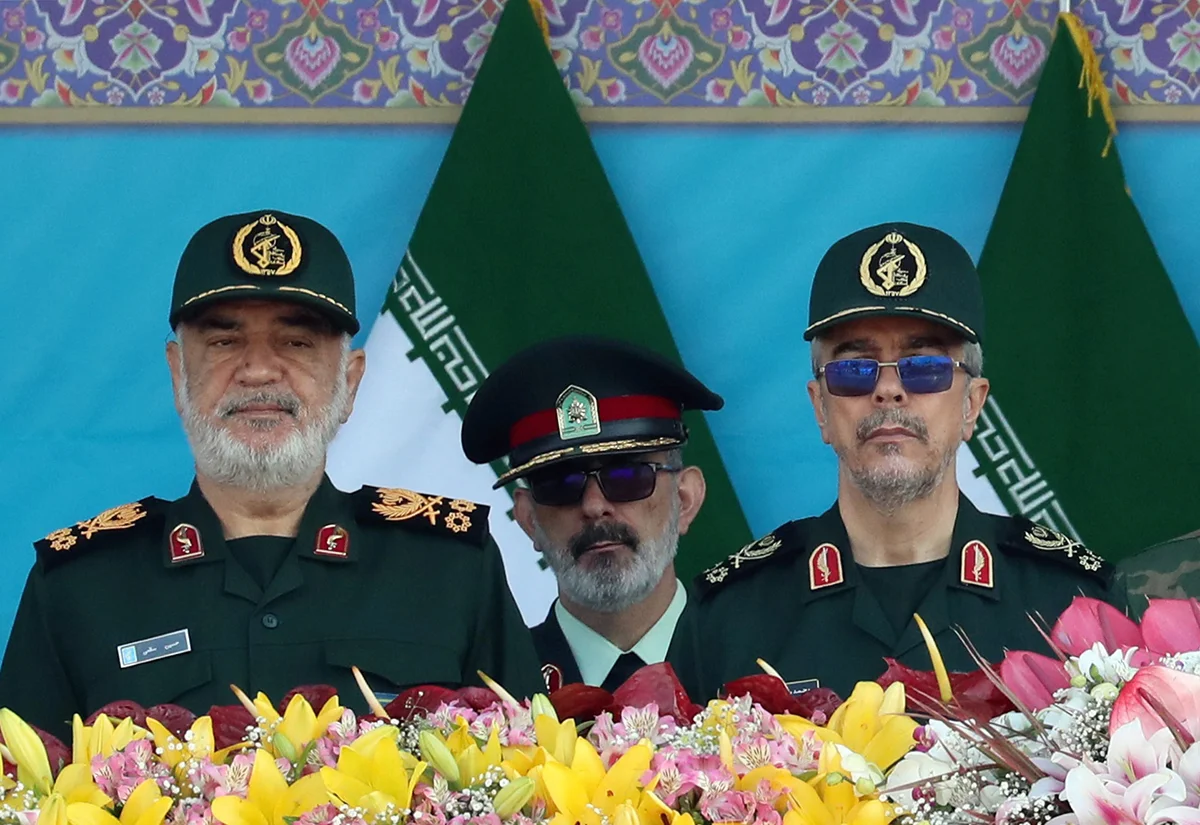
In less than two weeks, key representatives of the Iranian force elite were killed: the Commander -in -Chief of the Islamic Revolution Corps (KSIR) Hossein Salah, the chief of the General Staff of the Armed Forces Mohammad Bageri, the commander of the aerospace forces Amir Ali Hajizade and the leaders of the KudS forces [ the elite unit responsible for operations outside the country. - approx. aut. ].
This is not just a symbolic blow. Power in Iran has always rely on a narrow, united military-political elite, concentrated around the Xirir. The loss of so many key figures was created by a vacuum, which is difficult to fill, especially in a system where not only competence, but also ideological loyalty is important.
The psychological effect here is no less important. Having demonstrated the ability to strike in the very heart of the Iranian power apparatus, Israel sicked doubts both among the leadership and among ordinary employees. The regime itself so far retains power, but the aura of inviolability around his military command has already disappeared. Even the official representatives of Iran openly admit that it is more impossible to return the situation to the previous state.
The Islamic Republic had previously demonstrated amazing stability, but now the combination of several factors - the loss of leaders, strategic isolation and growing discontent among the population - can lead to a fracture. If the conflict continues, as Israel seems to want it, internal instability can develop into a complete collapse of the regime.
- Iran said that as a result of strikes, 24 high -ranking officials, military and scientists were killed. According to the Ministry of Health, about 224 people died in total, of which 90% were civilians. How much, in your opinion, can I trust the official data of the Iranian authorities?
- Surely you heard the saying: the first victim of the war is the truth. This conflict is no exception. On both sides, the number of victims and the scale of destruction became part of the brutal information struggle, where data on civilian losses are used for strategic, media and psychological purposes. This is not news: in any conflicts, losses always become part of the struggle for influence, trust and legitimacy. But in this case there is one important nuance.
Israel, who is trying to encourage the Iranians to the uprising, is interested in underestimating the number of civilian casualties. The underestimation and silence of the number of dead civilians allows Israel to maintain a positive image in the eyes of the Iranians and even position themselves as a possible ally in the fight against the regime. Parable and excessive violence can push away those people whose support is counting Israel.
The Islamic Republic leads the opposite information campaign. Exaggerating the number of victims among civilians, the regime is trying to cause popular indignation, rally a nation in the face of an external enemy and distract attention from internal problems. At the same time, the authorities deliberately lower the scale of damage to the key infrastructure: military bases, energy facilities and command posts. Confirmation of real destruction would mean recognition of vulnerability and inability to protect the country, which can cause panic and undermine the trust of society.
Both sides use numbers as a tool for forming their narrative. This war is not only missiles: it is a struggle for perception, where each number, each photo and every destroyed building become weapons in battle for emotions, public opinion and control over the agenda.
- As you said, many Prozrail public figures now say that the Iranians need to overthrow the “dictatorial regime” while it is weakened. How much such proposals relate to reality?
- Since the beginning of the operation “People as a Leo”, the Israeli leadership began to talk about their goals openly. Prime Minister Netanyahu no longer hides his intentions: the dismantling of the Islamic Republic is officially proclaimed by Israeli policy. He openly calls the Iranians to the uprising, saying that "the regime is much more vulnerable than it seems." Moreover, he hinted that the elimination of the High Leader Hamenie could be a key step in the "restructuring of the Middle East."
In his office of ministers they say about the “historical window of opportunities” for the final elimination of the Islamic regime. Even the name of the operation - “people like a lion” - is borrowed from the Old Testament and unequivocally hints at the pre -revolutionary Iran - the era of the lion and the sun [ in English the operation is called “rising lion” - “rebel lion”. Leo and the sun were important state symbols of Iran before the Islamic Revolution of 1979. - approx. aut. ]
This is more than just symbolism. The information war is as carefully thought out as missile strikes. The hacking of Iranian state television is not just a tactical move, but a psychological attack aimed at undermining the image of an invincible regime. Israel wages a struggle on two fronts at once: physical and informational. Behind the point airstrikes there is a clear strategy: destabilize the economy of Iran, paralyze its nuclear and military infrastructure, destroy the decision -making mechanism - and all this without the introduction of the ground forces.
This is a war on the exhaustion and undermining of the regime in which the same tactics of the proxy-war that he himself used for a long time against others use.
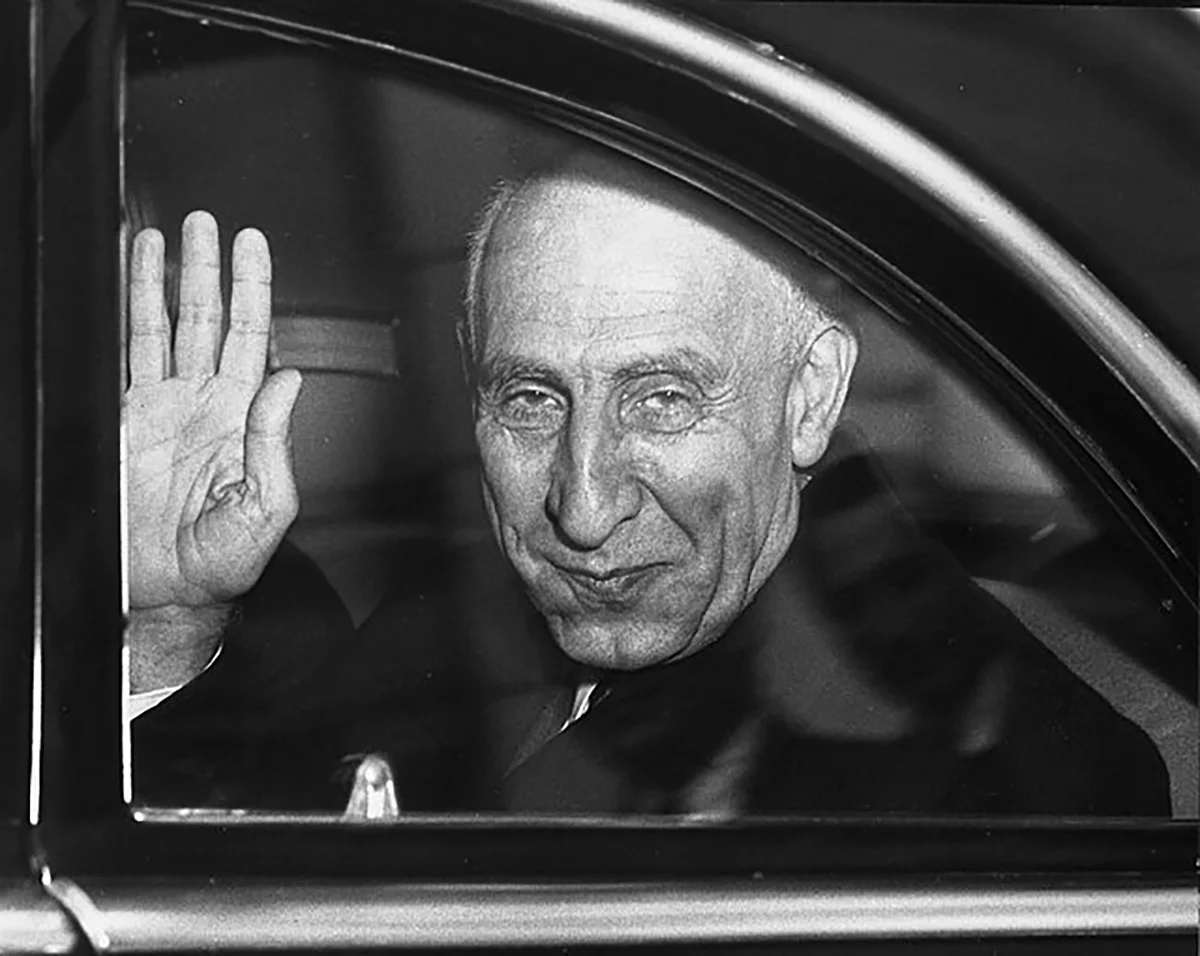
But the risk is huge. The history of Iran knows numerous examples of resistance to foreign interference. Be it the memory of Mosaddyka [Iran Prime Minister in the 1950s. He became famous for nationalizing the country's oil industry, which had previously been controlled by foreign companies, mainly British. This caused a strong tension in relations with the West, and in 1953 Mosaddyk was overthrown during the coup organized by the CIA and British intelligence. Mossadyk became a symbol of Iran’s struggle for independence and resistance to foreign intervention. - approx. aut. ] or pride in the Achaemenid Empire [Ancient Empire, which existed approximately from the VI to the 4th century BC and was founded by Cyrus the Great. This was one of the largest and most powerful empires in history, covering the territories from Egypt and Asia Minor to India. Achaemenids became famous for effective management, respect for the culture of the conquered peoples and the construction of grandiose cities and roads. For Iranians, this is a symbol of the great past and the subject of national pride. - approx. aut. ] - Iranians acutely feel any change imposed from the outside. Even those who dream of the future without theocracy will not accept the regime that will be a puppet of Israel or the USA: such a regime simply will not survive.
- And this “window of opportunities” is real?
- At first glance, chaos in Iran can open new opportunities for those who are opposed to the regime. Israeli blows clearly violated the chain of command command. Moreover, the consequences for civil infrastructure, such as the disconnection of state television and frequent interruptions in the Internet (regardless of whether they are caused by Israeli operations or the regime itself, trying to stop possible protests), created an atmosphere of universal anxiety and confusion. In such conditions, there may be chances for the internal opposition: to express your opinion or even mobilize.
However, this “window of opportunities” may be illusory or short -lived. History shows that the Islamic Republic has a gloomy but powerful ability to survive. The regime developed internal mechanisms - political, informational and repressive - which effectively absorb and suppress any discontent.
The main pillar of these mechanisms is the Corps of the Guardians of the Islamic Revolution (Ksir) - the most devoted and secured by the resources of the stronghold of the regime. Instead of weakening after the past crises, the Xirir - or “Sepes”, as the Iranians call it - comes out of each of them only stronger, more independent and even deeper rooted into the system. At the same time, external support, noticeably strengthened thanks to close ties with Moscow and Beijing, makes the collapse of the authorities in Tehran unlikely. On the contrary, the theme of external aggression - real or fictional - serves as an excuse for suppressing dissent, gives an occasion for accusations in the spirit of “color revolutions” or Zionist conspiracies.
The paradox is obvious: the regime seems shaky outside, but inside it in many ways remains military dictatorship. Over two decades, Xyr has hone the art of suppressing uprisings, control over cities and censorship - therefore, even the most daring spontaneous protests are faced with hard suppression. Simply put, any opportunities for political activity that have appeared is more likely illusory - this is a fleeting gap in a rigidly controlled system that can adapt, bribe and, if necessary, powerfully declare itself.
- There is another opinion: that many Iranians, on the contrary, “rally around the flag” amid the aggravation of the conflict with Israel. How do you think this assessment is true?
-To some extent, this is so, but with reservations. In the first days after a large -scale and coordinated attack of external forces, “rallying around the flag” is practically inevitable. At such moments, nationalism, even in the conditions of an authoritarian regime, becomes a powerful emotional support for people. There is evidence that some Iranians - especially those who remain a loyal Islamic Republic or are afraid of instability - responded to events with patriotic fervor.
But this reaction is not universal for everyone and, most likely, is short -lived. Decades of repression, economic difficulties and political disappointments undermined the trust of the people. The authorities are trying again to present what is happening as "a conspiracy of foreign enemies." But the reception, which used to work well, now Iranians are more and more skeptical. Especially among young people, the feeling that the regime, and not enemies from the outside, is the root of troubles, is growing.
In addition, the fact that the state was unable to protect the key infrastructure, stop the murders of commanders and ensure basic services, undermined faith in its legal capacity. The vulnerability of power against the backdrop of "cohesion" gives rise to an internal conflict.
So yes, some part of the population may really “rally around the flag”, but no less significant part rallied against the regime. We observe not national unity, but a national fragmentation, where patriotism is adjacent to a growing desire to hold a regime for decades of authoritarianism.
In other words, “rallying” really occurs, but it is partial, fragile and contradictory. Behind the outer picture, a much deeper public split may be hidden.
— Учитывая, что среди обычных иранцев есть и патриотический подъем, и растущее недоверие к режиму, интересно узнать, существует ли внутри иранской оппозиции единое мнение по поводу эскалации конфликта с Израилем? Например, в соцсетях появляются видео, где некоторые иранцы якобы празднуют бомбежки своей страны. Насколько, на ваш взгляд, распространены такие настроения?
— У иранской оппозиции нет какой-то единой позиции по поводу обострения конфликта с Израилем. И это отражает сложность иранского общества. Пока одни оппозиционеры восприняли удары Израиля с тихим одобрением, а гибель высокопоставленных силовиков как пример «справедливости», другие обеспокоены происходящим.
В иранских независимых СМИ и соцсетях можно увидеть редкие акты неповиновения режиму: сдержанные проявления радости, граффити в поддержку Израиля, шифрованные сообщения, в которых операцию называют началом конца Исламской Республики. Эти не массовые явления, но очень символичные, особенно в стране, где любое открытое инакомыслие жестоко подавляется.
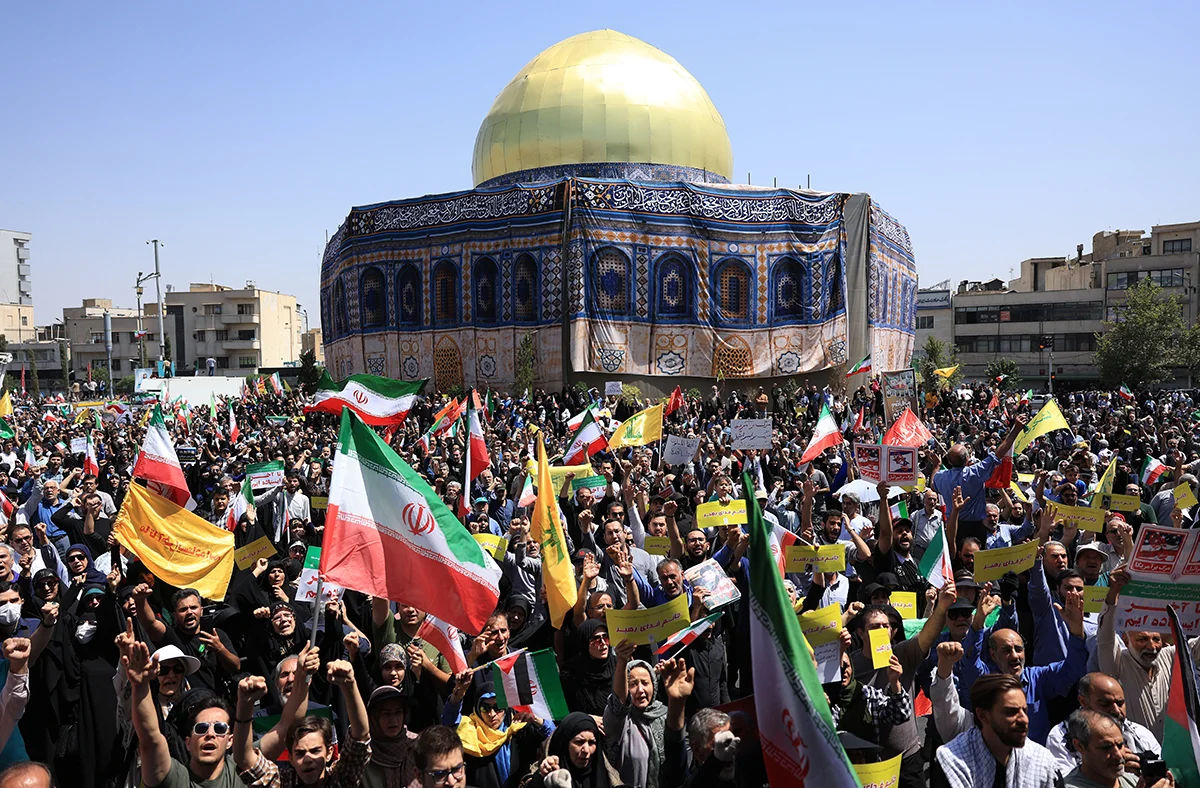
В то же время нельзя игнорировать и обратное. На организованных властями митингах собираются как убежденные сторонники режима, так и те, кто просто не приемлет идею иностранного военного вторжения. Лозунги «Смерть Израилю» снова звучат на улицах — это и результат пропаганды, и страх перед хаосом. Для многих режим, несмотря на все его недостатки, всё еще остается опорой, которая сдерживает национальный раскол.
— Есть ли сейчас какие-то прогнозы по развитию этого конфликта? К чему, по вашему мнению, он может привести и какие сценарии кажутся вам наиболее вероятными?
— Прогнозировать развитие конфликта между Ираном и Израилем очень сложно и рискованно, учитывая скорость и масштаб происходящего. Тем не менее, эксперты выделяют несколько реалистичных сценариев: от катастрофы до геополитической перестройки.
Первый сценарий — стратегическая неудача Израиля. Если Тегерану удастся сохранить или восстановить ядерный потенциал, он сможет ускорить разработку оружия.
Это может втянуть регион в затяжной цикл эскалаций по принципу «око за око». Израильские политики цинично называют это «стрижкой газона».
Второй сценарий — серьезные последствия для мировой экономики. Если Иран перекроет Ормузский пролив, через который проходит почти треть мировой нефти, или активизирует атаки хуситов в Красном море, это приведет к резкому росту цен на нефть, усилит инфляцию и повысит влияние крупных экспортеров энергоресурсов, таких как Россия.
Третий сценарий — крах режима, если Израилю удастся нанести удар, который приведет к падению Исламской Республики. Это может показаться стратегической победой. Но образовавшийся вакуум власти может привести к хаосу: гражданской войне, распаду по этническим или религиозным признакам и распространению нестабильности по региону, как это было после краха Ирака в 2003 году и Ливии в 2011-м. Не многие игроки, включая сам Израиль, действительно готовы к такому сценарию.
Существует еще один сценарий — контролируемый переход власти, организованный или поддерживаемый евразийскими союзниками Ирана. Сегодня Иран уже не изолирован. Он является полноправным членом BRICS+, Шанхайской организации сотрудничества (ШОС) и связан с Москвой и Пекином долгосрочными стратегическими соглашениями. Для России и Китая падение действующего режима в Тегеране — это не только риск, но и стратегическая возможность. Вместо того чтобы допустить к власти прозападную оппозицию, они могут предпочесть более «приемлемый» режим — светский, авторитарный и геополитически ориентированный на их интересы.
Также возможен переход власти к военным через государственный переворот, который может осуществить какой-нибудь офицер из Артеша — регулярной армии Ирана. Артеш часто рассматривают как более профессиональную и менее коррумпированную структуру по сравнению с КСИР. Она могла бы позиционировать себя защитником национального единства и стабильности. И для Си Цзиньпина, и для Владимира Путина такой исход был бы идеальным. Ни один из них не рассматривает клерикальный режим в Тегеране как естественного союзника — его революционная идеология и непредсказуемая дипломатия всегда были обузой. Напротив, националистический военный режим мог бы приостановить ядерную программу Ирана по тактическим причинам, нормализовать международные отношения ровно настолько, чтобы ослабить санкции, и при этом прочно оставаться в евразийской сфере влияния. Это также обеспечило бы Москве стабильный южный фланг, а Пекину — постоянный доступ к стратегическим энергетическим коридорам вдоль «Одного пояса и одного пути».
В таком сценарии Израилю, возможно, удалось бы обезглавить то, что его стратеги называют «головой исламистского осьминога», но, как ни парадоксально, это может привести к тому, что Иран станет более консолидированным, более модернизированным и по-прежнему настроенным против западных интересов.
Но, как вы справедливо отметили, это лишь прогнозы. Единственное, что можно сказать наверняка: регион находится на краю пропасти. Сейчас многое зависит от масштаба иранского ответа и от того, смогут ли США сдержать дальнейшую эскалацию со стороны Израиля. То, что начиналось как холодный конфликт, рискует перерасти в полномасштабную войну без ясного конца.