
Translated material
"Very fragile design"
Israel and Iran have concluded a truce, but the shelling continues. Whether to wait for a new escalation and what will lead Twitter Diplomatia-explains Orientalist Ruslan Suleimanov
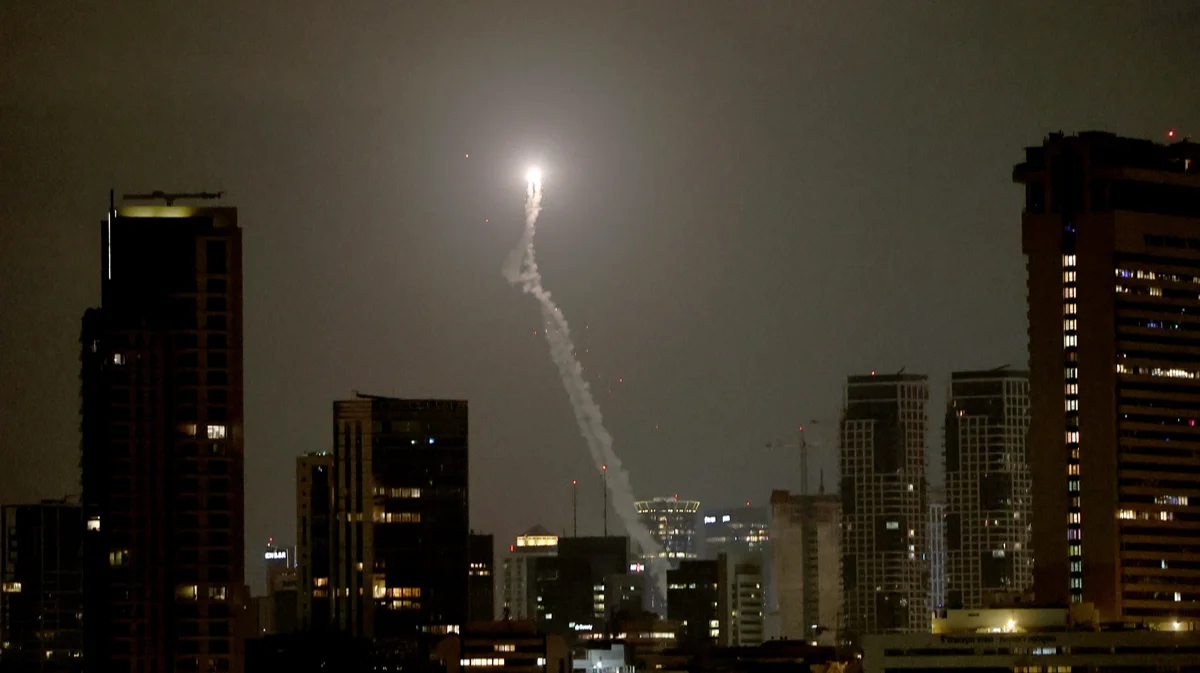
The Israeli air defense system intercepts Iranian missiles in the sky above Tel Aviv, Israel, June 17, 2025. Photo: ATEF Safadi / EPA
During the day, the situation in the Middle East has changed dramatically. On the evening of June 23, Iran attacked the American military bases in Qatar and Iraq with missiles. A few hours after that, US President Donald Trump announced on social networks about the conclusion of a ceasefire between Israel and Iran and even described a plan, which, on his assumption, will bring closer to the “official end of a 12-day war”.
However, the parties did not immediately confirm the words of the American president and continued shelling. Trump told reporters: “In fact, we have two countries that fight so long and so stubbornly that they do not understand what the hell is doing” (They Donat Know What the Fuck They're Doing in the original. - Ed.). Orientalist Ruslan Suleimanov, in an interview with Novo-Europe, tells whether it will be possible to ensure the ceasefire and how much the blows of Iran on the American military bases have influenced the situation.
- How do you assess such a rapid course of events?
- Trump is still more trying to give the desired for the real one. He seeks to achieve peace in the Middle East, but neither Iran nor Israel are ready for such speed. Although all parties already understand that this conflict cannot continue endlessly and that a certain conflict potential has been exhausted in many ways.
However, technically, none of the parties, even if they both agreed to the ceasefire, did not manage to ensure the implementation of this decision at all lines. Orders must pass the entire chain of command to the most lower links. Therefore, the shelling continues, and the danger of escalation remains.
This is not a written agreement on the ceasefire, not an official deal between Iran and Israel, where the parties publicly agreed and shook hands. No, here everything happened backstage, cello, and we do not know how it really was.
In fact, only from Trump's posts we learned that, it turns out, the world is concluded. Therefore, this world is extremely fragile.
I believe that the ceasefire will still be possible to provide - shelling on both sides should stop. But in the long run, this is not a solution to the conflict. Threats from both the Iranian and Israeli side will remain. The question of the Iranian nuclear program also remains open. So this is rather a temporary compromise solution that allows all parties to get a respite.
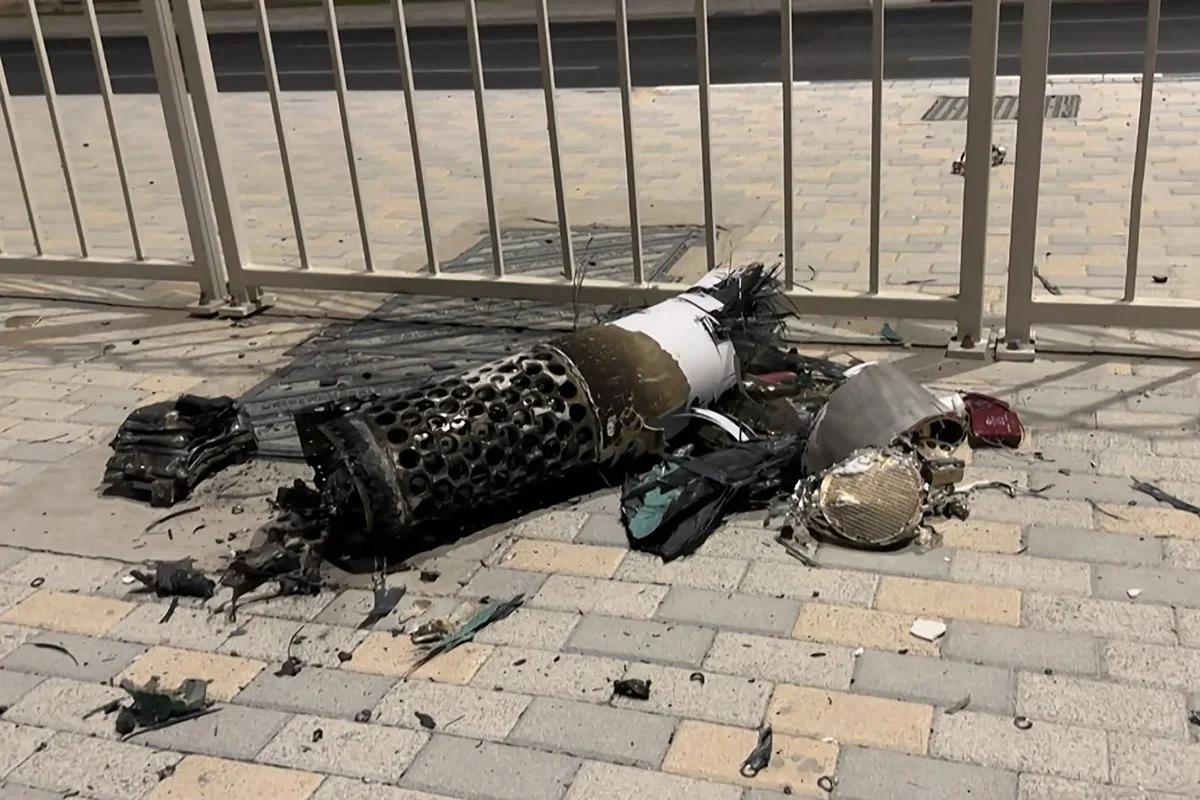
- You mentioned the fragility of this truce, declared by Trump in social networks. How much can such a "twitter divomatium" can be trusted? Could this initially be perceived as a serious statement?
-If Trump wrote about this, then some negotiations were really conducted, certain oral agreements were reached. But it is important to understand: this is not a written document, not an official transaction. It is even more difficult to imagine the representatives of Iran and Israel, who would meet, shook hands and signed an agreement on the ceasefire.
How negotiations were conducted
Trump entered into negotiations after the United States struck the Iranian nuclear facilities on the night of June 22, Axios writes with reference to sources. But Tehran, according to the publication, agreed to a diplomatic solution to the issue only after a response impact. Qatar became an intermediary in the negotiations.
Trump announced the ceasefire immediately after a conversation with Israeli Prime Minister and Iranian officials, reported by The New York Times with reference to an anonymous, sophisticated official in a White House. According to NYT, the announcement of Trump in social networks found the American administration by surprise.
So this is a very fragile design in itself. The situation remains extremely unstable and dangerous, with a high risk of resuming escalation.
Nevertheless, both Iran and Israel really feel the need at least for a temporary respite. This is an objective factor that can contribute to the preservation of a truce, despite all its shame.
- According to Trump, the ceasefire will begin to gradually enter into force about six hours after its announcement. During this time, both countries must complete the already begun operations. From the words of Trump it follows that the first ceasefire will have to be put into action by Iran, and after 12 hours - Israel. And by the end of the day it will be possible to state the “completion of the 12-day war”. How realistic is this plan?
-In my opinion, everything has already gone completely wrong. Almost immediately after the publication of Trump in social networks, Israel accused Iran of new shelling.
It is important to understand: a post on social networks is not a legal document with clearly described obligations and signatures of the parties. Most likely, there were some oral agreements, but Trump presented them as a full-fledged agreement. Since neither Iran nor Israel officially signed anything, this remains only by the declaration. Perhaps some mobile terms with a margin of several hours were discussed, but such a publication does not oblige anyone to anything.
The ceasefire cannot occur instantly by clicking fingers or after Trump one post. This is a complex mechanism that requires coordination between various departments and military structures. It takes time for decisions to reach all levels. Therefore, in general, I remain an optimist - a truce in principle has been achieved, but the question is, when it really enters into force, remains open.
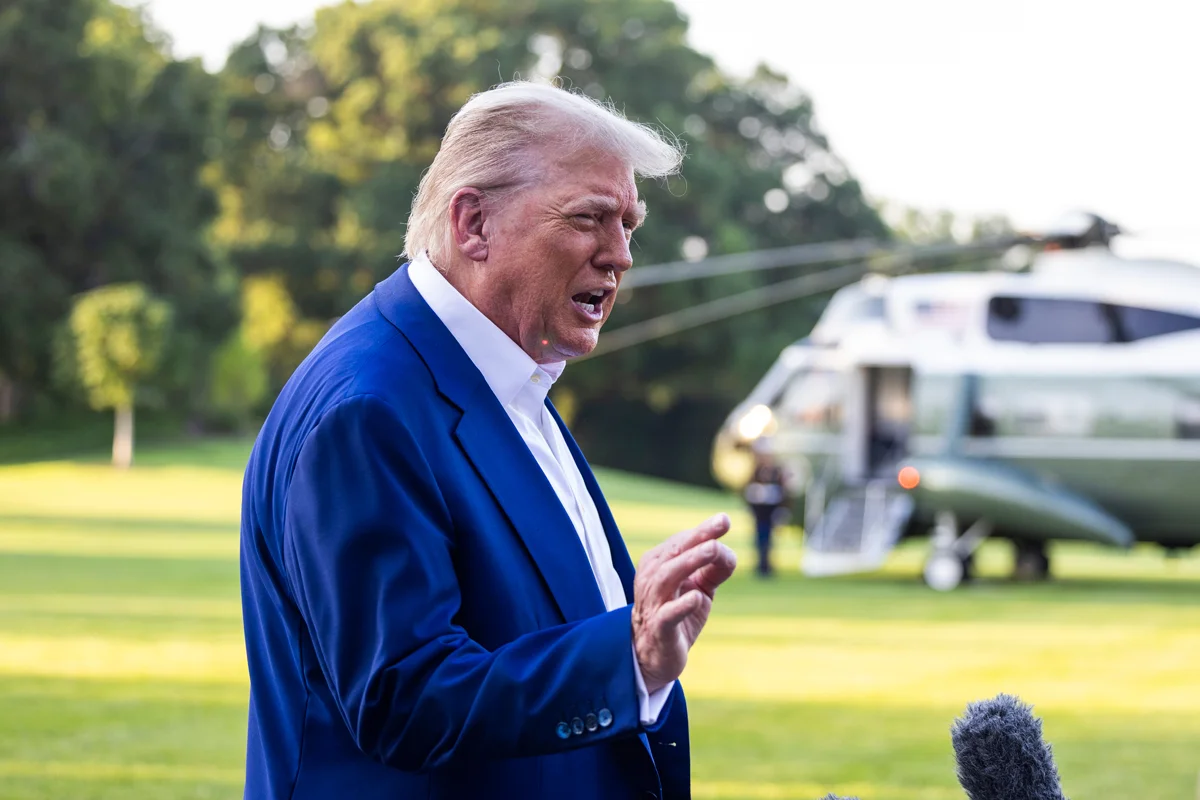
- How did Iran’s blows on American bases in Qatar and Iraq influenced the situation?
- Trump expected these blows - very restrained and with minimal damage to the American side, which eventually happened. In fact, American objects were not injured. Purely formally, this will say that each side showed its “teeth” and opportunities. This created the visibility of the “exchange of blows”: the United States struck, Iran answered - now you can stop.
The fact that Trump did not escort the conflict further and apply new blows to Iran, indicates that he was not interested in at this stage in an even greater war with Tehran and that he wants to appear a peacekeeper, and not a web of a war. At least this is his current strategy.
- If the truce holds out, how will this affect Iran and its nuclear program?
- In the Islamic Republic, the attack on American objects is presented as a huge success and a big victory. Despite the fact that it is clear - the blow is asymmetric, Iran cannot afford to cause huge damage to the United States. Nevertheless, this is already perceived as a victory: that we, they say, answered America.
But if we talk about the long term, it is obvious that the regime in Iran will be tightened, to close in itself. The Iranian nuclear program certainly did not end. Firstly, we do not know what the scale of destruction is actually. This can be established only by a special ground inspection, but no one conducted it. Iran may indicate that the damage is minimal, and Trump - that “tremendous damage” has been caused to nuclear objects in Iran. But what are the destruction, especially in the underground facility of Fordo, which is located deep in the rock underground, in fact, no one knows.
In any case, Iran still has hidden objects.
It is not to destroy the nuclear program with air strikes. That is, one way or another, this problem remains.
And many in Tehran after the last events, on the contrary, are convinced that it is necessary to develop a nuclear program as soon as possible and get nuclear weapons so that no one else strikes Iran, become a kind of North Korea with nuclear weapons and a very closed regime.
And this can be reflected on domestic policy. That is, it is obvious that the repression will become tight and the foreign policy of Tehran will become even more unpredictable. Something like it was with Iraq after the war in the bay of the 91st year.
What happened to Iraq after the 1991 war
The war in the 1991 Persian Gulf, known as a “storm in the desert” is an armed conflict between Iraq and a coalition from 35 countries under the auspices of the UN and under the leadership of the United States.
The war began on January 17 and ended on February 28 by the victory of the coalition and the liberation of Kuwait from the Iraqi occupation. After the defeat, the Iraqi army left Kuwait, and Shiite and Kurdish uprisings broke out in Iraq against the regime of Saddam Hussein. He brutally suppressed them with the help of the Republican Guard, which led to the mass executions and escape of the Kurds to Turkey and Iran.
The UN imposed economic sanctions against Iraq, including oil embargo, a ban on technology imports and freezing assets. The country was in isolation, and its relationship with the Arab countries worsened. Nevertheless, Hussein retained and even strengthened power, continuing repressions against the opposition.
-The main threat indicated by the United States and Israel-the Iranian nuclear program-still? On the contrary, its development will only accelerate, and the regime will tighten?
- Of course, the damage to the Iranian nuclear program has been caused - but we do not know its scale. Estimates vary: someone believes that the [nuclear] program has been thrown back for several months, someone is for several years. However, the program is not completely eliminated. In Iran there are new objects and new nuclear physicists who will continue to work.
Now, at the current stage, the Iranian nuclear problem is definitely not closed. Obviously, Israel and the United States, if necessary, will apply new blows to Iranian territory.
Two scenarios are possible: either Tehran will continue the program, risking new attacks from the United States and Israel, or the parties will still sit down at the negotiating table and try to conclude a new nuclear deal.
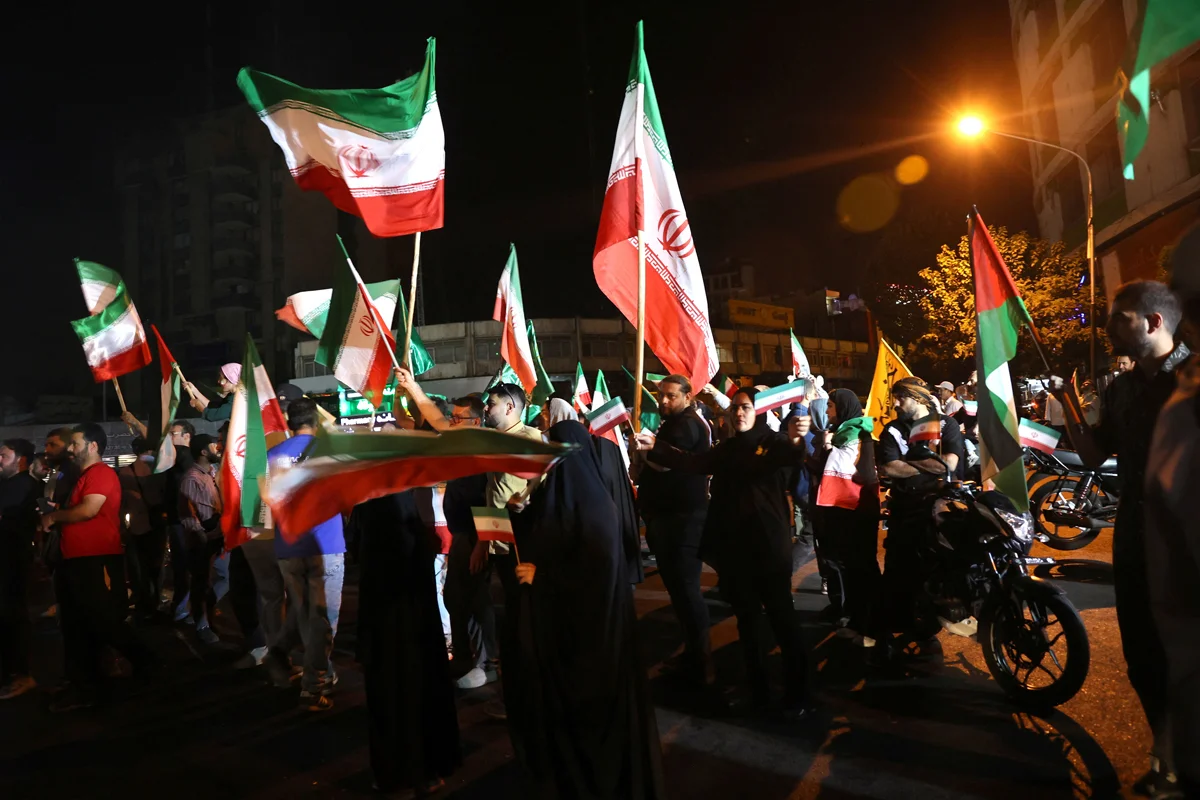
- How is the situation evaluated in Israel?
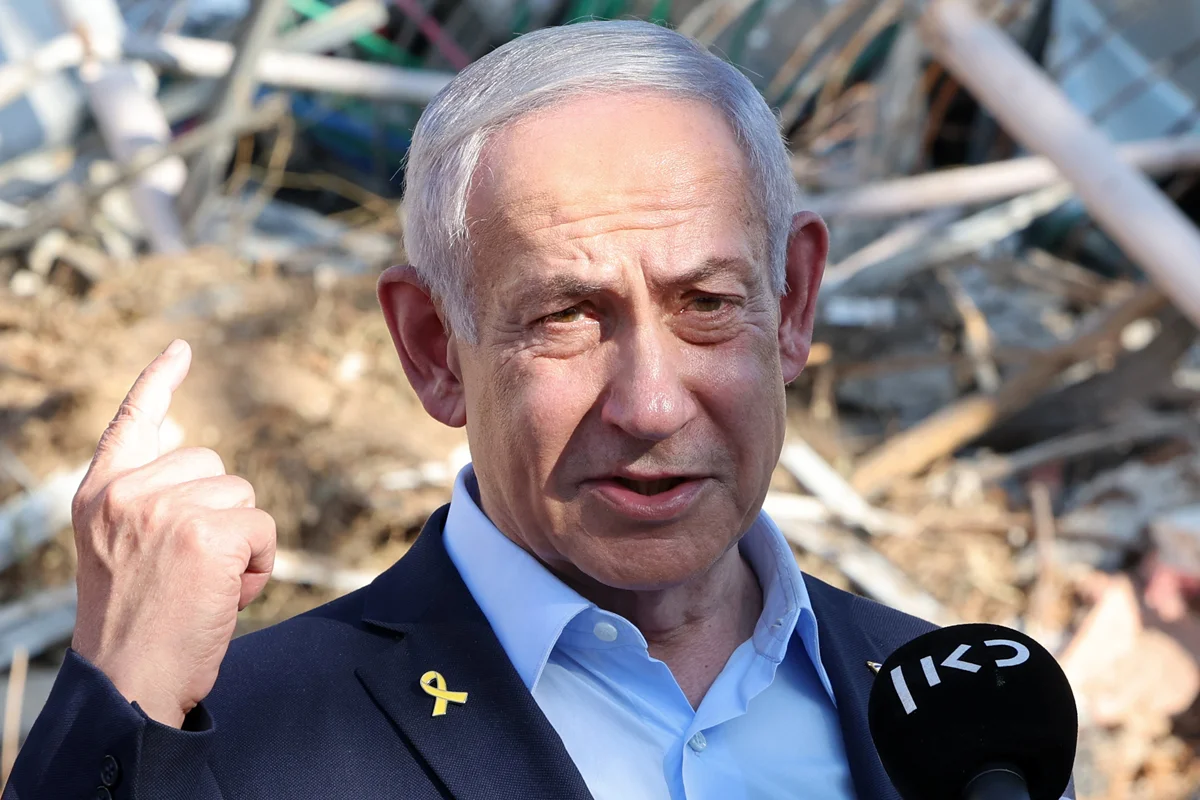
- In Israel, they have already announced that all the goals have been achieved. That is, the Netanyahu cabinet can say that Israel won this war.
Indeed, Netanyahu reached a considerable one. In addition to military purposes, in addition to eliminating, in fact, the entire military command of Iran, Netanyahu managed to divert attention from pressing problems, from conflicts within Israel, from the problem around the gas sector. It was possible to rally the Israeli population around the common enemy in the person of Iran. This is already a huge success for the Israeli authorities.
- What kind of intra -Israeli problems are we talking about?
- The war in Gaza has been going on for 20 months, and the tasks have not been solved. Israeli hostages remain in Hamas - according to various sources, about 20 living and several dead. This creates tremendous pressure inside Israel: on the one hand, society requires a deal with a hamas for the rescue of people, on the other hand, coalition partners of Netanyahu categorically against any concessions.
Let me remind you that the January agreement with Hamas was called the prime minister’s allies “surrender”. At the same time, Hamas is not only not destroyed, but continues to replenish the ranks and attack Israel. The opposition requires decisions tougher from the government - just a day before the Iranian operation in the Knesset, they almost decided to self -dissolve.
Scandals are added to this: investigations about the possible connections of the Netanyahu administration with Qatar, frozen judicial reform ( judicial reform in Israel, initiated by the Netanyahu government, involves limiting the powers of the Supreme Court and strengthening the control of the government of judges; the reform caused broad public debates and protests . - approx. Ed. ).
Yes, the latest events temporarily rally the Israelis - even the opposition leader Yair Lapid called for unity. But this is a short -term effect. Sooner or later, you will have to return to unresolved problems: gas, domestic political crises, elections inevitable in the future.
- And if the truce still breaks? What are the risks of rapid escalation and expanding the conflict in the region?
- So far, not a single country is eager to get into this conflict - neither on the side of Iran, nor on the side of Israel. All, including even Qatar, who himself recently fell under fire, is extremely preoccupied with the situation and obviously do not want further exacerbation.
Of course, among the Arab states there are those who, deep down, even rejoice at the weakening of Iran. But at the same time, everything is up to a single guard - they were seriously frightened by the lightness with which Israel is ready to launch the power against any threats.
If the escalation continues - and this is quite possible - it will most likely remain at the level of air strikes.
Neither the Americans nor the Israelis are going to start a terrestrial operation in order to achieve the complete destruction of Iranian nuclear objects. And even more so, they do not set themselves the goal of overthrowing the regime in Tehran.
For such large -scale tasks, you can’t do without the Ground Forces - but, I repeat, neither the USA nor Israel is being built now.