
Translated material
Caesar - God
What story was the Prime Minister of Armenia Nikol Pashinyan in Turkey and whether the domestic agenda for the country will supplant an external
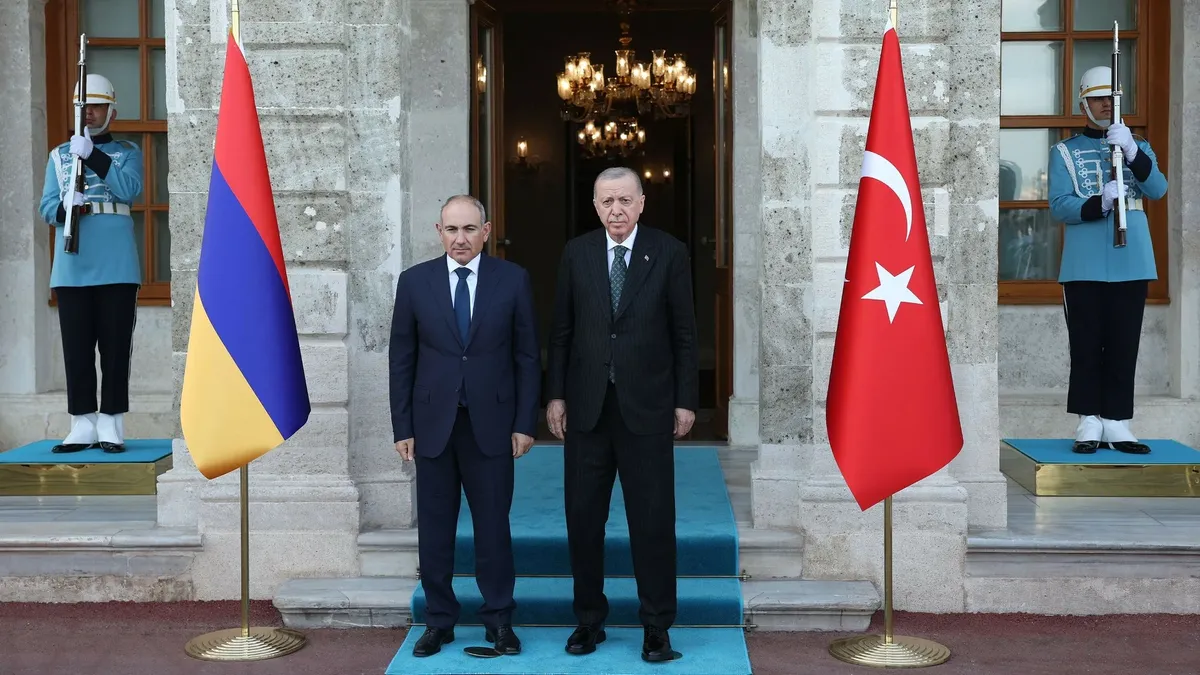
June 20, 2025. Istanbul. Nikol Pashinyan and Recep Erdogan. Photo: Handout / AFP / East News
Close to the Armenian authorities and the not very well -known publication of Civic.am, citing unknown sources, published a seven -page coup on the coup, which, together with the leaders of the opposition, large businessmen, and representatives of the church, were supposed to commit. The list of names basically did not surprise anyone: the former presidents Serge Sargsyan and Robert Kocharian, Archbishop Bagrat Bagrat Blastanyan, who became famous for his recent campaign against Pashinyan from Tavush to Yerevan, of course, the founder of the Tashir Business Empire Samvel Karapetyan arrested a few days ago. One of the richest people of Armenia, the creator of the “Prossiding Armenia” party, Gagik Tsarukyan, who had recently been distant from direct attacks on power, like another large businessman Samvel Aleksanyan, who also got into the Civic list, became somewhat unexpected in this list. Against this background, no one was surprised by the appearance of Russian structures in it, with which Pashinyan conflict from the very beginning: the Armenian structures of Russian Railways and Gazprom.
The power reaction to the press message was lightning fast. The very next day, searches were held in the houses of opposition, and the Investigative Committee announced the disclosure of the conspiracy, the details of which in general confirmed the Civic.am version, but also added details. The conspirators allegedly planned mass breakdowns and damage to the infrastructure, including traffic lights, which was supposed to lead, in particular, to the mass accidents and subsequent chaos, and for this purpose, as the message, they also acquired, including the maps of Yerevan. Arrests have already begun, which, as they believe in the opposition, will be massive.
And, perhaps, they are not mistaken in the opposition. The political crisis that has been ongoing all over the past months has been delayed in a tight spiral - a conflict with the church, the arrest of Karapetyan and now - the exposure of the coup. And even Pashinyan’s visit to Turkey, which was called historical in advance, also became part of it.
During his visit to Turkey, Nikol Pashinyan visited the Patriarchal Cathedral of the Blessed Virgin Mary in Istanbul and met with the Turkish compatriots-Armenians. The highest clergy of the Patriarchate of Constantinople in the cathedral ignored, but the Patriarch himself chose these days for a trip to the United States, and therefore the visit to Pashinyan Patriarchate became impossible, and indeed lost its meaning. Which, however, did not prevent this event from discussing much more widely and vividly than a meeting with President Erdogan himself, because of which the visit was initially and was called historical.
Turkish course
The last time Armenia and Türkiye made history seventeen years ago. Then both football teams fell into one qualifying group of the World Cup, and in the first game in Yerevan, attention was not focused on what happened on the field (where nothing interesting and good for the Armenians did not happen), but to the bed No. 1, in which the then presidents, Sergey Sargsyan and Abdullah Gul, were discussing something friendly.
However, very soon Washington’s initiative was nullified by the joint efforts of Moscow, which without changing regional layouts had enough problems after a five -day war in South Ossetia, and Baku, who considered any variation on the topic of bilateral communication of Ankara and Yerevan, considers and considers it a political risk for himself. And now Türkiye, which has learned its lessons from football diplomacy, does not allow undertaking in the Armenian direction, which can cause the displeasure of Azerbaijan. It is no coincidence that the day before the arrival of Pashinyan, Erdogan met with Aliyev, who had arrived to open the Azerbaijan quarter residential complex, jointly built after the 2023 earthquake in Kazakhmanmarash.
This has already called into question the historical prospects of the visit, and there were enough reasons for doubt without it.
Against the backdrop of advertised anxieties about the influence of the war of Israel and Iran on the neighbors, perhaps, only only Armenia felt her. Iran, along with Georgia, remains for her the only window in the world, the violations of Iranian logistics did not manage to become fatal, but they inspired anxiety. Especially due to the fact that similar and not very explained difficulties for Armenian carriers from the Georgian side were discovered.
But Iran for Armenia is also an occasion for difficult political positioning. He is not only an economic partner, but also an opponent of Azerbaijan,
He supports Yerevan’s position in his polemic with Baku on the Zangesur Corridor, since the transfer of roads from Azerbaijan to Nakhichevan deprives Iran of transport ladies to the north, to Georgia and Russia. This position previously somewhat contradicted the declared prolapse of Armenia, and now it is vulnerable and in connection with the obvious weakening of Iran.
And the appeal to Ankara is really logical. But, firstly, the visit was planned before the war and clearly in the framework of the unhurried course of the Armenian-Turkish process. And secondly, now the possibilities of doing Turkey by Yerevan is even less than before, when they were not enough for the opening of the border, announced back in 2021, or even more so to stimulate at least some desire to act regardless of Baku.
Türkiye, with all the regularity of the Philippic Israeli, looks one of the main beneficiaries of this war in particular and the entire last Middle Eastern voltage in general. It has never been close to becoming the main axis of a new configuration in this region, part of which even the South Caucasus becomes.
What can Yerevan offer? Zangezur corridor? It can’t, but for Turkey, the light on it also did not agree, as for Azerbaijan. A peace treaty with Azerbaijan? So his conclusion today is not listed in hasty priorities for anyone, and Azerbaijan as well.
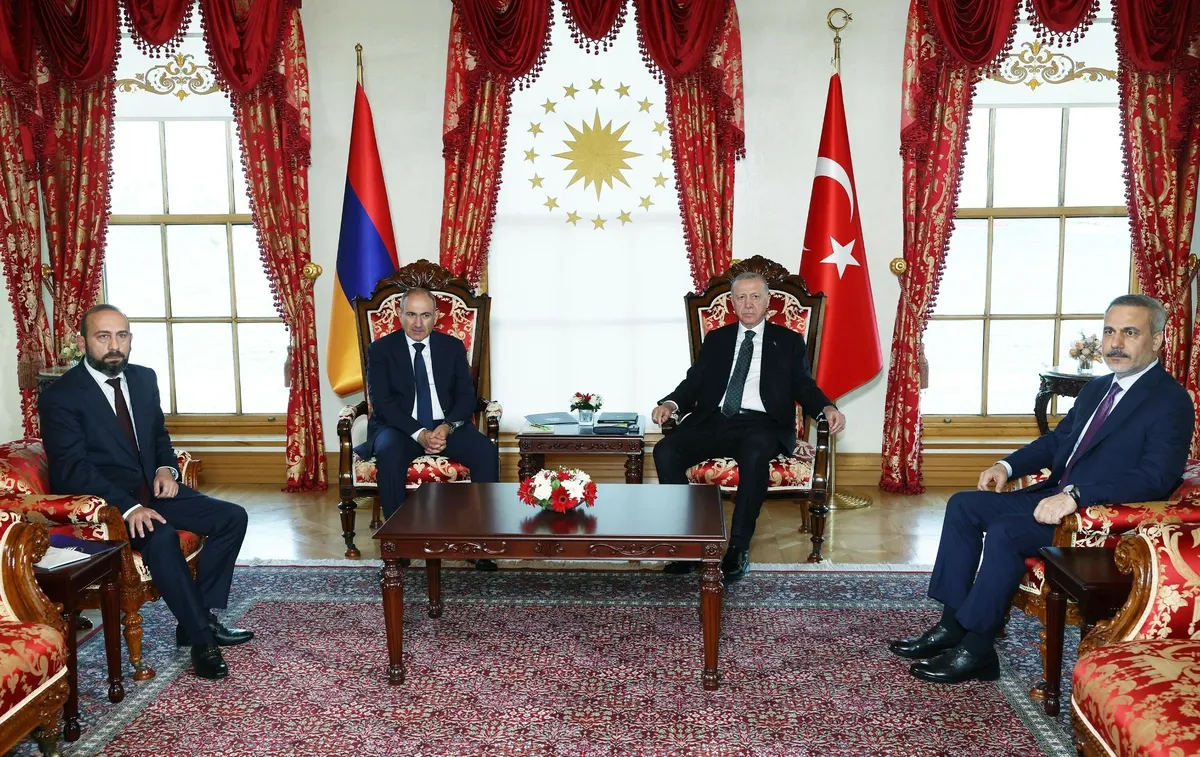
Pashinyan makes a procession
However, the current demonstration of the Armenian-Turkish breakthrough differs from the 2008 football diplomacy not only by the device of the changed world. Pashinyana, unlike Sergey Sargsyan, who was trying to play in a win -win (albeit unimaginative) lottery, which prizes in which real reversation of Armenia in the world could be, for Pashinyan, a Turkish maneuver - primarily the continuation of the internal political.
After the lost war, the substitution of the external’s internal political agenda in general for the Armenian authorities became a way of political survival, and this is logical. No matter what Pashinyan is charged with oblivion of shrines and revising history, priority for the majority is still - safety and preservation of the world.
And the more actively Pashinyan draws opponents into polemic on the foreign policy, the more obvious they have the lack of a peaceful program, which they only have to replace patriotic theses, which reads the readiness for a new war.
In accordance with the logic of Pashinyan, settlement with Turkey is a decrease in risks and on the contact line with Azerbaijan. And since many already understand that the only system of security for Armenia, which neither Russia nor Europe will be able to become and will not want to become and is the world with neighbors, the world in Pashinyan becomes largely the key to its own political survival.
And caring for him is becoming more and more relevant. Over time, resentment of Moscow, which Pashinyan put in many ways, is also weakening. In the local elections, the party of power has already lost twice - and this is a year before the decisive parliamentary elections. These lesions are so far explained by local specifics and local relations, sometimes quite criminal, and the forces, which is also ready to challenge the authorities at the national level, has not yet been visible. But the opposition, albeit the same weak, gradually become everything, Pashinyan is increasingly in political isolation.
And he goes to a sharp increase in his bets, possibly on the verge of bluff: he is not a lame duck, living after a catastrophically lost war every day as the last, on the contrary, he is a figure of an equal church and its hierarch - Catholicos of all Armenians Garen II. Starting with the revelation of his misconduct - violations of the vow of celibacy, Pashinyan demanded his resignation and elections of the new Catholicos, as if it were not about Catholicos, but about Sergey Sargsyan from the time of the “velvet revolution” of 2018. What is probably the meaning of the call: Pashinyan is still the winner, he again rakes the Avgia stables, only now in the church itself.
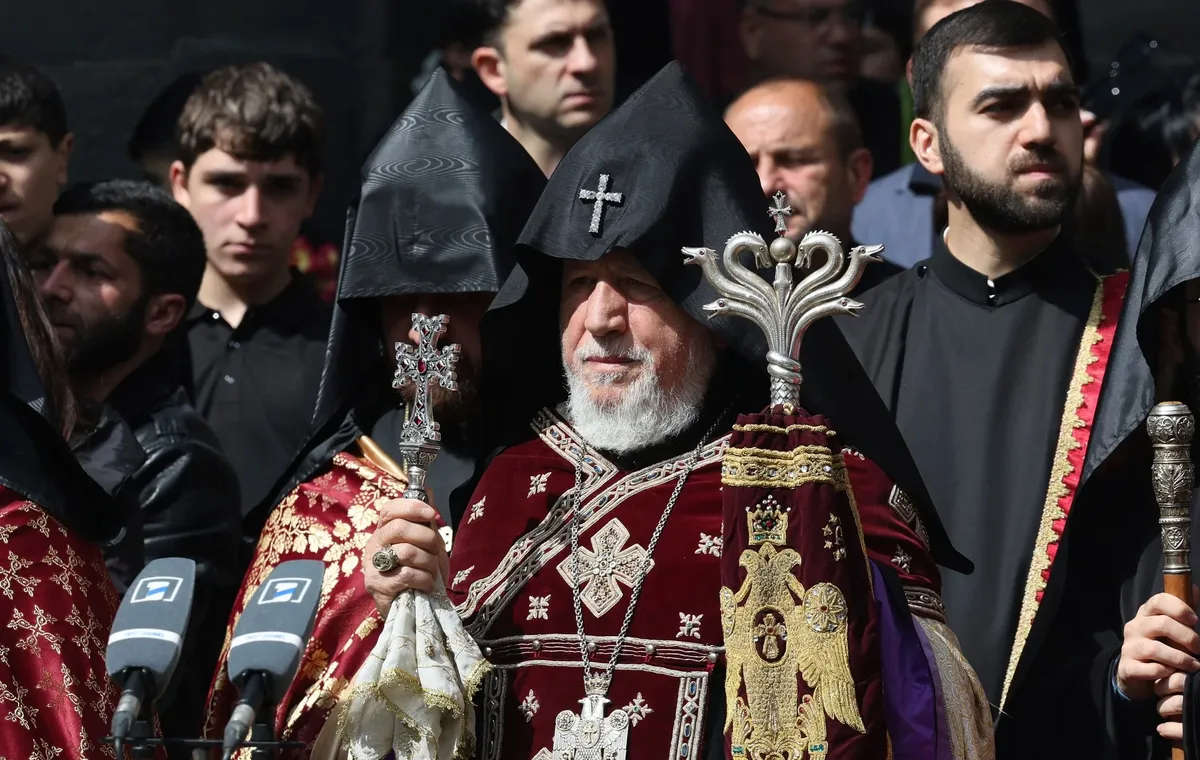
The game is risky. Not a single power of Armenia in the new and even more so in recent history, did not allow itself to, even being with the Church in a difficult relationship.
Moreover, the average parishioner about the hierarchs of this church, her temptations and other institutional and human nuances does not feed any illusions. Pashinyan did not surprise anyone with his revelations. But the real catch was different.
Insisting on what even the Soviet government was shy about with such directness - on such open and all -consuming right to perform church affairs, Pashinyan called the church to an open confrontation. And she, going into the attack, with the same directness declared her right - of course, the sacred - to intervene in the affairs of the authorities. Of course, she always did this, simply on the fact of her existence, and as for Pashinyan personally, Catholicos called him to resign after the Karabakh war. But now, having waited for a pause, for the first time with such a revelation, he declared a completely different one: about the readiness of the Church to stand over the state in general. Which is also unheard of, but, apparently, it was heard with a great understanding that Pashinyan’s intention to crush her under his power.
And the opposition received an unexpected gift. Leading the former leaders of the country, she caused a sad smile even among opponents of the current government. Now, when the efforts of Pashinyan had not just a common platform, but the owner of a powerful resource, and even a year before the elections, when the time to recoup, there were options.
And one of the first to feel this was the founder of the Tashir business empire Samvel Karapetyan.
Translated from Georgian
By the age of Samvel, Karapetyan belongs to the business that made itself in Armenia under Sergei Sargsyan, who headed the club of oligarchs, each of which Armenia knew more nicknames than by real names. But Samvel Karapetyan did not participate in this section, he is known for the fact that without unnecessary noise he employed his native village Tashir in the Kaluga region, from where the name of his business structure came. In some ways, he looks like Bidzin Ivanishvili, the same native of the Imeretnian hinterland. Just like him, Karapetyan made capital in Russia, but, unlike him, he did not engage in risky businesses, such as shrouded in secrets, including weapons, “Circushant Bank”. He was not eager for Russian business stars of the first magnitude, did not give out political ambitions (like the same Ruben Vardanyan), he was not seen in the Kremlin proximity, although he entered the circle, not too advertising his successes or his loyalty.
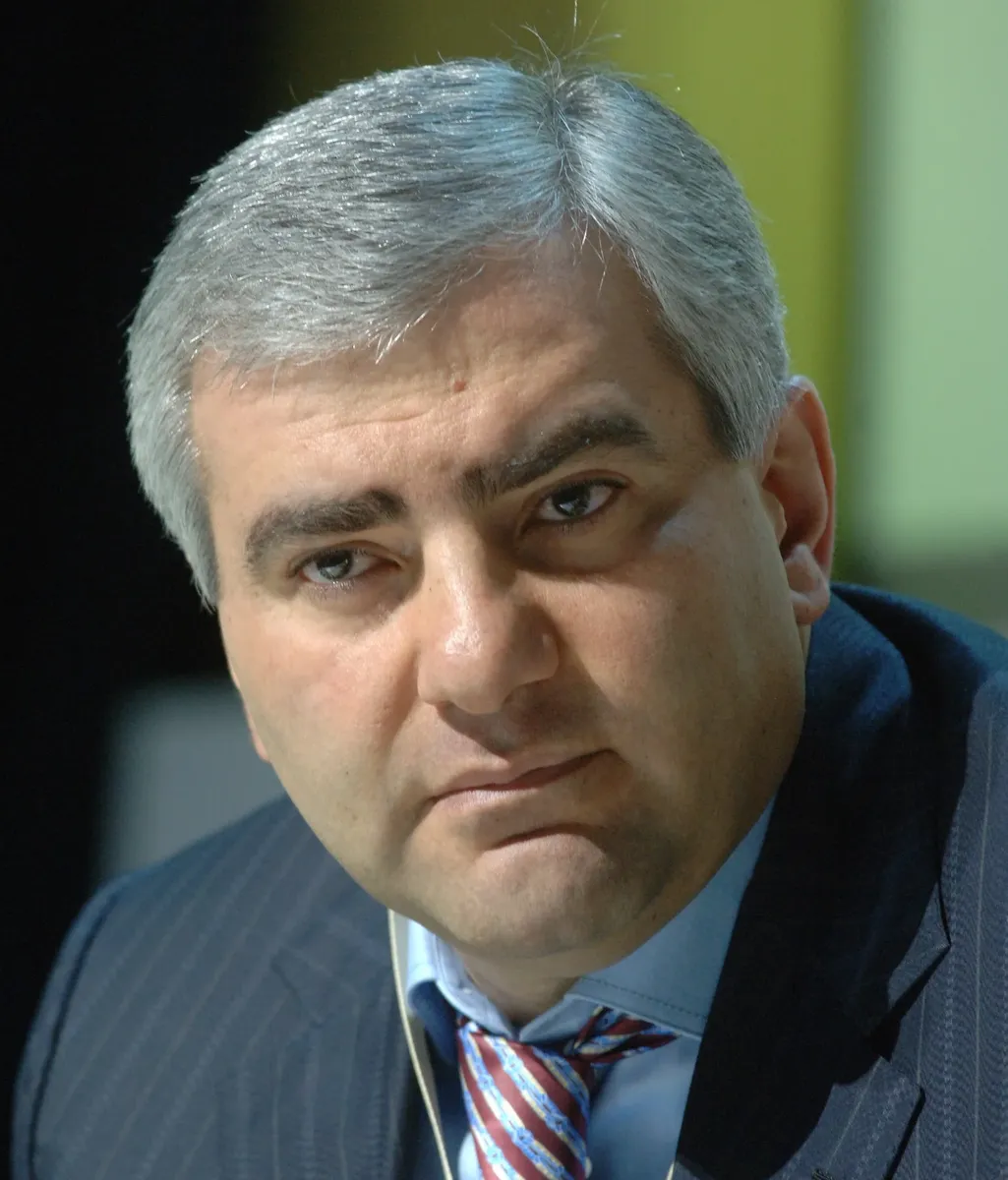
Like Ivanishvili, Karapetyan was emphasized for quite some time correctly in relation to power. In 2015, when the Interpretation of the Inter RAO, who owned the Armenian energy system, did not at all briefly raised electricity prices, which provoked mass protests called Elektromeidan, it was Karapetyan that became the compromise that took on this load.
It seems that yesterday he discussed with Pashinyan the next investment and generally plans for participating in the Armenian economy. And, apparently, like Ivanishvili, he caught the moment when it is no longer possible to make a political choice.
Probably, the authorities were waiting for this, as a mythical ruler, exhausting under the burden of bad prophecy, will seize him in every rustle. Now, retroactively, we can assume that
Even preserving loyalty, Karapetyan understood that he would have to make a choice, and Pashinyan guessed that there was no endless loyalty, and he hardly did not hear about Ivanishvili.
And, as in the conflict with the church, both sides showed an example of unprecedented frankness. In the promise of Karapetyan to stand up for the church “in its own way”, the authorities heard exactly what was probably meant: to convert the accumulated financial resource into a political one-approximately as in Georgia. And it is logical to assume that Pashinyan, remembering how it ended for Saakashvili, really saw an attempt to seize power in this and inflicted a preemptive blow, clearly not prepared and only in the calculation that in two months of the arrest of Karapetyan something would come up with. In the meantime, Türkiye, a visit to which, as it turned out, was preparing in a completely different era, in a completely different world. And possibly in another Armenia.
... A meeting with the Patriarch, presumably, was listed on the agenda of the visit from the very beginning, but now it has acquired, like the whole visit, another meaning. Perhaps in power they could count on the difficult relations of the Patriarch and Garegin II. But to count on the fact that the Patriarch will support in this battle not just a secular ruler, but a ruler who can not even do not lose the election, which can lose, is like counting on breakthroughs at a meeting with Erdogan, and so naive people in the delegation, it must be assumed. But it was necessary to indicate the attempt, and it cannot be said that it turned out to be completely failed. The Patriarch preferred to simply retire, distance himself from the controversy, and this is at least not defeat, albeit somewhat worse than a draw.
The meeting with compatriots also did not become a deafening failure and was not remembered for some kind of hostility. A significant part of the audience, as informed people say, made people loyal to the Turkish authorities, whom Pashinyan’s approach to settlement is quite satisfied with. But for the same reason, none of the Armenian authorities seemed to have decided to record this meeting in his asset. Anyway, the level of lighting the trip clearly did not correspond to the declared historicity, and this is understandable. The trip was compromised by the reality that is unlikely to be foreseen at the stage of the plan. But no one is in a hurry. Before the elections in Armenia, another year. Maybe, unlike the “football diplomacy” of seventeen years ago, this story will not interfere and repeat. Unless, of course, this time the domestic agenda does not finally displace the external for Armenia.