
Translated material
Reliably "packed dreams"
In the Manege of the Small Hermitage, an exhibition is held-“Fashion Ar-Deco from the collection of the Hermitage and the collection of Nazim Mustafaev”
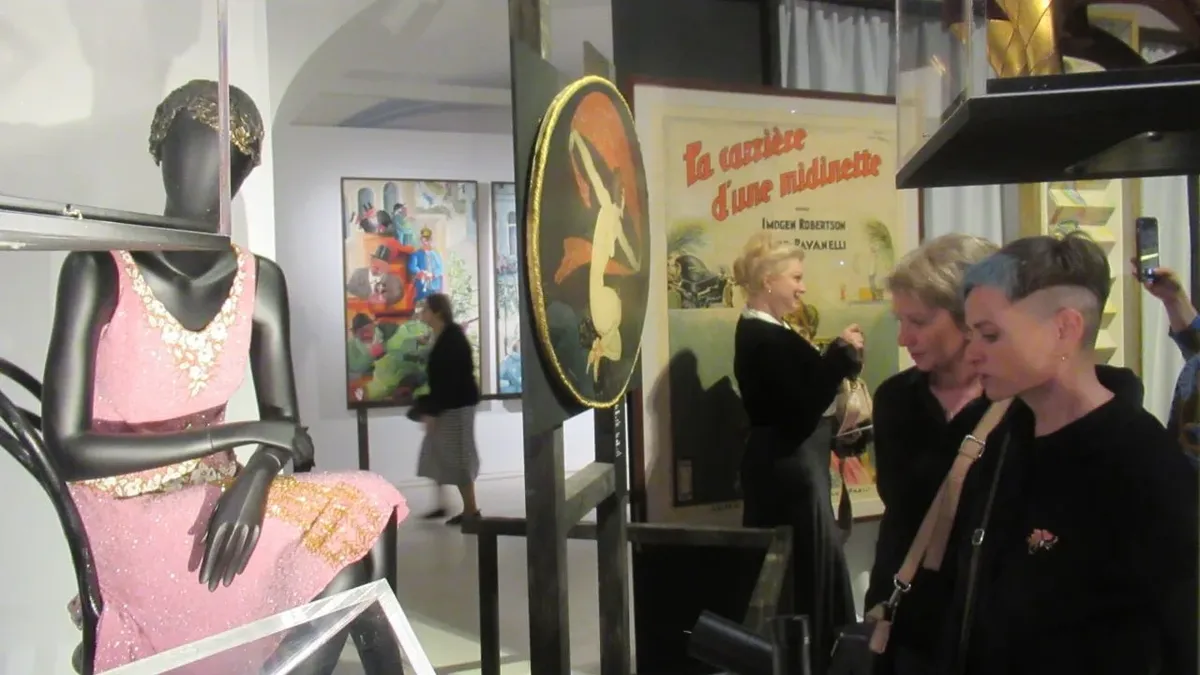
Photo: Natalia Skek
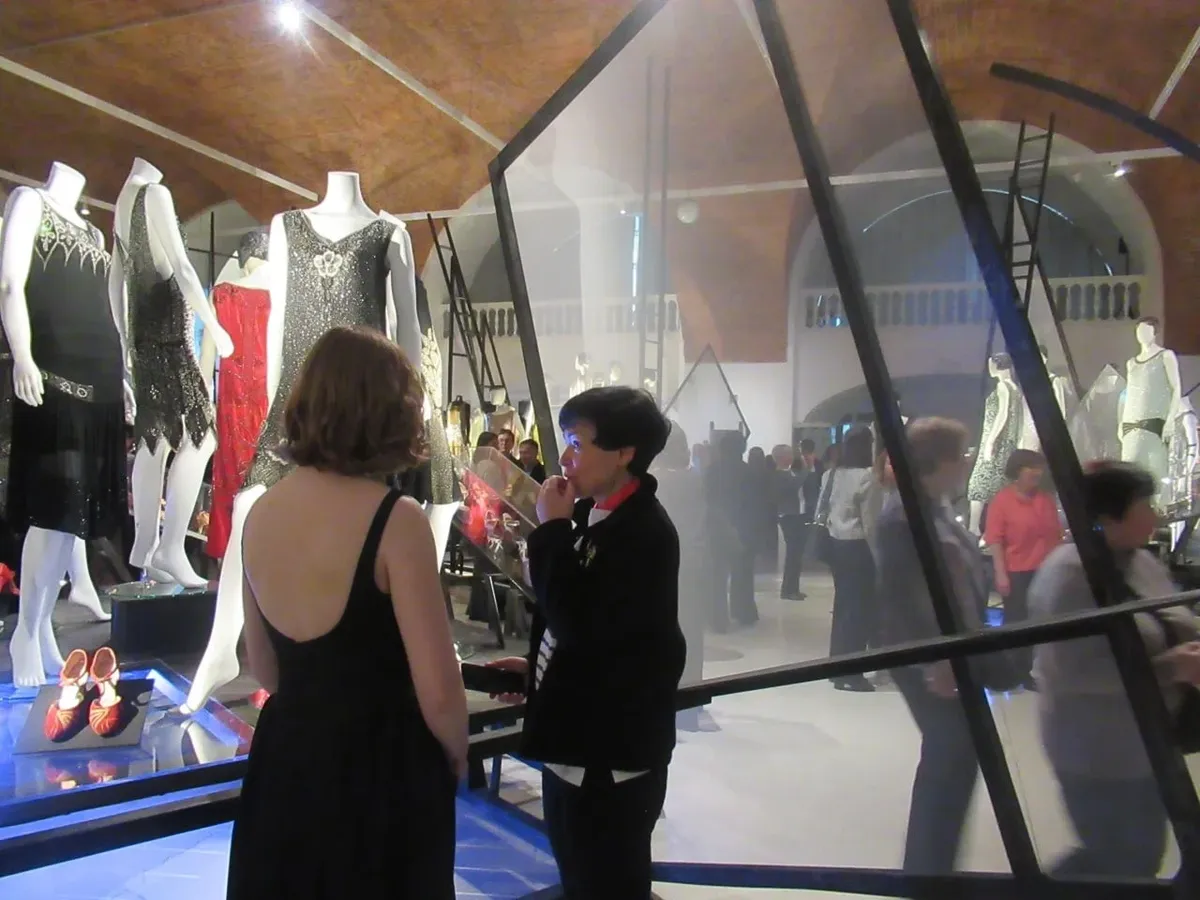
Silk and velvet, decorated with rhinestones and beads, luxurious dresses and shoes from the most famous couturiers, sparkling “Buik” - during the exhibition, the space of the Hermitage Manege turned into a brilliant cover of a fashion magazine. But behind this brilliance and luxury, the reality of the “last big style” era is practically not visible, as historians of art call this phenomenon - economic depression, poverty, unemployment, mass strikes and social riots, raising the head of Nazism and the proximity of the catastrophe of the Second World War.
The Hermitage Exposition is dedicated to the 100th anniversary of the international exhibition of modern decorative and industrial arts (Exposition International des Arts Décoratifs et Industriels Modernes), which took place in Paris in the spring and summer of 1925. Later, its abbreviated name began to be used as a term denoting a new style-Art Deco (art deco). For the Soviet Union, participation in this exhibition was a significant event: less than a year before the USSR and France, diplomatic relations were established, the Country of Soviets “published” for the first time and presented its achievements at the International Forum. The Soviet pavilion in Paris was built in the spirit of constructivism according to the project of architect Konstantin Melnikov, the author of the first sarcophagus for the body of Lenin, which was stored in it before evacuation in Tyumen.
The “large style”, as it was originally called, or Ar-Deco, is the product of the era between the two wars, “Interbellum” (translated from Latin-“between wars”). The era of jazz, crazy parties in the style of the "Great Gatsby", the emergence of the "dream factory" of Hollywood, the time of luxurious cars, clubs, giant skyscrapers and ocean liners-all this is ar-deco. The most famous novels of Oldos Haxli, Erich Maria Remarca, Scott Fitzgerald, Ivlin Wo, Virginia Wolf, Khoras McCoy (“Encouraged horses are you shoot, isn't it?”)-also the Ar-Deco era.
The basis of the exhibition in the Manege of the Small Hermitage is the collection of Nazim Mustafaev, a well-known collector, the owner of a large collection of shoes and dresses in the style of Ar-deco, the founder of the Virtual Museum of shoes Shoe ICons. Mustafaev has been collecting shoes for more than twenty years, in his collection there are unique items that are not even at the Institute of Costume of the Metro Museum and the Museum of Victoria and Albert. Now his collection has more than 2500 pairs of shoes and hundreds of costumes of different eras, which he often shows in various exposition spaces.
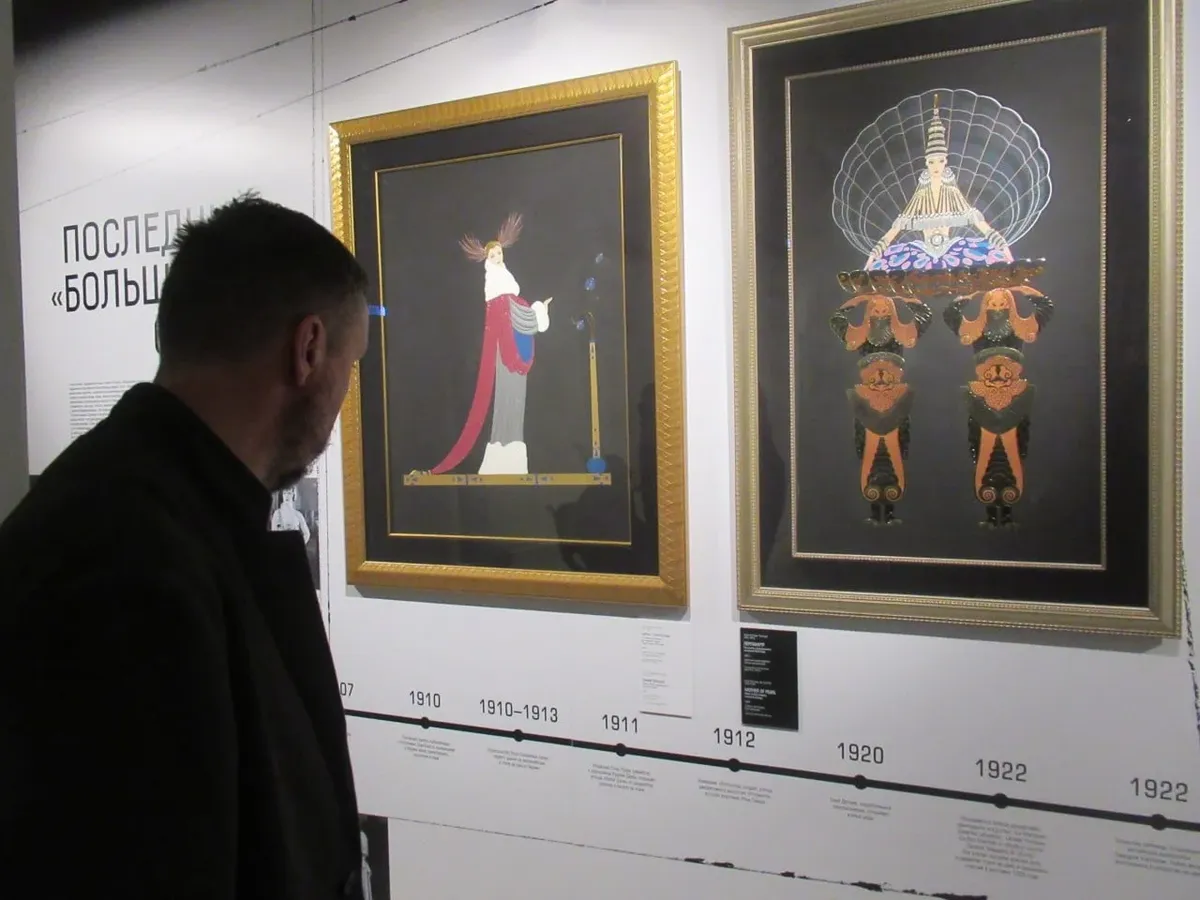
The Hermitage not only provided his halls under the demonstration of other people's collections, but also took an active part in the formation of the exposition: the drawings of Henri Matisse, lithography of Raul Dufi with images of Parisian fashionistas, graphics Erte (Roman Tyrtov) - all this complements the idea of the era of the “last great style of the 20th century”. Like the picturesque panel of Georges Barbier "Queen of the Night" and two -meter watercolor Sonya Delonya.
The central space of a small arena in the Hermitage resembles a huge store of a ladies' dress and shoes (the famous lines from Bulgakov’s novel “Master and Margarita” are heard, when Gella in Varita invites spectators to the stage: “Gerlen, Chanel number five, Mitsuko, Narsis Noir, evening dresses, dresses cocktail ...”).
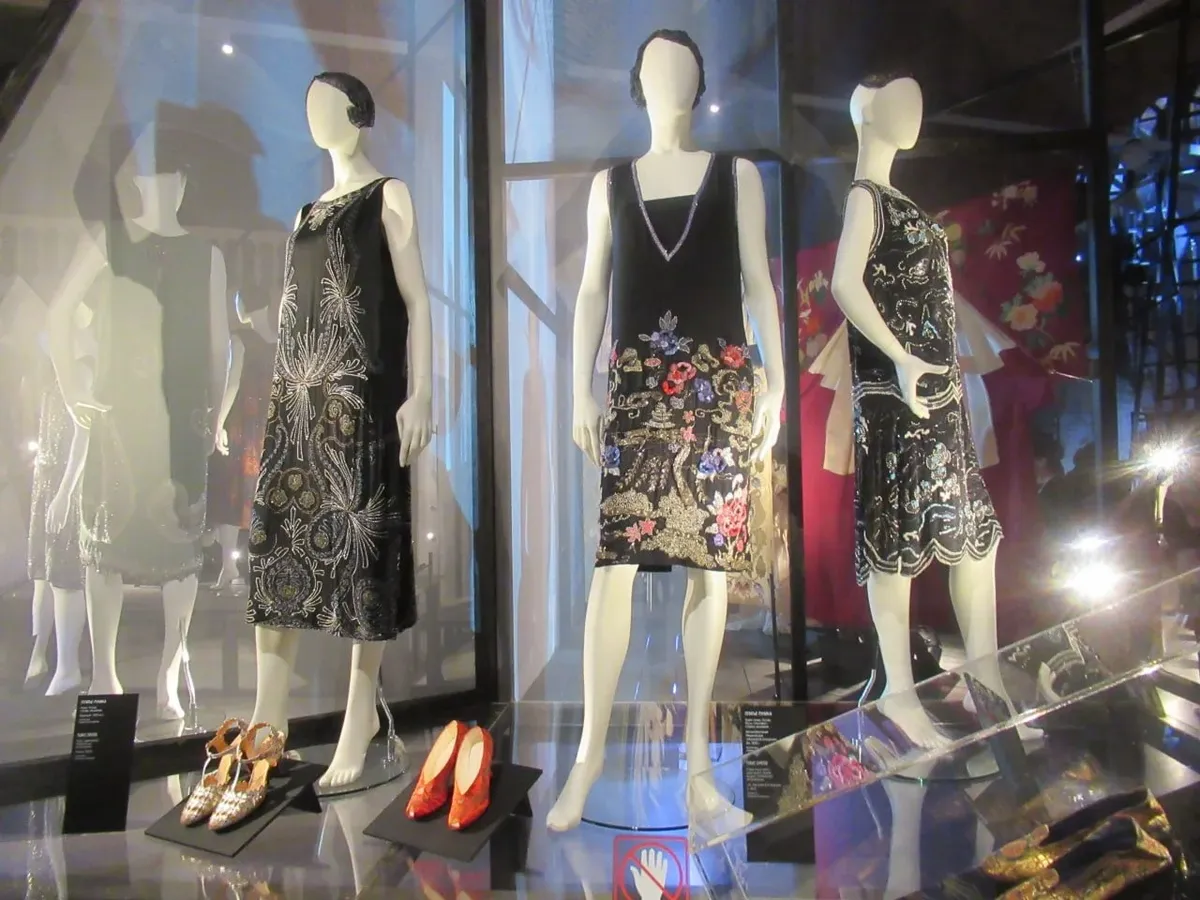
And at the same time, this is the film pavilion of one of the Hollywood studios, where the film is shooting about the Ar-Deco era (the curator of the exhibition is the head of the applied art sector of the History of the Russian Culture of the Hermitage Nina Tarasova, the designers are Emil Kaplyush and Yuri Suchkov). The exhibits are represented without windows, divided into groups, and each occupies a separate section-fast as an independent composition. Scenes from dumb films are projected onto translucent screens that divide the compositions with each other.
In the twilight, the main exhibiting items - dresses, shoes, accessories - look especially advantageous. The famous bead dresses, similar to bright tropical butterflies, shimmer in the light of the Sofis directed at them. The exhibition presents outfits from the most famous fashion designers of Europe and America - Jeanne Lanven, Poir Fields, Edward Molino, Lucien Lelong, Mariano Fortuni. Fortuni is a real legend of design at the beginning of the 20th century: its plissed Delphos tunics became real hits before the First World War and remained at the top of fashion until the end of the 30s. The Hermitage shows two of his dresses, silk and velvet, along with shoes made of the same materials.
At the exhibition in the Hermitage, you can see the shoes of the famous masters of the first half of the 20th century. Such as Andre Perugia, who collaborated with leading fashion designers of his time. According to the sketches of this designer, shoes were sewn in the workshops of Poire Field, Elsa Schiaparelli and many other leading fashion houses. And, of course, it is impossible to pass by the shoes of the most expensive shoe in the world, as Pietro Yantorny called himself - two pairs of blue silk boats were sewn manually.
A large showcase with heels attracts attention with a variety of finishes. Back at the end of the 19th century, celluloid began to be used to decorate women's shoes. It is easily succumbing to staining with organic dyes, embossing, it is able to imitate elephant bone, mother of pearl, coral, amber, porcelain, bronze, malachite and a turtle shell.
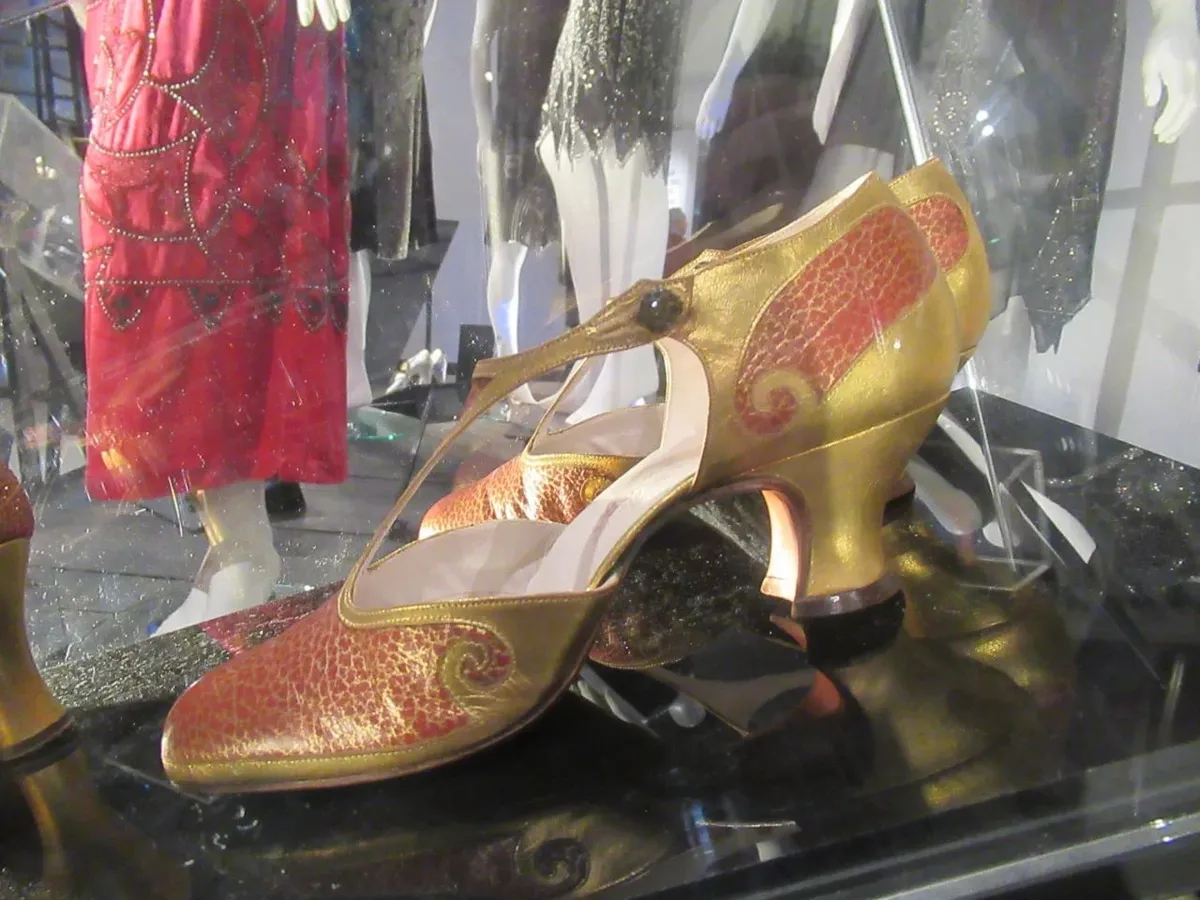
Near the window of the heels you can see the domestic, Soviet shoes of the 20-30s, which is very similar to the most fashionable European one, but is completely inferior to it in the decoration. Such shoes were sewn at the famous Leningrad factory "Skorokhod".
The exhibition in the Hermitage shows not only objects from the collection of Nazim Mustafaev: a significant part of the fashion accessories of that time was provided for the show by collectors Irina Uglinskaya, Pavel Kartashev, Vadim Poluboyartsev. Visitors learn about the serious influence of the traditional art of Japan and China on the culture of Europe from the collection of Japanese kimono and accessories in the Chinese style of the Moscow collector Natalia Bakina. And, of course, the most overall and noticeable exhibit is the Buik model 44 (Buick Model 44 Series 121 Sport Roadster), bought in 1929 by deputy aircraft industry Mikhail Ivanov during a business trip to the United States. The car introduced the Museum of Technology Vadim Zadorozhny to the exhibition. A car of Hollywood films sparkling with nickel and chrome is a symbol of respectability and the American lifestyle.
A brilliant, like a glass ball under the ceiling of Dansing, the exhibition in the arena of a small Hermitage, of course, attracts attention and is popular with visitors to the museum. But behind all this brilliance and luxury, a social and historical context is practically not visible.
However, the authors tried to imagine it: along the walls of the hall there is a chronological tape of real events of the 20-30s with quotes from remark and Fitzgerald, photographs, film posters, covers of fashion magazines.
These are mainly events from the world of art, fashion with rare hints of their social character. One of these hints is the painting “Prostitute” of Werner Sholts from the Hermitage collection. But prostitution existed at all times, and not only in the 20-30s of the last century. Although if the authors and curators of the exposition really wanted to show the historical context, against which the ar-deco style bloomed, they could tell about the colossal economic crisis that overwhelmed the world in the late 1920s, millions of people were ruined, thrown out into the street, starving. Europe was drowning in strikes and clashes between the extreme left and nationalist fronts, generated by fear of the advancing fascism. By this time, a system of forced labor camps was already formed in the country of Soviets, and in the field of art and culture in the early 30s at the state level, the style of socialist realism was approved for all creators. The modest chronological tape of events on the walls of the Hermitage Hall is also silent about this.
The final figures, 1933, talking about Hitler’s coming to power, are drowned in the floor and are only half visible-this probably symbolizes the end of the Ar-Deco era in Germany.
In the current state of affairs in the country, the fears and fears of the Hermitage curators can understand. But it is strange why they do not use the rich history of exhibits already presented at the exhibition. For example, a triptych “The struggle and death of Comrade Eglgofer” of the German expressionist Henry Emzen is exhibited here. The fact is that this triptich was ordered by Emzen by the Soviet government during the nine -month journey of the artist in the USSR in 1932. It was supposed to show the picture in 1933 at a large-scale campaign exhibition "15 years of workers and peasants' Red Army." Most likely, as was customary in the country of Soviets, the artist was given clear instructions on how to interpret the plot, how to portray characters. Unfortunately, the authors of the exposition also do not tell this story.
Of course, the social context and the story with the "Buik" exhibited in the hall would greatly expand. This is not just an expensive car, which was brought from a business trip to the United States by the People's Commissar of Aviation Industry Mikhail Ivanov. Yes, he brought it, but after returning to the USSR, Comrade Ivanov hid the car in the garage in his cottage, and until 1973 he never left the garage. How it was necessary to be afraid of their neighbors, friends, colleagues, and his whole country, so as not to ride in a sparkling car along the streets of the capital! That's truly reliably “packed dreams”.