
Translated material
Express Sammit
The NATO meeting this year was short. The participants did everything possible to avoid conflict with Trump. This is what they discussed
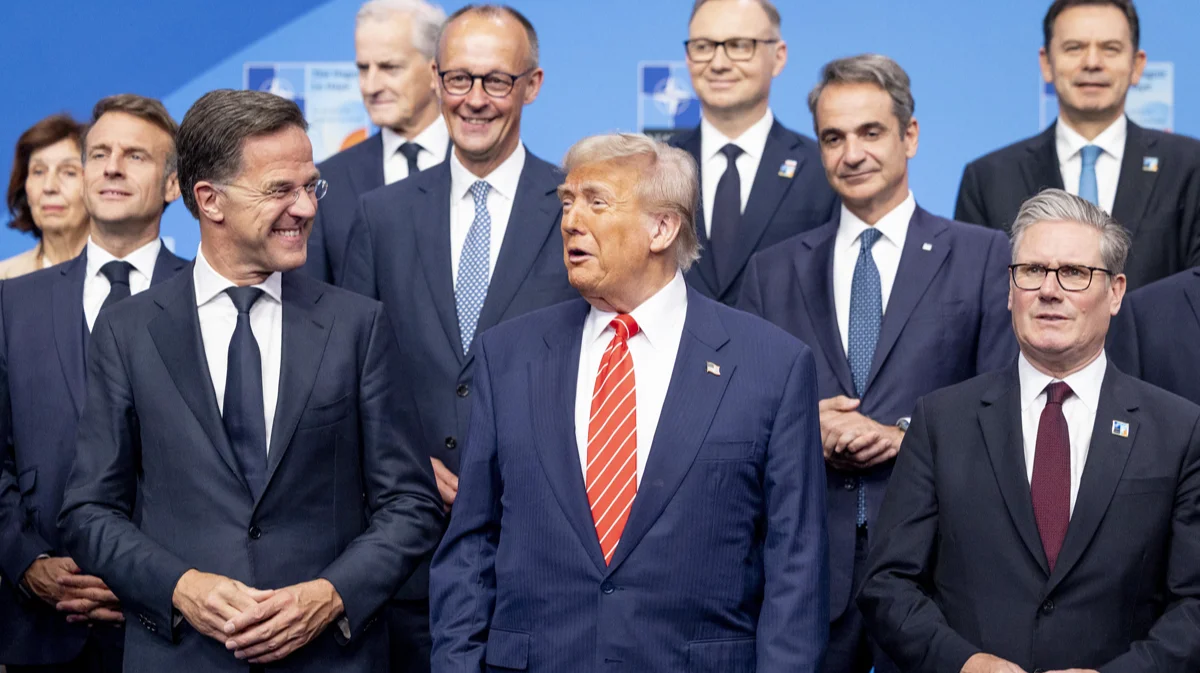
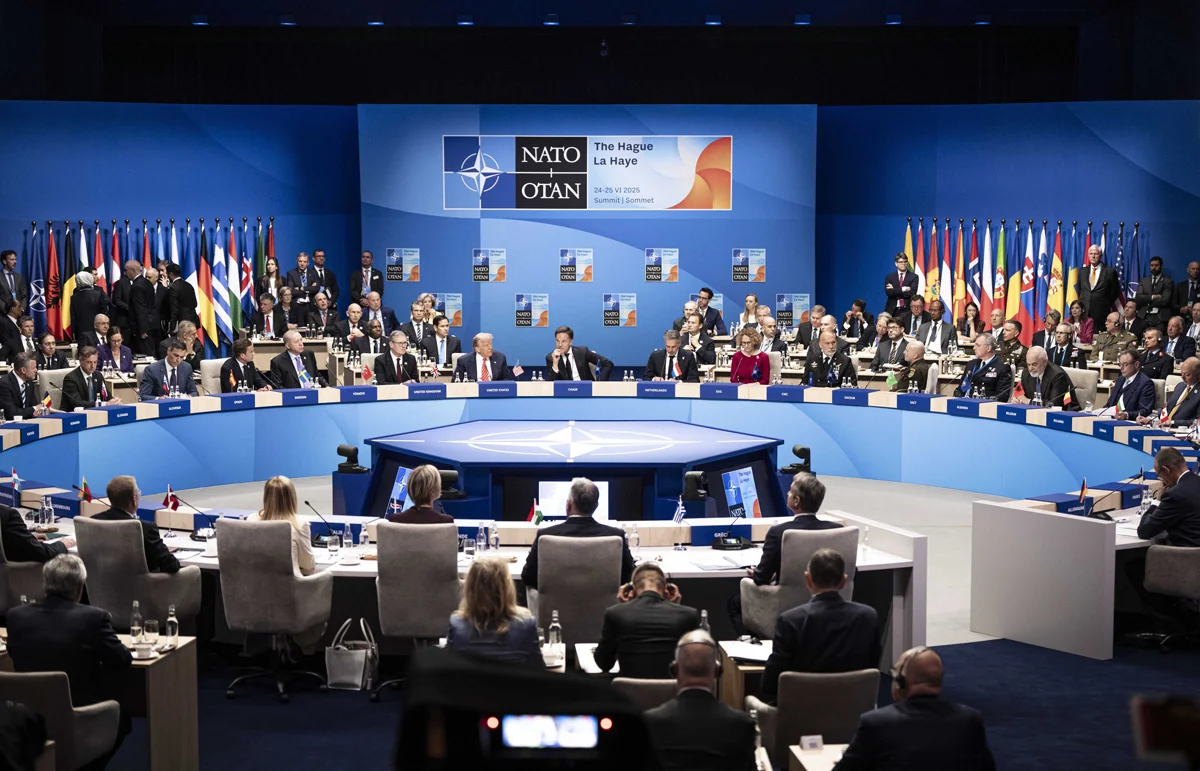
The head of NATO Mark Rutte together with the leaders of the member countries of the Alliance at the Summit in the Hague, the Netherlands, June 25, 2025. Photo: Koen Van Weel / EPA
NATO members agreed by 2035 to increase their expenses for defense needs to 5% of GDP. This is the main result of the Summit of the North Atlantic Alliance held in the Hague on June 24–25, which turned out to be a record short and as quiet as possible. It is significant that the final declaration turned out to be almost 12 times shorter than the one that was adopted a year ago in Washington.
The reason is the fears that the Summit with the participation of US President Donald Trump could provoke mutual accusations and hard skirmishes, not only behind closed doors, but also publicly. Such a scenario could play into Moscow, where, since the inauguration of Trump, they speak of the decay of transatlantic unity. As the participants in the summit were looking for - and in the end they found - what unites them was observed by the "new newspaper Europe."
Briefly and clear
The most acute topic of recent days - the bombing of the Iranian territory by the United States - was not in the spotlight at the NATO summit. The day before the meeting of the Alliance Secretary General, Mark Rutte told reporters: perhaps one of the leaders will raise this topic at the negotiating table, but actually the summit is not about it. At the same time, he expressed confidence that "the US blow did not become a violation of international law," and the receipt of nuclear weapons "would be a disaster for the region." The most actively in the Hague this question was commented on by Donald Trump himself, boasting that the blows “put an end to the war” of Israel and Iran.
The absence of detailed discussions on this score is indicative: the organizers tried by all their might to make the summit “short and pleasant”. On the eve of a two -day event, his goal precisely in these words outlined the newspaper The Times an unnamed diplomatic source. As for brevity, in a conversation with the Novo-Europe, the former deputy assistant to the Secretary General of NATO on new security calls Jamie Shi noted: “Trump does not like long-term meetings and is inclined to get bored, listening to long speeches at the negotiation table.” “More actions, fewer conversations,” the press secretary of President Trump Caroline Lithvit placed the emphasis slightly differently.
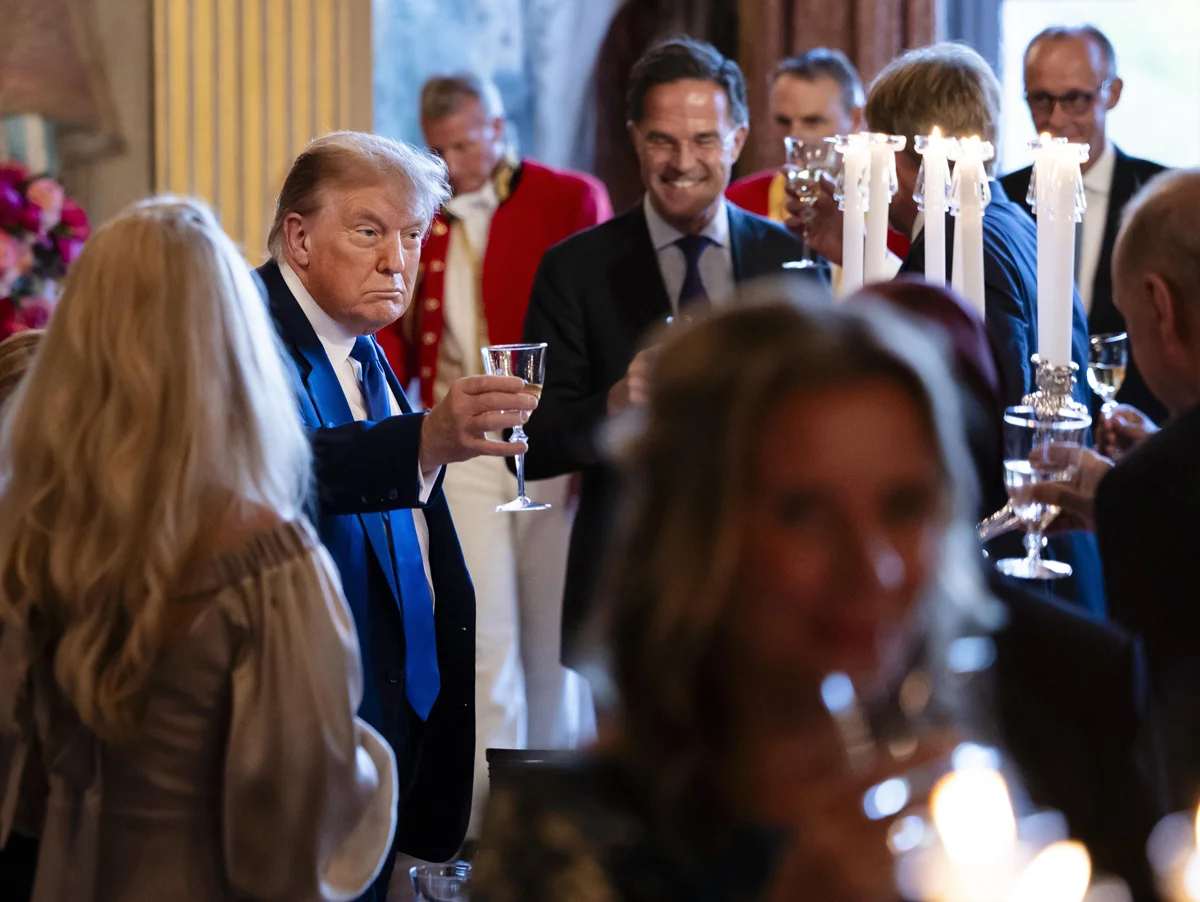
Typically, the official program on Nuto summits lasts two days and includes two or three working sessions for about 2.5 hours. But in the Hague everything was different. If you do not take into account events in the fields, such as the NATO public forum and the defense industry forum, then the work program began in the evening of June 24 with a solemn reception organized by King Willem-Aleksandr. And the next morning, the first and only work session took place.
The reason for the compactness of the program is not only and not so much in Trump's restlessness. According to Jamie Shi, "a short summit minimized the likelihood that something would go wrong or upset Trump." NATO members feared that any long discussions behind closed doors could cause damage to the transatlantic unity that had already suffered over the past months.
Indeed, there were many potentially dangerous topics: these are not only the already mentioned Iran, but also the principles of the Russian-Ukrainian settlement, the consequences of Trump's tariff wars, the situation with human rights in Europe, which is loved by the members of the current American administration. Given this, Western experts in front of the summit converged in the opinion : "The lack of news from the Hague would be good news for NATO."
As a result, everything cost not only the only working session, but also an unusually short final declaration of the summit: five paragraphs that were placed on one page. For comparison: in last year’s declaration , following the results of the Washington summit, there were 44 paragraphs (taking into account the separately allocated “promise of long -term assistance to Ukraine in the field of security”). Then the main document for NATO was fit in 5391 words, now - in 455.
At the same time, a significant part of the document was occupied by standard formulations that NATO is “the strongest alliance in history”, and its members are “united and unshakable in their determination to protect a billion citizens, defend the alliance and protect freedom and democracy”. There was also a gratitude to the Netherlands for hospitality and it was noted that the next summit would be held in 2026 in Turkey.
In the background
It seems more important not what is said in the declaration, but what did not fall into it. A year ago, the document said a lot of words that Russia is “the most significant and direct threat of allied security”, and “strong, independent and democratic Ukraine is vital for the safety and stability of the Euro -Atlantic region”.
In that text, the word “Ukraine” appeared 60 times, and “Russia” - 44. Now Ukraine was mentioned twice, and then in one sentence: the summit participants confirmed the obligations to “provide support to Ukraine, the safety of which contributes to the safety” in NATO space. The word "Russia" appeared once, and then after a comma with terrorism as one of the threats of security.
At the final press conference, Mark Rutte made it clear that it was not worth looking for some kind of background here: just the participants of the summit decided to focus on the main one, and not include everything in the document, "from the birth of Christ to the present." And, for example, the absence of a “irreversible path of Ukraine to NATO” has already become familiar in recent years ”does not mean anything: this thesis is already implied.
Meanwhile, probably, the brevity of the document can also be explained by the “Trump factor”. For example, attempts to include in the document wording with tough criticism of Russia would probably lead to an exacerbation of the conflict with the US administration, which none of the participants wanted to.
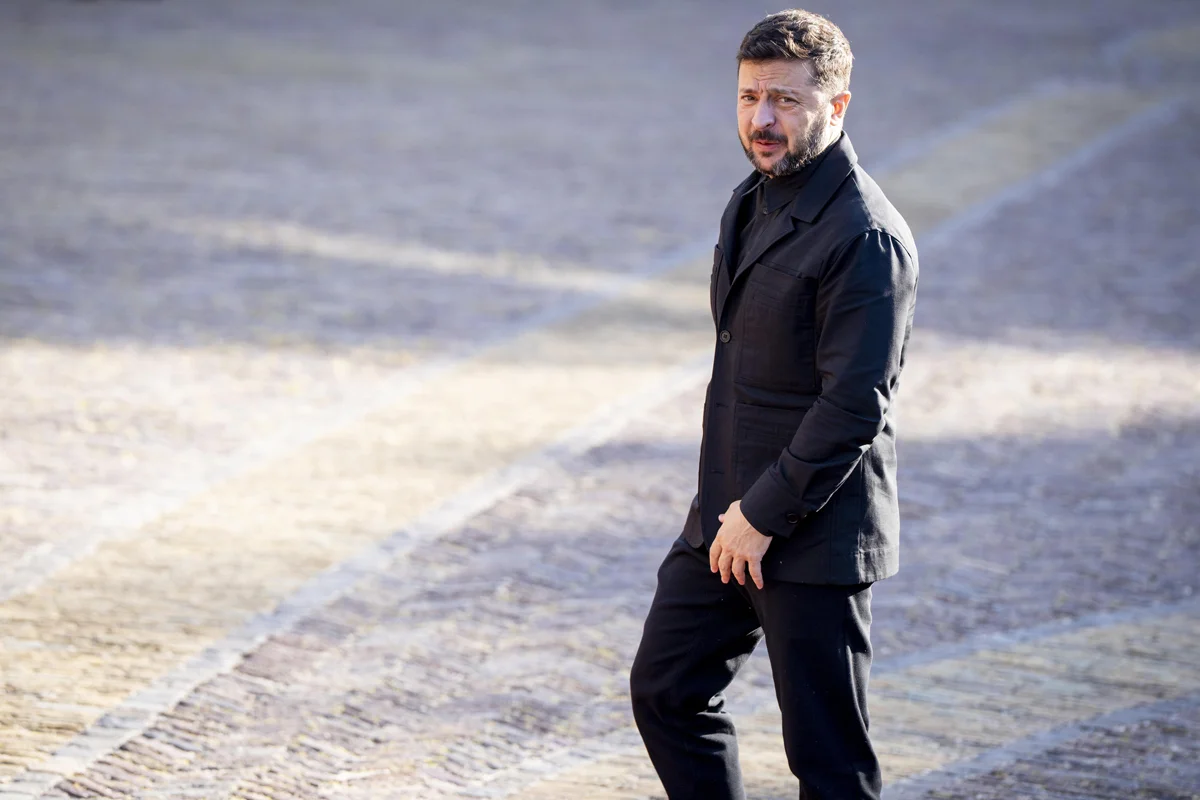
Not only this, but also much more indicated that the NATO allies decided not to pedal this time the theme of Ukraine. For example, a meeting of the Ukraine -NATO Council was not planned at the highest level. At the same time, a compromise decision was developed about the format of the participation of the President of Zelensky - the main guest of all previous summits since 2022: he was invited to dinner in front of the summit, but not to the main working session. In addition, he took part in the Forum of the Defense Industry, participated in the meetings of the Secretary General of NATO -E -Ukraine and the Secretary General of NATO -Ukraine E5 (France, Germany, Italy, Poland and the UK). " Finally, on June 25, after the summit, a bilateral meeting with Donald Trump was also held - according to Vladimir Zelensky, "long and substantial."
“I just wanted to know how he was doing,” President Trump noted, in turn, at the final press conference.
Commenting on the fact that Zelensky was not invited to the official formal part of NATO meeting, the Hungarian Foreign Minister Peter Siyyarto noted : the alliance for the first time since 2022 unequivocally showed that the issue of Ukraine’s membership was removed from the agenda. However, with this position, he found himself in a clear minority: during all meetings and statements - for example, the same brand Rutte - it sounded invariably that Kiev would “continue its irreversible path to NATO”, and Ukraine’s support remains as unshakable as before.
There were new concrete agreements these days. For example, Ukraine and Great Britain agreed to launch the initiative for the joint production of drones. An agreement on intent was signed with Denmark, which also opens the way to joint production of Ukrainian weapons in the kingdom. And the Netherlands announced the allocation of a new package of military assistance to Ukraine totaling about 175 million euros, which will include radars for detection of drones.
Mark Rutte reminded in the Hague that European and Canadian allies in NATO (i.e., excluding the United States) since the beginning of the year, promised to allocate an additional 35 billion euros to Ukraine, while for the whole last year this indicator amounted to a little more than 50 billion euros. “So we can safely assume that the annual amount will exceed last year,” said the general secretary of the alliance with the forecast.
However, it is difficult to deny that it has become more difficult to work with NATO as a single organization. Jamie Shi admitted in a conversation with the Novo-Europe: “The current position of the United States in Ukraine and Russia complicates the situation for NATO” and “Support for Kyiv (political, military and financial) now will probably go into European structures, such as the EU, the Weimar+group and the coalition of those who wish”. Speaking about the future, the expert made it clear: “It would be good if the United States, at least, did not try to stop the current actions of NATO in support of Ukraine, such as a security and preparation mission for Ukraine” (NSATU) and a group of drones.
Everyone pays
According to Jamie Shi, this summit had “only one real and significant result” - and NATO tried to focus on it all his attention to “give Trump the opportunity to declare his political victory and show off in the headings of news materials.”
We are talking about the NATO countries announced by defense expenses. Before the Summit of the country, NATO officially sought to spend at least 2% of their GDP on these needs. Now the bar was raised to 5%. “Our investments will ensure the availability of forces, capabilities, resources, infrastructure, combat readiness and sustainability necessary for deterrence and defense,” the final declaration said on this occasion.
In Washington, such a decision was perceived as its explicit achievement - a “major victory” that would not be without Trump. In the leadership of NATO, this approach was only supported. This follows at least from the screenshot, which was published on June 24 on the social network Truth Social Donald Trump. He published a personal message from Mark Rutte (probably through the Signal messenger), who wrote: “Donald, you led us to a very, very important moment for America, Europe and the whole world. You will achieve what not a single American president has been able to do in the last decades. ”
At the opening of the summit itself, such speeches sounded. “For too long, one ally, the United States, carried too much of the burden, but today the situation has changed. President Trump, dear Donald, you made this change possible, ”Rutte turned to Trump. And at the final press conference, the Secretary General of the Alliance more than once called the head of the White House "a good friend." As the British newspaper The Telegraph stated , flattery addressed to Trump in The Hague reached previously heights.
The increase in the expenses of Europeans and Canadians for defense is exactly what Trump achieved for years, from the first presidential term. For the last months, he threatened to wash his hands with the further inaction of the allies-to abandon any obligations to protect them. Even such eccentric statements sounded from his lips: the Russian authorities can “do everything that the hell will want” with NATO countries, which do not fulfill the target indicator of defense costs. Trump's associates were even more radical, calling the rest of NATO countries "not allies, but loafers."
Jamie Shi called such assessments erroneous, noting: Europeans make a much greater contribution to the general defense of NATO than during the Cold War, and, moreover, "overtook the United States in terms of supporting Ukraine, including military assistance."
At the same time, he noted that Trump’s criticism in recent months was aimed "mainly at the level of defense expenses of individual allies, and not to NATO as such." Therefore, the interlocutor of Novo-Europe expressed the hope that "the obligation to increase defense costs to 5% of GDP will reconcile Trump with an alliance." Although, Jamie Shi added, “with such an unpredictable person as Trump, you can never be sure of anything, since he does not share the traditional Atlantic values of the previous US presidents.”
At the same time, the United States itself is not going to increase expenses to 5%. Now they spend 3.4% of GDP on defense targets, while in percentage, it is almost 70% of the total military budget of NATO countries. That is, Europe and Canada account for only 30% of the total military expenses in NATO space. The task that Trump beats over is to reduce this imbalance.
Exceptions and reservations
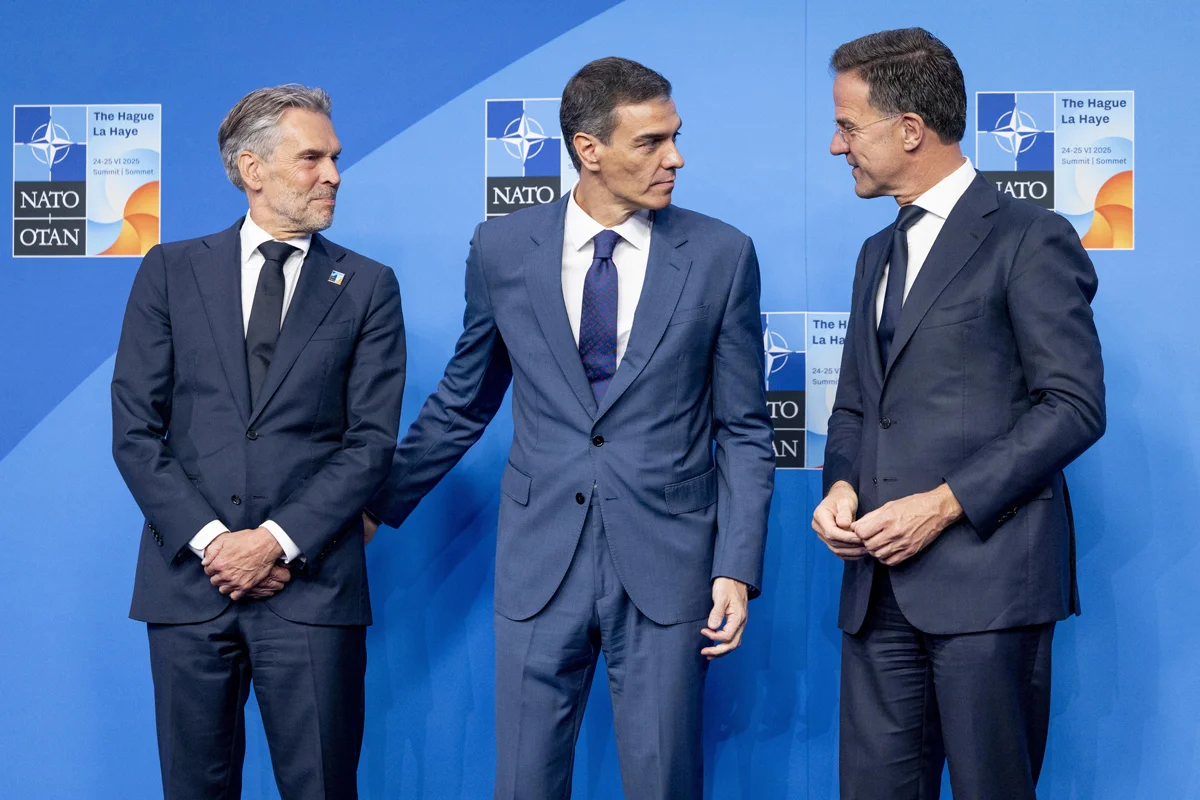
Meanwhile, many NATO members will be difficult to achieve a new goal. According to the results of 2024, ten out of 32 allies did not reach the goal of 2%set more than ten years ago. These are Croatia, Montenegro, Italy, Portugal, Canada, Slovenia, Luxembourg, Belgium and Spain, which spent the defense of record -based 1.28% of GDP last year. Mark Rutte, however, during the summit assured that according to the results of this year, the bar over 2% overcome the bar.
Before the current summit, the position of the Spanish Prime Minister Pedro Sanchez, who, in a letter from the NATO Secretary General, spoke out against the idea of increasing defense expenses to 5% of GDP by 2032, as this would jeopardize the country's social security system and force to increase taxes for the middle class in a letter. Sanchez proposed to include a more flexible wording in the declaration: to call 5% a voluntary landmark. Such a requirement was clearly set, not without the influence of Sanchez’s partners on the ruling coalition from Sumar’s extreme left movement. On the Alternative Summit in the Hague in the Hague, where, on the call of the former prime minister of Italy Giuseppe, opponents of the “reckless arms race” gathered, Sumar became the only participant in power: the rest of the countries were represented by oppositionists of varying degrees of influence.
As a result, even on the eve of the opening of the Summite summit, Sanchez achieved an exception from the rules. Jamie Shi considered this bad news, noting: this will “prompt other allies experiencing economic difficulties, who spend a lot of ongoing on social support, as well as having problems with deficit and duty, to demand more flexibility.” The Spanish media also asked questions : if their country may not comply with a general agreement, then the worse the other lagging ones - for example, Belgium, Italy, Canada, Slovenia. At the press conferences, Mark Rutte asked about this, but he, as often happens, went from any direct answers.
The question was not only with the rigidity of the formulations, but also with the coordination of the deadlines. While the United States and the countries of Eastern Europe wanted to establish as such 2030, the lagging behind sought delay at least two years, and preferably at once for five. Mark Rutte as a compromise proposed the 2032nd. But in the end, the mildest option was chosen: 2035.
An even more serious concession was the division of these 5% into two parts: 3.5% - “hard military” goals and 1.5% for related costs - for example, for infrastructure, special services and protection of cyberspace. In a conversation with New Evrop, Jamie Shi noted that “it was a smart move from Rutte,” since it would be impossible to convince them from 2% to 5% without it. According to the ex-official of NATO, “highways, railways, ports, airfields, cyber protection and safe communications, of course, are necessary for effective collective defense,” but the alliance “should be strict enough so that the criteria for counting investments within these 1.5% are not excessively blurry”.
Other experts also expressed these fears, noting : “For example, the construction of the bridge from Sicily in the mainland of Italy falls under these 5%?” They did not find clear answers. Slovakia, for example, has already stated that it would be preferred by dual -purpose projects: for example, improving transport infrastructure and building hospitals. And the British The Guardian reported with reference to sources that these 1.5% in the United Kingdom will be inscribed, for example, projects for broadband Internet in the rural area and the planned expansion of Khitrovo Airport.
One way or another, the main goal of the summit was fulfilled: Trump was satisfied.
Unless Spain provoked harsh criticism addressed to her: this “terrible country”, according to Trump, will eventually pay for everything.
Spend wisely
Meanwhile, the problem is not only how to raise money, but also how to spend it in the best way. NATO requires that its members spend at least 20% of their defense budgets on the purchase of new equipment. Almost all countries - except Canada and Belgium - have reached this indicator. The record holder is Poland (51.1%).
Shortly before the summit, Mark Rutte told what the Alliance should work on in the first place. So, it is necessary to increase the capabilities of the air defense and the alliance by 400%. In addition, thousands of additional armored vehicles and tanks, millions of artillery shells, new ships, planes, drones and high -range missile systems are needed. Еще одна задача — «удвоение потенциала в сферах логистики, снабжении транспортных возможностей и медицинской поддержки».
Опрошенные журналом Foreign Policy эксперты называли «реальной проблемой» то, что Европе не хватает критически важных инструментов для проведения длительных боевых операций, средств разведки, наблюдения и рекогносцировки, а также нанесения дальних высокоточных ударов, систем противовоздушной обороны большой дальности, надежной инфраструктуры командования, управления и связи.
Всё это сейчас в значительной степени обеспечивается американской стороной. Газета The Guardian пришла к выводу , что, например, 46% истребителей, стоящих на вооружении европейских стран (27 государств ЕС, Британия и Норвегия), — американского производства. А в плане ракетных комплексов речь идет о соотношении 42% против 32% (остальное — не американская и не европейская продукция). При этом речь не идет о давних закупках: большинство ключевых сделок, которые европейцы заключали в 2024 году, подразумевали закупки именно американских вооружений.
«Как долго США смогут поддерживать прежний уровень вовлеченности в Европе», — задался вопросом в Гааге президент Чехии Петр Павел. Впрочем, к слову «смогут» стоило бы добавить еще слово «захотят». Как отмечал постпред США при НАТО Мэттью Уитакер, после саммита, вероятно, произойдет переоценка роли американских военных в Европе и сокращение численности американского личного состава по эту сторону Атлантики.
А президент Трамп, общаясь с журналистами на борту самолета по пути в Гаагу, уклончиво отвечал на вопросы о том, привержены ли США по-прежнему статье 5 устава НАТО (о коллективной обороне). «Зависит от вашего определения… Существует множество определений Пятой статьи», — отметил он. Когда Трампа попросили уточнить, он сказал, что стремится «сохранить жизни людей» и предан «жизни и безопасности». И совсем не факт, что Трамп отвечает на вопрос «Кто представляет собой главную угрозу безопасности?» так же, как подавляющее большинство других членов НАТО.
Накануне саммита экс-постпред США при НАТО Джулианн Смит напомнила , что в 2024 году союзники договорились подготовить к саммиту-2025 новую стратегию по России, но после избрания Дональда Трампа работа над документом была заморожена. «Меня беспокоит, что без такой стратегии некоторые союзники будут чесать затылки и спрашивать, зачем мы делаем эти дополнительные инвестиции, если не можем договориться о какой-либо стратегии в отношении России», — отметила она, выразив надежду на то, что «после саммита союзники смогут засучить рукава и приступить к работе» над концепцией дальнейшей политики по отношению к Москве.
Там, кстати, со своим отношением к НАТО давно определились, считая Альянс инструментом агрессии и конфронтации», а также виновником «глобальной милитаризации и гонки вооружений». И гаагский саммит в этом восприятии ничего не изменил.