
Translated material
Complex partnership
While Putin was accepting the leader of Mali, documents on torture and cannibalism with the participation of Vagner and the Malinesan security forces were transferred to the Hague
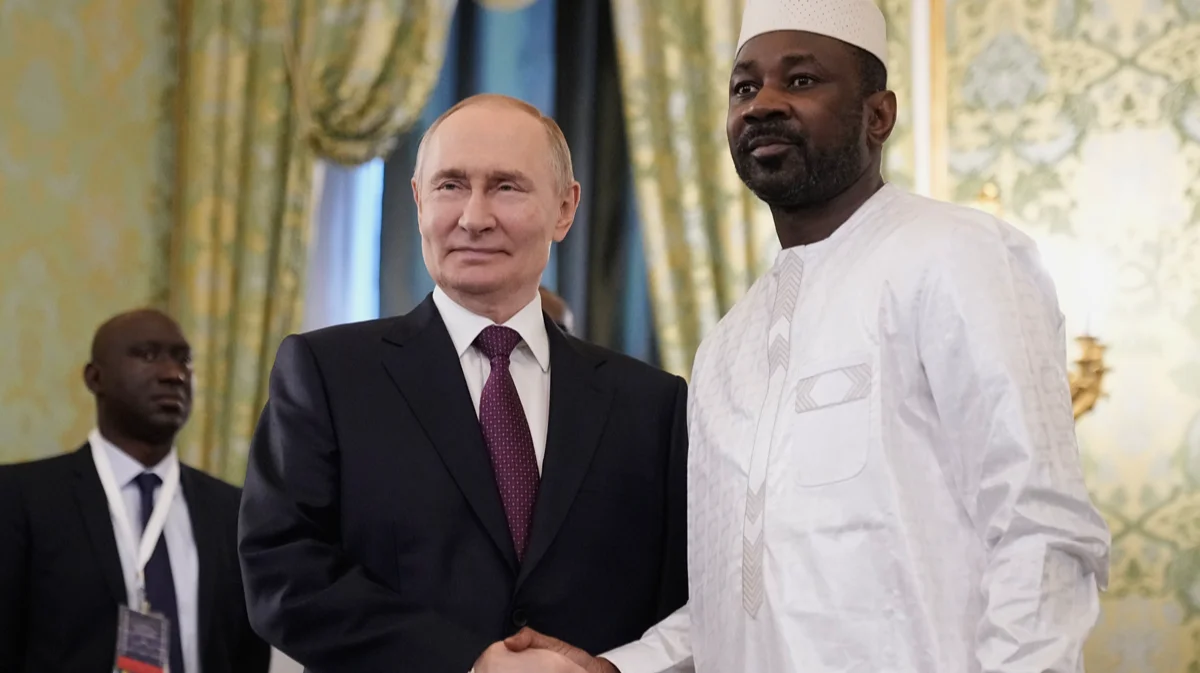
Assimi Goyta at a meeting with Vladimir Putin Moscow Kremlin, June 23, 2025. Photo: Pavel Bednyakov / EPA
Last week, the president of the transition period of the Republic of Mali Assimi Goyta arrived on an official visit to Moscow, where he met with President Putin. The parties discussed the future of relations between the Russian Federation and the Republic of Mali, discussed joint economic, energy and defense projects, laid the foundations of “complex partnerships” and even signed an agreement on cooperation in the field of peaceful use of atomic energy.
Goyta’s visit to Moscow was held on a very unpleasant information background for all participants, which, however, remained outside the negotiations. On June 12, the international journalistic consortium Forbidden Stories has published an investigation that states that the Wagner group, which was present in Mali for more than three years, was engaged in monstrous crimes against civilians: abductions, torture, and extra -industrial executions. Literally ten days later, on June 22, the Associated Press issued a message that experts of the University of California in Berkeley filed a confidential legal document containing evidence of crimes committed by the Wagner group in West Africa, and specifically in Mali. This document is no longer just about extrajudicial executions, but also about the dismemberment and acts of cannibalism.
The Wagner group appeared in Mali in 2021 amid the ongoing political turbulence in the country. The last military coup, which took place in 2022, led to power the junta under the leadership of Colonel Assimi Goyt (the very one who has now arrived in Moscow). The new military government has terminated military cooperation with France and demanded the conclusion of international peacekeepers. The vacuum formed by the Wagner group, which included under the pretext of providing a temporary government in the fight against terrorism and separatism.
Both of these troubles do not give the Malian state a calm life.
On the one hand, for many years in the north of the country, nomadic groups of tuars are operating, requiring independence. On the other hand, jihadist cells associated with al-Qaeda are active in the country.
The Provisional Government Mali needed support in confrontation with these forces. In Russia, such cooperation is interesting from the point of view of strengthening its own presence in the African region of Sahel (except Mali, the Sahel states and Niger and Niger are also included in the Alliance of the Sahel states).
In June 2025, the Wagner group announced the completion of their own mission in Mali, which, of course, does not mean the end of the Russian presence in the region. This is only his renewal: in particular, the Al Arabiya television channel reported that back in April 2025, the “Wagnerians” replacement with representatives of the African corps, directly affiliated with the Russian Ministry of Defense, began in the Sachel states.
Not even a week has passed after the Vagner's loud statement about the exit from Mali, how the international journalistic investigation conducted by Forbidden Stories in cooperation with the ten world media thundered. Journalists develop a well -known plot: after the output of the UN mission, the Mali transition leadership activated the partnership with Wagner: together they took control of the bases that were empty after leaving the UN peacekeeping mission, and often used them as underground prisons.
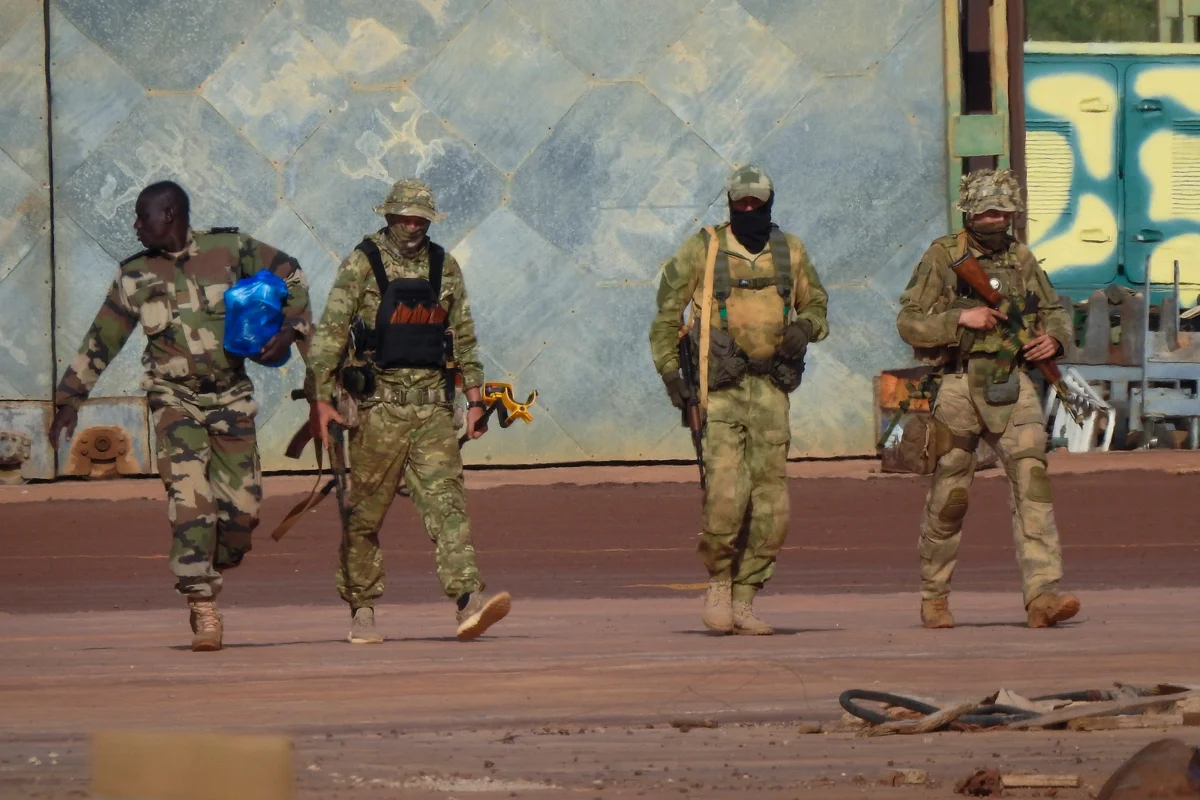
In the investigation, cases of detention of civilians without official charges or judicial orders are documented. Among the detainees are peasants and farmers who were suspected of cooperation with armed groups, forced immigrants who had previously found a shelter at the UN facilities. Some of the detainees disappeared without a trace, others told reporters about “cruelty” during the detention.
The report, for example, gives the story of a shepherd from the city of Mopti, which is mentioned under the conventional name "Abdel-Carim". He was detained during the night raid in which Russian -speaking soldiers participated. For three weeks he was held at one of the bases. He described the methods of interrogation as "physically and psychologically painful." Among the mentioned torture methods - drowning, beating with plastic pipes, holding in metal containers in extreme heat.
Another witness is a former officer and refugee who left Mali after the death of his son. He said that
It was Wagner fighters who played a decisive role in interrogations and decision -making, while the Mali army only complied with their orders.
This report is far from the first certificate of terrible things that took place in Mali with the participation of Russians. Since 2022, human rights organizations, including Human Rights Watch , recorded hundreds of cases of violent disappearances. Local authorities denied the presence of systematic violations and called criticism of politically motivated. According to the investigation, since then not a single case of a qualitative investigation of the disappearance of people has been recorded.
The Wagner methods in Mali, according to the investigation, echoes the practices recorded earlier in Syria and Ukraine. This, according to the authors, speaks of the possible systematicity in the approaches of the group to operations.
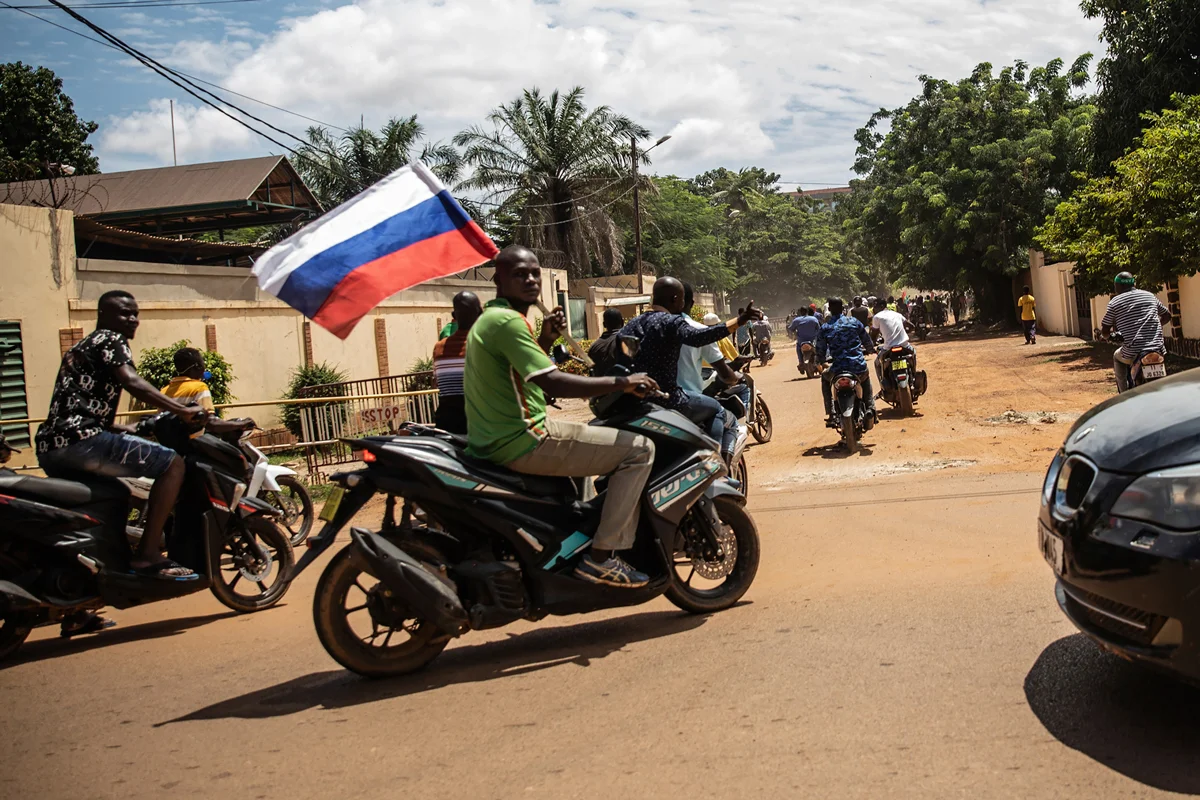
The investigation emphasizes that in parallel with military cooperation, Wagner and the Mali Provisional Government also developed economic partnership. So, the companies associated with Wagner, including Petra Trading , received privileges in gold mining.
In conclusion, the authors of the investigation notes that the situation in Sahel reflects a growing trend: against the backdrop of the exit from the region of other international actors, the positions of new forces acting bypassing international recognized norms are strengthened. All this causes the authors a concern about the future relations of African countries with external powers and the prices that the population of the region can pay for this.
However, the Forbidden Stories report is far from the worst thing that we have to find out about the actions of the Russian group Wagner in West Africa. Soon, the Associated Press published a secret legal note prepared by experts at the University of California at his disposal. This document is addressed to the International Criminal Court and contains a demand to start an official investigation of terrifying crimes attributed to the Russian group "Wagner" in force in the region. At the same time, special emphasis is on the situation in Mali from December 2021 to July 2024. The document is based on a series of videos and photos from social networks demonstrating scenes of torture and dismemberment of bodies, as well as mentioning acts of cannibalism by persons allegedly related to Wagner or their local allies. The document mentions multiple cases of extrajudicial executions, torture, dismemberment of bodies and cultural and psychologically traumatic acts.
The defendants in these videos are men in military uniforms who cut the bodies and flaunt internal organs of victims.
In one of the videos, a voice is heard, saying that he is “preparing to eat the victim’s liver”, the other voice tells about an attempt to extract his heart.
Lindsay Freeman, director of the “Technology, Law and Politics” program at the Center for Human Rights at the University of California in Berkeley, whose commentary gives AP, says that Wagner used channels in Telegram as a tool to strengthen their “cruel image”: the video served as psychological weapons to intimidate local communities.
According to the Associated Press, some videos through the repost appeared on the channels associated with Wagner. In these videos, people in military uniform carried out the cutting and frying of human remains with mocking comments. In these videos, the symbolism of Wagner flashes. Experts, which are referred by AP, have no doubt that the human bodies that appear in these records are genuine.
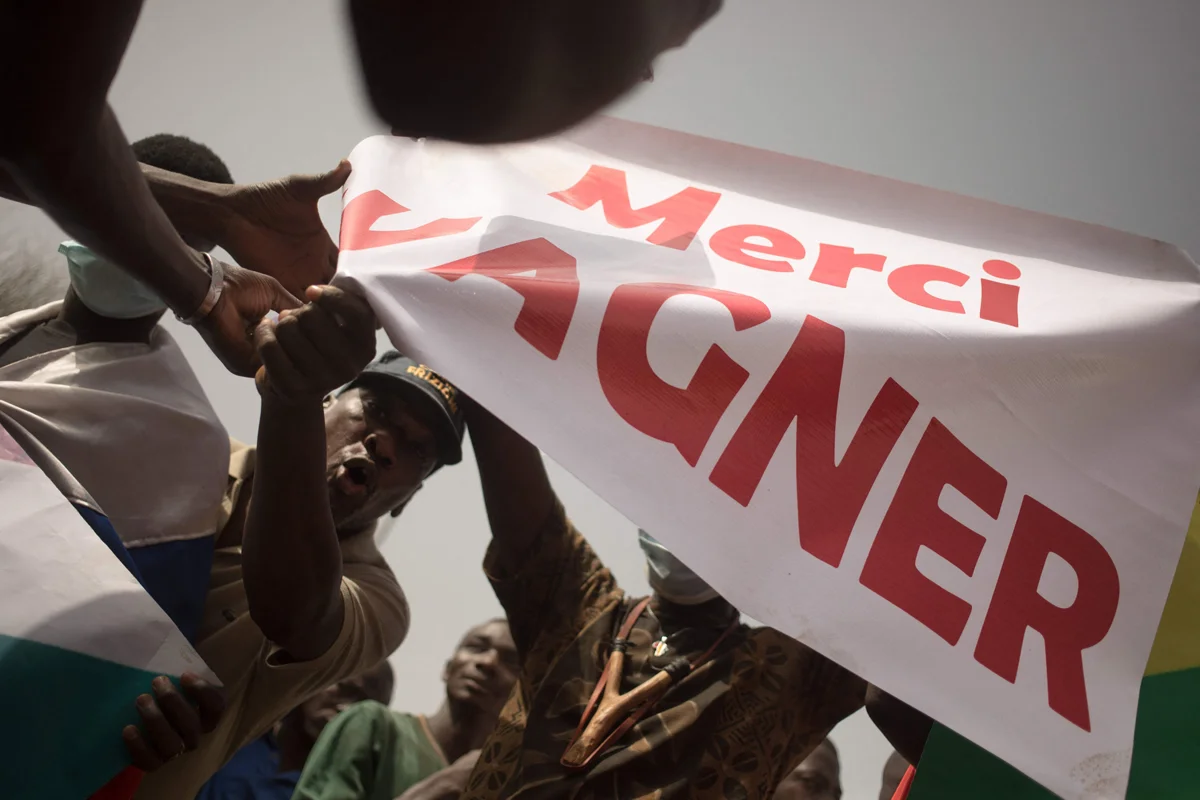
A document of experts at the University of California, aimed at the Mus, requires an investigation into the persons related to Wagner, the Russian government, as well as the Mali transition administration.
Persons affiliated with the Wagner PMC, and in general, the Russian side officially did not comment on these videos, despite the requests of international media. Meanwhile, earlier, in 2024, the Mali Army’s leaders announced the opening of an internal investigation on the facts of cannibalism recorded on video received by law enforcement officers. However, nothing is reported about this investigation.
Meanwhile, a video appeared on the Web from Burkina-Faso, on which supposedly military personnel on camera are cutting human bodies. The country's authorities sharply condemned such actions and announced the beginning of the investigation to establish persons involved in incidents.
These episodes and dozens of publications on the channels associated with Wagner demonstrate to us a new aspect of the war in Sachela - psychological. The horrors that filled the local online space create widespread fear and undermine the moral state of the population.
The testimonies of people who directly encountered the cruel actions of government forces and their Russian allies say that last year thousands of their fellow countrymen have left their villages, and hundreds went missing after skirmishes with the Malian army or with it associated, including Wagner.
Cruel practices described by human rights defenders and specialists in armed conflicts are now in Africa, do not lead to the fact that these practices come to naught. On the contrary, these kinds of incidents feed the cycles of retaliation, cultivate extremism, prolonging conflicts in the warring regions of the world. However, the next indication of this fact that has been sore fact is not the only value of the document of the University of California.
This legal dossier is the first organized attempt to connect the actions in the information field with military crimes and expand the jurisdiction of the Mus on violations in cyberspace.
The court expressed interest in the case and announced the monitoring of reports of violations of human rights in Mali, but there was no official statement for this secret dossier yet.