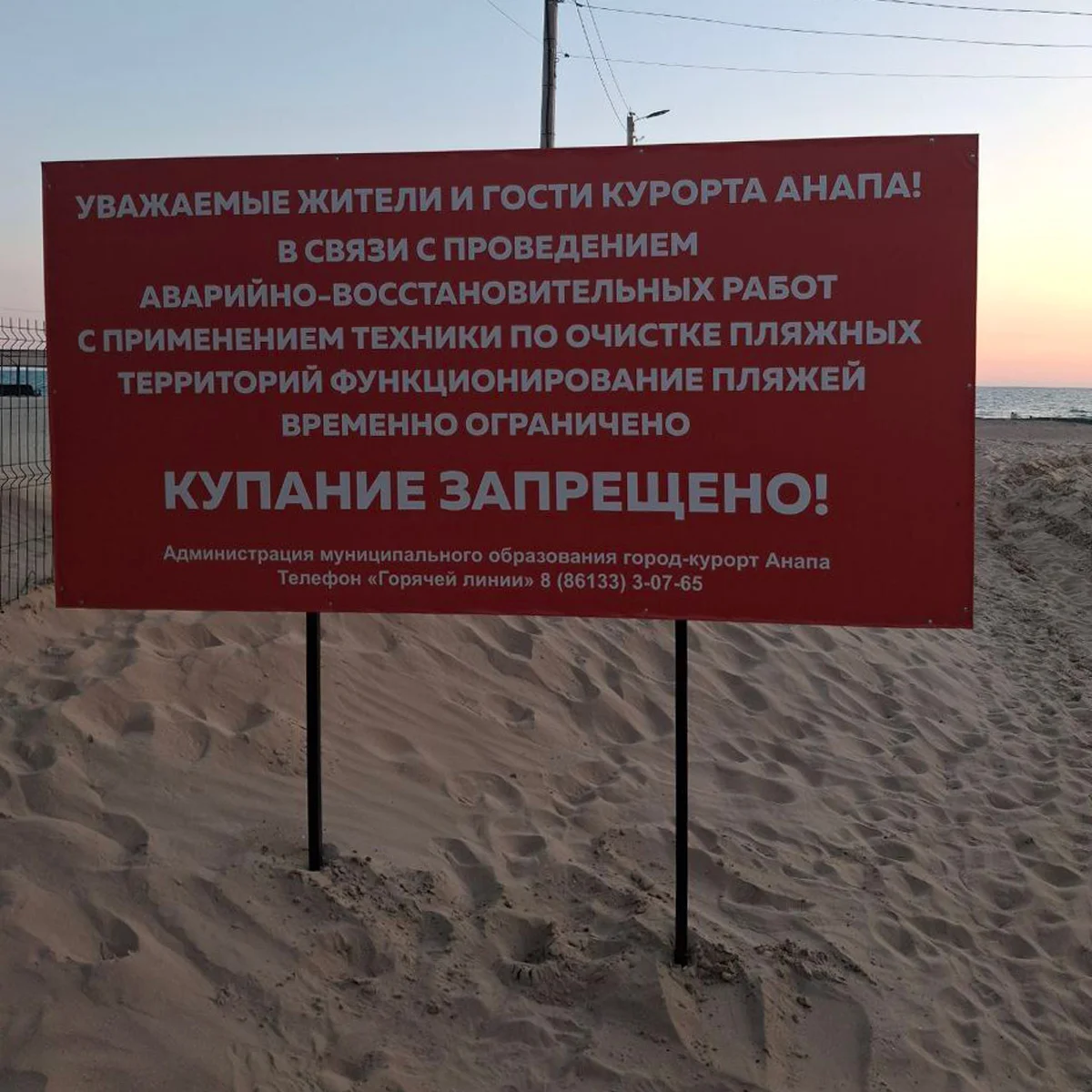
Translated material
Black Sea of Fuel oil
How the catastrophe was eliminated in the Kerch Strait and is it possible to rest in Anapa now
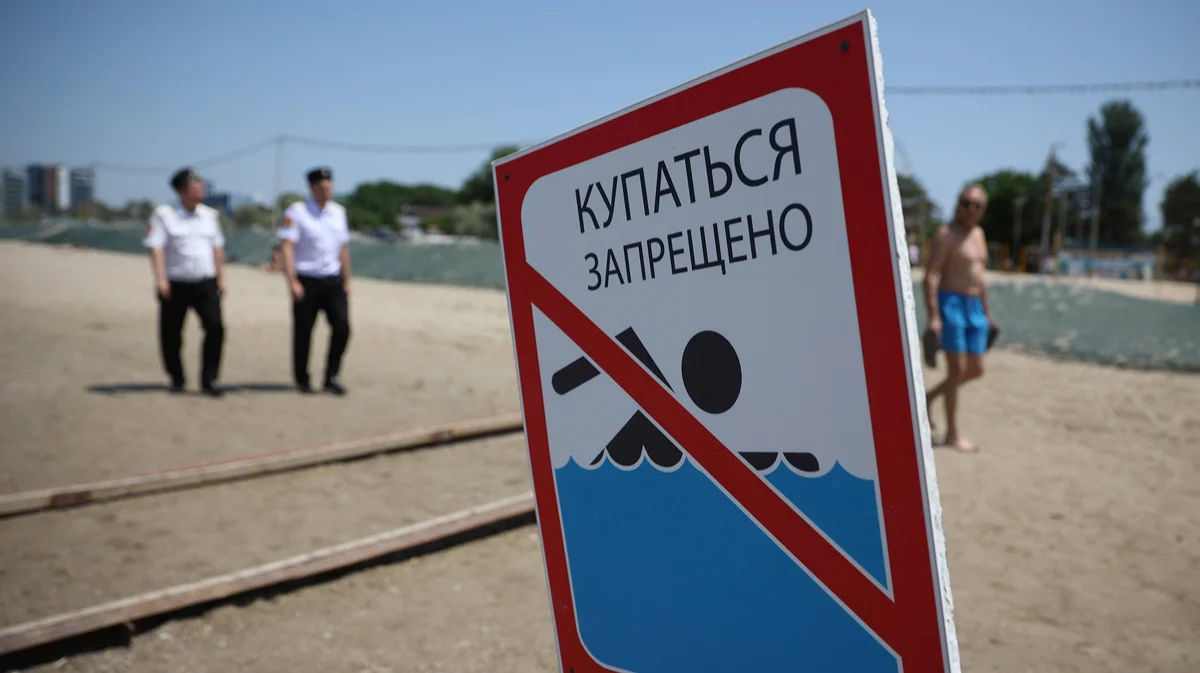
The sign "swimming" on the beach in Anapa, June 8, 2025. Photo: Vitaly Timkiv / satellite / Imago Images / Scanpix / Leta
In the mid -2024, one of the largest accidents in the history of oil transportation occurred in the Kerch Strait: two Russian tankers transported 9,200 tons of fuel oil. 2400 tons of oil products were included in the water area, some of which were nailed to the coast of the Anapa children's resort. At first, the authorities argued that there was no environmental damage, the consequences of the accident would be eliminated in the near future, and the holiday season would definitely take place. However, on December 26, an emergency of federal level was introduced in the region. We understand how the authorities bought trips to relax state employees in Anapa, how they shift the responsibility for bathing in the polluted sea and why the liquidation of the spill is ineffectively.
How many tourists are there in Anapa
The summer season in Anapa began: vacationers fill the hotels, walk along the sea and bathe. State media disseminate information that there were even more vacationers than in the previous seasons.
About 100 thousand tourists arrived at the May holidays in Anapa. This is more than in 2021 and 2022, the city hall said. In many ways, the influx of tourists was provided by the authorities: the vouchers to the resorts were redeemed by state -owned enterprises and the administrations of Russian cities. So, for trips to Anapa, the Sverdlovsk budget spent 470 million rubles, in the Volgograd region - 26 million rubles, in Ugra intended to spend 9.7 million rubles.
Information about such purchases was accompanied by a violent discussion of the danger of swimming in the sea, especially for children, but the organizers of the rest claimed: instead of the sea, tourists are waiting for pools. In fact, they still bathed into the sea.
“In the village of Vityazevo near Anapa, despite the environmental disaster, the beach season begins. Children run out of the hotel’s gates to the sea and rush into the sand: they take it with handfuls and throw it into the air, sculpt the cakes, pick it with blades, ” wrote the cedar publication at the end of May.
In the video about the resorts of Anapa, an unknown author photographed many tourists located on pebbles and with pleasure swimming in the sea. Filming were made on June 22–23, 2025, says a sunbeam.
However, on June 24, the head of the Union of Russian Tourists, Ilya Umansky, at the country's main business event-the St. Petersburg International Economic Forum- said that the tourist flow in Anapa fell by 20% compared to the indicator of June of the previous year. Entrepreneurs reduced 40%prices to attract tourists, and count on an increase in the number of guests in July-August. But, it seems, Umansky does not have enough objective data: the situation is worse.
According to the source familiar with the situation, now people on the beaches are many times less.
Best, hotels with pools; The owners of apartments and houses who rented out housing have few guests: everywhere you can see the announcement of “surrenders”.
Nevertheless, state media continue to talk about the prospects of tourist boards in Anapa. “Anapa still meets the guests with a bright sun, sea air and wonderful weather. The summer of 2025 is not much different from the rest, only the battles about the ban on bathing remind of a recent disaster, ” writes Rossiyskaya Gazeta and offers visitors to go on excursions to the reserves and visit the water park.
The ecologist and director of the environmental programs of the All -Russian Public Organization "Green Patrol" Roman Pukalov reassures the readers of the article. In his opinion, rest in Anapa is safe: all air samples showed the absolute absence in the atmosphere of fuel oil vapors.
Why you can’t swim, but you can breathe
Meanwhile, with access to information about water and air samples in Anapa, civil society has problems. During the time of the accident, various departments have made thousands of tests, but only their result is voiced, there are no research itself in the public domain, the volunteer who took part in the liquidation of the consequences of the accident told Novaya Gazeta Europe. According to him, many attempts by civil activists to pass water and sand for analysis led to paradoxical situations: laboratories refused to take samples, referring to workload, or lost water and sand during research. Moreover, the security forces held conversations with those who tried to openly talk about the dangers of bathing and the remnants of fuel oil on the beach.
The facts about such pressure were publicized by the Krasnodar blogger Yuri Ozarovsky. For a post about fuel oil, he was detained in Alushta and fined for the spread of inaccurate information.
At the same time, allegedly independent experts, the same Pukalov, leads as an example of water samples taken by local residents. After sea water stood for several hours in the room, the smell of petroleum products was not captured. On this basis, Pukalov recognized the water clean. Blogger Max Anapsky took water samples in three places on the coast and also received a positive conclusion from laboratories: the content of oil products in them complies with the norms.
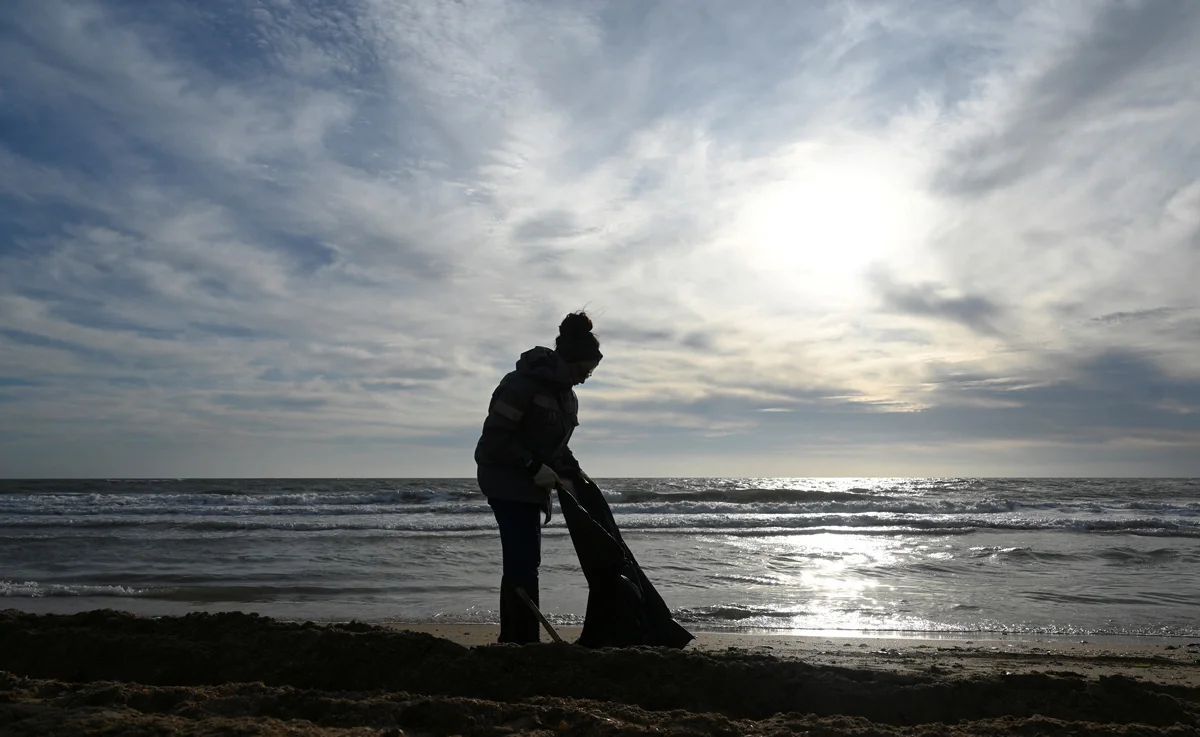
But despite the reports on the purity of water, at the end of April, Rospotrebnadzor forbade bathing on Anapa beaches. “In Anapa, in the area where sandy beaches and water were covered with oil, yes, there are excesses there, they are preserved. This does not allow us to allow the use of these beaches today, ” said the head of the department Anna Popova at the end of June.
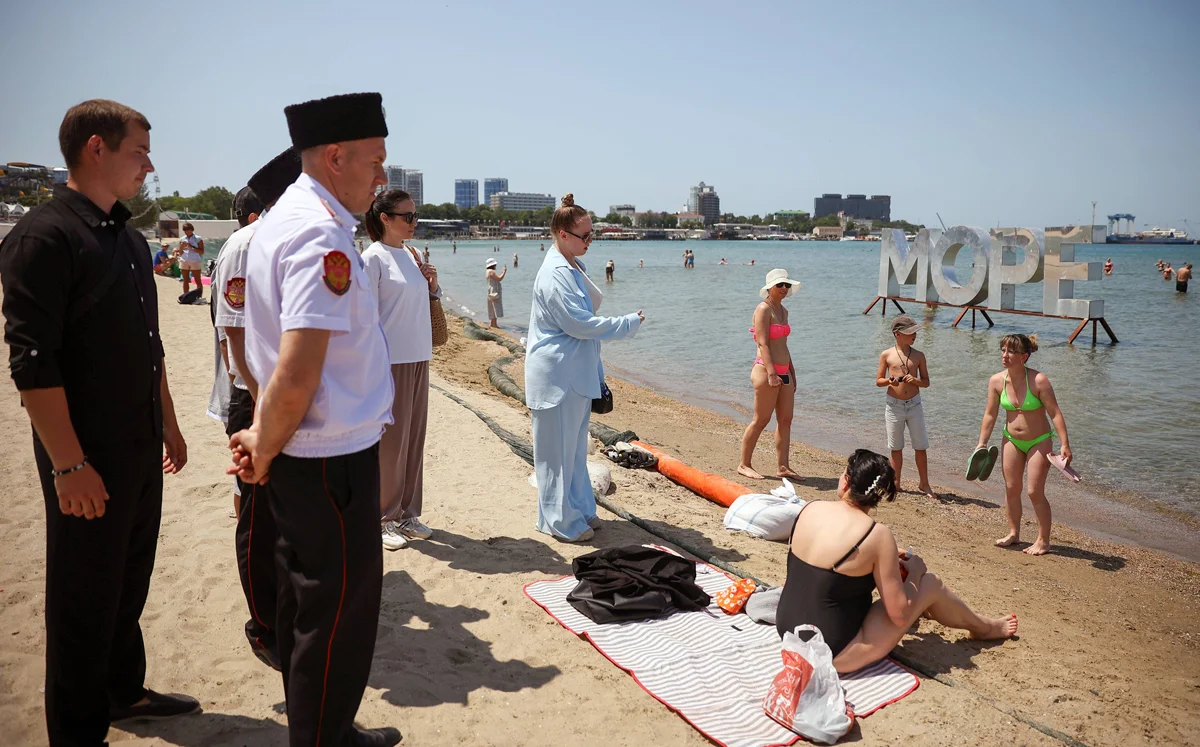
According to an anonymous source familiar with the situation, the authorities, using Rospotrebnadzor, are trying to evade responsibility. On the one hand, bathing is officially prohibited, on the other hand, people enter the water, despite the signs and ads to the loudspeaker.
No one from the sea is expelled and does not give information about the dangerous influence of oil vapor and toxicants, which are contained in fuel oil.
True, from June 24, Anapa from tourists take receipts about what they know about the ban on swimming. Written informing, when checking in all Anapa hotels and hotels, introduced the operational headquarters to eliminate the emergencies of the Krasnodar Territory. “This is an additional measure aimed at informing tourists about health risks: possible skin diseases, allergies, poisoning due to possible contact with fuel oil on that section of the coast, where work is continuing to eliminate emergencies,” the official d telegram channel of the operastble.
But this should not be associated with the desire to save the health of citizens. The matter is still trying to avoid responsibility: in some places there are no notices on the ban on the ban on the ban on bathing.
Why is the fuel oil still threatening citizens' health
The authorities allocated more than 2.2 billion to eliminate the consequences of the fuel oil spill. However, there is no data on the spending of funds, but there are evidence of delay and in vain budget expenses. The most amazing events began to occur when volunteers working on the beaches at the call of the heart were replaced by volunteers sent by ordering, who were paid 4,000 rubles a day. Some enterprising people hired for 1000–2000 local residents to clean the beaches instead of themselves. However, the latter did not differ with special zeal in cleaning.
For example, according to June 23, 163,000 tons of polluted sand were taken out with the beaches, 40 thousand tons were disposed of after cleaning. The destruction of a ton of sand, according to various estimates, is from 17,000 to 21,000 rubles, that is, officials and entrepreneurs performing state orders for cleaning are interested in the most expensive way to eliminate the consequences - burning.
Sed sand is used for dumping at garbage training grounds, and the most contaminated with fuel oil is sent for burning. Earlier, the authorities claimed that after cleaning, sand could return to the beaches. However, it quickly became clear: a similar scenario is impossible. An attempt to bring on the shore sand from quarries failed: world experience showed that the waves are blurred faster. But it hardly stopped officials; Most likely, it was not possible to agree with the owners of quarries who would be left without their enterprises: they would have taken everything to the beaches, buying at low prices.
In the end, the ANAS authorities purchased the only installation for cleaning sand right on the beach. Since February 13, a special tractor with a plow has been working on the coast, the task of which is to raise layers of sand from a depth of up to 70 centimeters to ensure its thorough cleaning. However, sifting allows you to choose relatively large pieces of fuel oil from sand, and the smallest particles will remain on the shore.
Theoretically, bacteria or other methods of biological cleaning will help to neutralize these residues, but so far they are only undergoing tests on the “beds” in Anapa. Their massive use seems to be a very distant perspective.
In June, experiencing their own development - living bacteria - the company "RUSNANO" began.
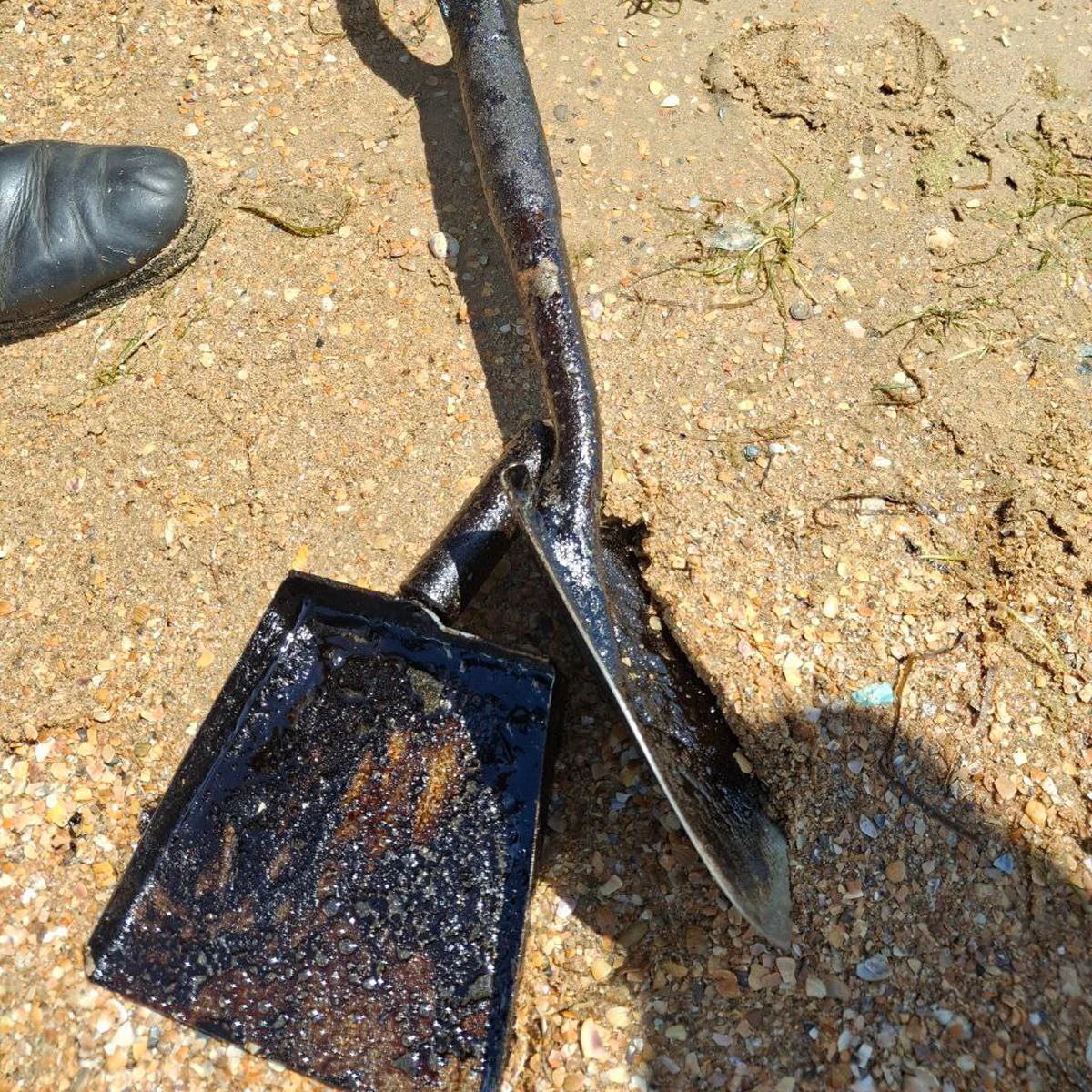
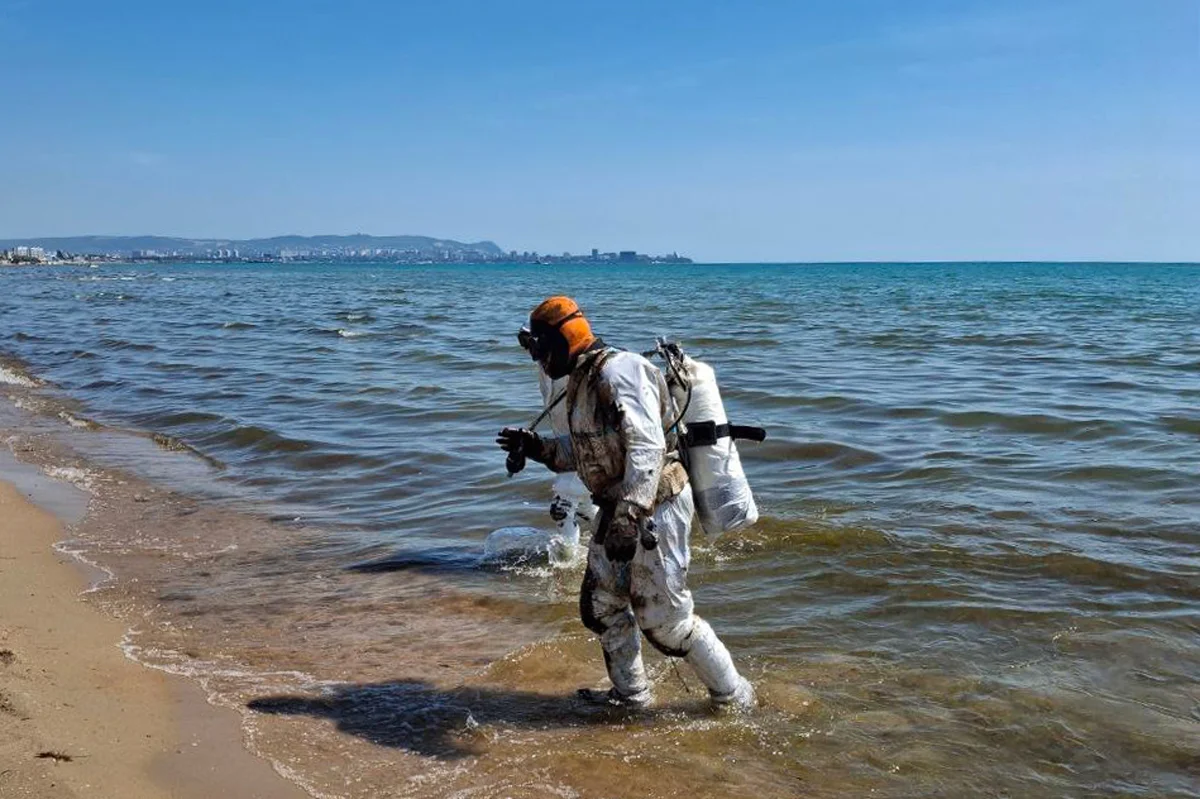
But the fuel oil is a problem not only on the beach, but also in the sea. Until now, parts of the collapsed tankers have not been raised from the bottom and continue to supply fuel oil to the shores of Anapa or Crimea, depending on the direction of the wind. The fuel oil remains at the bottom, and during the storm it throws it ashore. During favorable weather, divers descend into the sea and collect sand with shovels, load it into bags and lift it to the surface. According to an anonymous source, Russian chemists proposed using Persol well -known housewives to simplify the collection of fuel oil. If you pour the person (sodium percarbonate) to the seabed, then the fuel oil will rise to the surface where it is easier to assemble it. However, the proposal was not accepted. Other technological developments were also not taken to work.
When the fuel oil stops leak
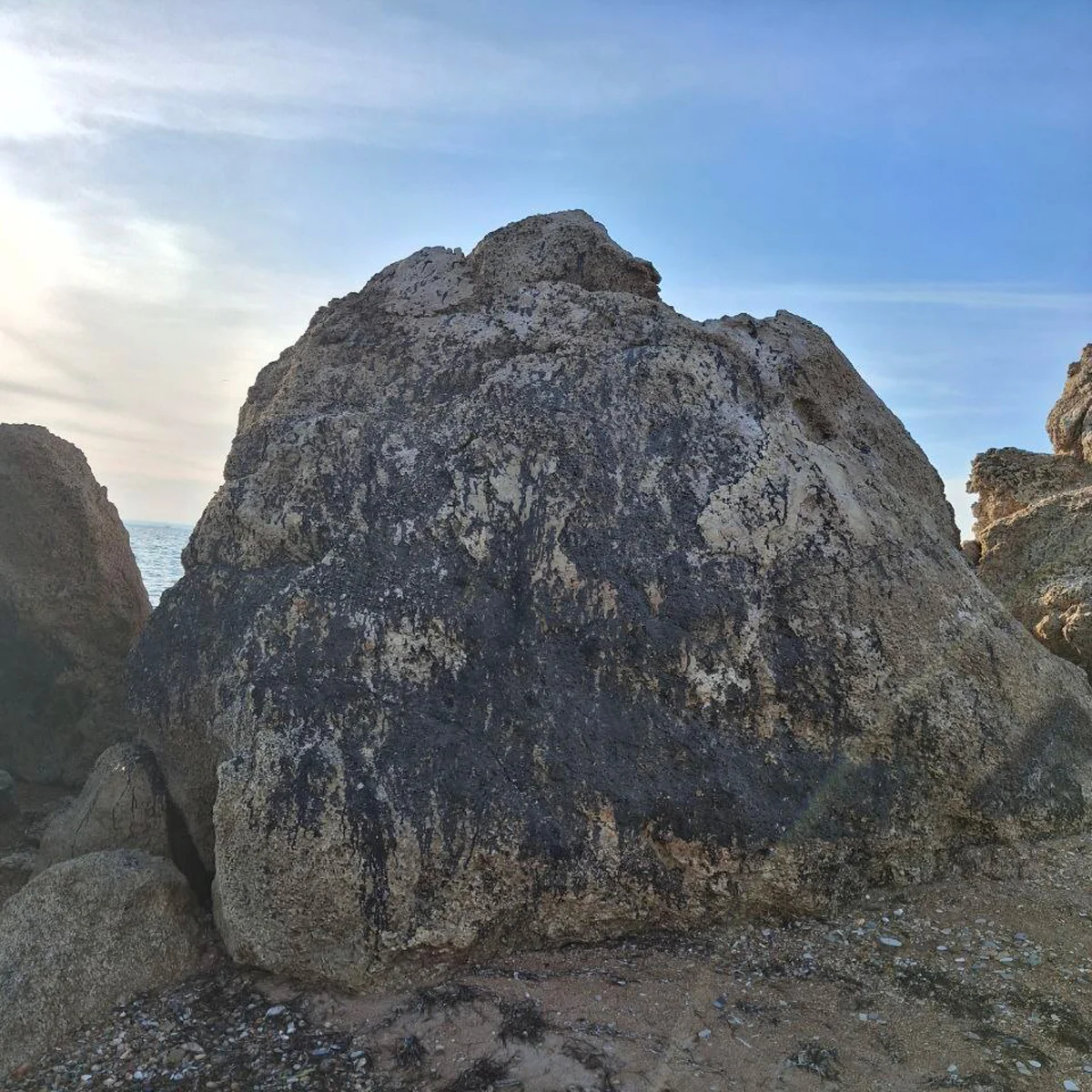
According to anonymous expert, emissions of fuel oil from sunken ships continue at a speed of up to 500 kg per day, to the shore takes up to 50 kg of fuel oil per kilometer of the beach.
The appearance of fresh pollution will stop only after pumping out a fuel oil from tankers. In March 2025, Deputy Prime Minister Vitaly Savelyev assured that there was a plan for lifting the courts. The Russian government promised to allocate over 7.5 billion rubles to eliminate the consequences of emergencies with the spill oil products in the Kerch Strait. These funds are intended for the construction of three special kofferdams - steel “caps”, which will be installed over the sunken parts of tankers.
Then Rosmorrechflot began searching for contractors for the design of the construction and installation of three kofferdam in Anapa. The deadline is until October 30, 2025, dismantling work will begin after this date. While the performer of the work is unknown, it was also not reported on the beginning of the manufacture of structures.
Who will pay for an accident in the Kerch Strait
Court cases have begun against the perpetrators of the emergency. On June 2, the Arbitration Court of the Krasnodar Territory accepted the claims of the Chernomoro-Azov Marine Directorate of the Rosprirodnadzor for the owners of the victims of the Kerch Strait of the Volgonft-212 and Volgoneft-239 Tankers. The amount of claims exceeds 49 billion rubles to Kama Shipping LLC and Kamatransoyil LLC and 35 billion rubles to CJSC Volgatransneft.
Earlier, the owners of tankers refused to voluntarily compensate for the harm caused by the sea environment. The Arbitration Court of the Krasnodar Territory also refused the owners of tankers to create limited liability funds for damage from the spill of fuel oil. This would allow them to limit the amount of claims. If the court granted the petitions, the companies would pay no more than 1.07 billion rubles. For all the claims he had shown, the lawyer Natalya Lisitsina points out .
But the court refused the shipowners, since the damage from pollution was the result of their “own action or own inaction, committed intentionally or in grief”. The court found that both owners were found guilty of violations of technical regulations during the operation of tankers.
“In fact, this means that the guilt of the pollution tanker has already been confirmed by the court, and then only the work of technology: if the plaintiffs prove the validity of the amount of damage and losses, then the requirements will be satisfied”,
- Lisitsyna believes.
Consideration of the claim of Kamatransoyil LLC against Kama Shipping LLC to recover 200 million rubles of losses from the death of the rented tanker Volgoneft-212 is transferred to closed regime and full texts of the court decisions are not published.
The claim of the administration of the Temryuk district of the Krasnodar Territory against Kama Shipping LLC and CJSC Volgatransneft on compensation for losses of 28.3 million rubles was also adopted . The administration of the resort city of Anapa, in turn, requires the owners of tankers to cover the costs of eliminating damage in the amount of 545.93 million rubles.
On June 25, it became known that the property of the leaders of the Kama Shipping company, who owned tankers in the Kerch Strait, was arrested .
If we generally assess the situation with the liquidation of emergencies, then everything seems to be in the format familiar to Russia: the information is not available, the public cannot monitor the effectiveness of work and expenditure of funds, the state is trying to avoid responsibility for the health of citizens - on the one hand, on the other hand, people come to the sea and fill out the receipt of the ban on bathing.