
Translated material
Elon Musk launched the Robotaxi service, which is controlled by artificial intelligence. True, cars still cannot drive the Tesla employees unaccompanied
And they sometimes violate the rules of the road
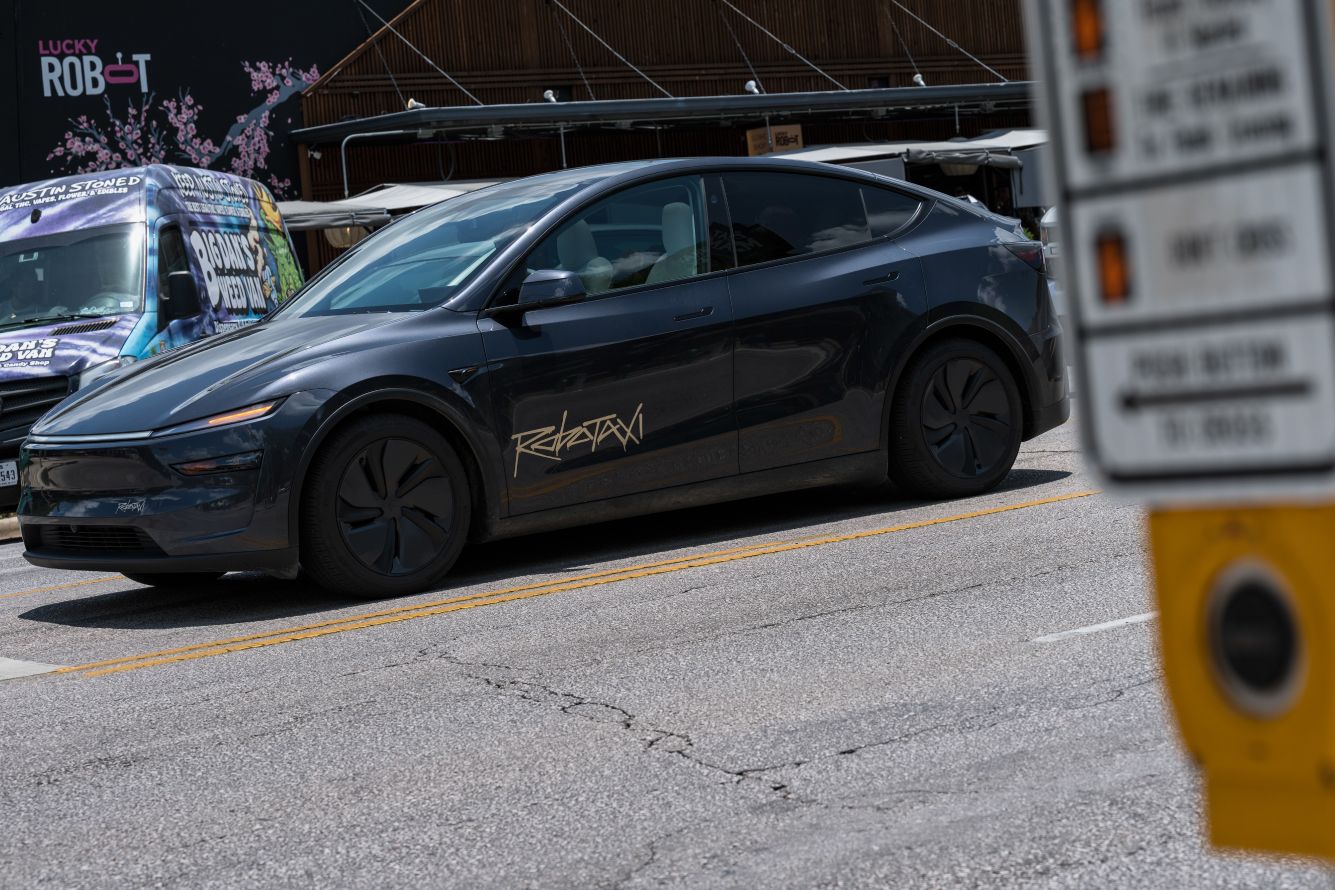
On June 22, 2025, Tesla launched an unmanned robotaxi in Texas. It is only about two dozen Model Y electric vehicles, which carry out orders in the small area of Austin. Each machine must have Tesla employee, who monitors safety. To control robotaxi, a system consisting of cameras and artificial intelligence is used, which analyzes the situation on the road. "Medusa" tells how the launch of the new Tesla service has passed - and what problems the company can encounter in the future.
Initially, the head of Tesla, Ilon Musk, promised to launch robotaxi by the end of 2020. And he began to predict the appearance of unmanned vehicles even earlier, in January 2016. However, most of the promises and forecasts of the businessman did not come true. The launch of the unmanned taxi service was carried out only in June 2025 - and so far only in very limited mode.
Now the Robotaxi service is working in a small and relatively safe area from the point of view of Austin, writes The Verge. If you specify the destination outside it, then the passenger will deliver a taxi only to the border of the service zone. You can order a car from six in the morning to midnight, although there are other restrictions. For example, robotaxi does not work in bad weather, and there should not be high -speed highway and complex intersections on the route.
Robotaxi is not quite unmanned - the client is always accompanied by a Tesla employee. He sits in the front passenger seat and can help in an emergency. Other companies that develop unmanned cars have similar employees, notes The Verge. Although they usually accompany passengers only at the testing stage, and Tesla launched their service in mode, albeit limited, but still commercial services.
According to the publication, now the Robotaxi Mask fleet consists of 10–20 Tesla Model Y. The fully autonomous Cybercab model without a steering wheel and pedals, which the businessman introduced in the fall of last year, while at the prototype stage. Elon Musk expects that the production of this electric car will begin in 2026.
While testing robotaxi in Austin is taking place among devoted influensers, TechCrunch writes . As a rule, these are Tesla electric vehicles, which are very positive about the brand and have a large number of subscribers in social networks (mainly in the X owned by the mask). How much Tesla sent out invitations is not specified. It is also unknown when the service becomes available to a wide audience.
Journalists note that the choice of loyal influencers casts doubt on the reliability of the first reviews on the product. Tesla is trying to convince everyone (primarily regulators) of the performance of their technologies, which is why he actively hides information about the service. For example, the company tried to block the request of TechCrunch journalists to the Texas Transport Department, who wanted to get public information about the project. Previously, Tesla also tried to block the Reuters Agency for the Austin authorities.
Evidence has already appeared on the network that robotaxi does not work perfectly and violates the rules of the road. Electric cars do not accelerate faster than 40 miles per hour (about 65 kilometers per hour), but sometimes they ignore the signs of speed limit. In one of the videos studied by Bloomberg, a taxi exceeds the set limit by about eight kilometers per hour.
In another video , it is noticeable that the car confused the lanes. She found herself in a row, from which it was possible to turn only to the left, she pulled the steering wheel several times in this direction, but in the end she went straight. As a result of a taxi, she went into the oncoming lane for a short time, and then crossed a double continuous line - and returned to the correct part of the road.
One of the participants in the testing program was planted directly at the intersection. In another video , a taxi stops too far from the order point, and passengers have to overcome about 400 meters to find a car. Also, autonomous electric cars react nervously to police cars and are quite sharply inhibited because of them in unexpected places-in the middle of the strip or even at intersections.
According to Bloomberg, the American National Directorate of Traffic Safety on the Tracks in the course of all these incidents. Now it collects additional information to evaluate how serious the violations were. According to journalists, the agency regularly interacts with security automakers, but, as a rule, these discussions do not end with an official investigation.
The robotax mask is controlled using cameras and artificial intelligence. This system is considered unreliable
Unlike its direct competitors - first of all, it is Waymo - Tesla does not use additional sensors, such as radars and lidars , for its unmanned electric vehicles. Her Full Self-Driving (FSD) system is relied only on cameras and artificial intelligence. It is also available to ordinary owners of Tesla - the technology helps in driving an electric car (for example, during parking or when moving in a stream), but needs constant control by the driver.
It is precisely that the system cannot take on the full control of the car is considered the main obstacle to the output of the Tesla robotaxi to the market. Despite the fact that the advanced version of the FSD is used in the new service, cars can still have problems on the roads. The absence of backup sensors can endanger all participants in the movement in conditions of poor visibility. And not only weather conditions can affect the quality of the system, but even solar glare or just dust.
In October 2024, it became known that the National Department of Traffic Safety on the Tracks began an investigation against Tesla. The reason for this was four incidents involving cars equipped with FSD. As a result of one of them, a pedestrian died. A separate investigation is also conducted by the US Department of Justice. And the US Securities and Exchange Commission (SEC) studies how true the promises of the mask of investors were about FSD capabilities.
Despite all the claims, Elon Musk promises to release a thousand autonomous electric vehicles on Austin’s roads over the coming months. In the future, he plans to expand the service area - in particular, to launch the service in other cities of Texas, as well as in California.
So far, Tesla is very inferior to Waymo both in terms of coverage and in size of the fleet. The company owned by Alphabet has already released 1,500 autonomous taxis on the roads of Austin, San Francisco, Los Angeles and Phoenix. In the summer of 2025, the service also became available in Atlanta, in the immediate plans - Miami and Washington. Already now, the company performs up to 250 thousand orders per week. In 2026, Waymo expects to increase its fleet by another two thousand cars.
For Ilon, the mask successful launch of robotaxi is another opportunity to improve the financial situation of Tesla, making it more attractive in the eyes of investors. The company's positions were very shaken at the beginning of 2025, when the businessman headed the Department of Efficiency of Public Administration (DOGE). By March, Tesla lost almost half of her capitalization.
Tesla's failures were associated with unpopular decisions and conflicting political statements of the mask in a new position. Investors did not like that the billionaire practically stopped paying attention to his business. By the middle of the summer, Tesla managed to compensate for part of the losses, but the launch of robotaxi has not yet been reflected in its financial situation: the shares of the company, which have rise in price by 9% after the launch of robotaxi, returned to their initial value by the end of the week.
Mikhail Gerasimov