
Translated material
Among the participants of the NO exhibition are the Danish art group Superflex
They distribute art for the audience for free, develop beer and soda, and also build houses for fish
In Berlin, in the space of Kunstraum Kreuzberg, the “No” exhibition finishes the work - it will be open until July 6th. The Danish art group Superflex is responsible in this project for the Censorship Hall. Superflex founded three artists in 1993 - Jacob Fenger, Rasmus Nielsen and Björnostierne Christiansen. This is a very unusual art group that creates anything, just not familiar works of art: from beer and soda to parks, swings and public toilets. And in recent years, observing the increase in sea level, artists undertook to build on land a house for fish and other inhabitants of the sea. Critic Anton Khitrov (aka Medusa editor and texts for the NO exhibition) tells how Superflex argues with the generally accepted idea of art, why they do not recognize copyright and how their work is connected with the Soviet avant -garde.
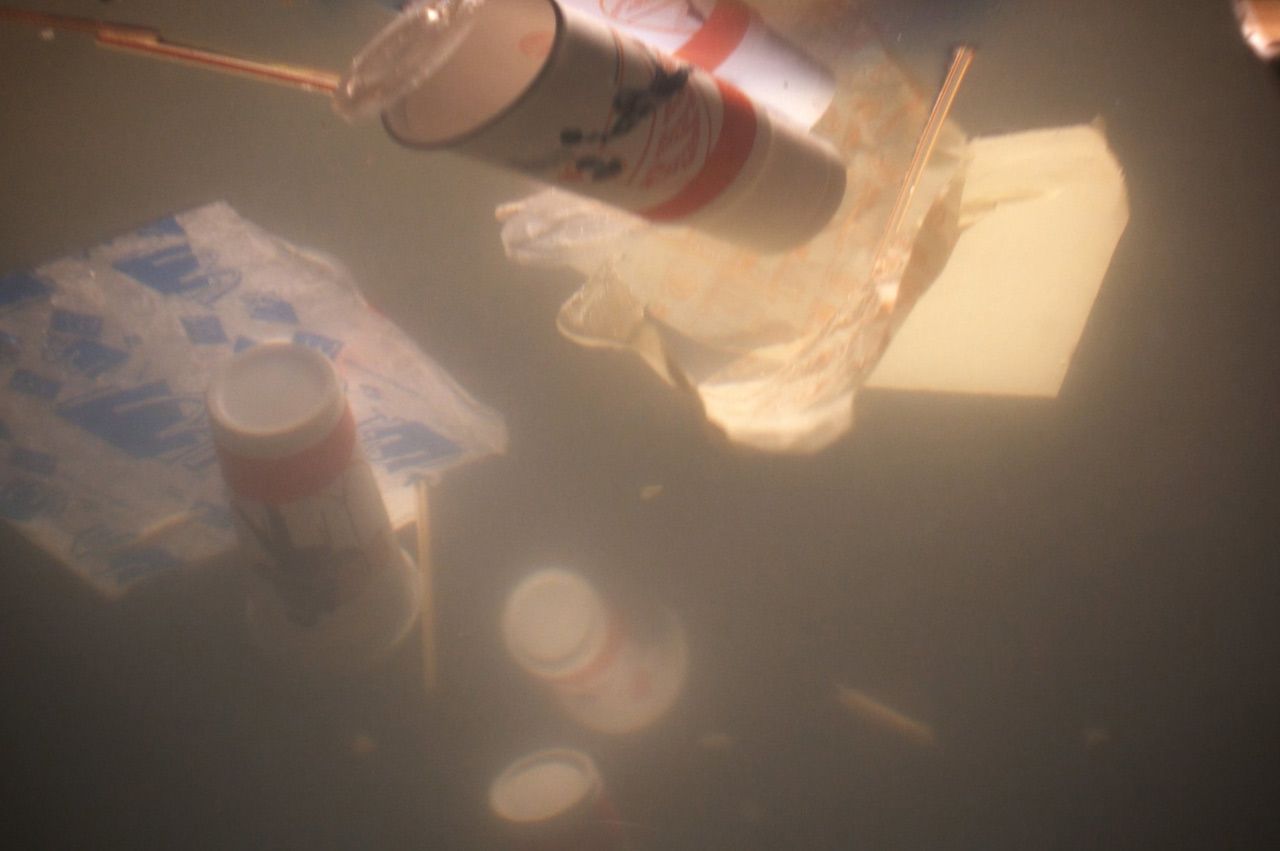
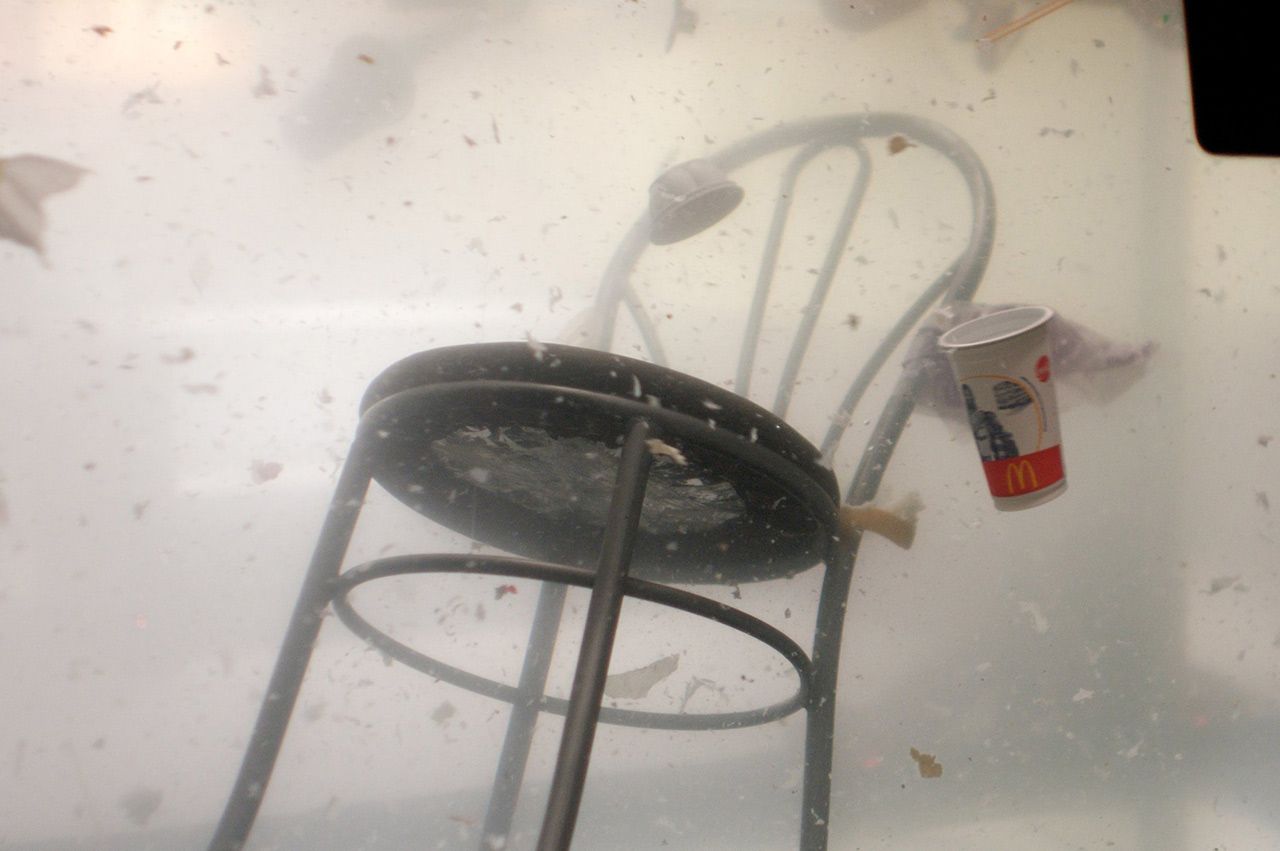
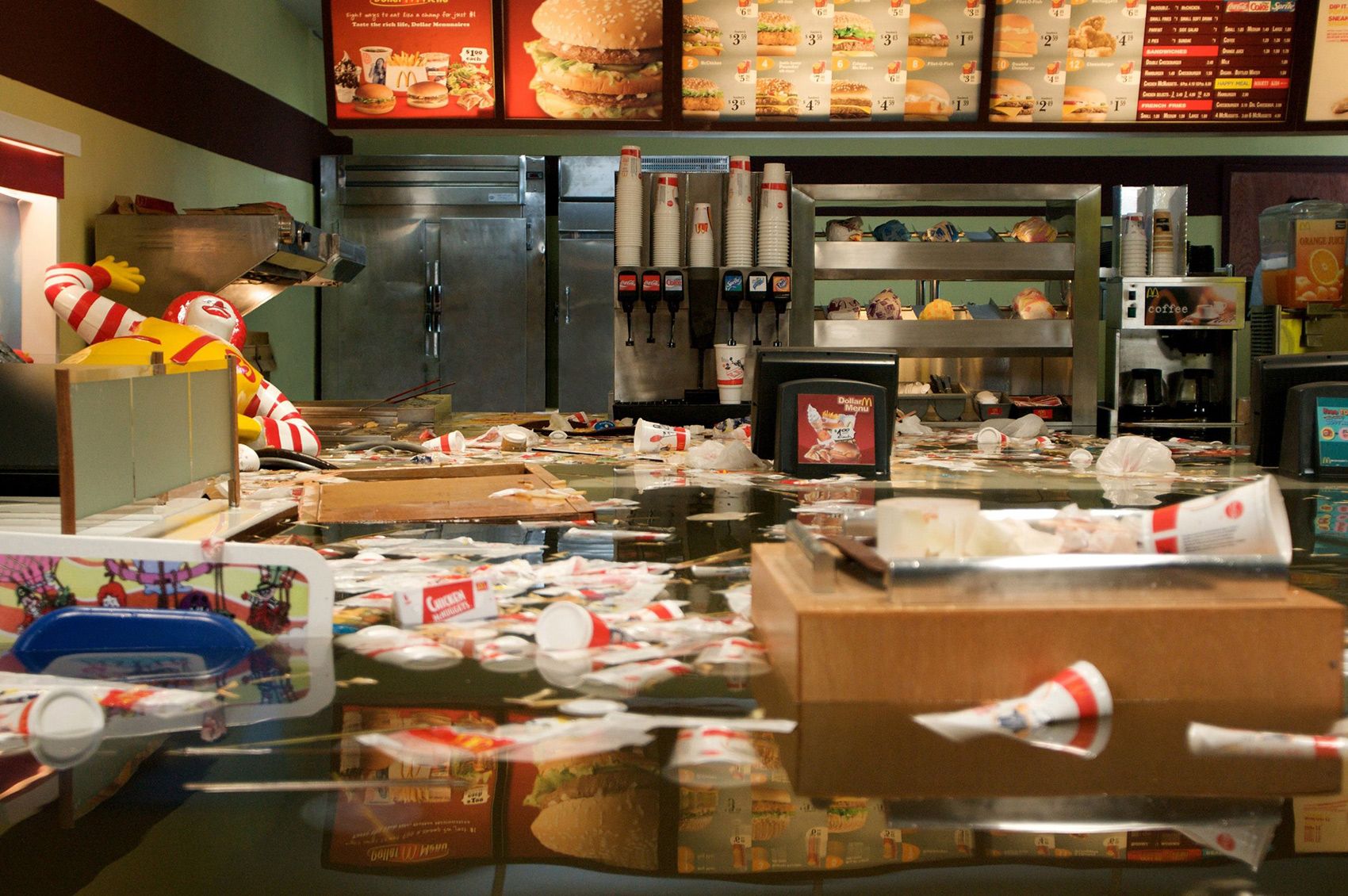
Neither screams nor alarming music, only you can hear how water is gurgling. She slowly fills the empty McDonald's. Rinses a tray with an unfinished Coca-Cola and wet potatoes from the table. Pour cash desks and garbage containers. Ronald McDonald’s statue is overturning on his back. The plastic clown does not sink, but sways on the waves. The general pathos of the picture causes the Old Testament quote in memory: "You are weighed on the scales and found very light."
To shoot this video called “The flooded McDonald's” , the Superflex art group built the most reliable decoration of the restaurant on one scale of one. In general, there are no equal in the creation of all kinds of replicas.
For the project “Tuel of the authorities” , they built public restrooms around the world, exactly the same as in the offices of various powerful organizations-such as the UN Security Council or UNESCO Executive Council. And for Superkilen in Copenhagen - they copied signs, benches, garbage tanks and other details of the urban environment of different countries (if it was not possible to take the originals). The artists made the list of these objects with local residents who came to Denmark from all over land. Superkilen is the sign work of the group: at the Copenhagen Airport, the park is even depicted on a billboard along with other metropolitan attractions.
At the end of 2024 - early 2025, the flooded McDonald's showed at the Louisiana Museum of Contemporary Art, located about forty kilometers from the Danish capital, at the high sea coast at the large -scale exhibition. The team of curators, led by Tina Kolbrup, tried to cover the vast theme “man and the sea” in its entirety - from myths about mermaids and other water creations to modern eco -led. Superflex shared a space with salt -eating marble statues raised from the bottom of the sea, ancient collections of shells and baroque still lifes. Anxious contemporary art, however, prevailed.
The growing level of the sea is an infinitely important topic for Denmark, and not at all because the prosperous Danes have nothing to worry about. The country is experiencing one destructive flood after another. In Copenhagen, about 500 thousand buildings risk being under water for 50 years. Among them, McDonald's restaurants will probably be.
What can artists contrast international corporations? In essence, almost nothing. The climatic crisis is a reality that art is hardly able to change. But it, at least, can comprehend it in a new way. Superflex removed the “flooded McDonald's” in 2009. They have long quit discussing climate changes in biblical concepts - the Apocalypse, the World Flood - and are trying to look at the future of the planets with a kind of bitter optimism. “This is not the end of the world,” read the LED sign created by the art group in 2019. Then Superflex began to build fish houses.
“ Anthropocher is coming to an end,” the artists write on the group’s website, commenting on their unexpectedly cheerful sign. - It is worth us to leave, our infrastructure will adapt to other species that will replace us. A new life will blossom, with us or without us. ” While Superflex objects from the Interperse Housing series remain on land, these are sculptures: they fit into the same “Ocean” exposition no worse than “The flooded McDonald's”. But they should be under water, they will turn into utilitarian buildings.
Perhaps the main value of this team is cooperation. It is no coincidence that its founders Jacob Fenger, Rasmus Nielsen and Björnistierne Christiansen abandoned personal brands at one time and sign projects with the collective name Superflex. But Superflex is not only three artists. The Danes regularly attract different experts to the work: architects - if you need to build a public toilet, designers - if you have to develop a poster. Artists create dwellings for fish and other aquatic inhabitants along with marine biologists. Scientists suggested painting objects in shades of pink, give them a complex shape or make a porous surface: this is suitable for fish.
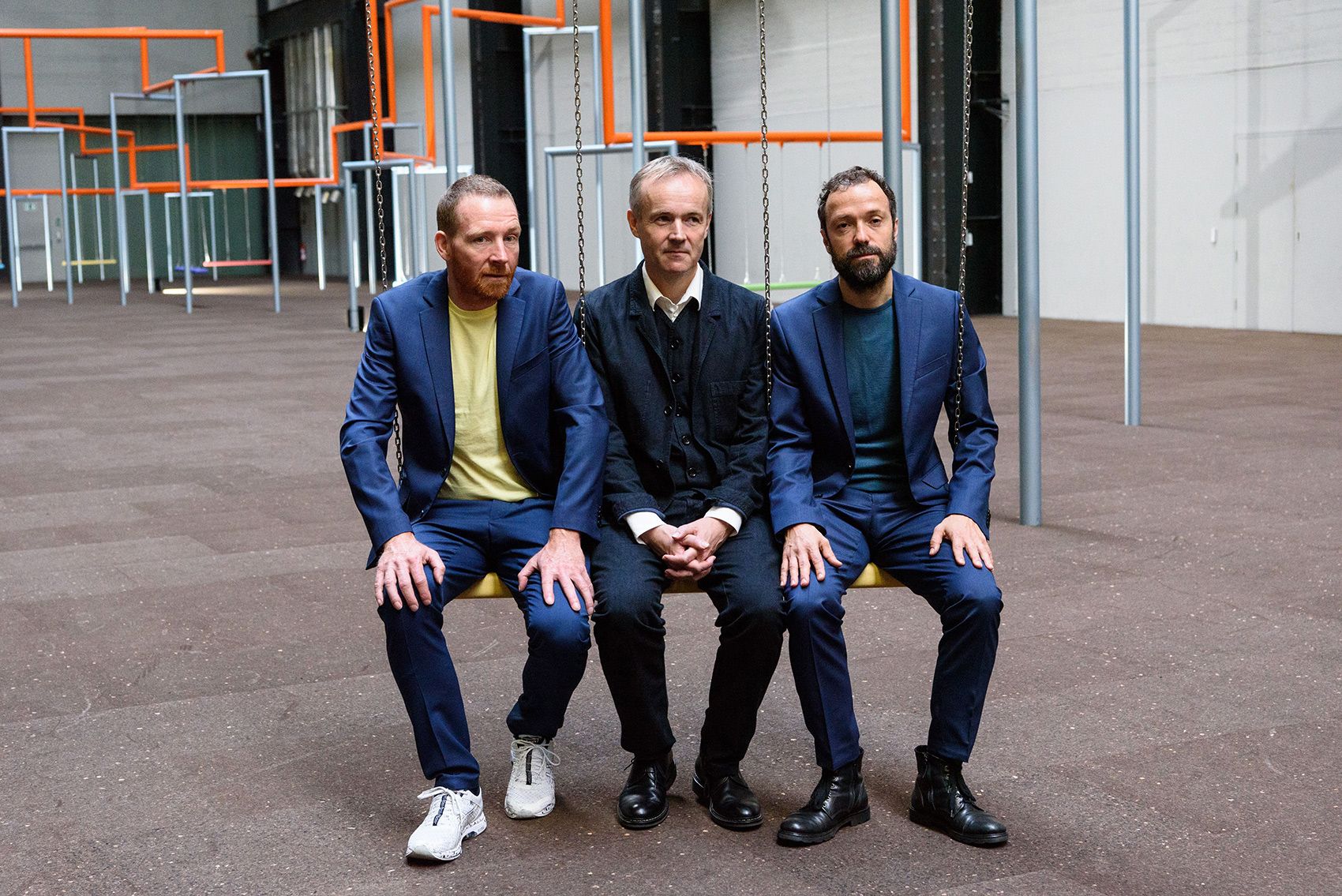
Superflex Studio in Copenhagen, a former industrial building, like an office of a serious design bureau rather than an art workshop, is filled with these pink sculptures of a variety of sizes today: some in human growth, while you could immerse at a home aquarium if you wish. Since the choice of color is dictated by science, associations with Barbie and Disney princesses seems to be unnecessary - but it is impossible not to think about the mermaid, in any case, the city itself has it. Superflex turns over the plot of Hans Christian Andersen, their famous compatriot: if a fairy -tale heroine dreamed of land, then, on the contrary, they imagine the wonderful world of the future at the bottom of the sea.
Radical, even demonstrative self -denial is the most amazing in this project. Artists insist: if in the future a person has no place, this does not mean that such a future should be indifferent to him. It’s not that they seriously intend to provide real estate as many fish as possible - their art, of course, is addressed to people. Superflex urge us to expand empathy as far as possible outside our group, no matter how this group was called - Denmark, Europe or humanity.
“The idea that foreigners exist is the biggest lie in history,” Björnostyansen, one of the founders of the group, shares with Medusa. He himself is in a way a foreigner: his father is Danish composer Henning Christiansen, but his mother, artist Ursula Reuters Christiansen, moved to her husband from Germany. Parents were fond of communist ideas, recalls Björnostierne, and studied the avant -garde with Joseph Boyce, the legends of modern Western art (by the way, he was also occupied by the shaky border between man and other species, and the Danes with their homes for fish, undoubtedly inherit it). When the future participant of Superflex turned a year, the Christiansen moved from Copenhagen to the village, to the island of Mön in the Baltic Sea, because "they did not want to deal with the bourgeoisie." Ursula Reuters Christiansen, the star of the Danish art scene, to this day lives and works there.
“We are all immigrants,” says Björnostierne. - Nature does not care about the borders. Borders, territories are the worst that you can come up with. No “we” and “they”. Only “we”. This “we” must include not only representatives of other cultures, but also other species. ”
At the heart of the philosophy of Superflex - the rejection of egocentrism. Artists consistently break the neoliberal logic, according to which competition leads to progress, and the purpose of life lies in personal success, that is, superiority over others. So, for example, they question the modern concept of authorship and copyright. The motto of the art group is “IF Value then Copy” (“If valuable, copy”). A whole section is devoted to the Superflex website. The Danes give free the recipe and the brand of beer Free Beer . Organize workshops for the manufacture of lamps from photos of other, much more expensive lamps. The replicas of the sculpture of Sol Levitt, the famous American conceptualist, whose genuine work go at auctions for hundreds of thousands of dollars, are stamped and give the audience.
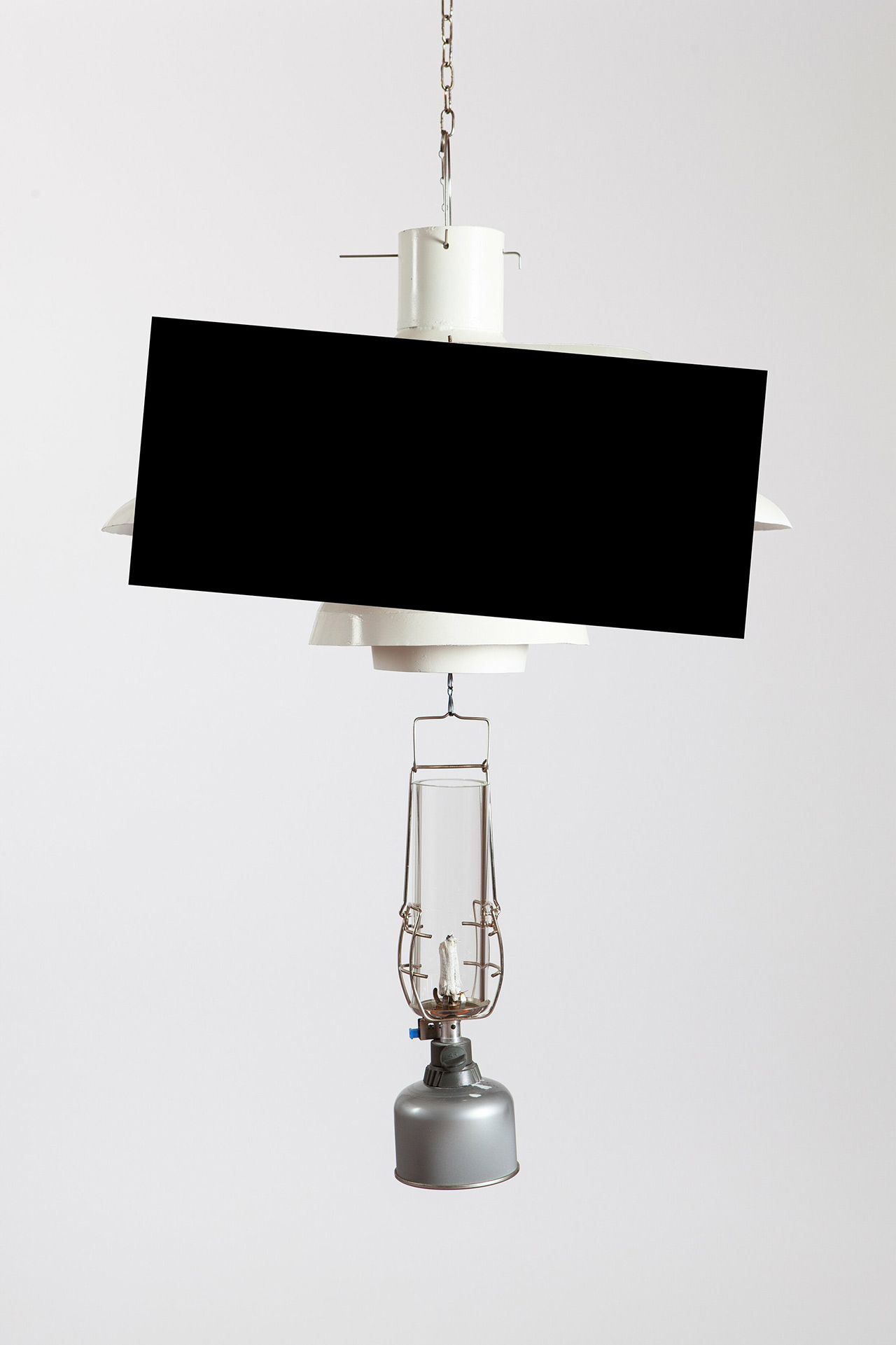
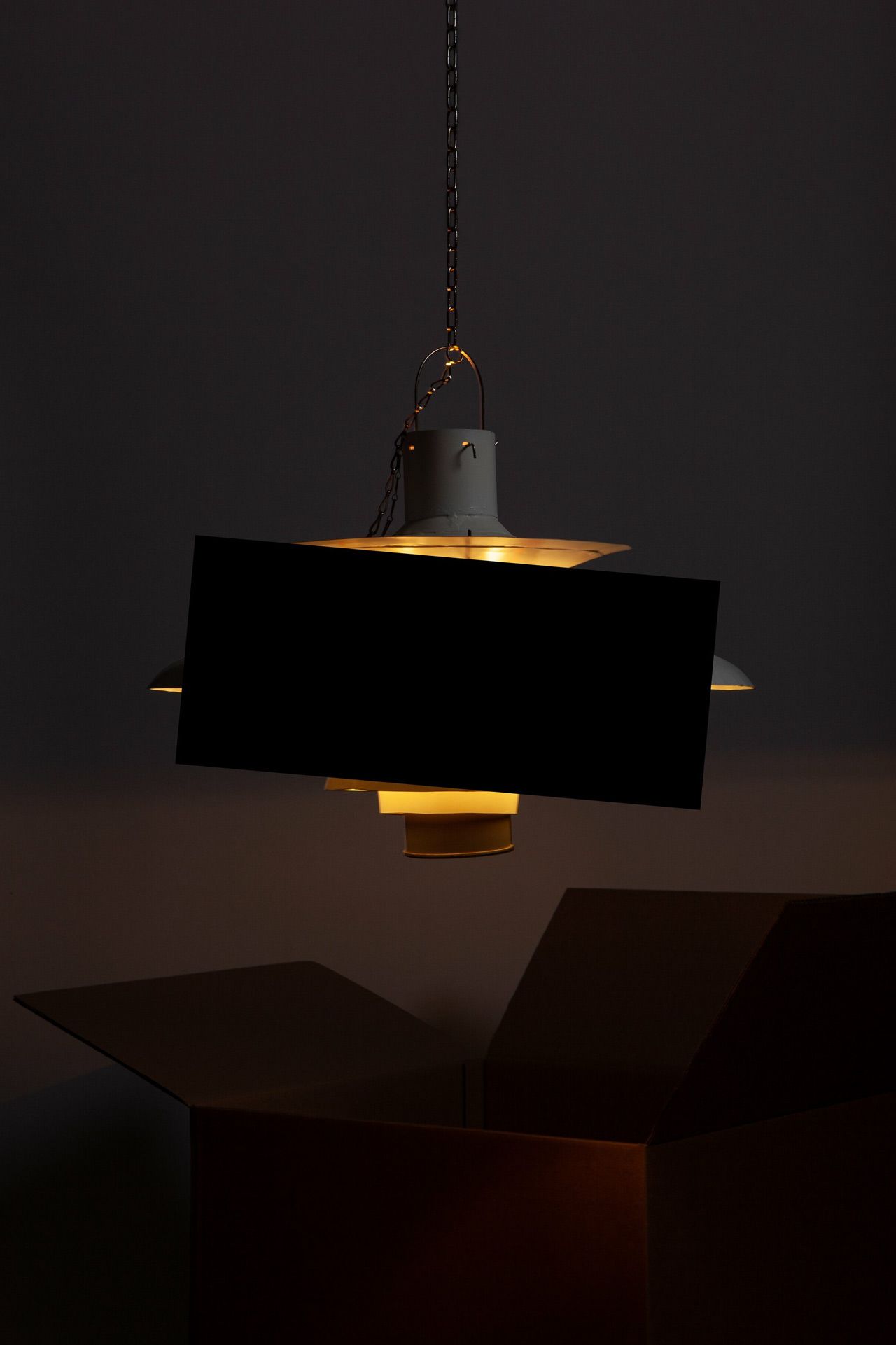
Of course, Superflex periodically encounter problems due to copyright. In 2002, for example, artists modified the PH5 lamp-a textbook sample of Danish design created by the Hennigsen field in 1958. Their version worked on gas and was intended for people living in areas without electricity. As soon as Superflex put a lamp in the Swedish Malmo, the copyright holders of the design, Louis Poulsen Lighting A/S, threatened the lawsuit of both the group and the gallery where the exhibition was held. Since then, artists show this lamp exclusively in cardboard packaging.
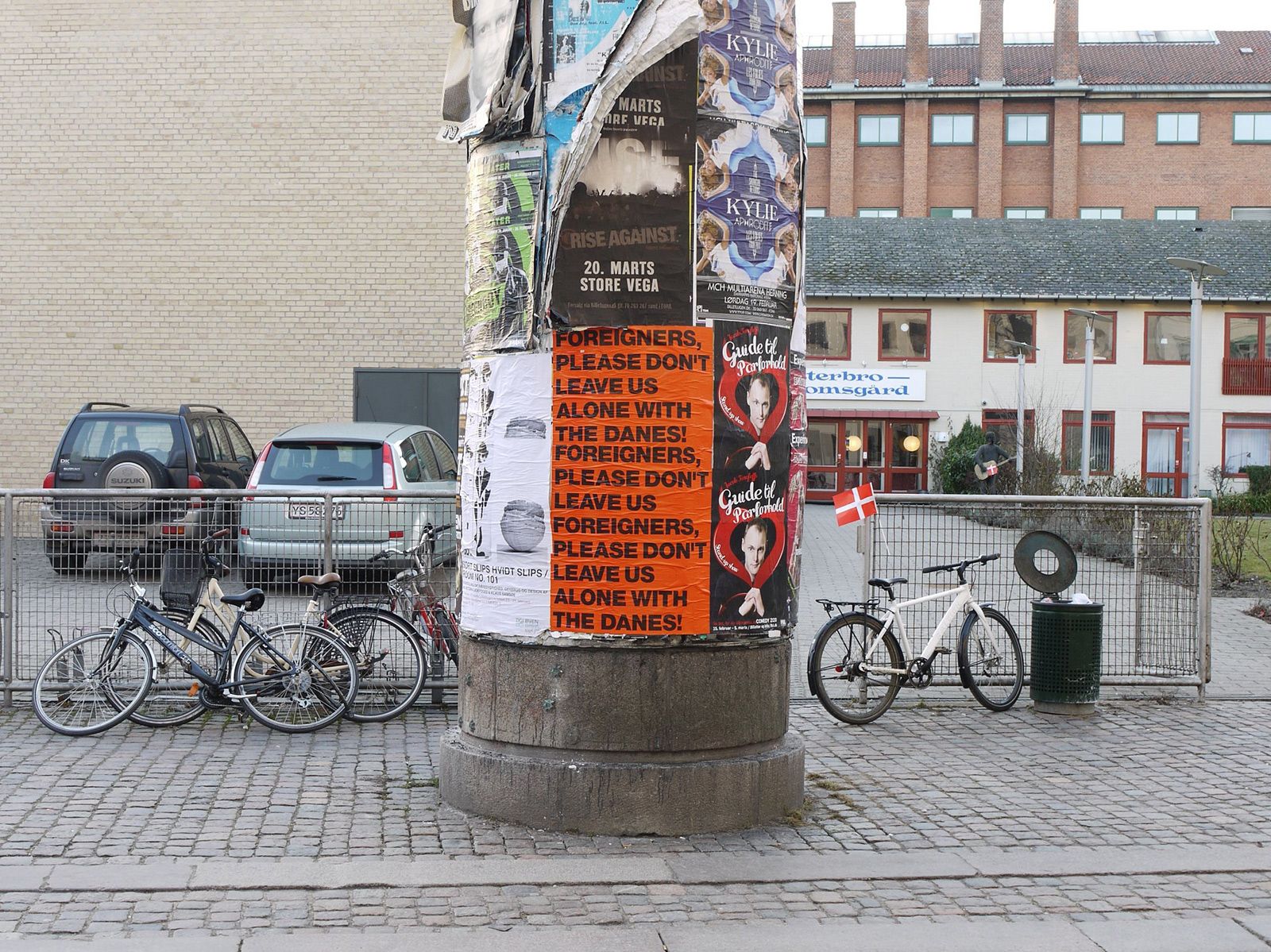
It doesn’t matter who the author is convinced by Superflex, it is important whether the idea is good. Art for them is anything, but not a way of self -realization in the usual sense of the word. Typically, for the artist, originality is above all, secondary work means worthless, plagiarism is completely shame. For the Danish art group, all this is insignificant, they think about art about the same as they thought in the Middle Ages, when the work did not have a creator at all. Even their most famous poster “Foreigners please Donʼt Leave Us Alone with the Danes!” (“Foreigners, please do not leave us alone with the Danes!”) - just a tracing paper with a French graffiti accidentally seen.
Björnstierne Christiansen recalls that the work appeared in 2002, when Denmark chaired the European Union, and politicians from other European countries gathered in Copenhagen in many ways. Superflex stuck these ambiguous posters in the city, addressed by either high -ranking guests or immigrants that many Danes did not want to see as neighbors. “Everyone thinks that Denmark is a cozy, hospitable, friendly place,” says the artist. “This is not so.”
Christiansen believes that the right turn in Europe began with his country. At the beginning of the zero, the Danish People’s Party - conservative nationalists who seek to limit immigration - entered the ruling coalition. Although over time, the right ones were opposition, the country's immigration legislation is still very harsh, says the artist. His wife, a native of Brazil, has not yet received Danish citizenship - after 16 years of marriage.
Superflex exhibitions distribute their posters for free. Recently, the group published a book for which people sent them photos with the “Foreigners ...” poster in their interiors. Everyone who took this poster and glued it on the wall puts his own meaning into it, Christiansen explains. Superflex once seized this phrase from the French context and placed it in Danish. Now their viewers are free to do the same: “Danes” is written on the poster, but instead of them you can mentally substitute “Germans”, “French” or any other nation whose representatives willingly vote behind the right.
The poster format itself, so beloved by an art group, is essentially a mockery of an art market, where the unique, only products are appreciated. The poster is a thing by definition is not unique, they are printed by unlimited circulation. In addition, Superflex deliberately put them in a row or laid out in stacks so that this non -norment is striking.
“For us, art is infrastructure,” says Christiansen. What the Danes did not let out: bricks , swing , soda , pudding . Even those works that are more like art in the traditional sense of the word are close to the aesthetics of industrial design. Being a non -profit institution, Superflex is deliberately mimicked to the factory, because, in fact, the purpose of their work is to look for solutions, alternative to those that modern capitalism offers us.
In many ways, they inherit the Soviet avant -garde - with its idealism, commitment to left -handed ideas and the idea of an artist as a person who designed life, and not just creating art objects. A lot of avant -garde classics were engaged in about the same as Superflex today - art as infrastructure. Alexander Rodchenko, say, developed the interior of the working club and the uniform for the sellers of Mosselprom, El Lisitsky painted campaign posters, Vladimir Tatlin tried to create aircraft.
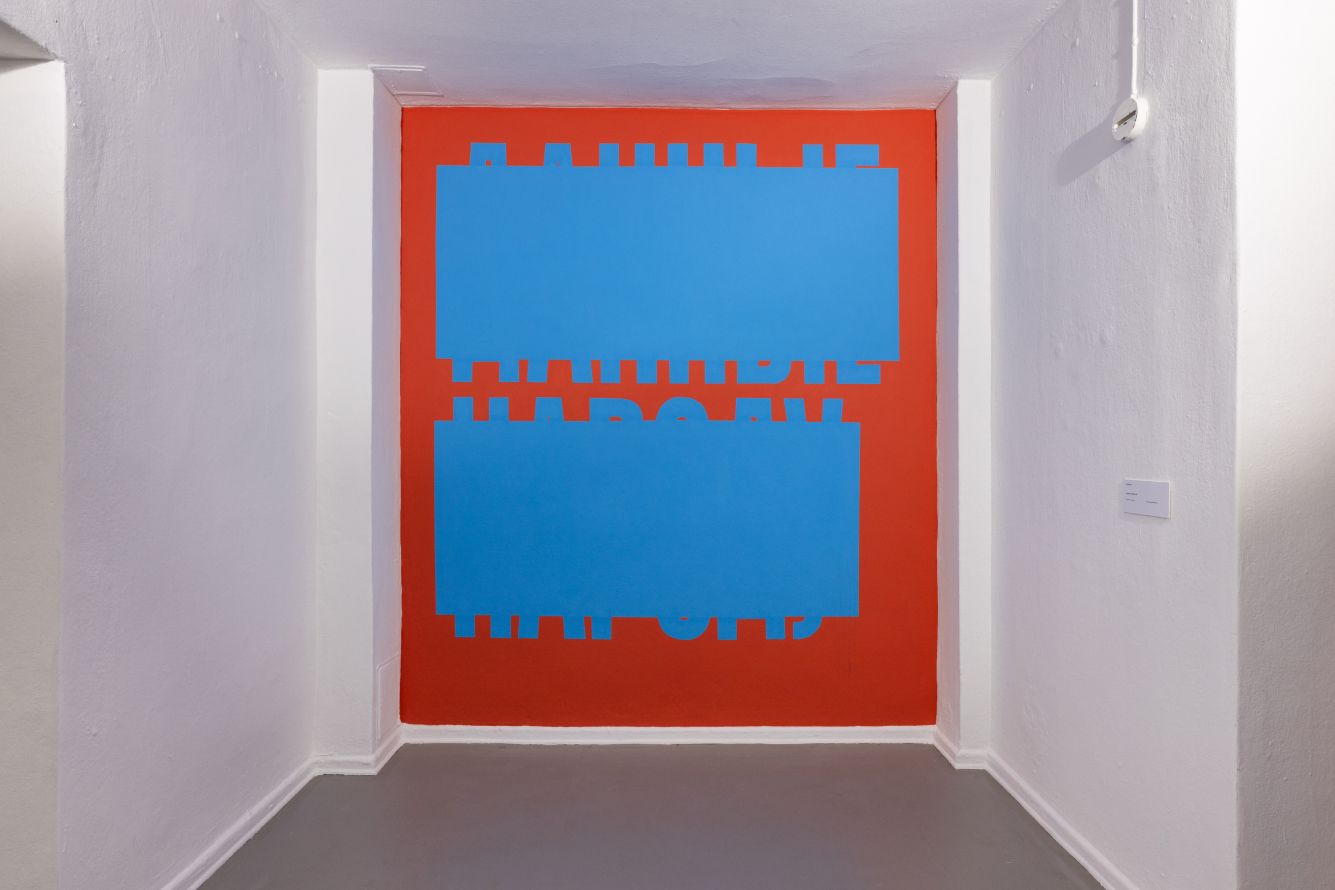
The echo of this era can also be seen in the work that Superflex is shown in Kunstraum Kreuzberg/Bethanien at the NO exhibition. The mural “All Data to the People” (in our translation - “data of the people”), the Danes first created in 2014 in the small city of Holbek 60 kilometers from Copenhagen. Since then, they repeated the project several times in different countries and in different languages. Sometimes Mural is complete with posters that spectators can take for free: this is how Superflex work in Berlin.
“In China, our work was censored,” says Christiansen. “Therefore, we first wrote a slogan, and then painted over, but so that the letters were still visible.” This technique is to protest against restrictions, making them visible - Superflex was used more than once to avoid copyright difficulties (as, for example, in the case of the PH5 lamp). At the NO exhibition, the artists returned to this decision to remind you of the self -censorship, which became the norm in Russia.
Christiansen believes that the slogan “Data to the people” requires not only transparency from power and business, but also responsibility - from ordinary consumers of information. “Of course, we are talking about access to data, but also about the ability to work with these data, to form complex knowledge on their basis,” says the artist. So, when Superflex offers the audience to make out posters, these are not just souvenirs as a gift, but a symbolic gesture: our work is over, now your turn is to go home and continue what we started.
The NO exhibition will last until July 6. She works at Kunstraum Kreuzberg/Bethanien every day from 10:00 to 20:00 (on Saturday June 28 - until 16:00). Good news: you still have a chance to join the last curator's excursions that will be held on July 5 at 16:00 and July 6 at 17:00. The tour lasts an hour, participation is free. Register on the exhibition website and come!
Anton Khitrov