
Translated material
Selfie on the background of the Gulag
“Popels and Dolomite” Tom Selivanova - an important film about the trip to the places of the Stalinist camps - was released on Russian streaming
Almost a year and a half after the International Premiere at the Rotterdam Film Festival in February 2024 and a little over six months after the Russian premiere at the Mayak festival, June 20, a picture of the MSHK graduate Toma Selivanova - “Ashes and Dolomite” was published on Premier’s streaming. This is both an artistic and a documentary about the journey of two young people (granddaughters of repressed and a foreigner), making the sounds and images of ruins and cemeteries remaining from the forced labor camps of the USSR. The film critic Irina Karpova looked at the picture and believes that, despite all her virtues, the severity of the topic raised was its creators not on the shoulder.
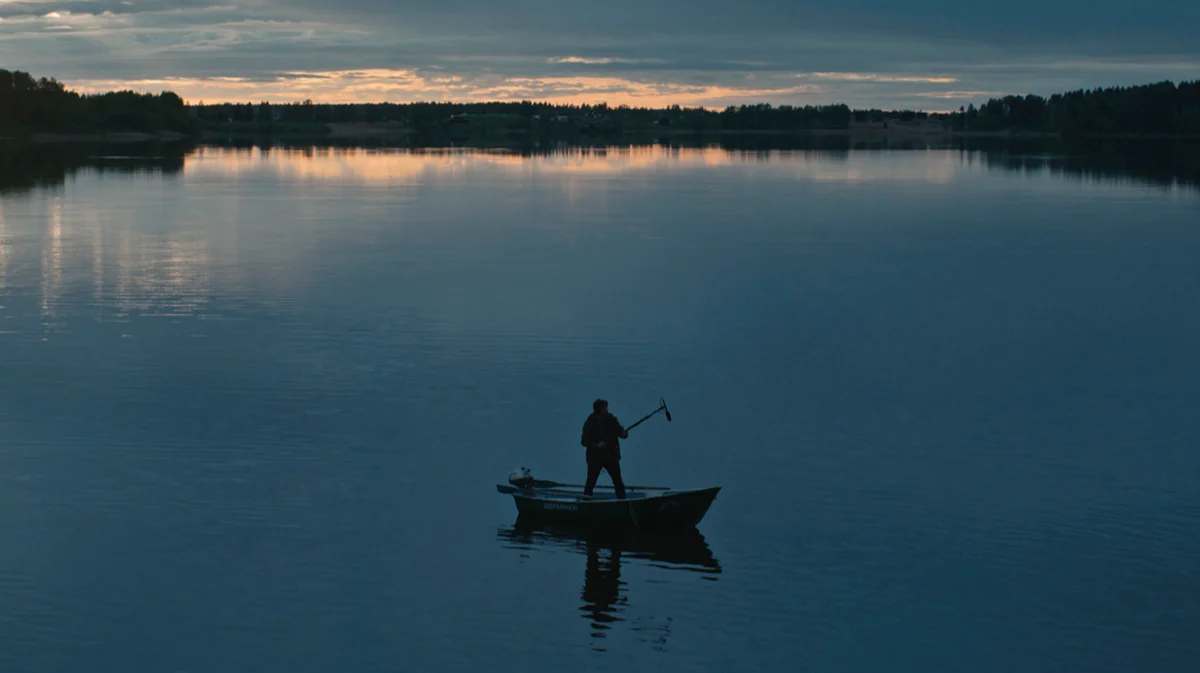
Director Dina (in fact, the director of the film Tom Selivanov), having sailed on the motorcycle to the middle of the Rybinsk reservoir, complains to the sound operator Johan (Anton Rival, who starred in the Frenchman Andrei Smirnov and Kraken Nikolai Lebedev), which cannot take anything off in this place. He records sounds, and she shoots plotted videos close to the video art to capture what remains of the labor camps of the Soviet Union. Under the Rybinsk reservoir-a city flooded in the 1940s, bridge and monasteries. “This lake is built on the bones,” says Dina Johan. “A camp was built here to build a reservoir,” she explains. The Rybinsk man -made sea was created as part of the construction of the Rybinsk hydroelectric power station (1935–1955), and the prisoners of the Gulag were built by the power station. Suddenly, Johan came up with the idea - to arrange the action “Return of the names”, to scream the names of those who died at a construction site.
He will record the sound, and Dina will scream names, diving his head into the water and pronouncing the names under water: “Boule-Bul-Bul”.
“Ashes and Dolomite” is the infinity of northern beauty, moss and stone, the surface and ripples of the lake, a boat swinging in the sky reflected in the water. In the center of this beauty is a doubting documentary, thinking aloud, whether she has the right to speak for those whose voice was taken away and whom they destroyed. But, both in this episode, and in the whole film, the return of names and an attempt to approach black horror, to divide, to the heritage of victims and to the traces of the executioners turns out to be strange “Boule-Bul”. Johan and Dina will not only not find answers (and is it possible in the format of cinema?), But even, it seems, is not able to formulate questions about the uncomfortable past, which in Russia has the ability to never end.
This debut full meter of Tom Selivanova talks about the weights of the past in the green-stone landscapes of Sandarmokh and Magadan. To shoot in 2023 a film regarding the history of repressions and camp heritage, in modern Russia, where the human rights center “Memorial” was declared a foreign agent and liquidated with this heritage, a very bold idea. This is a great merit and the power of the picture - to present the endless surface of the Rybinsk reservoir as a cemetery of the Soviet people, to report important knowledge to those who have not yet climbed this page of Russian history. At the same time, there is no severe sensation from him - on the contrary, it seems that the film soars in the air, the unnatural dialogs and the illogical actions of the heroes hang in it. Although it all starts very well, in the spirit of the detachment of Henri Bresson and Eugene Green, the heroes of Selivanova teach French words, and the camera demonstrates the meaning of the word, as if helping them (and the audience too) determine the coordinates of this world.
I would like to say thanks to Premier to Stream that “ash and dolomite” can now see everyone, and not just critics and participants in the film industry. For the third year in a row, the Rotterdam Film Festival, after the Russian Federation’s invasion of Ukraine, has challenged a pan -European ban on the show of Russian cinema as part of large filmings. This is, first of all, the experimental cinema festival, in 2023, in the Big Screen Competition section, Natalya Meshchaninova’s autobiographical film “One Little Night Secret” was shown - about a girl subjected to Abuez from the stepfather, and he still has not appeared in Russia either at the box office or at streams. And this year, in the Bright Future program, “on this earth” Renati Jalo, a black and white film about the aviation pioneer from the Russian village of the Lomonosov and Catherine II era (I really want it to repeat the path of the film Selivanova, not Meshschaninova and get to the audience). Selivanova’s short film “Cow” (you can see here ) participated in the program of the Rotterdam Film Festival in 2019, and Popel and Dolomit received a grant from the Hubert Balta festival fund in 2020.
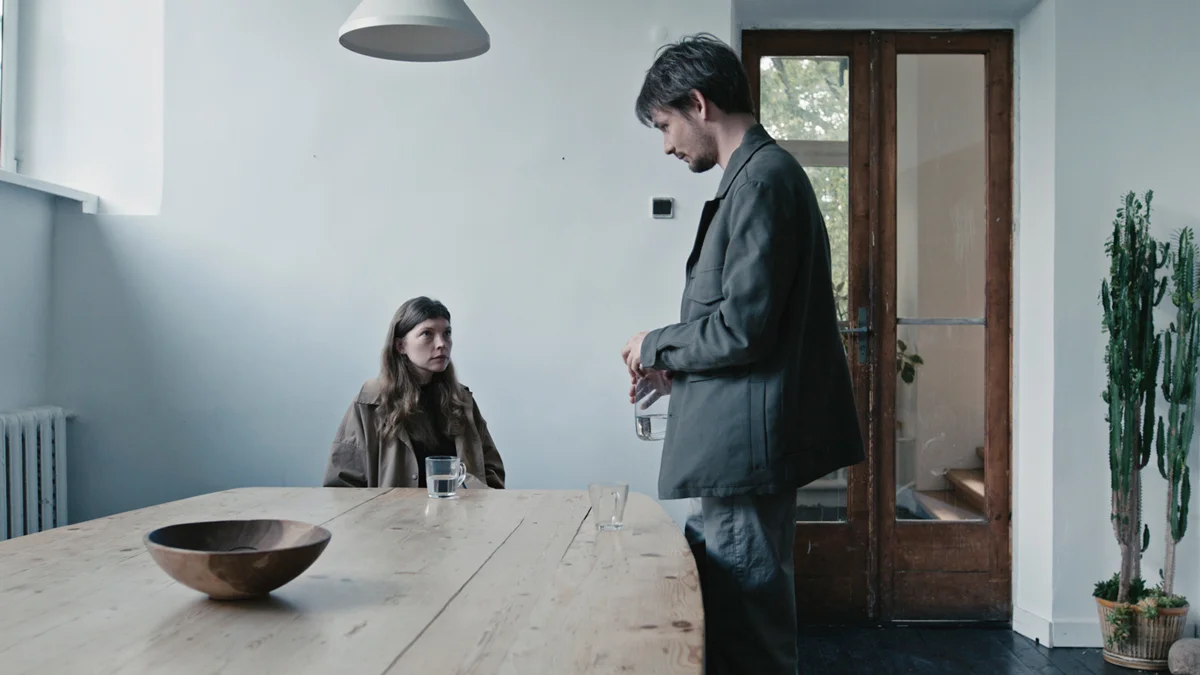
The image in the films of Tom Selivanova is practically Andrei Zvyagintsev, she is responsible for the operator work by the Belgian Florian Beritty, and the picture of both the ash and dolomite and the short -term clip of the “cow” (2019) resembles by movement, chiaroscuro and the color scheme of Mikhail Kricman, the “Return” and “Leviathan” operator. But what Selivanova does not have, so this is Oleg Negina - the permanent co -author of Zvyagintsev. The script in her films is the black hole where all the good intentions are sucked-the perfect construction of the frame, an image, from the beauty of which you can lose your head, a tense electronic soundtrack made by Alexander Galanov, ex-member of the ShortParis group.
Johan is looking for traces of his grandfather who fell into Soviet captivity and missing him. Dina's grandfather was repressed. This is an auto-fractional story, Tom Selivanova is the granddaughter of repressed, and although she plays herself, Dina is extremely close to become her alter ego. Selivanova says that while working on the film, Varlam Shalamova read for a year.
In Sandarmokh, in the forest of graves, where repressed people were shot, Dina with a camera falls back to moss and stones. Selivanova tells about this in an interview : “I went into this story almost like a tourist, I looked at everything through the eyes of a tourist. And for the first time I turned on another optics in Sandarmokh. There I came up with this falling camera: I just realized that I could show the last thing the people who were shot there saw. ”
Without her explanation of Dina's fall and a trembling camera in Sandarmokh, they seem to be a strained search for a form. It eliminates (or it intentionally ignores) that people have an internal vision, that those who go to execution can not see the pillars of trunks, but completely different paintings, that both circumstances and personality of people determine their optics. It is impossible to look into them.
The fall with the camera is just a simulation, a gesture without a feeling in an attempt to find it. How to feel what a person feels a second before his death? Impossible.
In addition, the heroine Selivanova pronounces the banal text that both the victims of repression and the executioners, "the killers and the killers, are all the same in Sandarmokh, everyone is lying together." “Strange, huh? She says to Johan. - As if this is such a very painful possibility of reconciliation, the path to reconciliation. Maybe". After all, if there is no reconciliation, then everything can happen again. To date, in Russia in places of conclusions there are 532 political prisoners, according to the "Memorial". Is everything repeated? Or is it just not over yet?
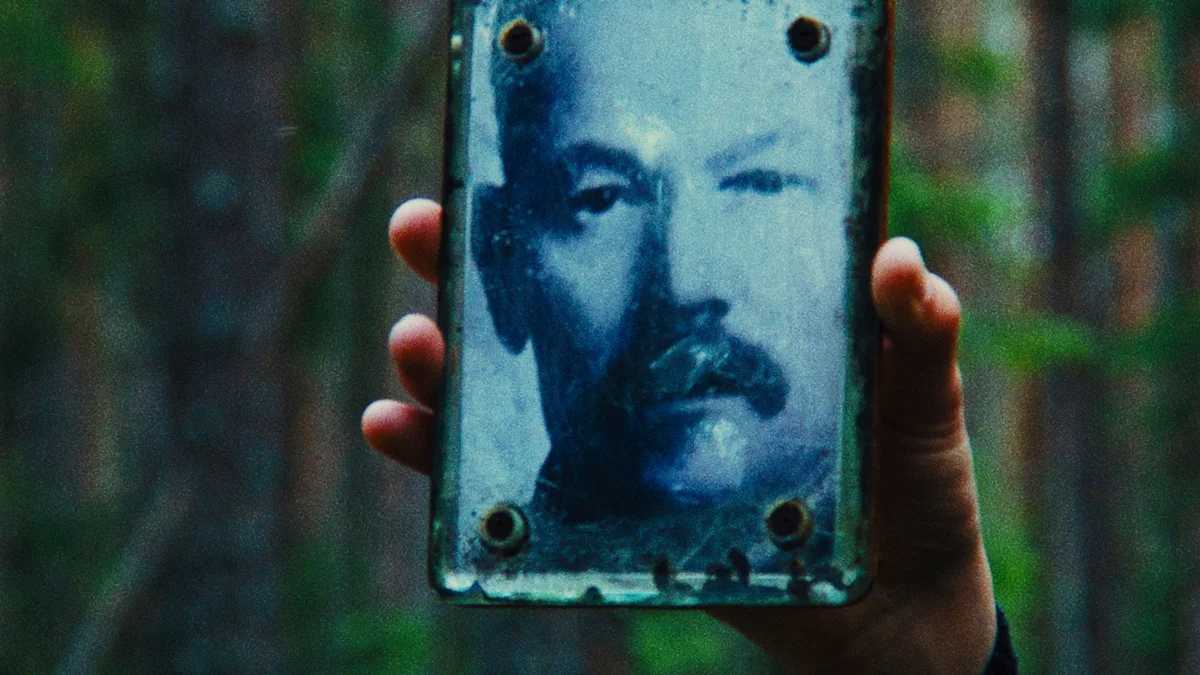
But just as optics determines what a person sees, so “ashes and dolomite”, or, more precisely, the attitude to the film, changes depending on how to look at him. As a film about memory, about the traces of repression, about the impunity of the executioners - this is a cring. But as a film about young people, about a generation trying to find an injury to their parents, grandparents, but instead gurgling into the water and falling into moss, this is an accurate hit, a visually impeccable story about an attempt to feel their voice, which was unstressed by unconditional success. This time.
As Selivanova herself says in an interview : “I understand that what is now called the universal word“ fear ”is not only fear, there is also guilt and shame. Therefore, we suffer and are silent. And this is very supported by our culture: to be silent and not lean out. After all, I could not even ask a question for a lecture before, and not because I was ashamed that I was stupid. And just you will become immediately visible. ”
In an attempt to become visible and finding your voice in a debut full -length film, it is not a sin to fall into a cring and gurgling.