
Translated material
Ottawa Mine Convention: Why Europe is withdrawing
Human rights activists say anti-personnel mines are inhumane and indiscriminate weapons
The Baltic countries, Finland and Poland are withdrawing from the Ottawa Convention banning anti-personnel mines and plan to mine the territories bordering Russia. At the end of June, Ukraine also officially announced its withdrawal from the convention. “Verstka” figured out why these countries had previously abandoned the use of anti-personnel mines and whether minefields will help deter Russian aggression.
In order not to miss new texts from “Layout”, subscribe to our telegram channel
What is the Ottawa Anti-Personnel Mine Ban Convention?
The Convention on the Prohibition of the Use, Stockpiling, Production and Transfer of Anti-Personnel Mines and on Their Destruction was prepared at the initiative of the International Movement to Ban Anti-Personnel Mines and adopted in September 1997.
The parties agreed to exchange information about accumulated anti-personnel mines, minefields and mine clearance methods, destroy their stockpiles of such mines, and never produce or accumulate them. Known minefields were to be destroyed, and the participants pledged to work together on a UN database to help combat these types of weapons and assist in the rehabilitation of victims of explosions.
In 1999, the Ottawa Convention came into force. As of early 2025, more than 160 states have ratified or signed it, making the Ottawa Convention one of the most widely supported disarmament treaties.
Are mines really more dangerous than other types of weapons? Why did the world want to give them up?
The developers of the convention call anti-personnel mines one of the most inhumane types of weapons. The international movement to ban landmines was created by six human rights organizations - Human Rights Watch, Handicap International, Medico International, Mines Advisory Group, Physicians for Human Rights and Vietnam Veterans of America Foundation. Currently, the coalition of organizations promoting the idea of a complete ban on anti-personnel mines includes more than a thousand partners.
Human rights activists call anti-personnel mines indiscriminate weapons that pose a greater threat to civilians than to military personnel. In 2023 alone, mines and explosive remnants of war caused 5,757 deaths worldwide. 84% of the victims were civilians, and in 37% of known cases the victims were children.
A 1997 study estimated that more than 250,000 people worldwide were living with the consequences of landmine injuries, including amputations, and the number of mine casualties has continued to rise every year since then. Mines have a long-term impact on war zones - mined areas cannot be used in peaceful life for years or decades, and residents suffer from subsided or long-ended conflicts. For example, in Yemen in 2022, almost 600 people were injured or killed by mines in regions where fighting stopped in 2021, Humanity & Inclusion reported . In Ukraine, the area of mined territories reaches 137 thousand square kilometers, which is comparable to the area of Greece.
How are mines used in the war in Ukraine?
Both Ukraine and Russia, according to human rights reports, began using mines in the war as early as 2014, but widespread use began after the full-scale Russian invasion in 2022. Moscow has never joined the Ottawa Convention. Kyiv has been a member of the mine ban agreement since 2006, but will officially leave it in 2025 - the decree has already been signed by President Vladimir Zelensky.
However, until the end of the war with Russia, formally Ukraine still cannot withdraw from the convention, since its rules provide that if the state that has declared its withdrawal is in a state of armed conflict, then withdrawal is possible only after its completion.
Since 2022, Russian troops have been recorded using at least 13 different types of anti-personnel mines, including new models with sensor fuses, which are extremely dangerous when clearing mines. Russia is actively mining not only the front line, but also leaving mines during retreat, including on civilian targets and in residential buildings. Human Rights Watch has documented mines being placed in residential buildings, killing civilians returning home.
However, international organizations note similar behavior in Ukraine. Human Rights Watch documented the repeated use of missile-delivered antipersonnel mines by Ukrainian forces in the Izyum area as early as the summer of 2022, when the city was under Russian control.
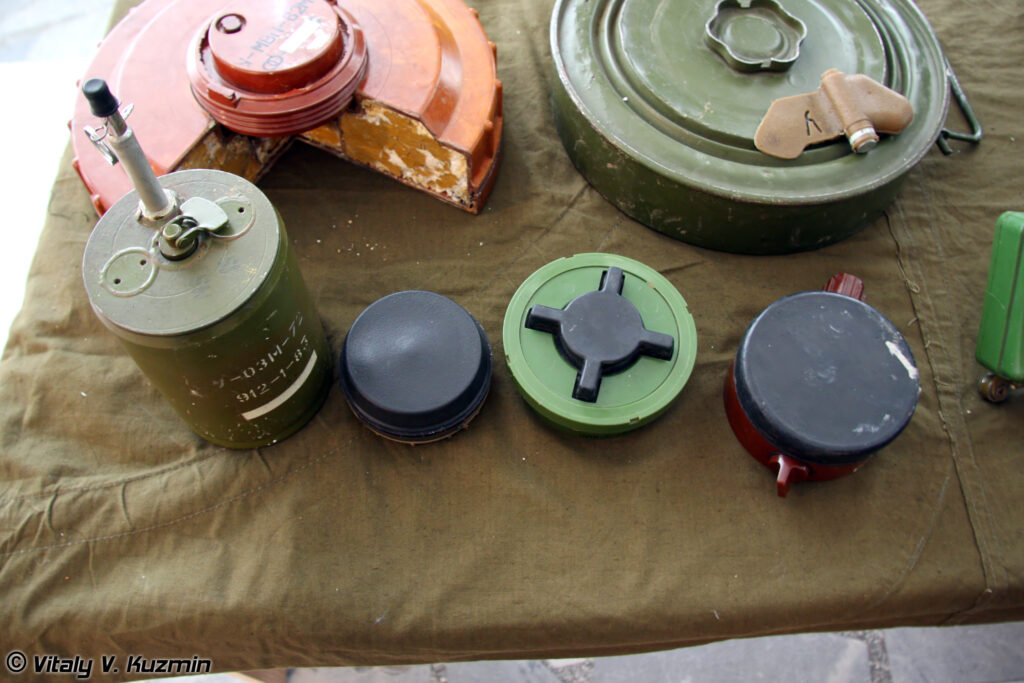
American media reported about the supply of anti-personnel mines to Kyiv from the United States (this was not officially confirmed). Both the Ukrainian and Russian armies widely use Soviet copies of the American Dragon's Tooth and Lepestok mines. Miniature devices with unusual shapes attract children, which makes them especially dangerous.
As for military losses directly, according to The Moscow Times, at least 180 thousand Russians returning from the front may live with amputated limbs. In Ukraine there may be about 50 thousand such people. There are no publicly available statistics on what percentage of injuries at SVO are associated with mine explosions. However, as Vorstka previously reported, 86% of Russian military personnel have shrapnel wounds, and 47% have wounds to the extremities.
Why are Russia's neighbors withdrawing from the Ottawa Mine Ban Convention?
In 2025, all the Baltic countries, as well as Poland and Finland, announced their intention to withdraw from the mine ban treaty. These states border Russia and explain their decision by the war in Ukraine and the worsening security situation in the region for NATO members.
In a joint statement, the defense ministers of these countries said that the armies should be given "flexibility and freedom of choice to potentially use new weapons systems." “With this decision, we send a clear signal: our countries are ready and able to use all necessary measures to protect our territory and freedom,” the statement said.
Estonia reported that minefields would be placed on the border in “times of crisis.” The Chief of the General Staff of the Polish Army, General Wieslaw Kukula, said that the mines would be deployed when the “inevitability of war” became clear. The countries plan to receive EU funding for this, Ukrayinska Pravda reported .
“The reality is that our neighbor is an aggressive imperialist state that is not a party to the Ottawa Convention and is mercilessly using mines,” explained Finnish President Alexander Stubb.
Can mines help defend against the Russian army?
The use of barriers that can limit the mobility of enemy troops is one of the most important tasks facing military personnel at all levels. Mines are an easy way to create such barriers in the right place and at the right time. Both Russia, Ukraine and NATO countries have weapons that are capable of laying minefields remotely; in addition, saboteurs often lay mines and use them to cover defensive positions.
Minefields slow down the advance of enemy troops, the delivery of equipment for mine clearance to one section of the front most likely demonstrates the enemy’s desire to attack in this direction, in addition, anti-personnel mines have an important psychological effect for the military - enemy soldiers are afraid of becoming disabled in the offensive, often this is an even stronger fear than the fear of death.
Saturating the front with drones allows operators to effectively hunt for sappers and enemy mine trawls - presumably, defense on such a section of the front will be more effective. At the same time, even some military experts doubt the effectiveness of minefields in deterring an advancing enemy army, DW notes .
In order not to miss new texts from “Layout”, subscribe to our telegram channel
To break through minefields, the military has sappers, including trained dogs, trawling systems, remote mine clearance equipment (the Russian military also uses them to strike the Ukrainian Armed Forces), drones and automated robots .
The Red Cross study notes that in wars since 1940, there has not been a single case in which anti-personnel mines played a decisive role in the outcome of hostilities. Even when widely used, they “generally had little or no impact on outcomes,” the organization said.
In addition, Lithuanian international lawyer Rytis Satkevicius says in an interview with DW, the convention, signed by 160 states, is no longer just a treaty but an element of customary international law. “You can’t get out of it simply because external circumstances have changed,” he says. — This exit must be carefully justified. Otherwise, tomorrow, for example, Iran may say: “Our country is in danger and the only way to defend ourselves is to arm ourselves with chemical weapons.”
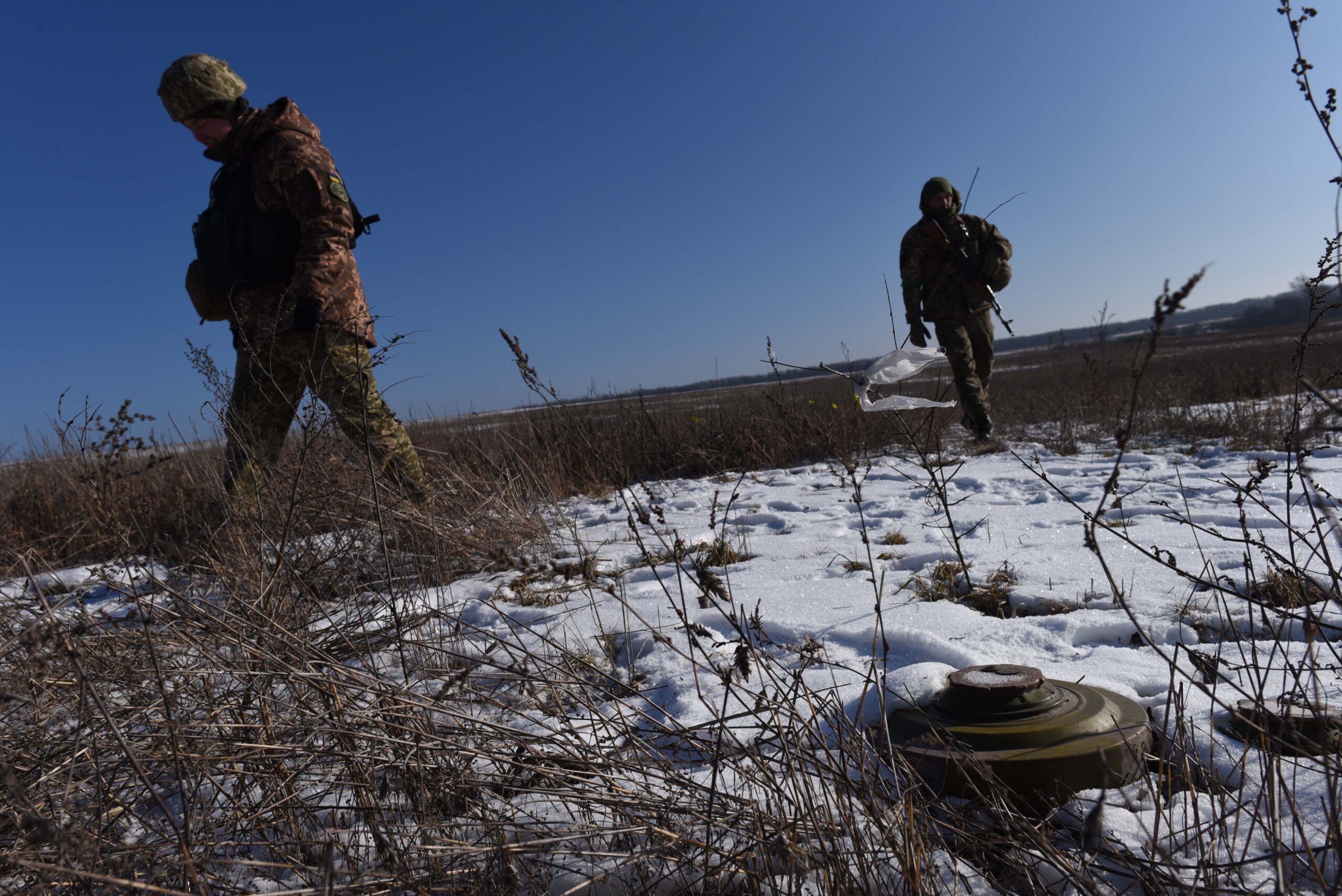
Photo: Ukrainian soldiers clear mines from the road near Izyum, Kharkov region. February 8, 2023. Mehdi Chebil / Hans Lucas via Reuters Connect
Support “Vestka” - it’s important and safe →