
Translated material
Five years without the right ...
To the anniversary of the hemp voting, unobtrusively and as if bashfully changed the country
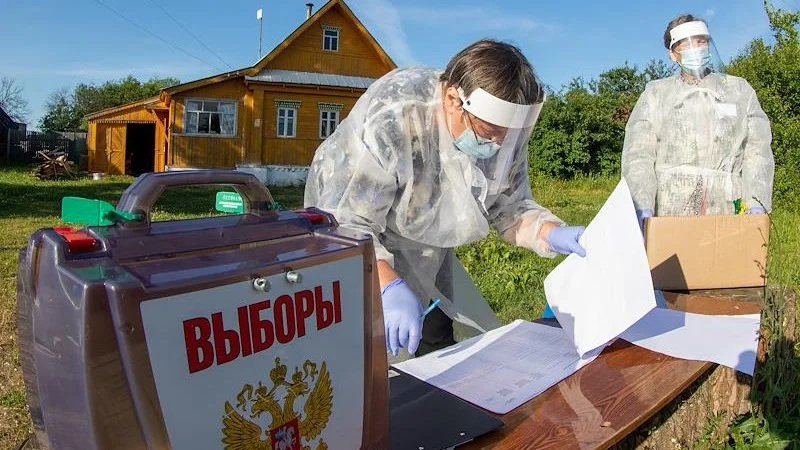
Photo: Safron Golikov / Kommersant
18+. This material (information) was produced, distributed and (or) sent by foreign agent Vishnevsky Boris Lazarevich or concerns the activities of the foreign agent Vishnevsky Boris Lazarevich.
Against the background of other events in the country and in the world, the first “anniversary” of large -scale changes to the Russian Constitution, adopted on July 1, 2020, turned out to be completely forgotten.
“We ban double citizenship to officials”, “annual indexation of pensions”, “we will not give native land of the land”, “we will preserve family values”, “protect the memory of the ancestors”, “respect for a labor person”, “retain the native culture and language” - the posters with such calls were then hung up by St. Petersburg, and not only it.
The calls “We will give the president the right to lead until 2036” and “we will deprive citizens of the opportunity to apply for protection in the ECHR” somehow not to recall.
Amendments to the Constitution (formally it was one amendment for which citizens voted) concerned all the heads of the Basic Law, from the third to eighth - those that can be changed without adopting a new constitution.
15 articles were set out in the new edition, 26 articles made cardinal changes, 5 new articles were made to the text of these chapters of the Constitution of the Russian Federation.
Total - 46 of 69 articles, or two -thirds of the text of these chapters of the constitution.
... Such was the scale of the changes that were divided into four groups.
The first is “social” amendments on which the authorities made the main emphasis when explaining why it is necessary to change the constitution.
The second is declarative amendments that often do not have a legal significance, but create the basis for adoption, including repressive laws.
The third is amendments that change individual, but significant legal issues.
And the fourth - amendments regarding changes in the system of political power and redistribution of the powers of its bodies.
Socialist: all this is, but not
There were two “social” amendments: the establishment of the minimum wage (minimum wage) is not lower than the subsistence minimum and the indexation of pensions.
It looked attractive, but there is a nuance: all this was provided for by federal legislation.
The Constitution repeated the norm that the indexation of pensions is carried out “in the manner prescribed by law”, that is, as it was carried out before the adoption of amendments.
Both before the adoption of amendments and for five years after their adoption, the indexation of pensions for working pensioners has been “frozen” (since 2016) and was restored only since 2025. And the corrected constitution here did not help.
All the same applies to the minimum wage, which before (and after) the adoption of amendments to the Constitution should have been - by law - not lower than the subsistence level. But the problem here is not in the Constitution, but in the fact that nothing prevents the authorities from establishing a low cost of living, “cutting” the minimum set of necessary products, goods and services. Explaining the citizens that excess oil, sugar, meat, milk, fruits, public transport, shoes and clothes, as well as rest, are not so necessary. And the amendments to the Constitution here also did not help and did not change anything.
For reference: the cost of living in Russia now - 17,233 rubles, the minimum wage - 22,400 rubles. And do not deny yourself anything.
Divine Constitution
The second group of amendments is about “preserving the memory of the ancestors who conveyed to us ideals and faith in God”, about “protecting historical truth” and the inadmissibility of “diminishing the meaning of the feat of the people in the protection of the Fatherland”, about continuity in relation to the USSR, about the protection of the Russian language, about the care of animals, about culture as a unique heritage of the multinational people of the Russian Federation, which is supported and protected by the state.
On the creation of conditions for the country's sustainable economic growth and increasing the well -being of citizens, for mutual trust in the state and society. The fact that the protection of the dignity of citizens and the respect of a person of labor is guaranteed is ensured by the balance of the rights and obligations of a citizen, social partnership, economic, political and social solidarity.
The fact that “children are the most important priority of the state policy of Russia” and “the state creates conditions that contribute to the comprehensive spiritual, moral, intellectual and physical development of children, the education of patriotism, citizenship and respect for the elders.”
The fact that the Russian Federation provides support to compatriots living abroad in the exercise of their rights, ensuring the protection of their interests and preserving the all -Russian cultural identity.
The fact that in the joint jurisdiction of the Russian Federation and its subjects there is “ensuring the provision of affordable and high -quality medical care, preserving and strengthening public health, creating conditions for maintaining a healthy lifestyle, forming a culture of a responsible attitude of citizens to their health” ...
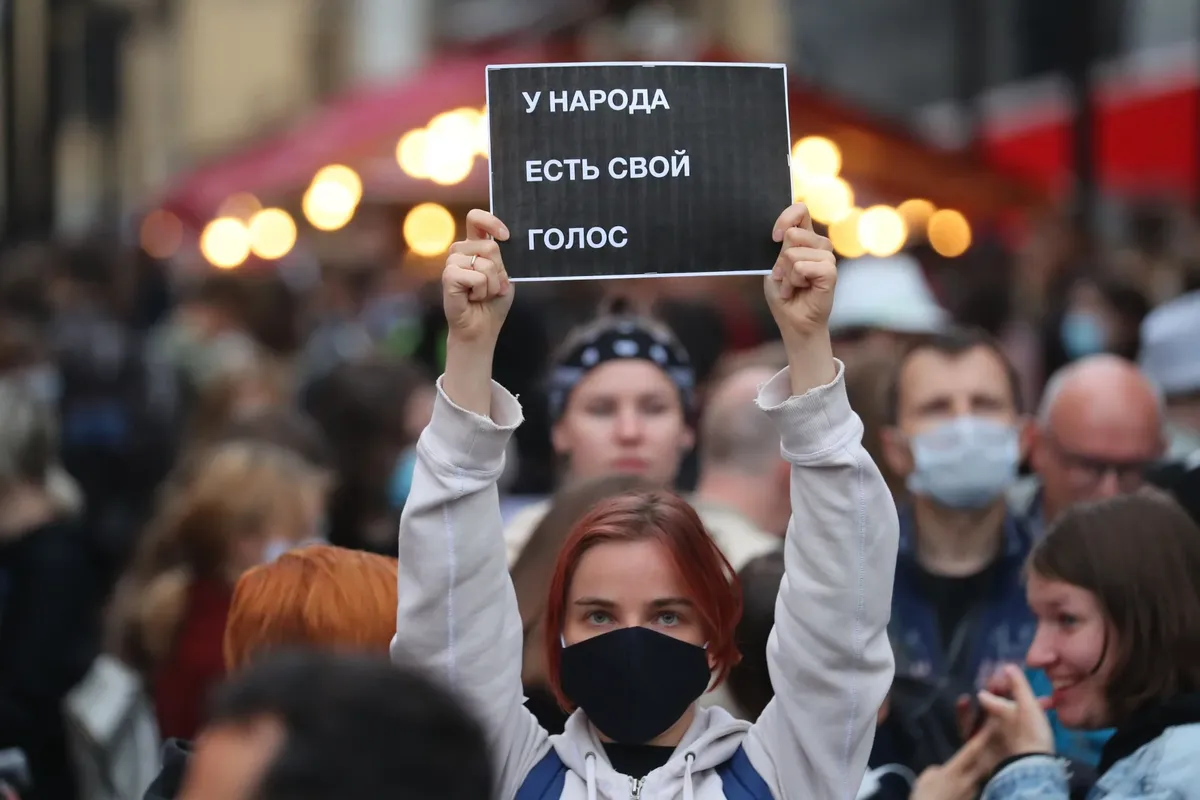
Some of these amendments have no legal significance at all and was originally suitable only for placement on advertising posters.
You can only smile sadly over the part - starting with the state protection of culture (despite the fact that today the denunciation of the next “social activist” can disrupt almost any cultural event) and care for animals (against the backdrop of attempts to destroy homeless dogs) and ending with guarantees of “protecting the dignity of citizens” (especially in the police) and “accessible and high -quality medical care” (despite the fact that desperate calls to rush to the whole world for treatment for treatment A child who does not provide the state is published by almost all significant media).
Part, to put it mildly, raises questions.
For example,
But what about unbelievers who did not give any faith in God?
Or, on the contrary, they transmitted atheism (prevailing in the Soviet Union for decades)?
What to do with the norm of the constitution about the secular state, which is one of the foundations of the constitutional system?
And about everyone’s right to confess any religion, and not to confess any?
If we talk about the “protection of historical truth”, then the question is appropriate: who will determine that there is a “historical truth”?
The version of the story that the authorities now consider to be profitable for itself, set out in the next textbook edited by Medinsky, and in which it is forbidden to doubt? A unified and tendentious, forced interpretation of history - with repressions against historians (and not only) who affect prohibited topics?
And what is understood by “belittling the meaning of the feat of the people”? Any doubts about the correctness of the decisions of Stalin and his military leaders? Or a bitter truth about disasters at the beginning of the war? Now, as you know, the ex-minister of culture Mikhail Shvydka requires censorship for frightened writers-and the requirement of censorship for frightened historians may well sound ...
These amendments (this was said, including the author, even when the project appeared) contradict the principles of freedom of thought and words, freedom of expression of their opinions and beliefs, freedom to receive and disseminate information (Article 29 from the “unchanged” second chapter of the Constitution).
After all, it follows that citizens who have a different opinion about the historical events of Russia, as well as the legitimacy of the actions of certain historical characters, can be easily enrolled in the enemies of Russia ...
Unfortunately, these questions are by no means rhetorical.
Because the practice of initiating criminal cases for “insulting the feelings of believers” continues in cases that “pull” no more than for stupidity or, in extreme cases, hooliganism (it is worth recalling the famous “God scold God”).
And for the arguments about the war between the USSR and Finland, the 1939–40s and the Molotov-Ribbentrop Pact, St. Petersburg local historian Dmitry Vitushkin received a criminal case on the “rehabilitation of Nazism” and was convicted.
Note that under the same article there are more and more cases of ordinary hooliganism, but committed in relation to the monuments to the victims in the Great Patriotic War - which, of course, is outrageous, but, as it seems, is not related to the “rehabilitation of Nazism”. However, law enforcement agencies and courts consider it differently, and punishment for this is much harder than for hooliganism.
If we talk about the cultivation of patriotism in the constitution, then we see what this turns into-by the militarization of education and upbringing (starting from school) in the children of the belief described once by Eugene Schwartz in the “naked king”: “Do you not know that our nation is the highest in the world? All others are not good, but we are well done. ”
And also - the suggestion to them, that the invariably peaceful Russia has always been surrounded by evil enemies, who dreamed of weakening, humiliate and conquer, and continuously attackers at it. Well, which in schools have recently demonstrated samples of patriotism and who often comes to teach this by personal example, is well known not only to readers of the “new”.
True, books have not yet been removed from the libraries, including famous historians, which sets out a slightly different version of Russian history, but this is not difficult to fix.
By the way, against the background of the announcement of an “unwanted organization” and the prohibition of the structure where the tests for knowledge of English were taken, another quote from the “naked king” is recalled: “Since His Majesty announced that our nation is the highest in the world, we have ordered to completely forget foreign languages” ...
On the sovereign territory and enemy courts
The third group of amendments - about the protection of family, motherhood, paternity and childhood; about the protection of the institution of marriage as a union of a man and a woman; On the creation of conditions for worthy education of children in the family, as well as for adult children, the obligation to take care of parents.
On the ban on those who hold state or municipal positions or work in the state or municipal service, have foreign citizenship and residence permit.
The fact that "decisions of interstate bodies adopted on the basis of the provisions of international treaties of the Russian Federation in their interpretation, contradicting the Constitution of the Russian Federation, are not subject to execution in the Russian Federation."
The fact that actions aimed at alienation of part of the territory of the Russian Federation, as well as calls to such actions ( calls for alienation of foreign territory and violation of the territorial integrity of other states in Russia, as you know, are not punishable and freely sound in a public field. - B.V. ) are not allowed.
The most significant of them is an amendment that allows not to comply with the decisions of international courts, which actually isolating Russia from international law.
The consequences were not only the denunciation in 2023 of a number of conventions signed by Russia (the Convention on the Protection of Human Rights and Fundamental Freedoms, the European Charter of Local Self -Government, the European Convention on the suppression of terrorism, the European Social Charter), but also the fact that
Russian citizens lost the opportunity to restore their rights violated by officials through the European Court of Human Rights. But the ECHR in many cases was the authority where it was possible to achieve, if not final justice, then at least material compensation.
When the draft amendment to the Constitution was published, a variety of lawyers (including this was noted in the expert opinion of the Center for Legislative Initiatives of Yabloko, under the leadership of the long -term member of the CEC of Elena Dubrovina), said that this norm actually means the possibility of non -fulfillment by the Russian Federation of international treaties ratified by her and contradicts the position of part 4 of Article 15 of the Constitution of the Russian Federation, which establishes that international The contracts of the Russian Federation are an integral part of its legal system. This provision is one of the foundations of the constitutional system, which cannot contradict any other provisions of the Constitution of the Russian Federation.
And this norm contradicts Article 46 (from the “unchanged” second chapter) of the Constitution, which guarantees Russian citizens the right to apply to the interstate bodies for the protection of human rights and freedoms if all available domestic legal protection funds are exhausted.
What is the point of this if the state at its discretion may refuse to execute the decisions of the relevant interstate courts?
As for other norms, the most consequences were the defense of the “Institute of Marriage as the Union of Man and Woman”, which was immediately interpreted not only as a ban on any other forms of marriage, but also as the basis for the persecution of everything related to “non -traditional relations”.
The norms on the protection of family, motherhood and paternity were used to ban “declension to abortion”, and to ban “promotion of refusal from childbearing”, and then to introduce payments for pregnant schoolgirls. At the same time, it has been noticed more than once that the refusal of the childbearing on a mortgage is most “promoted” - after all, there are few children to give birth, they must still be grown under normal conditions ...
Well, the ban for officials and deputies to have foreign citizenship or residence permit and foreign accounts - the norm, and before that, which was in the law, and its inclusion in the Constitution did not change anything.
About the main thing
Finally, the fourth group of amendments expanded even more the huge powers of the president, reduced the rights of regions and local self -government and reduced the independence of the court.
Apart among them is the “amendment of Tereshkova”, which has overwhelmed the terms of the reign of the current president and created the conditions for their continuation until 2036.
This amendment was separately “authorized” by the Constitutional Court-and the decision of the Constitutional Court will someday be given in the textbooks as an example of the refusal of the principle “the court decides sentences, and does not provide services”.
Especially “pleases” the COP argument that developed parliamentarism, real multi -partyism, the presence of political competition, an effective model of separation of powers, equipped with a system of retirement and counterweights, as well as ensuring rights and freedoms independent justice, including the activities of the constitutional court that exist today in Russia, are powerful institutional counterparts, quite sufficient in order to exclude even the slightest danger to the legal. The democratic nature of Russian statehood, emanating from the long stay of one person as the President of the Russian Federation.
The mentioned expert opinion of Yabloko lawyers says that “all of the listed institutions are more imitational in nature and are fully controlled by the President of the Russian Federation, as evidenced by their non -criticality in relation to him, the lack of facts of defending any position diverging from the presidential, and in these conditions, a refusal, even a temporary factor, from such a deterrent, as a prohibition of the President of the Russian Federation more than two Dates ... may become critical for the final sliding of Russia to the dictatorship. "
As for other amendments, they, first of all, intensified the influence of the president on all three “branches of power”, as well as on the prosecutor's office.

Although the State Duma received the right to approve the deputy prime ministers and ministers on the proposal of the prime minister, the president at any time can send them (including the prime minister), without receiving the consent of the parliament. At the same time, the heads of federal executive bodies (including federal ministers) who are in charge of “defense, security of the state, internal affairs, justice, foreign affairs, preventing emergency situations and eliminating the consequences of natural disasters, public safety” The Duma is not approved at all - they are independently appointed by the president. Having carried out nothing meaningful “consultations” with the Federation Council, which is dependent on it.
The president also received the right to appoint 30 senators, of which part of which is appointed for life, the exclusive right to offer the Federation Council to appoint and terminate the powers of the leadership of the senior courts (the Constitutional Court, the Supreme Court), judges of the senior courts, the right to appoint the leadership of other federal courts and federal judges, the exclusive right to appoint the Prosecutor General, his deputies and other prosecutors (he previously represented the Federation Council for approving the candidate Prosecutor General and his deputies, now only holds with the upper house of "consultation"). And after the “consultations”, prosecutors of the regions are now appointed - the right to coordinate them from regional parliaments.
Even then, when the draft amendments were published, I said that now it would be even more difficult for citizens to achieve justice in disputes with the state. Because the judge, whose fate is in the hands of the president, is unlikely to decide to make a decision (especially in “political” matters) not in favor of the state. And the prosecutor, completely dependent on the president and considers him his boss, will not insist on observing the rights of a citizen who violated the state. As he looked into the water ... However, it was easy to predict.
And another amendment, which later had very serious consequences - that "local governments and state authorities are included in a single system of public power."
Эта поправка с самого начала виделась противоречащей основам конституционного строя, провозглашенным в статьях 10, 11, 12 Конституции РФ, устанавливающим принципы разделения властей, их самостоятельности, а также самостоятельности органов местного самоуправления. Но на эту «мелочь» не обратили никакого внимания.
Следствием стала новая редакция закона о местном самоуправлении (о которой я рассказывал в «Новой газете» 11 марта), фактически уничтожающая самостоятельность МСУ и де-факто превращающая его в самый нижний и почти бесправный уровень государственной власти.
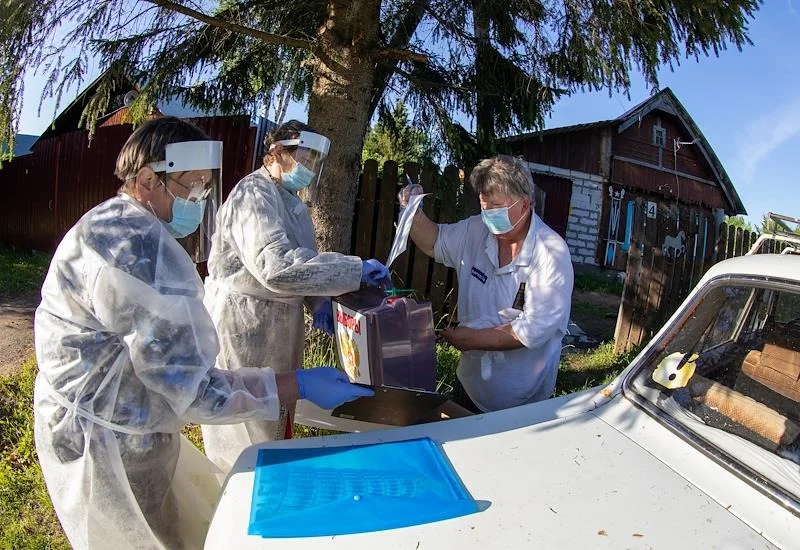
Поправки в Конституцию принимались многодневным голосованием, метко названным тогда «голосованием на пеньках» (под предлогом ковидной опасности; хорошо помню избирательный участок прямо у меня во дворе, на детской площадке). И эта идея была немедленно подхвачена и трансформирована в «трехдневное голосование» на выборах всех уровней, что (не раз писал об этом в «Новой») резко увеличило возможности для фальсификаций.
…Последнее. Тогда, пять лет назад, поправки представлялись как совершенно безальтернативные — между тем альтернатива была, хотя и не выносилась на голосование, мы готовили ее вместе с коллегами по «Яблоку» и ведущими учеными и юристами.
Она называлась «Конституция свободных людей», а ее главными моментами были: президентские полномочия ограничены двумя сроками по 4 года; правительство подотчетно парламенту; The Federation Council is elected citizens in direct elections; пытки запрещаются, и запрещается использование показаний, данных под пытками; служба в армии — только добровольно; пенсионный возраст для мужчин и женщин — 60 лет; граждане получают доходы от экспорта природных ресурсов на свои счета; все детские заболевания лечат за счет бюджета, свобода публичных акций; недопустимость политических репрессий и другие предложения, о которых «Яблоко» говорит на протяжении многих лет.
Когда будет (а он будет обязательно) новый шанс на перемены — это может стать для них хорошей правовой основой.